The frost has been back again, giving us some chilly but sparkling mornings. I’ve been grateful to see it because we’ve reached the stage of the year when there are few flowers or plants left to photograph.
Stalking around the garden, camera in hand, I’m usually on the lookout for images that are only made possible because of the frost: veins on a leaf picked out in white, petal edges encrusted as if they’ve been dipped in sugar, or tiny crystals of ice building up on frozen plant surfaces.
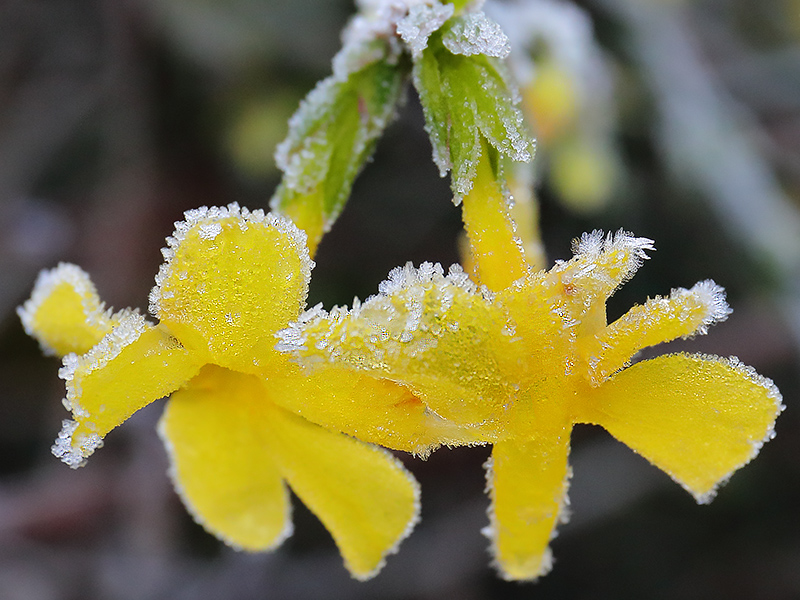
Tiny, frozen winter jasmine flowers with ice crystals building up on them.
The shady areas of the garden retain the most frost, and that shade can give a slightly blue tint to the white, which creates an even colder appearance. The lack of light makes it hard to get much depth of field in the photographs, even at fairly high ISO values. (I could use my tripod, but it’s much too cold to stand around for long and my feet feel warmer if I keep moving around.)
As the sunlight gradually starts to seep into the garden, I look for places where the frost has begun to sparkle in the sun. There won’t be much time before the frost begins to disappear as it warms up. This means I have to work quickly to capture the images that have attracted my eye.
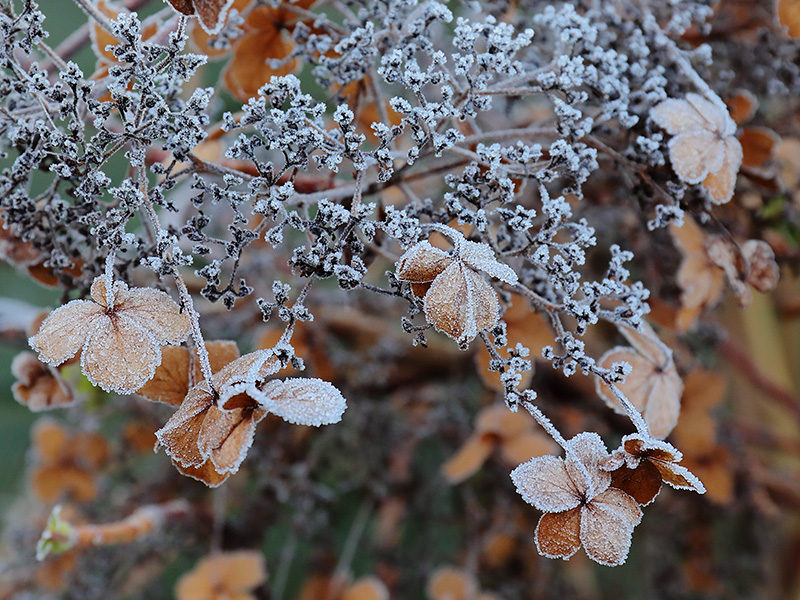
This climbing hydrangea is in one of the coldest parts of the garden, shaded by the fence and a tree.
Eventually I’m either too cold to stay out any longer or the frost has started to melt and drip off the wet plants. So it’s time to head indoors, first wrapping my camera in a large plastic bag to protect it from getting covered in condensation in the warmer air. (Outside, it’s all to easy to let the viewfinder get steamed up by my own breath – a frustrating interruption to taking the photographs!)
Once indoors, it’s time for a well-earned mug of coffee and a chance to get warm again while looking to see what new photographs I have. Frosty mornings can be productive and very satisfying!
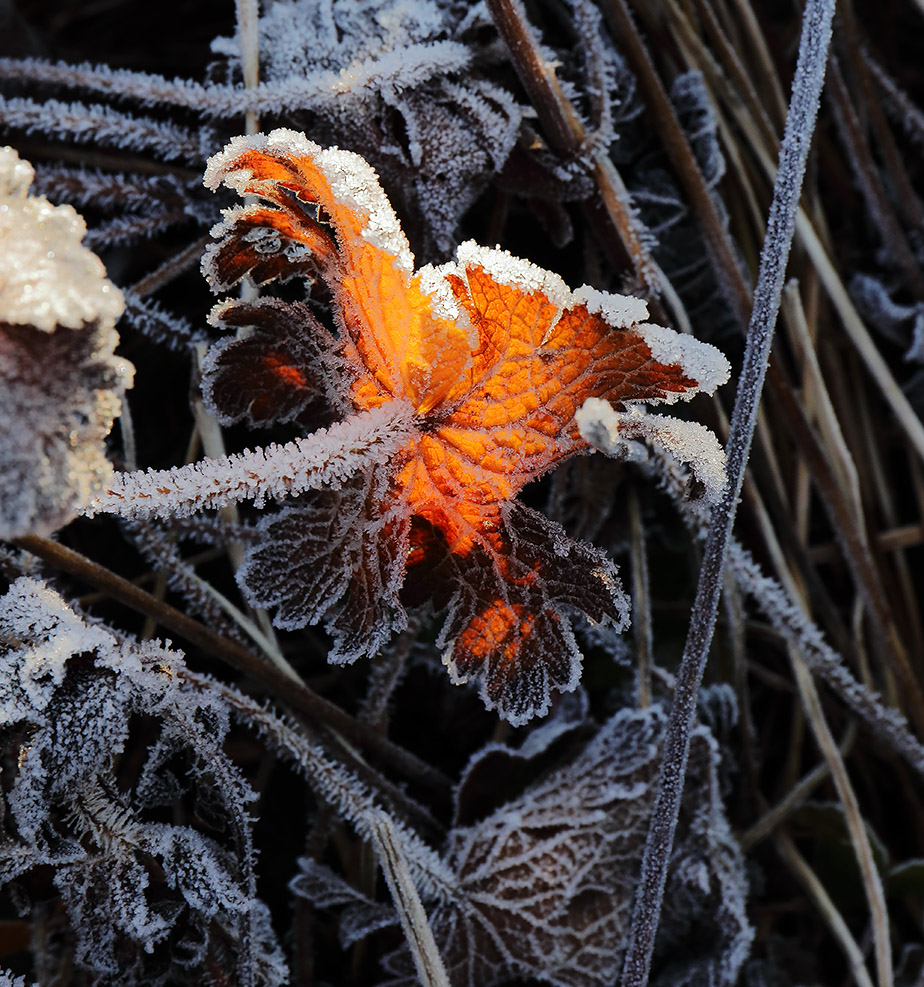
The frost on this fig leaf will soon be gone, now that the sun has reached it.
At this stage of the summer, there are not very many flowers left in the garden for me to photograph. But there’s one that’s in flower right now that I have wanted to photograph for some time.
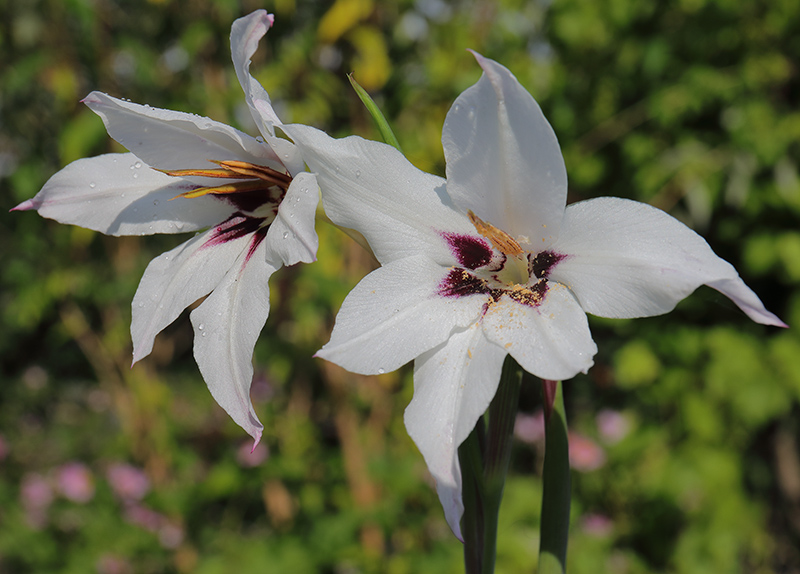
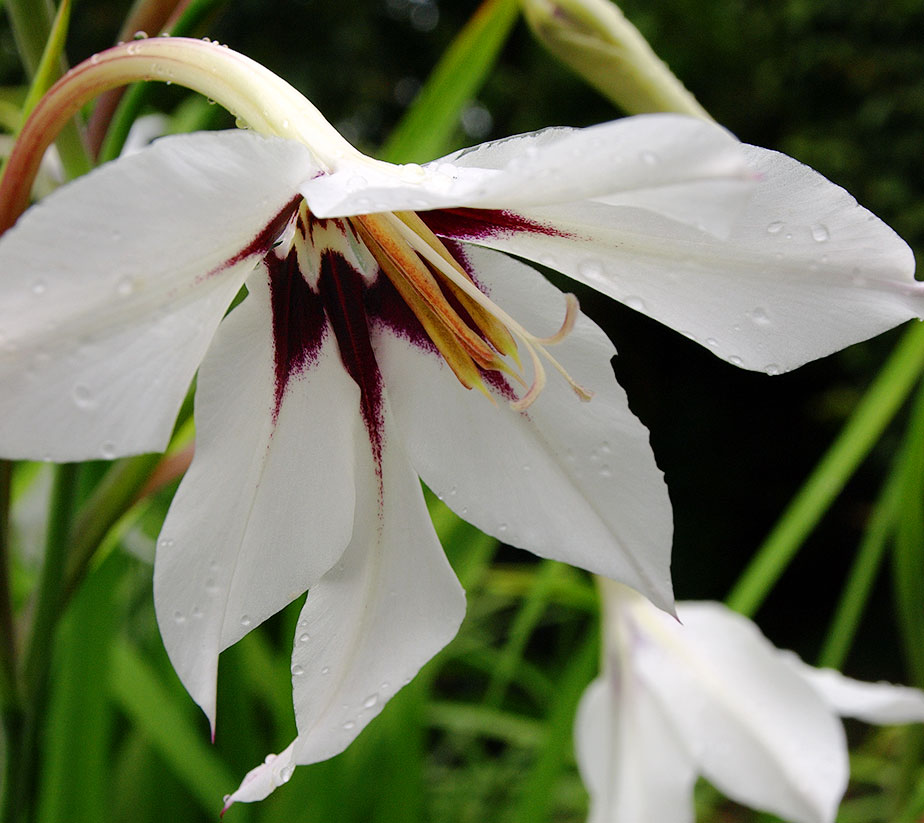
I have been able to photograph Acidanthera murielae in a garden I visited, but I really wanted the chance to try it again in my own garden.
If you’re garden-visiting, you can’t tidy up the plant by removing the spent flower-heads before you take your photograph. And there’s a limit to how long you can spend as you wait for the flower heads to stop swaying in every slight breeze.
It’s so much easier to wait for a calm period in your own garden.
Acidanthera flowers sway easily because they’re held in groups on graceful three-foot high stems. With their tall, iris-like leaves, the plants make a very elegant sight that is both a treat to photograph and a star attraction for a late-summer border.
I just have a few of the flowers in a pot this year. Next year I’ll plant more of the bulbs in the garden, but I’ll have to remember to store them inside over winter because these East African bulbs aren’t very hardy. (Even better would be to just buy some new corms every spring – they’re not expensive.)
Acidanthera (also known as callianthus or Abyssinian gladiolus) are sun-lovers for a well-drained soil. They’re easy to grow and can create a spectacular show at this time of year.
Now I just hope they’ll sit still for a little while so that I can take some more photographs!
I’m delighted to have acidanthera growing in my own garden at last!
Last week I mentioned my friend Judy’s beautiful garden and that I’d been able to spend a morning taking photographs in it. While I was there, I noticed that there were a good number of white flowers sprinkled around the garden and I really liked the effect they created.
There’s something very fresh and delicate about the appearance of white flowers. If they were pure white, they could seem a little harsh. But many have yellow stamens or perhaps a touch of another colour on their petals, and this softens the effect greatly. Seen growing in great numbers, perhaps spreading their way amongst other flowers, the look they create can be quite dreamy or fairytale.
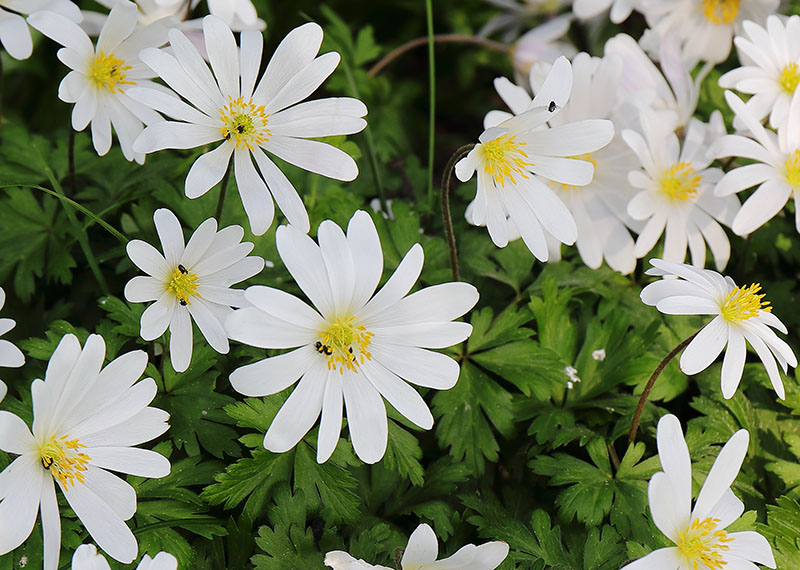
Anemone blanda soon builds up to a healthy colony if it’s in the right spot.
In combination with the blues and yellows of other spring flowers, white is truly beautiful. It brings a lively sparkle and gleam to the garden and chases away the memory of winter greys.
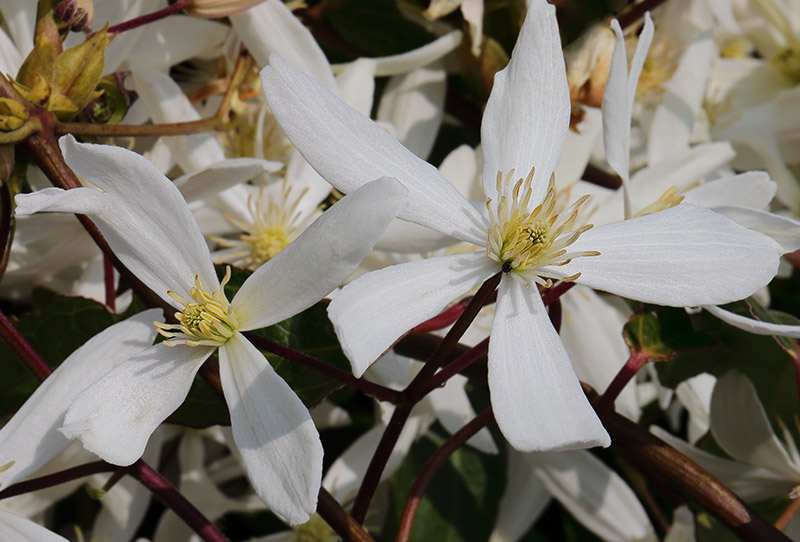
The most enchantingly impressive sight in Judy’s garden that morning was a Clematis armandii which had become a great mass of flowers along a section of fence. Not only are the flowers beautiful to look at – they’re scented too. That’s a pretty good bonus!
Clematis armandii flowers practically sparkle in the spring sunshine!
I enjoyed the effect of these white flowers so much that I’m thinking about ways of bringing a bit more white into my own garden. A background of green foliage makes white flowers look especially fresh and lively, so that is something I’d like to try.
There are a few white flowers in my garden. The best are Gaura lindheimeri, which has flowers that look like a flock of tiny white butterflies, and the white pulsatilla that I photographed last month. There’s also a big old white lilac (Madam Lemoine) which has very scented double white flowers and is a joy to be near…except that it has one problem. When its flowers die, they turn brown but don’t fall and because this lilac has become very tall now, it’s difficult to prune them off. The dead flowers really spoil the look of this lilac, so I will have to get out my telescopic lopper on a pole thingy to remove them. That will most likely be exhausting but worth it!
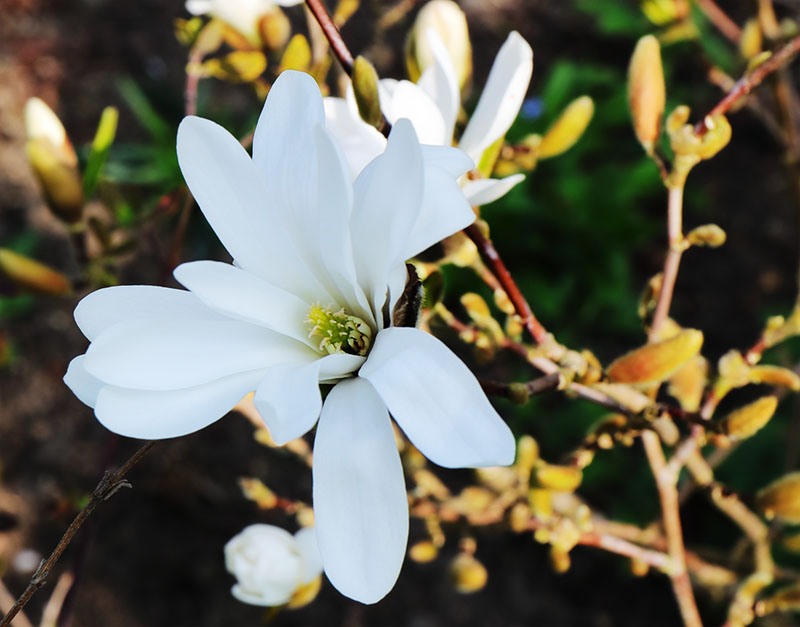
Magnolia stellata brings a touch of the exotic to the garden.
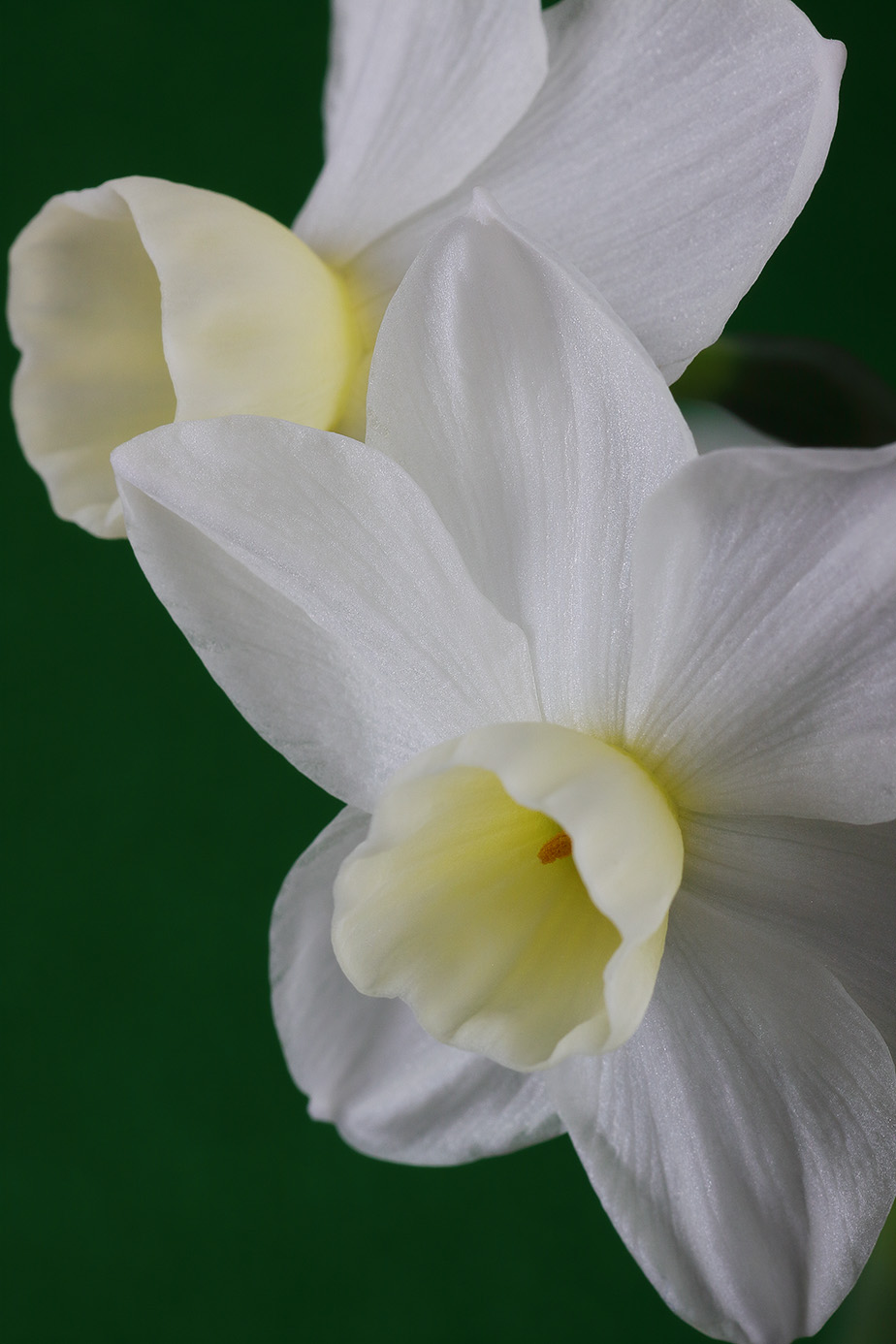
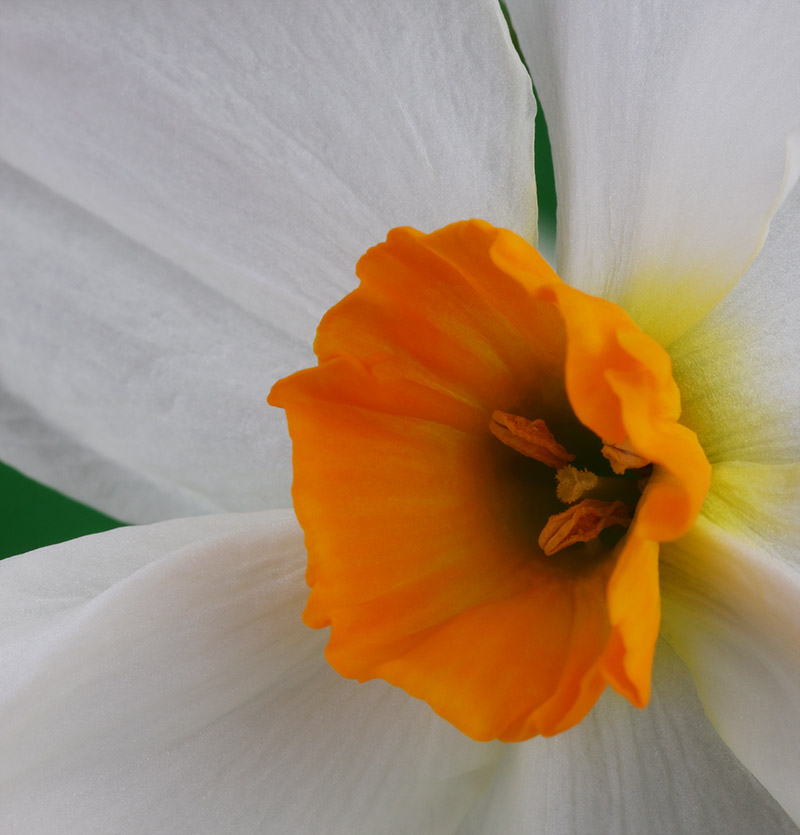
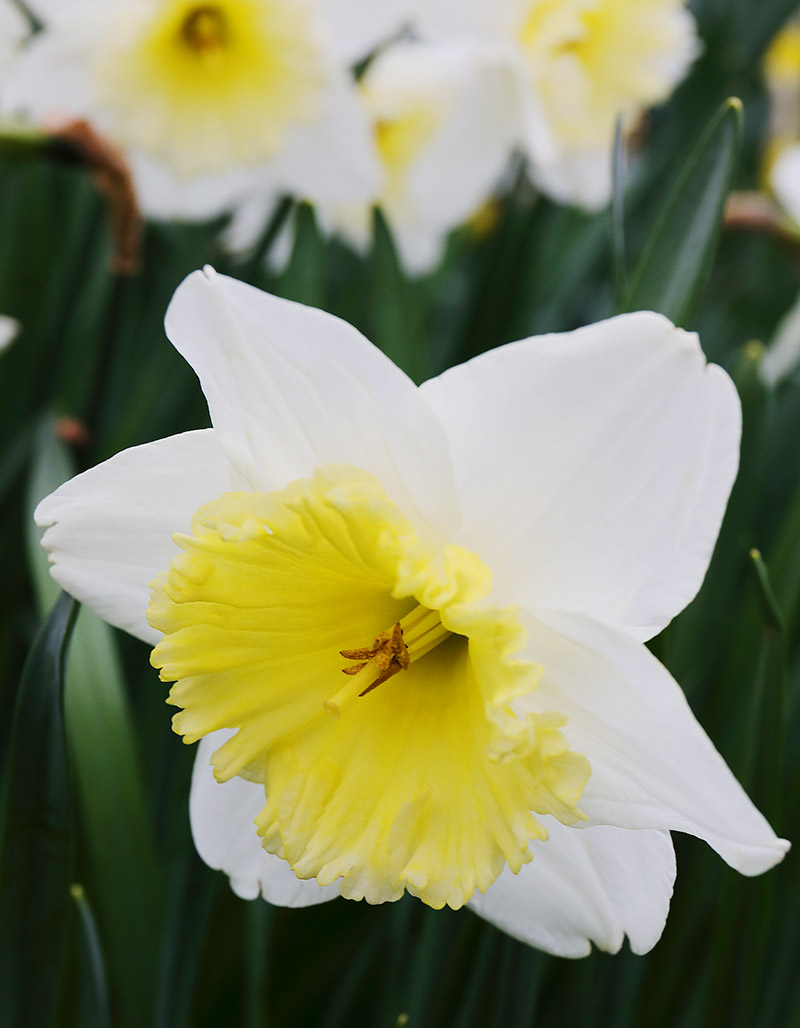
Daffodils…right now they are everywhere. This week we had the first ‘official’ day of spring with the arrival of the spring equinox. And right on cue, there are daffodils opening their cheerful flowers in a welcome to the new season.
Out in the country here, there are daffodils growing on the roadside verges outside houses and farms. In town, they’re at the start of garden paths or close to the front door. It feels as if everyone has some daffodils growing in a position where they’ll be both a welcome to anyone coming to their houses and a greeting to passers-by.
Daffodil ‘Geranium’ has a lovely scent.
Outside my front garden there is a large ‘green’ – a wide area of grass with trees that stretches between the main road and the minor road that serves the houses here. In springtime, swathes of daffodils enliven this green, creating a colourful welcome for drivers coming into the town.
In our own front garden, we have a group of miniature daffodils growing in one of the borders, but most of our daffodils are in the back garden. Seeing so many daffodils by other people’s front doors makes me feel that I should grow some more by the front path next year, as a welcome to visitors and to ourselves when we return home. (Maybe a pot of scented tazetta daffodils, such as ‘Geranium’ or ‘Paperwhite’ – they both have a delicious scent.)
By this stage of winter, the idea of lush green growth is tremendously appealing. It’s easy to dream of densely-planted borders bursting with re-emerging life – new shoots, unfurling leaves, and buds that swell with the promise of flowers soon to come.
Amongst all this imagined greenery, ferns would be an excellent addition. Their finely-cut fronds would contrast well with larger, more solid leaves and would bring their delicate textures and a subtle feel of pattern to the border.
The young fronds are very hairy on the back. They look almost furry!
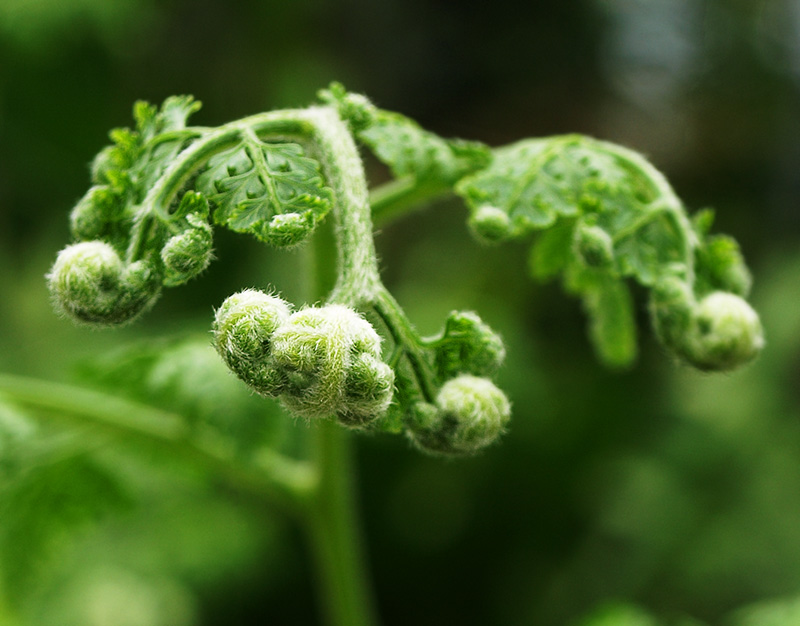
For photography, ferns make an excellent subject. There’s lots of pleasing detail, especially in the new foliage. The tightly-wound curls of the young fronds are especially photogenic and the outside surface of the curl (the back of the frond) can be surprisingly hairy and looks soft to touch.
(Saying that has made me realise that I didn’t actually touch them. I could have put out a finger to stroke the back of a curl, but I didn’t. Perhaps I should have. Taking photographs can absorb you so that you forget to interact with plants – or a garden – in ways that you would do, if you were walking around without a camera. So maybe I need to leave my camera in its bag for a while and explore the garden, before I start to take photographs.)
Fern leaves can add some texture and pattern to garden borders.
In my real garden (as opposed to the imaginary borders where anything will grow), it is too hot and dry for most ferns. The Male Fern (Dryopteris filix-mas) is reckoned to be able to cope with drier conditions than most, but that is if it’s in the shade. Most of our garden gets a lot of sunshine, but there is one area that is shaded by the house in the afternoon. Now I am wondering if that bit of ground might be suitable for making a bog garden and I’m imagining the other moisture-loving plants that would also be happy there. (Though there are ferns that don’t need such damp soil.)
If I do go ahead with this idea, the beautiful green growth of ferns would be a very satisfying reward. (Meanwhile, my imaginary garden is flourishing!)
The curly tips of the fronds of this fern look unusual.
It’s been quite mild here in Suffolk for the last few weeks but during the week we had the first frost of the season. Suddenly it feels like winter, although it was soon wet again.
While there’s a frost it’s great to be able to nip out into the garden and look to see what might be worth photographing.
If it’s sunny, the sparkle on the frost is wonderful but, of course, it means that the frost will soon disappear. That can make it can hard to decide what to photograph first. There’s never time to photograph all of the frosty subjects, no matter how fast you work.
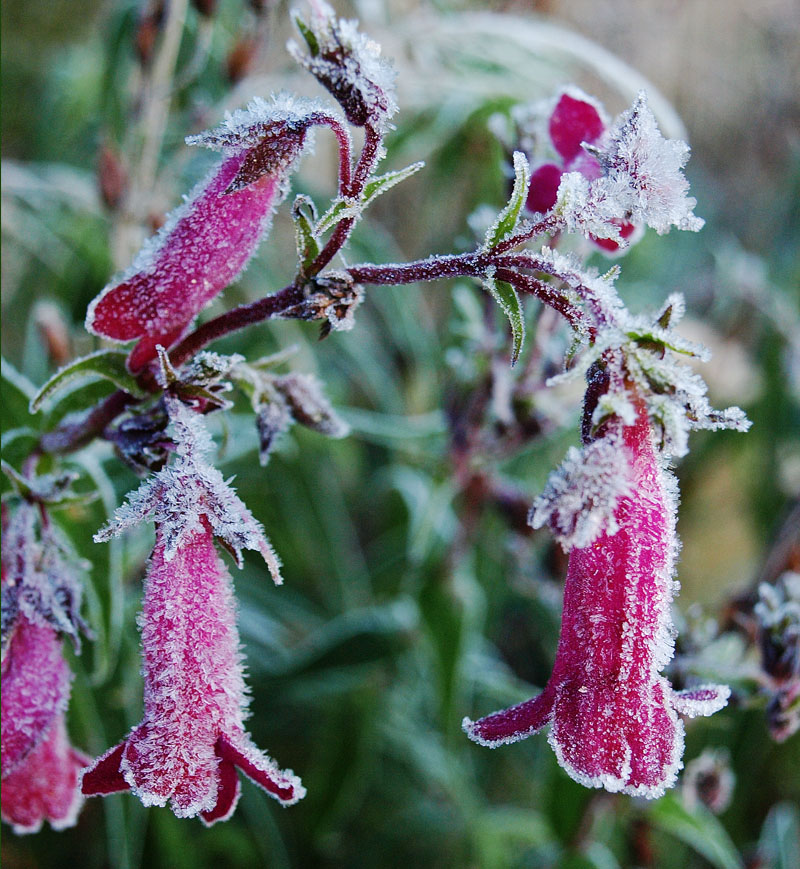
Frost covers these penstemon flowers.
I like to leave seed-heads on the plants in the garden here in the hope that they’ll get frosted. Sometimes there are a few flowers still. Penstemon ‘Garnet’ is especially good at continuing into the winter, although by this time there is only a sprinkling of flowers left.
Frosted heads of Stipa gigantea
Waiting for the frost to create opportunities for photography is a great reason for not being too tidy in the garden. Anything might look good with a coating of frost – flowers, seed-heads, leaves, grasses. It doesn’t matter if they’re dead or alive, so long as there’s an interesting shape or texture.
Frost is a kind friend to the garden photographer in winter – it makes interesting photographic subjects out of very little. (And you can leave tidying up the garden ’til springtime – well that’s my excuse anyway!)
These fennel heads have just lasted long enough to get frosted.
I’m lucky that East Anglia has some great gardens to visit. Last weekend there was the chance to get over to the Fullers Mill Garden near Bury St Edmunds, before it closes for the season. (It’s open from the start of April until the end of September every year.)
The garden is entered by a narrow lane that passes through the edge of the ‘Kings Forest’, Forestry Commission woodland at West Stow. So as soon as you arrive, you are surrounded by the sound of the wind rushing in the trees. This changes when you get right into the garden and arrive at Fullers Mill Cottage – now the sound you will hear is the River Lark forcing itself through a narrow weir before it spreads out again and becomes calmer on its journey through the garden.
As you continue into the garden, the sounds from the forest and the weir recede and you’re surrounded by a feeling of tranquility and calm. Even when the garden is full of visitors, you can find a quiet spot just for yourself. (And if you’re lucky, it might just happen to have one of the benches that are dotted around the garden.)
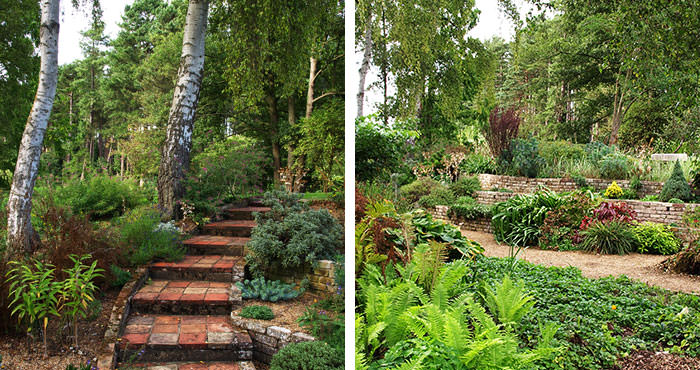
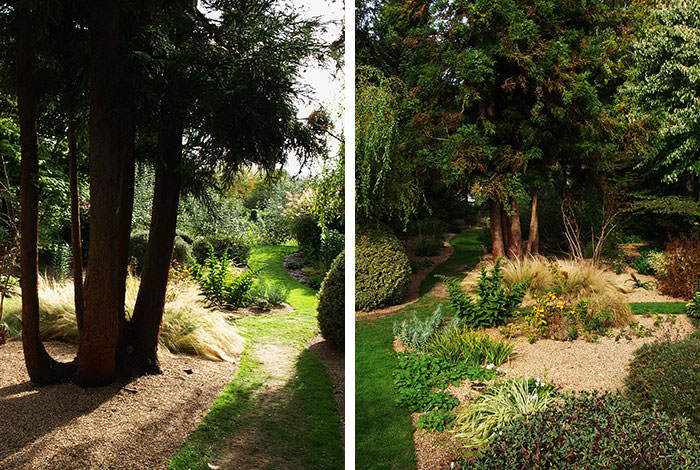
Left: Looking towards the house. Right: A shrub border
The original garden at Fullers Mill was small when the creator of the garden, Bernard Tickner and his wife Bess bought the cottage in 1958. Over a period of more than 50 years, Bernard was able to gradually buy land from the Forestry Commission and turn it from rough ground into a garden filled with a vast collection of plants, many of them uncommon and unusual.
Steps and terraces in the Low Garden
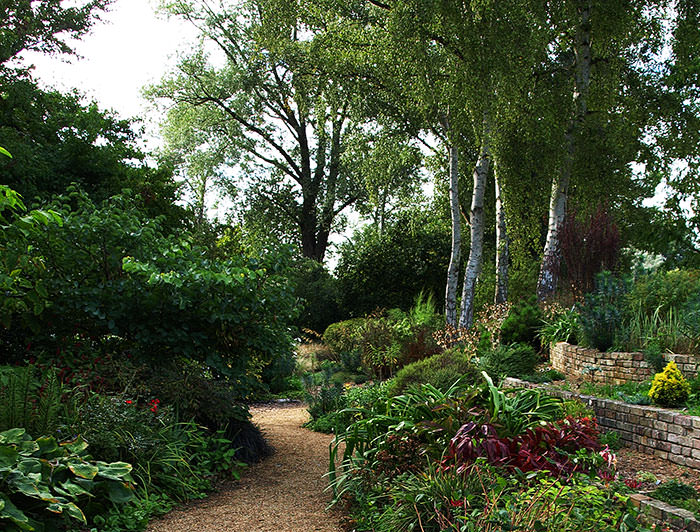
The first area to be developed was the ‘Low Garden’ (Photographs above and below). The terraces here are full of flowering bulbs in spring, and in summer there are the beautiful flowers of the giant lily, Cardiocrinum giganteum.
Path below the terraces
Bernard said that his ‘gardening heroine’ was Beth Chatto and reckoned that there was a similarity in the way both gardens grew and developed over time. The gardens now cover seven acres and offer a wide variety of planting conditions. While the Low Garden has a mix of shady and sunny areas that suit woodland plants and lilies, the Top Garden has poor soil and dry conditions, so is much better suited to Mediterranean plants. Moisture loving plants are happy around the mill pond and along the river and stream banks. (The garden has both the River Lark and the Culford Stream running through it.) There are open areas too, so sun-loving plants can also be found a suitable home.
Two views of the same area in the ‘Top Garden’
One of the great things about having such a wide range of growing conditions is the sheer variety of plants that can be grown. I was amazed by the huge number of different trees, shrubs and perennials growing here. It made me wish that I had a better knowledge of plants and could recognise more of what I saw. I suspect that even then, I’d still find that there were a lot of rare or unusual cultivars here that I didn’t know.
For me, the wonderful collection of plants was an opportunity to take lots (and lots!) of photographs. I could easily spend days in this garden and still find that I wanted even more time for photographing the plants. (My husband did have some difficulty in getting me to leave the garden. Next time, maybe he’ll just leave me there!)
There were plenty flowers to keep me busy taking photographs!
Despite the fact that there are large collections of plants (around 70 or more euphorbias and the same number of lilies and snowdrops are just a few of these), the garden is designed to be in sympathy with the character of its site. The river and stream areas are allowed to keep a fairly natural, informal look and the planting in the woodland areas feels very appropriate – somehow very ‘comfortable’ there. This is the sort of garden that I love. (I’m much less keen on formal gardens and have never come to like topiary or parterres – or even box edging.) Overall, the feel of the garden is unfussy and relaxed, and extremely welcoming.
Left: A perennial border Right: The river bank
In 2013 Fullers Mill Garden was gifted to Perennial, The Gardeners’ Royal Benevolent Society to ensure its future and keep it open for visitors to enjoy. Bernard remained involved with his garden right throughout his later years. (He died last year, at the age of 93.) In a radio interview when he was almost 90, Bernard said that he didn’t believe a garden was ever finished. ‘I’m still buying plants, much to Annie, the head gardener’s distress, because then she’s got to find a spot for them. And I say, ”You can find somewhere Annie, to fit those in”. And she does eventually…it may take a little while.’
You can hear the radio interview with Bernard Tickner here. It’s easy to hear, from listening to him talk, how much he loved the garden at Fullers Mill and how how happy it (and gardening) made him. That happiness is something that the visitors to the garden can’t help but share. It’s a delight to stroll around the peaceful grounds along the banks of the river and stream, to walk under the trees and to discover all the wonderful plants tucked into every corner of the garden.
The riverbank retains a feeling of wildness and informality.
Fullers Mill Garden is now looked after by head gardener, Annie Dellbridge and her team of gardeners and volunteers. They tend the garden with obvious loving care and make visitors very welcome. (The garden is open from the start of April to the end of September, on Sundays, Wednesdays and Fridays. You can find full details on their website here.)
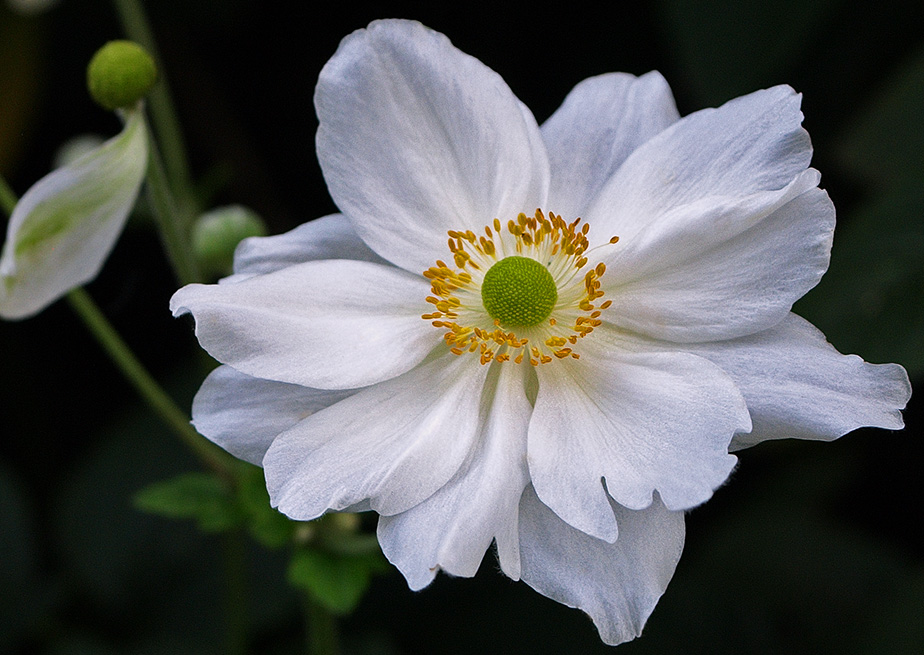
I fell in love with this garden and I know I’ll be back for several visits next year. And I even managed to bring a little bit of it home with me by buying a couple of white Japanese anemones and an aster, ‘Les Moutiers’.
Bernard Tickner said he liked the idea of buying a plant raised in a garden as a memento of it. But then, he was a man thoroughly in love with plants. I’ll give him the last word here, because it’s something I feel too (and I do hope he’s right!): ‘I love plants. Once you’ve got the ”disease”, you’ve got it for life. It doesn’t ever desert you.’
There’s been a change in the last week or so. Early mornings have been misty and daytime temperatures have dropped enough to make it feel like time to put the summer clothes away. (Though after the extremely hot days we’ve had this summer, anything ‘normal’ will feel very cool.)
We’re no longer woken by the light in the early hours of the morning and the evenings suddenly feel darker.
I love the beauty of autumn – the changing colours and (especially) the softer light that it brings. It’s a light that has lost the harsh glare of summer, making it much better for photography.
Even so, I always feel a slight melancholy at the ending of summer. It’s something I’ve felt since childhood. I was brought up in Caithness, the ‘far north’ of Scotland, where it seemed to hardly get dark at all on summer nights. That, coupled with the long school holidays created a marvellous feeling of freedom and unlimited time. (And the windy winter days, when darkness would fall by about 4 pm were, by contrast, something to dread.)
Now, as a keen gardener, it’s not just the leisure of summer that I miss, but all of its plants and flowers too. I miss watching new leaves unfurling and buds fattening up and showing that first little sliver of colour before they pop open and reveal their glorious petals…..but this year is different. Because I can see that I need to be more positive and enjoy the moment rather than regretting the fact that summer is ending. Instead, it is time to plan for next year and to do the work that was impossible in summer. (Right now that means digging. A lot of it. The hot weather meant that the ground became rock hard and my plans to dig a pond and new borders have been put off until this last couple of weeks. It’s amazing how much easier a drop of rain makes the work!)
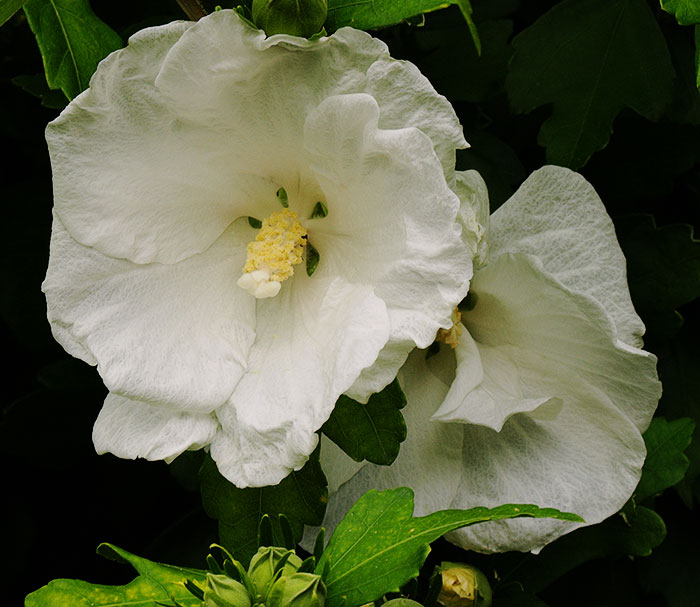
A white hibiscus would look good near the acidanthera.
Of course, new borders means new plants too. The fun part! And time to indulge in a bit of fantasy…. That’s where the photo at the top comes in. I saw the acidanthera in a garden last September and was impressed by how graceful they looked. (Much taller than I expected too.) So now I’m imagining how lovely they would look reflected in the planned pond and thinking what else might look good on that side of the garden – particularly if it’s a plant that looks good now and helps to extend the life of the border later into the year. (My overall plan is to have a garden with plenty to photograph for as much of the year as possible.)
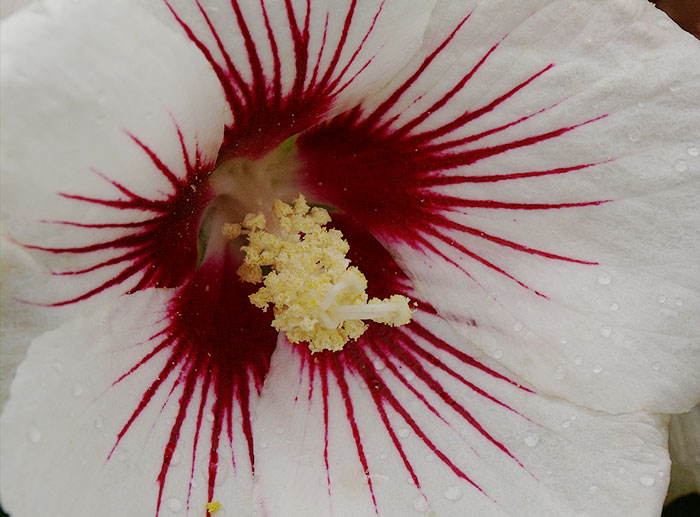
The white hibiscus was in a garden I visited a few weeks ago. It has a simple elegance which I think would look good if I keep the planting around the pond fairly unfussy. (And I already have a couple of other hibiscus bushes in the garden which still have some flowers, so there’s a decent length of flowering period.) The white hibiscus with red markings (below) would echo the colouring of the acidanthera but would be a bit much if planted close to them and could look too fussy in the pond area.
Showy but very pretty – for further along the border perhaps.
Other flowers that could look good planted in my imaginary (so far!) border would be white gaura, with it’s flowers that look like dancing little moths or tiny butterflies and the dark buttons of the tall red scabious that already seeds itself around my garden.
My mother would never have approved of this white and red border – she always said the two colours should never be used together for cut flowers because it was unlucky. (The colours suggest blood and bandages, apparently.) And this was from someone who denied that she was the slightest bit superstitious…hmm. (Anyway, a real border would have other colours too – not sure what yet.)
It’s quite fun to design a fantasy border, and to finish with, I can’t resist adding a clematis to the mix. (They’re one of my favourites and I find them very hard to walk past in the garden centres. This one is in my garden already and it’s called ‘Ville de Lyon’.)
If you have any suggestions for planting to go around my pond and the border behind it, please do add them in the comments. I’m happy to gather as many ideas as possible because the pond and border will be a reality next year – I’m digging them at the moment!
I’ve mentioned before that I enjoy visiting other people’s gardens. They’re a great source of both pleasure and inspiration. One of my favourites to visit is the lovely garden created by the late Beth Chatto at Elmstead Market in Essex.
Fortunately for me, I live in the neighbouring county (Suffolk) and I’ve been able to visit the Beth Chatto Garden many times over recent years. But my first visit to the garden was much earlier, while I was still living in Scotland. At the time I was still fairly new to gardening and Mrs Chatto’s book, ‘The Green Tapestry’ had just come out. The book soon became one of my most relied-on sources of information about how to create a garden, so it was a great treat to actually be able to visit the garden that had inspired it.
The view as you enter the garden and look towards the ponds
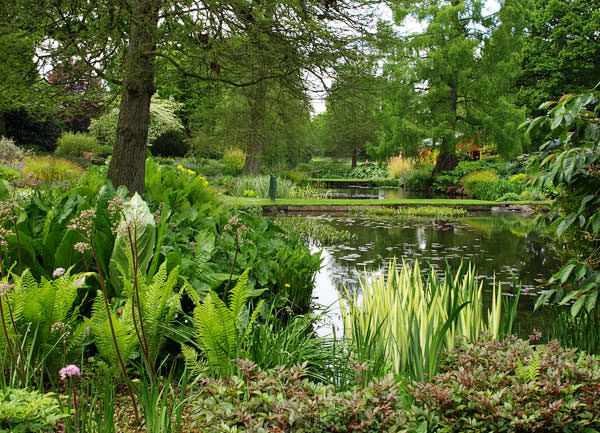
As you walk into the main part of the gardens, your eye is caught by a series of four large ponds that form the impressive centrepiece of the garden. The water-garden was created to take advantage of water coming from a natural spring and to solve the problem of what would otherwise be heavy, waterlogged ground. The results are beautiful and invite you to wander and linger or just have a seat on one of the benches and relax.
Planting along the bank of one of the ponds
It was late spring when we visited and there was new growth everywhere. The garden changes a lot with the seasons and can be dramatically different when the plants have grown to their full size later in the year. Our previous visit had been last autumn, so this felt like quite a contrast, with everything very fresh and green and full of promise for the summer.
A candelabra primula growing by the water
Many of the plants here are familiar to me from Scottish gardens – candelabra primulas, gunnera and ferns particularly – but sadly they won’t grow well in my own very hot and dry garden. (One of the things I learned through reading Beth Chatto’s books was the importance of choosing the right plant for the situation. I’m afraid I condemned a few plants to a slow death by putting them in entirely the wrong place in my earlier gardening days!)
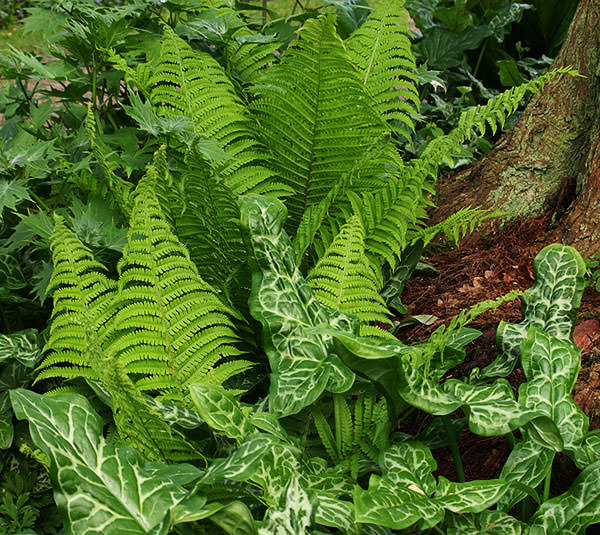
Arum italicum ‘Pictum’ echoes the shape of the fern but has a contrasting texture.
The planting in the garden is a delight. I love to see the way texture and shape are contrasted (as in the photo above). Actually, I’d really like to grow Arum italicum ‘Pictum’ in my own garden because the lines on the leaves make it a great subject for black and white photographs. (The wild arum keeps popping up here, so it should do well enough.)
Looking across part of the water garden
Our visit to the Beth Chatto Garden was partly prompted by wanting to get ideas for making a pond in our own garden. (OK, so our pond will be absolutely tiny in comparison, but you might as well look for inspiration from the best!) And there’s a nursery at the garden, so inspiration can easily turn into a few plants to take home with you…
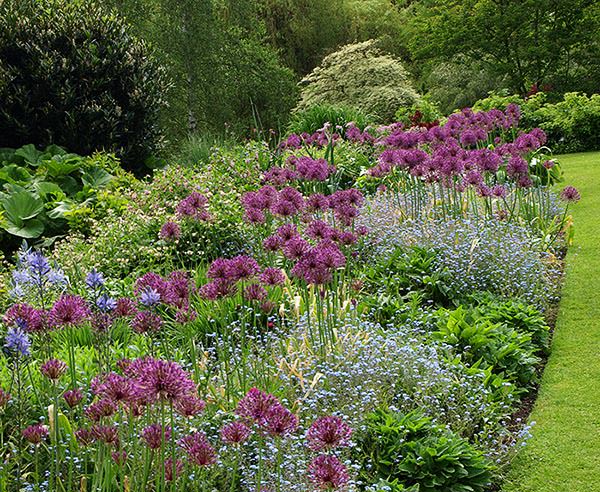
Alliums and forget-me-nots in a border
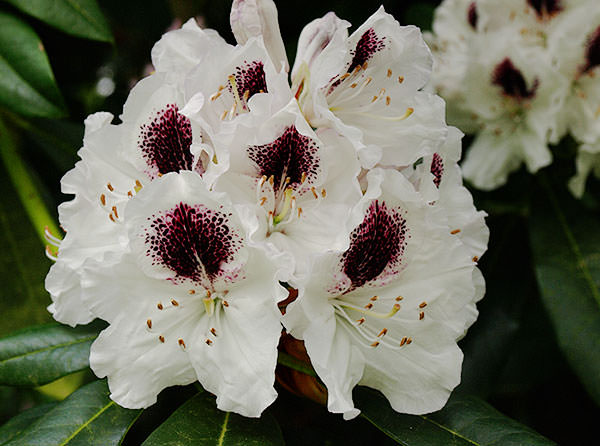
Of course, there are plenty of familiar plants that I can (and do) grow, like the alliums, camassia and forget-me-nots in the border above. And then there’s the plants that I could grow when I lived in Scotland, like the rhododendron below. (Ah, now I really wish I could grow that here!)
A plant I wish I could have….
The gardens have far more than I can possibly describe here. There appears to be just about any habitat that you can think of – water garden, woodland, shady areas and the sunny scree beds. And then there’s the famous gravel garden with its drought-tolerant planting – it has been a great source of inspiration for our own very dry garden. It’s a garden that I feel I can thoroughly recommend to anyone visiting this area, at any time of year. There’s a nursery and a good tearoom too, so you can easily spend a few hours here.
As you will probably know if you read gardening papers or magazines, Beth Chatto passed away in May this year, aged 94. She has been an inspiration to many and I know that a lot of my own enthusiasm for gardening has come from reading her books. I feel that her legacy is not just in the beautiful gardens that she has created, but also in the love of plants and the understanding and knowledge of them that she has shared with other gardeners.
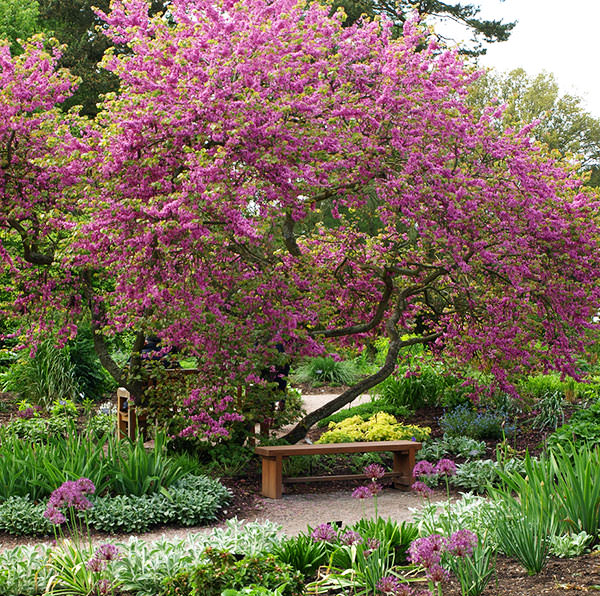
A quiet spot under a beautiful Cercis siliquastrum (Judas tree or redbud)
One of the pleasures of summertime is spending a lazy afternoon wandering around someone else’s garden.
Garden-visiting is a source of inspiration for me. It gives me ideas for how I can improve my own garden. (Seeing new plant combinations, and even just the size that mature plants can get to, is tremendously helpful.) And – in many ways more important for me – it allows me to see plants that I would like to have growing in my own garden so that I can photograph them.
My hubby and I had the chance to spend a couple of days staying at Huntingdon (in Cambridgeshire) this week, so we took the chance to pay a visit to the garden at The Manor in Hemingford Grey.
The Manor at Hemingford Grey is said to be one of England’s oldest continuously-inhabited houses. Building was begun by the Normans in the 1130s. (You can see the evidence of this on one side of the house where the windows have the typical Norman building-style that you can see on old churches. Look out for the round-headed window with it’s zig-zag ornamentation in stone above. Lower down on the same wall you can also see a narrow slit of a window…just like you might find on an old castle wall.)
We entered the garden from the path along the River Ouse, crossing a lawn by walking along a path bordered with topiary yews to reach the house itself. Around the house, the garden looked, to me, like a cottage garden on a big scale. It felt relaxed and welcoming in its informality – just the place to put visitors at their ease.
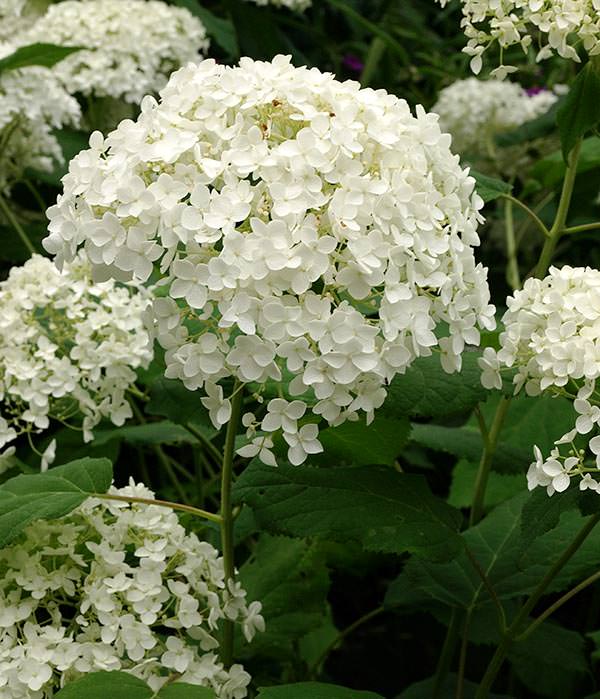
White hydrangeas add a dreamy softness to the planting
Visiting in mid-July meant that the roses that the garden is well-known for were over and the flower borders were taking on a late-summer feel. Some areas were bright with the reds and yellows of crocosmias and rudbekias, while other areas were more delicate, with plants such as hydrangeas and daucus carota (wild carrot) adding a more romantic feel.
Bright rudbekias gave a sunny touch to the borders
I enjoyed meandering around the garden with camera in hand. Photographing flowers in a garden that you’re visiting is more difficult than it would be in your own garden. You can’t use a tripod, so a macro lens isn’t ideal, nor do you have any control over lighting or the placing of the plant. So for me, the camera is more of a notebook-tool when I’m garden-visiting. It lets me see what plants appeal to me as future subjects and what their possibilities may be. (And it fuels my plant-buying too!)
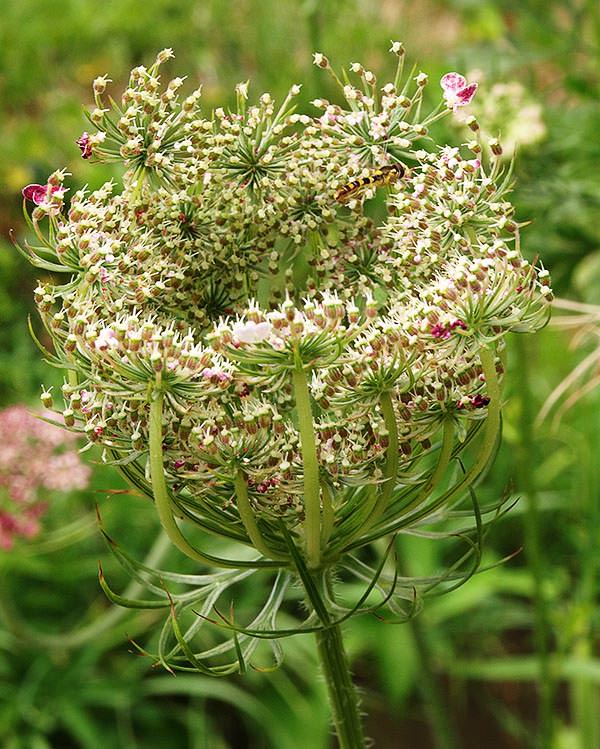
Daucus carota (wild carrot) is a plant that I want to grow in my own garden.
One of the plants that really caught my eye was the wild carrot (Daucus carota). It is a wonderful shape for photographing and would repay the effort of using a proper macro lens and a good hefty tripod. I have already sown a few plants, which are still tiny and won’t flower until next year. So it was interesting to see the full-grown plant here and to see just how lovely the structure and textures of the plant are. (I think they were probably growing the same variety as I have sown – ‘Dara’, which produces flowers in pink, burgundy-red and white and gives a beautifully delicate effect.)
It’s lovely to visit a garden and see plants through someone else’s eyes, to see their vision for the space within their garden, and to see their own ways of combining plants. This is a garden that I’ll make the effort to come back to again – hopefully timing a visit so that I can see their wonderful collection of irises and then again so that I can see their roses.
We could have visited the house as well as the garden and will do next time. (Visits to the house need to be booked beforehand.) Many people come to see the house because it is the setting for the series of children’s books about ‘Green Knowe’ by Lucy Boston. Her daughter-in-law, Diana Boston, gives a tour of the house that sounds both charming and highly entertaining and would be an essential for fans of the Green Knowe books.














 Ann Mackay: Inspired by Nature