Tiny Beauty: Spring Vetchling

Lathyrus vernus (spring pea) flowers

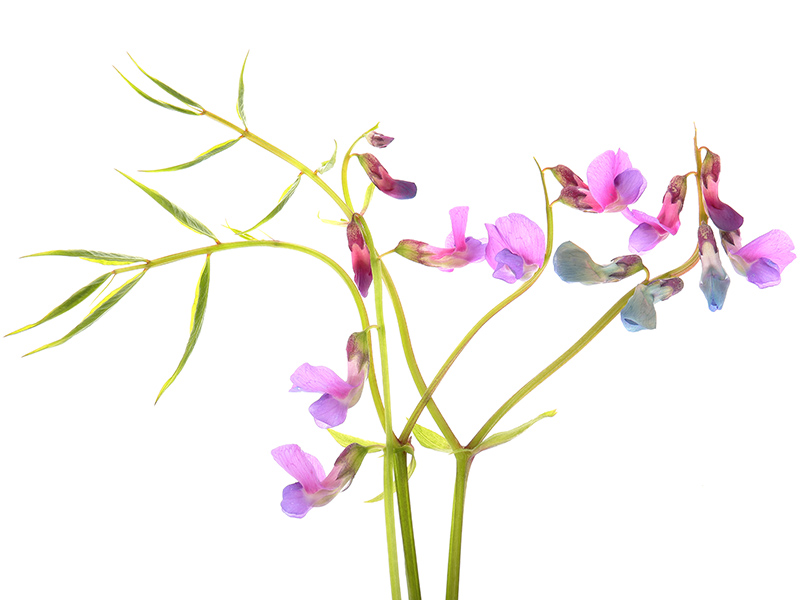
The spring vetchling or spring pea (Lathyrus vernus) is one of those plants that needs to be seen up close to appreciate its loveliness.

It’s a relative of the sweet pea, but is far smaller and looks much more delicate. It doesn’t climb, but instead produces a rounded clump of leaves and flowers around 18 inches high and wide. The flowers are just 3/4 inch long.

Several different cultivars of Lathyrus vernus have been bred to give different flower colours. You can find plants with flowers in pink and white, plain pale pink, white or blue. The plant in my photographs is the original species.

These flowers start out purplish pink, but gradually age to a pale blue. This gives a range of different shades of colour which adds to the appeal for photography. In those areas where background flowers are out of focus, the colours have a softness that reminds me of watercolour paint (top photo).

While writing this, I have popped back into my studio and had a quick look at the flowers in their vase. I was delighted to discover that the flowers have continued to change colour even after picking. The remaining flowers are now almost all blue, so I should be able to take some quite different photographs of them. (In that case, next week’s post will probably be blue spring flowers.)

The spring pea’s flowers are amongst my favourites at this time of year. For me, the smallest flowers can be the prettiest.
Lathyrus vernus (spring pea) flowers

A Plant to Share: Billbergia Nutans

bilbergia nutans

The cold weather this spring has meant that there is less than usual in flower in the garden. So I had to look elsewhere for something to photograph this week.

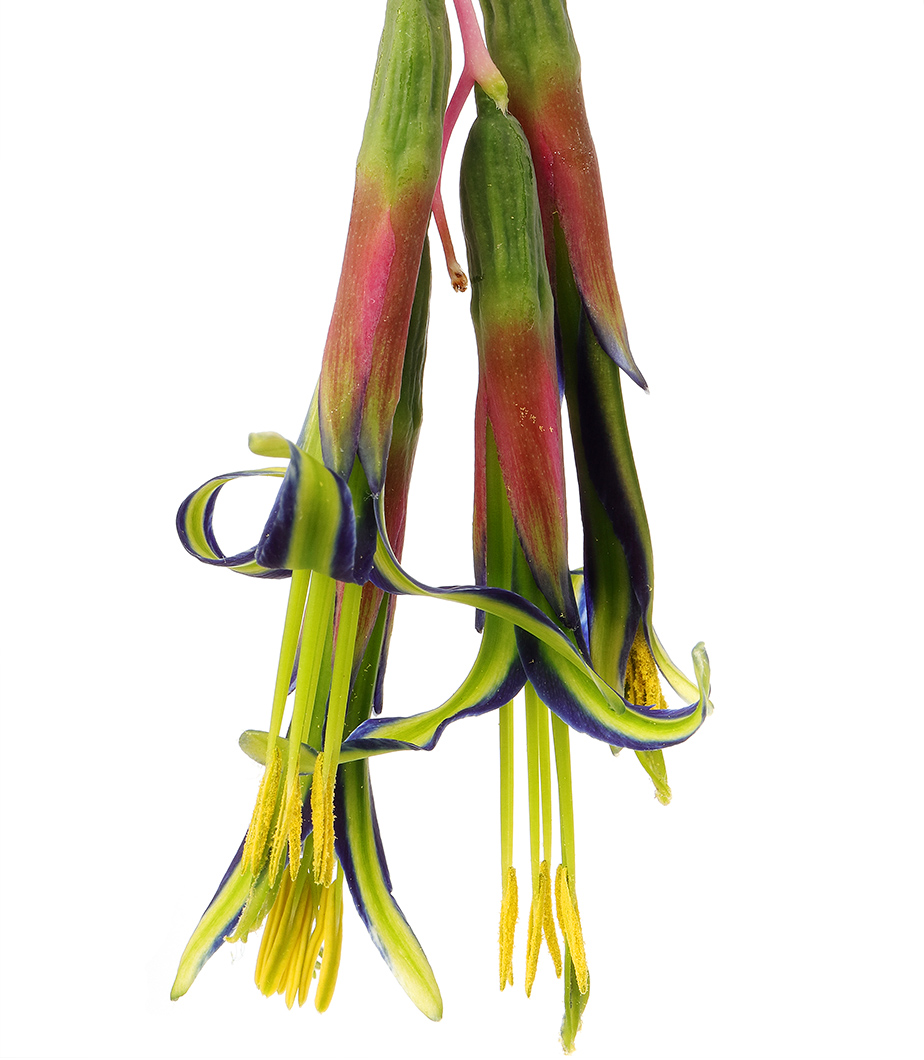
Luckily I only had to go as far as the conservatory to find a plant in full flower. This is Billbergia nutans (aka ‘friendship plant’ or ‘queen’s tears’ ), a bromeliad that comes from South America. There it can be found growing attached to the branches of trees in the rainforest. Despite the huge difference in conditions, it seems quite content as a houseplant and is very easy to grow.

This billbergia must be pretty hardy, because our conservatory is unheated and gets cold in winter. (The conservatory is used more as an indoor garden than as a normal living area and in the winter usually has plants brought in that wouldn’t survive outside.) There is sun in the morning and early afternoon, followed by shade and this seems to suit the plant well. It grows fast, and after being split in two, has quickly filled both pots.

Billbergia produces leaves which grow in rosettes with the flower stalk at the centre. These leaves are long and arching and as they grow older, their edges develop tiny spikes. For most of the year this is a very plain-looking plant with nothing to show but its clump of green leaves. But while it’s in flower, it does look quite spectacular.

The speed at which billbergia grows and produces offsets means that it really does deserve the name ‘friendship plant’. The young rosettes at the outer edges of the plant can be detached (when they’re at least 6 inches high) and potted up as new plants. The other name, ‘queen’s tears’ comes from the way that the flowers drip nectar onto the ground. (It’s very sticky!)

My plants have tightly filled their pots now, so I think it will soon be time to remove some of the young offsets. That means that some new plants will go out into the world, continuing the chain of shared plants. A happy thought!

Bilbergia nutans

Frothy Pinks: Cherry Blossom

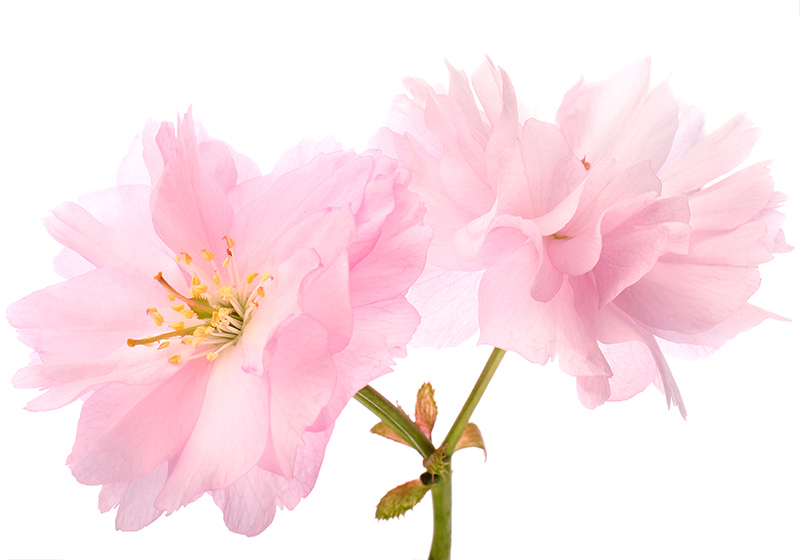
Cherry blossom

After last week’s pink tulips, here’s more pretty pinks – but even frothier! (Or should that be fluffier – not sure, but this cherry blossom can out-pink anything else.)

The blossom on our cherry tree is late this year because April has been so cold. Not all of the buds have opened yet but it should be a very good show when they are. The tree must be a good few years old, so is a good size and is always completely covered in these soft pink flowers.

The tree is Prunus ‘Kanzan’, one of the most frequently-seen ornamental cherries here. Sadly, our tree may not be here for many more years. They’re known to have a short life-expectancy. (I’ve seen differing estimates of 15-20 years and up to 40 years.) Ours was a mature tree when we moved here 16 years ago. In addition, it now has splits in the bark, which may be due to the effects of winter weather or may be an indication of disease. It has obviously suffered from canker at some time before we moved in, but this hasn’t stopped it from being laden with flowers in spring.

For now, we’ll enjoy whatever time the tree has left. At the same time, we will probably have to think about what we might want to plant in its place in the future. It should probably be something that doesn’t get too big, given that it’s so close to our boundary with our neighbours. We wouldn’t want it to protrude into their driveway! And it needs to be robust and healthy because it is the most exposed area of the front garden.

It feels a bit sad to to know that it may not be long before we have to remove this old cherry tree. We moved in to this house at a time when it was in full, glorious flower and it felt like a warm welcome to our new home. But the tree, like its flowers, is an ephemeral thing – to be enjoyed in the moment. (And afterwards I will still have photographs of its blossom as a reminder of it.)

Cherry blossom

Fluffy Flowers for Easter: Pasqueflowers

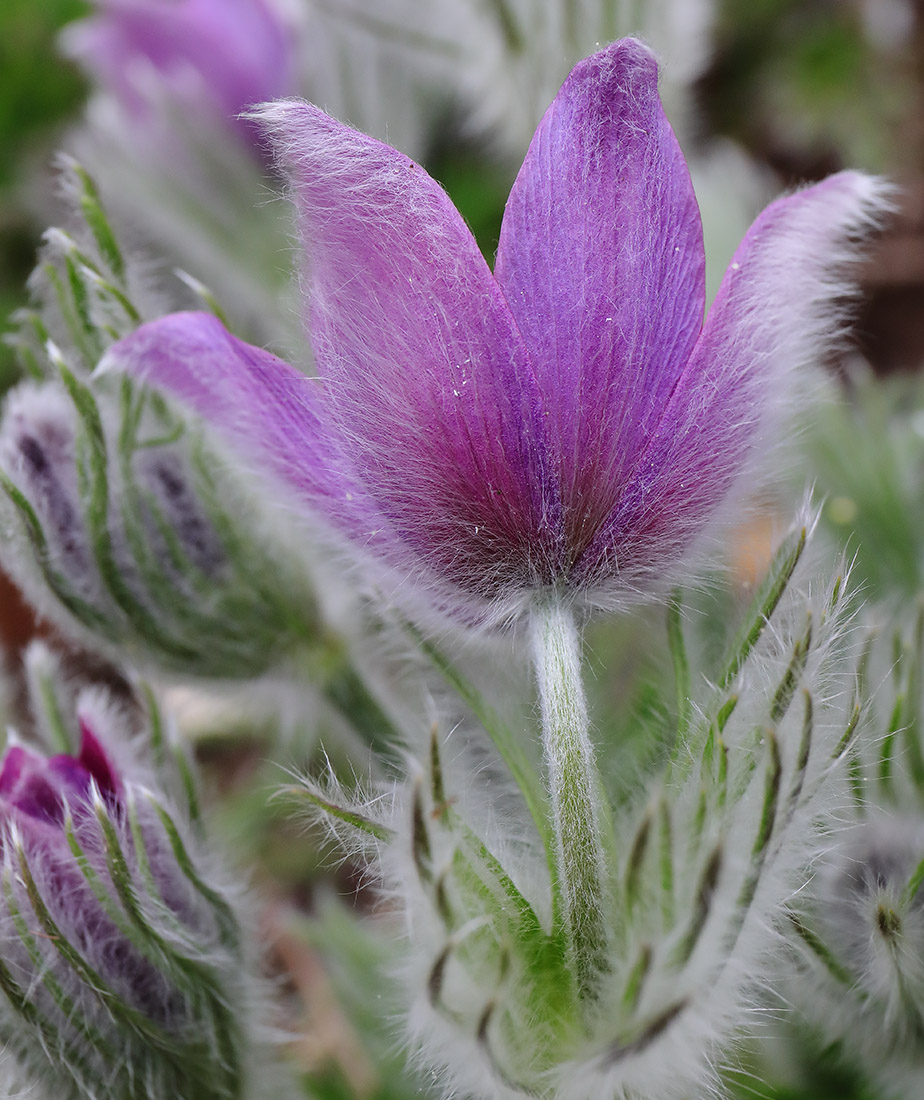
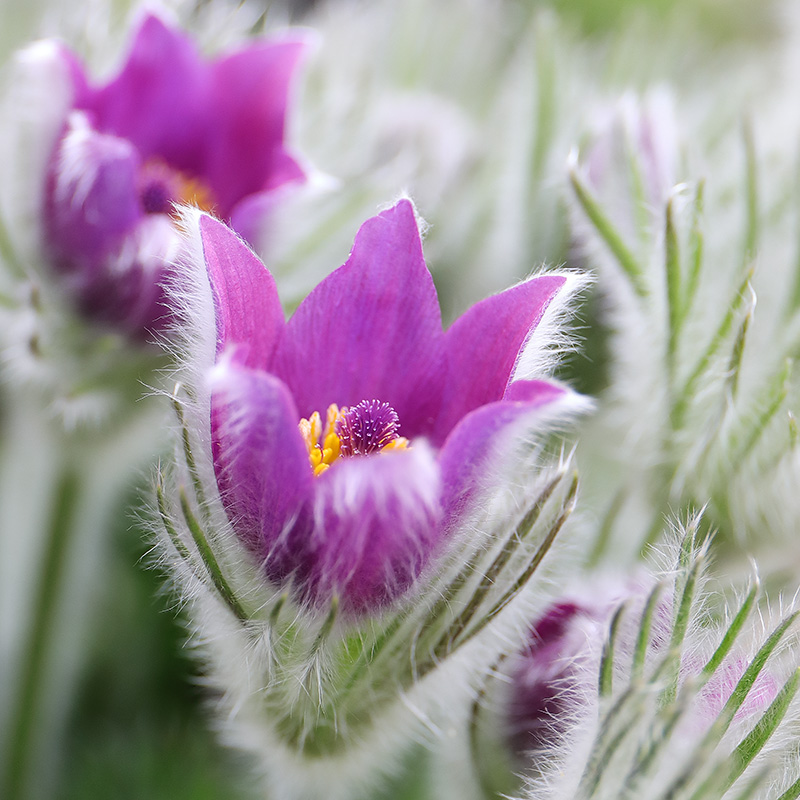
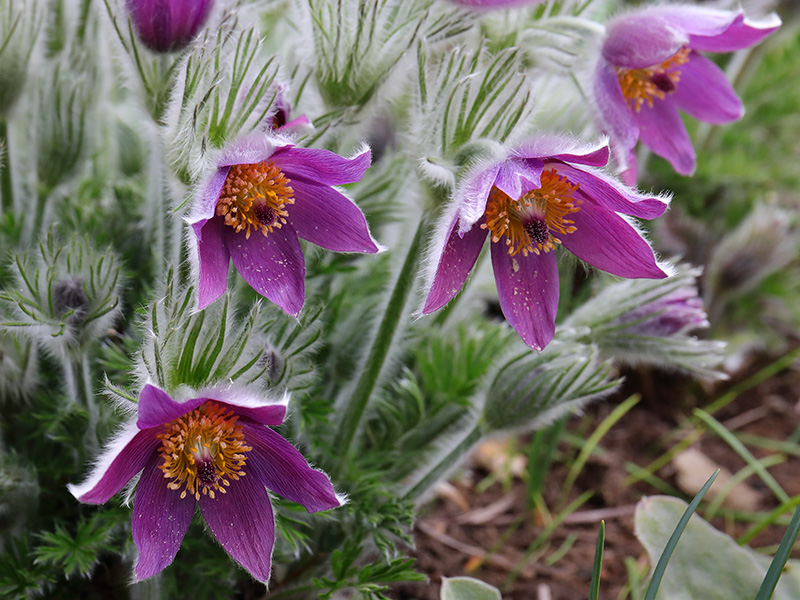
Pulsatilla vulgaris (pasqueflower)

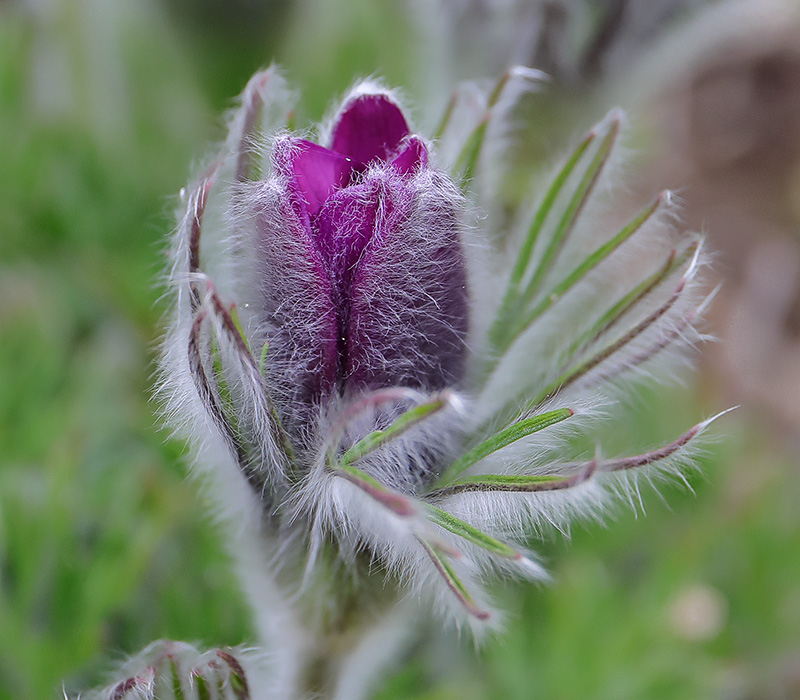
The pasqueflowers (Pulsatilla vulgaris) are flowering slightly earlier than last year. That means they’re here in time for Easter, so they’re living up to their name. (The pasque part of the name comes from ‘paschal’, meaning ‘of or related to Easter’.)

The clumps are a bit bigger than last year, so there are more flowers too. Those fluffy, cup-shaped flowers are a most welcome sight. They seem to have settled into the garden here very well and they’re probably the most reliable of our spring flowers.

Pulsatilla vulgaris (pasqueflower)

But they don’t just look good – they feel nice too. Those fine hairs on the outside of the petals, buds and leaves are just as soft as they appear. I know this for certain, having spent a few minutes stroking them just to check! It’s not often that I think about how a plant feels as opposed to how it looks, but with these, the urge to touch is strong.

Although a native wildflower in the UK, the pasqueflower is rarely seen in the wild. It has become a well-loved garden flower, with nurseries and garden centres stocking plants with purple, white (‘Alba’) or deep red (‘Rubra’) flowers.

Pulsatilla vulgaris (pasqueflower)

I was hoping that I might have the opportunity to buy one or two more pasqueflower plants today. We were able to visit a garden centre for the first time in many months. (Probably since the end of last August.) It was a treat to be able to do this again and we did make sure to buy some plants. (But no pasqueflowers this time.)

Now that a few weeks have passed since having our first Covid jabs, we have enough protection to be able to explore the world again. Plant nurseries will be also able to open soon, so I’m feeling excited about being able to visit my favourites again. There’s a fair bit of border space that’s just waiting for some new plants to fill it!

If you celebrate it, I wish you a very happy Easter. And for everyone, I hope you enjoy your weekend.

A pasqueflower bud.

Still Waiting for Spring

hellebore flower

It’s still not quite spring here. Actually, it’s quite confusing. We had a few days when it did get warm and sunny and working in the garden was a pleasure. But then the cold came back, along with heavy grey clouds.

Luckily, I hadn’t started removing the dead leaves and remains of the old growth from the perennials etc. There are still lots of ladybirds and other little critters tucked up for the winter in amongst it all. I don’t want to eject anything from its comfy little bed yet – they’ll want to snooze a bit longer until it gets warmer. Tidying up in the garden can wait a while.

I did make a start on removing some of the Japanese anemones that are doing their best to take over large areas of the garden. It was necessary to get a move on with this because a friend had given me two big plants of Salvia ‘Amistad’ and I needed to find space for them. (It’s a very sunny spot, with a bit of shelter, so they should be happy there.) However, it took me so long to get rid of all the anemone roots that I decided to plant the second sage into a big pot. Otherwise I would probably have run out of time to get the second patch of ground cleared.

Although the big swathes of anemones are a problem, I may well plant other flowers in big drifts. This is because it’s supposed to make it easier for the bees to find them. So no more dotting a plant here and another there! (I do try to plant in groups if I can. It does look much better. But that can get expensive if you’re buying them at a garden centre.)

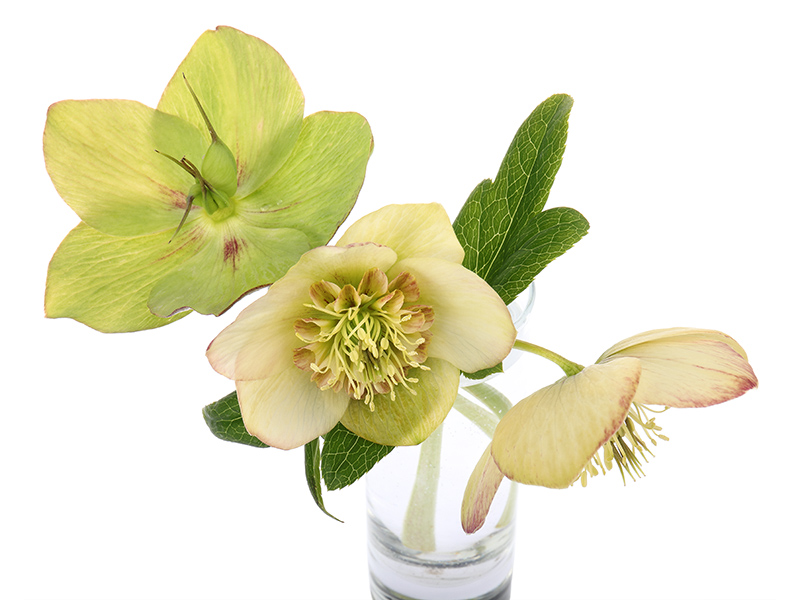
I’m glad to see that the bumblebees have been making use of the flowers that are out now – mostly crocuses and the remaining winter jasmine flowers. They are probably visiting our hellebores too, but the downturned flowers make it hard to spot any visiting bees. I reckon that growing plants for bees makes an excellent excuse for buying more hellebores! (Well, any good bee plants really!)

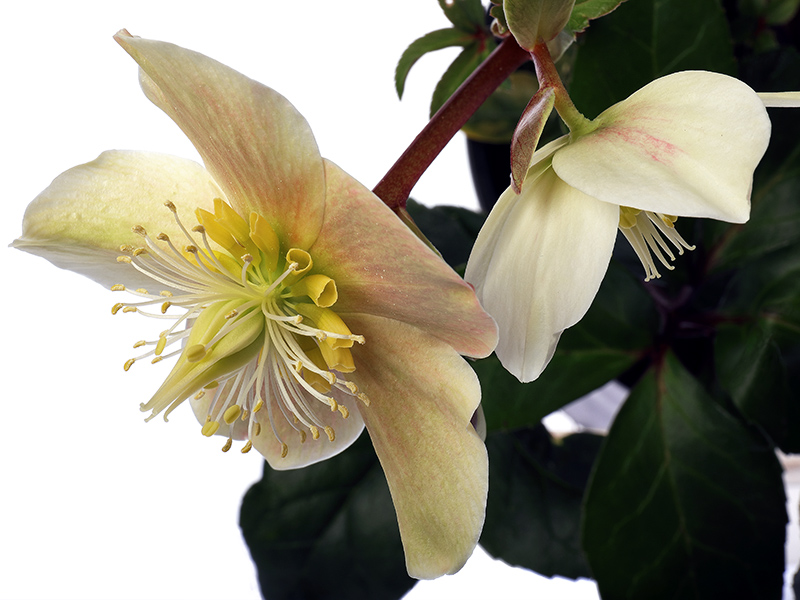
The hellebore here is a plant that I photographed in the garden last year. Bringing a few of the flowers inside made it much easier to photograph than trying to get low enough down to see the flowers outside. This is just its second year of flowering, so I’m hoping for lots more flowers as it gets bigger. (I don’t like to take many flowers from a plant that’s still small because I really prefer to see them still out in the garden. But you don’t miss the odd flower if there’s plenty of them.)

If you’re waiting for spring too, I hope there’s lots of exciting new growth popping up around you. And I wish you flowers – lots of flowers!

Simple but Colourful

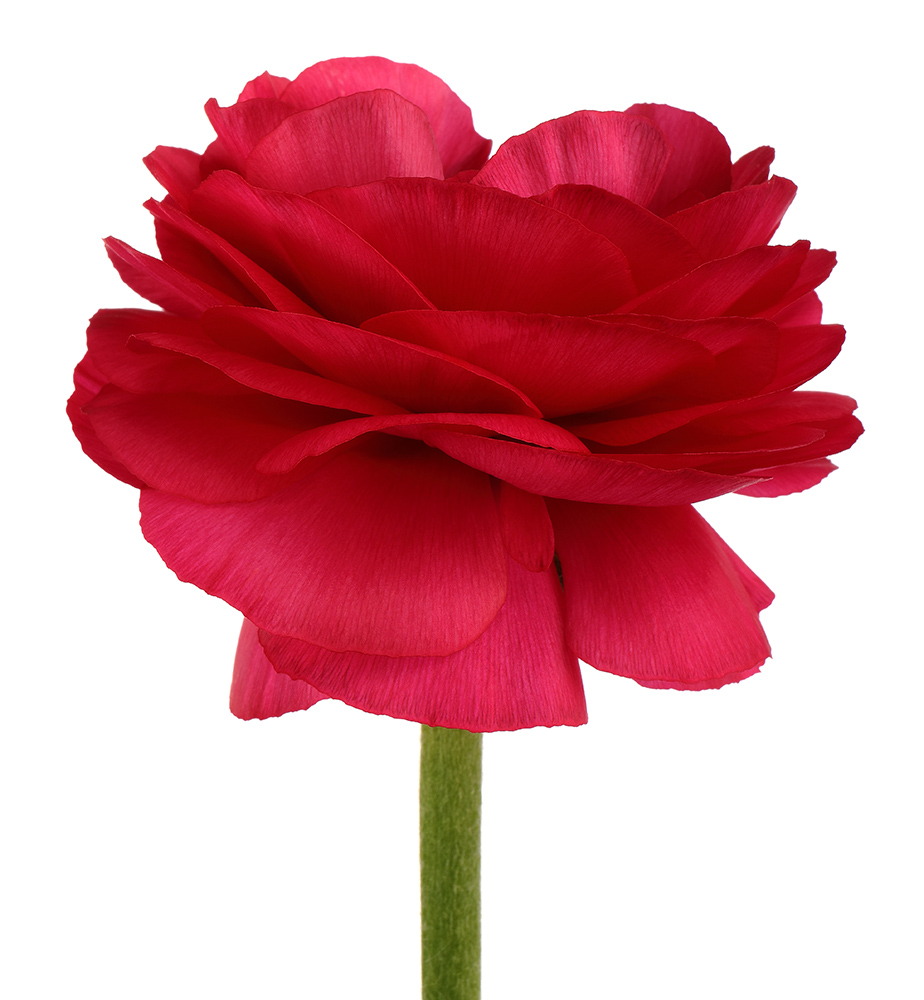
A bright red flower of Ranunculus asiaticus

Often it’s the form of a flower, especially the details of the structure within it, that attracts me to it. Usually it’s a combination of shape and colour that makes for an interesting photograph, and some of my subjects (e.g. passionflowers ) can be quite complex in their appearance.

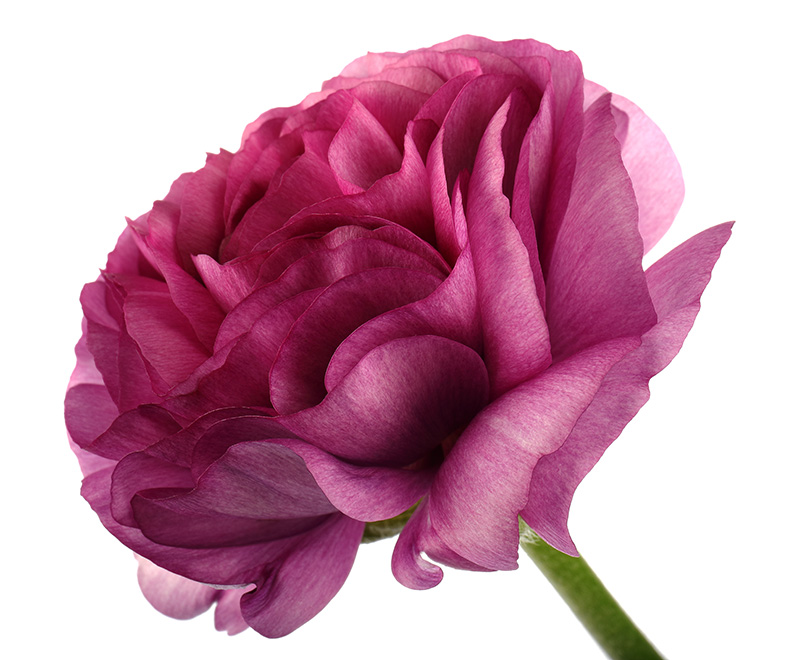
But some flowers are delightful in their simplicity, like these ranunculus, aka ‘Persian buttercups’. Their vibrant colours were enough to make me buy the plants to photograph them. (The red flower makes me think of the red crepe paper we used for making Christmas decorations as kids at primary school.)

These images are from last spring. Several others were posted on the blog at the time, but these have lurked on my PC as unprocessed RAW files since then. Wintertime is a good time to catch up with processing photographs that have been taken a while ago. It has given me something to keep me busy while it’s too cold to work in the garden.

Whenever there are flowers around, I take photographs of as many as I can. That means I have something to show on this blog every week. But during the warmer times of year, when I’m kept busy in the garden, time can be short. And then the photos mount up, waiting for me to get them ready to post here. It’s like having a little stash of colourful memories from sunnier days to keep me occupied while the garden has its winter break.

Soon I’ll be too busy outside to be able to spend a lot of time at the PC. Already the sunshine has come back and the temperatures are just a bit warmer. Everything in the garden is beginning to grow again and the crocuses are welcoming the first of the bees. No doubt, I’ll also be taking lots more photographs, so there will be plenty to process during next winter too.

An In-Between Time

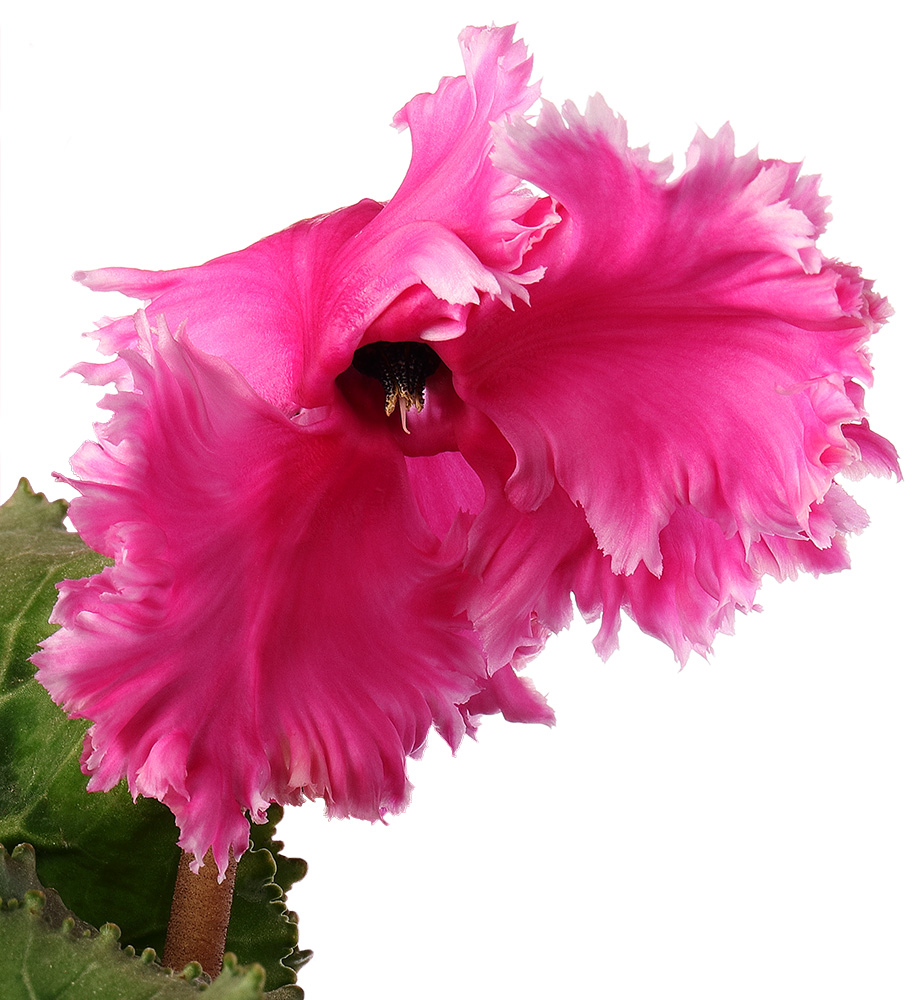
pink cyclamen flower

Spring is getting closer but it certainly isn’t here yet. Sometimes February can feel mild and spring-like, but this year it has felt colder and snowy. I haven’t been in the garden much in the last week or two.

Apart from the hellebores which are starting to emerge, there has been a lack of flowers outside. Happily, the cyclamen plants have been busy flowering indoors to cheer us up. This year they seem to have lasted longer than usual – I think that’s because they’re in a cool conservatory.

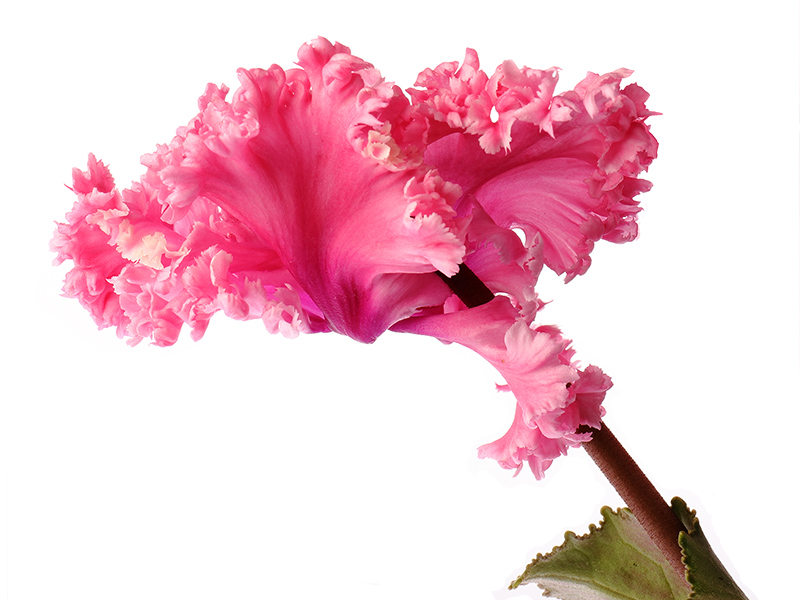
Ruffled pink cyclamen flower

It feels like it’s not quite either winter or spring as I wait for the garden to come alive again with fresh growth. Meanwhile, I wanted something interesting to do. A plant I could photograph indoors so that I wouldn’t have to face the cold. These little flowers are ideal for that.

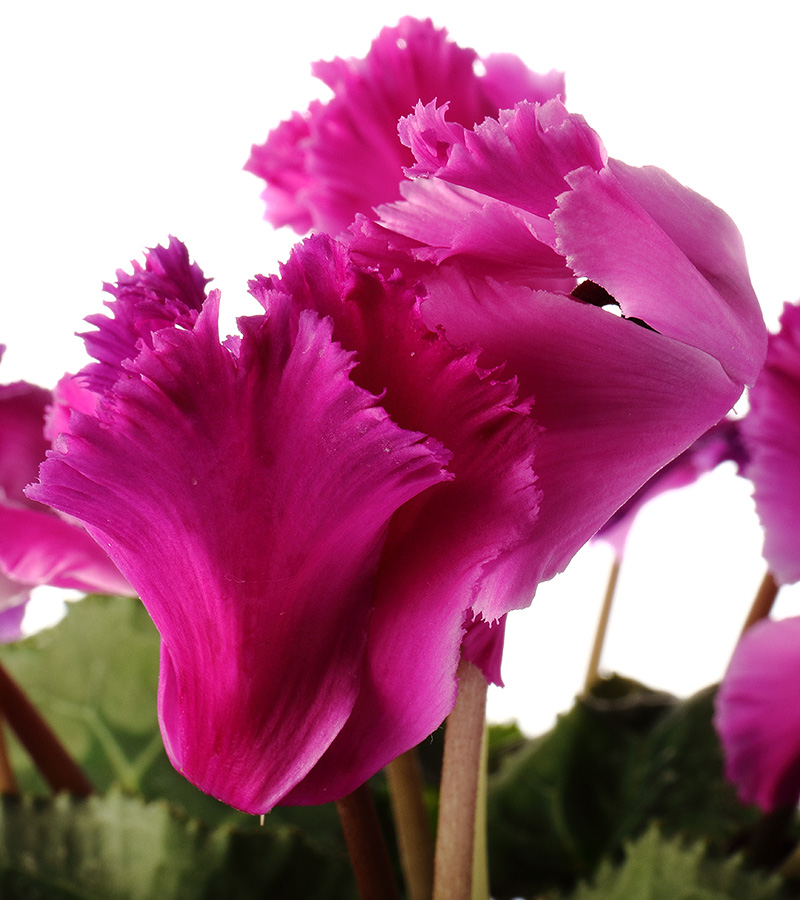
The rich colours and swirling shapes of the cyclamen flowers make them an obvious photographic subject. All those crinkles, curls and serrated edges give the petals a sense of drama and energy. Altogether, these features make the flowers look as if they’re in motion. The slight sheen of the petal surfaces suggests silk, making the flowers look like small pieces of fabric, fluttering in a breeze.

Cyclamen flowers

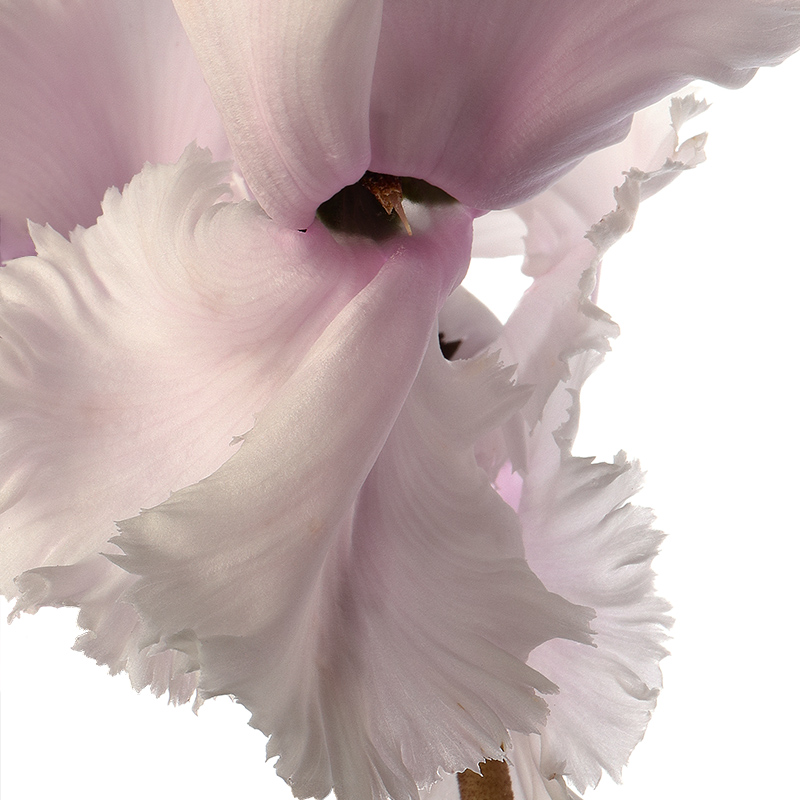
Alternatively, you could imagine that the flowers are tiny dancers, skirts swirling as they perform some graceful and athletic pirouette. Come in closer to the flower and that feeling of energy is magnified by all the curves and twists of the petals. Your eyes follow the lines made by the delicate veins, increasing the feeling of movement and strengthening the illusion.

Fun to photograph and glorious colour to combat the winter greys – I wouldn’t want to be without cyclamen at this time of year. Soon the spring flowers will be flaunting their brilliance and freshness, but for the last few weeks, it’s the cyclamen that have gladdened my heart.

Cyclamen flower

A Rose for Valentine’s Day

Climbing rose 'Handel'

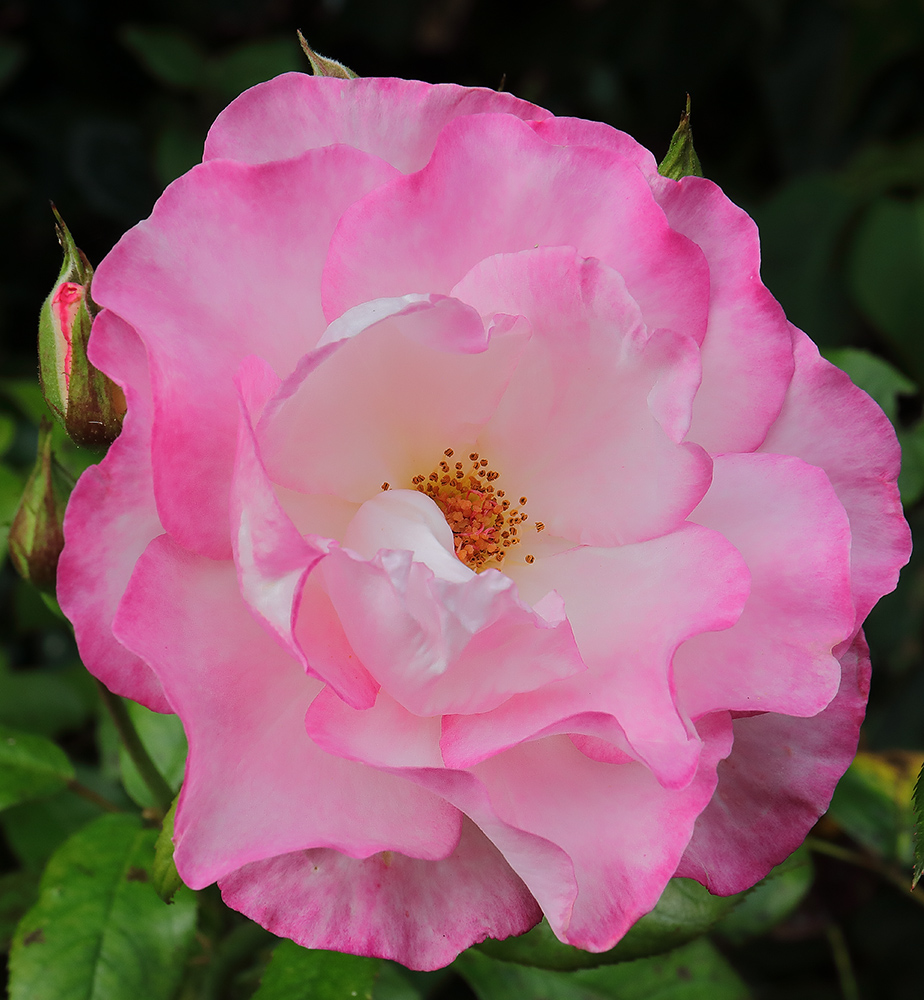
Actually, this really isn’t a Valentine rose – it would need to be red. But I don’t have any red roses in the garden, so this is the best I can offer. (It’s the climbing rose ‘Handel’.)

According to Google and several florists’ websites, a pale pink rose means, among other things, ‘happiness’ or ‘joy’. So maybe it’s a bit more suitable as an offering to my blog readers than a red one would be!

I don’t know why it’s the red rose that means love. Perhaps it’s because it’s the colour of blood, so associated with the heart and passion. At any rate, it does go back a long way, even to the myths of the ancient Greeks. Aphrodite, their goddess of love, was scratched by a thorn on a white rose bush as she was rushing to be with her dying lover, Adonis. Her blood turned the rose red and ever afterwards, red roses were the symbol of love.

It feels like it will be a long time before there are any roses at all here. It’s snowy outside at the moment, and I am dreaming of being able to visit gardens where the scent of roses is carried on warm summer air. And I’ll be very happy to see them, whatever colour they may be!

Winter Delight: Hellebores

Hellebore flowers

Hellebores are starting to flower in the garden here. Some are still just small buds, but this one has been in flower for a few weeks. This is one of the Helleborus Gold Collection, HGC ‘Shooting Star’.

I particularly like this hellebore for the way that its flowers are held more upright than most hellebores. It makes it so much easier to see the flowers – and to photograph them too.

(My other hellebores are difficult to see properly in the garden. You really have to take the time to turn the flower head upwards if you want to look at the detail. But that has the advantage of making you get close to the flower and actually touch it, rather than just passing it by. So they’re all good!)

For the moment, this plant is in a pot, which has made it easy to take it indoors to photograph it. But it would probably be happier in a border where it has a bit more space. Later I will plant it out – when I find it a slightly shady spot where it won’t get too hot in summer.

As a winter and early spring flowering plant, hellebores are a great treat in the garden. They start flowering when much of the rest of the planting is either dead foliage or shoots that are not yet ready to emerge. And their beautiful flowers have an exotic look – much bigger and more showy than the other winter flowers. If I get the chance to go shopping in a garden centre while they’re still available, I know I’m going to be very tempted to buy more.

hellebore flowers

Frosted Seed-Heads

Frosted hibiscus seed-pod

After last week’s snow-capped anemone seed-head, today we have seed-heads that are covered in frost. In the middle of winter I’m really glad to find anything to photograph in the garden, so I’m grateful that these are here.

On a frosty morning, these seed-heads create a focal point and some interesting textures in the garden. They become like miniature natural sculptures when their details are picked out by frost crystals. I find that seeing the patterns of frost encourages me to look more closely at the plant’s own structure. That allows me to see possible photographs where I may not have noticed them before.

frosted honesty seed pods
The remains of honesty seed-pods sparkle in the sunshine.

Mind you, sometimes there’s very little left of the seed-heads, as you can see with the honesty above. These are pretty-well wrecked by now but, given a bit of sunshine to make the frost sparkle, still manage to look interesting. Of course, on a dull but mild day, with no frost or sunshine, they don’t look at all pretty at this stage. So it’s amazing what the right weather can do.

Amongst the best of the seed-heads for frost photography are the umbellifers. There are usually quite a lot of self-sown bronze fennel seedlings around the garden and these really sparkle on a frosty morning. I never cut these down until spring, because the seeds can provide food for hungry birds. (As well as starting lots more plants.) The delicate decorations that they become is a delightful winter bonus.

frosted fennel seed head
Fennel seeds look at their best with a thick coating of frost.