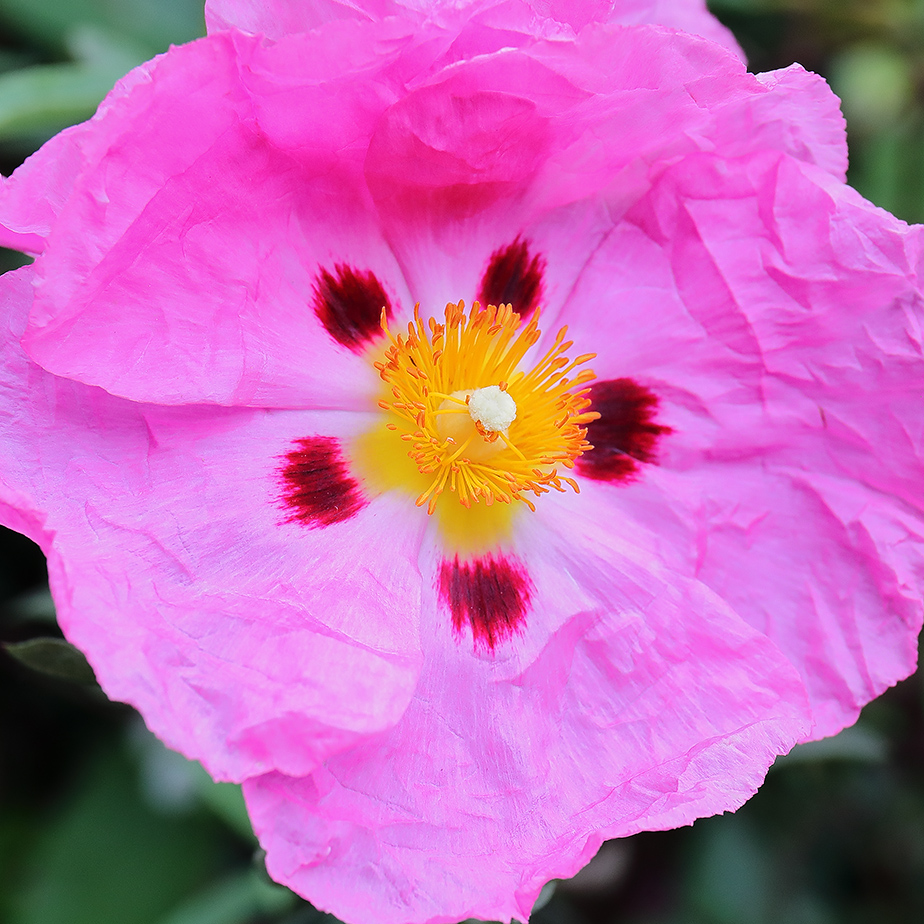
Crumpled Tissue Flowers: Cistus

Rock rose flower (Cistus)

The rock rose here (Cistus x purpureus) has been at it’s best this week. In the warm afternoon sunshine, the shrub has been absolutely covered in these crinkly pink flowers.

Now, however, those first flowers have gone over – shattered into lots of pink papery shreds lying on the ground. But I can see that there are plenty more flowers yet to appear, as there are lots of fat little buds waiting for their time to burst open.

These flowers are tightly packed inside their buds and emerge looking like scraps of crumpled tissue paper. They each last only a day and on a sunny day, there can be many flowers open at once. When I took these photographs, the rock rose had dozens of bright flowers, but early this evening when I looked at it, there wasn’t a flower left. Tomorrow morning I shall go out and see how many of the new flowers have opened in the sun. (In the UK, these shrubs are also known as ‘sun roses’.)

However ephemeral the flowers may be, the shrub itself has survived here for a long time. (Earlier white-flowered rock roses haven’t done so well and died in very cold winters.) It was planted not long after we arrived here, as part of a gravel garden.

Plans for this area have changed though, and it will become a mixture of veggie garden and somewhere to grow some wildflowers and other plants for bees. Our greenhouse will also have to be moved to this area, so I may have to cut the sprawling rock rose back a bit. Rock roses don’t like to be heavily pruned but I may be able to get away with taking off one or two of the longer branches. As insurance, I’ll try taking some cuttings from it too. If they root successfully, I’ll have some new rock roses to plant out in another sunny area. If I’m really lucky, they might even survive as long as this one has.

Rock rose flower (Cistus)

A Slow Start and Gradual Change

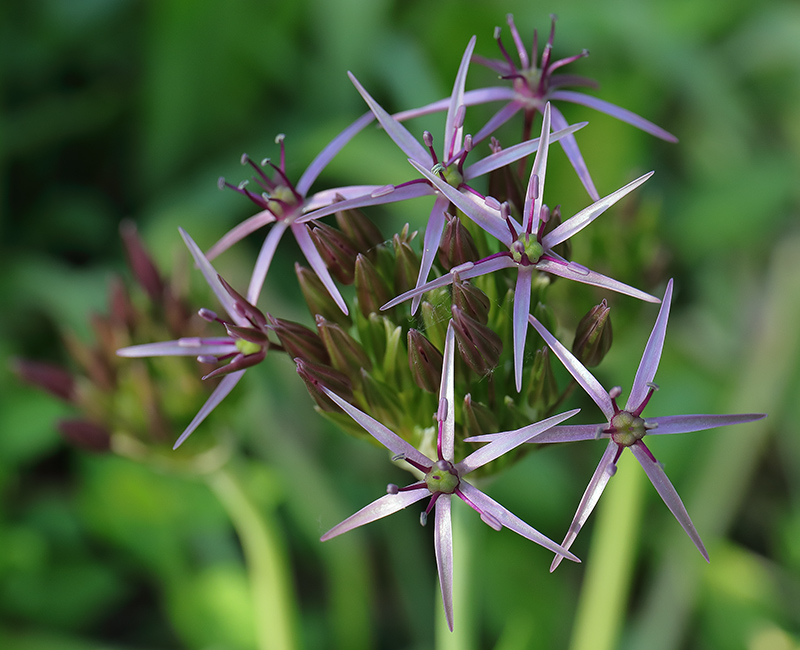
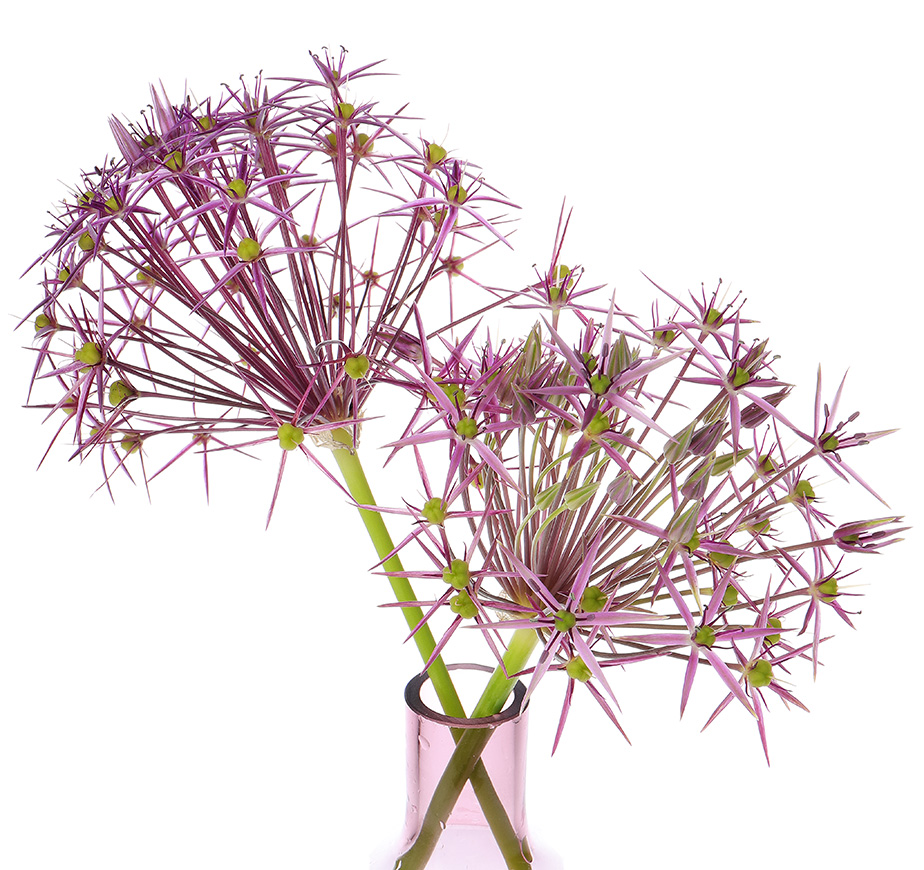
Allium christophii flowers

The cold weather in May has slowed down the development and flowering of our garden for June. Normally there would be plenty of flowers here, including these alliums (Allium christophii) that I photographed last year.

There aren’t even as many of the alliums as there were in the few years before. Last year there were a good number of them in the bed where the picture below was taken. This year there are only a few in the same place.

I know that other gardeners find that Allium christophii doesn’t always come back but I don’t know why…is it because the bulbs became diseased, were in soil that was too poor, or had they just reached the end of their lifespan? (The plants had a sunny and well-drained site which seemed to suit them.)

Allium christophii flower buds opening

Luckily I have another patch of Allium christophii which has done much better. This is an older area that I had planted as a gravel garden and here the plants have multiplied over the years. Ironically, the way the alliums had spread in this area made me worry that they would take over the other, newer border too. (And that’s still possible because there are plenty of allium seedlings in both areas.)

The unpredictability of gardening and the way things change from year to year is one of the things that keeps it interesting for me. (How boring would it be if the plants always stayed the same year after year!) There are always new things to learn and different ideas to try out. And there are always surprises around the corner!

I’m glad that I do have the older patch of alliums that are doing well because I would hate to be without their little purple stars. The bees love them too, which makes them important for my future plans for the garden. I think I will try to move some of those tiny allium seedlings to another area. Then I can just leave them there to grow and develop into new bulbs. Hopefully, in a few years I’ll be surprised by a whole new batch of these lovely flowers.

Allium christophii

Trollius: Golden Globeflowers

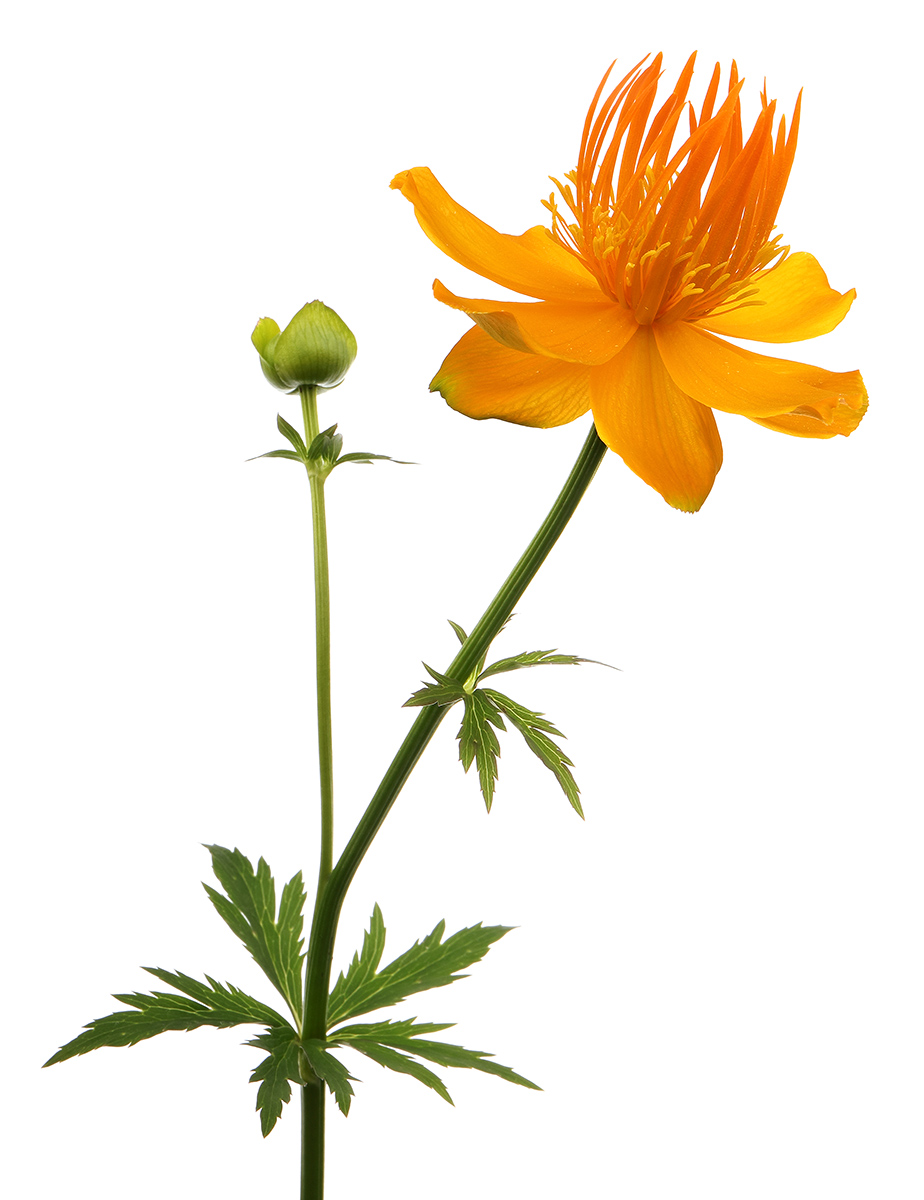
Trollius 'Golden Queen' (globeflower)

This globeflower (Trollius chinensis ‘Golden Queen’) has been flaunting its gloriously sunny petals throughout a couple of weeks of unseasonably grey weather.

It has been a bright point to days that should have felt like the run up to summer. In combination with an orange geum (‘Rijnstroom’, photographed for this post) it has given a cistrusy zest to a new border that I’m building.

Actually, I don’t know if they’ll normally flower at the same time because I have just recently bought the globeflower from a nursery that keeps most of its plants in a large glasshouse. The extra warmth they get in there means that they can flower early. So I’ll just have to wait until next spring to see if the flowering of the globeflower will coincide with the geum.

Whether or not it flowers at the same time next year, I know I’ll be delighted to see it again. How could you do anything but smile, in response to such cheerfully golden flowers?

Trollius 'Golden Queen' (globeflower)

Buzz! Buzz! Bee-lated Celebrations!

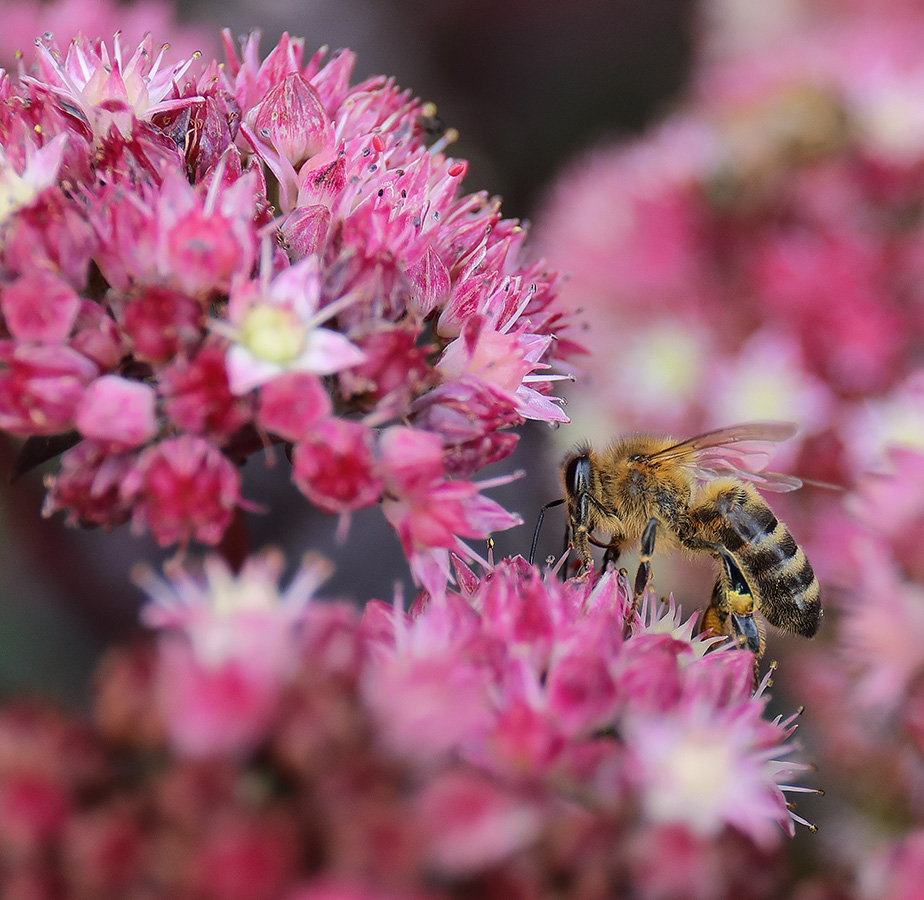
Honeybee on sedum flowers

I’m a few days late to celebrate ‘World Bee Day’, but I will anyway because I think every day should be a bee day. (It was actually this lovely bee portrait by Steve Gingold that alerted me to the significance of Thursday 20th May.)

World Bee Day was launched by the Slovenian Beekeepers’ Association and has been supported by beekeepers worldwide. There’s a website for World Bee Day that tells you all about the importance of bees and the essential role they play in the production of our food.

I think we’ve all become more aware of how much we need bees and that we need to do what we can to help them. There are some good books and websites to advise on planting ideas if you have somewhere to grow flowers for nectar and pollen. It doesn’t need to be a garden, pots on a balcony or window boxes can help. And the flowers in my images below (zinnia, scabious, salvias, and a perennial sunflower) are all very easy to grow.

If you’re in the UK, Dave Goulson’s ‘Gardening for Bumblebees’ is very good, for both planting suggestions and information on the lives of bees. But if you’re in the US, you’ll probably find that ‘Pollinator Friendly Gardening’ by Rhonda Fleming Hayes is more useful. (I thought it looked very interesting and would have bought it if it had been relevant to the bees and native plants here. You do need to read something based on your own area to get the correct information for where you live.)

Websites by local wildlife trusts are also likely to tell you what flowers are good to plant in your area. For the UK, I’ve found the Bumblebee Conservation Trust has an excellent site with lots of information about gardening for bees, identifying the different bumblebee species, and the lifecycles and habitats of bumblebees. I like the site set up by the UK Wildlife Trusts too – they have a good section on bees. (I would suggest checking out your nearest wildlife trust or organisation if you live outside the UK.)

I have a lot to do still in my own garden to make it really useful to bees for as much of the year as possible. It feels like something very worthwhile that I can do to help increase the numbers of bees around. And if most gardeners plant what they can for bees, while also avoiding the use of pesticides, we will together make a big difference.

Every day should be a bee day!

Tiny Beauty: Spring Vetchling

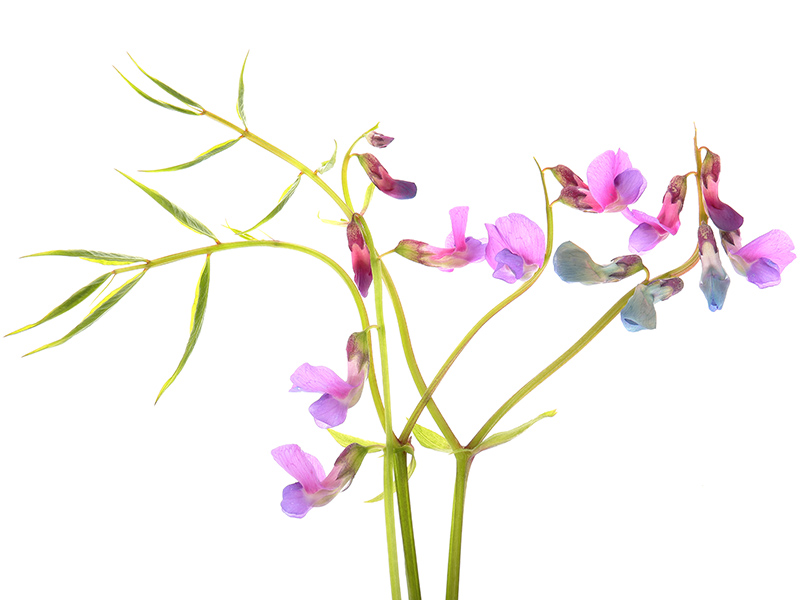
Lathyrus vernus (spring pea) flowers

The spring vetchling or spring pea (Lathyrus vernus) is one of those plants that needs to be seen up close to appreciate its loveliness.

It’s a relative of the sweet pea, but is far smaller and looks much more delicate. It doesn’t climb, but instead produces a rounded clump of leaves and flowers around 18 inches high and wide. The flowers are just 3/4 inch long.

Several different cultivars of Lathyrus vernus have been bred to give different flower colours. You can find plants with flowers in pink and white, plain pale pink, white or blue. The plant in my photographs is the original species.

These flowers start out purplish pink, but gradually age to a pale blue. This gives a range of different shades of colour which adds to the appeal for photography. In those areas where background flowers are out of focus, the colours have a softness that reminds me of watercolour paint (top photo).

While writing this, I have popped back into my studio and had a quick look at the flowers in their vase. I was delighted to discover that the flowers have continued to change colour even after picking. The remaining flowers are now almost all blue, so I should be able to take some quite different photographs of them. (In that case, next week’s post will probably be blue spring flowers.)

The spring pea’s flowers are amongst my favourites at this time of year. For me, the smallest flowers can be the prettiest.

Lathyrus vernus (spring pea) flowers

Something Sweet: Pink Tulips

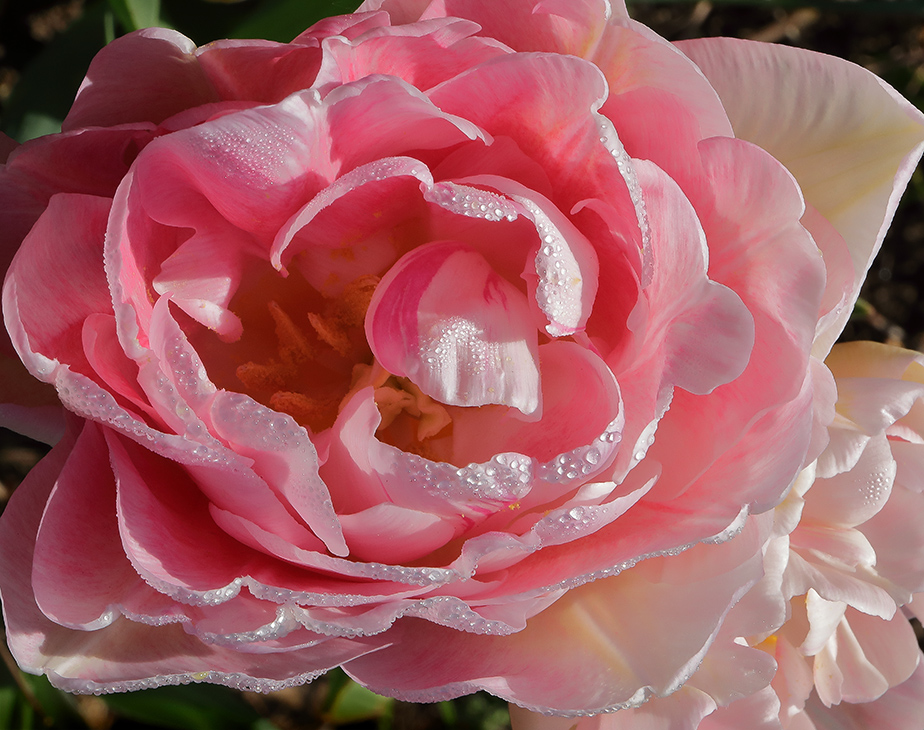
Tulip 'Angelique'

Tulips are a sign that spring is well underway. Winter is forgotten and plans are being made for summer.

However, tulips are something that I don’t have much experience of in the garden. I think that’s because I became frustrated by the fact that so many varieties don’t come back again. I’d plant tulips that flowered beautifully the first year (and perhaps remember to photograph them) but then the next year I’d wonder what I’d done wrong when they failed to reappear.

Recently I’ve allowed myself to fall in love with them again. They are one of the prettiest and most feminine of flowers at this time of year and I love to photograph them too. So now I am happy to grow a few every year, to give myself something new to photograph and to enjoy while they’re here.

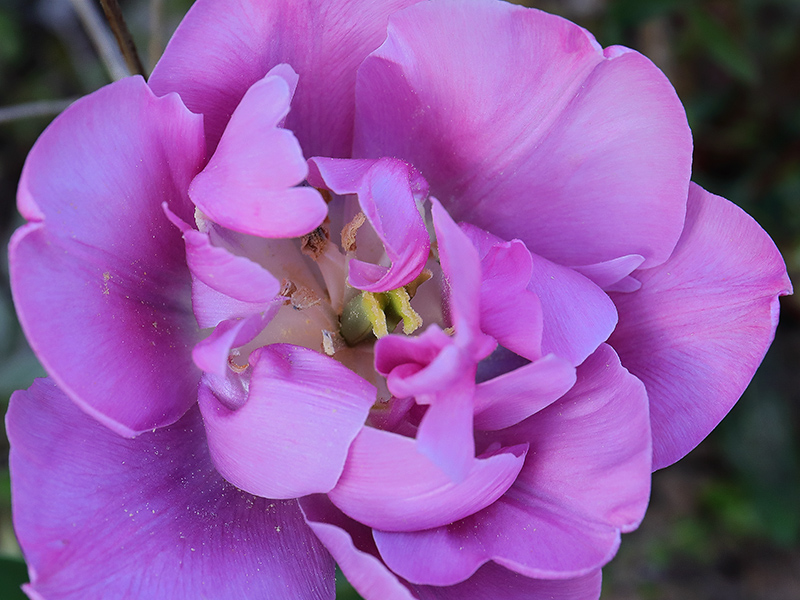
Some tulips, like the one below, have only flowered once before disappearing. So I was delighted when the tulip in the top picture not only came back this year but has produced even more flowers. It’s ‘Angelique’ and is certainly a vision of sweetness in the early morning sun.

I didn’t buy any bulbs last autumn but this year I’ll make a point of buying some tulips that I haven’t tried before. Then there will be something new and delightful to look forward to next spring.

Tulip 'Angelique'

Finding a Balance: Weeds for Wildlife

Bumblebee on deadnettle

This week I’ve been looking out for bumblebees on white deadnettles here. The white deadnettle (Lamium album) is an excellent wild plant for the queen bumblebees that have just emerged from hibernation in spring. The flowers, which are already opening now in April, are a great source of nectar and pollen when there isn’t much else around.

We have a lot of bee-friendly plants in the garden and I’m trying to develop this further by planting to provide for bees and other insects for as much of the year as possible. This is causing me a bit of a dilemma at the moment because this particular deadnettle runs rampant in my garden.

Deadnettles are members of the mint family and this one is determined to take over as big an area as possible. Before I knew that it was such a good bee plant, I’d spent years trying to remove it from the garden, with very slow progress. (I doubt that it was deliberately planted by anyone – most likely it just ‘arrived’.)

Recently I’ve been reading a lot of books about gardening for wildlife. They all recommend the white deadnettle for bees, moths and beetles, so I feel that I really shouldn’t get rid of it all. At the same time, these books don’t mention how invasive this plant can be.

It’s a UK native wildflower, but can be bought as a garden plant (presumably for a ‘wild’ garden). As you probably guessed from the name, it looks just like a nettle – except for the rings of white flowers around the stalk – but thankfully it doesn’t sting.

So now I’m wondering what to do. I have noticed that there are a couple of different species of bumblebee that visit the flowers. (Not many yet. It’s been quite chilly and if I was a queen bee, I’d have popped back to bed for a bit longer!) I really don’t want to deprive these bees of their food source but I know that the moment I turn my back on the deadnettle, it will reach out and grab the rest of my garden. The bees might then be really well-fed, but everything else will be swamped.

The best answer is probably to grow some of this over-enthusiastic plant in large pots. I’ll have to watch that none of the roots escape through the drainage holes, or else it will be off, racing through the garden again, with me in pursuit.

As you can see from the photo below, ladybirds like deadnettles too. Maybe I’ll get to like it eventually!

Ladybird on deadnettle

Daughter of the Wind: Anemone Blanda

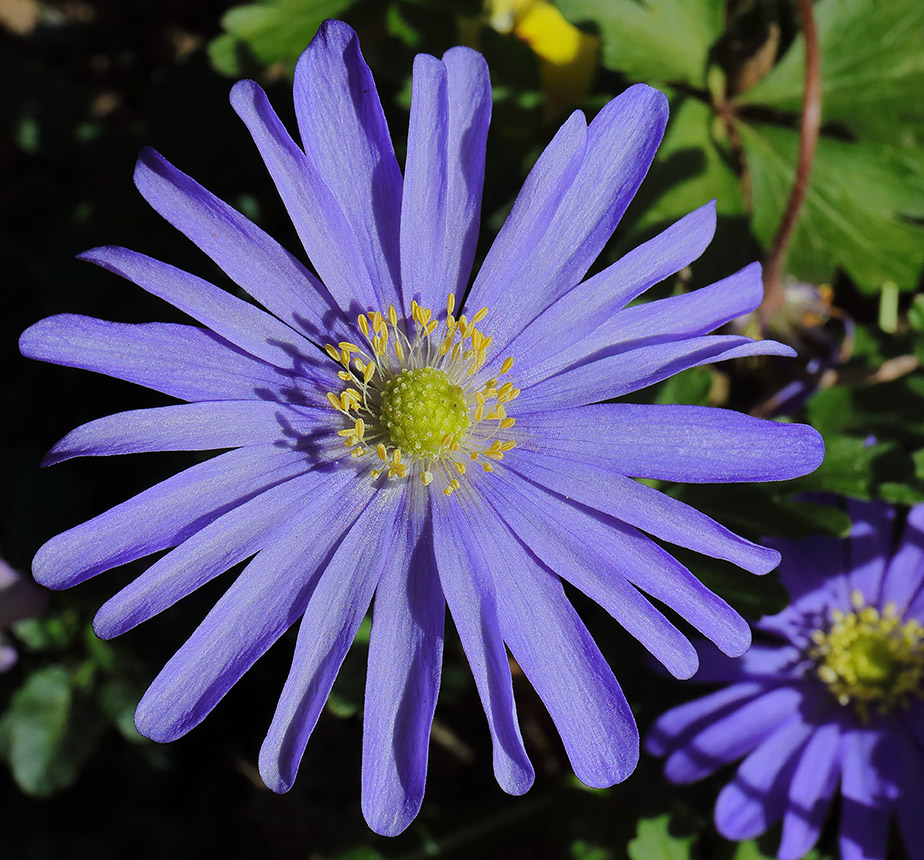
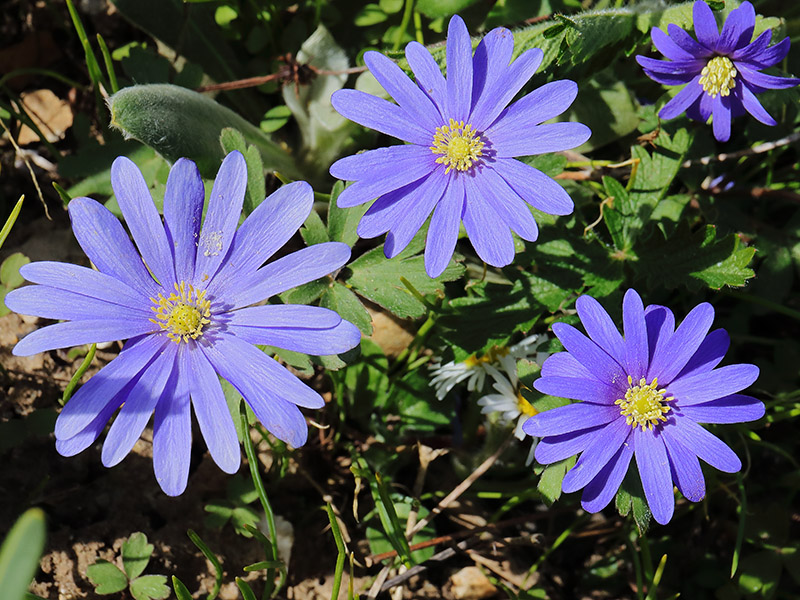
Close-up of a violet-blue Anemone blanda flower.

The common names for Anemone blanda are ‘Grecian windflower’ or ‘winter windflower’. ‘Why windflower?’, I wondered, as I dived into a little internet search. The reason for the name is unclear. Some suggest that it’s because it symbolises their fragility in the wind, while others say it’s because the flowers are opened by the wind.

Whatever the reason behind the name, it probably comes from a Greek word which translates as ‘daughter of the wind’. That translation appeals to me greatly. I can imagine it as the name for a graceful old-fashioned sailing ship or a sleek modern racing yacht. I suppose I’m not the only one to come up with that idea!

But sailing ships are taking us far from garden flowers. This daisy-like flower is currently flowering in odd corners of my garden, mostly where I’d forgotten planting it. (Actually, I think that its rhizomes sometimes get picked up and transferred with other plants as I divide and move them elsewhere. So eventually they could end up anywhere in the garden.)

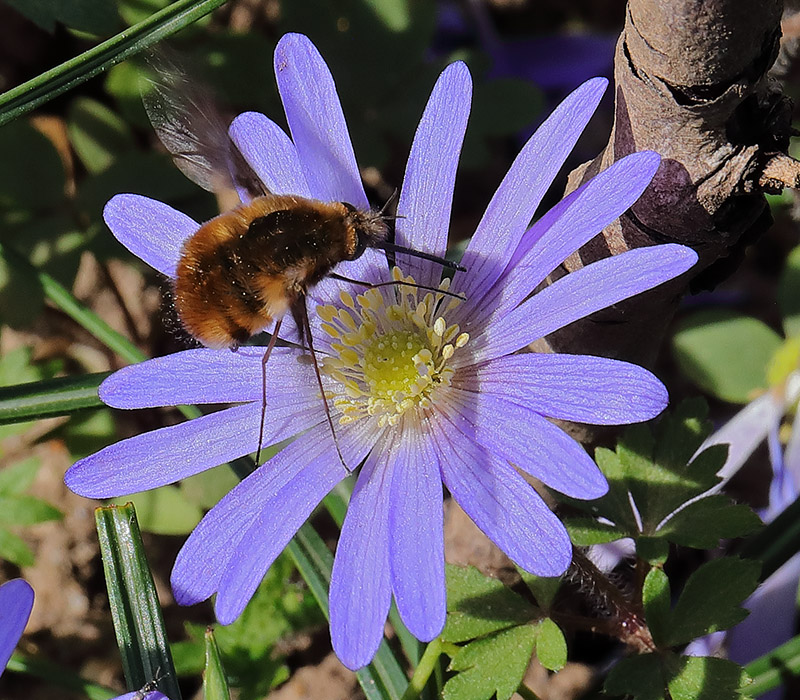
A bee-fly enjoying an Anemone blanda flower

The anemone above has a visitor. It’s not a bee, though, but a bee-fly. Although it may look like a bee, you can see the difference in the long proboscis (tongue, used for feeding on nectar) and the long and very fragile-looking legs. Although the proboscis may look sharp and a bit scary, bee-flies don’t sting or bite. They just try to look as if they might!

Bee-flies aren’t good news for the nearby ground-nesting bumblebees, because bee-fly larvae eat the bumblebee larvae. Luckily it doesn’t seem to affect the overall number of bumblebees. (Just shows how much murder and mayhem is going on among the beasties that live in our gardens!)

I hope that some of the bumblebees will find these anemones too. Apparently bees prefer to work among a large patch of the same flowers, rather than going to lone individuals. This must be a great reason/excuse for growing more of all the early spring flowers, especially these delightful beauties. (Given time, they will spread, but I reckon I’d like to give them some help.)

Please note that I won’t be able to reply to comments until after Tuesday because of internet connection problems. But I’ll be back to chat to you after that!

Blue Anemone blanda flowers

Fluffy Flowers for Easter: Pasqueflowers

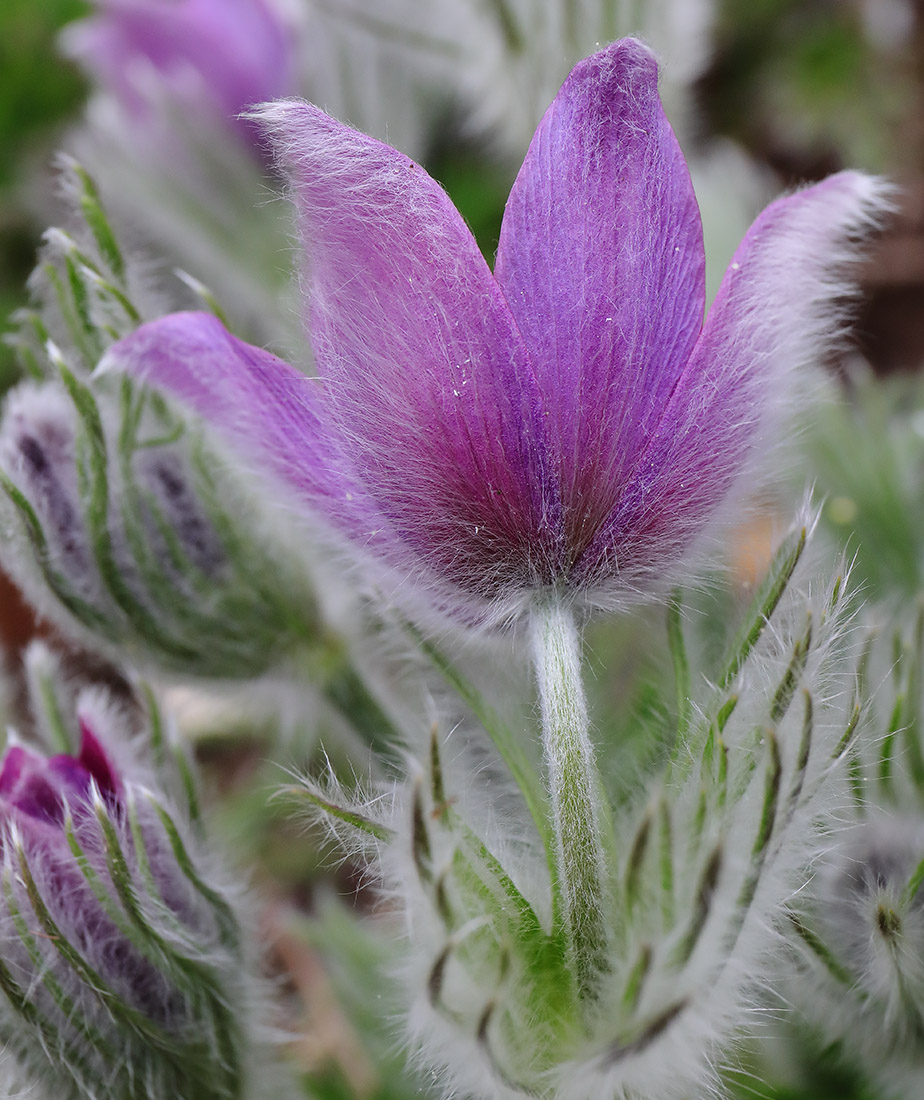
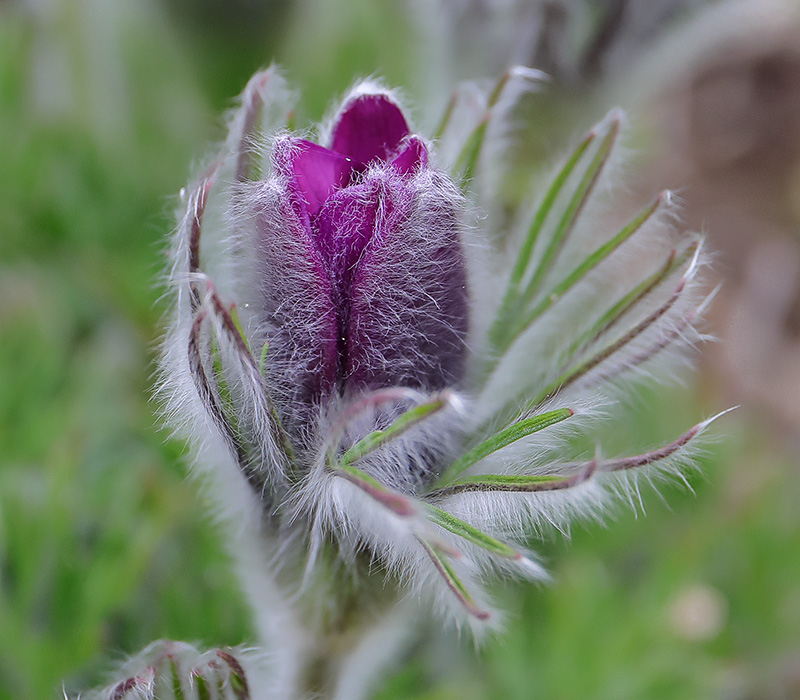
Pulsatilla vulgaris (pasqueflower)

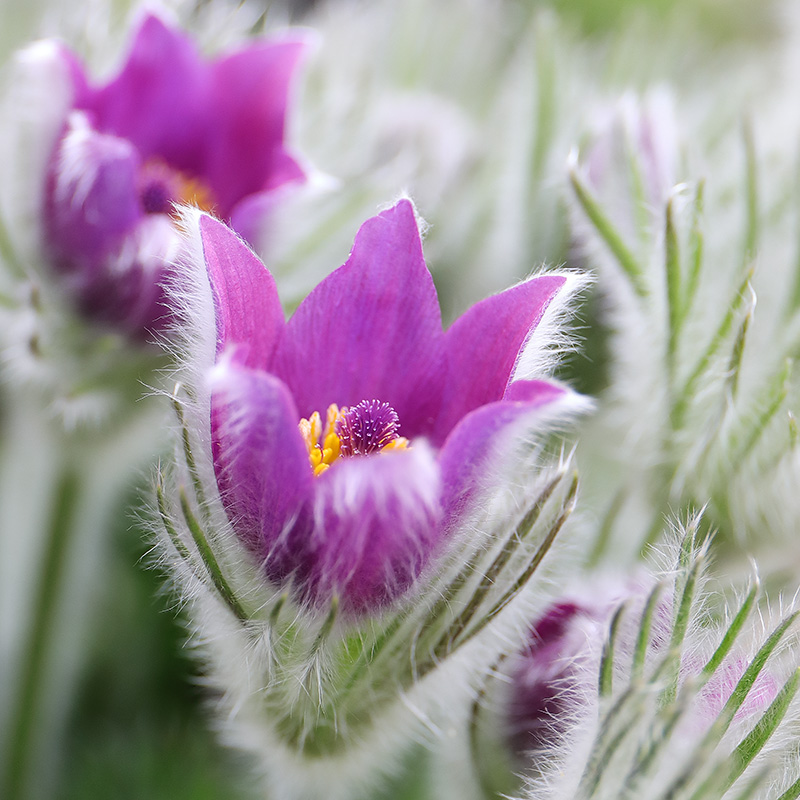
The pasqueflowers (Pulsatilla vulgaris) are flowering slightly earlier than last year. That means they’re here in time for Easter, so they’re living up to their name. (The pasque part of the name comes from ‘paschal’, meaning ‘of or related to Easter’.)

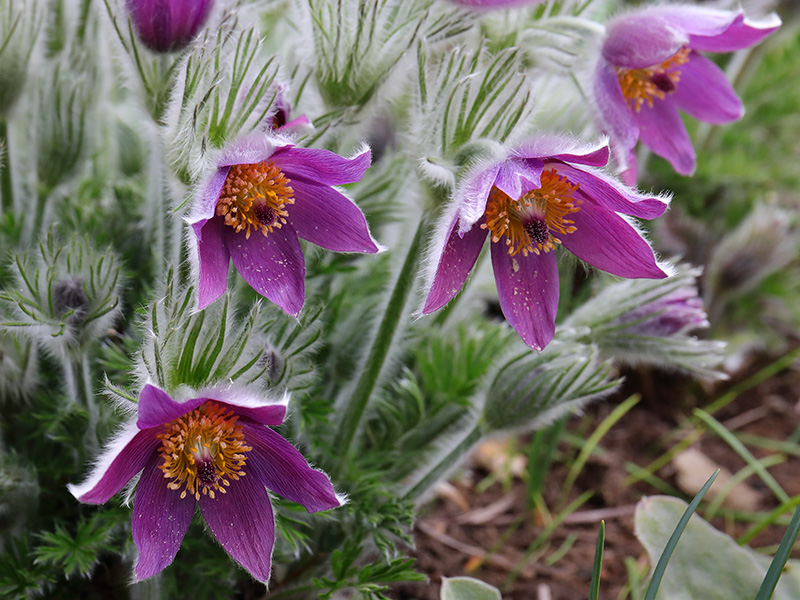
The clumps are a bit bigger than last year, so there are more flowers too. Those fluffy, cup-shaped flowers are a most welcome sight. They seem to have settled into the garden here very well and they’re probably the most reliable of our spring flowers.

Pulsatilla vulgaris (pasqueflower)

But they don’t just look good – they feel nice too. Those fine hairs on the outside of the petals, buds and leaves are just as soft as they appear. I know this for certain, having spent a few minutes stroking them just to check! It’s not often that I think about how a plant feels as opposed to how it looks, but with these, the urge to touch is strong.

Although a native wildflower in the UK, the pasqueflower is rarely seen in the wild. It has become a well-loved garden flower, with nurseries and garden centres stocking plants with purple, white (‘Alba’) or deep red (‘Rubra’) flowers.

Pulsatilla vulgaris (pasqueflower)

I was hoping that I might have the opportunity to buy one or two more pasqueflower plants today. We were able to visit a garden centre for the first time in many months. (Probably since the end of last August.) It was a treat to be able to do this again and we did make sure to buy some plants. (But no pasqueflowers this time.)

Now that a few weeks have passed since having our first Covid jabs, we have enough protection to be able to explore the world again. Plant nurseries will be also able to open soon, so I’m feeling excited about being able to visit my favourites again. There’s a fair bit of border space that’s just waiting for some new plants to fill it!

If you celebrate it, I wish you a very happy Easter. And for everyone, I hope you enjoy your weekend.

A pasqueflower bud.

Signs of Hope!

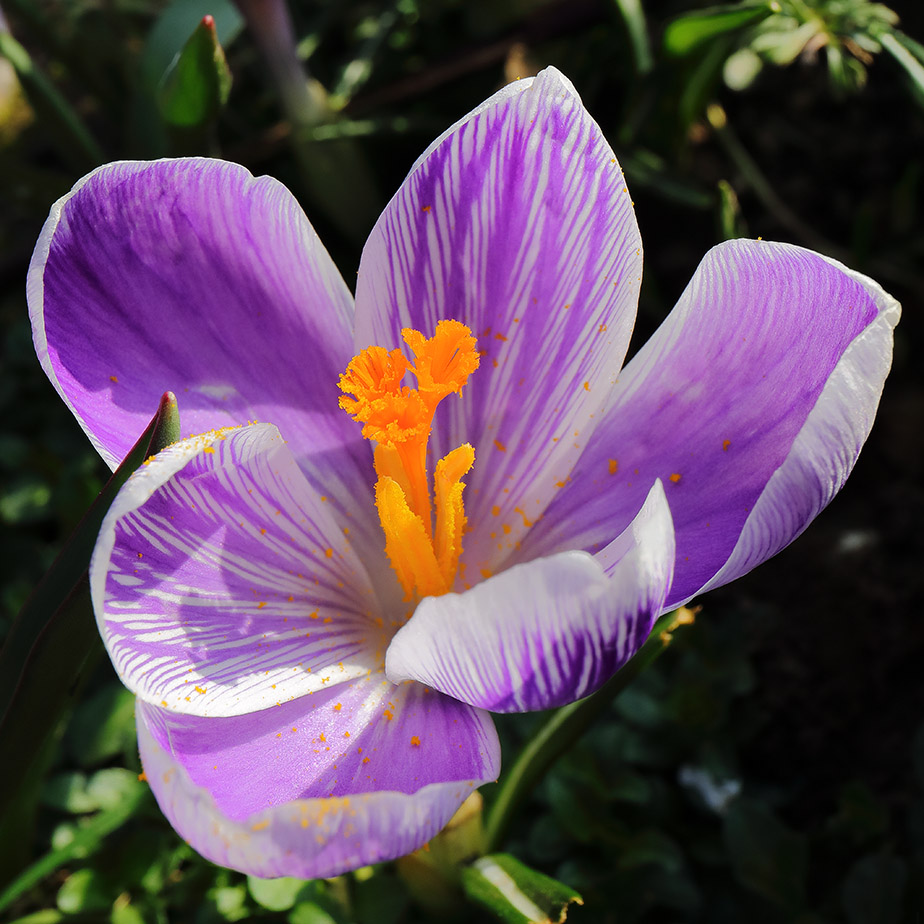
Crocus Pickwick in flower.

Crocuses are, for me, the first signs that spring is on the way. Hellebores don’t give me the same feeling because they start flowering when it’s still winter. But crocuses, with their fresh and radiant colours, show us that the garden has begun to fill with new life.

Before long, there will be other flowers to continue what the crocuses have started. But for now these are the flowers that bring gardeners (and the first bees) joy.

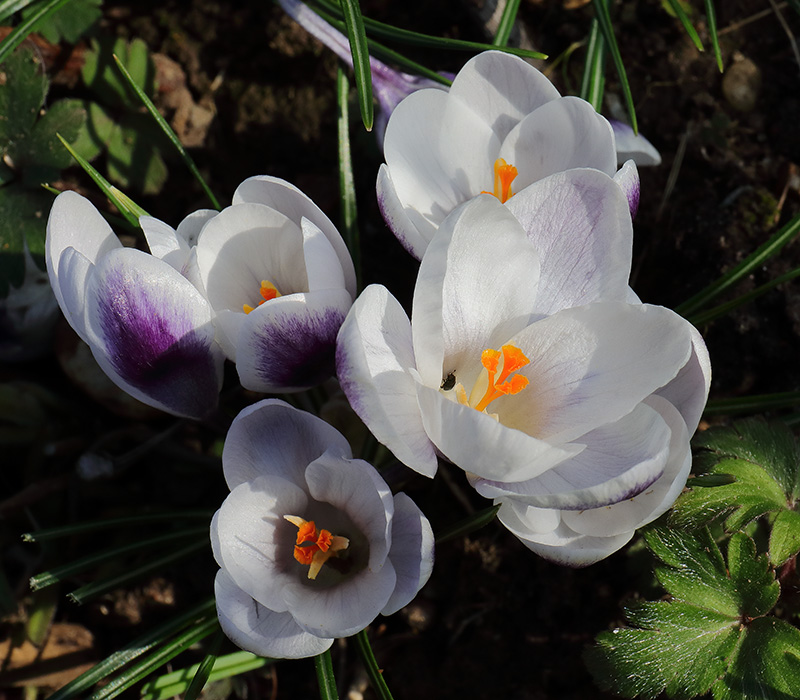
Flowers of Crocus 'Prins Claus'

When I lived near Edinburgh, I enjoyed the sight of mass plantings of crocuses in some of its parks. These gleaming sparks of colour, sprinkled over lush grass, were a cheerful sight and a reassurance that the cold of winter would end. Seeing the brilliant flowers fully open in the sunshine was a reminder that summer would come and days would be warm and bright.

This year I think we need the promise of better days more than we ever did. I’m looking forward to being able to spend more time outside, especially now I am aware of how much we benefit from being in contact with nature. Soon we will be able to enjoy the natural world again, as spring gives us the chance to get out into our gardens and back to the countryside.

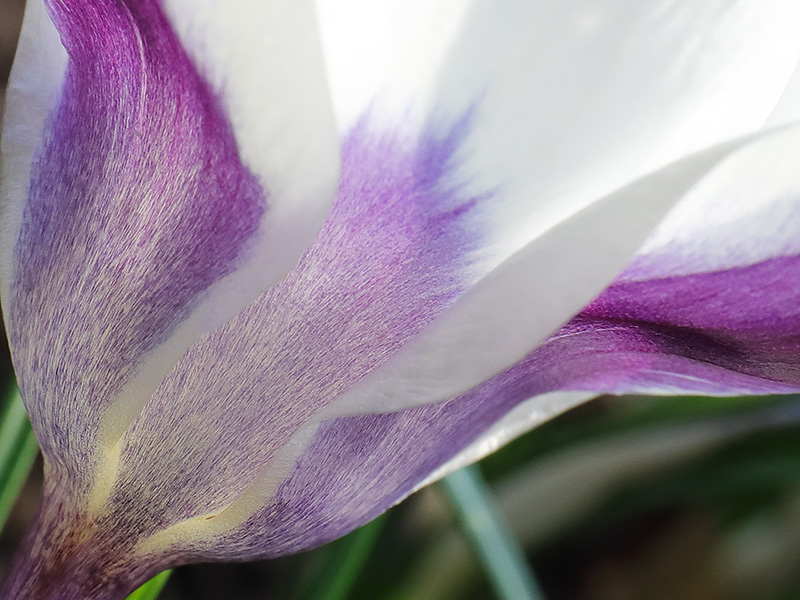
Crocus Prins Claus