Tulips: Glowing with Glorious Colour.

Purple and white striped tulip.

As March comes to an end, gardens are filled with plants coming back to life. New flowers are opening every day, providing an exciting array of  possible photographs. You can imagine, I’m sure, what a happy and busy time of year this is for me!

Among my favourite spring flowers to photograph are tulips.  The variety of colours and the amazing markings that some of the flowers have make them an obvious subject for a picture. When you also take into account the different flower shapes and the sinuous way that the tulip stems bend, then you have all sorts of possibilities for different images, whether bold, graceful, or full-on pretty.
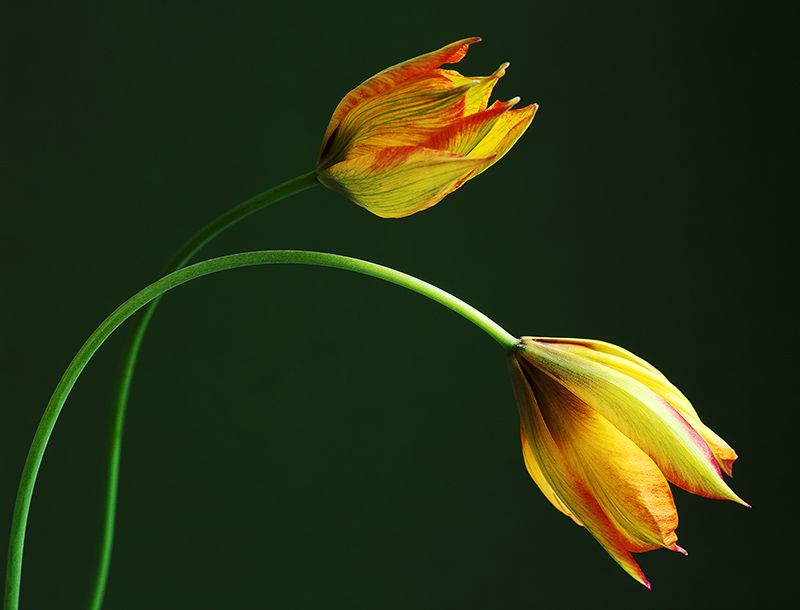
Striped flowers of tulipa orphanidea 'Flava'
Tulip orphanidea ‘Flava’ has delicate coloured veins on its petals.

Tulips with coloured markings – the ‘feathered’ stripes, as in the top photo, or the more delicate veining of  ‘orphanidea’ (above), can be especially lovely. These are the flowers that I look out for because they add a lot of extra interest to the photograph.

But the single-hued flowers are great too. These tulips, with their brilliant, saturated, colours and simple shapes help the photographer to make very bold, eye-catching images.

For next year, I’m planning to create a small bed for cut flowers that can be used for photography and tulips will be an essential addition to it. And for now, there are tulips in the garden that haven’t opened yet…I’m waiting!

Tulip 'Prinses Irene'
There’s a flame-like glow from this tulip flower.

Welcome to Spring

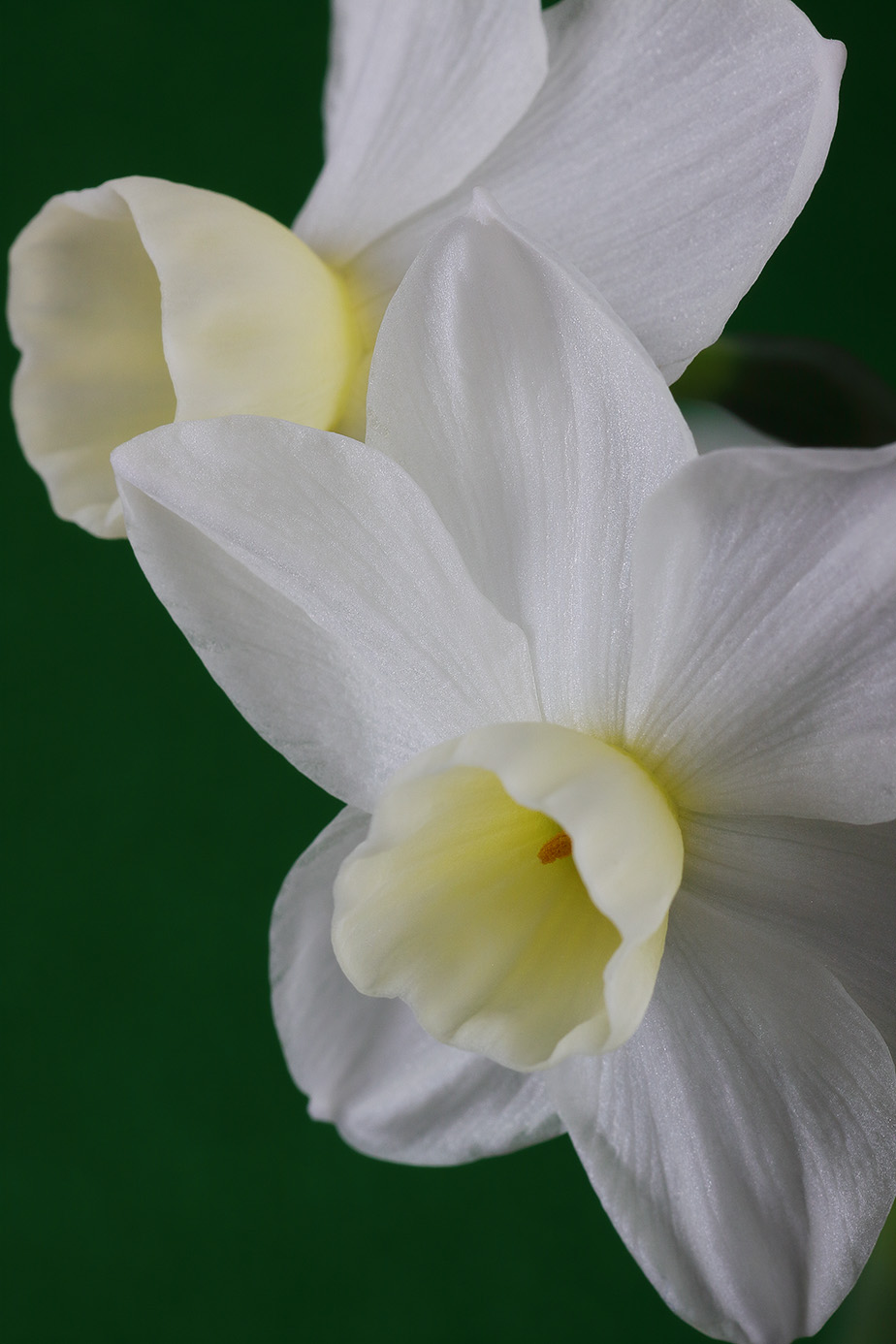
Scented 'Paperwhite' Daffodils

Daffodils…right now they are everywhere. This week we had the first ‘official’ day of spring with the arrival of the spring equinox. And right on cue, there are daffodils opening their cheerful flowers in a welcome to the new season.

Out in the country here, there are daffodils growing on the roadside verges outside houses and farms. In town, they’re at the start of garden paths or close to the front door. It feels as if everyone has some daffodils growing in a position where they’ll be both a welcome to anyone coming to their houses and a greeting to passers-by.

Daffodil 'Geranium'
Daffodil ‘Geranium’ has a lovely scent.

Outside my front garden there is a large ‘green’ – a wide area of grass with trees that stretches between the main road and the minor road that serves the houses here. In springtime, swathes of daffodils enliven this green, creating a colourful welcome for drivers coming into the town.

In our own front garden, we have a group of miniature daffodils growing in one of the borders, but most of our daffodils are in the back garden. Seeing so many daffodils by other people’s front doors makes me feel that I should grow some more by the front path next year, as a welcome to visitors and to ourselves when we return home. (Maybe a pot of  scented tazetta daffodils, such as ‘Geranium’ or ‘Paperwhite’ – they both have a delicious scent.)

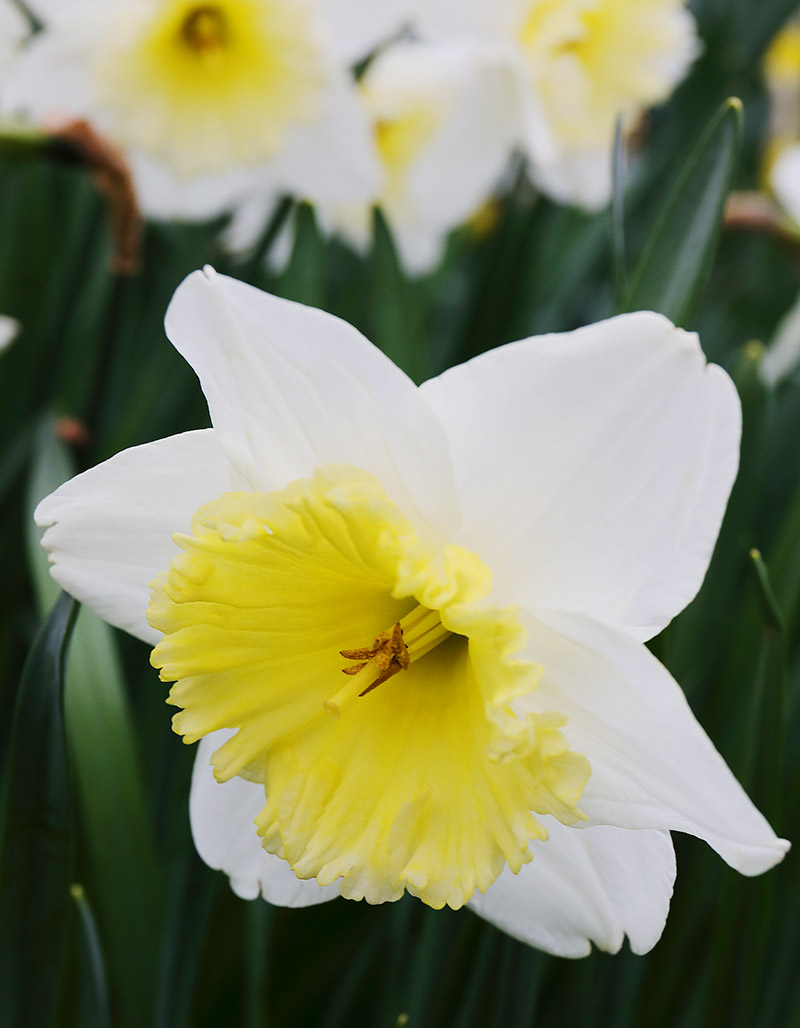
'Ice Follies' daffodils
‘Ice Follies’ on the green outside my home.

Flower Photography for a Rainy Day

Purple and white pansy.

The weather has been quite wild here over the last week – very windy and wet too. (A huge change from the spring-like sunshine of late February.) So there has been no chance for anything staying still enough to take photographs outdoors.

Luckily, I have some plants in pots that have been sitting in the conservatory while they’re waiting for the ground to dry out enough for them to be planted in the garden. (There’s been a lovely scent from the primulas and, I think, the tiny pansies in there – I’ll miss it when the plants do go outside.)

I took this pansy into my little studio space and set up my lights and a white background. It was only after I’d taken a few photos that I realised I had company…the unfortunate plant had become home to some greenfly. It’s amazing how much more you can see in a close-up photograph compared to just looking straight at something. Now I have some nice sharp shots of greenfly, but somehow I don’t think they’ll be very useful to me! It didn’t take long to dust the wee devils off with a soft artists’ paintbrush. (Usually it’s cat hairs that I have to brush off – they can be practically invisible until you look at the photo magnified on the PC monitor.)

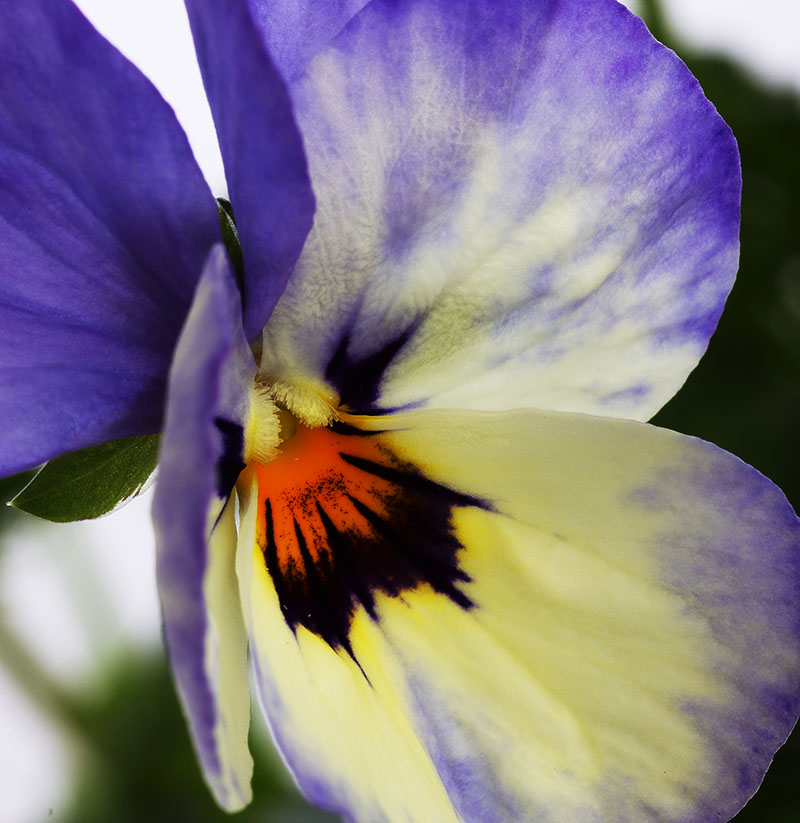
Centre of a violet.
The yellow and black centre of this small pansy makes me think of a bee.

You can see pansies planted all over the place at this time of year in the UK. They’re cheap to buy and easily available everywhere, so they do get pretty much taken for granted. But I do love the colours, especially the way they blend into each other, giving a soft, almost watercolour effect.

Having the plant indoors made it easy to keep the flowers still while they were being photographed. When you’re working outdoors, movement in the slightest breeze is a big problem with macro photography.  The area of focus is so shallow that it takes very little to take your flower out of focus and, if you’re not watching carefully, it can be easy to miss the fact that the flower has moved.

Spending an afternoon indoors, taking photographs with plenty of light and being able to keep warm and dry felt like quite a luxury. However, there a flowers out in the garden that are still waiting for their chance to be photographed…so I’m hoping for some better weather next week!

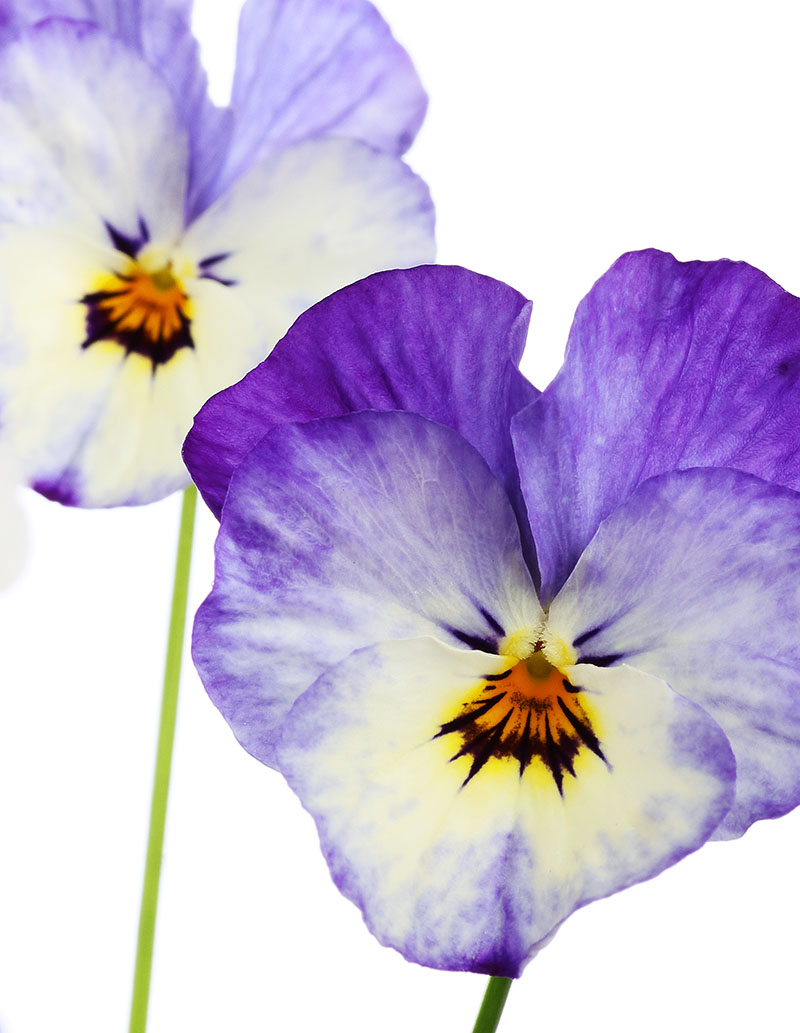
High-key photograph of violets.
Playing with a high-key effect with these little pansies…

The Early Flower Catches The Photographer

White Pulsatilla vulgaris (Pasque Flower)

Last week, I wrote about finding all the new stocks of plants coming into garden centres very tempting. So you may not be surprised to learn that I bought a few of them. (If you’ve been reading this blog for a little while, you will probably know me well enough by now to expect it!)

I tell myself  that I have a great excuse, because I need something to photograph and there isn’t a lot available in the garden yet. And buying plants instead of cut flowers means I can grow them in the garden for the following years. Neat reasoning, eh? All the same, I’m glad that there are several plant nurseries nearby, so that I can buy reasonably-priced small plants rather than spending a fortune on larger plants elsewhere.

It’s interesting to see just how far advanced these plants that have been grown in large, heated glasshouses are, in comparison to garden plants. I have pinky-purple pasque flowers growing in the garden but they won’t be in flower for weeks yet. (Probably April or May.)

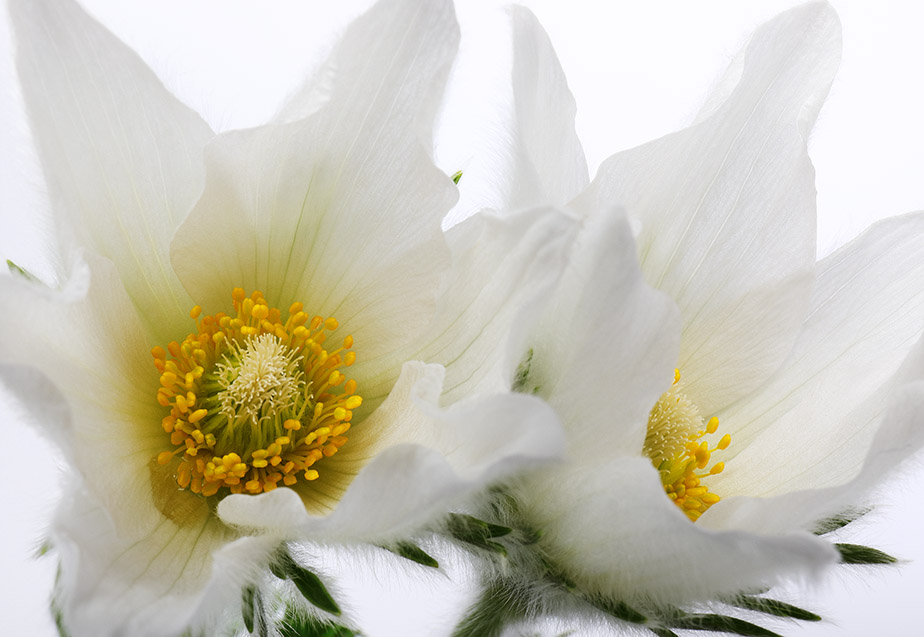
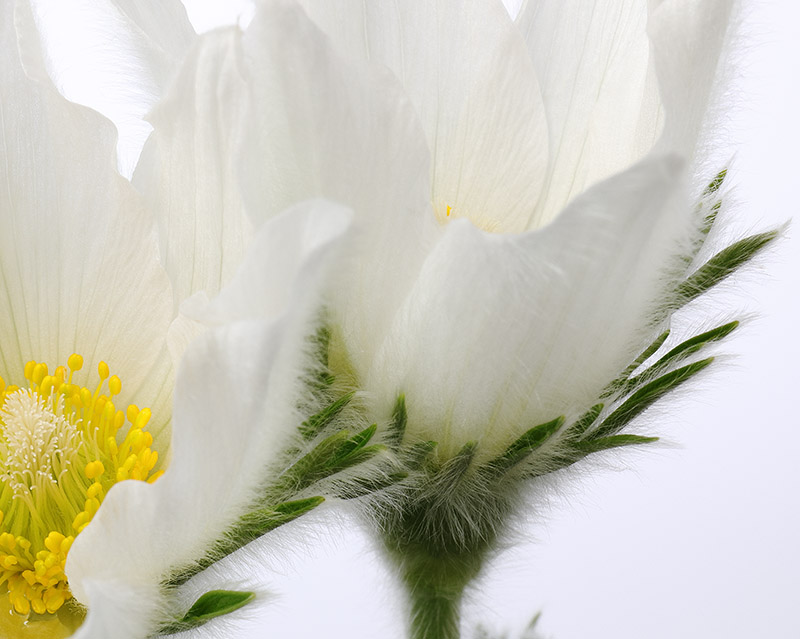
Hairy flowers of Pulsatilla vulgaris (pasque flower).
You can see how hairy these pasque flowers are!

Pasque flowers like it in the garden here. The well-drained soil and open, sunny site suits them. It’s actually a native plant in the UK and East Anglia (which includes Suffolk, where I live) is one of the areas that it grows in. Sadly though, it’s rare as a wild plant now and you’re much more likely to see it growing in gardens. However, as a ‘local’ plant, they’re both drought-tolerant and wonderful for bees.

The flowers themselves are delightful to photograph – fresh, pretty and entirely charming. And then there’s the bonus of the rest of the plant being photogenic too. That’s because it’s so very hairy (and soft enough that you want to stroke it). All the soft little hairs that cover the finely-cut leaves, flower buds, and even the outside of the petals, help to give the plant a silvery appearance when they are caught in sunshine. Later the seed-heads become very ornamental, like some sort of silky, wildly fluffy pompoms. (My cats think they’re great fun for having a swift bat at with a paw!)

The pasque flower that I bought will no doubt be joined by others. (I have to wait for them to flower at the nursery, so that I can see what colour they are.) And I’m sure that a few hours will be spent photographing them…happy times!

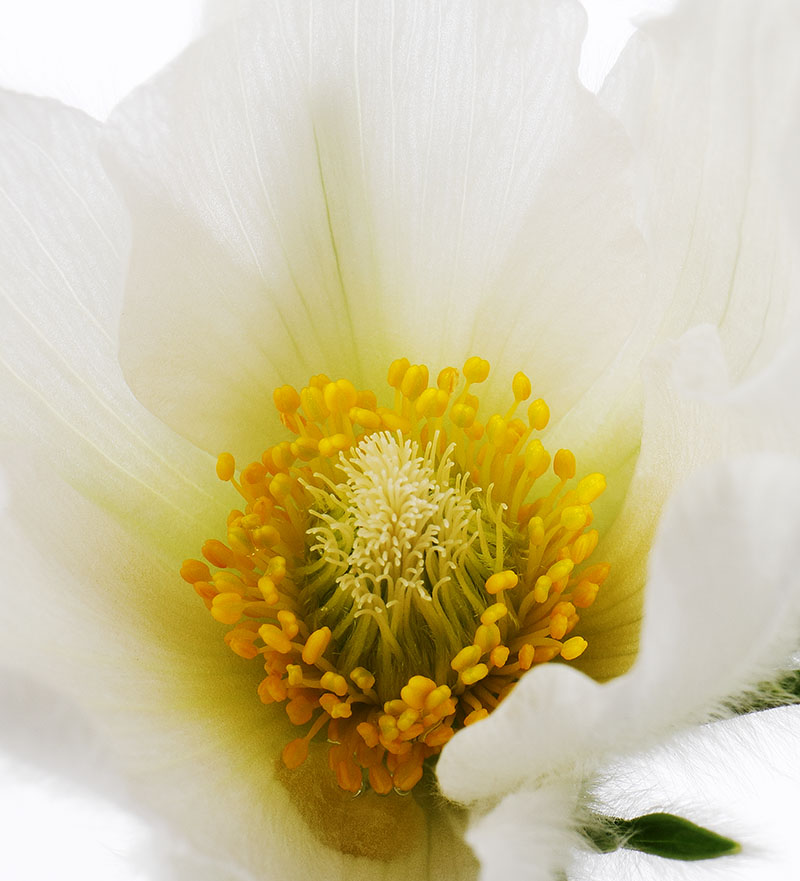
Flower of Pulsatilla vulgaris (pasque flower).
Delicate white and rich yellow make this a very attractive spring flower.

Something Different

Blue-veined flowers of primrose 'Zebra Blue'.

As spring approaches, there are new stocks of plants coming into garden centres and other plant-sellers, such as supermarkets and market stalls. After winter, it’s a huge delight and an even bigger temptation to see all these fresh plants that are just waiting for us to buy them.

There are the usual bulbs – snowdrops, crocuses, irises and daffodils. And at the moment there seems to be a huge number of primulas (or primroses) everywhere, in just about any colour you might want. They glow brightly at you, flaunting their brilliance and offering themselves as a cheerful reassurance that spring must be almost here.

Like many others, I found myself wandering past these happy little plants, wondering which would be the most uplifting addition to the winter-weary borders in my own garden. Unexpectedly, I came across one that I haven’t seen before and which intrigued me much more than the gaudier varieties…a stripy-flowered primrose!

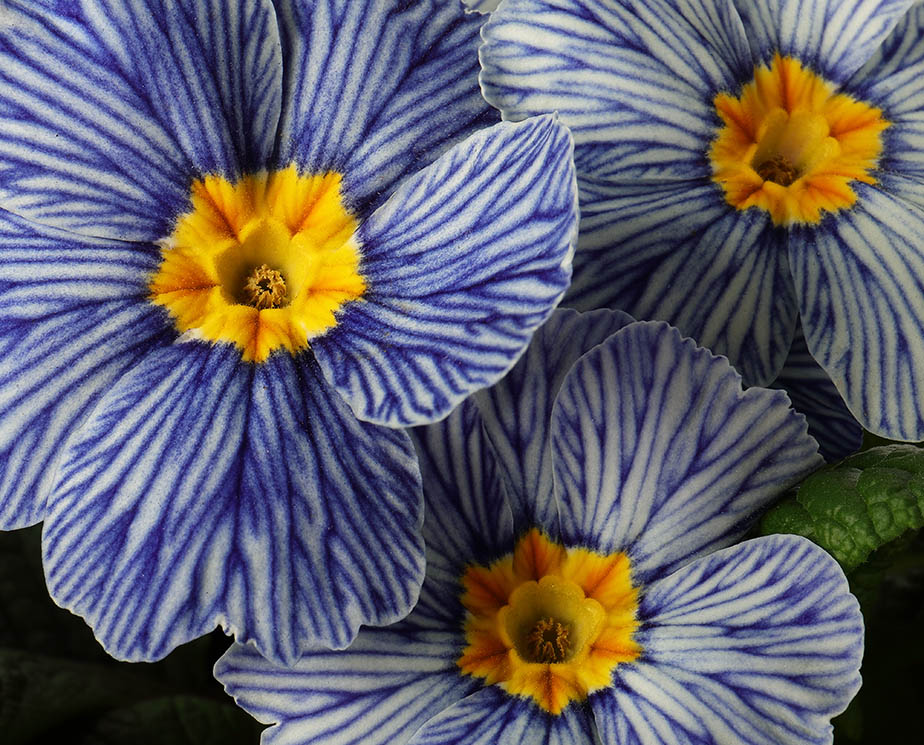
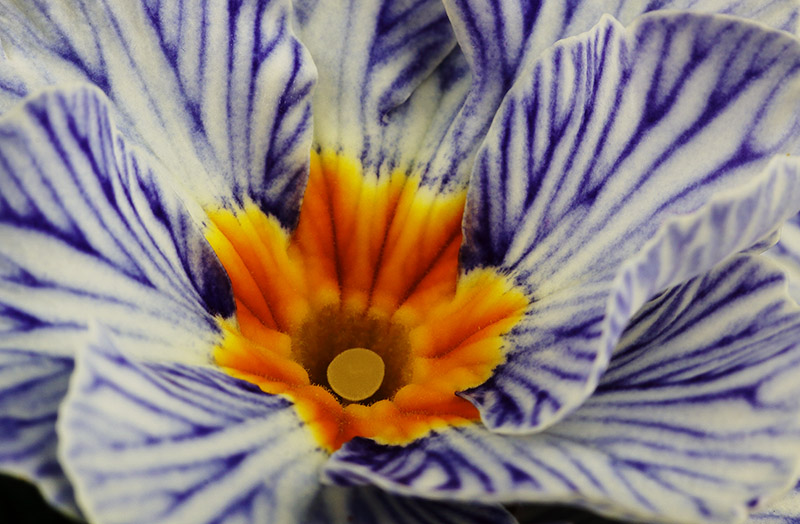
Macro photograph of Primula acaulis 'Zebra Blue'
The yellow centre is a striking contrast to the blue and white petals.

The primrose I bought turned out to be ‘Zebra Blue’. It has white petals which are veined with a wonderfully deep blue (which looks rather as if ink has been spilled onto the flowers and gradually crept along the veins). The deep orangey-yellow centres are the perfect contrast to offset the blue and make the flower very eye-catching indeed.

Most of the flowers and plants that I buy are seen as potential subjects for my photography. A flower with markings like these is an ideal source of inspiration for an afternoon spent experimenting with different compositions.

The prominent veining of the petals and the vibrant contrast of the centre of the flower makes this primrose a very bold subject. It’s easy to use the patterns produced by the veins to create a rather abstract feel. But, because some of the flowers have a more muted colouration, with much paler veining (sometimes becoming a lighter, more denim-blue), there is the option of creating a softer, more gentle image too. I have only just started exploring where this little flower may lead my photography and I reckon that I need to spend a few more hours in it’s company…what fun!

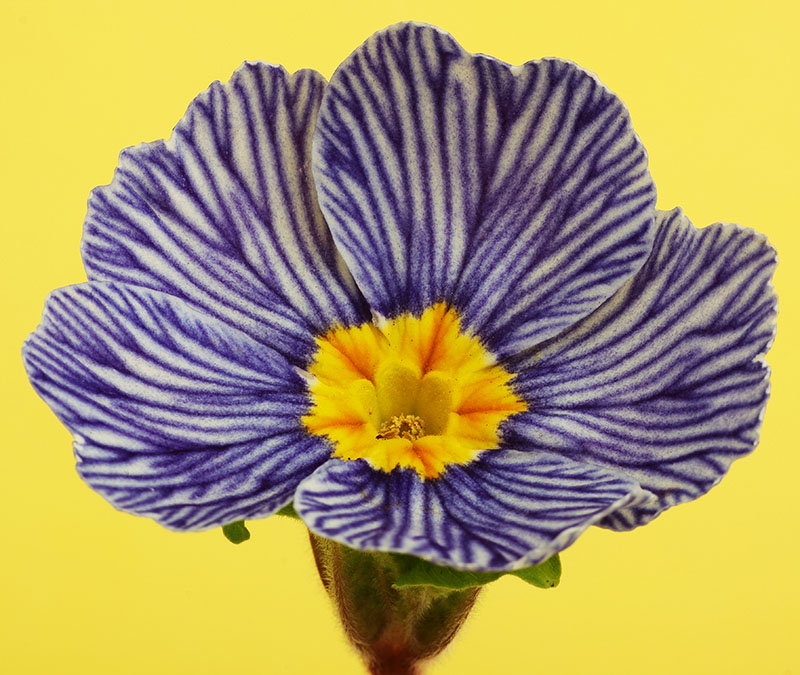
Blue-veined primrose flower against a yellow background.
I used a contrasting yellow background to give a bolder image in this photo.

A Little Survivor

Pink-freckled hellebore.

It’s the time of year when gardeners start peering anxiously at their plants, looking for signs of life. Are there new shoots emerging from the ground? Some leaf buds perhaps? Anything to show that the plant has made it through the winter?

But, as any gardener is unfortunately all too aware, it’s not just the winter that can kill our plants. There are all sorts of possible mishaps. Here, building work has been one of the biggest dangers to our garden plants in the last couple of years.

We’ve had several things done to our house, the main one being the addition of a conservatory. So there have been piles of building materials parked around the garden.

The resulting chaos was made worse by our decision to reclaim and re-use the brick pavers from the big old patio area where the conservatory was to be built. And, of course, they needed to be piled somewhere out of the way. Like the bit of border that has been overrun by a huge mass of Japanese anemones and is desperately in need of renovation…. and all before I could think to warn that there were other plants there too.

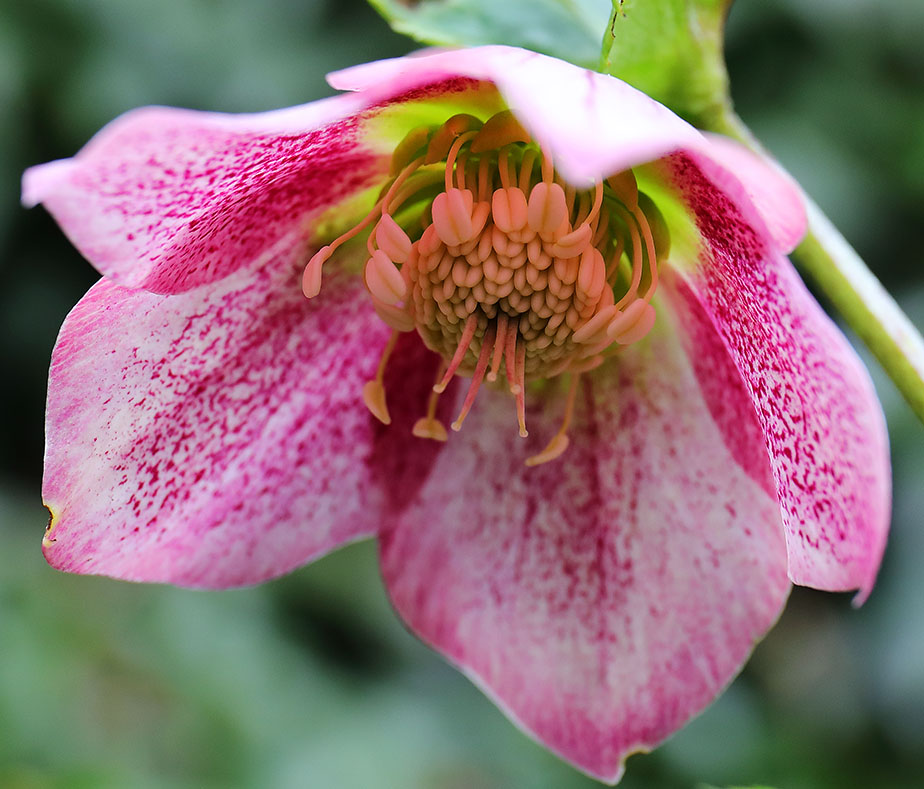
Pink-spotted hellebore flowers.
Last year there was only a single leaf on this hellebore – this year it has managed to flower.

To be honest, I’d forgotten precisely where the hellebore was and it wasn’t until I saw one lonely hellebore leaf poking out between a couple of bricks that I realised that it had pretty much been covered. The bricks were removed but I didn’t really expect the plant to survive. There seemed to be too little of it left. That made me feel both sad and guilty because it was such a lovely little plant and one that I had enjoyed photographing.

So you can imagine how surprised and delighted I was to discover that it was growing again and this year it has even managed to produce some flowers. (I feel as if it has forgiven me! And I’ve promised it that I’ll take better care of it in future!)

It’s extraordinary how strong the life force in plants can be and how they can often tolerate conditions that really should kill them. (I know, it’s true that the plants that you try to get rid of – the weeds – that seem show the most determined ability to survive.) Every so often you get a wonderful surprise when a plant that you fear has died reappears, when new buds grow on what look like dead stems, or when new seedlings spring up from old plants unexpectedly. That vitality can certainly be something to celebrate!

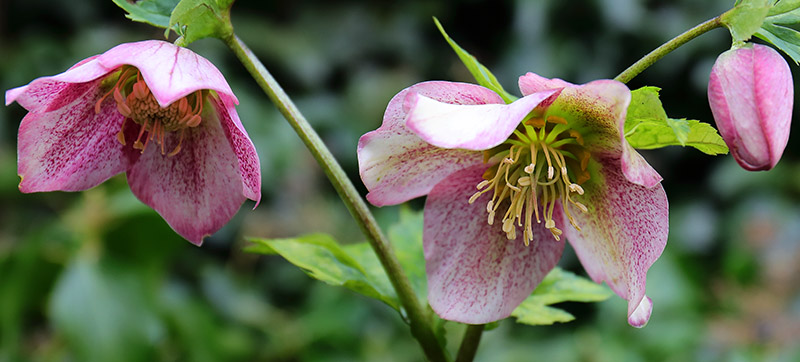
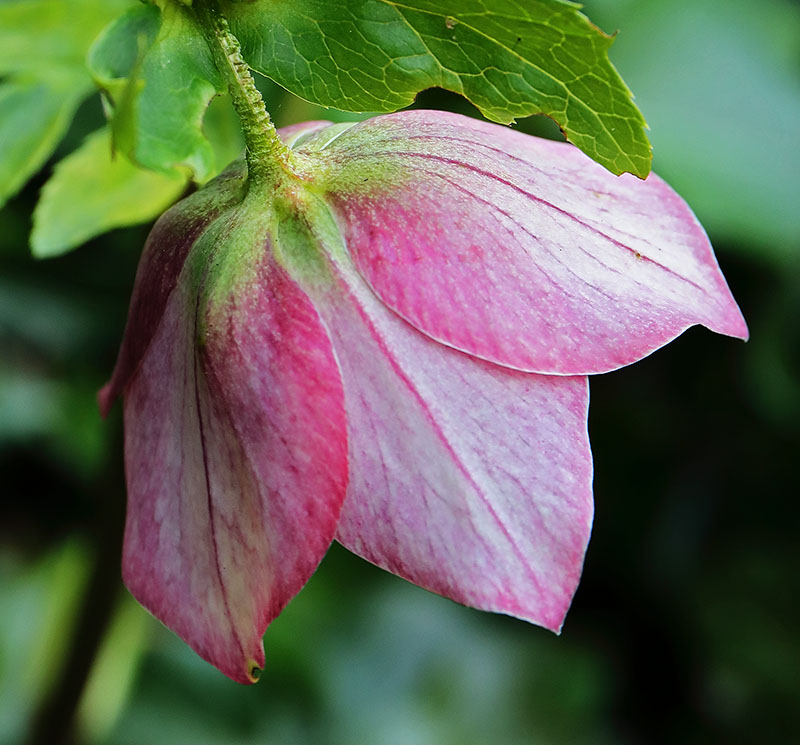
Pink hellebore flower.
The usual view of a shy hellebore flower.

Signs of Spring.

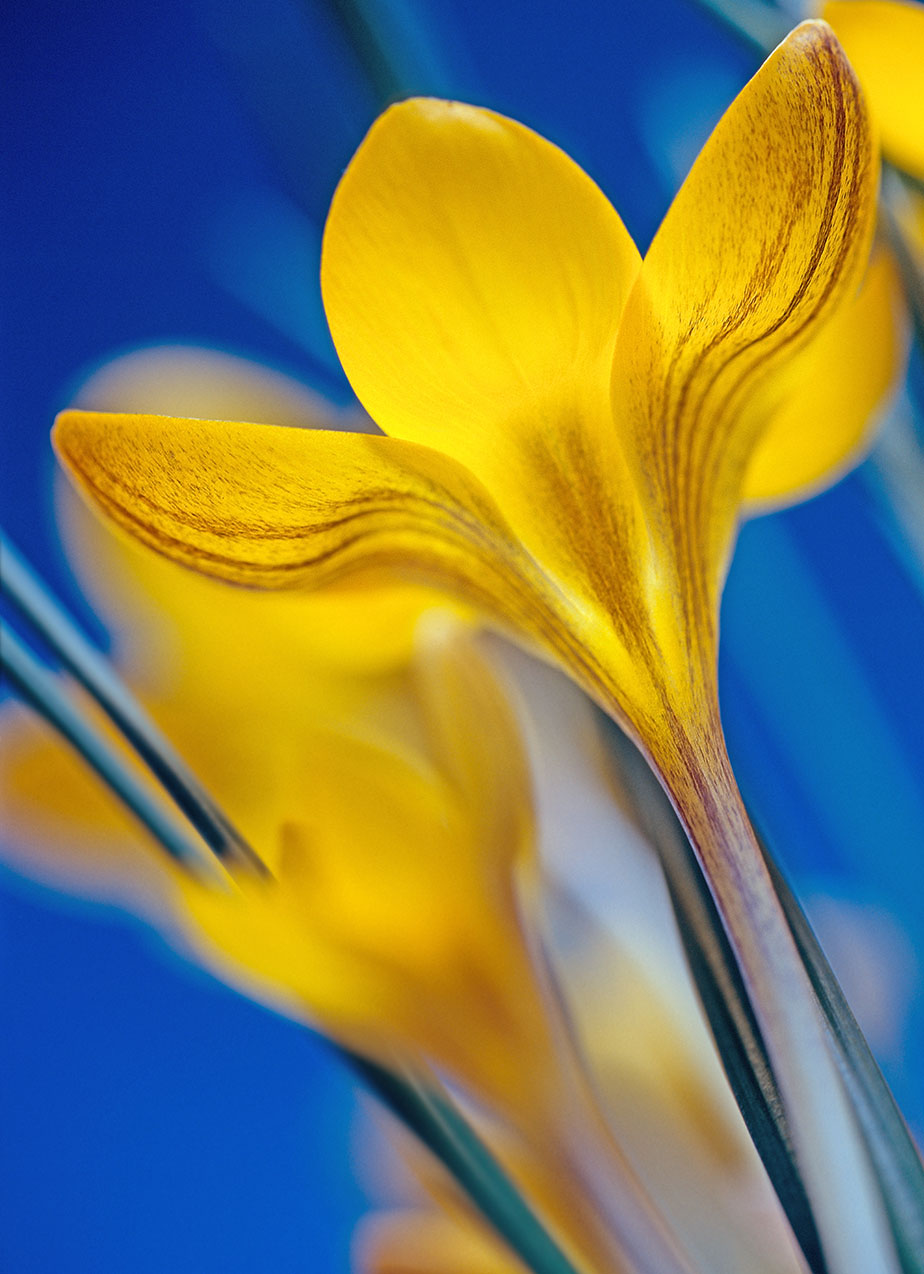
Yellow crocus 'Zwanenberg Bronze'

The first crocuses are in flower and it feels as if spring is on its way. The sun grows brighter and stronger, the air is quite a few degrees warmer, and the daylight is lasting for longer. Winter, at last, is receding and it feels good to get outside and enjoy the re-emergence of life in the garden.

Winter can be a time when life runs at a bit of a low ebb. Most days are too cold and grey to wish to spend a lot of time outdoors and you really just want to keep warm and dry. (But, if there is a warmish winter day, with perhaps a little bit of sun, then I do try to get some gardening done. It raises my spirits and allows me to escape the incarceration of being stuck indoors.)

Spring is an invitation to go out into the garden and look for the start of new growth. Right now the snowdrops are still in flower, crocuses are showing as little flashes of colour here and there, and the daffodils are promising flowers soon, as their leaves lengthen and their buds fatten.

The long wait of winter is almost over. It’s time to start work in the garden again.

There’s lots to do – new borders to dig, weeds to get rid of, and old dead growth to be cleared away to allow room for the new shoots. The work is invigorating and brings a connection to the earth and the life that is quietly pulsing within it.  That connection creates an awareness of the natural world. It gives a feeling of being part of that world, and of well-being and pleasure at being able to contribute to it.

If you’re coming to the end of winter wherever you live, I hope that you’re starting to see the signs of spring. Do enjoy them!

The Romantic Rose

Pink and cream rose

Because it will be St. Valentine’s Day on Thursday, it feels appropriate to post photographs of roses this week.

The rose has a long connection with love and romance, right from ancient Greek times when it was associated with Aphrodite, the goddess of love. And these days, the red rose is seriously in demand on February 14th.

But, for me, all roses have a romantic feel about them, especially if they have a scent. (What is more wonderful on a still summer morning, than a garden of scented roses? Just imagine the rich colours, the velvety petals that beg you to stroke them, and that trace of perfume in the air…)

In Britain, it seems to be rather in the blood to love roses. It’s the nation’s favourite flower (according to a survey in 2017) and it’s also the national flower of England. (But England only – the national flower of Scotland is the thistle and Wales has the daffodil.)

The first roses I fell in love with must have been the dog roses I saw as a young child. They grew on some of the roadside verges near my home and it seemed like a kind of miracle to see something so perfect just growing in the wild. Much later on, I can remember my joy when I moved into my first home with my husband, and discovered that there were well-established roses in the garden. When we moved here, the garden had just a single rose bush but, oh my, the scent is lovely! (I think it must be Zephirine Drouhin – bright cerise-pink and very few thorns.) I liked it so much that I planted another near the back door, so that we can smell it’s perfume when we step outside.

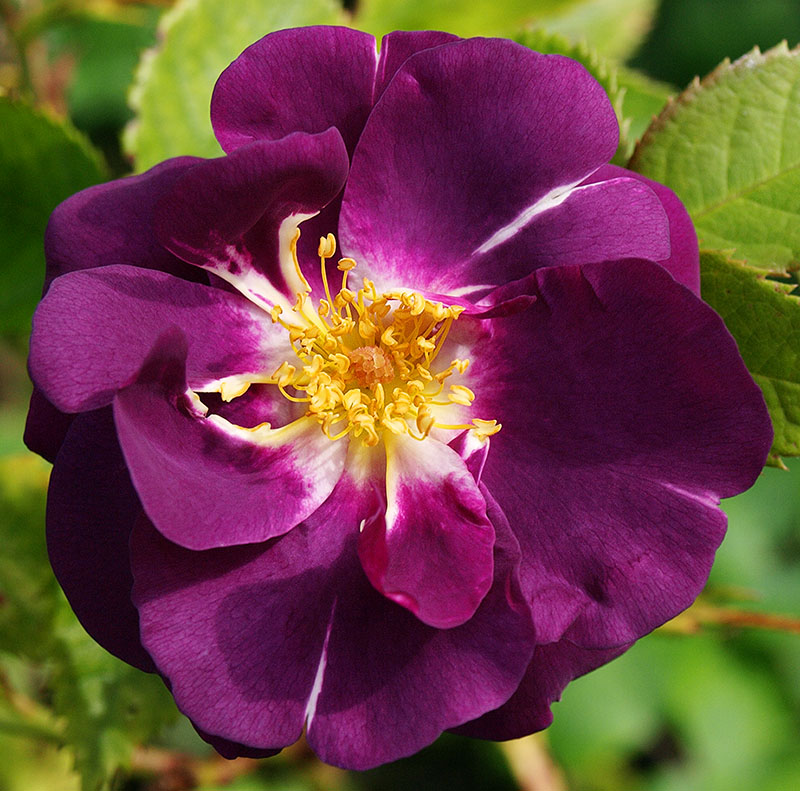
By now, as you would expect, I’ve planted several other roses in the garden, including the rose below. It is ‘Rhapsody in Blue’, an absolutely lovely rose. The scent is sweet and the colour works beautifully with so many other garden plants in the pinky-purply range. (I also have another one planted beside a pale yellow hybrid tea rose called ‘Grandpa Dickson’ and they look very good together.)

By the way, if you happen to get a bunch of dark purple roses, the colour is supposed to mean ‘lasting love’ – a pretty good alternative if the red roses are all gone! (I would certainly be happy with them!)

I hope that you and your loved one have a very happy Valentine’s Day.

Rose 'Rhapsody in Blue'
Rose ‘Rhapsody in Blue’ – my favourite.

Glorious Green: Ferns

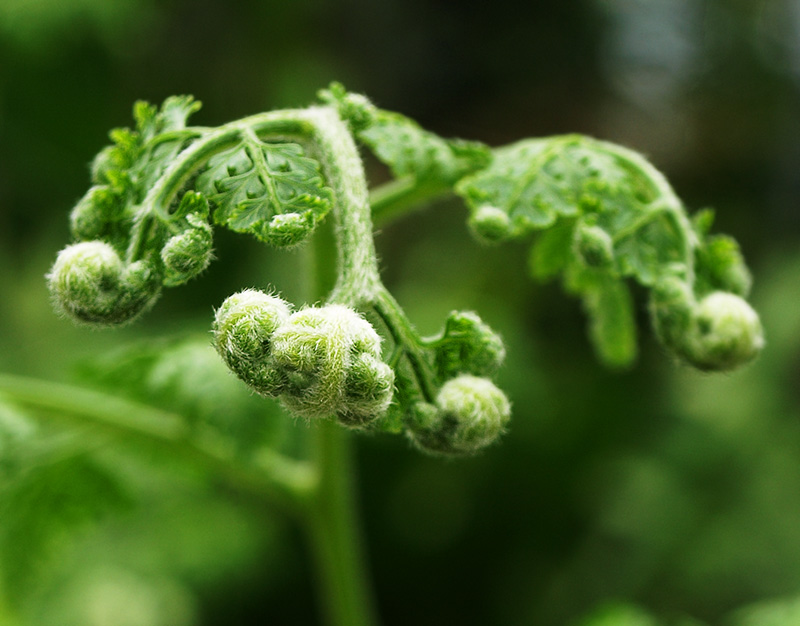
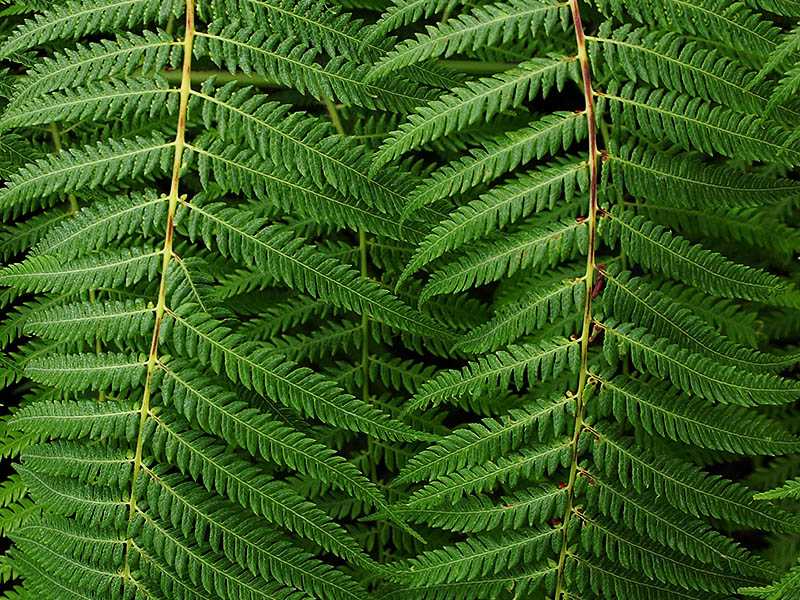
A tightly-curled young fern frond.

By this stage of winter, the idea of lush green growth is tremendously appealing. It’s easy to dream of densely-planted borders bursting with re-emerging life – new shoots, unfurling leaves, and buds that swell with the promise of flowers soon to come.

Amongst all this imagined greenery, ferns would be an excellent addition. Their finely-cut fronds would contrast well with larger, more solid leaves and would bring their delicate textures and a subtle feel of pattern to the border.

Hairy reverse of young fern-frond.
The young fronds are very hairy on the back. They look almost furry!

For photography, ferns make an excellent subject. There’s lots of pleasing detail, especially in the new foliage. The tightly-wound curls of the young fronds are especially photogenic and the outside surface of the curl (the back of the frond) can be surprisingly hairy and looks soft to touch.

(Saying that has made me realise that I didn’t actually touch them. I could have put out a finger to stroke the back of a curl, but I didn’t. Perhaps I should have. Taking photographs can absorb you so that you forget to interact with plants – or a garden – in ways that you would do, if you were walking around without a camera. So maybe I need to leave my camera in its bag for a while and explore the garden, before I start to take photographs.)

Fern leaves.
Fern leaves can add some texture and pattern to garden borders.

In my real garden (as opposed to the imaginary borders where anything will grow), it is too hot and dry for most ferns. The Male Fern (Dryopteris filix-mas) is reckoned to be able to cope with drier conditions than most, but that is if it’s in the shade. Most of our garden gets a lot of sunshine, but there is one area that is shaded by the house in the afternoon. Now I am wondering if that bit of ground might be suitable for making a bog garden and I’m imagining the other moisture-loving plants that would also be happy there. (Though there are ferns that don’t need such damp soil.)

If I do go ahead with this idea, the beautiful green growth of ferns would be a very satisfying reward. (Meanwhile, my imaginary garden is flourishing!)

Fern fronds with curled tips.
The curly tips of the fronds of this fern look unusual.

A Waiting Time…

Frosted violets

This is the time of year when everything seems to be waiting for spring. Here and there the tips of leaves are starting to show where bulbs will flower. And the flowers that have made it through the chilly months so far are starting to go over.

We don’t have many winter-flowering plants here (yet). The few that there are, give a bit of cheer and encouragement when we step outside and keep us company as we get some work done in the garden. They also give me something to photograph, although I feel that I really need to grow more winter-flowering plants to keep myself inspired. (I have recently planted a couple of Clematis cirrhosa varieties. They’re just tiny plants as yet but one does have a couple of buds…)

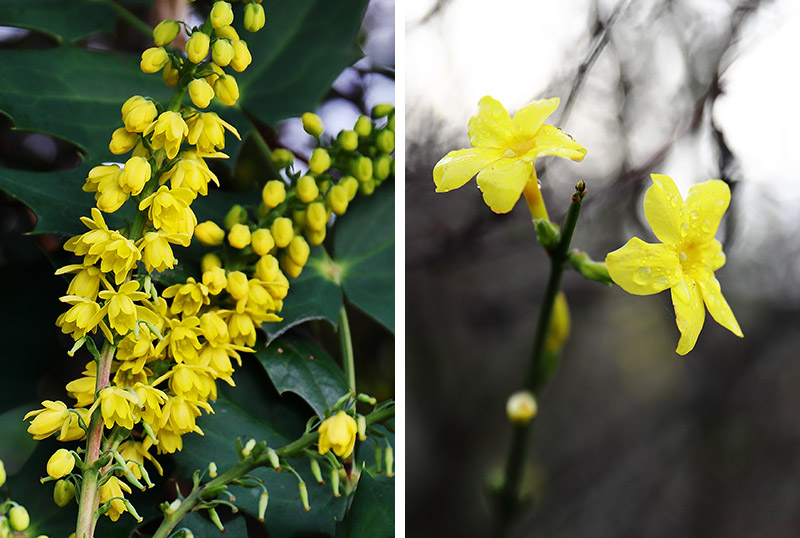
Mahonia (left) and winter jasmine (right).
Winter sunshine – a splash of yellow from a mahonia (left) and winter jasmine (right).

The flowers of Mahonia japonica, despite being past their best, still give a yellow glow from right at the back of the garden. It’s a beast of a shrub to weed around or (if feeling brave) to prune because its leaves are extremely prickly but it makes up for this with its reliable winter colour and the bold shape of its leaves. The yellow jasmine, though, has finished flowering ’til next year. It’s tiny yellow flowers disappeared suddenly during the last week, leaving what feels like a very empty space on the fence that supports it.

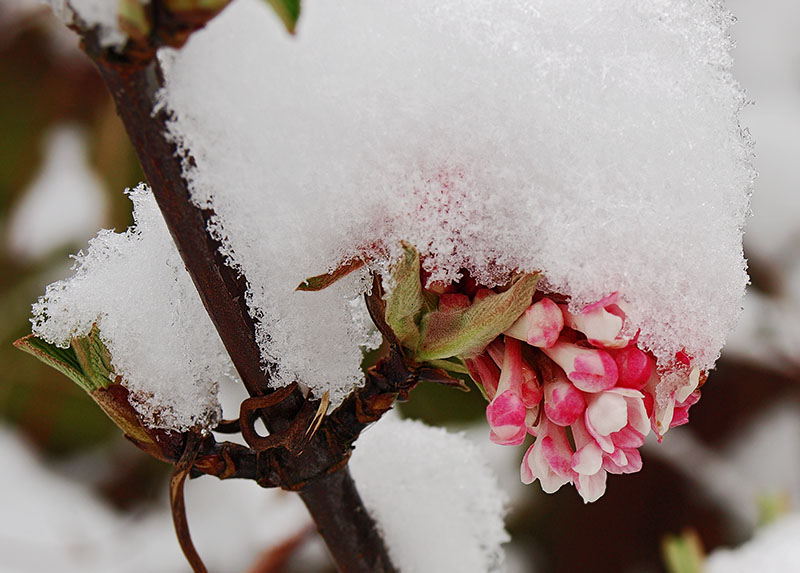
That bit of the garden feels even emptier now because the Viburnum bodnantense ‘Dawn’ that grows nearby has also finished flowering. (It’s in the photograph below, but this isn’t a recent picture – we haven’t had any snow here yet.)

Snow-covered Viburnum bodnantense flower.
Viburnum flowers can cheerfully ignore the snow.

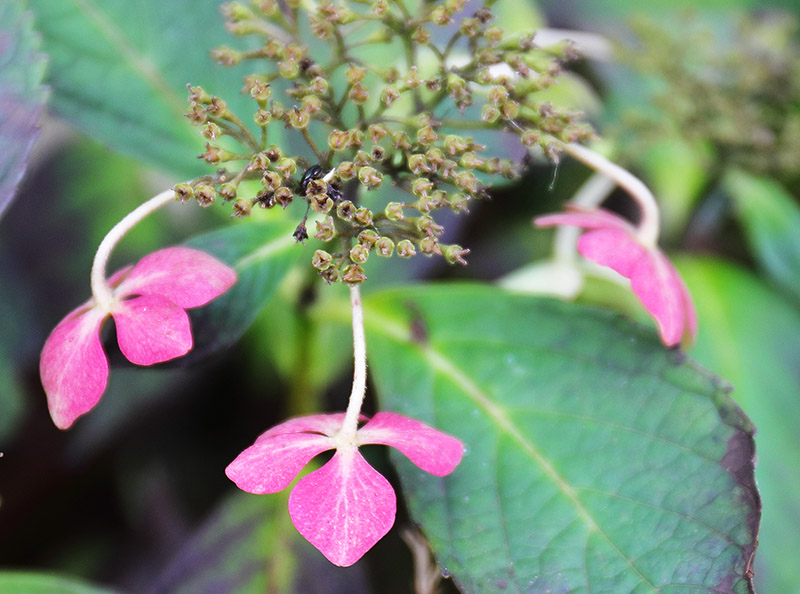
Some flowers have managed to hang on past the time they would normally be gone. The flowers of the hydrangea in the photo below managed that quite literally, but, since the frosts in the last couple of weeks, have now all turned brown. That little dash of pink was welcome while it lasted.

Hydrangea flowers in winter.
The last few pink hydrangea flowers hung on, until the frost turned them brown.

Another hanger-on was scabious. Tiny little red or pink flowers continue, just one or two per plant, wherever they have seeded themselves around the garden. They make a delightful discovery as you wander round the garden on a winter day. And they show that, despite all the dead stems and foliage around the rest of the garden, plants are still growing and thriving, no matter what the weather may feel like. Life in the garden flows on as we wait for spring.

Frosted pink Scabious
This little scabious flower is almost entirely iced-up.