It’s Easter Sunday today, so I thought I’d post a photograph of a pasqueflower (Pulsatilla vulgaris). This flower gets its name because it flowers around Easter time, with ‘pasque’ being like ‘paschal’, i.e. ‘relating to Easter’. (But I haven’t figured out whether the name should be one word or two. Pasqueflower or pasque flower? Both seem to be used.)
The Easter holiday tends to be a really busy time in the garden. Everything has started to grow very fast so that any old dead growth needs to have been cleared away to allow it space. (I leave the old foliage on some plants over winter to help protect them against frost.) The weeds are growing quickly too, so the battle with them keeps me busy. It seems like an unlikely and very distant dream that I might someday have a fairly weed-free garden!
But it’s seed-sowing that becomes the biggest rush for me. I really shouldn’t leave it so late. Everything else always feels so urgent and this year I’ve taken extra time to dig a pond. (That is going quite well and I’m hoping to have it done before the ground dries out and becomes really difficult to dig.) Now I need to get those seeds all sown and hope that all the tiny seedlings will have time to catch up…or they can just flower a bit late if they like!
With all the frantic gardening, it would be easy to forget to enjoy the garden itself and the tremendously sunny and warm weather we’re having this weekend. So I will make a point of sitting down for a while and just enjoy the outdoor scene for a bit. (That’s if the cat will let me have my seat…he thinks I put it in a nice sunny spot just for him!)
Whatever you’re doing this weekend, whether you celebrate Easter (or even have a long weekend for that matter), I hope you get a chance to get outside and enjoy some sunshine and the natural world. Happy Easter!
Last week I mentioned my friend Judy’s beautiful garden and that I’d been able to spend a morning taking photographs in it. While I was there, I noticed that there were a good number of white flowers sprinkled around the garden and I really liked the effect they created.
There’s something very fresh and delicate about the appearance of white flowers. If they were pure white, they could seem a little harsh. But many have yellow stamens or perhaps a touch of another colour on their petals, and this softens the effect greatly. Seen growing in great numbers, perhaps spreading their way amongst other flowers, the look they create can be quite dreamy or fairytale.
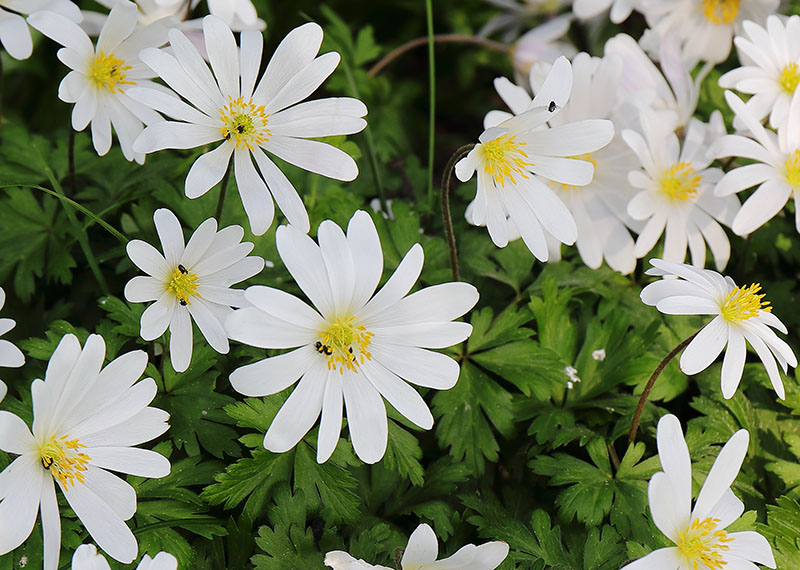
Anemone blanda soon builds up to a healthy colony if it’s in the right spot.
In combination with the blues and yellows of other spring flowers, white is truly beautiful. It brings a lively sparkle and gleam to the garden and chases away the memory of winter greys.
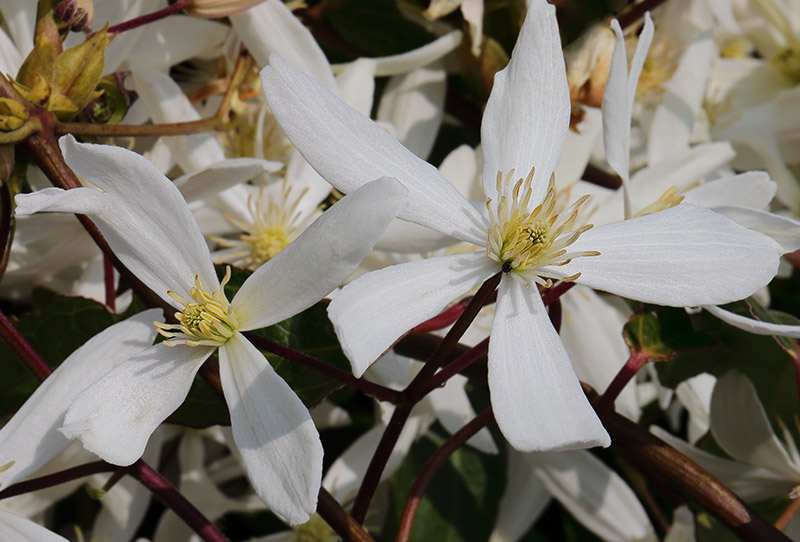
The most enchantingly impressive sight in Judy’s garden that morning was a Clematis armandii which had become a great mass of flowers along a section of fence. Not only are the flowers beautiful to look at – they’re scented too. That’s a pretty good bonus!
Clematis armandii flowers practically sparkle in the spring sunshine!
I enjoyed the effect of these white flowers so much that I’m thinking about ways of bringing a bit more white into my own garden. A background of green foliage makes white flowers look especially fresh and lively, so that is something I’d like to try.
There are a few white flowers in my garden. The best are Gaura lindheimeri, which has flowers that look like a flock of tiny white butterflies, and the white pulsatilla that I photographed last month. There’s also a big old white lilac (Madam Lemoine) which has very scented double white flowers and is a joy to be near…except that it has one problem. When its flowers die, they turn brown but don’t fall and because this lilac has become very tall now, it’s difficult to prune them off. The dead flowers really spoil the look of this lilac, so I will have to get out my telescopic lopper on a pole thingy to remove them. That will most likely be exhausting but worth it!
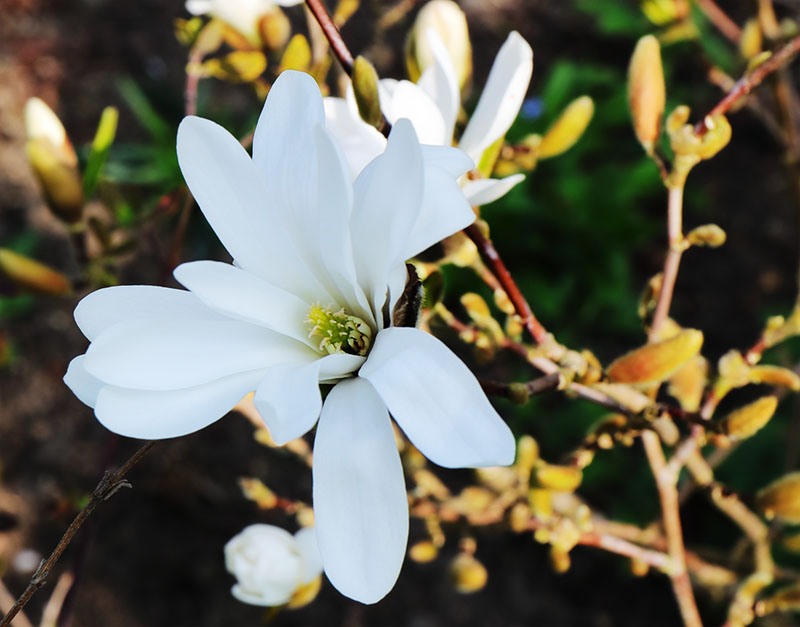
Magnolia stellata brings a touch of the exotic to the garden.
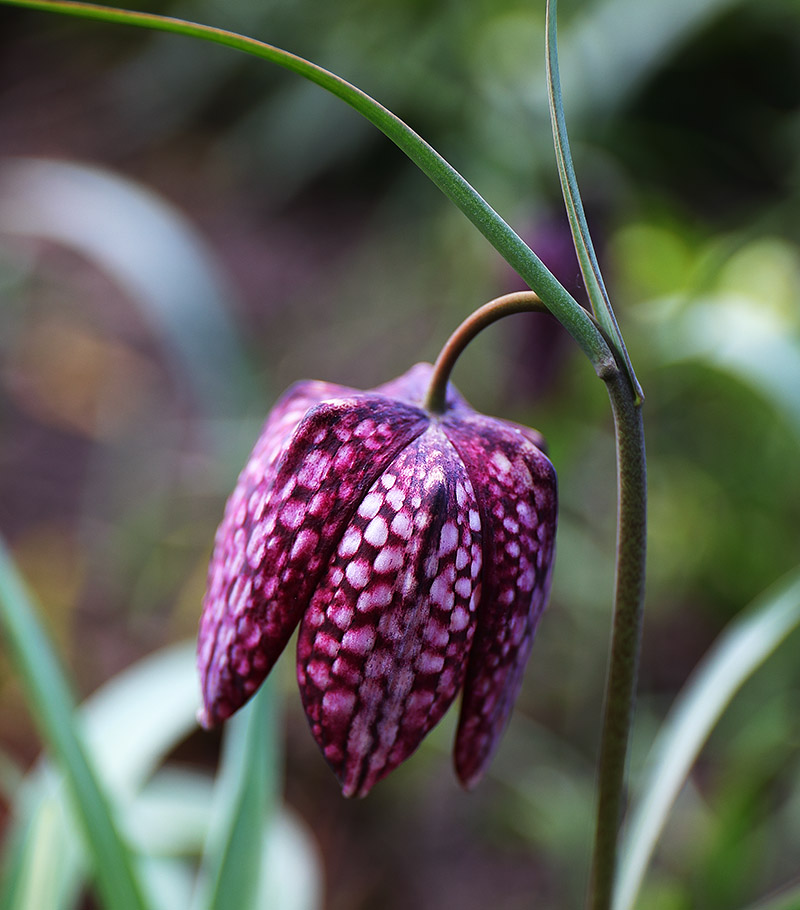
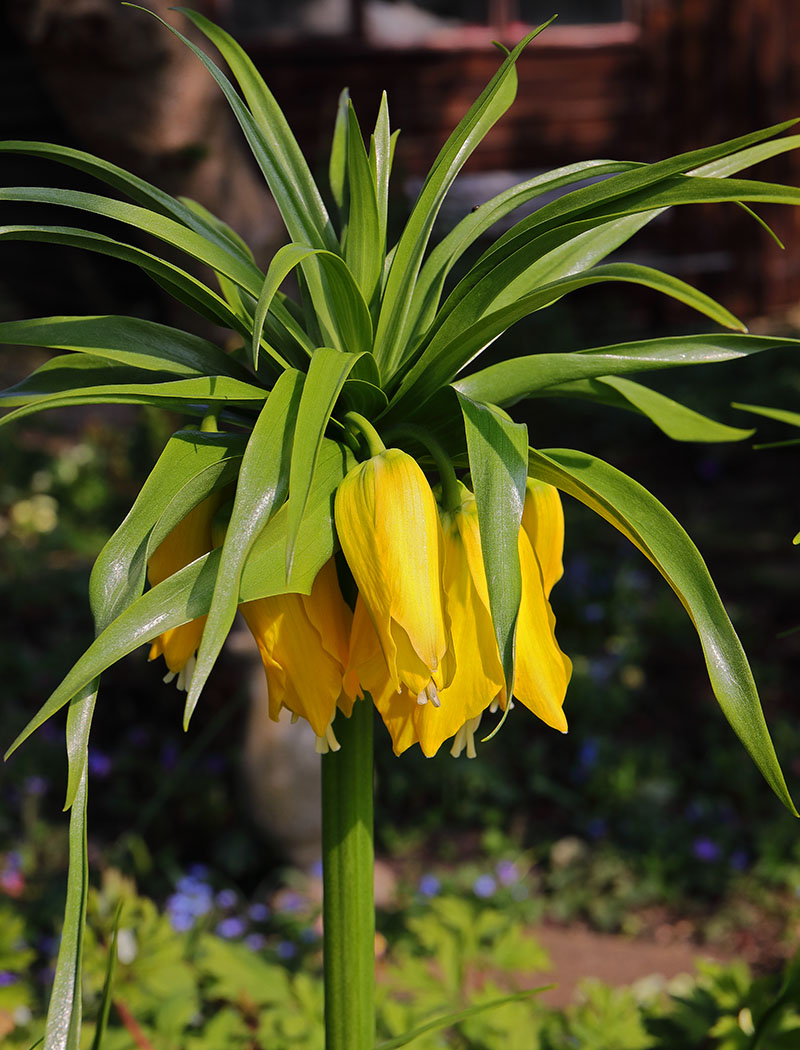
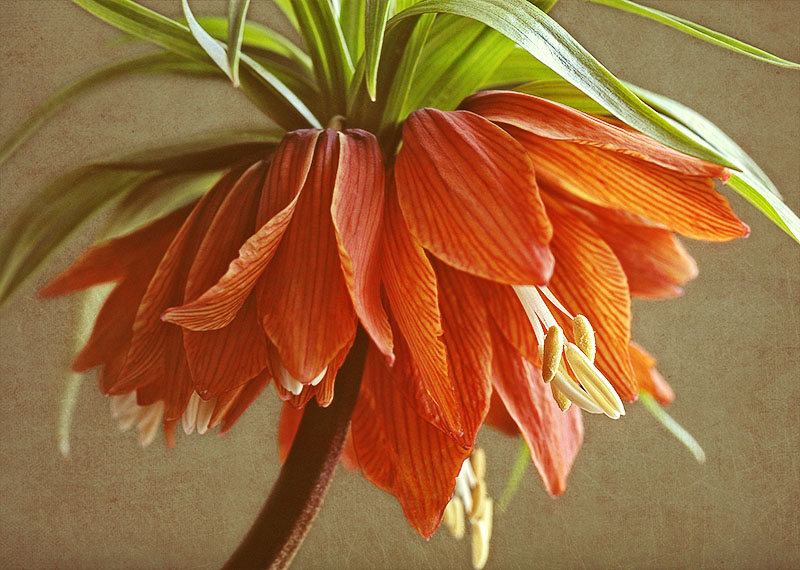
Snake’s head fritillaries and crown imperial fritillaries are strange-sounding names for very unusual plants. For a photographer, the flowers make an enticing subject and I was lucky enough to be able to take some pictures of them in my friend Judy’s beautiful garden. (Thanks, Judy – I had a lovely time!)
The snake’s head fritillary (Fritillaria meleagris) gets its name from the shape of the unopened flower bud – long and pointy at the tip – a bit like a viper’s head. It has other folk-names, according to Richard Mabey’s ‘Flora Britannica’ (a fascinating book, worth dipping into if you happen to get the chance). These include crowcups, leper’s bells, sulky ladies, and frawcups (possibly derived from a place-name).
These fritillaries were recorded to be growing in gardens in the UK in 1578 but not recorded in the wild until 1736. Some say that this suggests they may not be native to the UK but, even so, they used to be seen in their thousands growing in damp meadows. Sadly, as agriculture developed over time and land was drained and ‘improved’, they lost these habitats. There are still a few places where they can be found growing wild and, thankfully, they’re popular with gardeners, so they are still able to create a magical sight every spring.
The markings on this fritillary look as if someone painted them on!
The tiny chequered markings on the snake’s head flowers are irresistible. They make me want to get as close as I can to photograph the flower, in an attempt to show how much they look as if they’ve been carefully painted on by hand. The graceful shape of the flower, with those almost umbrella-like ribs at the top adds to the attraction. (Doesn’t it look just as if the petals are fabric, stretching over the ribs that are holding it in shape? Umbrellas for the ‘wee folk’!) The way the bell of the flower hangs from its curving stem, with one or two long and slender leaves soaring up from it, completes a very elegant flower.
The crown imperial has an extraordinary top-knot of leaves!
The crown imperial fritillary is very different from its serpent-like sister. A dramatically long stem holds the bold cluster of flowers up high. Instead of the one or two leaves rising above the flowers, there is a generous top-knot of leaves, giving a very distinctive appearance. This ‘crown’ of arching leaves is said to have given the plant its name, due to its resemblance to the shape of an imperial crown. However, a competing claim suggests that the name derives from the plant having been grown in the Imperial Botanic Garden in Vienna after the plant was brought there from Persia in 1576.
Like the snake’s head fritillary, I wanted to be able to get close enough to the flower of the orange crown imperial to show the markings on its petals. (The veins on the petals of the yellow version are barely visible by comparison.) These darker veins create a strong pattern of lines that make the flower even more pleasing to photograph. These flowers are such star performers when you come to take their photograph, that I think I will need to try growing some fritillaries in my own garden.
The prominent veins of these orange crown imperial flowers make them all the more striking.
It’s the time of year when gardeners start peering anxiously at their plants, looking for signs of life. Are there new shoots emerging from the ground? Some leaf buds perhaps? Anything to show that the plant has made it through the winter?
But, as any gardener is unfortunately all too aware, it’s not just the winter that can kill our plants. There are all sorts of possible mishaps. Here, building work has been one of the biggest dangers to our garden plants in the last couple of years.
We’ve had several things done to our house, the main one being the addition of a conservatory. So there have been piles of building materials parked around the garden.
The resulting chaos was made worse by our decision to reclaim and re-use the brick pavers from the big old patio area where the conservatory was to be built. And, of course, they needed to be piled somewhere out of the way. Like the bit of border that has been overrun by a huge mass of Japanese anemones and is desperately in need of renovation…. and all before I could think to warn that there were other plants there too.
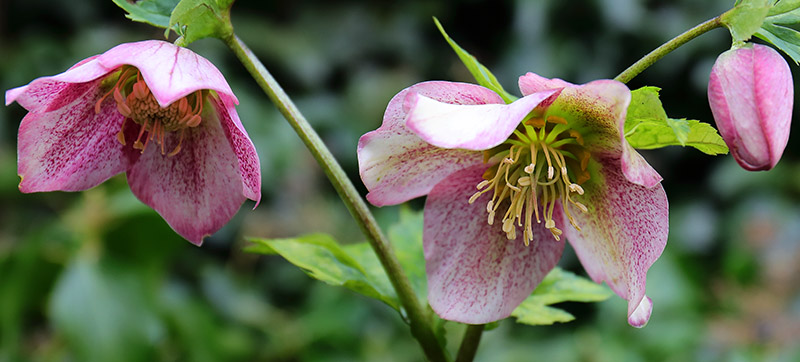
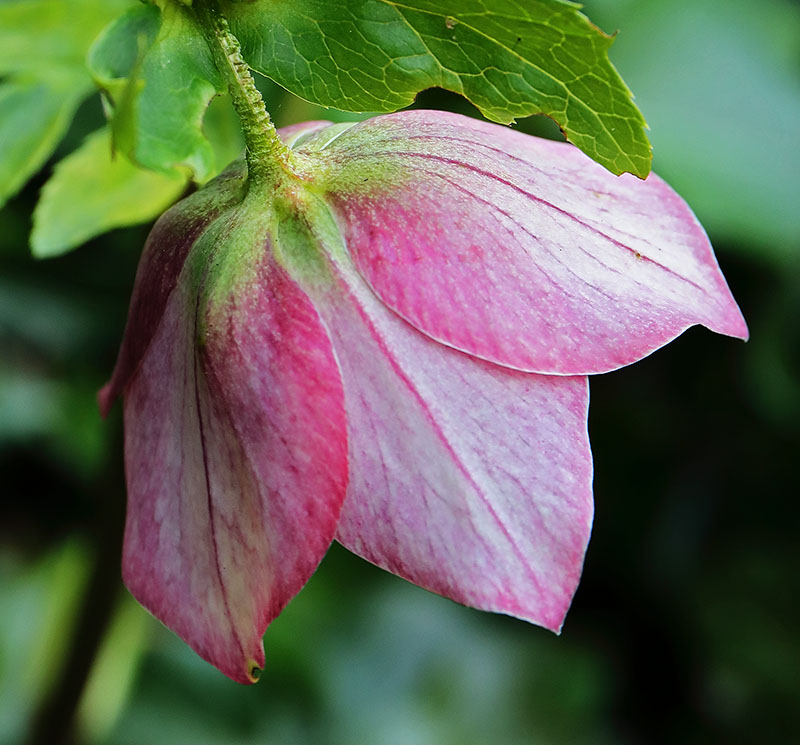
Last year there was only a single leaf on this hellebore – this year it has managed to flower.
To be honest, I’d forgotten precisely where the hellebore was and it wasn’t until I saw one lonely hellebore leaf poking out between a couple of bricks that I realised that it had pretty much been covered. The bricks were removed but I didn’t really expect the plant to survive. There seemed to be too little of it left. That made me feel both sad and guilty because it was such a lovely little plant and one that I had enjoyed photographing.
So you can imagine how surprised and delighted I was to discover that it was growing again and this year it has even managed to produce some flowers. (I feel as if it has forgiven me! And I’ve promised it that I’ll take better care of it in future!)
It’s extraordinary how strong the life force in plants can be and how they can often tolerate conditions that really should kill them. (I know, it’s true that the plants that you try to get rid of – the weeds – that seem show the most determined ability to survive.) Every so often you get a wonderful surprise when a plant that you fear has died reappears, when new buds grow on what look like dead stems, or when new seedlings spring up from old plants unexpectedly. That vitality can certainly be something to celebrate!
By this stage of winter, the idea of lush green growth is tremendously appealing. It’s easy to dream of densely-planted borders bursting with re-emerging life – new shoots, unfurling leaves, and buds that swell with the promise of flowers soon to come.
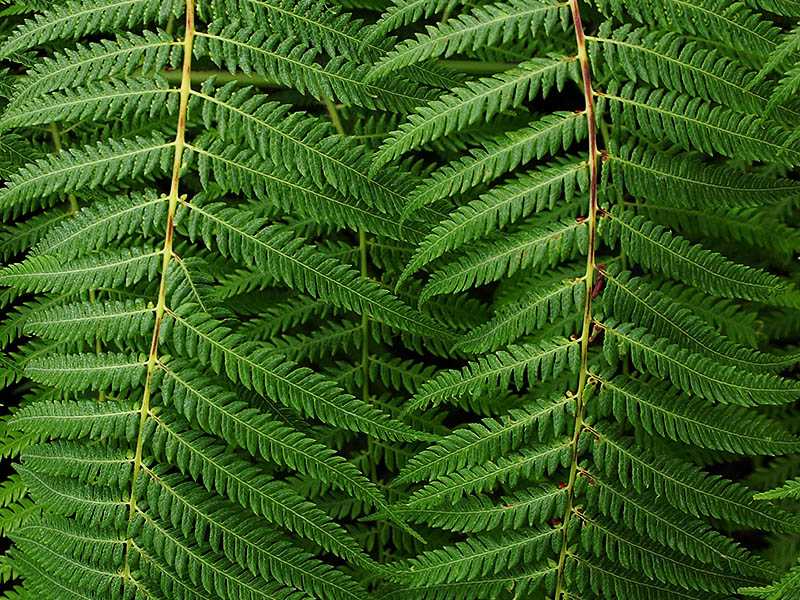
Amongst all this imagined greenery, ferns would be an excellent addition. Their finely-cut fronds would contrast well with larger, more solid leaves and would bring their delicate textures and a subtle feel of pattern to the border.
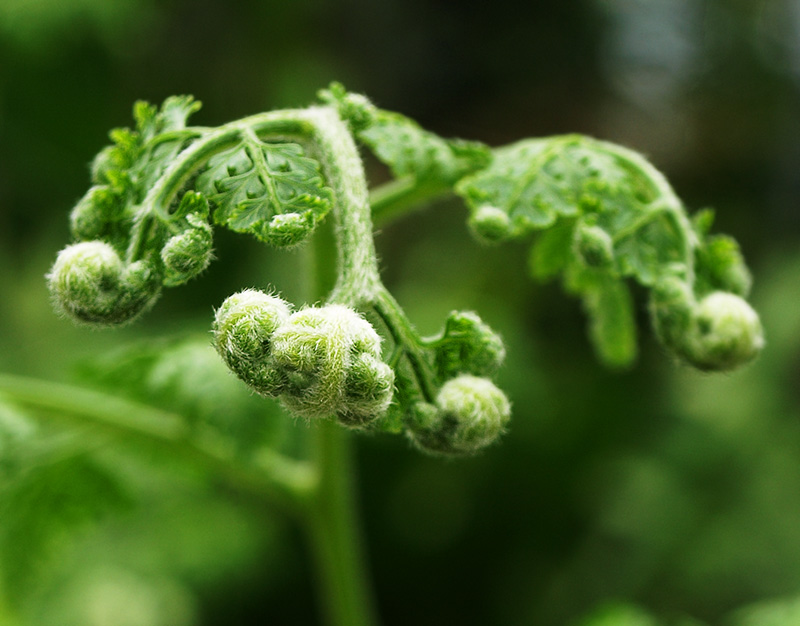
The young fronds are very hairy on the back. They look almost furry!
For photography, ferns make an excellent subject. There’s lots of pleasing detail, especially in the new foliage. The tightly-wound curls of the young fronds are especially photogenic and the outside surface of the curl (the back of the frond) can be surprisingly hairy and looks soft to touch.
(Saying that has made me realise that I didn’t actually touch them. I could have put out a finger to stroke the back of a curl, but I didn’t. Perhaps I should have. Taking photographs can absorb you so that you forget to interact with plants – or a garden – in ways that you would do, if you were walking around without a camera. So maybe I need to leave my camera in its bag for a while and explore the garden, before I start to take photographs.)
Fern leaves can add some texture and pattern to garden borders.
In my real garden (as opposed to the imaginary borders where anything will grow), it is too hot and dry for most ferns. The Male Fern (Dryopteris filix-mas) is reckoned to be able to cope with drier conditions than most, but that is if it’s in the shade. Most of our garden gets a lot of sunshine, but there is one area that is shaded by the house in the afternoon. Now I am wondering if that bit of ground might be suitable for making a bog garden and I’m imagining the other moisture-loving plants that would also be happy there. (Though there are ferns that don’t need such damp soil.)
If I do go ahead with this idea, the beautiful green growth of ferns would be a very satisfying reward. (Meanwhile, my imaginary garden is flourishing!)
The curly tips of the fronds of this fern look unusual.
This is the time of year when everything seems to be waiting for spring. Here and there the tips of leaves are starting to show where bulbs will flower. And the flowers that have made it through the chilly months so far are starting to go over.
We don’t have many winter-flowering plants here (yet). The few that there are, give a bit of cheer and encouragement when we step outside and keep us company as we get some work done in the garden. They also give me something to photograph, although I feel that I really need to grow more winter-flowering plants to keep myself inspired. (I have recently planted a couple of Clematis cirrhosa varieties. They’re just tiny plants as yet but one does have a couple of buds…)
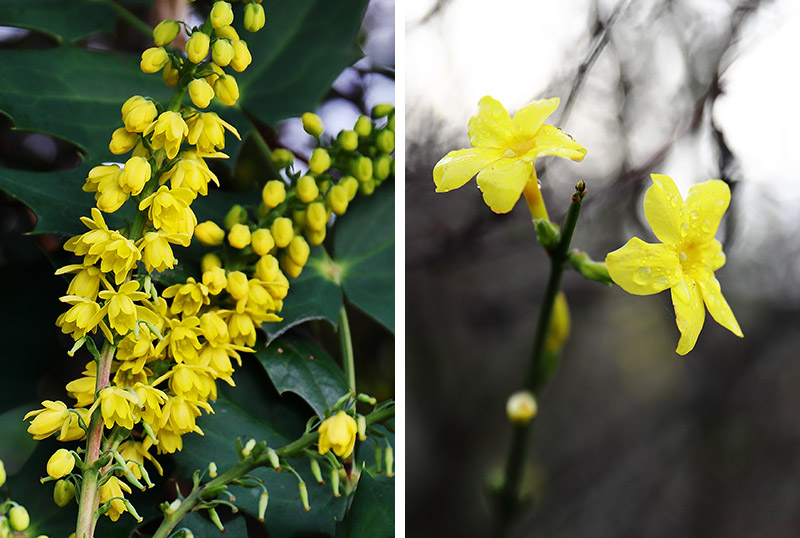
Winter sunshine – a splash of yellow from a mahonia (left) and winter jasmine (right).
The flowers of Mahonia japonica, despite being past their best, still give a yellow glow from right at the back of the garden. It’s a beast of a shrub to weed around or (if feeling brave) to prune because its leaves are extremely prickly but it makes up for this with its reliable winter colour and the bold shape of its leaves. The yellow jasmine, though, has finished flowering ’til next year. It’s tiny yellow flowers disappeared suddenly during the last week, leaving what feels like a very empty space on the fence that supports it.
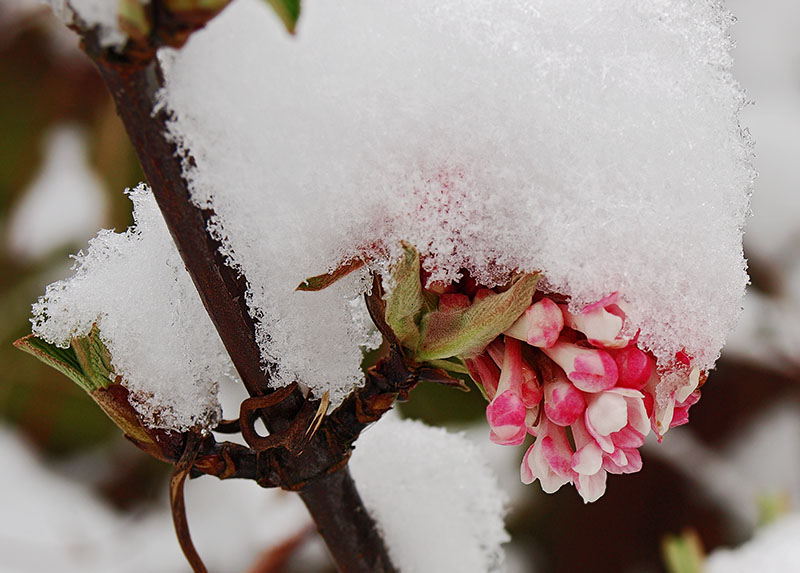
That bit of the garden feels even emptier now because the Viburnum bodnantense ‘Dawn’ that grows nearby has also finished flowering. (It’s in the photograph below, but this isn’t a recent picture – we haven’t had any snow here yet.)
Viburnum flowers can cheerfully ignore the snow.
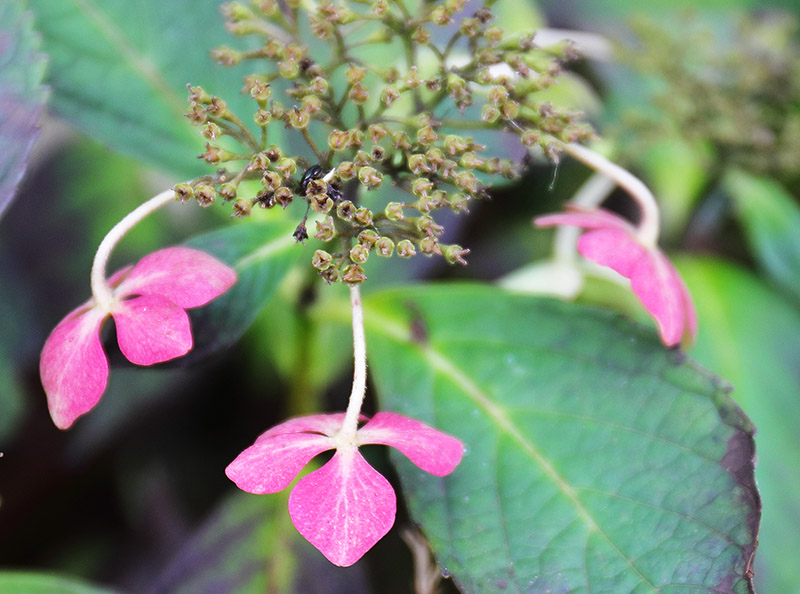
Some flowers have managed to hang on past the time they would normally be gone. The flowers of the hydrangea in the photo below managed that quite literally, but, since the frosts in the last couple of weeks, have now all turned brown. That little dash of pink was welcome while it lasted.
The last few pink hydrangea flowers hung on, until the frost turned them brown.
Another hanger-on was scabious. Tiny little red or pink flowers continue, just one or two per plant, wherever they have seeded themselves around the garden. They make a delightful discovery as you wander round the garden on a winter day. And they show that, despite all the dead stems and foliage around the rest of the garden, plants are still growing and thriving, no matter what the weather may feel like. Life in the garden flows on as we wait for spring.
This little scabious flower is almost entirely iced-up.
There have been a few frosty mornings recently. This morning’s was one of the heaviest frosts so far, the other was on Christmas Day. Both were still and silent, as if the cold was somehow transfixing not just the frosted plants, but sound and movement too.
These are the mornings that feel special in the winter garden. Camera in hand, it’s time to explore this frozen world of new creations. Old seed-heads and dead foliage are transformed into glittering sculptures that will last only until the sun erases them. It’s an ephemeral world – cold and quiet and unfamiliar.
Frost has created tiny firework bursts from these alliums
I always hope that some of the more interesting seed-heads will last long enough to become frosted. This year the weather has been kinder than most winters and there has been little in the way of strong winds or heavy rain. So the seed heads of agapanthus and alliums have kept their frail structures intact and are even holding onto quite a few of their seeds still.
It’s exciting to find out what the frost has been up to in the garden. There are all sorts of little gems waiting to inspire a close-up photograph. The cold makes it hard to linger for long, but it’s worthwhile. For the work of the frost has made it possible to photograph something delicate and transient and, once winter has gone, it will be a long time before the opportunity returns.
Hydrangea petiolaris with a light touch of frost.
It doesn’t take a lot of frost to create something to photograph. The plants in the centre of the garden, where it is more open, get a lot of frost but those towards the edges are sheltered by fences and evergreen shrubs. The climbing hydrangea in the photo above has a fairly protected position. But its dead flower-head has had enough frost to line the edges and pick out the veins of the larger petals. The tiny flowers in the centre of the head have been turned to lace – an effect that will vanish as soon as the frost melts.
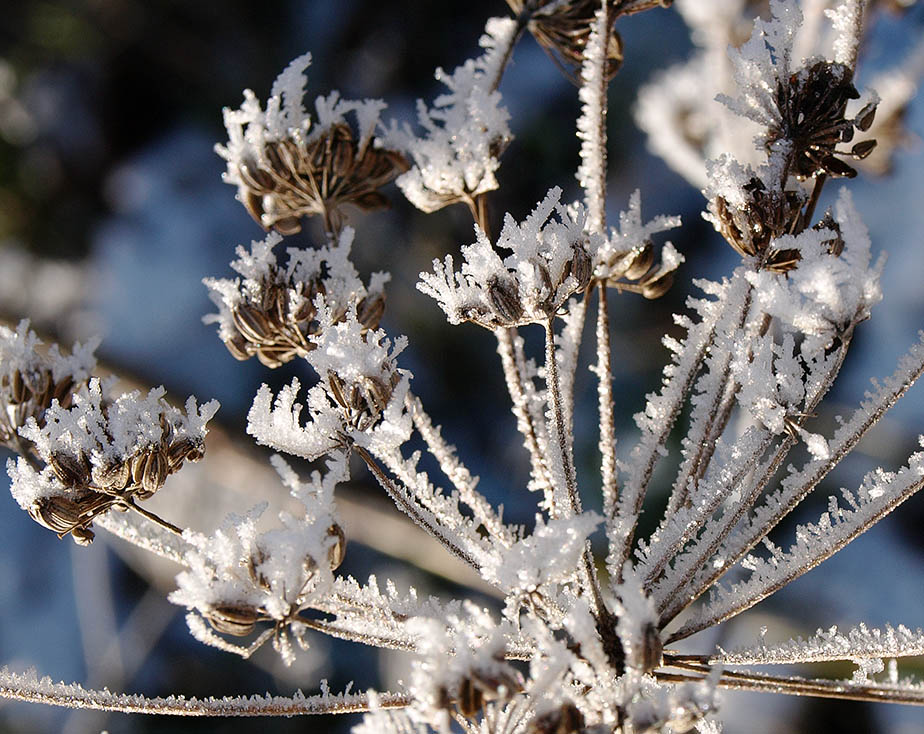
Wild carrot (Daucus) was sown late to catch the frost
Sometimes there are still a few flowers left in the garden for the frost to embellish. I had sown some wild carrot seeds much later than normal, in the hope that the plants might still be around when the frosts came. So the frost turned the flowers that were left on the plants into little ice-encrusted embroideries, just waiting to be photographed up close.
Other flowers aren’t really supposed to be around when the heavy frosts arrive. The Anemone coronaria below was too eager to flower. (Last year’s flowers were much later – probably sometime in February.) The mild weather in December persuaded them to put in an early appearance but the flowers couldn’t last long once things turned more wintry. Never mind! The flower may have ‘gone over’ quickly but for just a short time, the frost has turned it into something wonderful, and allowed it to add a little magic to the garden.
This Anemone coronaria flowered very early and got thoroughly frosted.
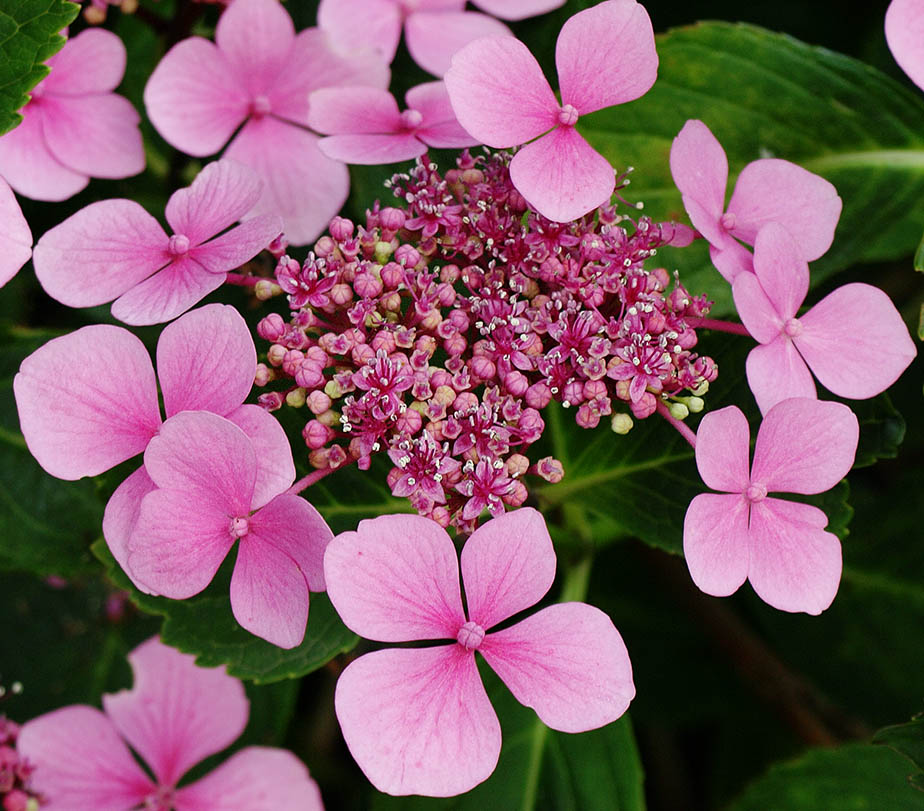
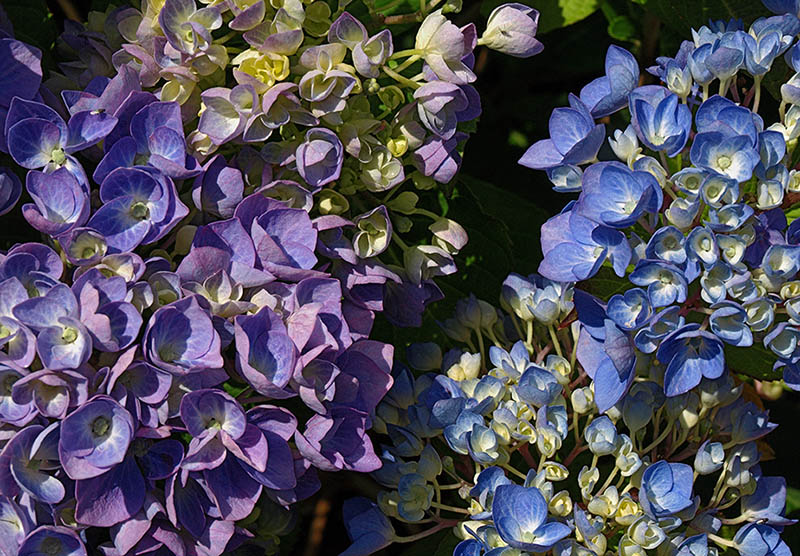
Hydrangeas make me wish that I could just wave a magic wand and change my garden soil…moister and more acidic would do fine.
Then I would be able to grow blue hydrangeas, or, failing that, a nice purply-blue shade like the hydrangea in our old garden in Scotland. It was Hydrangea macrophylla ‘Mariesii’ (a lacecap) and had flowers that ranged from a good blue to a more lilac/pink shade. Many of the flowers graduated from blue at the centre of the petal to pretty much pink at the outside. It was really delightful and lovely to photograph.
The hydrangea in the top photograph is growing here in our Suffolk garden. It’s very pretty but there’s no chance of any blue in its flowers. Unlike our Scottish garden, which had a fairly acidic soil, the soil here is alkaline. So our hydrangeas will never be blue. (Oh we could try…with acid-based compost, rainwater, and added aluminium sulphate or organic materials such as coffee grounds and eggshells, but that’s doing things the hard way. Much better to go with the conditions you have.)
I wish I could grow hydrangeas with these colours here!
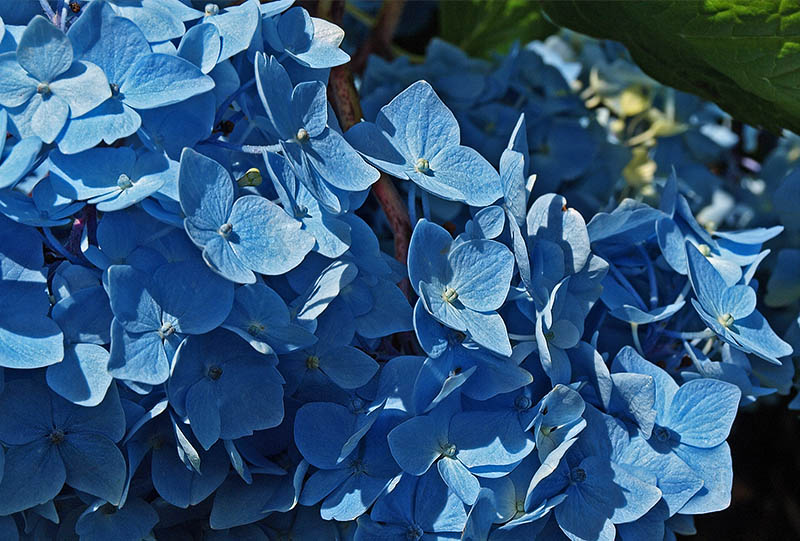
So I can only dream about having hydrangeas with flowers in wonderful shades of purple and blue like in the photo above. Or even a stunning blue like the hydrangea below. (Well, winter is a good time for indulging in fantasy gardening, sitting by a warm fire with your favourite books and seed catalogues.)
Visiting other people’s gardens does at least give me a chance to photograph hydrangeas of different types and colours. Finding a plant that you really love is one of the great joys of garden-visiting. And usually means that there’s a growing wishlist of plants to hunt for in the nurseries and garden centres.
What a fantastic blue!
I find that the flowers of the lacecap hydrangeas are much easier to photograph than the mophead types. The mopheads can be an unruly mass of flowers that don’t cooperate when it comes to creating structure within the photograph. The arrangement of the lacecaps, with their tiny ‘true’ flowers at the centre of a ring of bigger sterile flowers, means that it is easy to find an attractive angle for a photograph.
As well as the pink lacecap, we have the climbing Hydrangea petiolaris here. It’s growing along a shady fence and I’m a bit worried that it might actually be holding the fence up now! Replacing the fence panels in the future, without damaging the plant, might be really difficult, so I should try propagating some cuttings as insurance. The flowers of this climber are very like the lacecap flowers – again they make a good photograph. (I have just photographed a frost-covered flower that had lingered on the plant. That’s for another ‘frosty flowers’ blog post very soon.)
This ‘mophead’ hydrangea has very delicate colours.
Looking at the colours of the flowers here has me dreaming of summer gardens and making plans for my own. Our soil here is rather too dry for hydrangeas to be happy. The plants we already have needed to be watered frequently while they were young and the pink lacecap can still wilt a bit on a really hot day. It may be possible to create a more suitable space for hydrangeas in one of the areas that we’re re-developing in the garden. Somewhere with a bit of shade, maybe. But there will need to be lots and lots of good compost added to the ground to help it retain moisture…that will not be a quick job!
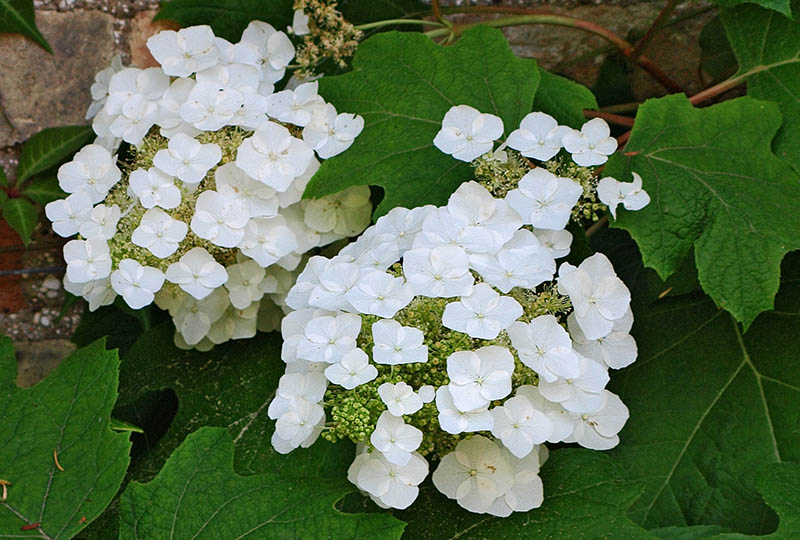
While I work to improve the soil in the garden here, I may just have to wait before planting any more hydrangeas. Meanwhile I hope I’ll be able to enjoy more of them in the gardens I visit. It’s exciting to see plants that I’ve not seen before, such as the oakleaf hydrangea below. (These seem to be less common than the mopheads and lacecaps here in the UK.) And I hope I’ll be able to take some more photographs too. (That’s my kind of plant-hunting!)
The large, rough leaves are a great foil for the white flowers of this ‘oakleaf’ hydrangea.
Snow can bring a bit of magic to the garden at this time of year. It covers up the dead leaves of perennials, hides weeds and makes tiny sculptures from the seed-heads that you’ve left for the birds. And if there’s frost too, then those seed-heads become like icy Christmas decorations.
It’s rare for us to get snow at Christmas here in the east of England. In fact, in the last few days, hubby and I have been using a mild spell of weather to get work done in the garden. (It’s very pleasant if you manage to follow where the sun is as you work.)
Snow is more likely in January, when the temperature always seems to drop and you really start to notice the cold. If it snows, then there’s not much chance to get any work done in the garden. It’s a good time to grab a camera and go for a walk, looking for things to photograph.
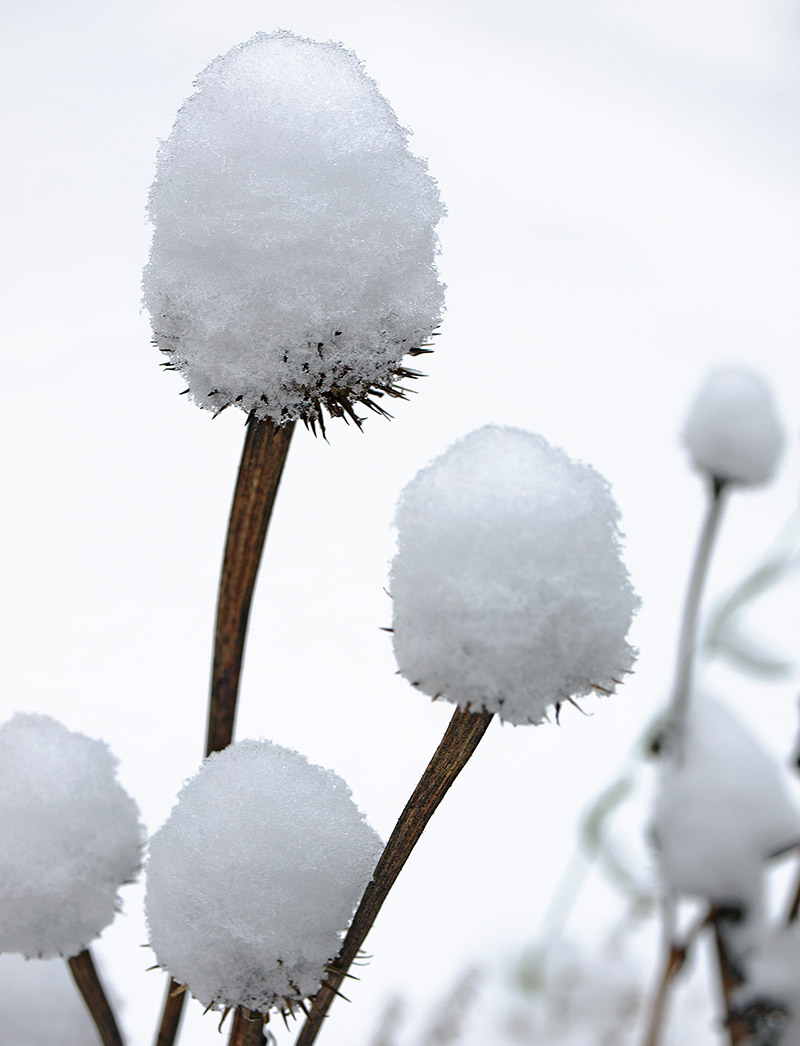
Guess what’s hiding under the snow! (Echinacea seed-heads.)
There are water meadows very close to our house, so this is where we usually walk. They become a great plain of white, etched with the dark shapes of trees and the even darker waters of the river. After one especially deep fall of snow, the temperature had risen enough to let the top surface of the snow melt slightly but it then re-froze as it got colder again. This made for a very satisfying walk, crunching through that top icy layer into the soft snow beneath.
Back in the garden, the plants may all turn to soft mounds of white. It can be hard to remember which is which. Everything becomes unfamiliar, clean and, for once, immaculately tidy. These are the days when I don’t look at the garden and immediately begin to think of all the jobs that are waiting to be done there. Instead I wander around with my camera, looking to see what strange forms the snow has created from the plants.
The opportunity to take photographs in the snow is quite rare here and doesn’t usually last very long. (These pictures were taken some time ago.) So if it snows this winter, I’ll have to take my chance quickly and get out into the garden to see what transformations the snow has made.
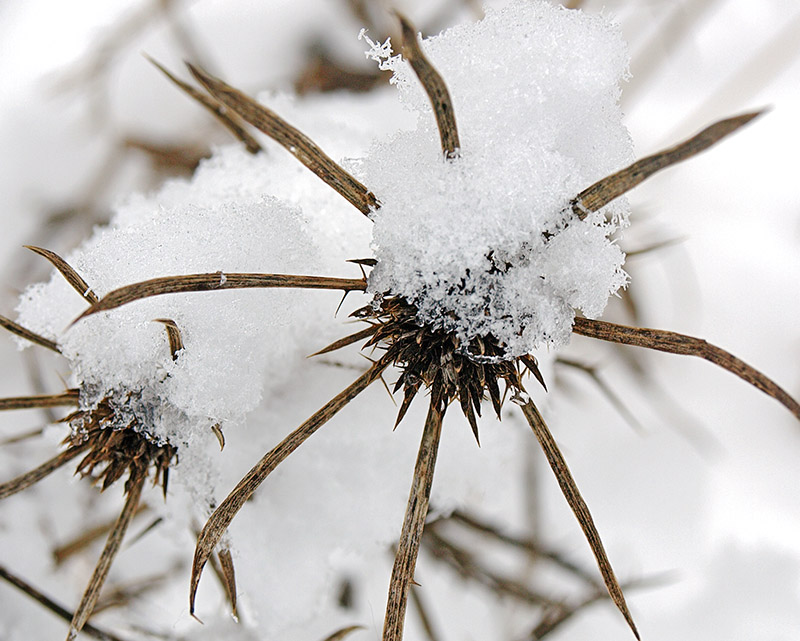
Eryngium seed-heads – prickly little starbursts in the snow.
Snow is part of our romantic image of Christmas – all white and crisp and ideal for sledging, snowballs and making snowmen. We very conveniently forget chaos on the roads, cancelled flights at snowbound airports and horribly slippery paths. Snow is an essential part of Christmas cards, holiday TV and happy childhood memories.
I won’t do a Bing Crosby and wish that all your Christmases may be white – it may be inconvenient for your travel plans or, if you’re reading this on the other side of the world, more than a bit unlikely! But I will say ‘May your days be merry and bright!’ I hope that you have a very happy Christmas.
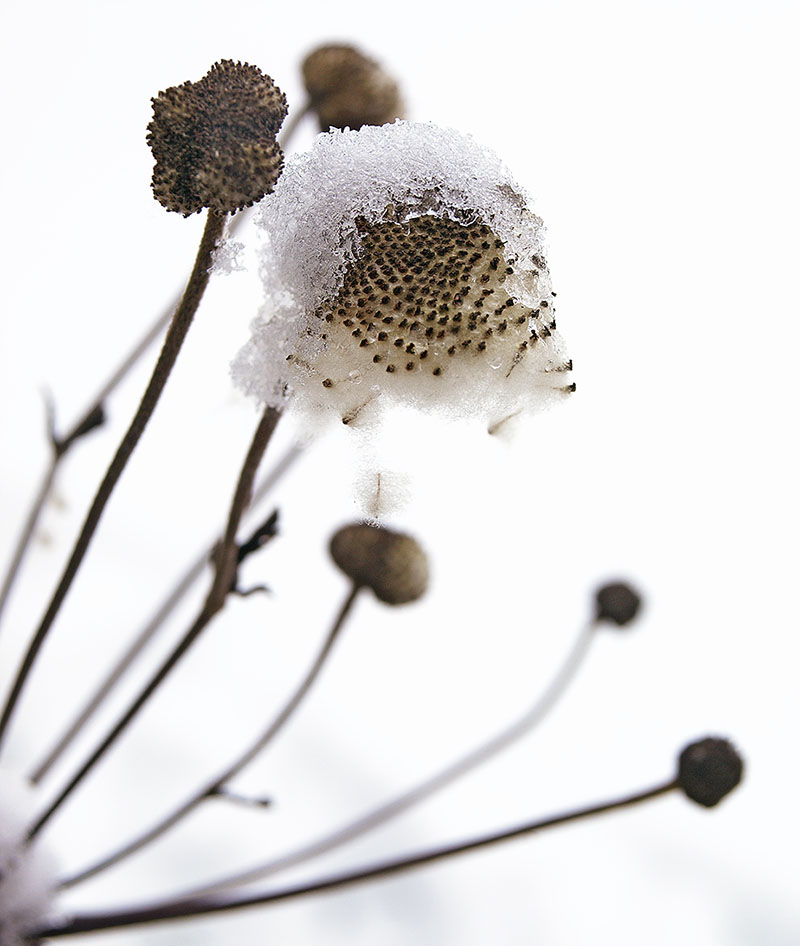
The fluffy seed-head of an anemone wears a little cap of snow.
Blue flowers are beautiful but those that are truly blue aren’t common. Those that come to mind first are delphinium, cornflower, salvia, morning glory and plumbago. Many of the flowers that we think of as blue have a hint or more of purple, mauve or lavender in their colouring.
I’ve been sitting comfortably inside while it’s been cold and sleety outside, looking through photos taken in the garden here. Working my way through them has made me aware of how often I choose to grow flowers in the purple-blue and mauve colour range.
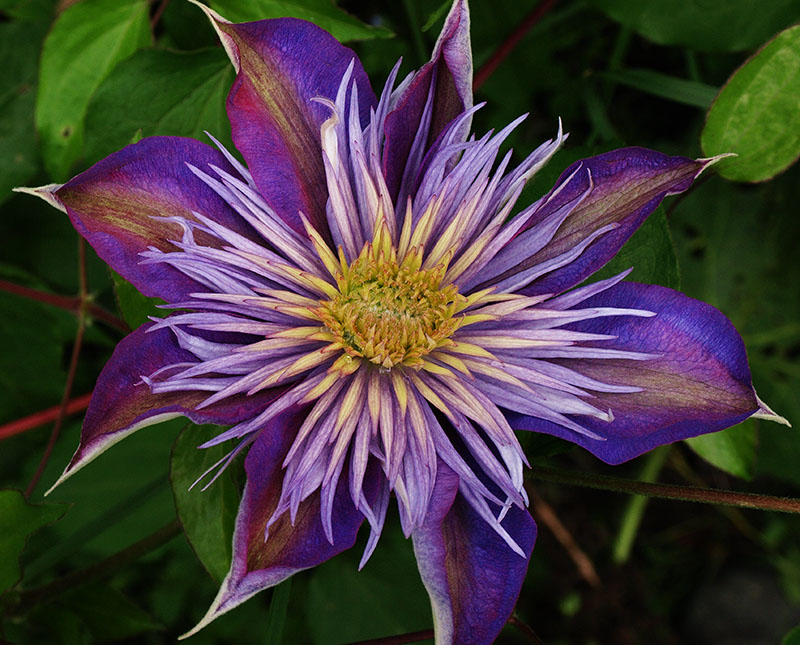
Blue and purple blend in the petals of this clematis.
The second photo of a clematis shows a very similar colouring to the first photo. (But you’ll see that the bud in that first photo develops very differently as it matures….) Violet-purples and lavender-blues seem to be very common colours for clematis. That can make it hard to choose between them.
The way the colours in the petals bleed into one another is very delicate. It’s almost like the way watercolours blend into each other and is something that I’m keen to try and capture in a photograph.
Blue and a lilac-y pink blend in the flowers of this penstemon.
The purply-blues, lavenders, mauves etc seem to all mix quite easily with other colours but not always with ‘true-blues’. However, the penstemon above seems to have managed this perfectly. Maybe nature can teach gardeners a thing or two about colour combinations. But, I prefer the colours in the flowers below, where the blue is a bit softer and seems to blend more gently with the lavender – perhaps there is a touch of red in the blue.
Left: Brodiaea Right: Iris
Going much more to the mauve/pink end of the colour range, there are many flowers that look beautiful and mix with the darker purple-blues very happily.
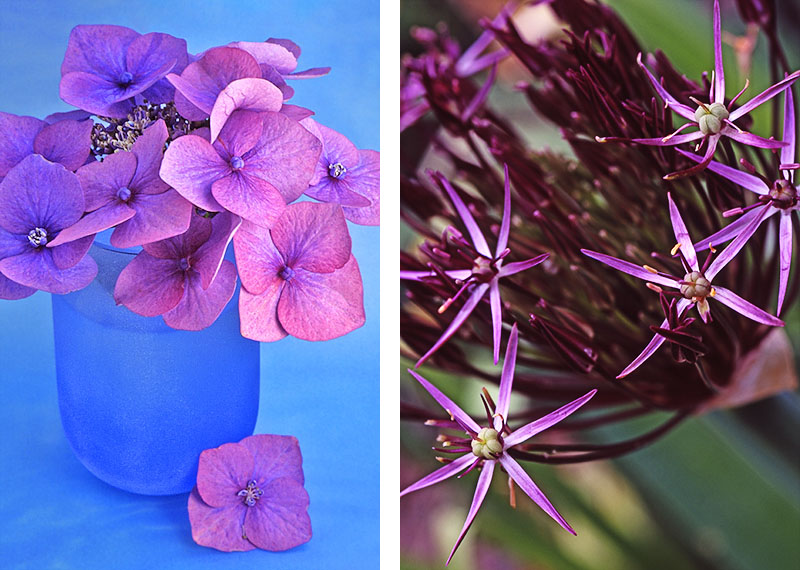
The hydrangea in the photo below grew in my previous garden in Scotland. The flowers on this shrub shaded from blue through to a mauve-pink. Evidently our soil there was not acid enough to turn the flowers completely blue, but the soft blending of the colours on the petals was lovely. (Here in Suffolk, blue hydrangeas turn pink – no chance of keeping one blue!)
The mauve-purple of the Allium ‘Cristophii’ has a lighter feel to it than the blue-purples but looks good with them. It’s an easy colour to use and the flowers are very attractive, so it’s good to see them self-seed around the garden.
Left: Hydrangea Right: Allium
So, while I may not have many real blues in the garden here, I’m very happy that there are so many photogenic flowers in the different purple shades.
At the start, I said you’d see how that clematis bud’s colours developed…. here it is…. Yes, it is the same flower!
Clematis flower showing more colour as the flower matures.










 Ann Mackay: Inspired by Nature