It’s Cold Out There!

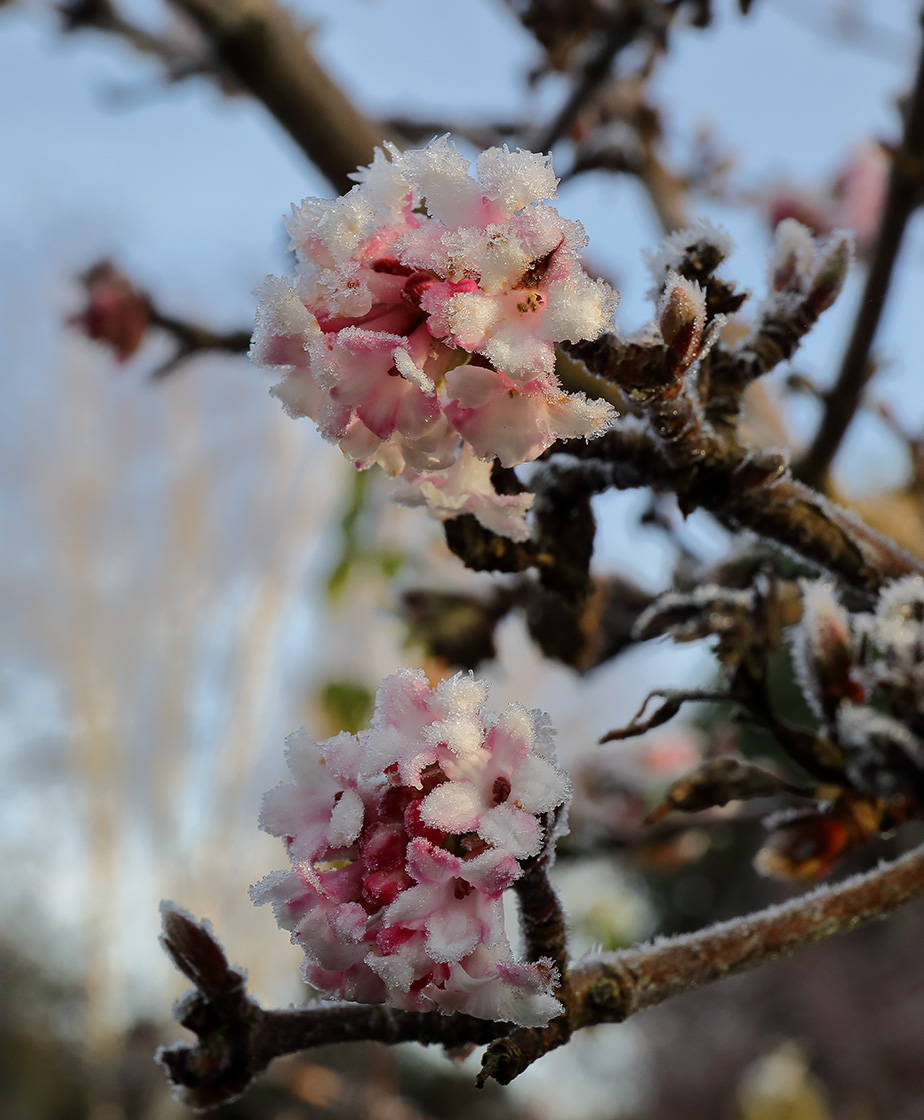
Frosted Salvia (flowering sage)

NB: A note for WordPress Reader users – you need to click on the title of the post again to see the full photograph. (Otherwise you see just a tiny section!)

We are definitely in the cold, dark depths of winter here, brrr! I think the drawn-out and very mild autumn had lulled me into a false sense of security and/or warmth because the freezing temperatures feel like quite a shock. But grey clouds are said to have silver linings, and frosty mornings mean opportunities for photography.

I initially wrote that frosty mornings have a sparkle, but that’s not necessarily true. If there is sun, as in the top picture of a pink-flowered salvia, it makes the image much more appealing. The tiny flowers are just enough to give a translucent gleam of crimson.
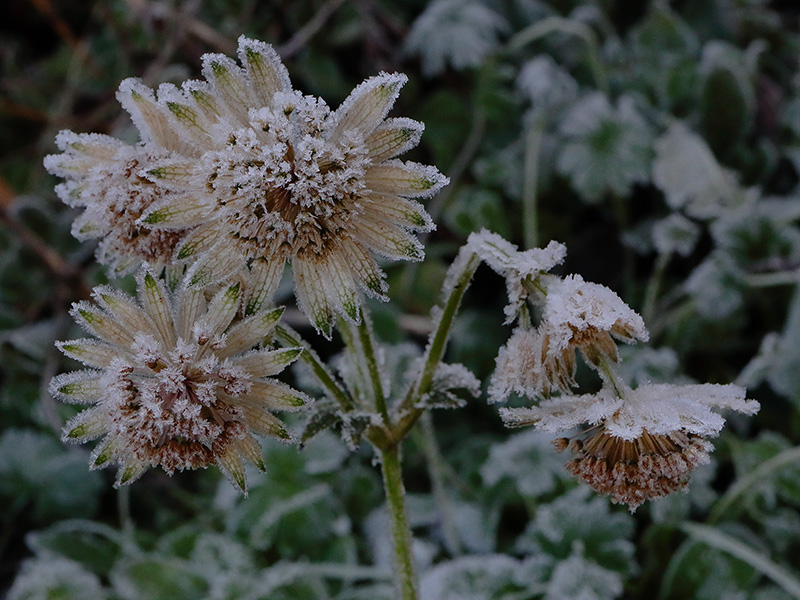
Frosted Astrantia flowers
Astrantia flowers are usually long gone by winter.

The two following images, were, by contrast, in deep shade. They have a much colder and more subtle feel, lacking the drama of strong colour and sun. At the same time, there is more detail in the frost than if the flower was beginning to warm in the weak sunshine. (Any bit of sun soon softens and melts the frost, so in brighter areas I have to work much more quickly.)

Astrantia (above) wouldn’t normally be in flower at this time of year and this late flower was a surprise. The Japanese anemone (below) would normally have finished flowering some time ago too (usually October). Maybe the late flowers were a result of the warmer than normal autumn. In any case, they were a chance to take frosty flower photographs that I wouldn’t normally get.

Frosted Anemone
This anemone flowered very late and paid a very chilly price!

Sadly, the frozen flowers will be destroyed by the frost. They’ll be like limp brown rags when they eventually thaw. I can’t complain though, because in these cooler, shady areas, the frost has lasted several days without lifting, giving me plenty of time to photograph these flowers.

The winter-flowering clematis that I posted photographs of recently has frozen too. Although I would expect the opened flowers to be badly damaged by the frost, I hope that the still-unopened buds will survive. With luck and milder temperatures soon, there may be more of these pink bells to come. I certainly hope so!
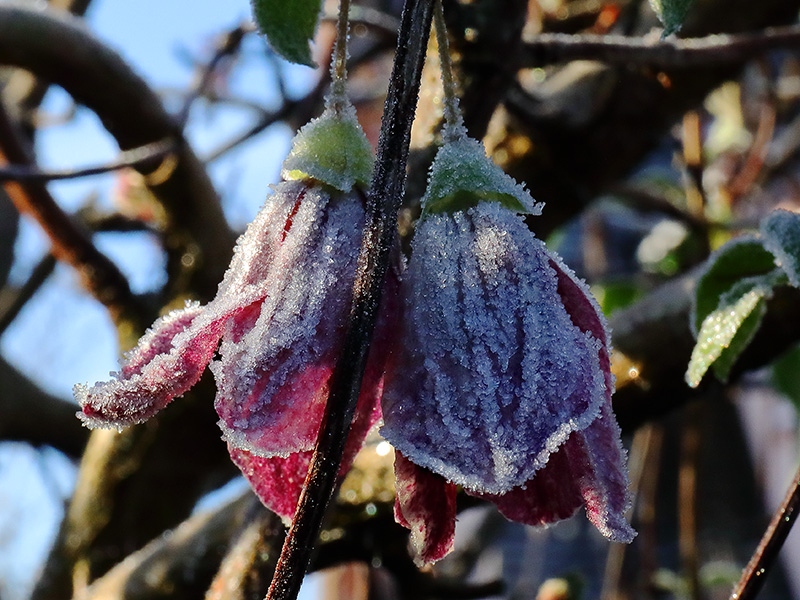
Frosted clematis flowers
The winter-flowering clematis is now a frozen clematis!

Winter Scent: Viburnum Bodnantense ‘Dawn’

Snow on flowers of Viburnum bodnantense Dawn

NB: A note for WordPress Reader users – you need to click on the title of the post again to see the full photograph. (Otherwise you see just a tiny section!)

Last week I photographed a winter-flowering clematis growing up a shrub that flowers at the same time. This week I thought I’d show you what the flowers of that shrub (Viburnum bodnantense ‘Dawn’) look like.

As you can see, the flowers are small and not exactly spectacular. They do however, look very pretty on the bare branches of the shrub and provide some good colour on a winter’s day. After frost or snow some of the older flowers will be browned and dying, but the newly-opened flowers and buds keep going and can last over a long period.

One of the main reasons I planted this viburnum wasn’t for the flowers, but for the scent. I’d come across it in a park in winter and had been entranced by its sweet fragrance. For the first years with my own one, I’d been disappointed by an apparent lack of scent. (But I don’t have a particularly strong sense of smell, so I thought I could be at fault.) I wondered whether individual shrubs could vary in the amount of scent they produced.

This year I was very pleased to find that my viburnum does indeed produce scent. At the moment it has far more flowers than ever before, so their sweetness has been noticeable in the air. Getting up close to the viburnum while I photographed the clematis in its branches was a very pleasant experience. There are some delightful benefits to spending time in a cold winter garden!

Unexpected Sparkle

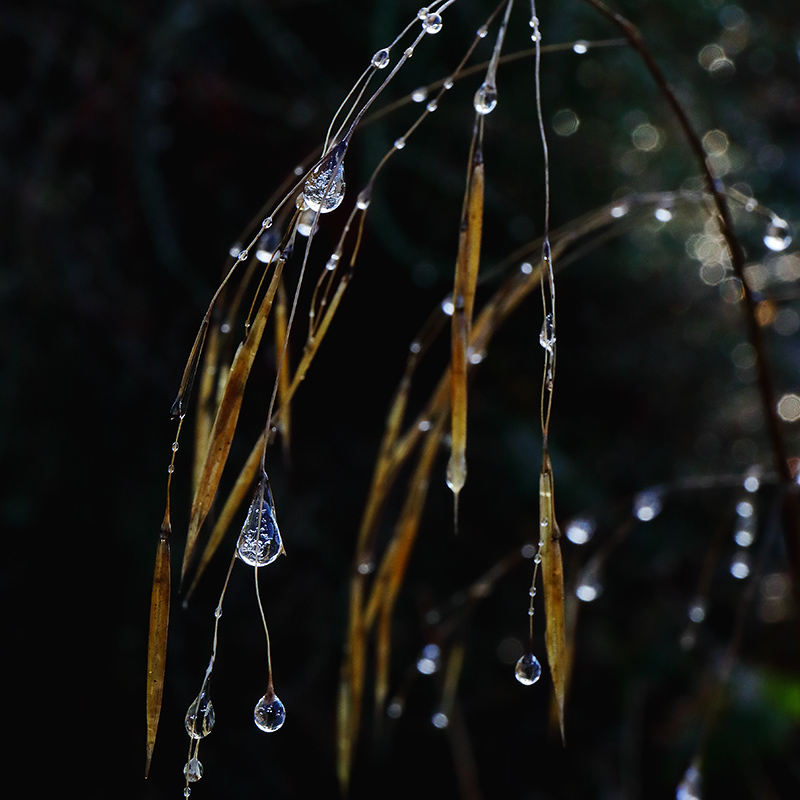
Water drops on Stipa gigantea (golden oats)

NB: A note for WordPress Reader users – you need to click on the title of the post again to see the full photograph. (Otherwise you see just a tiny section!)

The sparkling drops of melted frost on the seed head of Stipa gigantea (golden oats) above caught my attention one morning. I had gone outside knowing that any frost had already melted and expecting it too be too late to find any interesting photographs. When I saw this, however, I realised that I was wrong. There was still plenty to see and photograph.

You may have already seen several of the photographs from that morning in an earlier post: https://annmackay.blog/2022/01/30/after-the-frost/

Both of these photographs are of the Stipa gigantea. I was tempted to keep the more sparkly top one as a possible Christmas ‘nature’s decoration’ photo, but decided to hope for more frost before the end of next December. The need to find something to post right now was stronger!

The garden keeps me going even in the winter. It gives me new things to look at and to explore with my camera. It stops me from getting bored and helps me to look forward to the future. Sometimes it even brings a bit of sparkle into my life. Hope your life is a bit sparkly too!

Water drops on Stipa gigantea (golden oats)

Last of the Frost?

Frosted seedhead of Daucus carota

NB: A note for WordPress Reader users – you need to click on the title of the post again to see the full photograph. (Otherwise you see just a tiny section!)

Some more frosty pictures for today, but these were all taken a few weeks ago. It looks as if these may be the last frost pictures for this winter because the nights are not so cold now.

February has brought a feeling that, for us, the worst of winter is over. And I know how much I may be tempting fate with that statement! Here’s hoping we don’t get another ‘Beast from the East’ bringing especially wintry weather in the next month or two.

Frosted Campanula Seedheads
Frosted seedheads – probably from a campanula.

We haven’t had very much frost this year, although it has been cold enough on many nights to create a layer of ice on our half-finished pond. There’s been no snow either – in fact snow is starting to be a novelty whenever we do get any. Next time we get a really hard winter it will probably come as a shock, with us being unprepared to deal with it.

The last few days have given me the impression that spring is not so far away. I’m always glad to see the end of January, because I know that February is often mild enough to make working in the garden enjoyable again. There are the first signs of new life – early spring hellebore buds are appearing and there are tiny, tightly-curled new leaves on the honeysuckle.

Frosted Blackberry Leaves
Blackberry ‘Oregon Thornless’ leaves edged with frost.

Soon it will be time to get ready for spring. I’m never very organised when it comes to sowing seeds. Even so, I usually manage to grow something that will give me a new subject to photograph. More important this year, though, will be moving plants around and renovating borders in the garden. There’s plenty to look forward to, and hopefully lots of changes for the better through the year.

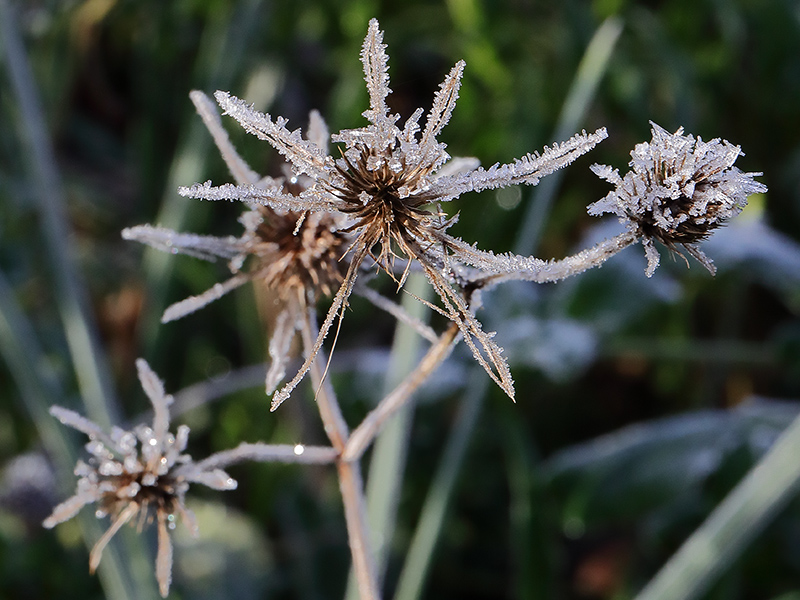
Frosted eryngium
The frosted seedheads of an eryngium.

After The Frost

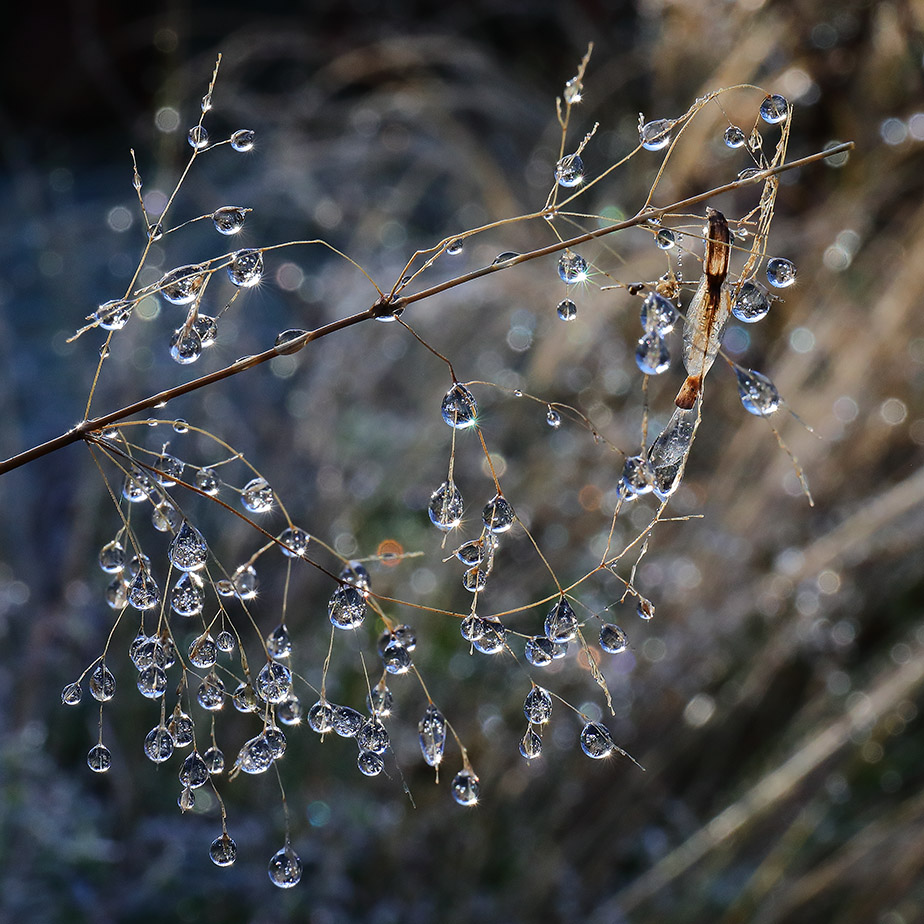
Water drops on Euphorbia mellifera

NB: A note for WordPress Reader users – you need to click on the title of the post again to see the full photograph. (Otherwise you see just a tiny section!)

As a slight change from my frosty photos, I thought I’d post a few pictures of the after-effects of these chilly nights.

After the frost melts, there is a great clarity and brilliance to the water drops that are left behind. While they are still very cold and not entirely melted, they can cling to plants for longer than raindrops would. If you look at them closely, you can see little bubbles trapped inside them.

The plant in the top photograph is Euphorbia mellifera. I’m intrigued by the way the tiniest of droplets gather in a line along the very edges of some of the leaves. This plant is placed where it gets the earliest sunshine, so any frost on it disappears quickly. The melted drops, however, stay, and add a brilliant sparkle to the vibrant green and red leaves.

Water drops on fennel seed head

There’s not much left of the fennel seedhead above. The seeds fell off it ages ago, and now the rest looks quite skeletal. I can imagine that big drop on the right being clutched in bony fingers. It has become something alien-looking, especially with the trail of tiny drops clinging to a stray grass stem that is entangled with it.

There’s even less left of the plant below. I think it’s the remains of the flowering stem of some catnip. Now though, the melted frost has become like little round beads that have managed to attach themselves to the plant – as if they’re some sort of weird plant/glass hybrid.

Drops of melted frost on seed head

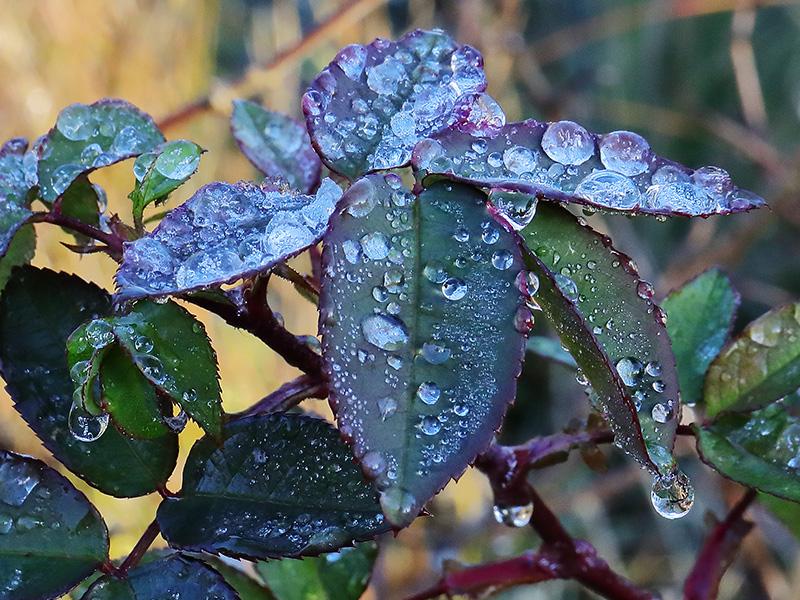
The frost on the rose leaves below is still partly frozen and is even more textured with icy ripples and crinkles and lots of bubbles. There’s quite a difference between the irregular shapes of the colder, still icy drops and the more spherical drops that have completely thawed.

The morning I took these photographs I had missed any chance of frost. But I enjoyed having a close look at these drops of melted frost. They add texture and an interesting highlight to the winter garden as they gleam in the morning sun.

Melted frost on rose leaves

Frosted Seed Heads: Wild Carrot

Frosted seed head of Daucus carota

NB: A note for WordPress Reader users – you need to click on the title of the post again to see the full photograph. (Otherwise you see just a tiny section!)

Back in September I wrote a post about the flowers and seed heads of wild carrot (Daucus carota). I was hoping that the seed heads would last long enough to be frosted when winter arrived. Luckily for me they did, so I had the chance to photograph them. (You can see my original post here: https://annmackay.blog/2021/09/19/going-to-seed-wild-carrot/ )

This wild carrot is a variety named ‘Dara’. It has white flowers that gradually turn a deep burgundy and are very lacy and delicate-looking. The seed heads are just as interesting as the flowers, especially when they curve inwards into a little ‘nest’ which protects the maturing seeds. By this time of the year most of the seeds have escaped (some with a fair bit of help from me) and may become the new plants for future years.

Meanwhile, the remains of the seed heads provide a great framework for frost. The top photograph was taken when the frost was particularly heavy, making it look as if the seed head had been dipped in sugar crystals.

This plant was in a position that is shaded from the early morning sun, so the frost lasts and allows time for photography. The cold lingers here, and the shade from the fence creates a bluish cast which makes it feel even chillier. (The bottom photograph is of a plant that is further from the fence, so frost there doesn’t last as long. It was also taken earlier in the winter, when there was a much lighter frost.)

I’m grateful for simple things like these frosted seed heads in winter, because they keep me supplied with something to photograph. They give me something to enjoy and to marvel at as I look at them closely…and something that is enough to get me outside on an icy winter morning!

Frosted seed head of Daucus carota

A Little Winter Colour

Winter Jasmine

NB: A note for WordPress Reader users – you need to click on the title of the post again to see the full photograph. (Otherwise you see just a tiny section!)

It always delights me that some flowers can tolerate rough weather to give us a bit of cheering colour at this time of year. Even if the frost eventually proves too much for the tiny flowers of this winter jasmine (Jasminum nudiflorum), there are lots of new buds which will soon open to continue the show.

These flowers are especially welcome when almost everything else seems dormant in the coldest days of winter. They encourage me to take a wander round the garden so that I can see them up close and enjoy their exuberant colour.

Unlike other jasmines, winter jasmine isn’t a twining plant. Instead it has very thin and floppy stems which can be easily trained against a fence or trellis. Or you can do what I’ve done – just allow it to weave its way through other shrubs for support. (That does get rather untidy!)

Although it’s said to be an excellent winter nectar-source, I haven’t yet seen bees on it. Perhaps there will be in early spring, as this shrub has a long flowering period. (From December or January right through into March.)

But whether the bees like it or not, I certainly do. These little flowers are brightening an otherwise dark area of the garden like a sprinkling of yellow stars. They bring some joyful colour to the garden as it waits for spring.

Winter jasmine flowers

Caught by the Frost: Frosted Flowers

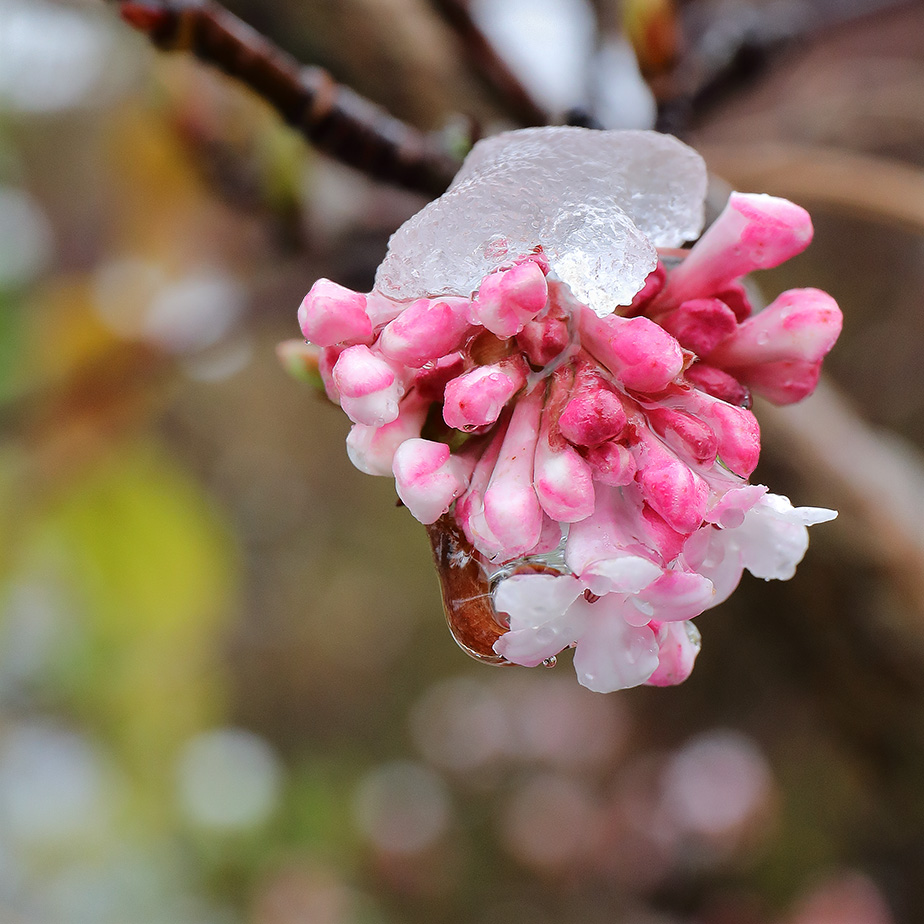
Frosted Viburnum flowers

NB: A note for WordPress Reader users – you need to click on the title of the post again to see the full photograph. (Otherwise you see just a tiny section!)

The cold has returned and it feels more like winter after the very mild New Year. There has been more frost and the new pond has had a covering of ice. What a change from the previous days that were more like mid-autumn!

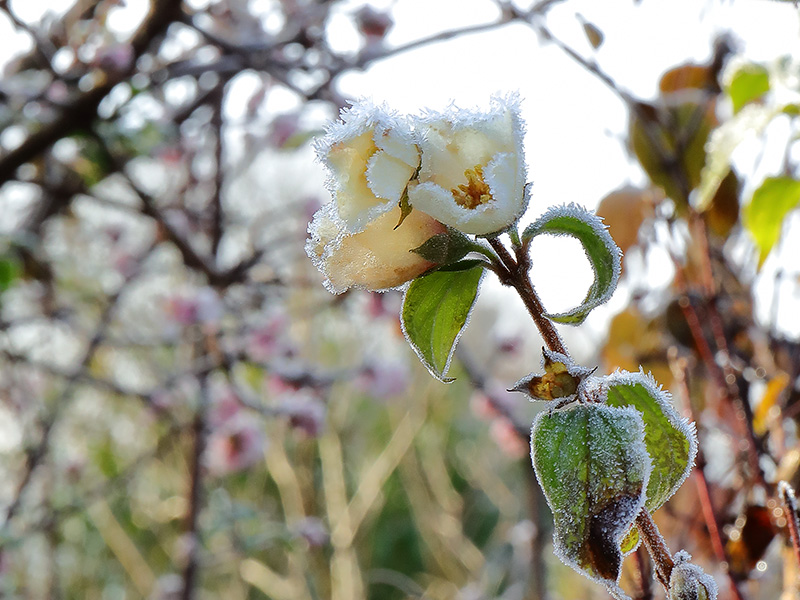
The frost has caught a few flowers in the garden. Viburnum bodnantense ‘Dawn’ (top photo) is a reliable flowerer for winter and often gets a little bit of icy decoration. The phildadelphus below is a summer-flowering shrub but somehow managed to produce the few flowers here. They make an unusual frosty image, but I wonder if the warming climate will make occasional winter flowers on this shrub more likely.

The unusually warm temperatures over the last few weeks must have been confusing for plants and for wildlife too. I’ve noticed the occasional bumblebee buzz past me while I’ve been working in the garden. It’s not unusual to see one or two out of hibernation on a sunny day. They seem to prefer the mahonia flowers to the viburnum, but maybe it depends on what the choice of flowers is, and what stage they’re at.

In any case, I think I should add some new plants to expand the choices for any bees active at this time of year. (Winter-flowering heathers, aconites, crocuses, hellebores and winter-flowering honeysuckle are all frequently recommended. As are willows, but I wouldn’t have room for one of those!) For now, I’m hoping that the bumblebees are safely tucked up and asleep – it’s cold out there!

Frosted Philadelphus flowers

Wishing You a Happy New Year!

Frosted aster plant

NB: A note for WordPress Reader users – you need to click on the title of the post again to see the full photograph. (Otherwise you see just a tiny section!)

It’s New Year’s Eve as I’m typing this, and it has been a strangely warm day for the time of year. Not a trace of wintry weather. The frost that I photographed here happened a few days before Christmas, so is long gone.

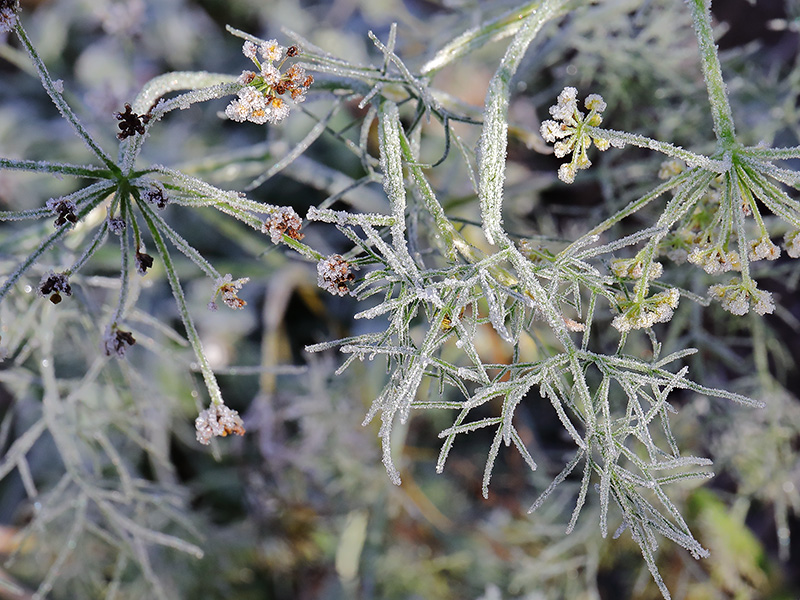
I was lucky to get that one frosty morning so that I could take a few sparkly photos for my Christmas and New Year posts. It’s amazing how frost can make the most ordinary of things look special. (Top photo is the remains of an aster, bottom is a young fennel plant that has flopped over in the cold.)

2021 has been a year of enjoying small, simple things here. The garden has been an ever-increasing source of happiness and has given me a sense of purpose when life has been rather constricted. I hope that 2022 is a year that will bring us back to being able to live our lives safely and healthily.

For 2022, I wish you all a year of joy, health and peace. May it be a year that brings you delight in life. Happy New Year!

Frosted fennel plant

Frosty Christmas Decorations

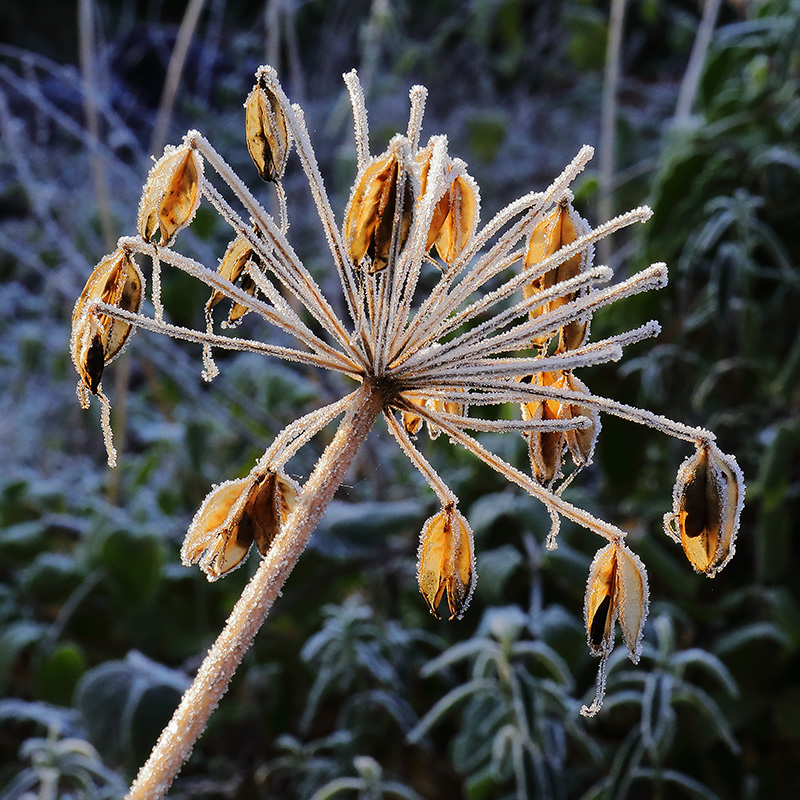
Frosted fennel seed-head

NB: A note for WordPress Reader users – you need to click on the title of the post again to see the full photograph. (Otherwise you see just a tiny section!)

As this is the last post here before Boxing Day, I reckoned it was time to post some natural ‘Christmas decorations’ created by the frost. These are from a couple of years ago – there hasn’t been enough frost for photography yet this year. (But there probably will be in January, as it’s usually colder then.)

I’m relieved that we haven’t had much frost yet because I have lots of plants sitting around in pots. They’re waiting for me to use them in a border renewal, but work has gone more slowly than I expected. The plants will probably be OK, because they’re in quite big pots and are mostly very hardy. Even so, I always feel a bit guilty about the possibility that they may freeze and worry about them making it ’til next spring.

The border I’m re-planting is an area that has partly been taken over by Japanese anemones. It stretches to the side of the new pond. (The pond is still a big black hole at the moment – I’m hoping that it will fill up with rain or snow over the winter.) It feels good to be able to keep going with this while the weather isn’t too cold.

Until it does get really wintry, I’ll keep pottering about in the garden. For Christmas though, I’ll take refuge in the warmth indoors. I’ll probably spend most of the time curled up on the sofa with hubby and the two cats, lots of good books, plenty of tasty food and (very likely) a generous amount of wine. (Maybe even something decent on the TV.) Whatever you’re doing this Christmas, I hope that it’s a good one, and that it brings you much happiness. I wish you and your families and friends good health and good cheer. 🙂