The Early Flower Catches The Photographer

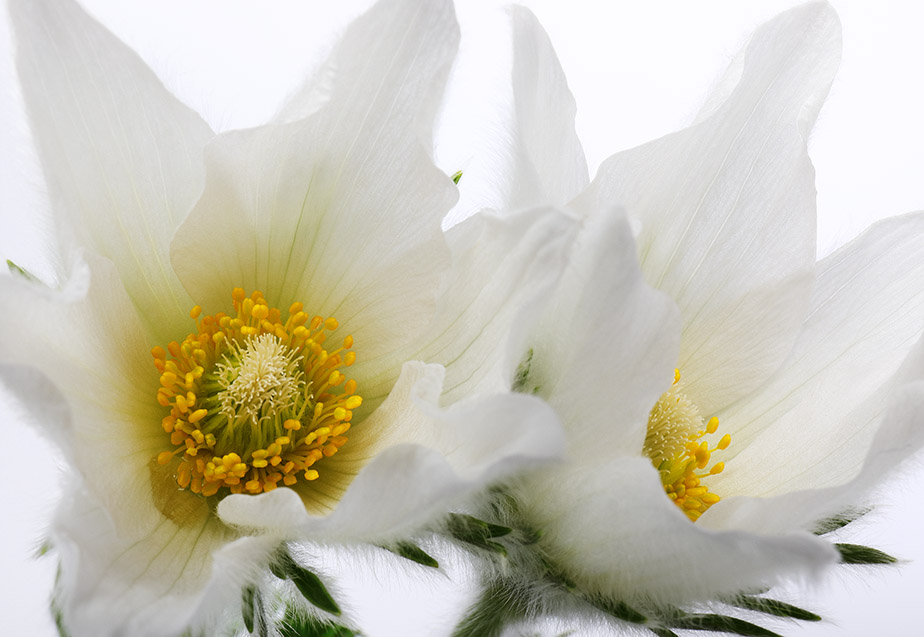
White Pulsatilla vulgaris (Pasque Flower)

Last week, I wrote about finding all the new stocks of plants coming into garden centres very tempting. So you may not be surprised to learn that I bought a few of them. (If you’ve been reading this blog for a little while, you will probably know me well enough by now to expect it!)

I tell myself  that I have a great excuse, because I need something to photograph and there isn’t a lot available in the garden yet. And buying plants instead of cut flowers means I can grow them in the garden for the following years. Neat reasoning, eh? All the same, I’m glad that there are several plant nurseries nearby, so that I can buy reasonably-priced small plants rather than spending a fortune on larger plants elsewhere.

It’s interesting to see just how far advanced these plants that have been grown in large, heated glasshouses are, in comparison to garden plants. I have pinky-purple pasque flowers growing in the garden but they won’t be in flower for weeks yet. (Probably April or May.)
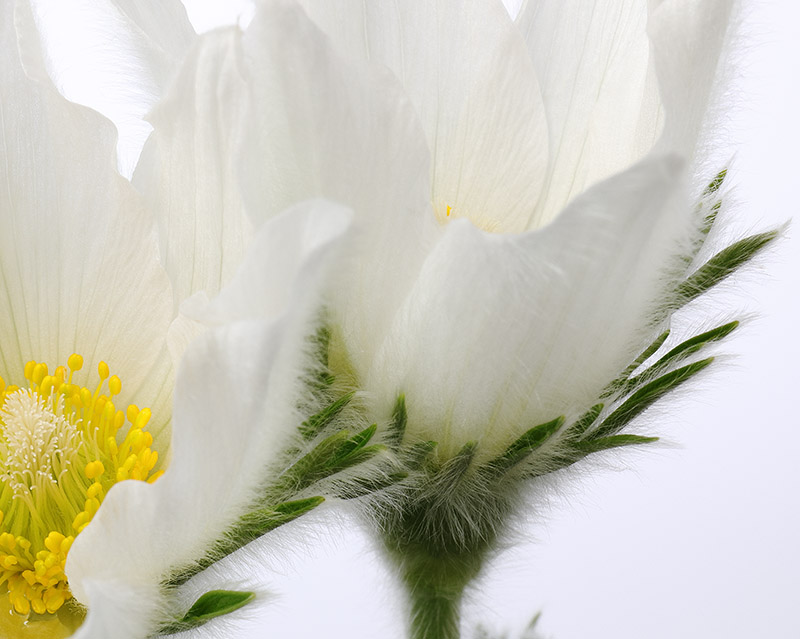
Hairy flowers of Pulsatilla vulgaris (pasque flower).
You can see how hairy these pasque flowers are!

Pasque flowers like it in the garden here. The well-drained soil and open, sunny site suits them. It’s actually a native plant in the UK and East Anglia (which includes Suffolk, where I live) is one of the areas that it grows in. Sadly though, it’s rare as a wild plant now and you’re much more likely to see it growing in gardens. However, as a ‘local’ plant, they’re both drought-tolerant and wonderful for bees.

The flowers themselves are delightful to photograph – fresh, pretty and entirely charming. And then there’s the bonus of the rest of the plant being photogenic too. That’s because it’s so very hairy (and soft enough that you want to stroke it). All the soft little hairs that cover the finely-cut leaves, flower buds, and even the outside of the petals, help to give the plant a silvery appearance when they are caught in sunshine. Later the seed-heads become very ornamental, like some sort of silky, wildly fluffy pompoms. (My cats think they’re great fun for having a swift bat at with a paw!)

The pasque flower that I bought will no doubt be joined by others. (I have to wait for them to flower at the nursery, so that I can see what colour they are.) And I’m sure that a few hours will be spent photographing them…happy times!
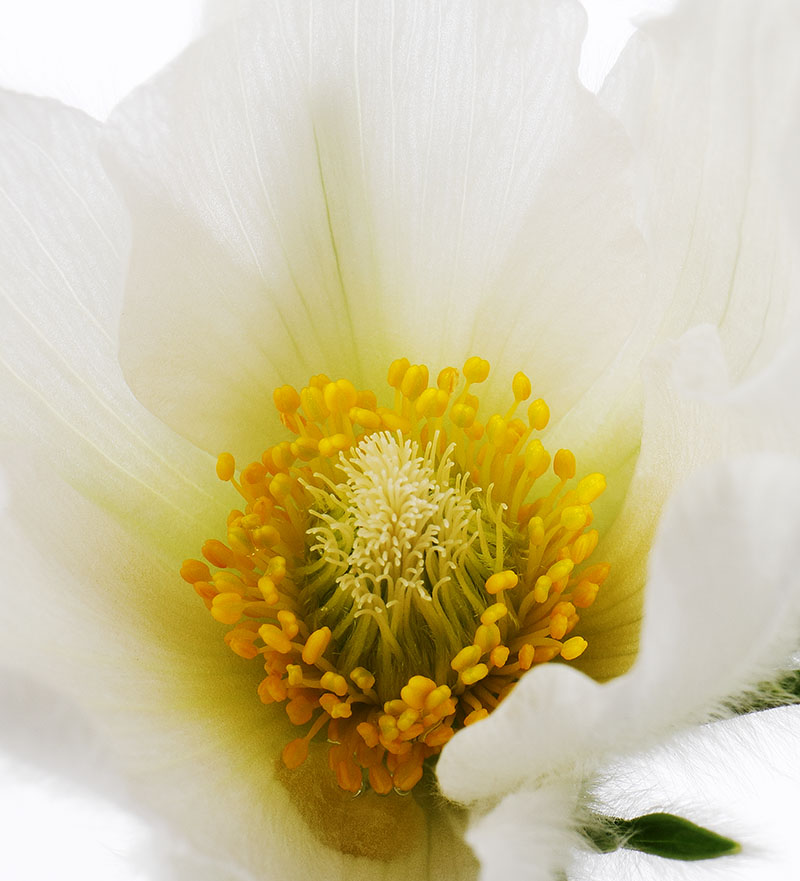
Flower of Pulsatilla vulgaris (pasque flower).
Delicate white and rich yellow make this a very attractive spring flower.

Something Different

Blue-veined flowers of primrose 'Zebra Blue'.

As spring approaches, there are new stocks of plants coming into garden centres and other plant-sellers, such as supermarkets and market stalls. After winter, it’s a huge delight and an even bigger temptation to see all these fresh plants that are just waiting for us to buy them.

There are the usual bulbs – snowdrops, crocuses, irises and daffodils. And at the moment there seems to be a huge number of primulas (or primroses) everywhere, in just about any colour you might want. They glow brightly at you, flaunting their brilliance and offering themselves as a cheerful reassurance that spring must be almost here.

Like many others, I found myself wandering past these happy little plants, wondering which would be the most uplifting addition to the winter-weary borders in my own garden. Unexpectedly, I came across one that I haven’t seen before and which intrigued me much more than the gaudier varieties…a stripy-flowered primrose!

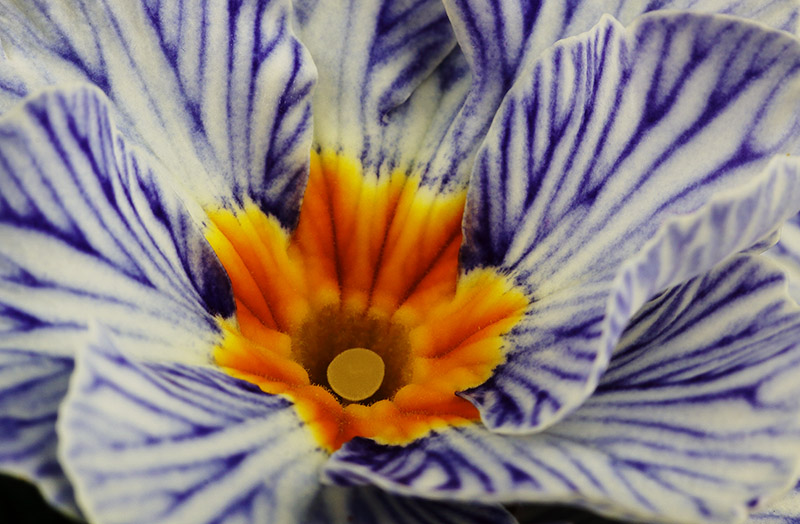
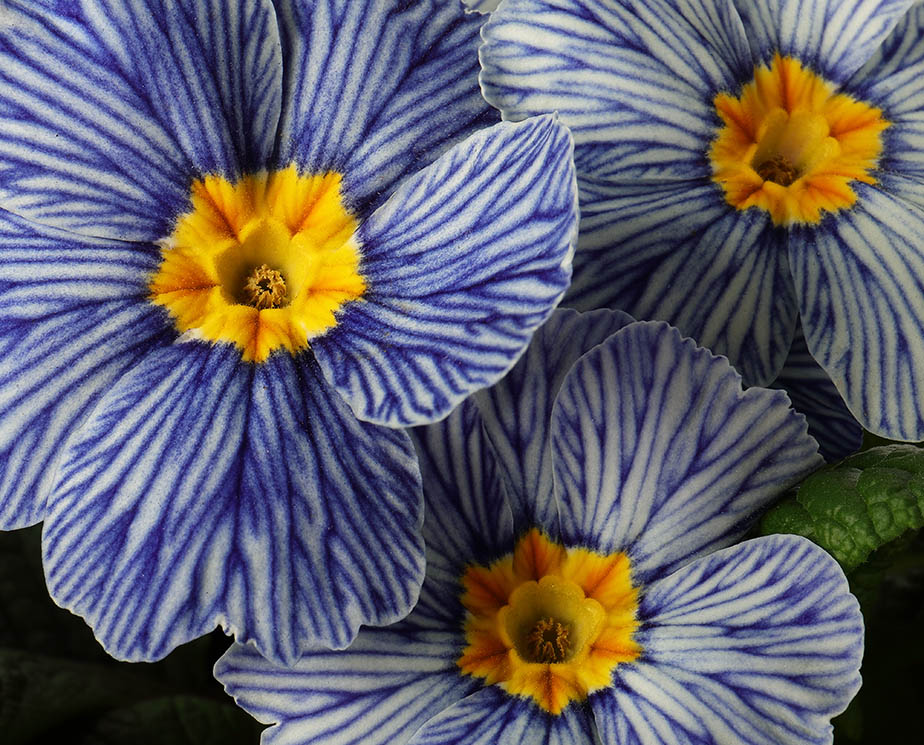
Macro photograph of Primula acaulis 'Zebra Blue'
The yellow centre is a striking contrast to the blue and white petals.

The primrose I bought turned out to be ‘Zebra Blue’. It has white petals which are veined with a wonderfully deep blue (which looks rather as if ink has been spilled onto the flowers and gradually crept along the veins). The deep orangey-yellow centres are the perfect contrast to offset the blue and make the flower very eye-catching indeed.

Most of the flowers and plants that I buy are seen as potential subjects for my photography. A flower with markings like these is an ideal source of inspiration for an afternoon spent experimenting with different compositions.

The prominent veining of the petals and the vibrant contrast of the centre of the flower makes this primrose a very bold subject. It’s easy to use the patterns produced by the veins to create a rather abstract feel. But, because some of the flowers have a more muted colouration, with much paler veining (sometimes becoming a lighter, more denim-blue), there is the option of creating a softer, more gentle image too. I have only just started exploring where this little flower may lead my photography and I reckon that I need to spend a few more hours in it’s company…what fun!

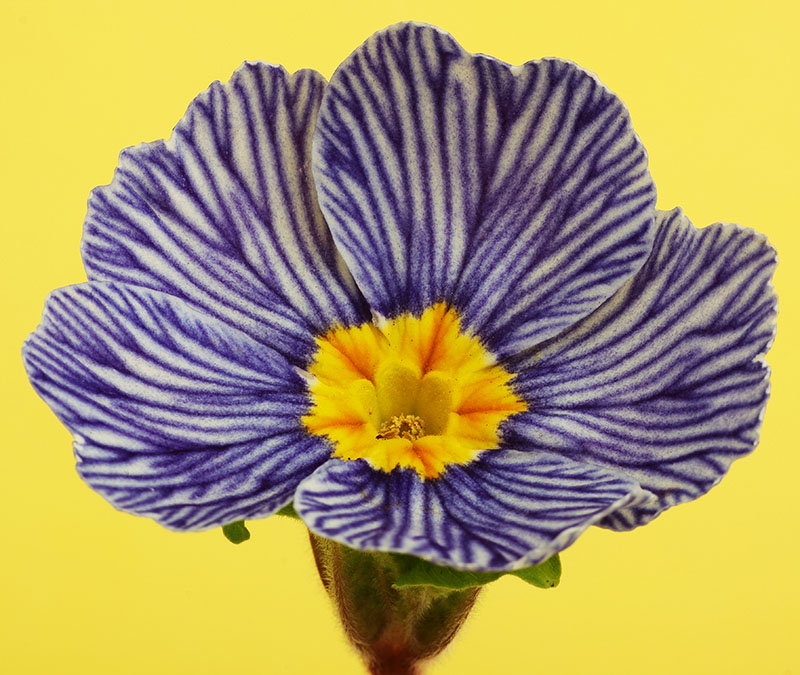
Blue-veined primrose flower against a yellow background.
I used a contrasting yellow background to give a bolder image in this photo.

A Little Survivor

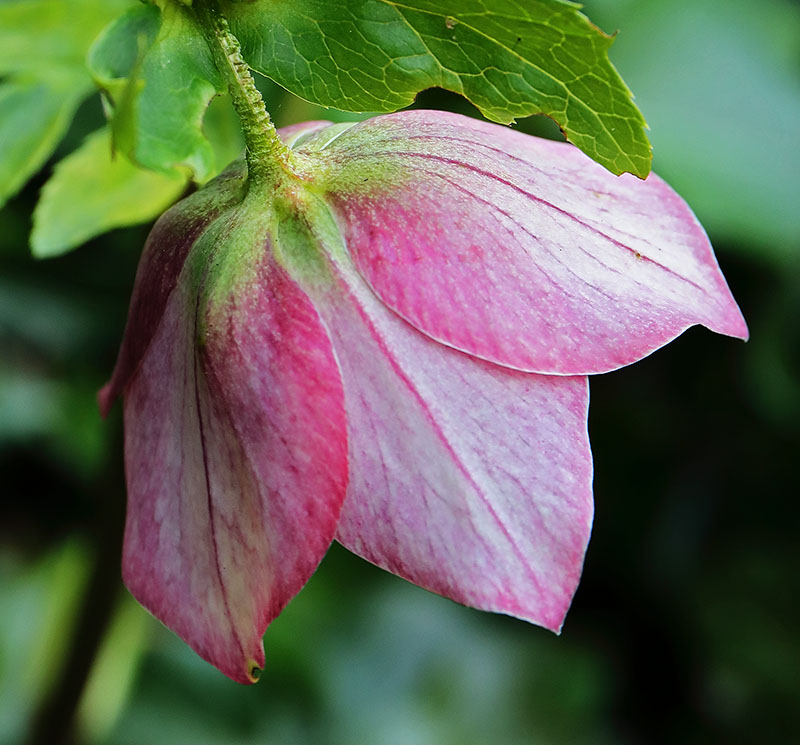
Pink-freckled hellebore.

It’s the time of year when gardeners start peering anxiously at their plants, looking for signs of life. Are there new shoots emerging from the ground? Some leaf buds perhaps? Anything to show that the plant has made it through the winter?

But, as any gardener is unfortunately all too aware, it’s not just the winter that can kill our plants. There are all sorts of possible mishaps. Here, building work has been one of the biggest dangers to our garden plants in the last couple of years.

We’ve had several things done to our house, the main one being the addition of a conservatory. So there have been piles of building materials parked around the garden.

The resulting chaos was made worse by our decision to reclaim and re-use the brick pavers from the big old patio area where the conservatory was to be built. And, of course, they needed to be piled somewhere out of the way. Like the bit of border that has been overrun by a huge mass of Japanese anemones and is desperately in need of renovation…. and all before I could think to warn that there were other plants there too.

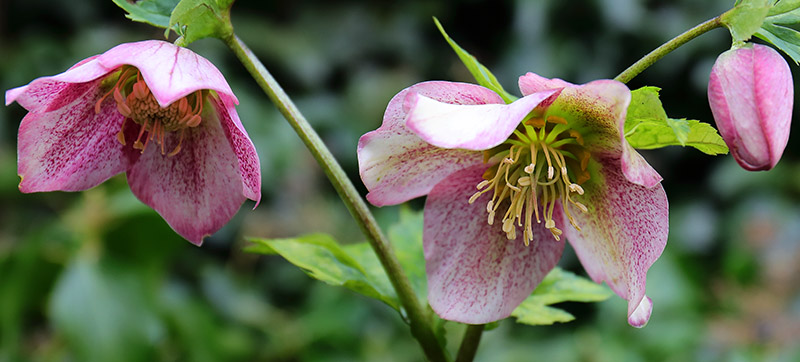
Pink-spotted hellebore flowers.
Last year there was only a single leaf on this hellebore – this year it has managed to flower.

To be honest, I’d forgotten precisely where the hellebore was and it wasn’t until I saw one lonely hellebore leaf poking out between a couple of bricks that I realised that it had pretty much been covered. The bricks were removed but I didn’t really expect the plant to survive. There seemed to be too little of it left. That made me feel both sad and guilty because it was such a lovely little plant and one that I had enjoyed photographing.

So you can imagine how surprised and delighted I was to discover that it was growing again and this year it has even managed to produce some flowers. (I feel as if it has forgiven me! And I’ve promised it that I’ll take better care of it in future!)

It’s extraordinary how strong the life force in plants can be and how they can often tolerate conditions that really should kill them. (I know, it’s true that the plants that you try to get rid of – the weeds – that seem show the most determined ability to survive.) Every so often you get a wonderful surprise when a plant that you fear has died reappears, when new buds grow on what look like dead stems, or when new seedlings spring up from old plants unexpectedly. That vitality can certainly be something to celebrate!

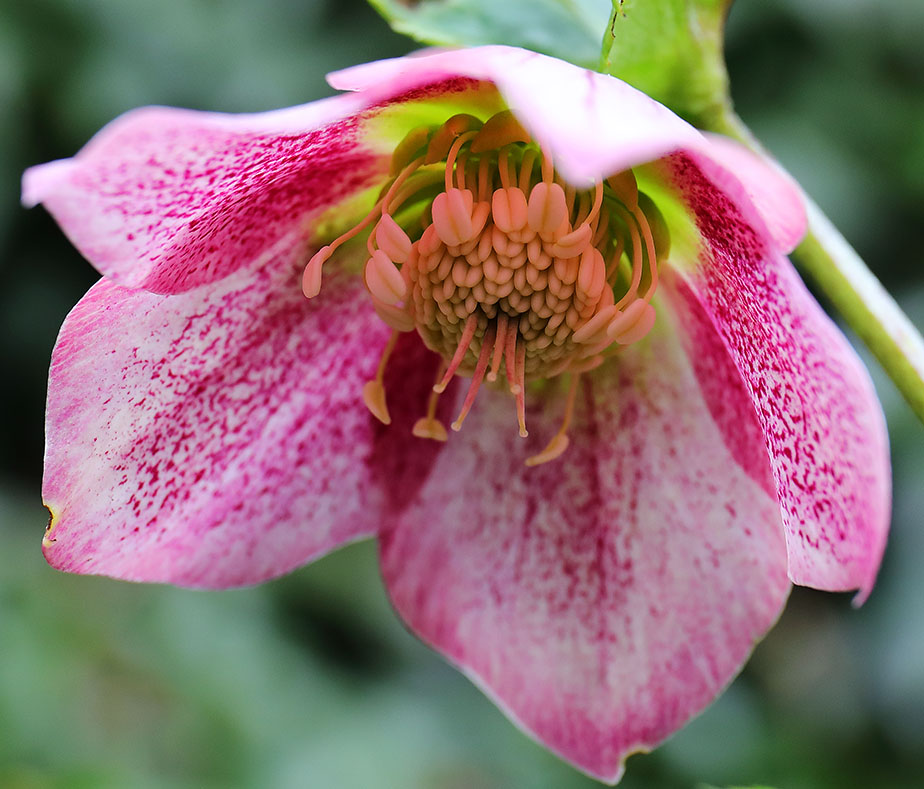
Pink hellebore flower.
The usual view of a shy hellebore flower.

Signs of Spring.

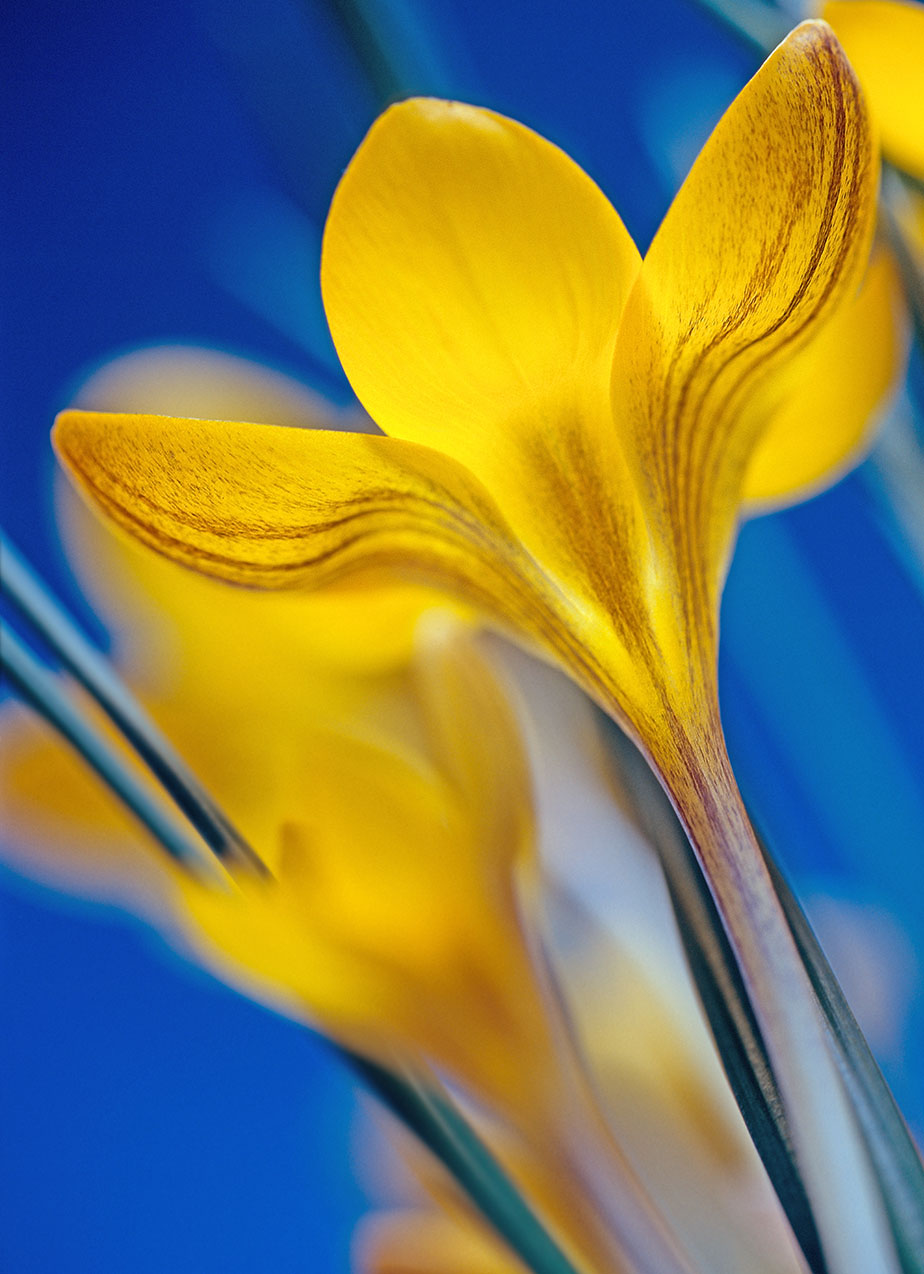
Yellow crocus 'Zwanenberg Bronze'

The first crocuses are in flower and it feels as if spring is on its way. The sun grows brighter and stronger, the air is quite a few degrees warmer, and the daylight is lasting for longer. Winter, at last, is receding and it feels good to get outside and enjoy the re-emergence of life in the garden.

Winter can be a time when life runs at a bit of a low ebb. Most days are too cold and grey to wish to spend a lot of time outdoors and you really just want to keep warm and dry. (But, if there is a warmish winter day, with perhaps a little bit of sun, then I do try to get some gardening done. It raises my spirits and allows me to escape the incarceration of being stuck indoors.)

Spring is an invitation to go out into the garden and look for the start of new growth. Right now the snowdrops are still in flower, crocuses are showing as little flashes of colour here and there, and the daffodils are promising flowers soon, as their leaves lengthen and their buds fatten.

The long wait of winter is almost over. It’s time to start work in the garden again.

There’s lots to do – new borders to dig, weeds to get rid of, and old dead growth to be cleared away to allow room for the new shoots. The work is invigorating and brings a connection to the earth and the life that is quietly pulsing within it.  That connection creates an awareness of the natural world. It gives a feeling of being part of that world, and of well-being and pleasure at being able to contribute to it.

If you’re coming to the end of winter wherever you live, I hope that you’re starting to see the signs of spring. Do enjoy them!