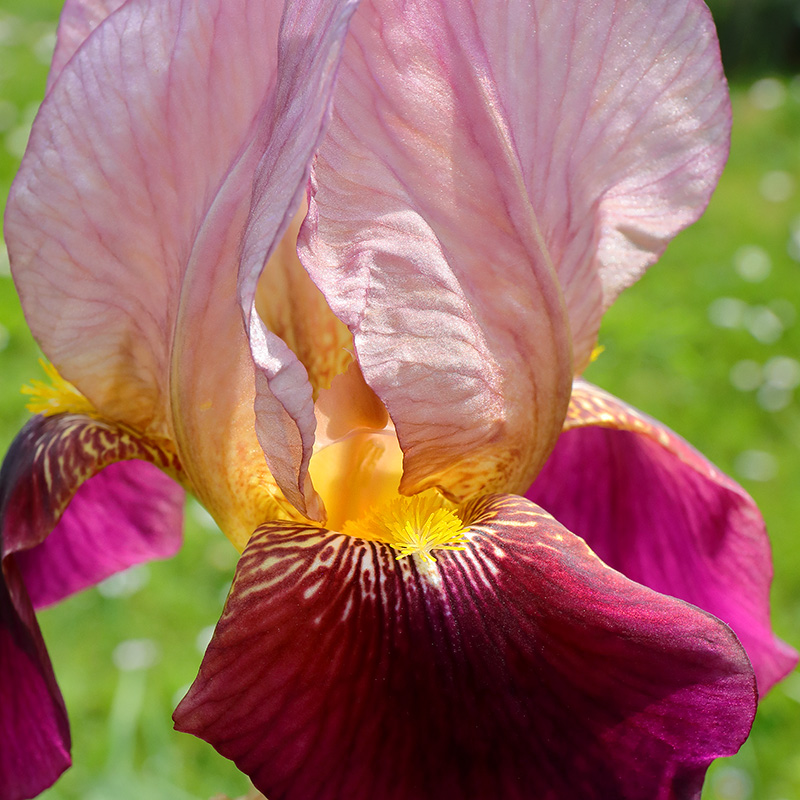
NB: A note for WordPress Reader users – you need to click on the title of the post again to come out of the reader and go to the post itself. This allows you to see the whole of the top photograph. (Otherwise you may see just a tiny section!)
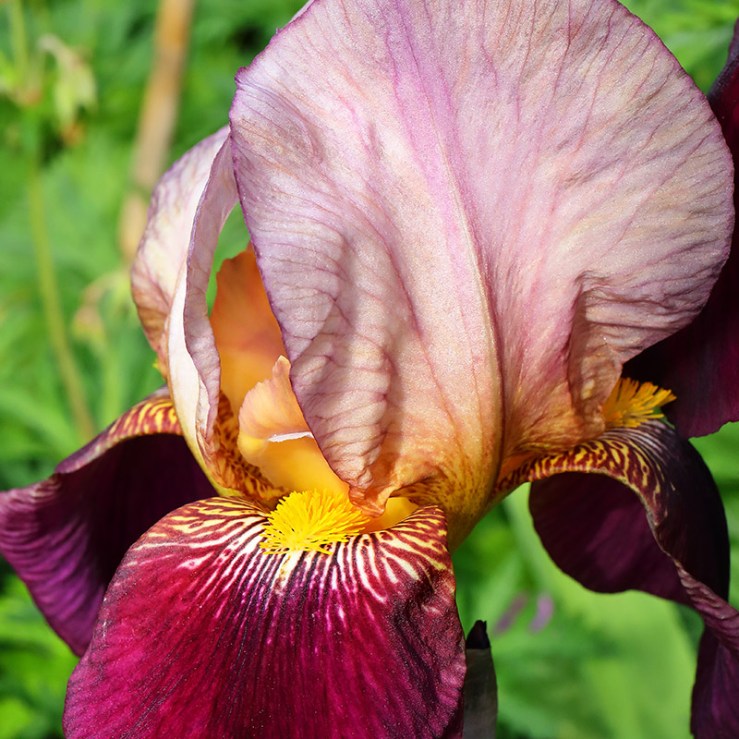
This bearded iris (I believe it’s Iris germanica ‘Indian Chief’) burst into flower with a dramatic flourish during some recent hot weather. It’s glory didn’t last long. The short life of the flowers was made even shorter by heavy rain not long after I’d taken these photos. But I enjoyed seeing them while they lasted.
There would be more flowers on this iris if its rhizomes were not being overshadowed by a neighbouring geranium. The rhizomes really need to bake in the sun during summer. Unfortunately, however, I haven’t had time to do anything about the geranium’s sudden growth spurt and encroachment on the iris. It might be easiest to move the iris to a less crowded area and this is almost the right time to do it.
This is an amazingly active time in the garden, with the plants moving fast in growth and flowering. It’s a very busy time for me too, so it would be easy to miss the opportunity to enjoy and photograph those flowers that don’t last long. I’m glad I had the time to appreciate the iris’s presence before its flowers went over. Now I must decide whether to move it or the geranium…







 Ann Mackay: Inspired by Nature