Winter Delight: Hellebores

Hellebore flowers

Hellebores are starting to flower in the garden here. Some are still just small buds, but this one has been in flower for a few weeks. This is one of the Helleborus Gold Collection, HGC ‘Shooting Star’.

I particularly like this hellebore for the way that its flowers are held more upright than most hellebores. It makes it so much easier to see the flowers – and to photograph them too.

(My other hellebores are difficult to see properly in the garden. You really have to take the time to turn the flower head upwards if you want to look at the detail. But that has the advantage of making you get close to the flower and actually touch it, rather than just passing it by. So they’re all good!)

For the moment, this plant is in a pot, which has made it easy to take it indoors to photograph it. But it would probably be happier in a border where it has a bit more space. Later I will plant it out – when I find it a slightly shady spot where it won’t get too hot in summer.

As a winter and early spring flowering plant, hellebores are a great treat in the garden. They start flowering when much of the rest of the planting is either dead foliage or shoots that are not yet ready to emerge. And their beautiful flowers have an exotic look – much bigger and more showy than the other winter flowers. If I get the chance to go shopping in a garden centre while they’re still available, I know I’m going to be very tempted to buy more.
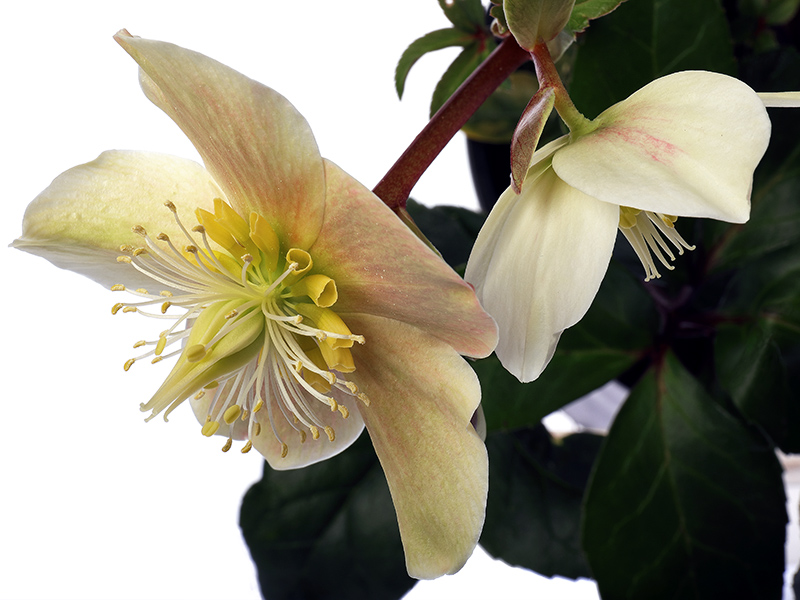
hellebore flowers

Frosted Seed-Heads

Frosted hibiscus seed-pod

After last week’s snow-capped anemone seed-head, today we have seed-heads that are covered in frost. In the middle of winter I’m really glad to find anything to photograph in the garden, so I’m grateful that these are here.

On a frosty morning, these seed-heads create a focal point and some interesting textures in the garden. They become like miniature natural sculptures when their details are picked out by frost crystals. I find that seeing the patterns of frost encourages me to look more closely at the plant’s own structure. That allows me to see possible photographs where I may not have noticed them before.

frosted honesty seed pods
The remains of honesty seed-pods sparkle in the sunshine.

Mind you, sometimes there’s very little left of the seed-heads, as you can see with the honesty above. These are pretty-well wrecked by now but, given a bit of sunshine to make the frost sparkle, still manage to look interesting. Of course, on a dull but mild day, with no frost or sunshine, they don’t look at all pretty at this stage. So it’s amazing what the right weather can do.

Amongst the best of the seed-heads for frost photography are the umbellifers. There are usually quite a lot of self-sown bronze fennel seedlings around the garden and these really sparkle on a frosty morning. I never cut these down until spring, because the seeds can provide food for hungry birds. (As well as starting lots more plants.) The delicate decorations that they become is a delightful winter bonus.

frosted fennel seed head
Fennel seeds look at their best with a thick coating of frost.

Merry Christmas!

Frosted leaves of fennel

Somehow I feel that Christmas has sneaked up on me this year. It has arrived stealthily, without the normal fanfare. I don’t feel at all ready for it – which isn’t really a problem because our Christmas is fairly simple. But I haven’t noticed its imminent arrival in the way I usually would.

It’s probably partly due to spending so much time at home and being less aware of all the Christmas items in the shops. Not going out very much also means not seeing the Christmas decorations in the streets as often. And, of course, there have been none of the usual Christmas get-togethers that help to get us into the festive spirit.

Even if I’m a bit later than usual in getting the house decorated for Christmas, the garden could look suitably festive if we get a bit of frost. Nature seems well able to create her own sparkle and drama in the garden as the frost turns the remaining plants into icy sculptures.

Frost makes something special of the simplest things in the garden. The top photo is of fennel leaves. Most of the other fennel plants have died back for winter. This one, however, is a young seedling and has kept its leaves for long enough for the frost to turn them to a delicately etched tracery of tiny ice crystals. To my mind, it’s much prettier than any indoor decoration! The eryngium below (sea holly) had managed to produce some very late flowers and they look quite magical with a thick coating of frost. The sun had reached these, so the frost had started to soften and would soon disappear. Part of the excitement of frost, for me, is that it lasts for such a short time, so you have to make an effort to get out and see it at its best.

I hope that you are able to find some magic in your Christmas this year, despite the effects of Covid. I think that this year has reminded us all of how important our friends and family are to us, and how much we value their company. I hope that it won’t be long before we can plan to see them all again and enjoy being with those we care about. Until then, please take care of yourselves and I wish you fun and joy over the holidays.

Frosted eryngium (sea holly)
Frosted flower head of eryngium (sea holly)

A Frosty Bunch

Frosted flower of red scabious (Knautia macedonica)

The frost caught the last few flowers that have been holding on in the garden. I love to see the effects of this and always hope that there will still be something around to be decorated by the first frosts. Some years it’s too mild here for that, and by the time the frost does arrive, the flowers are long gone.

Frosted flower of Scabiosa atropurpurea
A frosted flower and seed head of Scabiosa atropurpurea

But this year I’ve been lucky and still have some flowers, even now that it’s December. (I still find that surprising because there would have been none at all if we were still living in Scotland. Our garden there really seemed to go to sleep in winter.) And there are also the winter flowers – the newly emerged little yellow stars of winter jasmine and the glowing yellow buds of mahonia and pink ones of Viburnum bodnantense ‘Dawn’. (These are just starting to open.)

I think the fact that there is still life happening in my garden at this time of year does a lot for my well-being. There are still interesting things to see (and photograph), and of course, lots more work to do!

Frosted flower of Geranium 'Rozanne'
Frosted flower of Geranium ‘Rozanne’

Being able to get outside into the garden is a real benefit at the moment, when Covid restrictions make it difficult to leave home. At least I don’t have to be stuck indoors and I can enjoy my (chilly!) garden without having to worry about the dreaded virus. Of course, I’ll be even happier when I can safely invite friends nearby to come and spend time in my garden with me. Luckily my online friends can visit easily and without any health risks!

Frosted flowers of Cosmos
The last of the cosmos flowers caught the frost too.

Here Comes Winter!

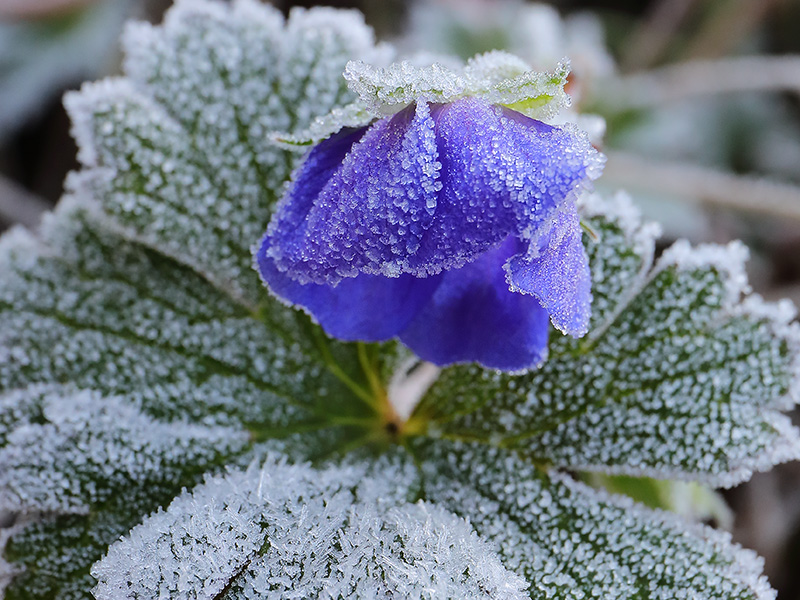
Gaura lindheimeri

Winter is on its way. The first signs of its approach have begun to show here. Earlier in the week, there was a light frost. It had already melted by the time I got out into the garden with my camera.

That melted frost allowed me to photograph the gaura above, still covered in dozens of icy little droplets. Somehow these drops seem fresher and clearer than raindrops do. Maybe they are actually cleaner – rain must collect whatever’s in the atmosphere as it falls.

The way that flowers can become translucent after having been frosted fascinates me. It makes the flowers look quite different from the way they normally do. They become especially delicate and rather ethereal. The gaura in the top photo is now so see-through that you can easily see the drops on the backs of the petals right through the petals themselves.

I photographed the flower below a couple of days later, after a much harder frost. The sun takes a few hours to get into this part of the garden in winter, so I have a good chance of finding still-frozen flowers here. By contrast, at this time the other side of the garden was dripping quietly as the brilliant sunshine worked its way in. (I reckon that I should use the shadier areas for more plants that would look good frosted.)

After photographing the frosted gaura, I wandered around the garden to look for more frozen flowers. So that means I have more frosty photos to process for next week. In winter, I’m grateful for the photographic opportunities that frost brings – they help to keep me active until spring!

Frosted gaura flowers

Brilliant Bougainvillea

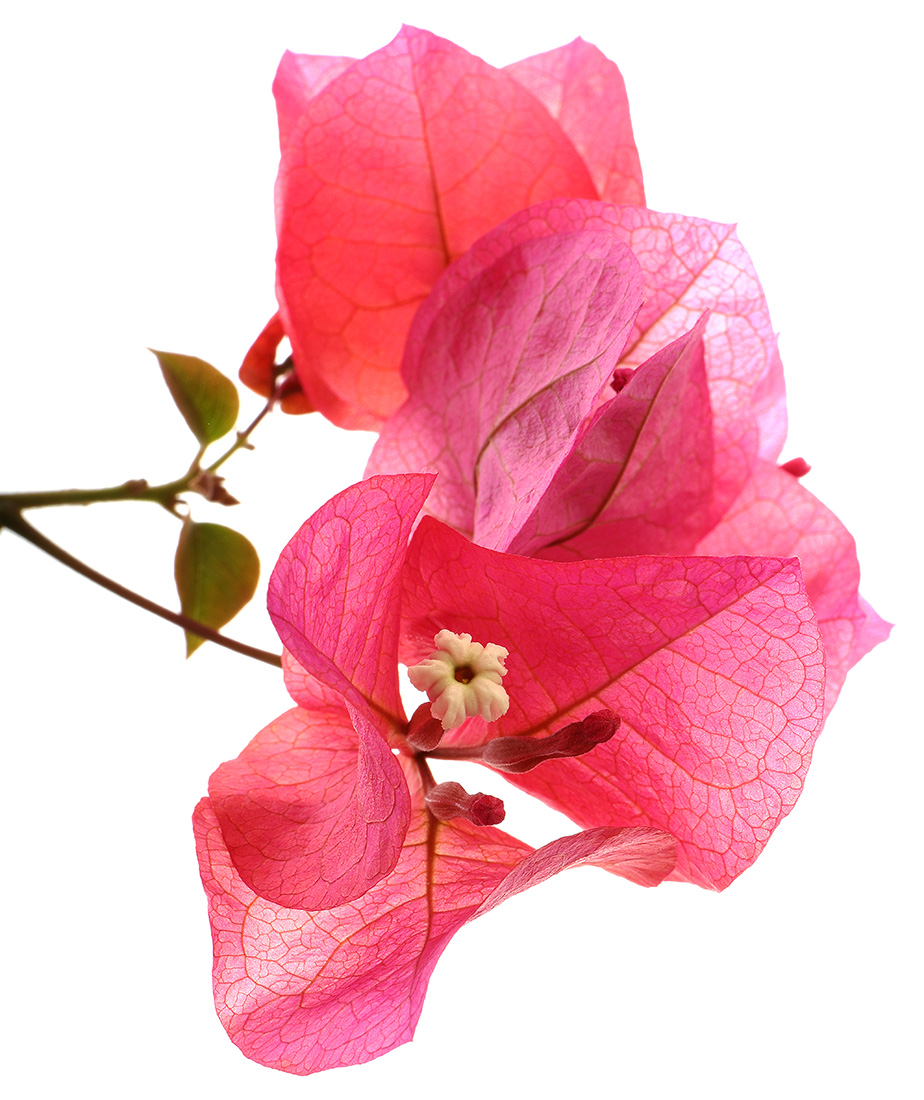
Bougainvillea flowers

Although it’s late autumn, there are still some flowers in our conservatory. We treat it as an ‘indoor garden’ rather than as a sitting room and try to have a few plants in there all year. (We haven’t actually got that many yet – I’m working on it!)

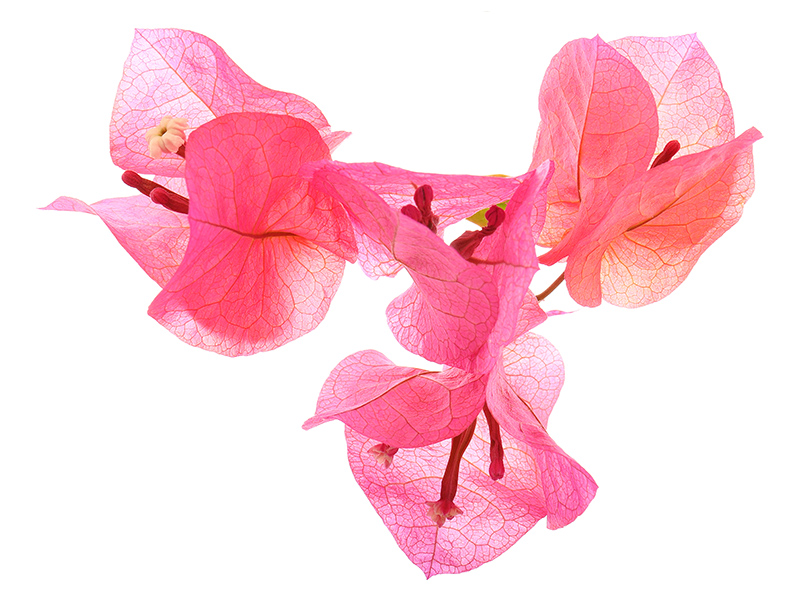
The most eye-catching of the flowers there are those of a young bougainvillea plant. This is just its second year and it has been well covered in flowers. (So has the floor – I seem to be always sweeping them up.) I love the showiness and flamboyance of the bright flowers – really I should say bracts, rather than flowers.

Apart from the glorious colour, these have a nostalgic attraction for me. My parents spent over 20 years in Spain when they retired, and had exactly the same colour of bougainvillea growing by their front door. So this bougainvillea brings back happy memories of spending time in the sun with Mum and Dad.

Seeing bougainvillea in flower in Spain always made me wish I could grow it too. There was a garden centre close to my parents’ apartment and I frequently went there to buy plants for their garden. That was a great excuse for spending ages wandering around looking at all the exciting and (to me) exotic-looking flowers, shrubs and trees. (If you’ve been reading this blog for a little while, you’ll know that time spent discovering plants makes me happy.)

The bougainvillea flowers will soon be gone from my plant, but I’ll look forward to seeing them again next year and to the sunshine that comes with them too. By then, I hope we’ll all be able to get out and discover the things that make us happy.

Bougainvillea flowers

A Splash of Late Sunshine

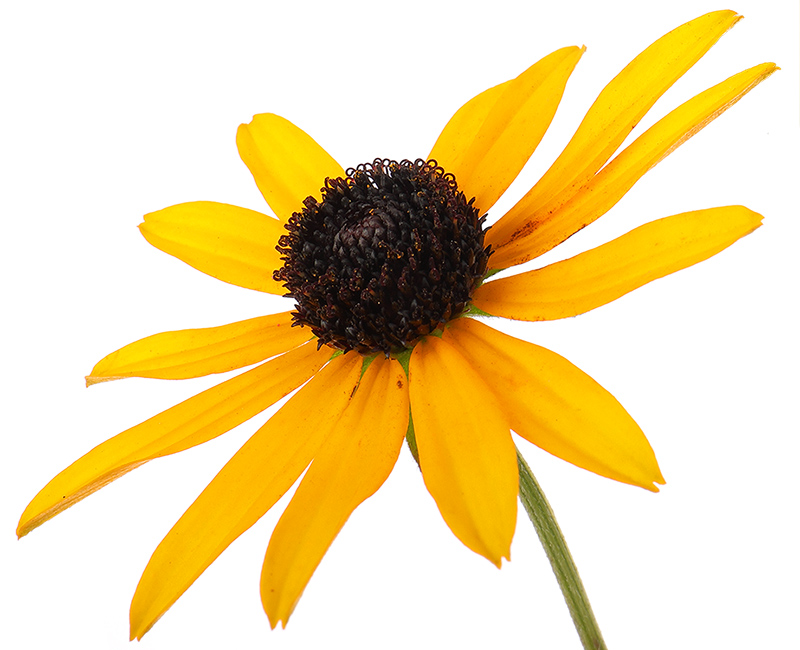
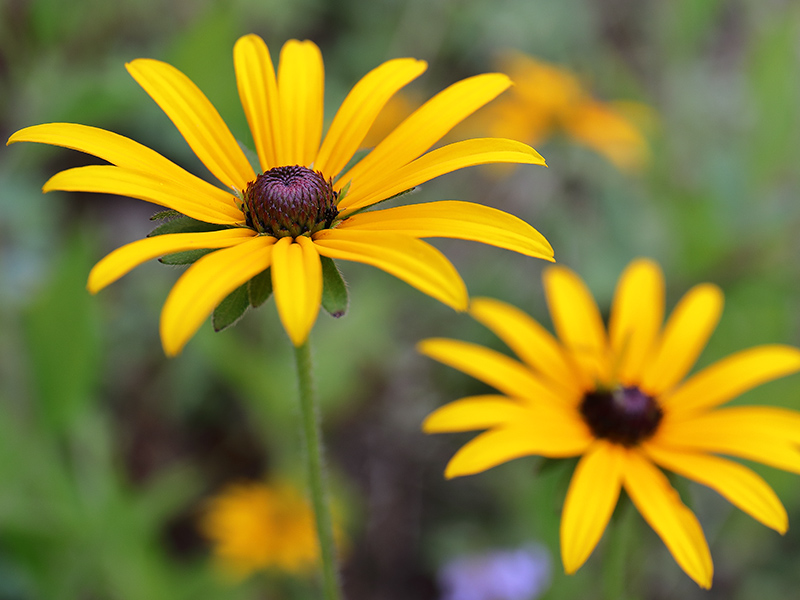
Rudbeckia flower

I managed to photograph these rudbeckias (coneflowers) before they got too weather-beaten to use. (They’re actually gone now – only the brown seed-heads remain – so I was just in time.)

The rudbeckia below (and at bottom) is ‘Goldsturm’ and it has given a rich touch of gold to the main border for weeks. I’d though of moving it to a position that would give it a little more moisture but it seems settled where it is. (Moving it might be risky too, I’ve lost them a few times, both back in Scotland and here. I think they got too dry.)

Rudbekia 'Goldsturm' flower

The rudbeckia at the top of this post is, I think, an annual. Hubby grew it from seed as part of his collection of potted plants in the front garden. (That part is his domain!) Sitting in its big pot, it has added a welcoming glow by our front door. It must have been in constant flower for a couple of months and now that it has gone over, I miss it!

There’s a new yellow tint seeping into the garden now as the leaves gradually change colour. Somehow at this time of year, we always seem to have a week or two of very rough, windy weather. So the leaves get blown off before there’s time to fully appreciate that yellow. If the wind does let up for a little while, I might get the chance to nip outside with my camera. (But I suspect I’ll end up collecting fallen leaves instead and photographing those.)

Rudbekia 'Goldsturm' flower

Small but Beautiful

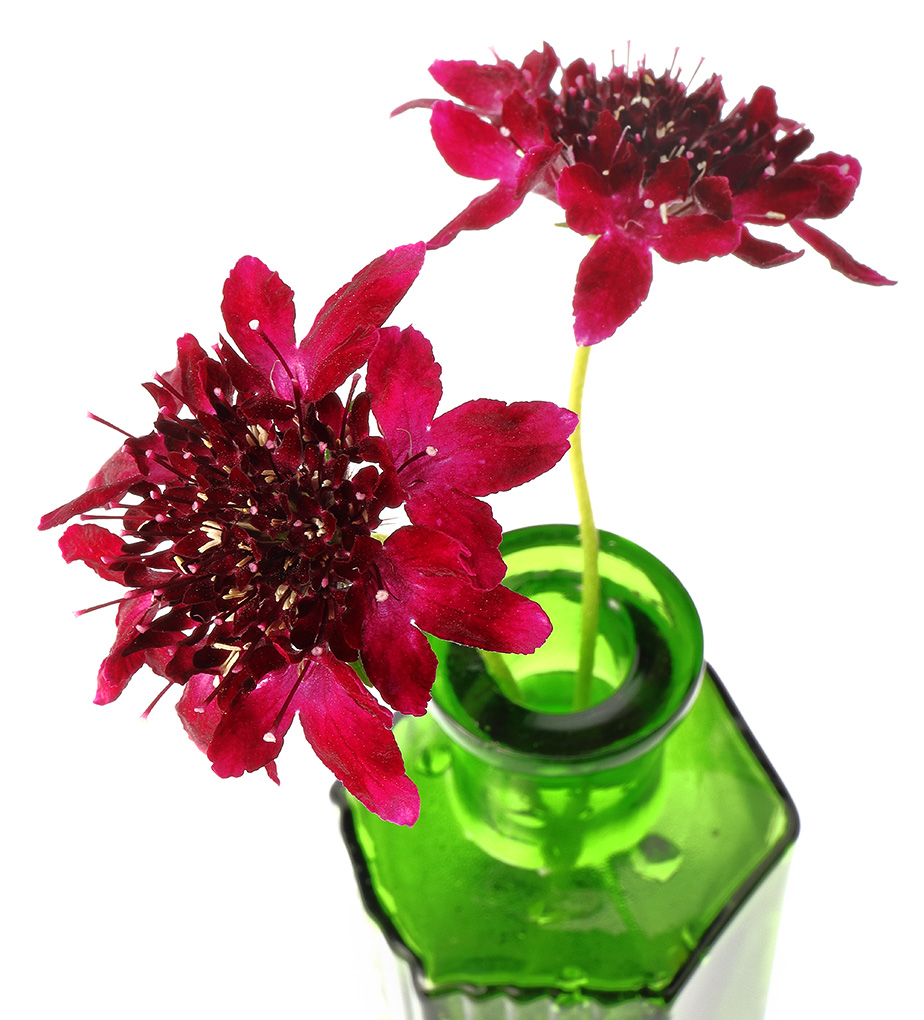
Scabiosa atropurpurea flowers (scabious 'Chile Black')

The flowers in the garden are getting fewer as autumn progresses. Finding something to photograph is more difficult now, but there are a few flowers left and some are still looking good.

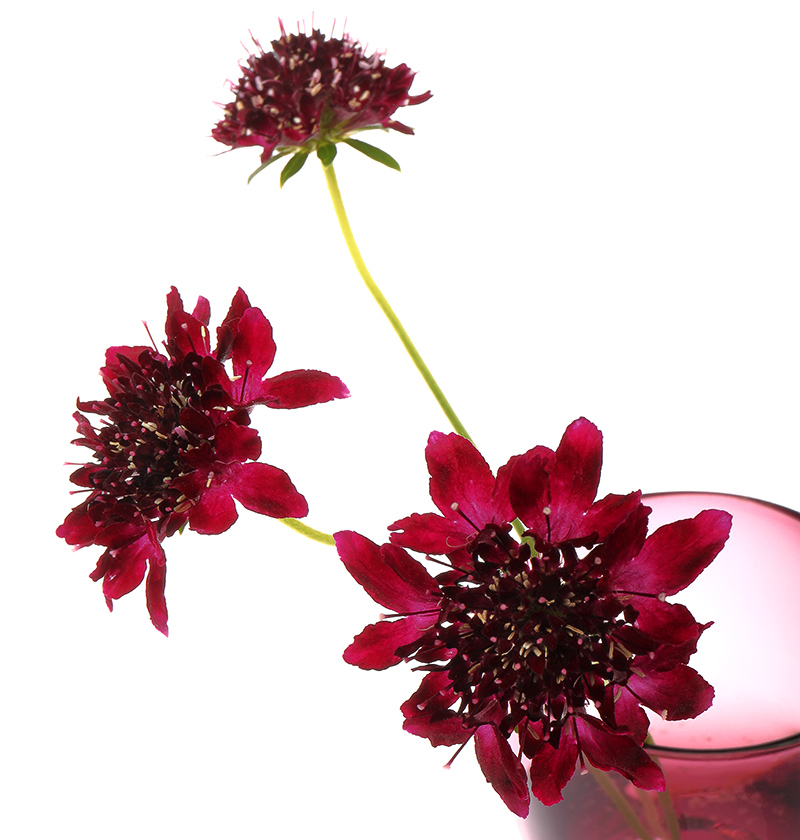
Amongst these is this very long-flowering Scabious atropurpurea. It’s a lovely little thing, but you do need to look at it closely to see the detail. I’ve also had to use plenty of light because the flowers are very dark. Here it’s a tricky balance between being able to see anything in the centre of the flowers and keeping the colour as true to life as possible.

And talking about the true colour – this is one of the supposedly ‘black’ flowered scabious varieties. (I’m not sure which. I’ve had both ‘Ace of Spades’ and ‘Chile Black’ and they look very similar to me.) As you can see, the flowers really aren’t black at all, but a very deep burgundy red, as are many other flowers that have black in their name. (Like Black Parrot tulips, photographed here: https://annmackay.blog/2020/05/03/tulips-flamboyant-and-fun/ )

I love having the deep, dark purplish-reds of these flowers in the garden. They look dramatic as they sway on their tall, delicate stems and can take the overly sweet edge off a bed that has a lot of softer pinks. Because they also self-seed freely around our garden, they help to give a more cohesive look to the borders.

(A problem of growing flowers to photograph is that it’s easy to end up with lots of ‘one-offs’ that give a very bitty effect. Repetition helps to hold the garden together. It’s good to have plants that are easy to propagate and can be sprinkled through the borders or grown in massed groups. )

Like other scabious flowers, these are great for bees and other pollinators. That gives me another reason for growing them and makes me want try other varieties of scabious too. (I do already have a small blue scabious – no idea of the name – and the related Knautia macedonica which is an absolute magnet for bees and hoverflies.)

It’s great that these flowers are happy to sow themselves everywhere because they are short-lived as perennials. (They’re often treated as annuals.) These have been in flower for a very long time and look set to flower for a few weeks yet. I do dead-head them but always leave the last seed heads, so there are usually lots of new seedlings the next year.

Hopefully I’ll never be without a few of these pretty little flowers around the garden – it will make the bees happy too!

Scabiosa atropurpurea flowers (scabious 'Chile Black')

A Daisy by Any Other Name

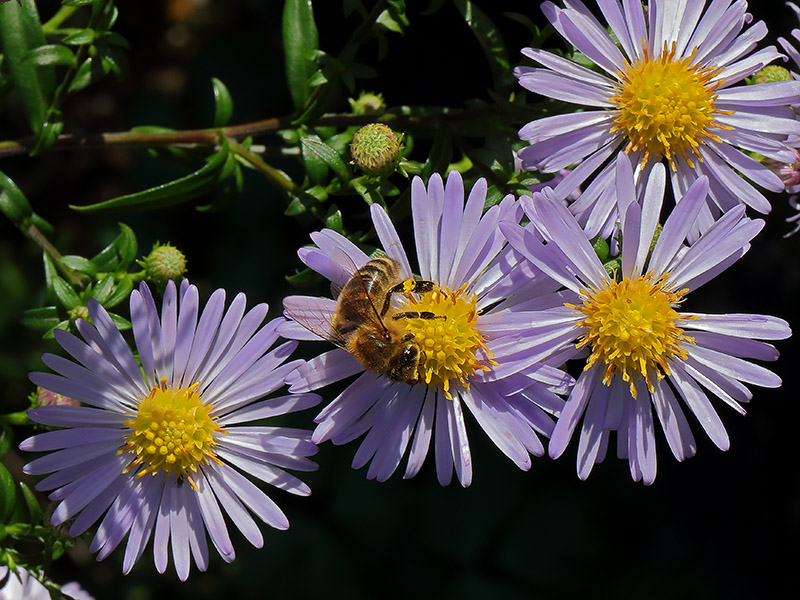
Aster x frikartii 'Monch'

This week my garden is full of Michaelmas daisies. I would call them asters – but that isn’t necessarily true. Actually, I do still call them asters, even though some had their name changed a few years ago.

My preference for the old name is because the new name for some asters is such an awkward mouthful. ‘Symphyotrichum’ isn’t exactly easy to say and is even harder to spell. (If I’ve got it wrong, I can blame the RHS website, which is my usual go-to for spelling plant names.)

Bee on Michaelmas daisy
A happy honeybee enjoying these Michaelmas daisies.

And if that’s not bad enough, many other popular asters were given a different name – ‘Eurybia’. Well, at least that one is much easier to spell, but it makes life more complicated for gardeners. But then there’s also ‘Galatella’, ‘Doellingeria’ and others – argh!

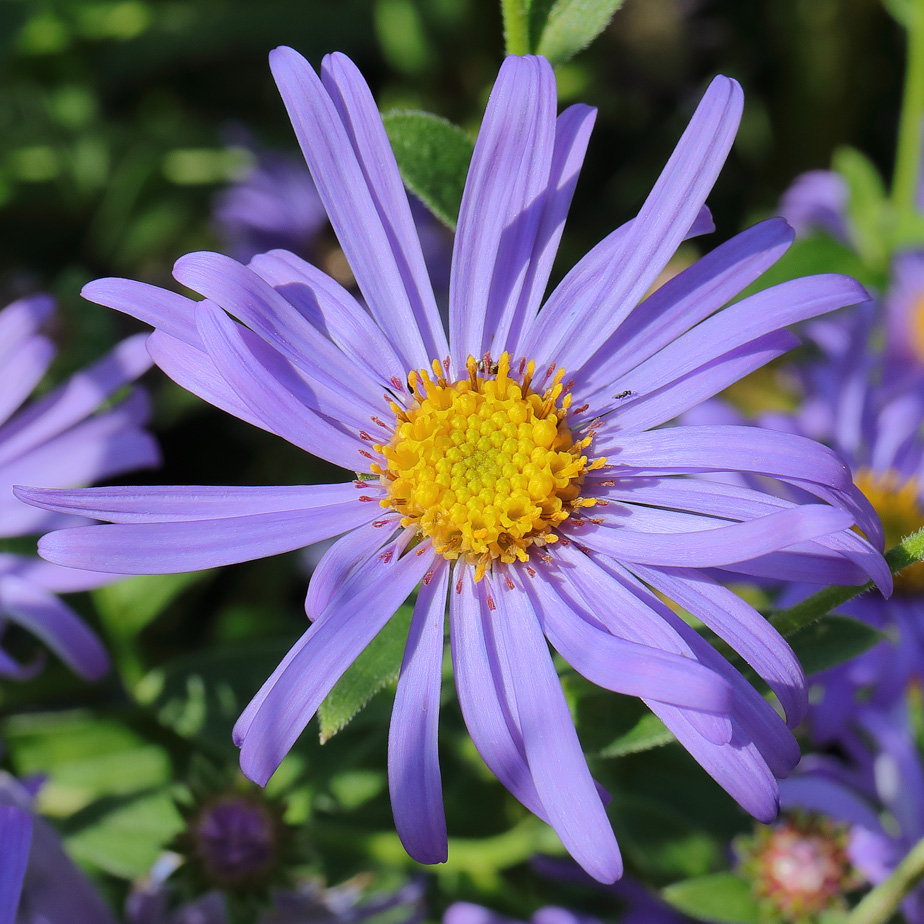
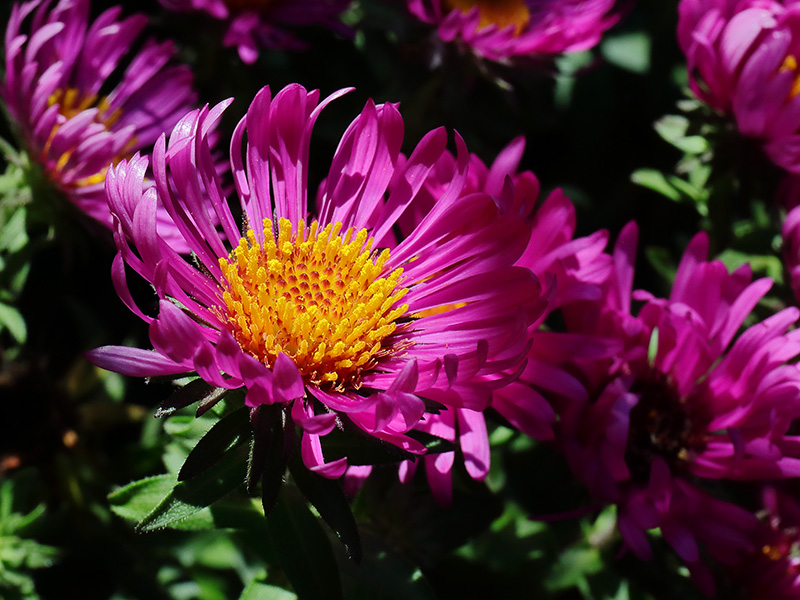
In fact, I have no idea of the names of all but one of the Michaelmas daisies here. I know that the flower below is Symphyotrichum laeve ‘Les Moutiers’ because I bought it from a nursery. But the small blue daisy above and the dark pink one at the bottom were both given by friends and their names are a mystery to me for now.

(I think the top photo – taken in a garden I visited last year – is probably Aster x frikartii ‘Monch’. It’s a plant I’ve been meaning to buy for a while, but it will have to wait until it’s easier to go plant-shopping.)

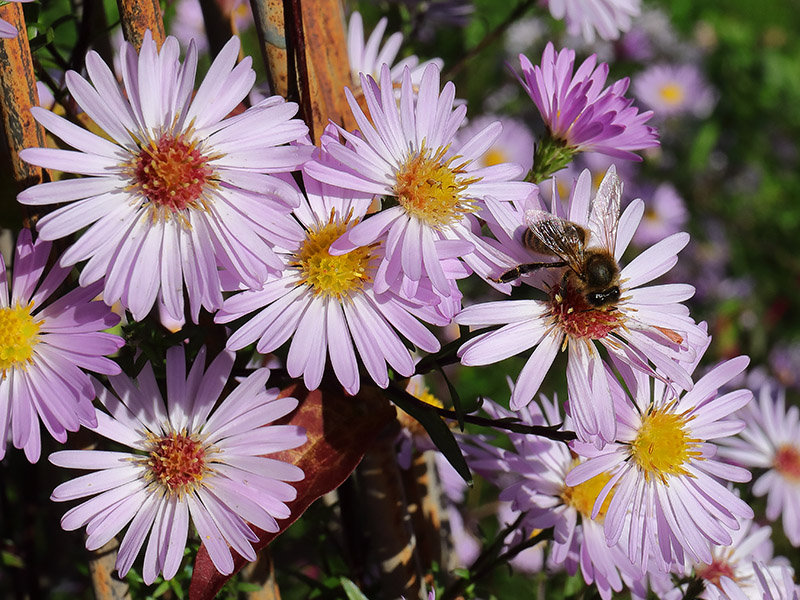
Honeybee on pink Michaelmas daisies
Symphyotrichum laeve ‘Les Moutiers’ – just try remembering that at the garden centre!

Whatever their names might be, I love seeing the colours of these daisies at a time when we’ve been plunged into dull weather with grey skies and lots of rain. They cheer me up and remind me that there’s a while yet before winter approaches.

More importantly, the bees are busily (and buzzily!) making the most of the nectar and pollen provided by these flowers. Having flowers for bees and other pollinators as late as possible in the year is one of my aims for the garden. The asters are a big help with this.

Whenever I do get the chance to buy plants again, I’ll just have to make sure that I’ve written down the names of any Michaelmas daisies that I want. (And then I’ll have to check it carefully, because most of my books and quite a few websites are out of date.) That way I’ll have a better chance of remembering the names of the plants I want!

Dark pink Michaelmas daisy flowers
Aster? Symphyotrichum? Or Eurybia?

Growing Flowers for Photography: Zinnias

Orange and pink zinnia flower

Every year I try to have something new to photograph in the garden. So it’s useful to plant a few annuals to give me the chance to try something different. This year a packet of mixed-colour Zinnia seed has produced a nice crop of willing photographic subjects.

I haven’t grown Zinnias for a long time – years ago in Scotland – but not since we moved here. Why I’ve allowed myself to miss out on them I can’t say. (Probably too busy weeding in springtime to grow much from seed!)

Intriguing shapes in the centre of this zinnia flower

The reward for taking a little time to grow these plants is a border full of colourful flowers that gleam like jewels. They include magenta-pink, a good strong red, an orange that vies with tithonia (Mexican sunflower) for sheer vibrance, and (perhaps the one I like best) a much softer orange that is blushed with magenta. It’s like the floral equivalent of a big bag of mixed sweeties (candy) for a photographer!

The shapes of the flowers are interesting too. I’ve always been attracted to the ring of tiny yellow flowers around the centre of the flower head. (These are the ‘disk flowers’ that make up the centre of a composite flower.) As these disk flowers gradually open closer to the very centre of the flower, the central disc can go from being flat to being conical, as in the top photograph. This gives an interesting variation in shape and more opportunities for different pictures.

There’s a fiery glow from this orange zinnia flower.

Zinnias are not just attractive to photographers, though. Bees love them too. The bee in the bottom photo seemed to have its face stuck right into one of the little disk florets. It was in no hurry to leave, so gave me another photographic opportunity. Thanks, little bee!

Late summer and autumn is a time when the garden here can start to run out of flowers, so the zinnias are especially welcome. And as a late-season bee plant, they are even more valuable. Next year I intend to find space to grow some more zinnias – so the bees and I will both be happy, and there will be lots more photographs. 🙂

Pink zinnia flower with a bumblebee