Didn’t Do My Homework: Heleniums

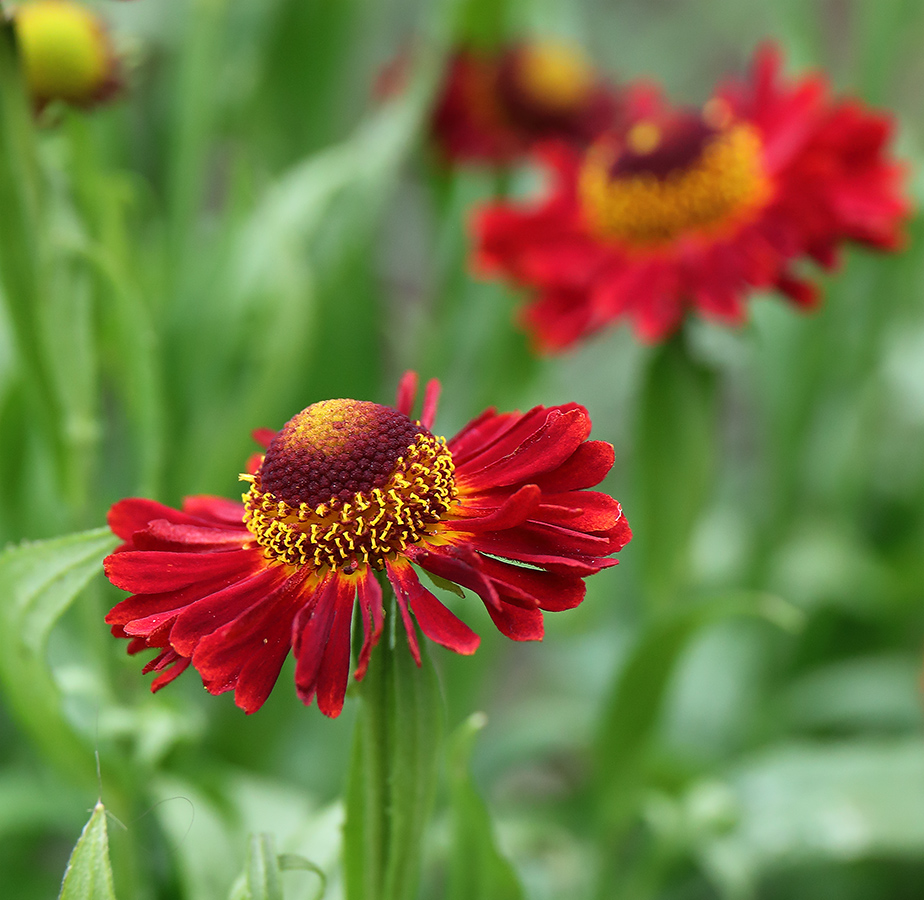
Red helenium flowers

Last year I bought a couple of helenium plants because I wanted to have as many late-season flowers as possible. (I’m always keen to prolong summer and keep the bees fed too.)

One plant was put into a border straight away, while the other has been in a large pot until recently. It is now in my ‘hot’ border. Both plants have been kept well-watered through the dry summer and are growing happily.

But that may be more by luck than any gardening skill on my part. Normally I make a point of checking the needs of any new plant on Google – sometimes even before I buy it. (I’m at my most impulsive in garden centres!) Not this time…I’ve only just discovered that heleniums like a much wetter soil than I’d thought. Luckily, it’s raining at the moment, so the plants are happy for now.

Soon, though, I will have to move the plants because they’re in the driest part of the garden and probably won’t survive there long. Later this year I want to build a bog garden and now this is making me think of having two ‘bog’ areas. One would be drier than the other, i.e. damp rather than truly boggy. Hopefully this would make it possible for me to give a good home to plants with a range of moisture needs. Will it work? I guess we’ll find out next year!

Incidentally, when I did get round to Googling heleniums, I discovered two facts that (together) intrigued me: that the common name ‘sneezeweed’ was given to the plant because the leaves used to be made into snuff and that all parts of the plant are poisonous to humans. Makes me wonder if anyone was ever poisoned with the snuff – maybe it’s better to just enjoy heleniums in our gardens and let them keep their leaves!
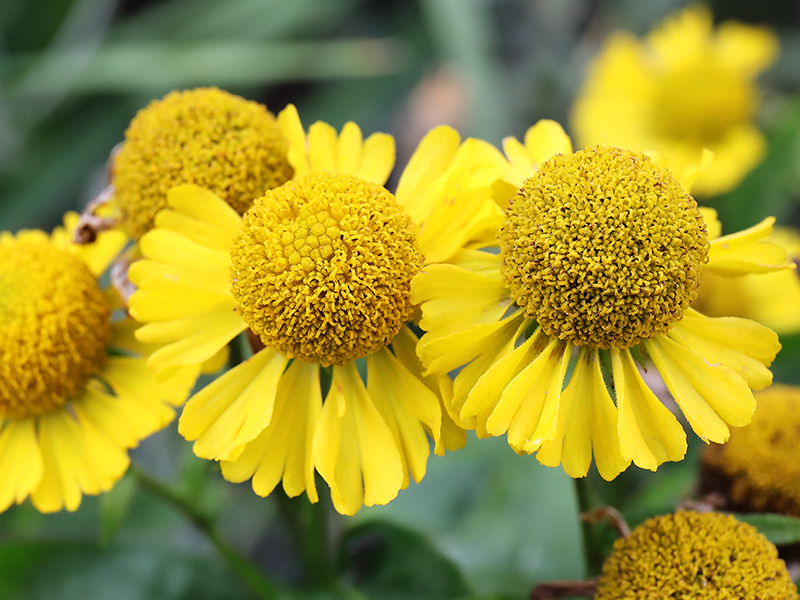
Yellow helenium flowers
These yellow helenium flowers look like little pom-poms!

Soft Blue: Himalayan Blue Poppy

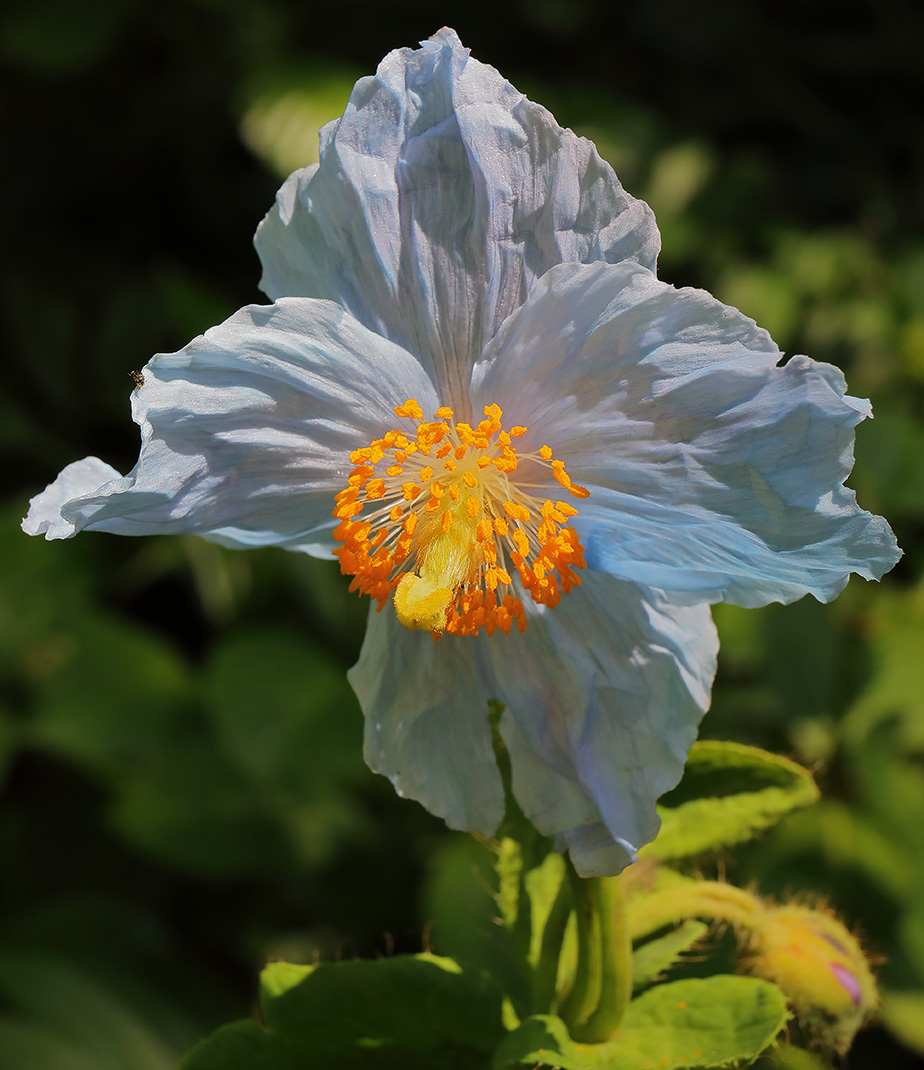
Meconopsis aka Himalayan blue poppy

This is a bit of a post and run today, because it has been a very busy time over the last week. It’s been frustrating not to have time to take new photographs, but hopefully I’ll be able to get back to doing what I love soon.

The photograph above is a flower I love to see – a Himalayan blue poppy (Meconopsis). It is frequently grown in Scotland, where the conditions suit it. (It looks wonderful near water, with trees and shrubs growing around it.)

I tried growing a couple of plants in our previous garden in Scotland, but they only lasted two or three years before dying out. At the time I thought I simply hadn’t kept them moist enough but I’ve learned since that they’re short-lived perennials. So maybe they wouldn’t have lasted a lot longer anyway.

There’s something about a plant being difficult to grow or hard to obtain that makes them all the more appealing to gardeners. I’m trying to learn to keep to plants that have a good chance in my very warm and dry garden (still a learning process). That means that I won’t be buying any blue poppies – they really wouldn’t like it here. But I can enjoy the memory of them.

The reason for being so busy this week is that we’re getting the garden ready for a contractor to come in and replace the fence around the garden. There’s far more to do than I had first realised and it seems to have taken a lot of time! Shrubs and trees have been cut back, lots of things, (including a large compost heap) have been moved and room still has to be found to store the new fence panels, posts and gravel boards…phew!

It will be a great relief to get this work done. The oldest part of the fence was blown down by gales in early spring. Since then it’s been cobbled together and propped up as best we can, so that the neighbours’ young dog can’t escape from their garden. (He managed it once, and had a lovely time playing and evading capture in our garden.) Originally the new fence was to be started mid-May – but Covid stopped it.

The job will take three weeks and there’s till plenty for me to do to create enough working space. After that I’ll be glad to get back to my photography and to planning some new planting!

Hot Spot: Echinaceas

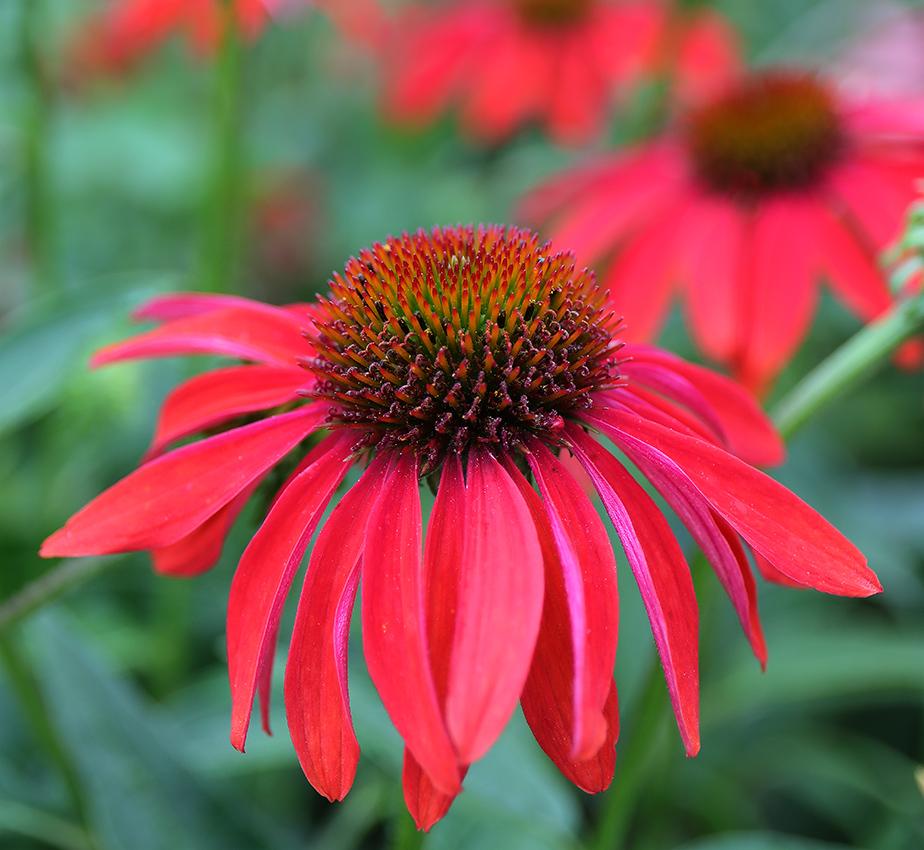
Red echinacea flower.

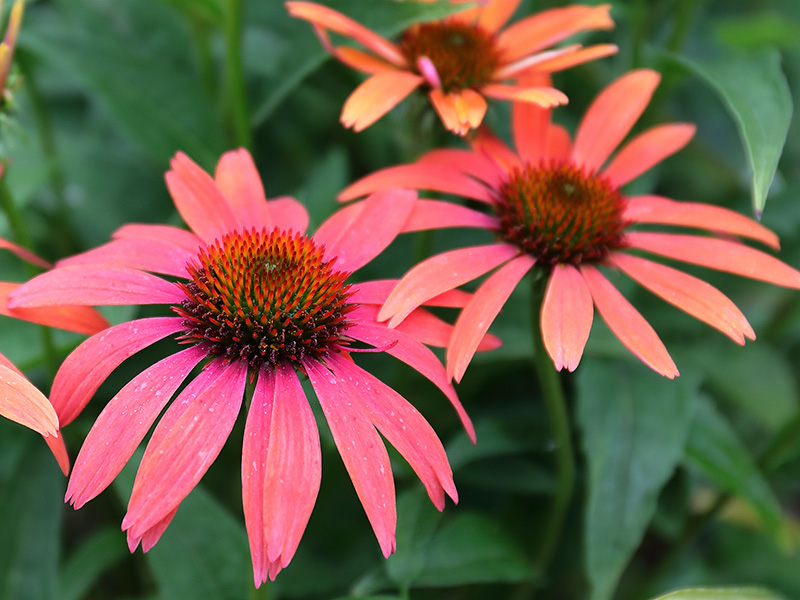
There’s a small patch of border that’s become quite a hot-spot this year. Red, orange and magenta-pink echinaceas (coneflowers), red geums, dark red scabious and the deep reddish-purple leaves of a heuchera are the start of a new planting scheme that radiates warmth.

There hasn’t been much red or orange in the garden before. Most of the other areas are planted with softer colours. These include lots of pink and mauve flowers, with plenty of lavender-blues added into the mix.

I find that these gentle pinkish shades can be difficult to use near red or orange – they can end up looking washed-out and feeble. On the other hand, a bright magenta – like rose campion (Lychnis coronaria) – works just fine and adds its own intense colour to the fieriness of the new border.

It feels good to now have an area specifically for hot colours. Last year I had some tithonia (Mexican sunflowers) in that space, and I found that I really enjoyed the intense colour. The tithonia is annual, so this year I’ve planted perennials instead.

(Although I grow a few annuals, at the moment I’m trying to concentrate on perennials so that I don’t have too much re-planting to do every year.)

The only problem with echinaceas is that they are short-lived perennials. I’ve read that the older pink varieties appear to go on from year to year because they self-seed and their offspring continue the display after the original plants have died. (It was something of a relief to discover this, because I was worried that I couldn’t keep the plants alive for long – some years they just seemed to disappear for no apparent reason.)

Some of the new echinaceas are said not to come true from seed and may die out after a few years. If that’s the case with those that I’ve planted here, then, because the colours are so gorgeous, I won’t mind buying more. (I’d like to plant yellow echinaceas too – they would be a good alternative to rudbekias because they’re much more tolerant of drought.)

In contrast to these brightly-coloured daisies, I also have an echinacea which has white flowers with centres that start off green and turn yellow. (If I remember correctly, it’s ‘Powwow White’.) It has a very different look to the hot-coloured flowers and suits a softer, more relaxing colour scheme. I photographed this particular flower when it froze last winter – you can see it here: https://annmackay.blog/2019/11/24/frozen-flowers/

Pink and orange echinacea flowers.
Echinacea flowers in a mix of orange and magenta-pink.

Purple Passion(flower)

These passionflower photographs are the result of an afternoon spent playing with a stem of the plant in my studio.

I photographed the flower and leaves to show their translucence. This makes the tiny veins in the petals and leaves stand out and gives a very crisp, sharp look to the photograph.

The colour changes a bit too. When seen under normal lighting (i.e. lit from the front or above), this passionflower is a soft pinky-purple. Here, though, the light from behind has bleached out the petal colours considerably and you can see more pink and red tones rather than the normal purple.

My setup for photographing flowers against a white background is fairly straightforward. I use a mini ‘shooting table’. Basically this is a sheet of translucent perspex on a metal frame. It’s bent into an ‘L’ shape (seen side-on). That gives both a background and a base for the photograph.

Because the shooting-table is translucent, you can shine studio lights through it. This gives a bright white background.

If you set the light levels so that there is a lot of light coming from behind the flower (in comparison to the light coming from the front), then you’ll get the maximum amount of detail in the veins of the petals.

To light the flowers from the front, I usually use two large studio flashes (strobes). One of these is fitted with a large, square softbox, which gives a very soft and even light. But the size of the softbox is more than a little awkward in my very small studio space!

The other light is fitted with a white (translucent) shoot-through brolly. The light from this is not as soft as that from the softbox, so it introduces a bit more shadow. This gives a bit more depth and modelling to the photograph.

If I want to have stronger shadows and a more dramatic feel to the image, I’ll use just the light with the brolly and leave out the light with the softbox. A reflector opposite the light is enough to put just a little light into the shadows.

By the way, if anyone knows the name of this particular passionflower, then please tell me! I’ve been wondering about it because it was labelled ‘Amethyst’, but Amethyst usually has a ring of purple filaments, instead of the white that this flower has. I’m intrigued and would love to know the correct name!

Passionflower ‘Amethyst’ or something else?

Allium Christophii: Star of Persia

Allium christophii

We’ve just had our first little bit of rain in weeks. The garden has been desperately dry, with small cracks appearing in the ground in the worst areas. So this rain is a huge relief!

At the same time, we’ve had the sunniest May here since records began in 1929. Wonderful for sitting out in and giving us lots of flowers everywhere, but making it even harder to keep up with watering.

Many plants have suffered in the heat, but a few have coped well. One of the best has been Allium christophii, which seems quite unbothered by drought. As long as it gets lots of sunshine and has well-drained soil, it’s happy.

The allium leaves become yellowed and dead-looking by the time the flowers open. These can to be hidden by planting the bulbs with something that they can grow up through.

When the allium flowers are over, there are the lovely dry seed heads to give an interesting display for the rest of the summer. You may find seedlings if you leave the heads – or you can just cut the heads and bring them indoors to display. (Allium christophii will also multiply by bulb offsets.)

One big bonus of growing alliums is that they’re highly attractive to bees. I’m trying to increase the number of good plants for pollinators and other insects in my garden, so these really earn their place.

These alliums are well settled in my garden. I have two areas where there are spreading clumps of them and it’s a delight to see the flowers increasing every year. They’re so pretty that I won’t mind if they get a bit invasive. That just means that there will be more for me to photograph!

Tricky Manoeuvres: Hellebore Photography

I’ve been waiting for a chance to take photographs of these hellebores for a while. At last the weather has become calmer. The wind has died down again and there have even been a few dry spells.

It felt good to get back outside into the garden with my camera and I was relieved to see that the rough weather hadn’t harmed the flowers.

But actually getting into a good position to photograph them was going to be a bit tricky. At the best of times it can be awkward to get close enough to low-growing plants, especially when the ground has become too much of a swampy mess to kneel on. Hellebores make it even more difficult by insisting on hanging their beautiful little heads down. You have to practically get to worm’s eye-level if you want to see them.

Luckily for me, there was a stack of bags of compost nearby and I was able to drag one over and lie down on it to get my photographs. Having one elbow firmly wedged against a big plant pot helped to make sure that I didn’t take a nose-dive into the mud.

All this makes me realise that I may have to change the arrangement of some of the garden borders. Far too many of the smaller plants are positioned quite far into the border, so that you really need to get right into the border to photograph them. Without standing on the other plants. Or getting jabbed by something prickly. Or even sitting down unexpectedly in the mud! Hmm, this may need a bit of thought…

Dark Hellebore 4833

Spring Comes Closer : Irises and Crocuses

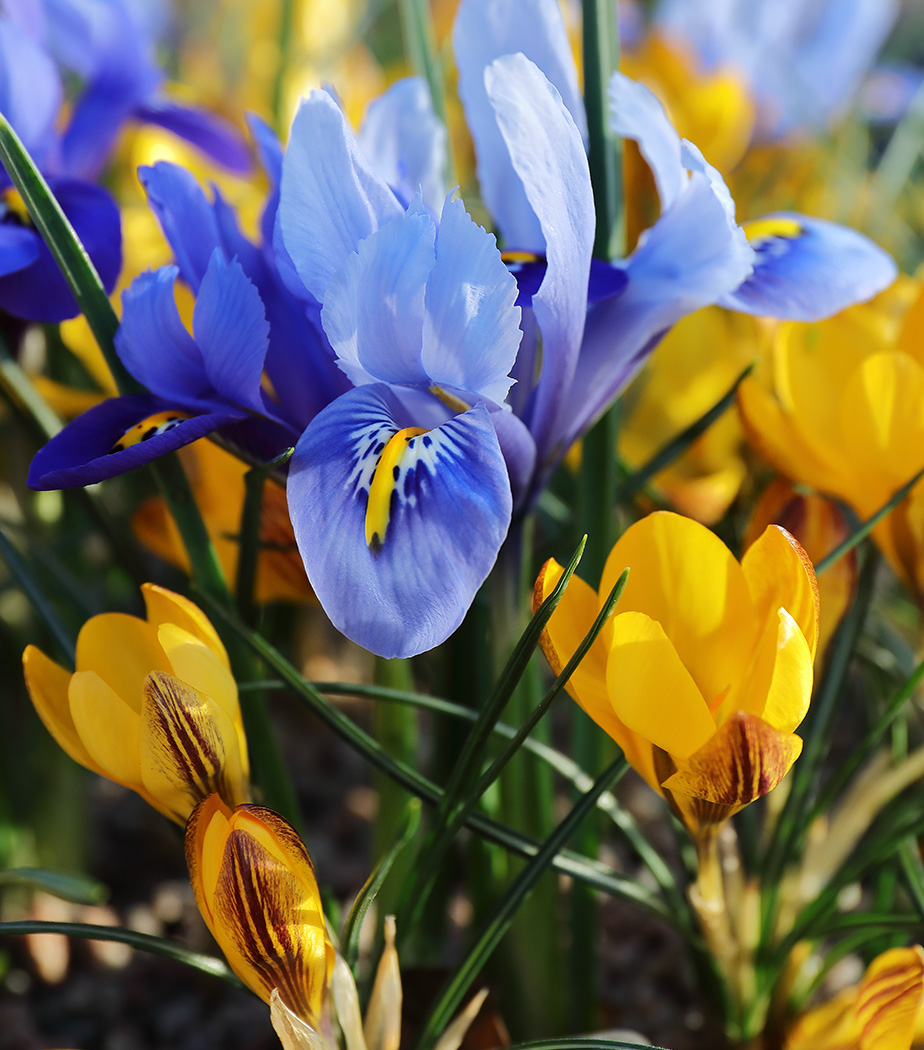
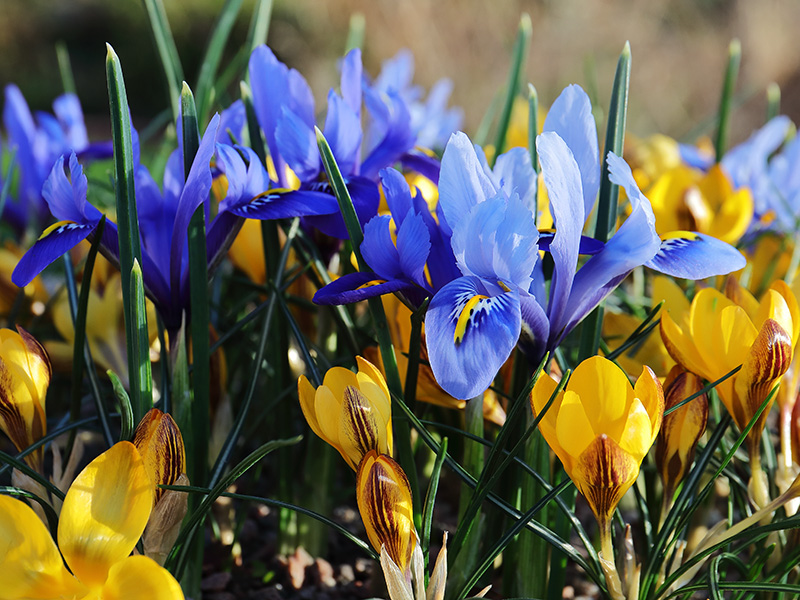
Blue irises and yellow crocuses

It’s been a very blowy, wet, and sometimes stormy couple of weeks here. Everything outside has had quite a thrashing from the wind, so I’m grateful that the early flowers have somehow managed to survive.

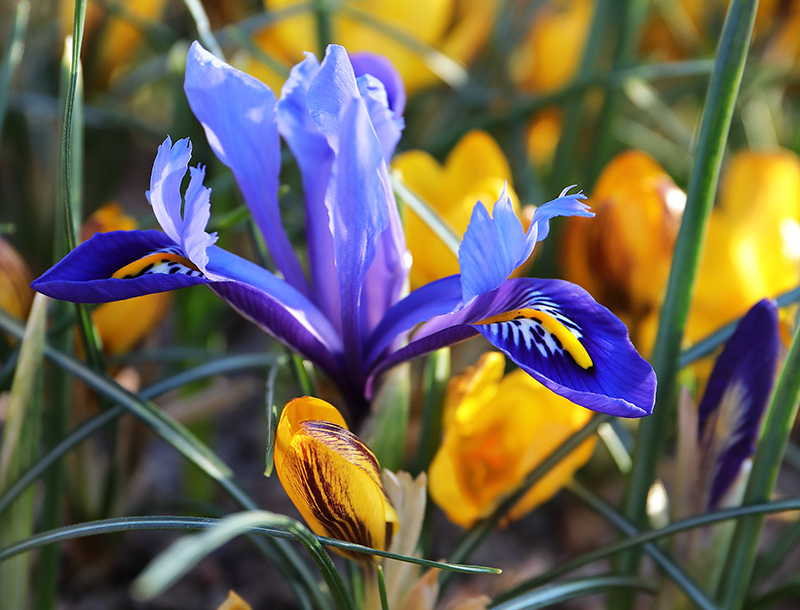
Last autumn I planted a shallow pot with the yellow crocus ‘fuscotinctus’ and dwarf reticulata irises ‘Cantab’ (the paler blue) and ‘Harmony’. Their pot sits at the front door and gets a lot of sunshine and a little bit of shelter from the wind. It has been a delight to see the colour gradually appearing as these flowers opened.

Despite that bit of shelter, it was a challenge to take photographs without too much blur as the upper petals of the irises fluttered in the wind. Sometimes flower photography means that you just have to hope to be able to snatch a shot right when there’s a slight drop in the breeze!

Iris and Crocus 4738

Every year I’ve said to myself that I must try to photograph all the flowers in the garden, starting with the early bulbs…and not managed it. Something would always get in the way – maybe something garden related, like sowing seeds and clearing weeds from borders, or a family responsibility that needed my time.

This blog has changed that and given some structure to my photography. It has created the need for me to take photographs every week and has put both my garden and my photography at the top of my ‘to do’ list (right along with writing my weekly blog post).

Now I can pay more attention to the gradual arrival of spring here and the changes it brings to the garden. That makes me very happy and full of anticipation of the gardening year ahead. It’s a bit of a luxury really, but these days my time is more my own and  I can spend it being the real me – obsessed gardener and photographer! (Happy days!)

Irises and Crocuses 4744

Late Winter Colour: Primulas

By the time you’re reading this, the garden here will probably be under attack from gale force winds and heavy rain as storm Ciara passes through.

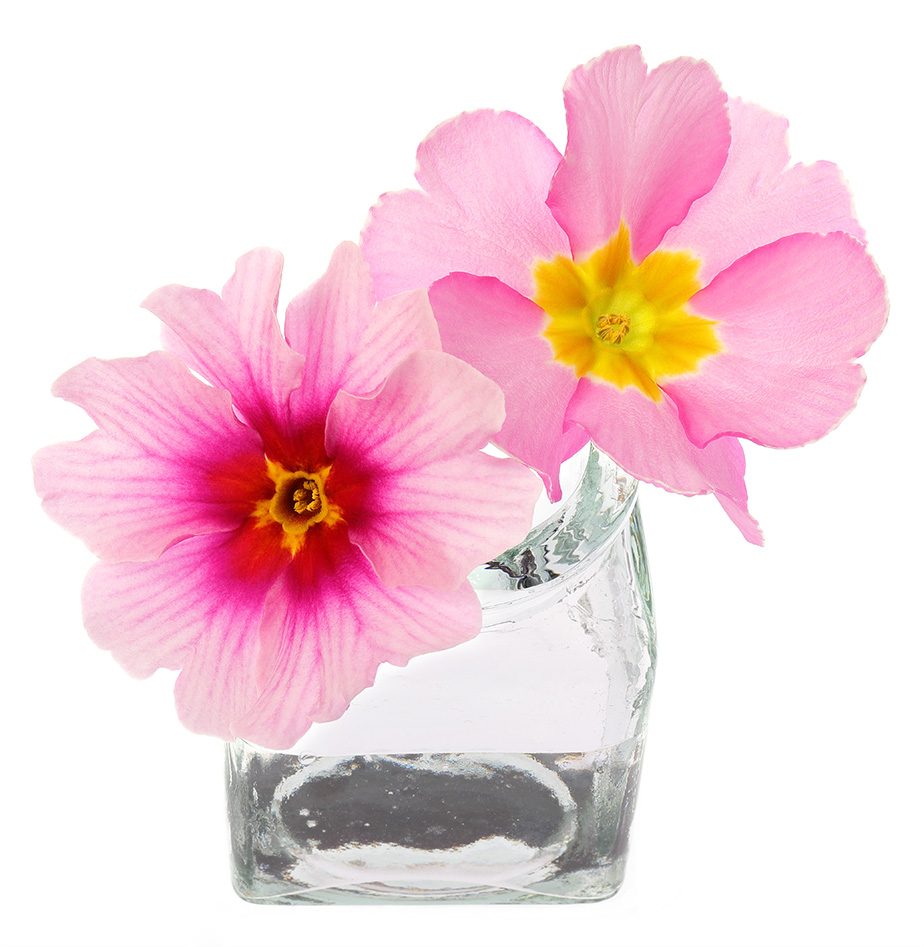
During this sort of gardener-unfriendly weather, I’m very happy to be able to stay inside, working in the comfort of my tiny studio space. So I am always on the lookout for flowers that lend themselves to indoor photography. For this, primulas are very obliging.

Primulas are easily available at this time of year in a great variety of colours and markings. They don’t cost much to buy and the flowers, once picked for the studio, last well in water.

Primulas-4564

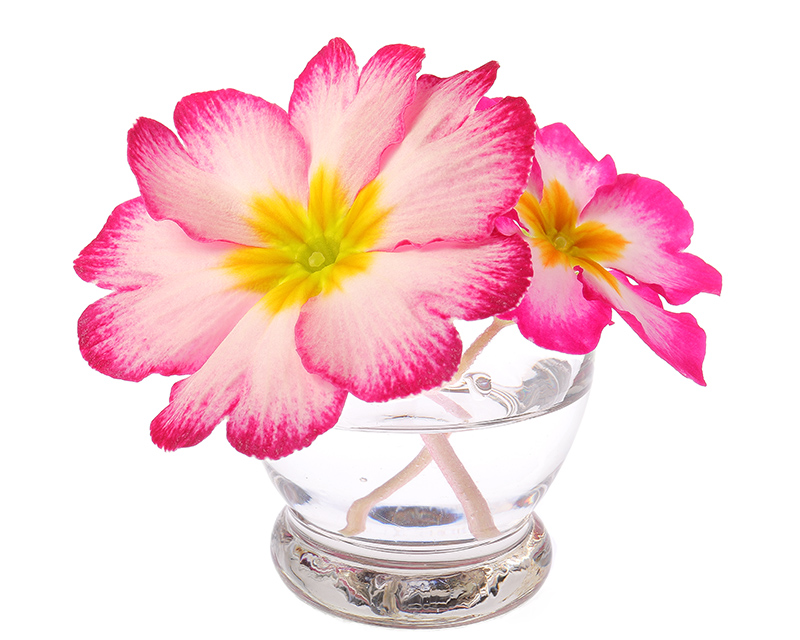
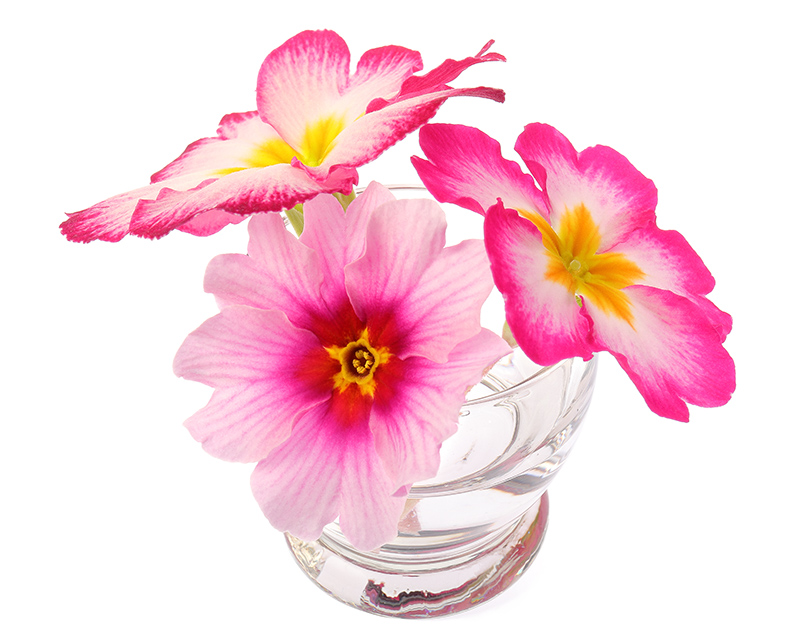
To be able to photograph such short-stemmed flowers, I have a collection of very small containers that act as mini vases. The top photo has a square recycled-glass bottle that is only 2 inches high – just the right size for very small flowers. The container in the other photos is probably an old eye-wash glass and it’s wide enough for several flowers.

Other useful ‘vases’ for short-stemmed flowers include vintage ink bottles, candle and tealight holders and shot glasses. It’s been fun shopping for these in junk shops and vintage stalls – you never know what you’ll find that will help to make a good photograph.

Now that the primulas have been photographed, I must decide where to plant them. They somehow look a bit formal and perhaps too showy for most areas of the back garden (which is now developing a more ‘natural’ look), so they’ll probably be planted in the front garden. Sadly, it seems that these highly-bred primulas are not useful to bees so I won’t be buying many of them. (Instead I could buy the yellow-flowered Primula vulgaris, which is native to the UK and is a good plant for bees, butterflies and moths.)

I hope you enjoy this little bit of cheery colour!

Primulas-4557

Remembered Colour: Lewisia

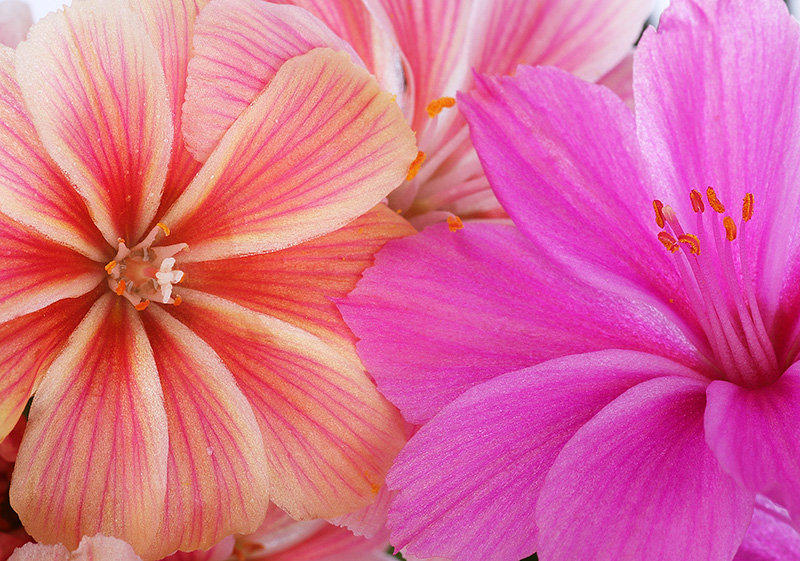
Lewisia flowers

There’s not much happening to photograph out in the garden at the moment. Instead, I’m looking back through some older photos that have been hiding in my PC as unconverted RAW files. Processing them is one of those jobs that I never fully catch up with and sometimes I find an image I like lurking there.

These lewisias were bought a couple of years ago because I couldn’t resist the gorgeous deep pink and the orange with pink veins of their vibrant flowers. They just had to be photographed! (These are Lewisia cotyledon ‘Sunset Strain’.)

Lewisias-50-0052
I’d be happy to wear these bright colours!

The petals make me think of light, silky fabrics. Like something you might wear on a summer’s day – rich, bright and full of the joy of life.

Photographing the flowers makes me aware of how delicate and translucent they are. As you’ll see in the last photo, the studio lights can shine through the petals, revealing their veining and the texture.

lewisia-50-0050
Close-up of a lewisia flower.

Unfortunately, I’ve never managed to keep lewisias growing for very long. They are natives of dry, rocky places in North America and need really good drainage. I have been able to keep some alive for a few years in clay pots, until I have eventually over-watered them. These, however, were planted in a very dry garden border and were happy until winter rains got to them. So it will be back to the pots for the next lot! Then I’ll be able to bring them under cover in winter.

These little beauties may not last long with me but that won’t stop me from buying more and trying again. I hope that I’ll learn how to look after them properly at last!

Lewisia-50-0057
You can see the light coming through the petals of these flowers.

Frost-Magic

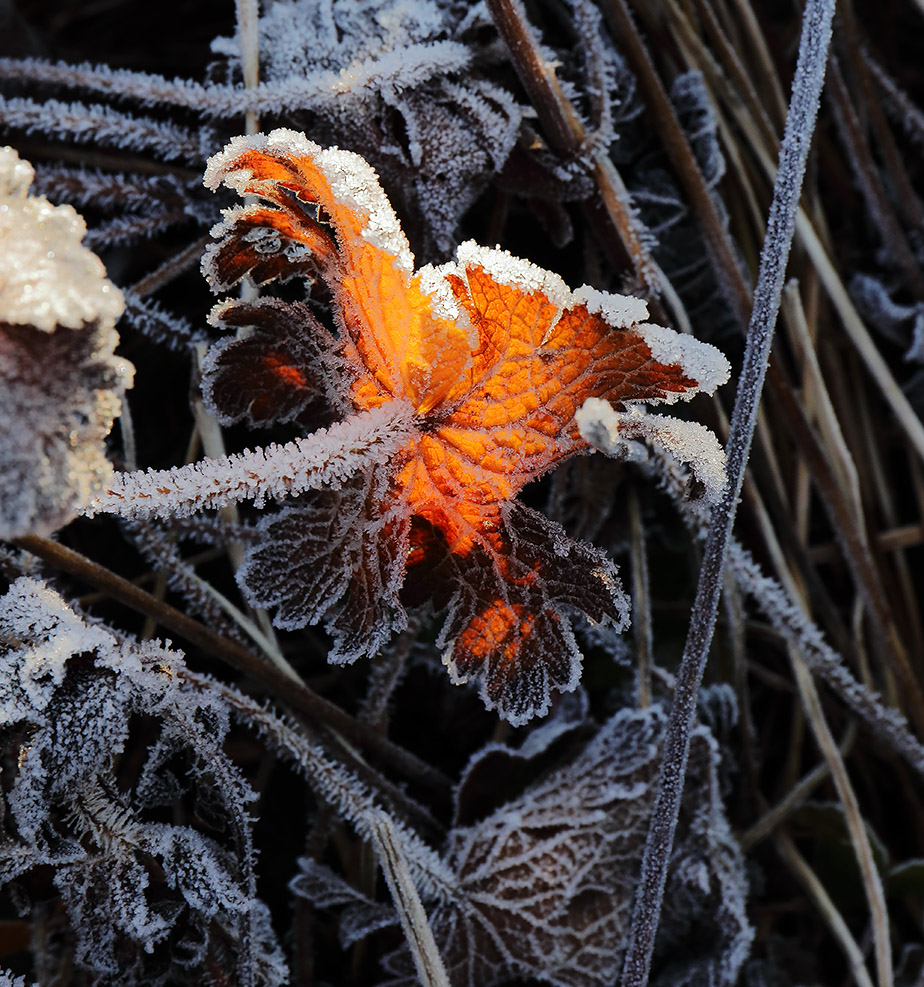
Frosted geranium leaf.

The frost has been back again, giving us some chilly but sparkling mornings. I’ve been grateful to see it because we’ve reached the stage of the year when there are few flowers or plants left to photograph.

Stalking around the garden, camera in hand, I’m usually on the lookout for images that are only made possible because of the frost: veins on a leaf picked out in white, petal edges encrusted as if they’ve been dipped in sugar, or tiny crystals of ice building up on frozen plant surfaces.

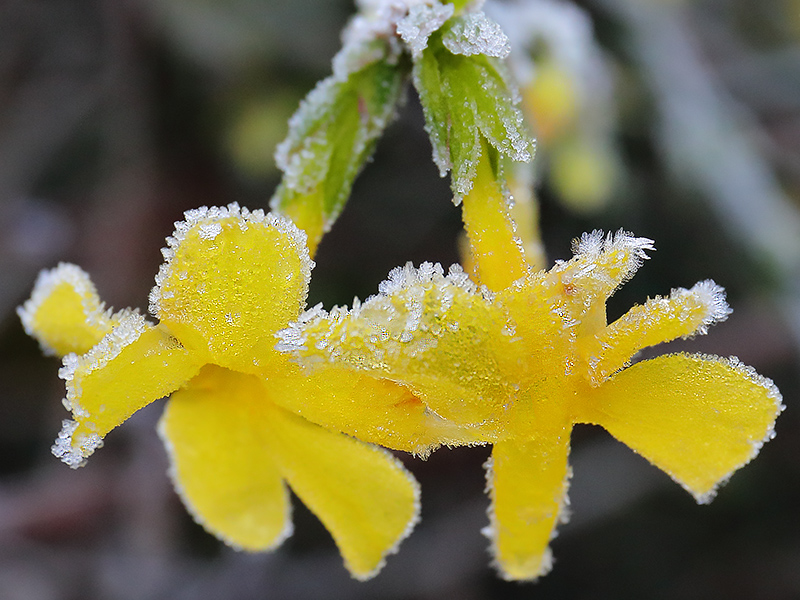
Frosted winter jasmine-3959
Tiny, frozen winter jasmine flowers with ice crystals building up on them.

The shady areas of the garden retain the most frost, and that shade can give a slightly blue tint to the white, which creates an even colder appearance. The lack of light makes it hard to get much depth of field in the photographs, even at fairly high ISO values. (I could use my tripod, but it’s much too cold to stand around for long and my feet feel warmer if I keep moving around.)

As the sunlight gradually starts to seep into the garden, I look for places where the frost has begun to sparkle in the sun. There won’t be much time before the frost begins to disappear as it warms up. This means I have to work quickly to capture the images that have attracted my eye.

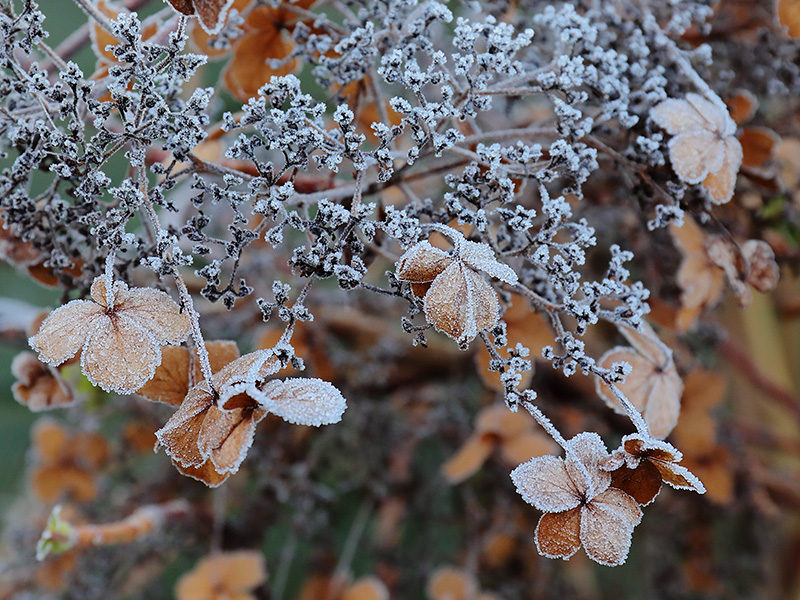
Frosted Hydrangea-3967
This climbing hydrangea is in one of the coldest parts of the garden, shaded by the fence and a tree.

Eventually I’m either too cold to stay out any longer or the frost has started to melt and drip off the wet plants. So it’s time to head indoors, first wrapping my camera in a large plastic bag to protect it from getting covered in condensation in the warmer air. (Outside, it’s all to easy to let the viewfinder get steamed up by my own breath – a frustrating interruption to taking the photographs!)

Once indoors, it’s time for a well-earned mug of coffee and a chance to get warm again while looking to see what new photographs I have. Frosty mornings can be productive and very satisfying!

Frosted Fig Leaf-3827
The frost on this fig leaf will soon be gone, now that the sun has reached it.