Little Stars

The star-shaped flowers of Allium christophii.

The shape of flowers is one of the main elements that draws me to photograph them. If it is a plant with a distinctive shape, especially when it’s graceful, then (as I’m sure you’ll expect) I’m keen to create images of it.

Allium christophii is one of the more spectacular early-summer flowers, with it’s firework-burst head of delicate purple stars. Each little star reflects light, giving it the appearance of being metallic. They remind me of the rich colour and sheen of anodised aluminium.
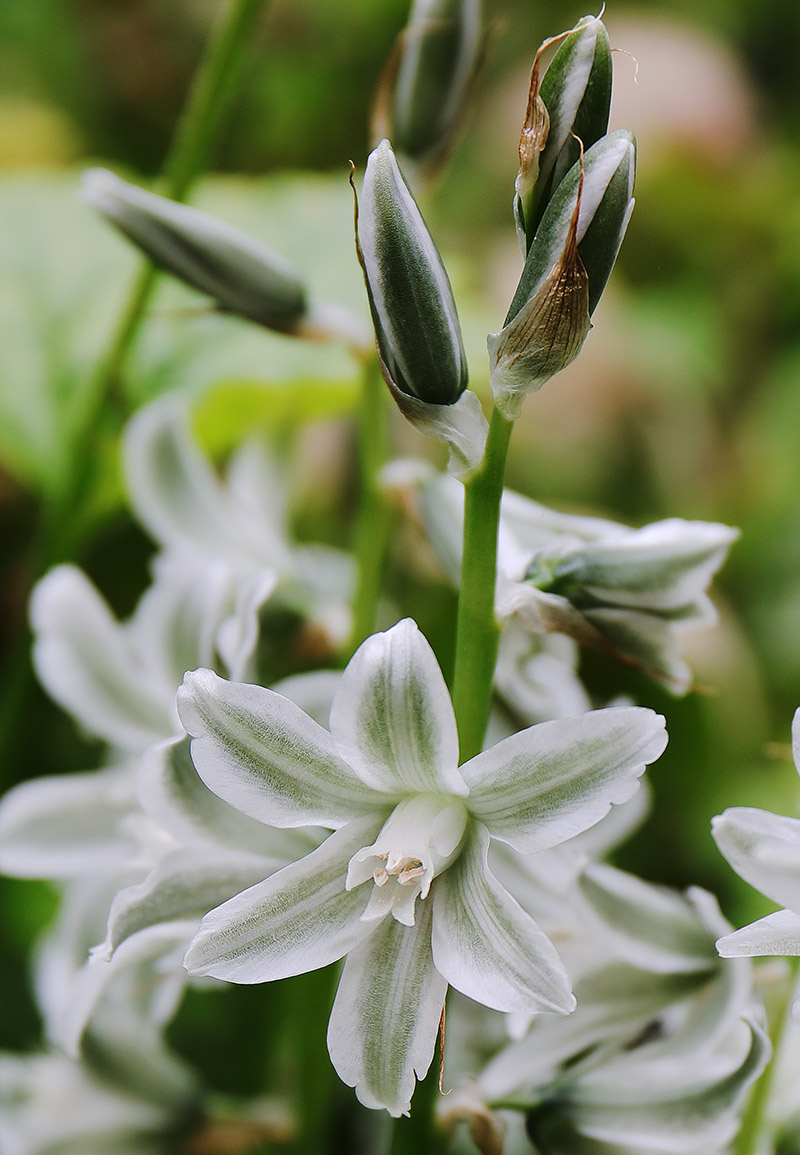
Flowers of Ornithogalum nutans
Ornithogalum nutans has a spike of starry flowers.

While the allium has a very sculptural look, there is something softer and more subtle about Ornithogalum nutans (AKA ‘Nodding Star of Bethlehem’). I hadn’t seen it until a recent garden visit and I was immediately attracted by the elegant white flowers with their green markings. They would look lovely mixed in a border with ferns and and something with bold leaves – hostas, maybe. (I think they’d be a great choice for the rather more ‘natural’ pond-side border that I’m currently planning.)
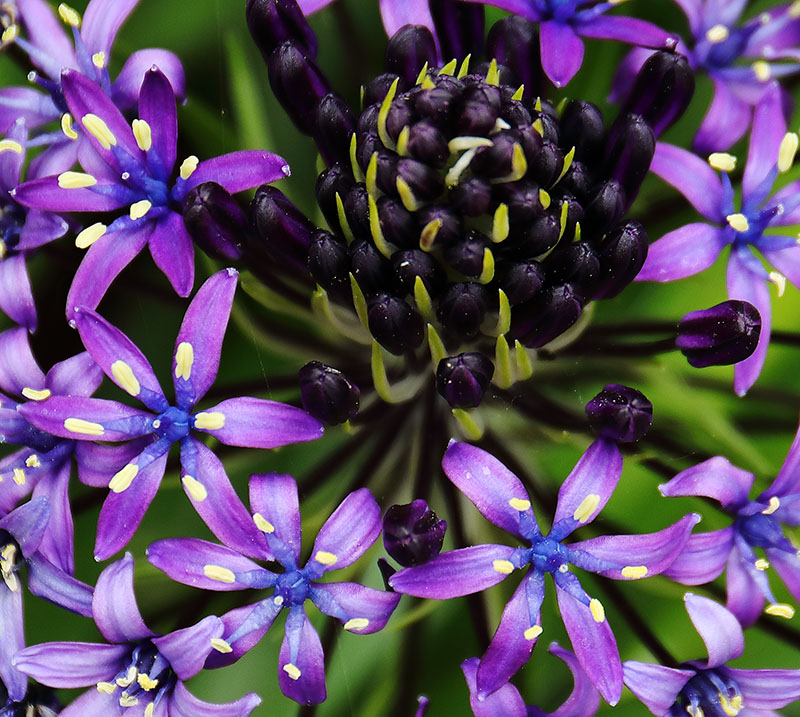
Flowers of Scilla peruviana
The little stars of Scilla peruviana orbit the still-unopened flower buds

Scilla peruviana is another plant that I’d like to grow so that I can photograph it. The purple and blue stars look as if they’re in an orbit around the darker buds that are still waiting to open. There are lots of possibilities for interesting compositions here, but it helps if you have the plants in your own garden so that you can spend some time experimenting. (I’m always wishing I could spend longer with the interesting plants I find in the gardens I visit. The only solution is to do a bit of plant-shopping!)

The last plant is one that I do have in my own garden. You may have come across the edible blue flowers of borage (also appropriately known as ‘starflower’) as a pretty addition to summer salads or frozen in ice cubes for drinks. Here, I let it seed around an area of the garden so that the bees can enjoy it. Borage is also an excellent companion plant for anything growing around it because it adds trace elements to the soil. (So it’s not just a pretty face!) Pimms, anyone?

Flowers of borage (starflower)
Borage is also known as ‘starflower’, a very apt name!

Rhododendrons: Woodland Beauty

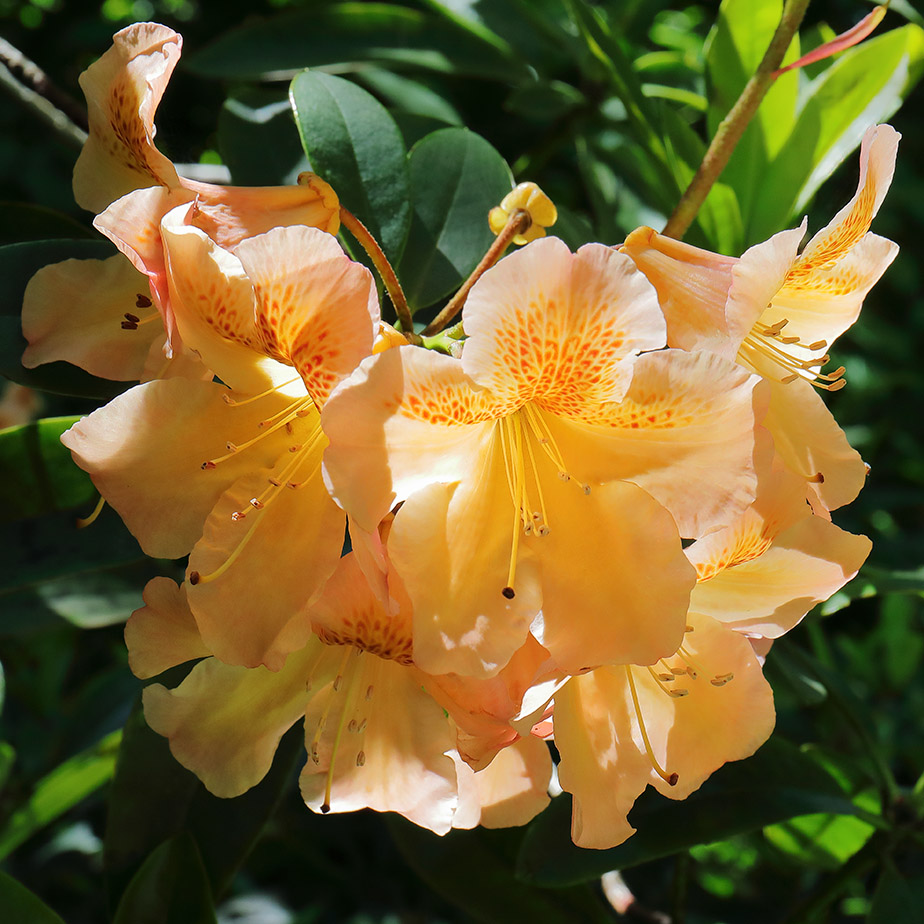
Orange rhododendron flowers

I was lucky enough to be able to get out and do some garden-visiting last weekend. It was incredibly hot, so I was happy to get out of the brilliant sunshine and into the garden’s wooded depths. Once there, I was delighted to find myself surrounded by the jewel-bright colours of rhododendrons in full flower.

It was difficult to get close to many of the flowers, but I was able to get near enough some of the prettiest to photograph them. (If you’re visiting a garden, that can be surprisingly difficult because it’s easy to get in the way of other visitors, especially if paths are narrow or you’re there at a busy time.)

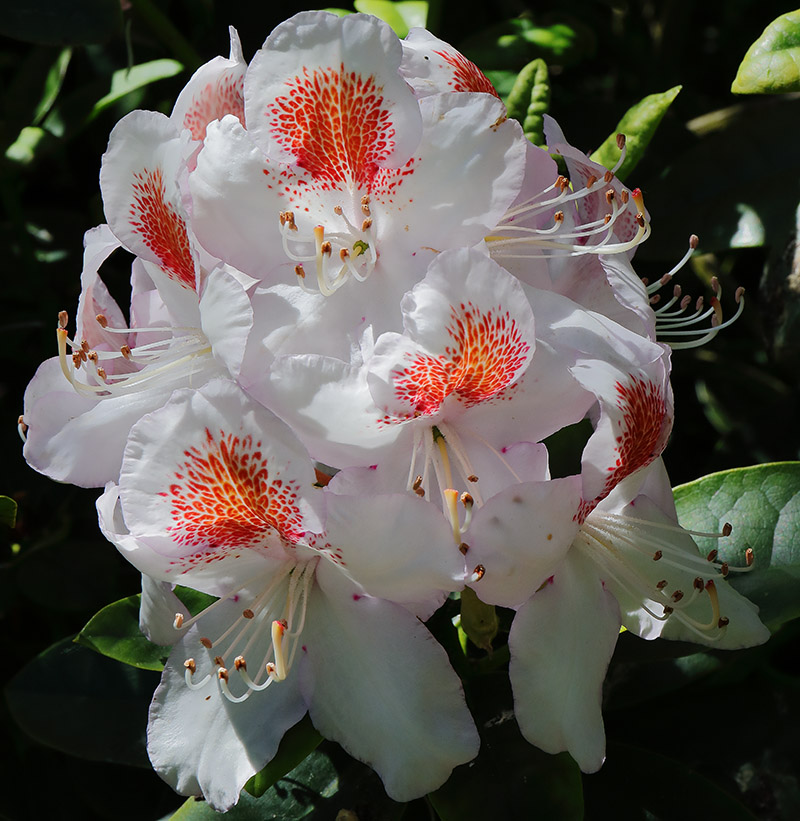
White rhododendron flowers with red/orange markings.
Spectacular red and orange markings drew my eye to this white rhododendron.

Having got close enough to a flower that’s still in good condition, the next problem is coping with the light. On a day with dazzling sunshine and trees overhead, it’s difficult for the camera to capture detail in both the highlight and shadow areas. If I was taking the photograph at home, I’d use a diffuser (basically a fine fabric stretched over a rigid frame) to soften the light falling on the flower.

Alternatively, if I hadn’t been in too much of a rush that morning, I should have remembered to bring a small fold-up reflector (or even just a piece of white paper or card) that I could use to bounce some of the bright light back into the shadows. I won’t make the mistake of being so unprepared next time!

Hoping that I could still get a reasonable photograph, I tried to find flowers that were more shaded. However, that wasn’t possible for many, including the white flowers above. So I decided to take the photograph anyway, bracketing the exposure a bit so that I could choose the best one.

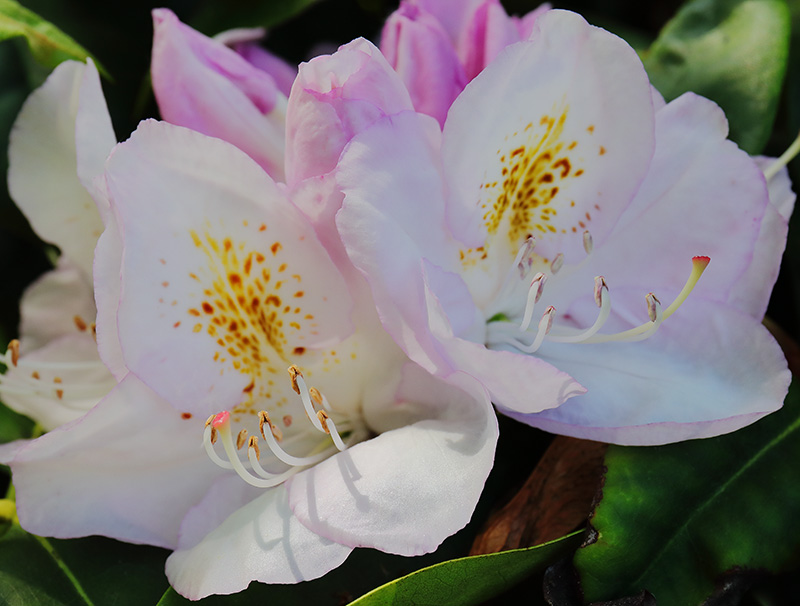
White rhododendron flowers tinted with pink
A slight pink blush to the white petals and deeper pink buds make these rhododendron flowers look especially delicate.

It’s at times like this, that shooting with the camera set to create RAW files really comes in useful. Once I was home, I was able to use the RAW development software to both darken the highlights, pulling back some of the detail into them, and lighten the shadows. There’s a limit to what software can do for you, but it shows that it’s always worth having a try at a photograph, even if the conditions aren’t ideal.

The photograph below was taken on a different day, when the light was more overcast. You can see that the effect is generally softer and that there are no harsh highlights or shadows to distract from the detail. A slightly grey day may not be what most day-trippers would wish for, but it certainly makes life easier for photographers!

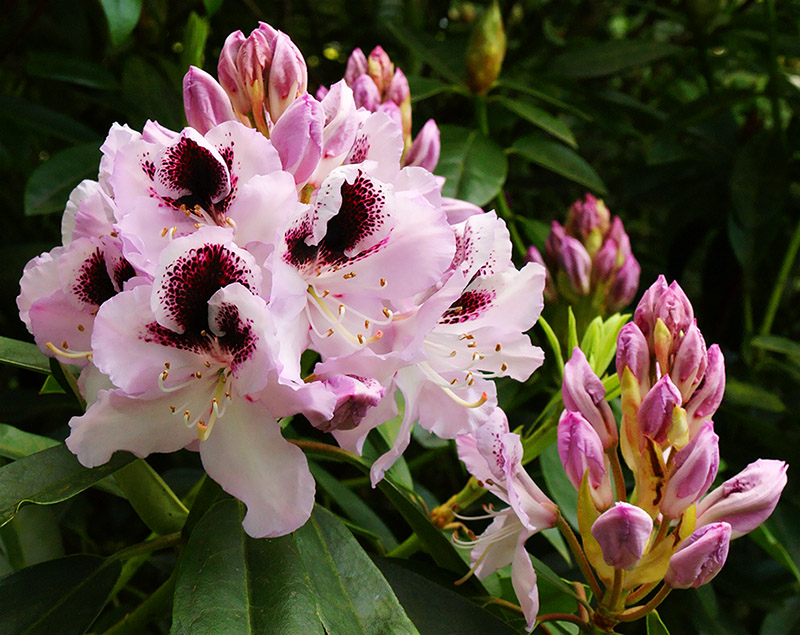
Pink rhododendron flowers with dark red markings
The dark markings provide a bold contrast to the pretty pink of the petals.

In Evening Light

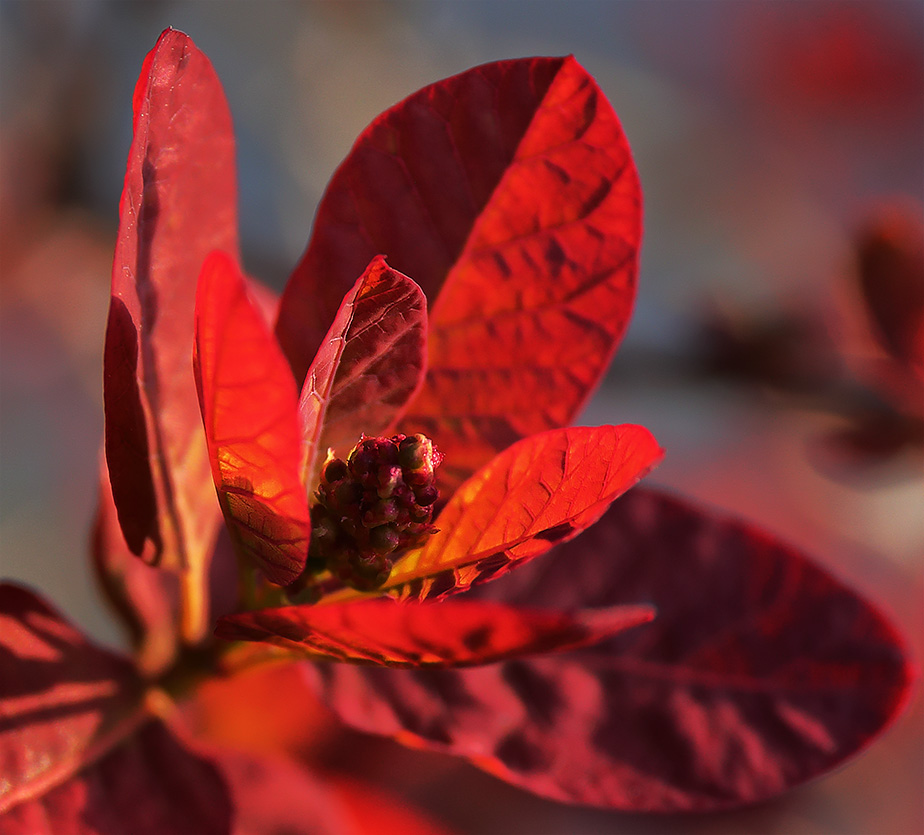
Leaves of the smoke bush (Cotinus coggygria)

After a busy day, getting out into the garden for a while is wonderfully calming and restorative. The garden can look its best in the evening light too, when the low-angled light creates long shadows and shows up the textures of the plants. Colours come alive in this light, especially where the sun passes through flowers and leaves. (Just like sun coming through a stained-glass window.)

If I can, I like to spend some time in the garden at this time of day. Maybe I’ll do a bit of weeding or simply sit for a while. What I prefer to do, though, is to take my camera for a wander around the garden.

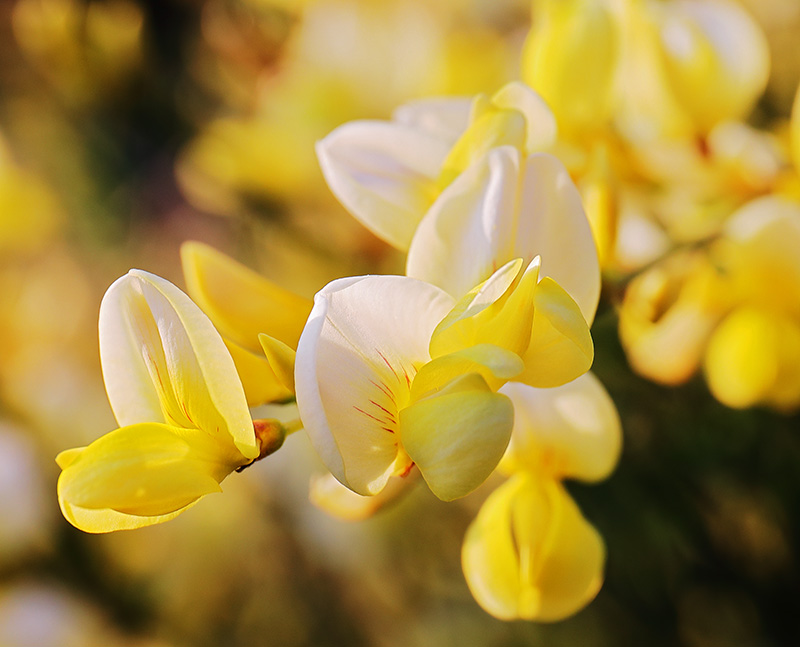
Yellow broom (Cytisus) flowers
Yellow broom (Cytisus) flowers gleam in the sun.

Late in the day, the light is warmer and yellower. (More of the blue in the light is absorbed by the atmosphere when it’s at this low angle.) It warms and intensifies the colours of flowers. Quite ordinary looking flowers like the broom above become much more appealing photographic subjects when the strong side-lighting shines through their petals and makes them glow.

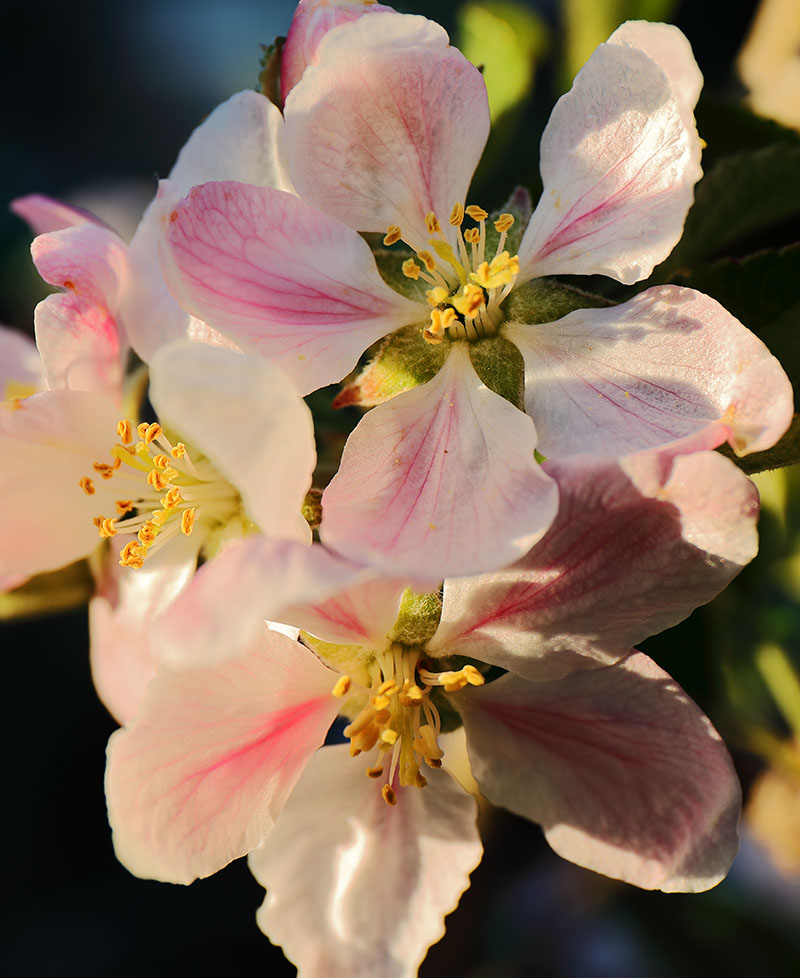
In the apple blossom photograph below, you can see that the evening light has an attractive warming effect on the petals of the flowers. This brings associations of pleasant evenings spent outside and can conjure up thoughts of the summer to come, or past memories of time in the garden. Just with the difference of the colour in the light, you can give a photograph a little suggestion of emotion and make it a bit more than a straightforward record of the flower.

Blossom on a Braeburn apple tree.
Blossom on our Braeburn apple tree.

Because evening light creates excellent side-lighting that picks out the texture in petals and leaves, it makes them appear more 3-D. (Like the rather crinkly surface of the apple blossom petals and the hairy calyx behind them.) The shapes of flowers and details such as the stamens are also highlighted and the whole flower can be ‘spotlit’ in a way that helps to bring it out from its background.

Early morning light has the same beautiful low-angle effects as evening light but there’s rarely time to take an unhurried stroll around the garden at that time of day. (Not here anyway – there’s cats to be fed, humans to be fed and other distractions!) And as the dawn becomes earlier and summer approaches, it’s less likely that I’ll be out of bed to catch that very early light. (But doesn’t it feel quite heavenly to be up really, really early, when no-one else is around but the birds, and you have the whole world to yourself? I love it if I can manage it! Sadly, that’s not very often.)

So evening time is, for me, a time I look forward to with anticipation on clear days. And when I’m gardening, I try to place plants that are especially colourful, or that have delicate structures, where the late sun can make the most of them. That smoke bush in the top photograph was planted where the setting sun could shine through its deep red leaves. It makes the shrub seem as if it’s alight. It’s amazing what a little bit of evening sunlight can do!

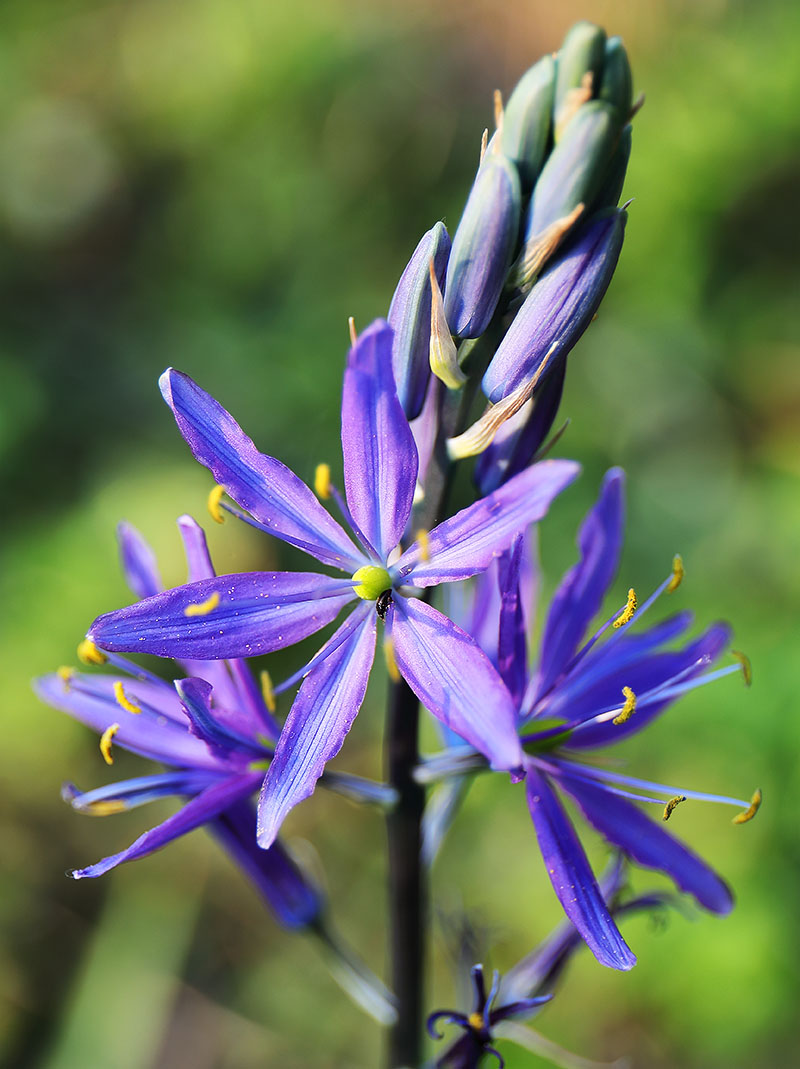
Camassia leichtlinii
This Camassia is in the last area to catch the sun and for a little while the colours become richer.

Beauty in the Woods: Bluebells

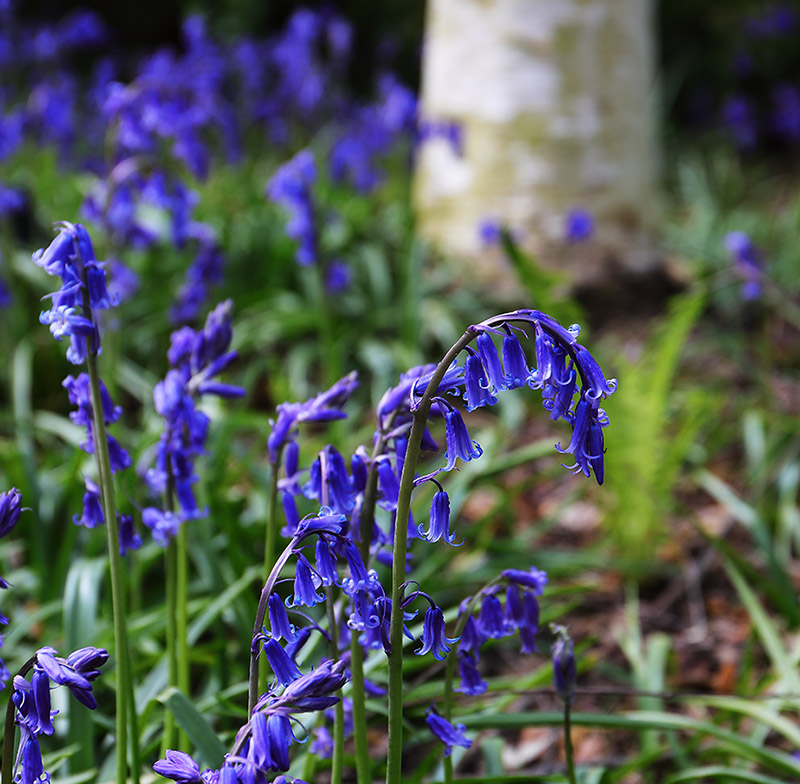
Flowers of British bluebells (Hyacinthoides non-scripta)

Right now, in the UK, you can see swathes of blue among groups of trees and along the bottoms of hedges. If you’re lucky, you might find yourself in a bluebell wood. It’s one of the special sights of springtime and a precious part of the British countryside.

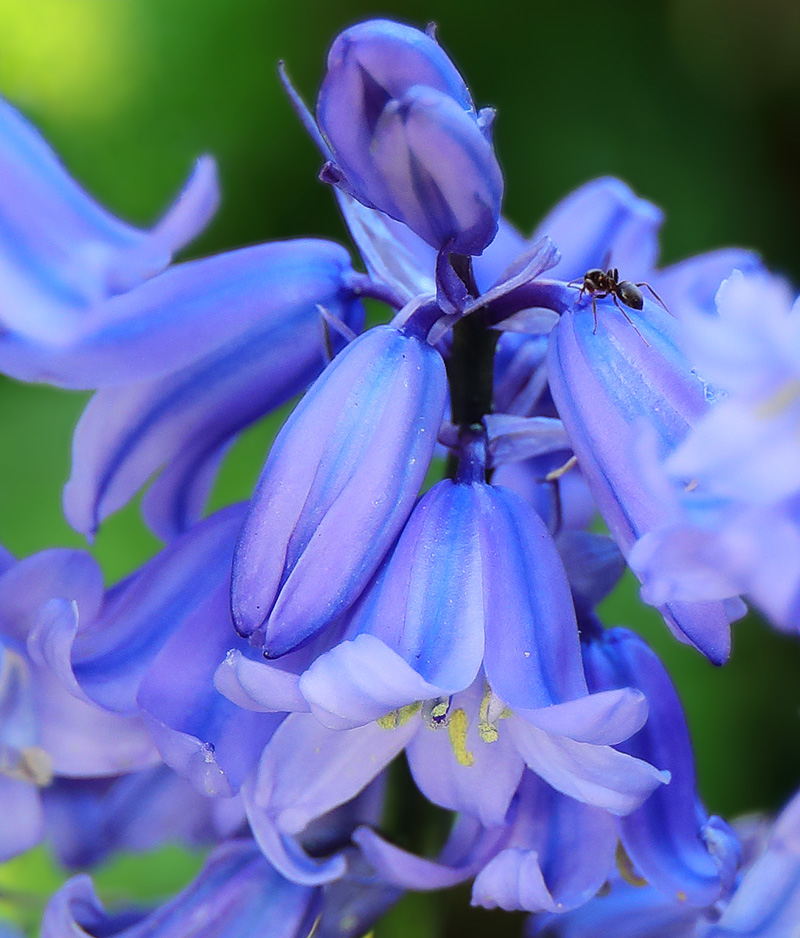
But not all bluebells are the same…and it’s not always easy to tell which are the true native British bluebells. The bluebell below is a Spanish bluebell, which you will find growing in many gardens. (These bluebells came from my own garden – I had to crop the picture quite tightly to remove some of the rather chewed-looking bells. I wonder what has been eating them…)

Spanish bluebell (Hyacinthoides hispanica)
A close-up of a Spanish bluebell, showing the arrangement of flowers on the stem.

So how do you tell the difference between the two types of bluebell? There are a few clues that should help. The Spanish bluebells hold their flowers on all sides of the stem and stand very upright, whereas the British bluebell’s flowers hang in an arch, mostly on just the one side of the stem. (However, the photograph below shows what appears to be an immature flower at the left-hand side of the picture. I’m assuming that it has yet to develop the characteristic arch.)

The flowers of the British bluebell are a darker colour and the bells are a slimmer and longer shape. The leaves are also slimmer (about 1.5cm or half an inch wide), while the leaves of the Spanish bluebell are twice that width. Additionally, our native bluebells have a sweet scent but there is none or little from the Spanish flowers.

Just to make identification difficult, the two plants hybridise very readily and the hybrids are becoming very common. There is a fear that these hybrids may take over from the less vigorous British bluebell and that over time the genes of the native flower will become diluted by the incomer. It would be a pity if that happens. Our native bluebell is a sign of ancient woodlands and a sea of these deep blue, scented flowers is a wonderful sight.

Bluebells growing among birch trees.

A Flower for Easter.

Purple pasqueflower (Pulsatilla vulgaris)

It’s Easter Sunday today, so I thought I’d post a photograph of a pasqueflower (Pulsatilla vulgaris). This flower gets its name because it flowers around Easter time, with ‘pasque’ being like ‘paschal’, i.e. ‘relating to Easter’. (But I haven’t figured out whether the name should be one word or two. Pasqueflower or pasque flower? Both seem to be used.)

The Easter holiday tends to be a really busy time in the garden. Everything has started to grow very fast so that any old dead growth needs to have been cleared away to allow it space. (I leave the old foliage on some plants over winter to help protect them against frost.) The weeds are growing quickly too, so the battle with them keeps me busy. It seems like an unlikely and very distant dream that I might someday have a fairly weed-free garden!

But it’s seed-sowing that becomes the biggest rush for me. I really shouldn’t leave it so late. Everything else always feels so urgent and this year I’ve taken extra time to dig a pond. (That is going quite well and I’m hoping to have it done before the ground dries out and becomes really difficult to dig.) Now I need to get those seeds all sown and hope that all the tiny seedlings will have time to catch up…or they can just flower a bit late if they like!

With all the frantic gardening, it would be easy to forget to enjoy the garden itself and the tremendously sunny and warm weather we’re having this weekend. So I will make a point of sitting down for a while and just enjoy the outdoor scene for a bit. (That’s if the cat will let me have my seat…he thinks I put it in a nice sunny spot just for him!)

Whatever you’re doing this weekend, whether you celebrate Easter (or even have a long weekend for that matter), I hope you get a chance to get outside and enjoy some sunshine and the natural world. Happy Easter!

Gleaming White

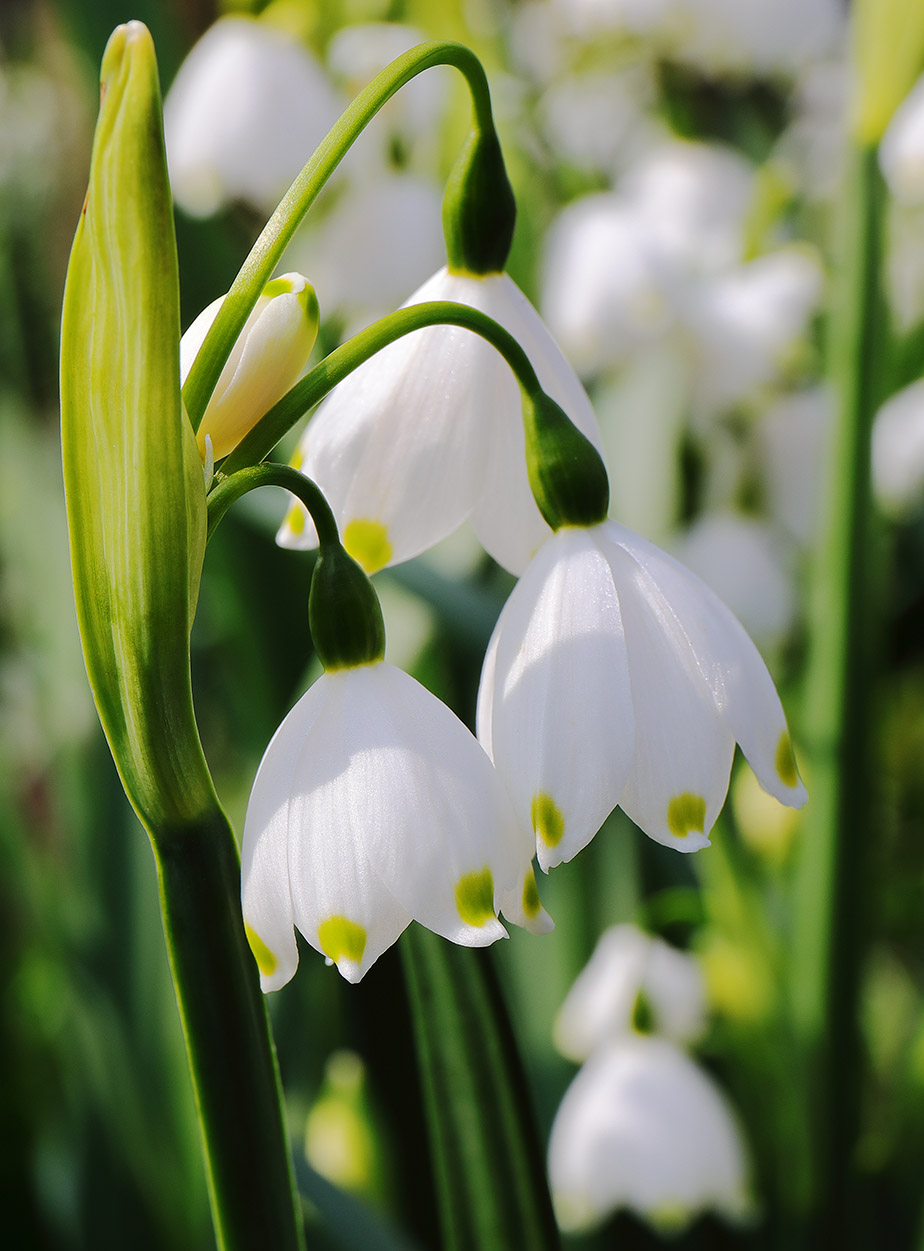
Leucojum flowers

Last week I mentioned my friend Judy’s beautiful garden and that I’d been able to spend a morning taking photographs in it. While I was there, I noticed that there were a good number of white flowers sprinkled around the garden and I really liked the effect they created.

There’s something very fresh and delicate about the appearance of white flowers. If they were pure white, they could seem a little harsh. But many have yellow stamens or perhaps a touch of another colour on their petals, and this softens the effect greatly. Seen growing in great numbers, perhaps spreading their way amongst other flowers, the look they create can be  quite dreamy or fairytale.

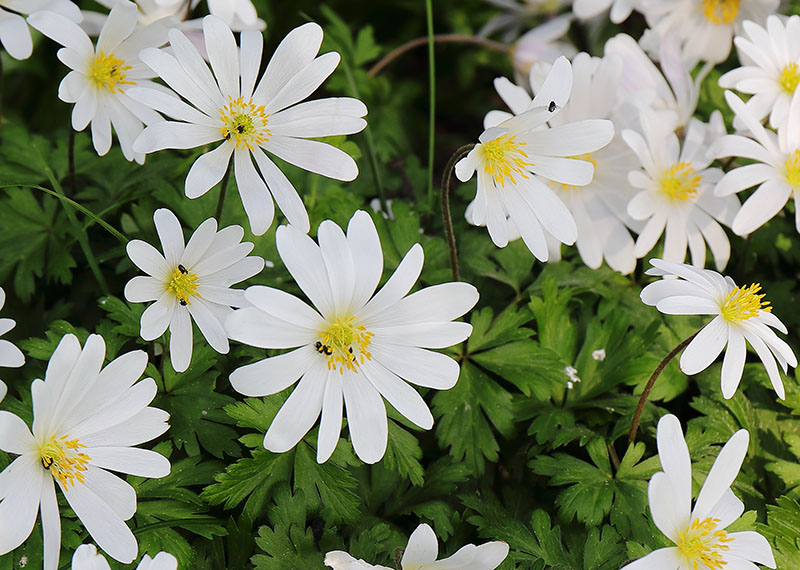
White flowers of Anemone blanda.
Anemone blanda soon builds up to a healthy colony if it’s in the right spot.

In combination with the blues and yellows of other spring flowers, white is truly beautiful. It brings a lively sparkle and gleam to the garden and chases away the memory of winter greys.

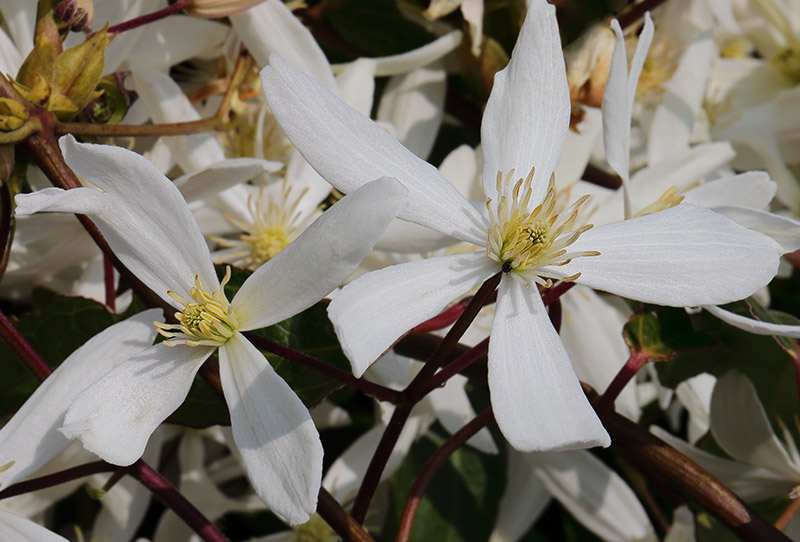
The most enchantingly impressive sight in Judy’s garden that morning was a Clematis armandii which had become a great mass of flowers along a section of fence. Not only are the flowers beautiful to look at – they’re scented too. That’s a pretty good bonus!

White flowers of Clematis armandi.
Clematis armandii flowers practically sparkle in the spring sunshine!

I enjoyed the effect of these white flowers so much that I’m thinking about ways of bringing a bit more white into my own garden. A background of green foliage makes white flowers look especially fresh and lively, so that is something I’d like to try.

There are a few white flowers in my garden. The best are Gaura lindheimeri, which has flowers that look like a flock of tiny white butterflies, and the white pulsatilla that I photographed last month. There’s also a big old white lilac (Madam Lemoine) which has very scented double white flowers and is a joy to be near…except that it has one problem. When its flowers die, they turn brown but don’t fall and because this lilac has become very tall now, it’s difficult to prune them off. The dead flowers really spoil the look of this lilac, so I will have to get out my telescopic lopper on a pole thingy to remove them. That will most likely be exhausting but worth it!

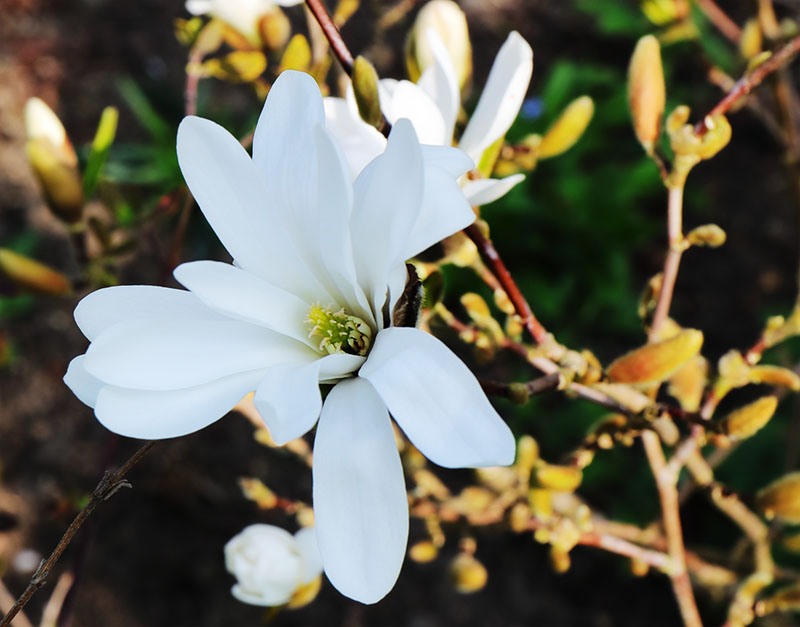
Magnolia stellata flower.
Magnolia stellata brings a touch of the exotic to the garden.

Snake’s Heads and Crowns of Leaves: Fritillaries

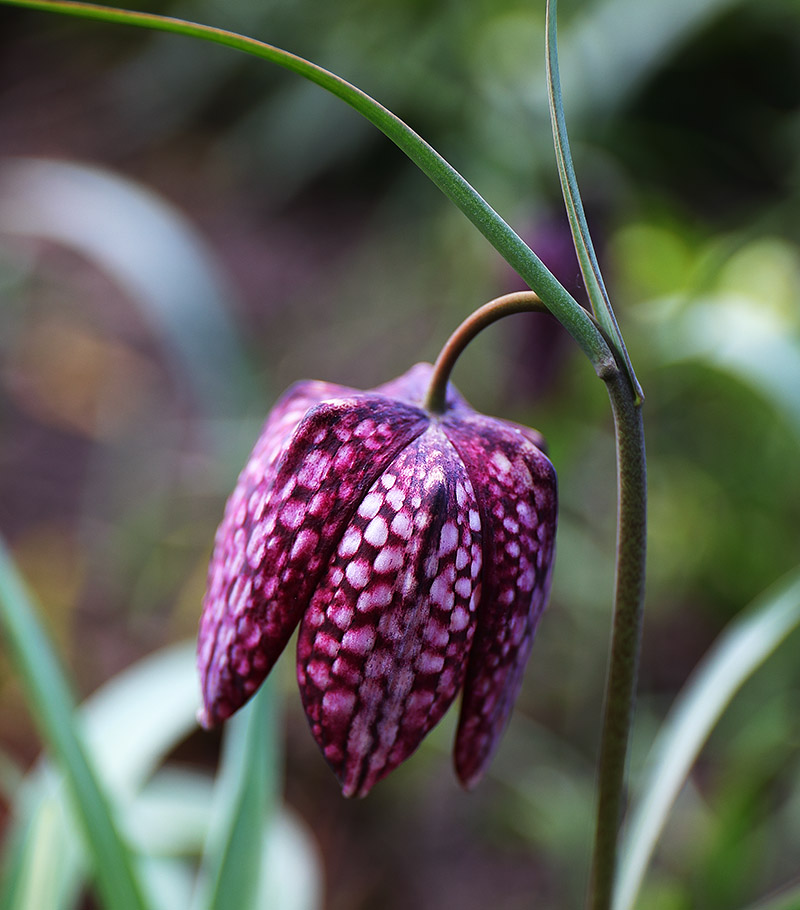
Three snake's head fritillary flowers.

Snake’s head  fritillaries and crown imperial fritillaries are strange-sounding names for very unusual plants. For a photographer, the flowers make an enticing subject and I was lucky enough to be able to take some pictures of them in my friend Judy’s beautiful garden. (Thanks, Judy – I had a lovely time!)

The snake’s head fritillary (Fritillaria meleagris) gets its name from the shape of the unopened flower bud – long and pointy at the tip – a bit like a viper’s head. It has other folk-names, according to Richard Mabey’s ‘Flora Britannica’ (a fascinating book, worth dipping into if you happen to get the chance). These include crowcups, leper’s bells, sulky ladies, and frawcups (possibly derived from a place-name).

These fritillaries were recorded to be growing in gardens in the UK in 1578 but not recorded in the wild until 1736. Some say that this suggests they may not be native to the UK but, even so, they used to be seen in their thousands growing in damp meadows.  Sadly, as agriculture developed over time and land was drained and ‘improved’, they lost these habitats. There are still a few places where they can be found growing wild and, thankfully, they’re popular with gardeners, so they are still able to create a magical sight every spring.

Close-up of Fritillaria meleagris flower.
The markings on this fritillary look as if someone painted them on!

The tiny chequered markings on the snake’s head flowers are irresistible. They make me want to get as close as I can to photograph the flower, in an attempt to show how much they look as if they’ve been carefully painted on by hand. The graceful shape of the flower, with those almost umbrella-like ribs at the top adds to the attraction. (Doesn’t it look just as if the petals are fabric, stretching over the ribs that are holding it in shape? Umbrellas for the ‘wee folk’!) The way the bell of the flower hangs from its curving stem, with one or two long and slender leaves soaring up from it, completes a very elegant flower.

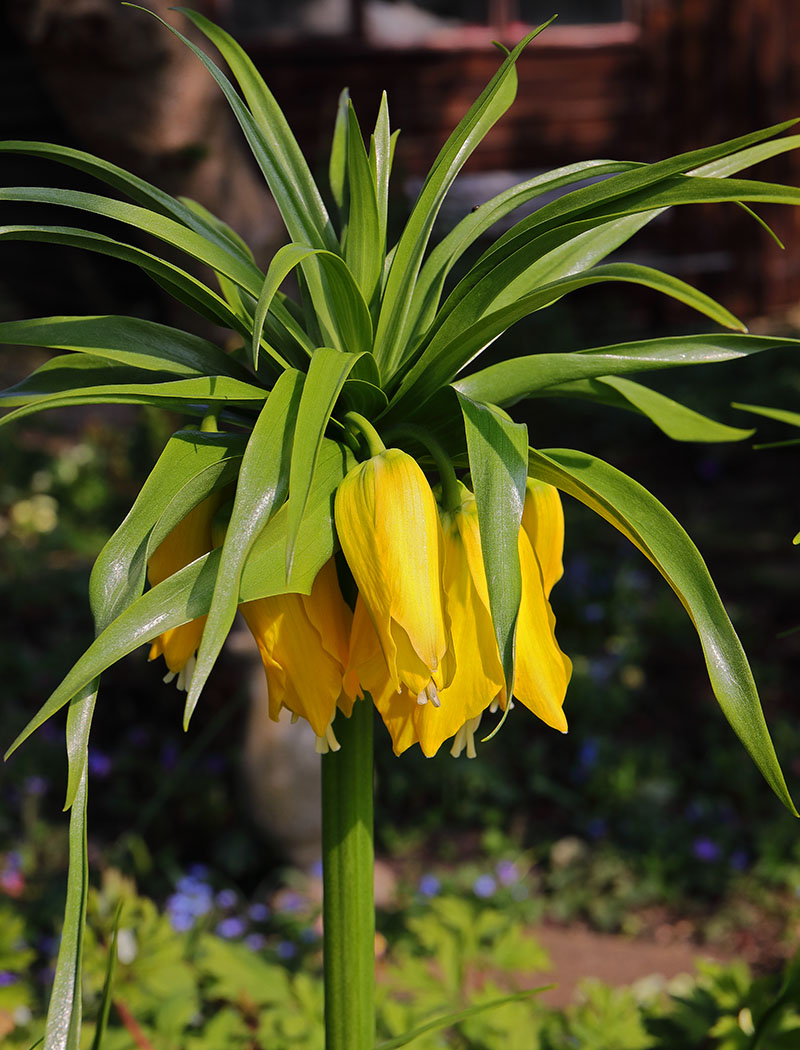
Yellow 'Crown Imperial' flowers. (Fritillaria imperialis.)
The crown imperial has an extraordinary top-knot of leaves!

The crown imperial fritillary is very different from its serpent-like sister. A dramatically long stem holds the bold cluster of flowers up high. Instead of the one or two leaves rising above the flowers, there is a generous top-knot of leaves, giving a very distinctive appearance. This ‘crown’ of arching leaves is said to have given the plant its name, due to its resemblance to the shape of an imperial crown. However, a competing claim suggests that the name derives from the plant having been grown in the Imperial Botanic Garden in Vienna after the plant was brought there from Persia in 1576.

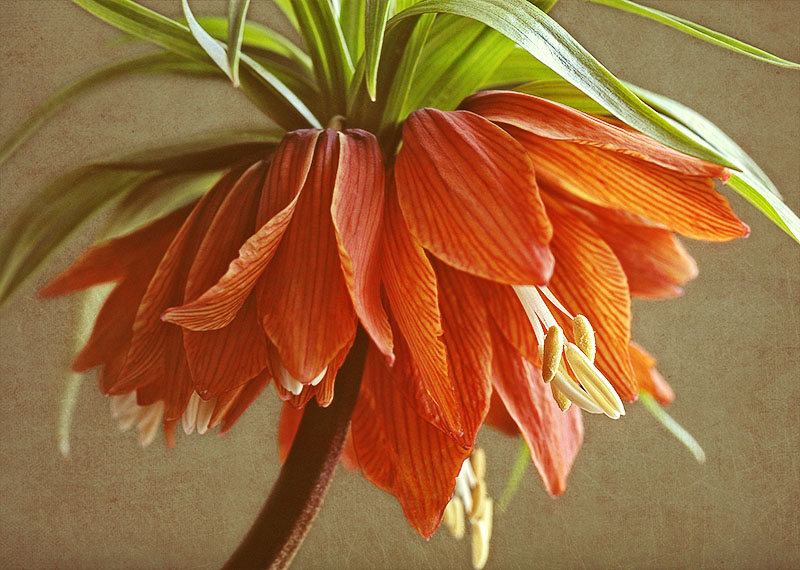
Like the snake’s head fritillary, I wanted to be able to get close enough to the flower of the orange crown imperial to show the markings on its petals. (The veins on the petals of the yellow version are barely visible by comparison.) These darker veins create a strong pattern of lines that make the flower even more pleasing to photograph. These flowers are such star performers when you come to take their photograph, that I think I will need to try growing some fritillaries in my own garden.

Orange 'Crown Imperial' fritillaries. (Fritillaria imperialis.)
The prominent veins of these orange crown imperial flowers make them all the more striking.

Tulips: Glowing with Glorious Colour.

Purple and white striped tulip.

As March comes to an end, gardens are filled with plants coming back to life. New flowers are opening every day, providing an exciting array of  possible photographs. You can imagine, I’m sure, what a happy and busy time of year this is for me!

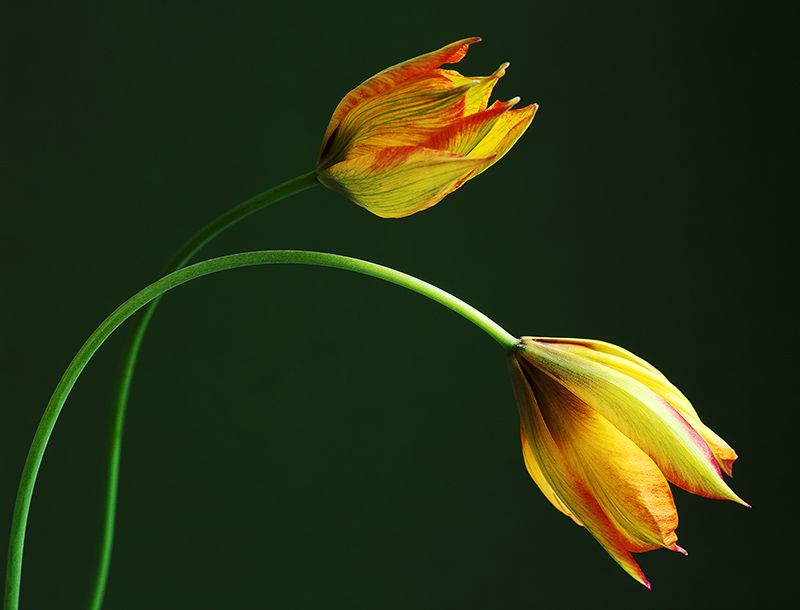
Among my favourite spring flowers to photograph are tulips.  The variety of colours and the amazing markings that some of the flowers have make them an obvious subject for a picture. When you also take into account the different flower shapes and the sinuous way that the tulip stems bend, then you have all sorts of possibilities for different images, whether bold, graceful, or full-on pretty.

Striped flowers of tulipa orphanidea 'Flava'
Tulip orphanidea ‘Flava’ has delicate coloured veins on its petals.

Tulips with coloured markings – the ‘feathered’ stripes, as in the top photo, or the more delicate veining of  ‘orphanidea’ (above), can be especially lovely. These are the flowers that I look out for because they add a lot of extra interest to the photograph.

But the single-hued flowers are great too. These tulips, with their brilliant, saturated, colours and simple shapes help the photographer to make very bold, eye-catching images.

For next year, I’m planning to create a small bed for cut flowers that can be used for photography and tulips will be an essential addition to it. And for now, there are tulips in the garden that haven’t opened yet…I’m waiting!

Tulip 'Prinses Irene'
There’s a flame-like glow from this tulip flower.

Flower Photography for a Rainy Day

Purple and white pansy.

The weather has been quite wild here over the last week – very windy and wet too. (A huge change from the spring-like sunshine of late February.) So there has been no chance for anything staying still enough to take photographs outdoors.

Luckily, I have some plants in pots that have been sitting in the conservatory while they’re waiting for the ground to dry out enough for them to be planted in the garden. (There’s been a lovely scent from the primulas and, I think, the tiny pansies in there – I’ll miss it when the plants do go outside.)

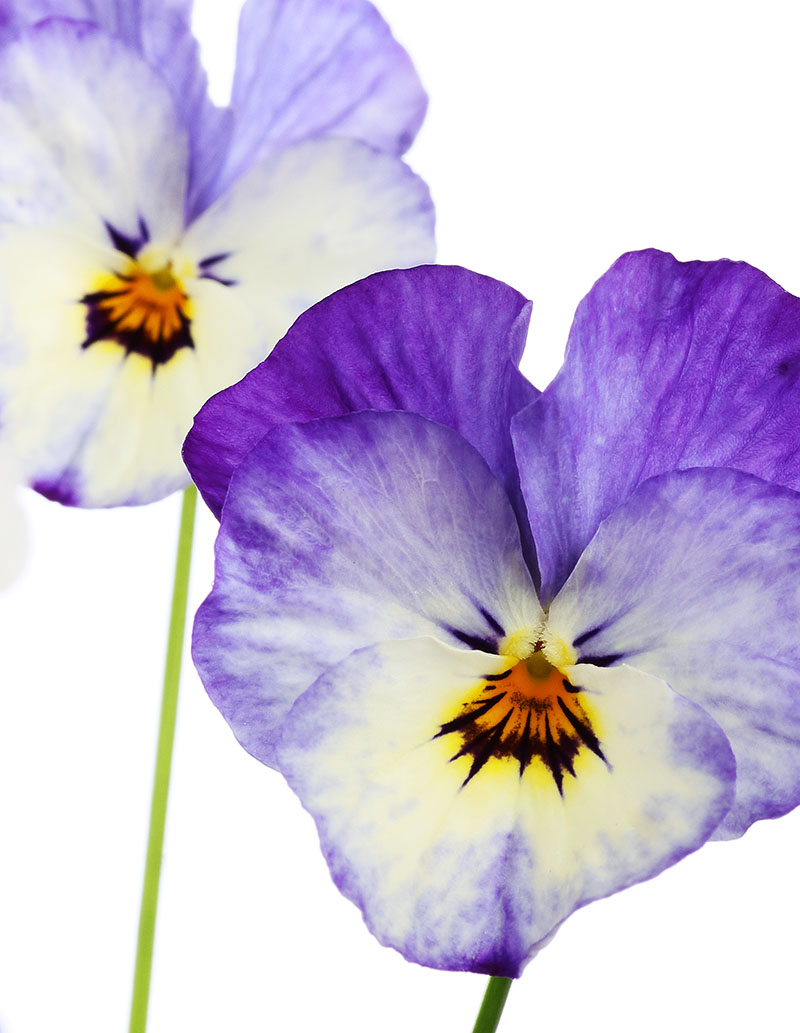
I took this pansy into my little studio space and set up my lights and a white background. It was only after I’d taken a few photos that I realised I had company…the unfortunate plant had become home to some greenfly. It’s amazing how much more you can see in a close-up photograph compared to just looking straight at something. Now I have some nice sharp shots of greenfly, but somehow I don’t think they’ll be very useful to me! It didn’t take long to dust the wee devils off with a soft artists’ paintbrush. (Usually it’s cat hairs that I have to brush off – they can be practically invisible until you look at the photo magnified on the PC monitor.)

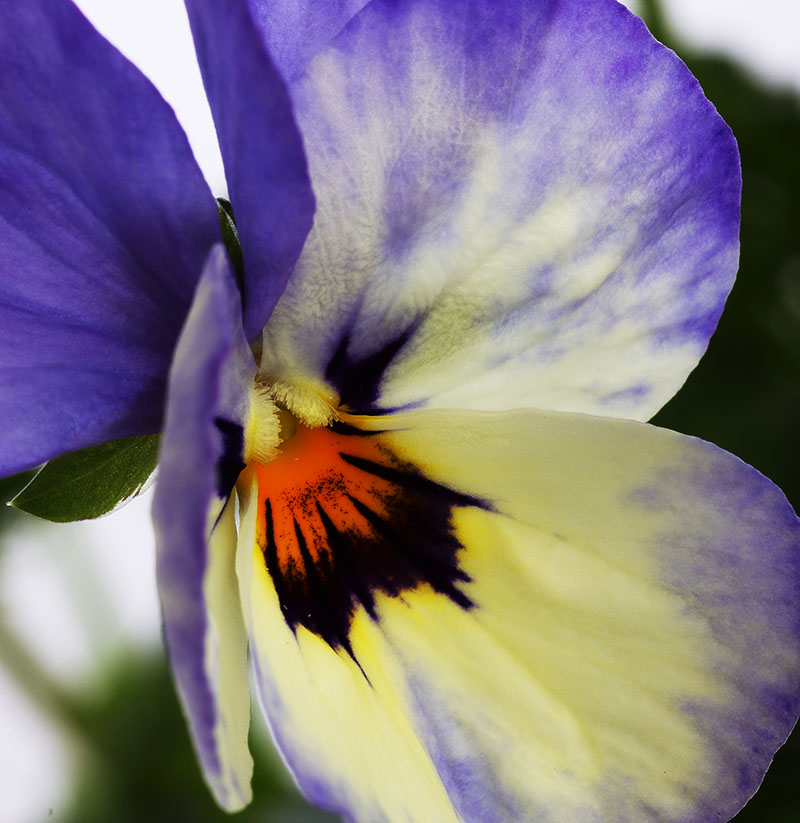
Centre of a violet.
The yellow and black centre of this small pansy makes me think of a bee.

You can see pansies planted all over the place at this time of year in the UK. They’re cheap to buy and easily available everywhere, so they do get pretty much taken for granted. But I do love the colours, especially the way they blend into each other, giving a soft, almost watercolour effect.

Having the plant indoors made it easy to keep the flowers still while they were being photographed. When you’re working outdoors, movement in the slightest breeze is a big problem with macro photography.  The area of focus is so shallow that it takes very little to take your flower out of focus and, if you’re not watching carefully, it can be easy to miss the fact that the flower has moved.

Spending an afternoon indoors, taking photographs with plenty of light and being able to keep warm and dry felt like quite a luxury. However, there a flowers out in the garden that are still waiting for their chance to be photographed…so I’m hoping for some better weather next week!

High-key photograph of violets.
Playing with a high-key effect with these little pansies…

The Early Flower Catches The Photographer

White Pulsatilla vulgaris (Pasque Flower)

Last week, I wrote about finding all the new stocks of plants coming into garden centres very tempting. So you may not be surprised to learn that I bought a few of them. (If you’ve been reading this blog for a little while, you will probably know me well enough by now to expect it!)

I tell myself  that I have a great excuse, because I need something to photograph and there isn’t a lot available in the garden yet. And buying plants instead of cut flowers means I can grow them in the garden for the following years. Neat reasoning, eh? All the same, I’m glad that there are several plant nurseries nearby, so that I can buy reasonably-priced small plants rather than spending a fortune on larger plants elsewhere.

It’s interesting to see just how far advanced these plants that have been grown in large, heated glasshouses are, in comparison to garden plants. I have pinky-purple pasque flowers growing in the garden but they won’t be in flower for weeks yet. (Probably April or May.)

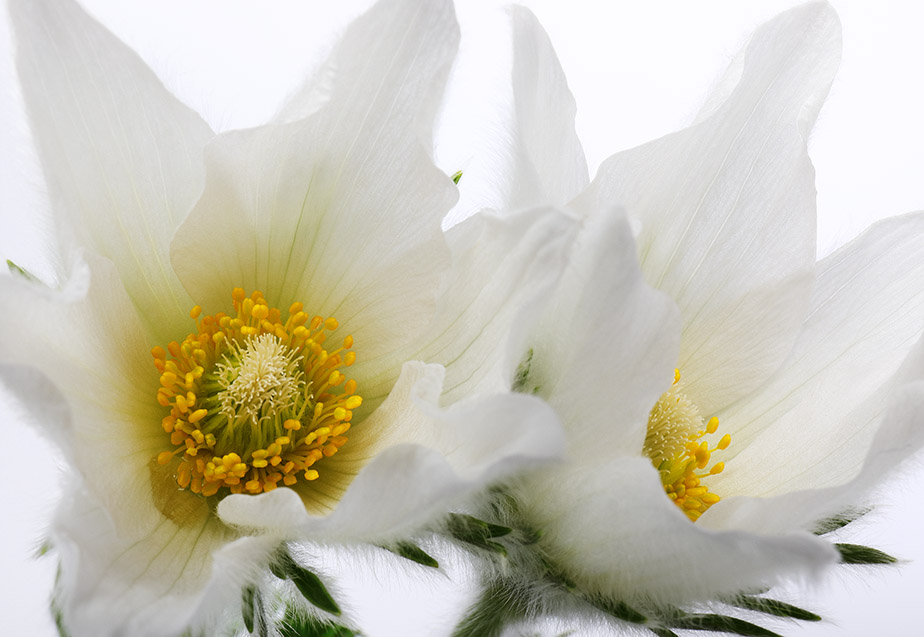
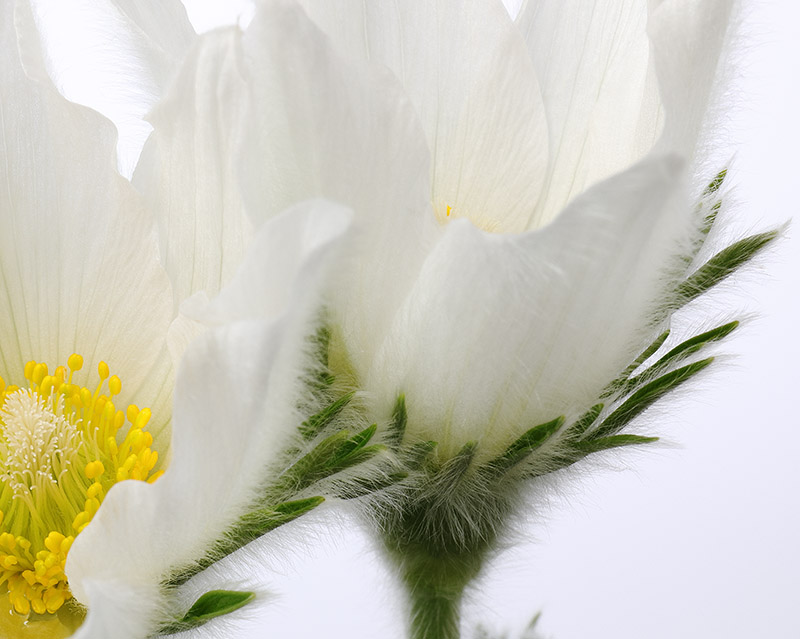
Hairy flowers of Pulsatilla vulgaris (pasque flower).
You can see how hairy these pasque flowers are!

Pasque flowers like it in the garden here. The well-drained soil and open, sunny site suits them. It’s actually a native plant in the UK and East Anglia (which includes Suffolk, where I live) is one of the areas that it grows in. Sadly though, it’s rare as a wild plant now and you’re much more likely to see it growing in gardens. However, as a ‘local’ plant, they’re both drought-tolerant and wonderful for bees.

The flowers themselves are delightful to photograph – fresh, pretty and entirely charming. And then there’s the bonus of the rest of the plant being photogenic too. That’s because it’s so very hairy (and soft enough that you want to stroke it). All the soft little hairs that cover the finely-cut leaves, flower buds, and even the outside of the petals, help to give the plant a silvery appearance when they are caught in sunshine. Later the seed-heads become very ornamental, like some sort of silky, wildly fluffy pompoms. (My cats think they’re great fun for having a swift bat at with a paw!)

The pasque flower that I bought will no doubt be joined by others. (I have to wait for them to flower at the nursery, so that I can see what colour they are.) And I’m sure that a few hours will be spent photographing them…happy times!

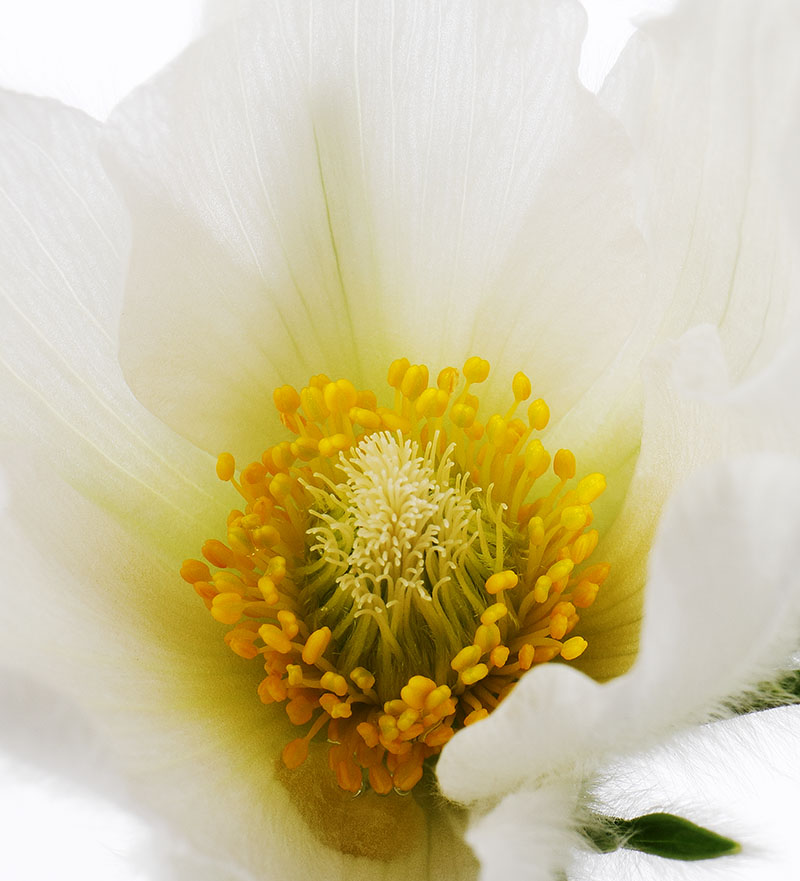
Flower of Pulsatilla vulgaris (pasque flower).
Delicate white and rich yellow make this a very attractive spring flower.