Days of Celebration

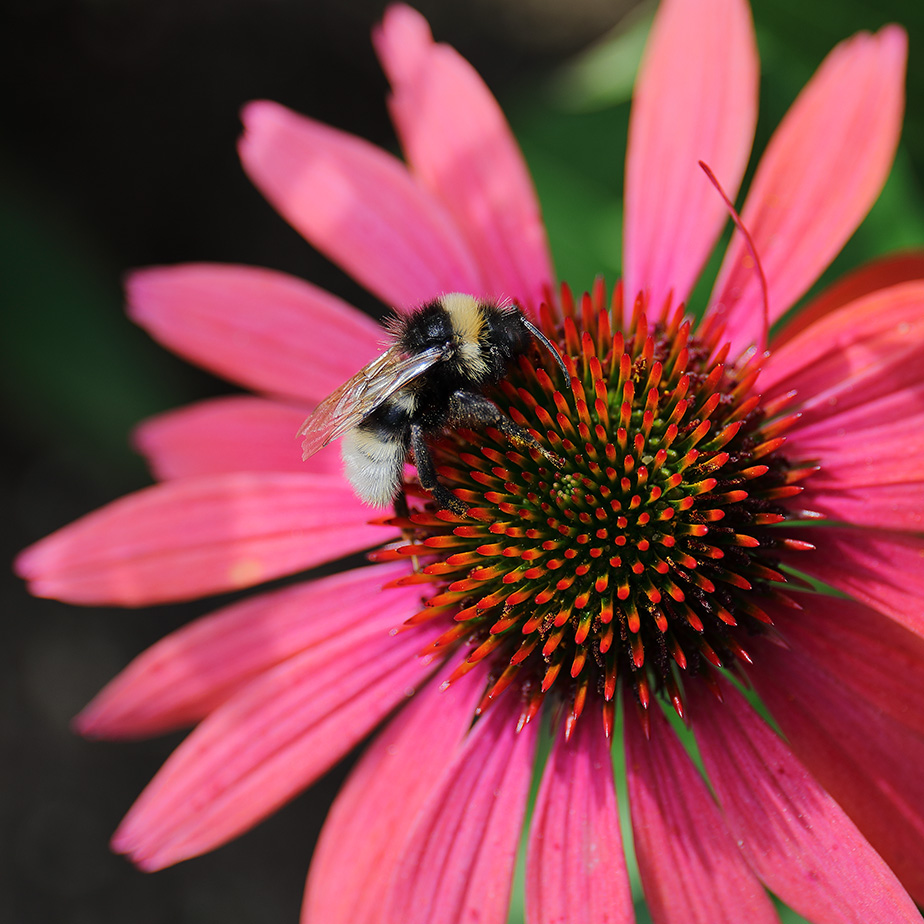
Bumblebee on echinacea flower

NB: A note for WordPress Reader users – you need to click on the title of the post again to see the full photograph. (Otherwise you see just a tiny section!)

There have been two special days this week, both celebrating something dear to my heart. The first was the sixth international ‘Fascination of Plants Day’, coordinated by the European Plant Science Organisation on Wednesday (May 18th). The second was ‘World Bee Day’ on Friday (May 20th).

Anyone who has been reading this blog for a while will know how crazy I am about plants. Flowers and plants have been a special love for me for many years now. That has gradually led me into a love of bees and other pollinators too. (As far as I’m concerned, you really can’t have one without the other.) It’s appropriate that both days fall within the same week.

The Fascination of Plants Day was organised to get as many people as possible interested in plants, and in plant science and conservation. It aimed to increase the appreciation of the role they play in providing us with food and products such as pharmaceuticals. Considering that we would not be able to survive without plants (for even the air we breathe), their study has to be one of the most important areas of research.

Many plants wouldn’t be able to survive without bees and other insects to pollinate them. In the UK, a project to create ‘Bee Lines’ to connect areas of habitat throughout the country has been set up by the conservation group ‘Buglife’. You can see the details of how this will make it easier for bees and others to find the food and breeding areas they need here.

Anyone with a garden, or even just a balcony with pots or some window boxes, can grow plants which will help to keep bees alive. You can read advice on how you can help bumblebees in your garden on this page by the Bumblebee Conservation Trust. There is also a very informative plant list for bees written by Dave Goulson here.

This year I’ll be trying to add to the bee-friendly plants in the garden. I may even see a few species of bees that I hadn’t noticed before. (But I probably won’t be able to say what they are – I find bee identification very difficult!) It’s a joy to hear the garden buzzing with bees and to see them busy in the flowers.

Thank you to blogger Steven Schwartzman for kindly letting me know about Fascination for Plants Day.

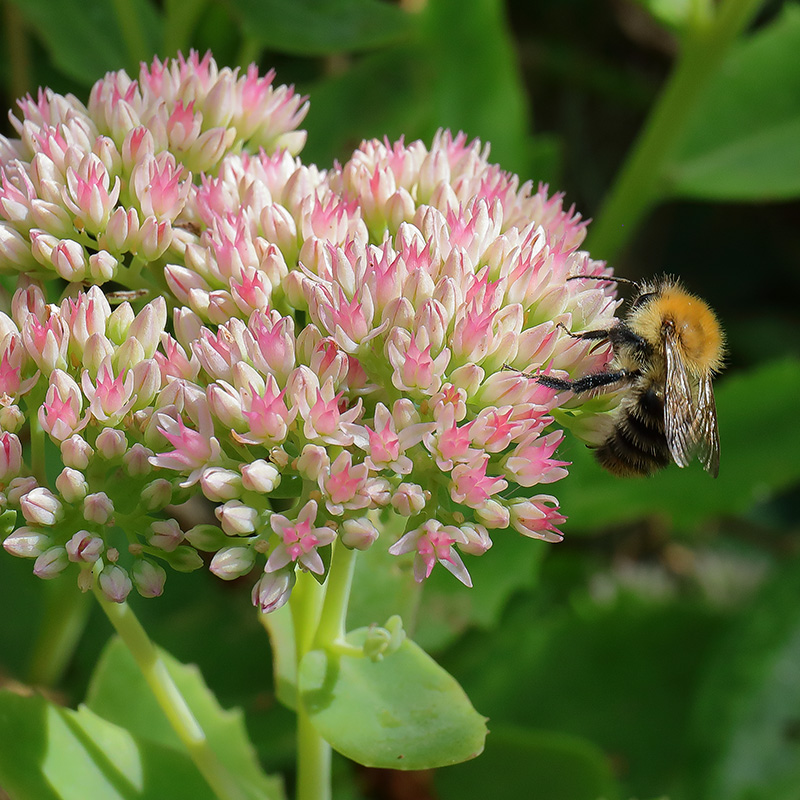
Common Carder bee on Sedum 'Autumn Joy'
Common Carder bee on Hylotelephium ‘Herbstfreude’, syn. Sedum ‘Autumn Joy’ (stonecrop)

Oh! You Pretty Things

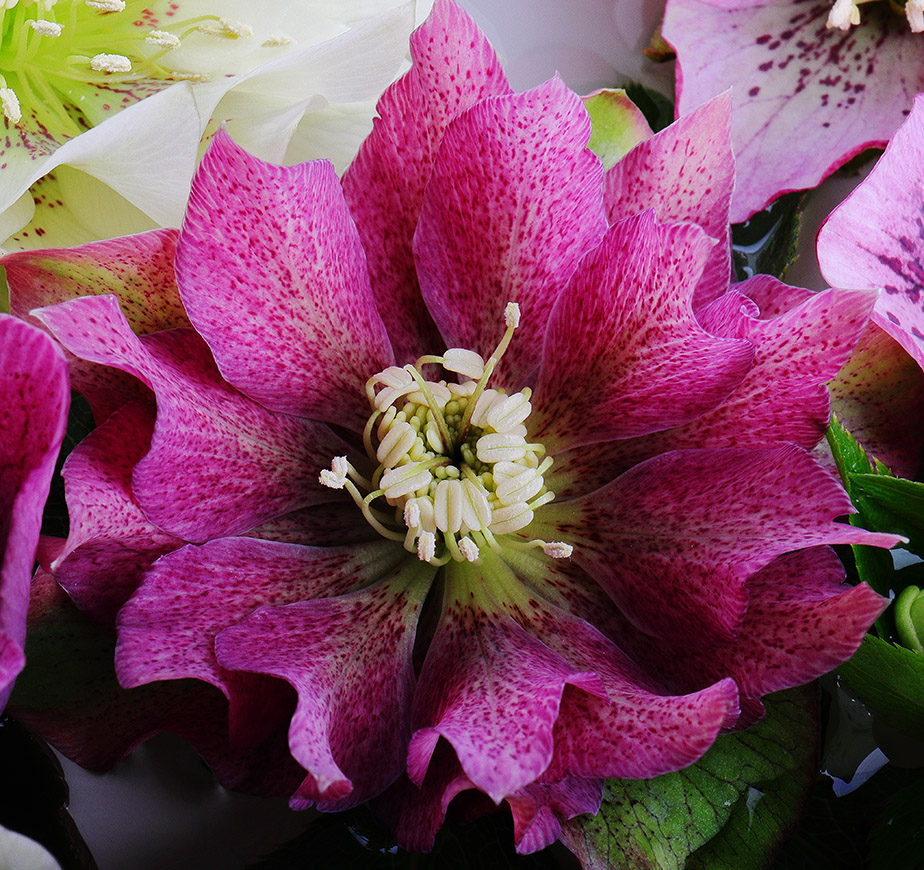
Pink hellebore flower

NB: A note for WordPress Reader users – you need to click on the title of the post again to see the full photograph. (Otherwise you see just a tiny section!)

The hellebores here were given to me from my neighbour’s garden. She knows that I photograph flowers, so she knew I would be delighted with them. A lovely gift, and one that kept me happy for a long while.

The top photograph is of a flower floating in a bowl of hellebores. I found that I preferred photographing the hellebore close-up, rather than trying to photograph the whole bowl of flowers. I think that’s partly due to the limitations of my bowl (not the most attractive) and partly because I find it much harder to create a pleasing composition from so many very varied flower heads.

It’s a lot more satisfying to me to arrange a smaller group of flower heads, especially if they are somehow related. That makes it easier to concentrate on the details of the flowers – even more so if I choose to photograph just a single flower.

I love seeing hellebores appear in early spring. They have a very exotic look which is not what I would really expect in a UK garden that is still shivering in chilly breezes. Both single and double flowers are utterly enchanting, but the doubles are just a bit more elaborate. I actually think the singles suit my garden better because of the fairly naturalistic planting here. However, I’m happy to create a slightly more formal looking area that should suit a few of the doubles – if I get a chance to buy some!

You may have noticed that I pinched my title from the David Bowie song. If you’d like to hear a very different version by Lisa Hannigan, it’s here. Enjoy!

White hellebore flowers

Hellebore Time!

White and pink hellebore flower

NB: A note for WordPress Reader users – you need to click on the title of the post again to see the full photograph. (Otherwise you see just a tiny section!)

This is a time of year that I really look forward to. The garden is beginning to waken from winter and the first flowers of the year are starting to open. These early flowers are an invitation to come outside and have a look around to see what new delights have appeared.

Amongst these, the hellebores are the flowers that demand attention first. After the tiny winter flowers of mahonia, Viburnum bodnantense and winter jasmine, their big, showy blooms bring an exotic feel to borders that have been starved of colour for a few months.

White and pink hellebore flowers

I find the variations in hellebore flowers fascinating. There are so many different flowers and new ones being bred all the time – all with beautiful colours and markings on the petals.

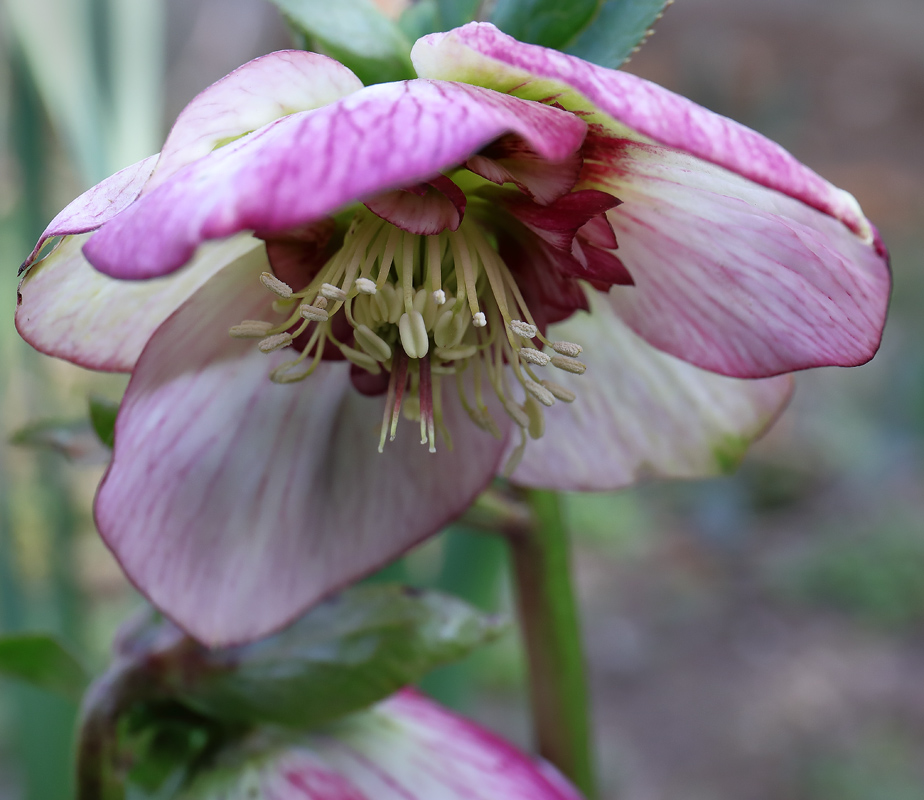
The flower forms can vary too. On this one the nectaries are very large and a deep red. (The nectaries are the tube-like shapes, arranged in a ring at the base of the petals. In fact, these nectaries are reckoned to have evolved from the hellebore’s original petals, while what we think of as the petals are actually sepals. The sepals last for far longer than petals can, meaning that hellebores have very long-lasting flowers.)

These are such pretty flowers (and good for early bees) that I would love to have lots more. Unfortunately, they can be quite expensive to buy, but occasionally I’m lucky enough to find one at a price that’s easier to afford. For the pleasure they give, they’re worth it!

White and pink hellebore flower

Unexpected Sparkle

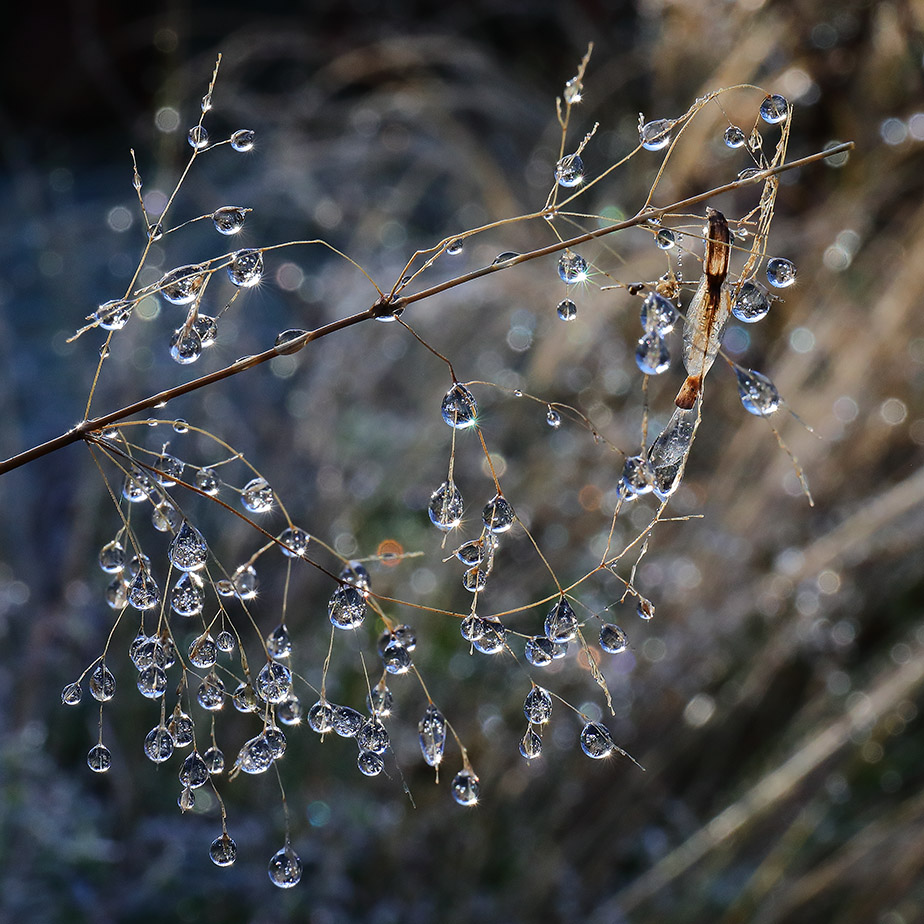
Water drops on Stipa gigantea (golden oats)

NB: A note for WordPress Reader users – you need to click on the title of the post again to see the full photograph. (Otherwise you see just a tiny section!)

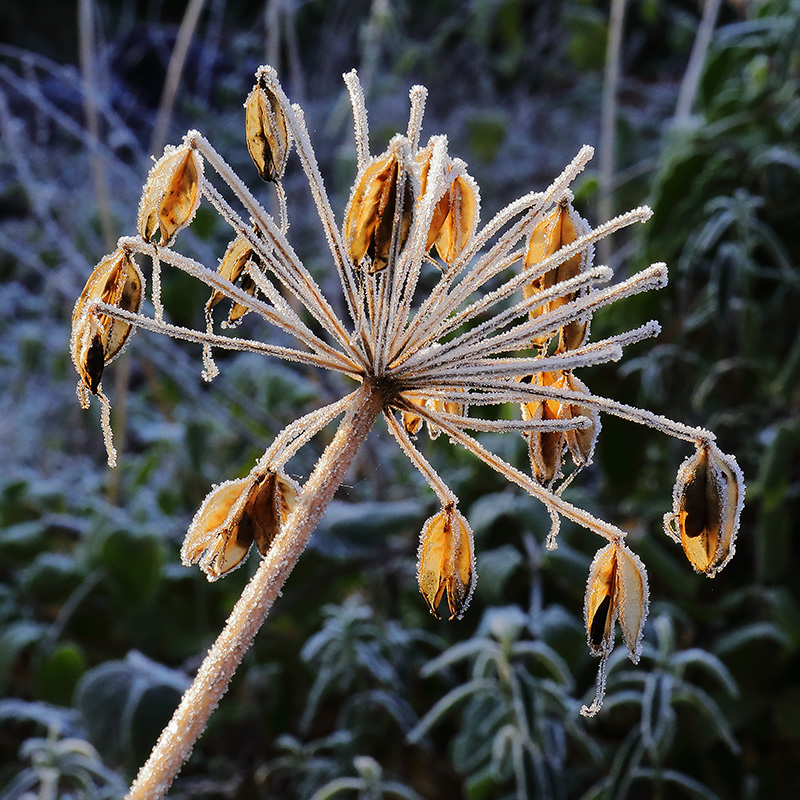
The sparkling drops of melted frost on the seed head of Stipa gigantea (golden oats) above caught my attention one morning. I had gone outside knowing that any frost had already melted and expecting it too be too late to find any interesting photographs. When I saw this, however, I realised that I was wrong. There was still plenty to see and photograph.

You may have already seen several of the photographs from that morning in an earlier post: https://annmackay.blog/2022/01/30/after-the-frost/

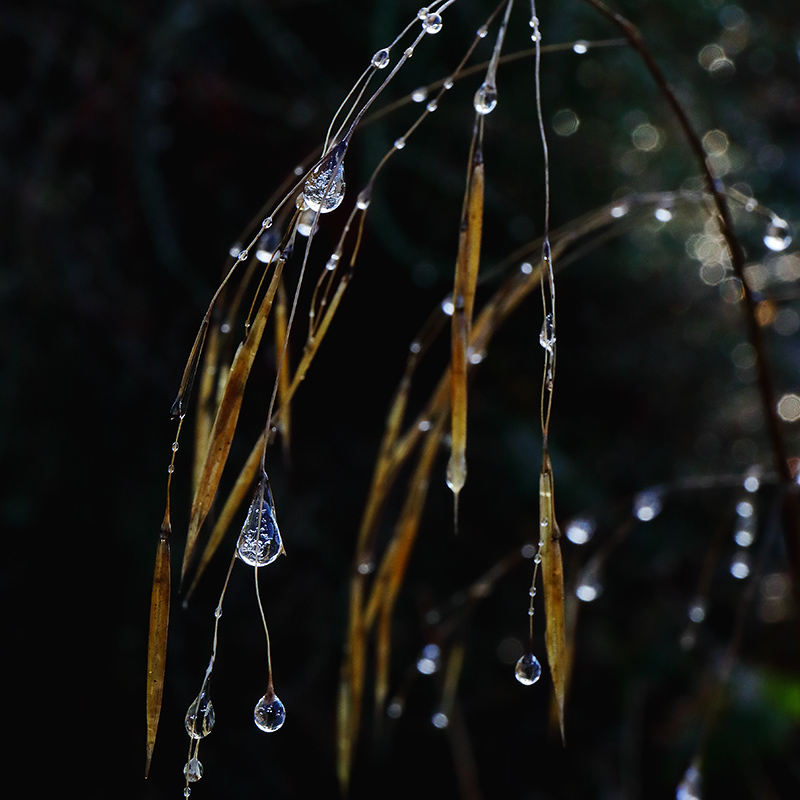
Both of these photographs are of the Stipa gigantea. I was tempted to keep the more sparkly top one as a possible Christmas ‘nature’s decoration’ photo, but decided to hope for more frost before the end of next December. The need to find something to post right now was stronger!

The garden keeps me going even in the winter. It gives me new things to look at and to explore with my camera. It stops me from getting bored and helps me to look forward to the future. Sometimes it even brings a bit of sparkle into my life. Hope your life is a bit sparkly too!

Water drops on Stipa gigantea (golden oats)

After The Frost

Water drops on Euphorbia mellifera

NB: A note for WordPress Reader users – you need to click on the title of the post again to see the full photograph. (Otherwise you see just a tiny section!)

As a slight change from my frosty photos, I thought I’d post a few pictures of the after-effects of these chilly nights.

After the frost melts, there is a great clarity and brilliance to the water drops that are left behind. While they are still very cold and not entirely melted, they can cling to plants for longer than raindrops would. If you look at them closely, you can see little bubbles trapped inside them.

The plant in the top photograph is Euphorbia mellifera. I’m intrigued by the way the tiniest of droplets gather in a line along the very edges of some of the leaves. This plant is placed where it gets the earliest sunshine, so any frost on it disappears quickly. The melted drops, however, stay, and add a brilliant sparkle to the vibrant green and red leaves.

Water drops on fennel seed head

There’s not much left of the fennel seedhead above. The seeds fell off it ages ago, and now the rest looks quite skeletal. I can imagine that big drop on the right being clutched in bony fingers. It has become something alien-looking, especially with the trail of tiny drops clinging to a stray grass stem that is entangled with it.

There’s even less left of the plant below. I think it’s the remains of the flowering stem of some catnip. Now though, the melted frost has become like little round beads that have managed to attach themselves to the plant – as if they’re some sort of weird plant/glass hybrid.

Drops of melted frost on seed head

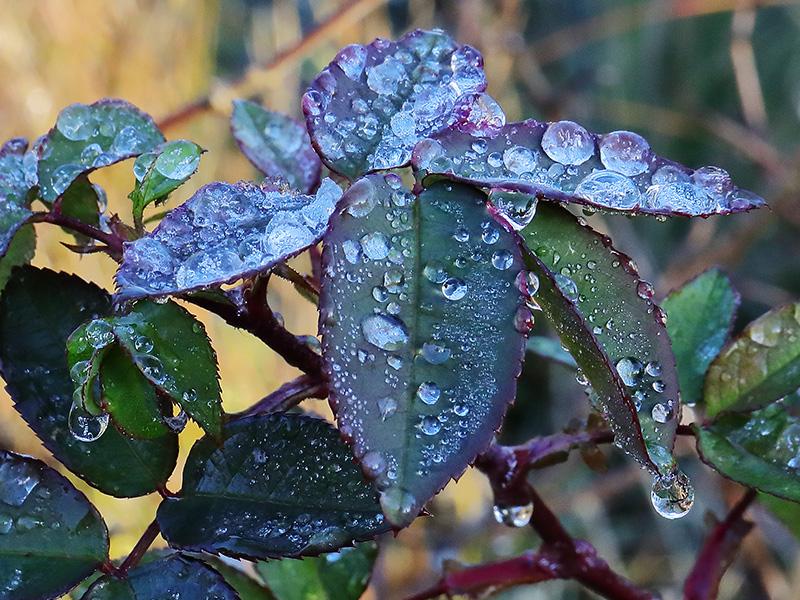
The frost on the rose leaves below is still partly frozen and is even more textured with icy ripples and crinkles and lots of bubbles. There’s quite a difference between the irregular shapes of the colder, still icy drops and the more spherical drops that have completely thawed.

The morning I took these photographs I had missed any chance of frost. But I enjoyed having a close look at these drops of melted frost. They add texture and an interesting highlight to the winter garden as they gleam in the morning sun.

Melted frost on rose leaves

Wishing You a Happy New Year!

Frosted aster plant

NB: A note for WordPress Reader users – you need to click on the title of the post again to see the full photograph. (Otherwise you see just a tiny section!)

It’s New Year’s Eve as I’m typing this, and it has been a strangely warm day for the time of year. Not a trace of wintry weather. The frost that I photographed here happened a few days before Christmas, so is long gone.

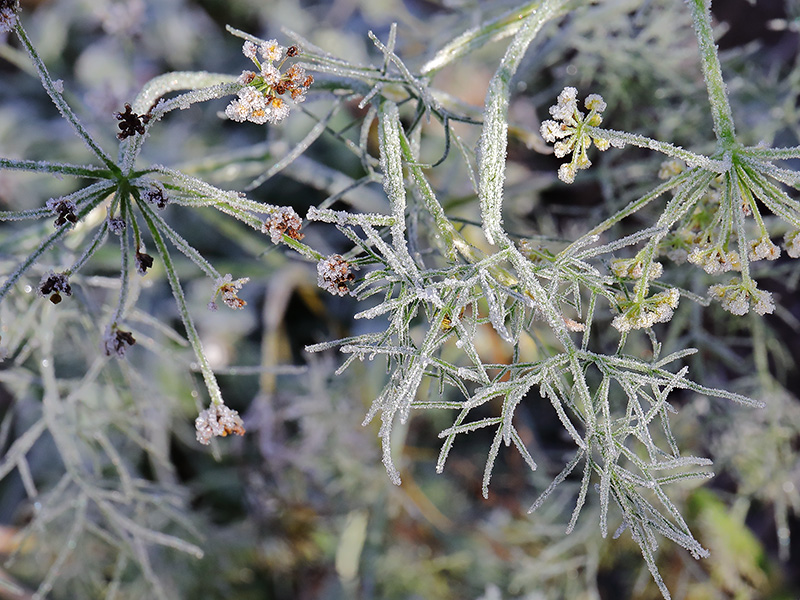
I was lucky to get that one frosty morning so that I could take a few sparkly photos for my Christmas and New Year posts. It’s amazing how frost can make the most ordinary of things look special. (Top photo is the remains of an aster, bottom is a young fennel plant that has flopped over in the cold.)

2021 has been a year of enjoying small, simple things here. The garden has been an ever-increasing source of happiness and has given me a sense of purpose when life has been rather constricted. I hope that 2022 is a year that will bring us back to being able to live our lives safely and healthily.

For 2022, I wish you all a year of joy, health and peace. May it be a year that brings you delight in life. Happy New Year!

Frosted fennel plant

Frosty Christmas Decorations

Frosted fennel seed-head

NB: A note for WordPress Reader users – you need to click on the title of the post again to see the full photograph. (Otherwise you see just a tiny section!)

As this is the last post here before Boxing Day, I reckoned it was time to post some natural ‘Christmas decorations’ created by the frost. These are from a couple of years ago – there hasn’t been enough frost for photography yet this year. (But there probably will be in January, as it’s usually colder then.)

I’m relieved that we haven’t had much frost yet because I have lots of plants sitting around in pots. They’re waiting for me to use them in a border renewal, but work has gone more slowly than I expected. The plants will probably be OK, because they’re in quite big pots and are mostly very hardy. Even so, I always feel a bit guilty about the possibility that they may freeze and worry about them making it ’til next spring.

The border I’m re-planting is an area that has partly been taken over by Japanese anemones. It stretches to the side of the new pond. (The pond is still a big black hole at the moment – I’m hoping that it will fill up with rain or snow over the winter.) It feels good to be able to keep going with this while the weather isn’t too cold.

Until it does get really wintry, I’ll keep pottering about in the garden. For Christmas though, I’ll take refuge in the warmth indoors. I’ll probably spend most of the time curled up on the sofa with hubby and the two cats, lots of good books, plenty of tasty food and (very likely) a generous amount of wine. (Maybe even something decent on the TV.) Whatever you’re doing this Christmas, I hope that it’s a good one, and that it brings you much happiness. I wish you and your families and friends good health and good cheer. 🙂

Some Autumn Reds

Autumn leaves - crab apple

NB: A note for WordPress Reader users – you need to click on the title of the post again to see the full photograph. (Otherwise you see just a tiny section!)

We had some good autumn reds in the garden this year – or maybe I should say orange for the photo above. It’s the fieriest that our leaves have managed in a long time. I should think the more intense colours developed because it’s been colder than most autumns, though not nearly as cold as we were used to in Scotland.

Our little crab apple tree (Malus ‘Royal Beauty’) has the brightest leaves in our autumn garden. Both photographs here are of this same tree, so you can see that they vary between orange and deep red. They have really been spectacular this year.

To photograph the leaves, I chose to shoot towards the sun. (I was lucky enough to catch the last bit of late sun before it left the back garden.) Doing this allows the strong light to shine through the leaves. As a result, they become ablaze with glowing colour that contrasts with the dark shadows cast by other leaves.

I love nature’s ability to imitate stained glass, if only for a short time. It makes the garden much more exciting to photograph at this time of year!

Autumn leaves - crab apple

Reaching for the Sky: Hollyhocks

I have been waiting for this pink hollyhock to finish flowering and for its seeds to ripen. At last it has, and I’ve cut down the old stems and taken them away to a sunny, sheltered spot where I’m hoping it will seed itself around. (I need to clear the hollyhock’s space so that it can become part of a new bog garden.)

The plant was the offspring of a series of hollyhocks that have self-sown in the area for the last few years. Originally I had planted a few seedlings bought at a community plant sale. I can’t now remember what colour the flowers were. Possibly yellow, because I do remember some very pretty double yellow flowers and it seems likely that they would eventually revert to producing plants with single flowers.

This year there was only the one plant. That’s probably a result of all the disturbance of having the fence renewed last year. But this single plant was much bigger than any of the previous hollyhocks. When I cut the stems, I measured the longest and found that it had reached a height of 10 feet. (Hollyhocks do grow tall, but are more likely to be 6 to 8 ft.) It was lucky that it hasn’t been windy enough to blow the stems over!

There’s a lot of discussion about whether hollyhocks are biennial or perennial. (They don’t flower until their second year.) The RHS says that they are short-lived perennials, so I’m happy to go with that. But I haven’t tried to move the hollyhock to a new position because they have deep tap roots and don’t like to be disturbed.

A reddish-pink hollyhock flower

If there’s time next year, I may grow some new plants from seed. I’d love to have a range of colours, including pale yellow, the really dark purples, and strong pinks like the flower above. This one sadly wasn’t in my garden, but was photographed outside a pretty cottage a few years ago. (I’ve seen a wonderful range of colours outside some of the pretty medieval cottages in the villages around here…the tall flowers and quaint cottages seem to go so well together!)

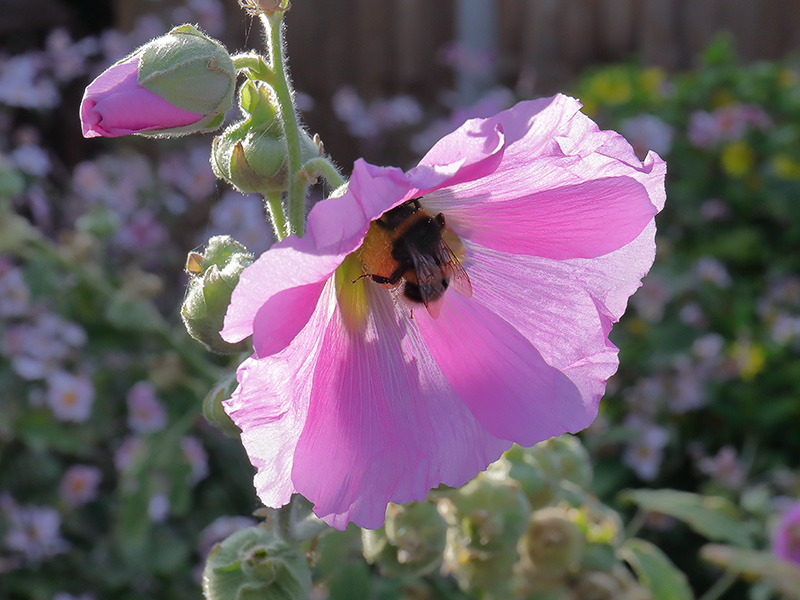
Whatever colours I might fancy in hollyhocks, the bees seemed happy with this year’s pink. This plant has attracted many bees, so that would be a good reason for keeping some of the same shade – and a good reason for growing varieties with single flowers rather than the doubles. If I manage to grow hollyhocks in a number of different colours, I must take note of which they prefer – could be an interesting little project!

Common Carder Bee: Bee I.D.

Common Carder Bee

In the last few years, I’ve become fascinated by the bees and other insects that visit my garden. Sometimes I like to just sit and watch as they go about their business among the flowers. It feels very relaxing and deeply peaceful.

There are several different species of bee that use the garden. Honeybees come here frequently. There’s usually a good number of buff-tailed bumblebees too, and just occasionally, a red-tailed bumblebee. And there’s the bumblebee pictured above – the common carder bee (Bombus pascuorum).

Common carder bee
Common carder bee on Caryopteris x clandonensis

I’d noticed these bees back in spring, visiting the white deadnettle and other early flowers. They moved about too much for me to get a really good look at them, or a clear photograph that showed their markings. Recently, I saw a couple of them enjoying the freshly-opened flowers of a sedum on a sunny afternoon. It made a good opportunity to photograph them.

Having photographs of the bees made it easier to identify them by comparing them to images on websites about bees. Even then, it can be very hard to be sure about identification, because many bees look very similar.

Honeybee on Sedum
For comparison: honeybee on sedum

To make it easier to see the differences between the commonest bees in my garden, I’ve posted a couple of comparison photos. Above is the honeybee. (The western or European honeybee, Apis mellifera.)

You can see that the honeybee’s colouration is quite like that of the common carder bee. But the carder is much hairier and a stronger ginger colour. (The common carder is also a bit bigger than the honeybee.)

If you look at the tails of the two bees, you’ll notice that the tail of the common carder has hairy stripes in black and white. While the honeybee also has a stripey look to its tail, they are quite different. Here the black areas of the tail look smooth and slightly shiny, with just very short and sparse pale-coloured hairs.

Bumblebee on a blue scabious flower.
For comparison (2): Buff-tailed bumblebee (I think!)

The other comparison (above) is the very common buff-tailed bumblebee. (Which can be distinguished from the white-tailed bumblebee by that very narrow orangey stripe at the top of its tail.) It looks quite different from the common carder bee, having a mostly black thorax with an orangey-yellow stripe just below the head, and another on the abdomen, just below the waist. (Mostly hidden here by the wings.)

One of my reasons for wanting to know which bees use my garden is so that I can try to make sure I have a range of flowers to suit them.

The common carder bees have been busy at the caryopteris flowers, even though the shrub has almost finished flowering for the year. Like a lot of other bees, they’re keen on the flowers of sedums at the moment, as well as the last of the catnip flowers. (When there’s not a cat sleeping in it!)

Now I must go and read up on what other flowers they like and what sorts of habitats suit them. I’m hoping for lots more of them next year!

Common Carder Bee
Common Carder Bee – it has a hairy face!