Still in the Pink

magnolia flower

NB: A note for WordPress Reader users – you need to click on the title of the post again to come out of the reader and go to the post itself. This allows you to see the whole of the top photograph. (Otherwise you may see just a tiny section!)

One of the spring sights that always impresses me is a magnolia tree in full flower. There are several of these not far from where I live and they were magnificent just a couple of weeks or so ago. Their pink flowers are gone now, so last year I was surprised to see magnolia flowers in a garden we visited in mid-May.

I am so used to seeing spring magnolias in flower around here that I was unaware (or had possibly forgotten) that there are summer-flowering magnolias too. A quick read up on them was required!

Depending on the variety, magnolias can flower from spring up until September but I’m not sure that I’ve ever seen any of these late-bloomers. There’s a particularly lovely white-flowered magnolia (Magnolia sieboldii) which I would love to see – and photograph, of course!

It was a matter of luck that I was able to photograph the magnolias here. The flowers are often too high up on large trees for me to be able to get near enough to them. These were just at a nice height for me! Hopefully I will find more of these lovelies on future garden visits…I will certainly keep my eyes open for them.
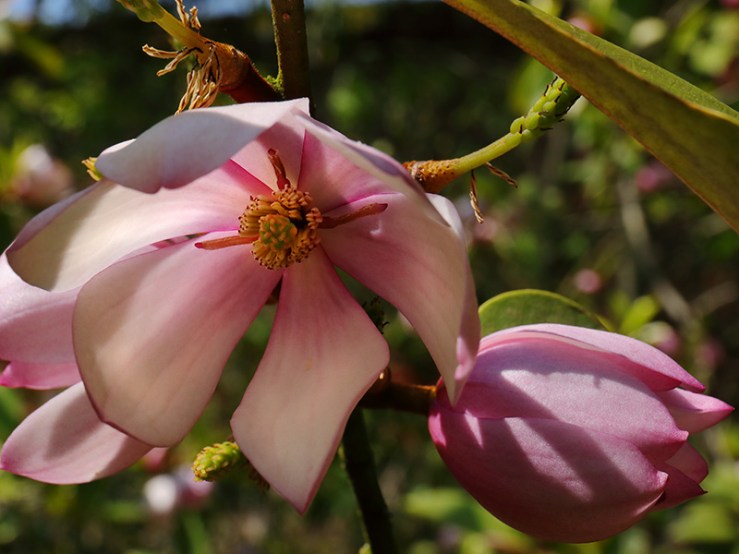
magnolia flower and bud

Ragged but Lovely: Silene flos-cuculi

Ragged Robin (Silene flos-cuculi) flowers

NB: A note for WordPress Reader users – you need to click on the title of the post again to come out of the reader and go to the post itself. This allows you to see the whole of the top photograph. (Otherwise you may see just a tiny section!)

Ragged robin (Silene flos-cuculi, also known as Lychnis flos-cuculi) is a very pretty wildflower that is native to Europe and Asia. It grows in damp or marshy ground and was, in the past, a common sight around the UK. (I remember it growing in soggy ditches alongside country roads when I was much younger.) It has become significantly less common now, even rare, due to land development, especially the drainage of ground for agriculture and the loss of wetlands and wild ponds.

Fortunately, ragged robin is now grown as a garden plant. It’s a perennial which seeds itself around very readily in moist and sunny sites. Gardeners can choose cultivars in deep pink, pale pink or white. The pale flowers in the photograph below were growing in the wet ground alongside a large pond in a garden we visited. They were such a lovely sight that I wished I could grow them in my own much drier garden.

The desire to grow plants that like damp conditions led me to create a little ‘bog garden’ last year. That meant that I was able to plant the dark-flowered ragged robin that you can see in the top photo. (I was afraid that the huge increase in our winter rainfall might have drowned the plants in my bog garden, but everything in it is growing again and the ragged robin seems perfectly happy.)

The availability and growing popularity of wildflowers as garden plants helps not only their survival, but that of many insects too. Ragged robin is an excellent source of nectar for bees and butterflies and apparently attracts dragonflies too. I shall be on the lookout for those!

Ragged Robin (Silene flos-cuculi) flowers
The pale pink ragged robin that inspired my wish to grow this attractive plant.

Hanging On

cherry blossom

NB: A note for WordPress Reader users – you need to click on the title of the post again to come out of the reader and go to the post itself. This allows you to see the whole of the top photograph. (Otherwise you may see just a tiny section!)

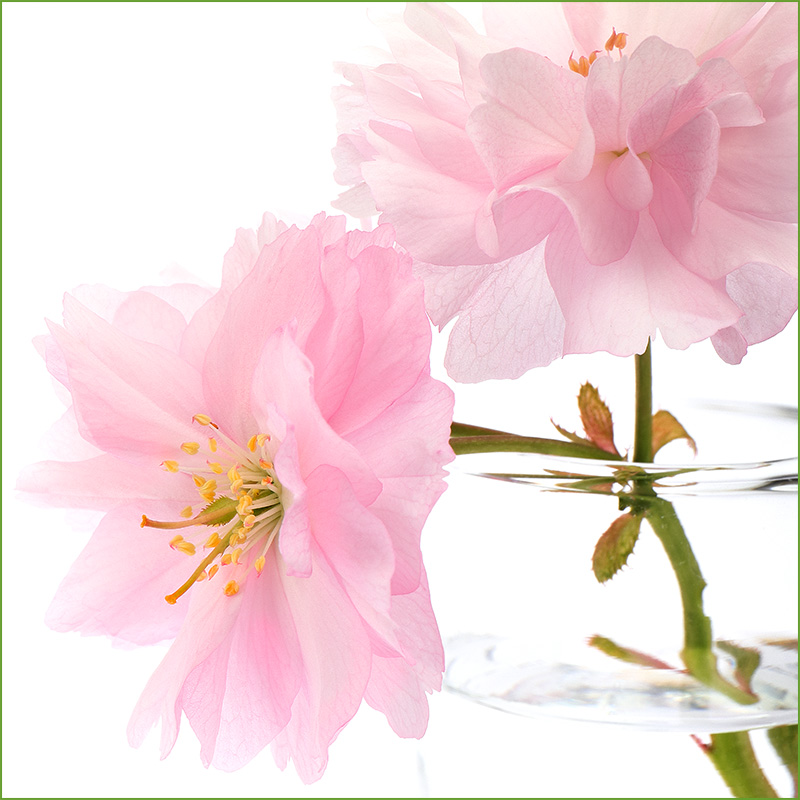
Very windy weather was forecast for this week, so I expected much of the blossom to be blown off our ‘Kanzan’ flowering cherry. It’s in front of the house, which is the most exposed part of our garden, and it was no surprise to see its branches waving around as the wind strengthened. Soon there was a scatter of petals that looked like giant pink snowflakes all across the grass.

To my surprise, most of the blossom survived the rough winds and the tree is still displaying its characteristic round balls of flowers. It must have been still early in the life-cycle of these flowers for them to be robust enough to resist being torn off the tree – a few days later would have been a different story. (I’m relieved to see that the blossom is still on our fruit trees in the back garden too, so we can hope for apples and cherries later.)

The cherry tree itself is in a state of ‘hanging on’ too. It already looked very mature and had seen some damage by the time we came here in 2005, so it must be old for a cherry tree by now. ( I’ve read that their maximum lifespan is around 30 to 40 years, with Kanzan only having about 25 years.) Despite being at least 30 years old, the tree is keeping going. It doesn’t flower as profusely as it used to, but still has a good number of flowers for us to admire. We’ll simply enjoy it while it lasts. 🌸

cherry blossom

Before and After

Pulsatilla vulgaris (pasqueflower)

NB: A note for WordPress Reader users – you need to click on the title of the post again to come out of the reader and go to the post itself. This allows you to see the whole of the top photograph. (Otherwise you may see just a tiny section!)

Once spring is underway, it gathers speed. For the past week I’ve been happily distracted from the garden by the company of a visitor, so have had less time to notice changes in the garden. Now that I have time to look around I’m impressed to see how much has grown and flowered in just a few days.

Blossom is everywhere, from the fruit trees in the garden to the ornamental cherries and crab apples on the green in front of our house. The daffodils have mostly gone over now, but the tulips are open and the first lilac flowers are out. Amidst the rush of flowery activity, I’ve had less time than I’d have liked to admire the pasqueflowers (above) before they too were going over.

This year I may have been too distracted to take much notice of the lovely purple pasqueflowers, with their charmingly fluffy buds and leaves, but I do still have the pleasure of their seed heads to come. These sway on their long stems in any breeze, with their silvery hairs glinting in the sun. Almost as pretty as the flowers! (And one of my cats used to think they made a grand toy for her to swat!)

Now I really need to get back out into the garden – everything happens so quickly out there in spring! 🌿

Pulsatilla vulgaris (pasqueflower) Seed Heads
The seed heads of Pulsatilla vulgaris (pasqueflower) are gloriously fluffy.

Covering the Ground

Dark purple-flowered periwinkle (Vinca minor 'Atropurpurea')

NB: A note for WordPress Reader users – you need to click on the title of the post again to come out of the reader and go to the post itself. This allows you to see the whole of the top photograph. (Otherwise you may see just a tiny section!)

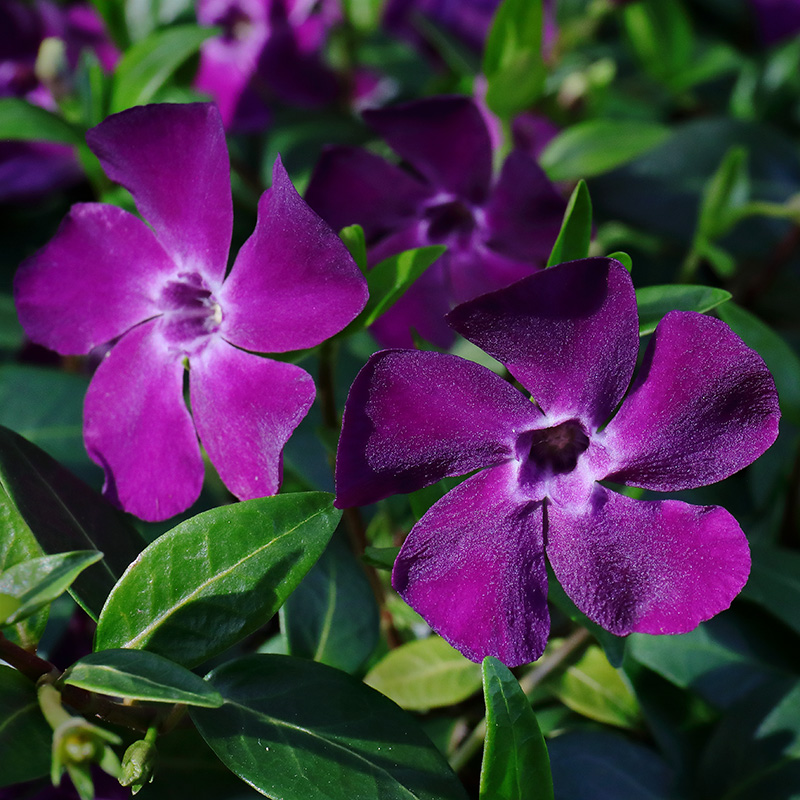
These purple flowers look attractive but may soon be trying to overrun a large patch of my garden. For once, I don’t mind. This is Vinca minor ‘Atropurpurea’, the dark purple-flowered periwinkle. It’s a ground-cover plant that can spread quickly and has small but pretty flowers.

Normally I’m wary of plants that have the ability to become thugs that try to take the garden over. This time, though, I needed something that would survive in the dry shade beneath a ceanothus (California lilac). It also needed to be able to creep along the ground and help to stabilise a slight slope near the edge of our pond.

Once this plant has done its job of providing ground cover under the ceanothus, I’ll try to persuade it to continue its spread below some of the neighbouring shrubs. I reckon it should help to keep down the weeds under them too, which would be very helpful. (It gets tricky to weed under shrubs as they get bigger and I get older!)

I wonder how far it can spread? (The RHS says 1.5 metres, but I’m betting that it will self-propagate by layering and reach further.) I know I’ll have to keep a stern eye on it and give it a thorough trim if it goes too far.🌿

Dark purple-flowered periwinkle (Vinca minor 'Atropurpurea')
Dark purple-flowered periwinkle (Vinca minor ‘Atropurpurea’) can cover a lot of ground very quickly!

Pretty Wild

Wild primrose (Primula vulgaris)

NB: A note for WordPress Reader users – you need to click on the title of the post again to come out of the reader and go to the post itself. This allows you to see the whole of the top photograph. (Otherwise you may see just a tiny section!)

Despite the title, I’d describe these flowers as ‘pretty and wild’, since Primula vulgaris is the primrose, a wildflower which grows in woodlands and meadows. The wild primrose is also a welcome early spring flower in many gardens. It likes the semi-shade at the foot of hedges, so is a great plant to grow below deciduous shrubs and in other partly-shaded places. In my eyes, it’s prettier than the more brightly-coloured primula hybrids and I find it easier to blend into the existing planting in my garden.

A friend gave me several clumps of this primrose from her own garden last year. Some have been planted out to join the primulas already in the garden. Others were potted up to plant later on, after I have finished splitting and moving other plants around. All are flowering happily! They harmonise well with, and flower at the same time as, the mix of cream and darker yellow daffodils growing here. (I will need to add some blue flowers for the best effect. What a good excuse for buying more plants!)

Wild primroses were common along roadside verges when I was a child and I can still remember my delight at the sight of these pale yellow flowers. There were not a lot of flowers to be seen in the gardens of the ‘far north’ of Scotland in those days, so finding pretty flowers growing in the wild was an experience to value. I don’t know if they grow there still, but here (in Suffolk) I see them in the wild only occasionally. It’s good to know that they are growing and thriving in many gardens, where they provide an early source of nectar for the first of the year’s bees and butterflies. 🐝

Wild primrose (Primula vulgaris)

More Hellebores…

Hellebore 'Rosali'

NB: A note for WordPress Reader users – you need to click on the title of the post again to come out of the reader and go to the post itself. This allows you to see the whole of the top photograph. (Otherwise you may see just a tiny section!)

Spring arrived here this week. Every year I feel that there is a day when winter clothing suddenly feels much too much and the sun has real warmth to it. The cats have deserted their bed by a warm radiator and taken over the conservatory chairs again. The birds are busy, busy and so are a few early bees. Best of all, things are growing again.

Nevertheless, it’s a slow process for colour to start reappearing in the garden. Our daffodils have opened at last, and there’s a scattering of blue and white Anemone blanda and some yellow primroses. Amongst these spring flowers, the hellebores are still holding their own. They flower for weeks, bridging the period spanning late winter and early spring with their glorious blooms.

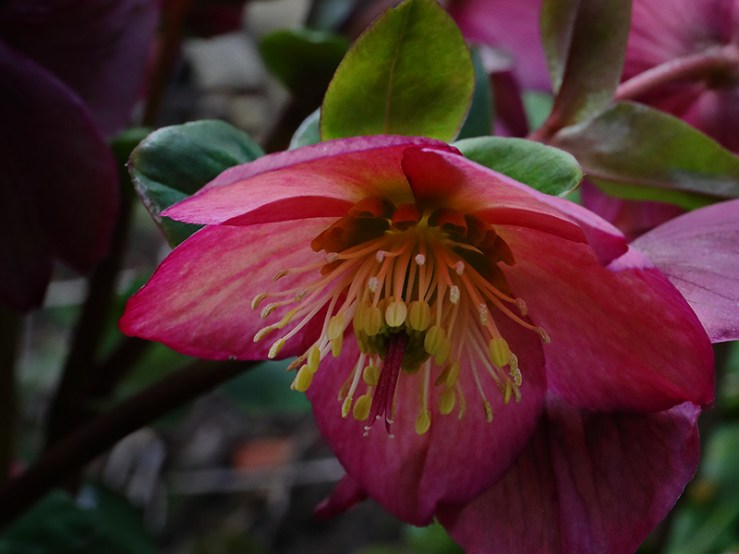
This year the hellebores have done well. They’ve become much more sturdy plants, with many more flowers than I’ve seen on them before. Both photographs here are of ‘Rosali’ from the HGC ‘Ice N’ Roses’ series, which I planted last year. I hope that this newer hellebore will turn out to be as robust and resilient as other older varieties are said to be…time will tell!

Hellebore 'Rosali'
Hellebore ‘Rosali’, with its flower looking like a tiny umbrella.

Heralds of a Wet and Windy Spring

Hellebore flower

NB: A note for WordPress Reader users – you need to click on the title of the post again to come out of the reader and go to the post itself. This allows you to see the whole of the top photograph. (Otherwise you may see just a tiny section!)

Hellebores are resilient plants. They need to be, given that the weather in very early spring can be anywhere between sunshine and gentle breezes to the blast of high winds and freezing rain or snow. This year we’ve had a fairly benign mix – quite a lot of rain but sunshine too and no gales around here.

I did worry that this hellebore and the others that are planted beside it might suffer in the gusts of chilly air that are sent out from the air-source heat pump that we recently had installed. The heat pump works by extracting warmth from the air around it so the air it pushes back out is very cold. Luckily, it turns out that the airstream is just enough to the side of them not to be damaging.

Unfortunately, the site that had to be used for the heat pump meant that a path and a low retaining wall had to be dismantled to make room for it. Now both path and wall will need to be reinstated and the hellebores may be in the way. If possible, I’d rather not move them, especially when they seem happy in their present position. Hopefully, if I do, they’ll survive and bring more joy to next spring.

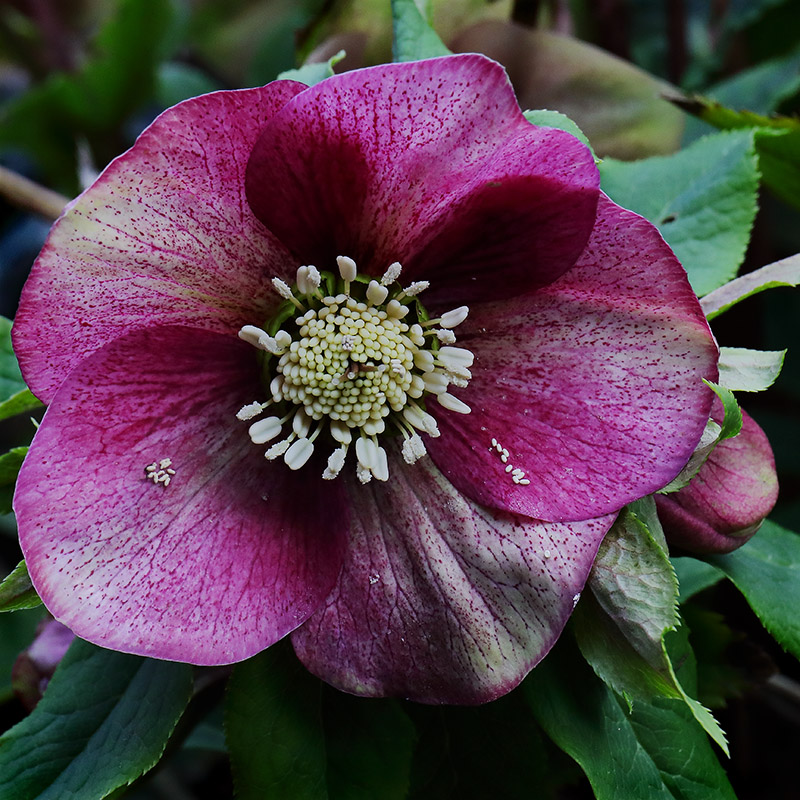
(Meanwhile, I’m wondering what has laid its eggs on the flower in the top photo…do you see those white ovals? Not slugs or snails, which have round eggs. Not to worry, I suspect the rain we’ve just had will have washed them off!)

Hellebore flowers

Briefly Brilliant

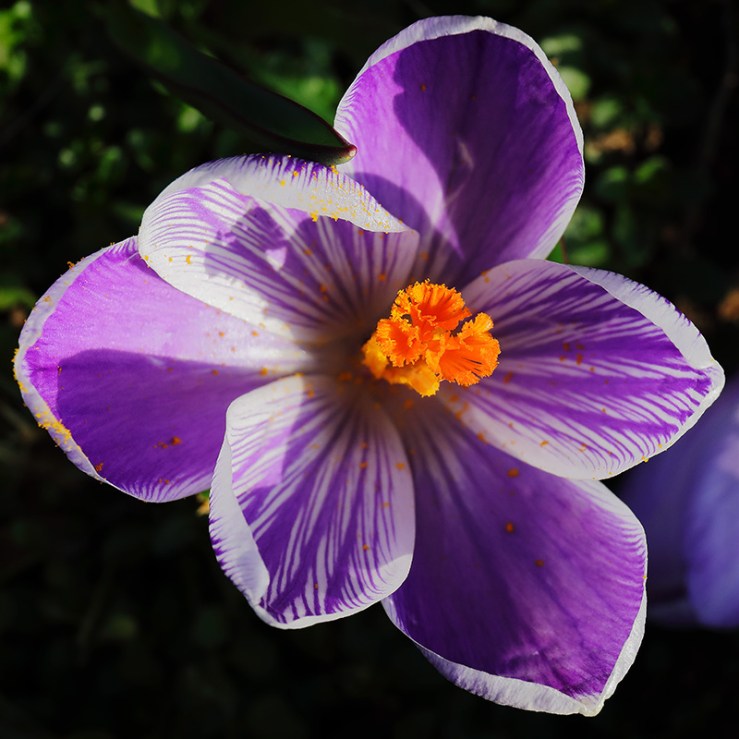
Crocus 'Prins Claus'

NB: A note for WordPress Reader users – you need to click on the title of the post again to come out of the reader and go to the post itself. This allows you to see the whole of the top photograph. (Otherwise you may see just a tiny section!)

The unusually wet weather has been very destructive to the crocuses this year. I don’t have many here, and those that have flowered have been quickly flattened by the rain. They end up looking like tiny scraps of brightly-coloured silk lying on the ground.

Luckily, other years have been kinder to these late-winter flowers and to the early bumblebees that were able to enjoy their nectar. (Crocuses are nicely timed to feed bumble bee queens that have just come out of hibernation.) The photographs here are from a sunny February a couple of years ago: at the top is ‘Prins Claus’, while the flower below is ‘Pickwick’.

Right now there is still one relatively undamaged group of purple crocuses which haven’t yet been rained flat. I can’t get at them to photograph them without tramping on a lot of wet soil (and thereby compressing it), so I’m unlikely to photograph them this year. But I can at least enjoy the sight of them and maybe the weather next year will allow me to photograph them then. Here’s hoping!

Crocus 'Pickwick'

A Welcome Sight

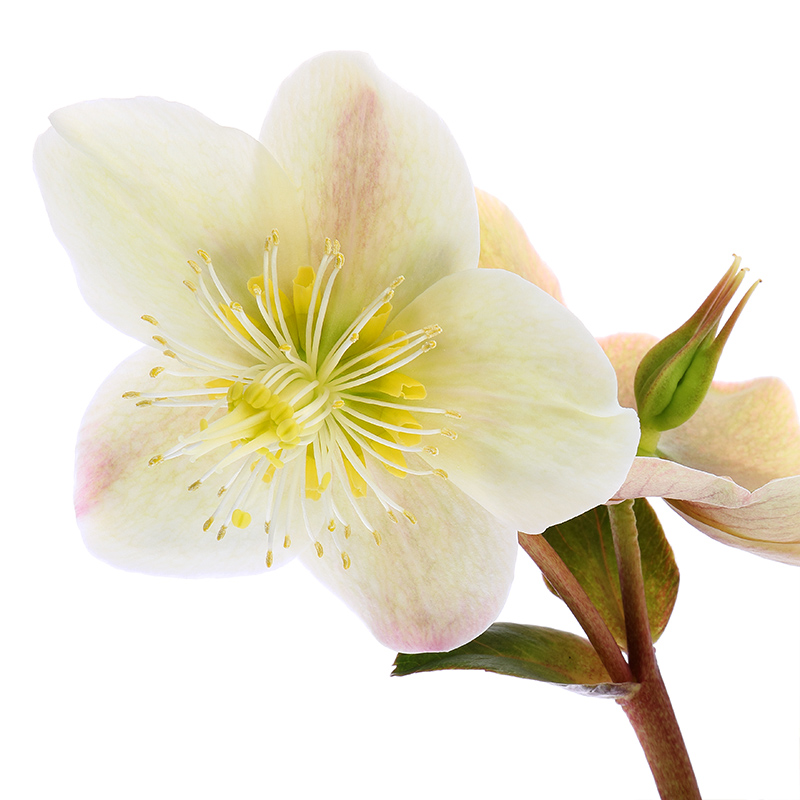
white hellebore flower ('Cinnamon Snow')

NB: A note for WordPress Reader users – you need to click on the title of the post again to see the full photograph. (Otherwise you see just a tiny section!)

February has brought the opening of hellebore flowers in my garden. Along with a scattering of snowdrops, they’re the first of the year’s flowers. (Although there are still pink flowers on the viburnum ‘Dawn’ and yellow ones on the winter-flowering jasmine. But they’ve been around for quite a while now.)

It’s a cheering sight to see something pretty at last, after a rather wet and muddy winter. And now I have something that makes me want to be outside in the garden with my camera…or else indoors in my little studio, as with the flower below. I reckon that I can promise that there will be more hellebore photographs here very soon!

hellebore flower - white with pink spots