NB: A note for WordPress Reader users – you need to click on the title of the post again to come out of the reader and go to the post itself. This allows you to see the whole of the top photograph. (Otherwise you may see just a tiny section!)
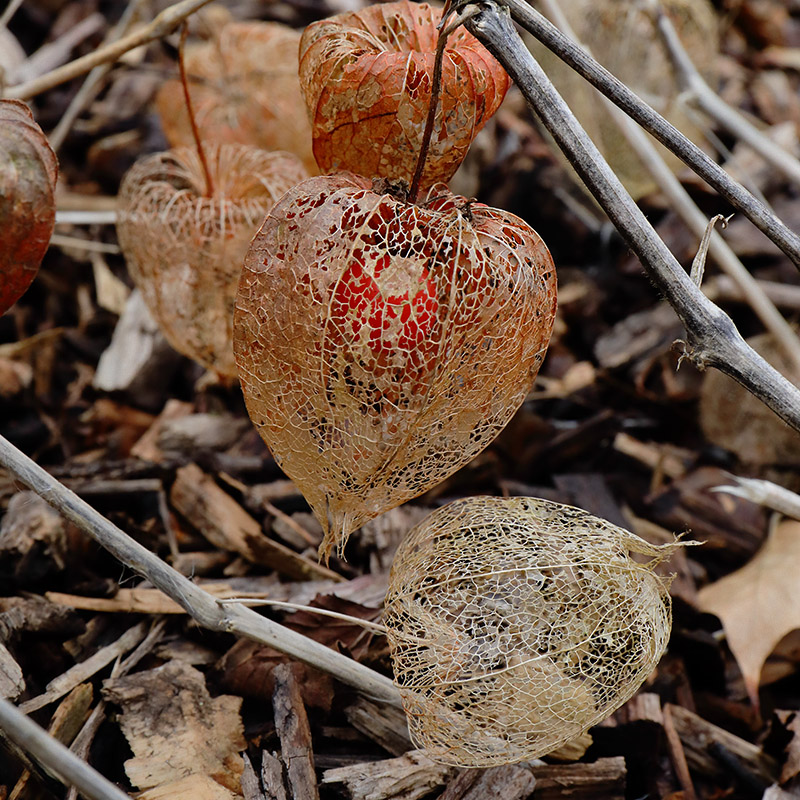
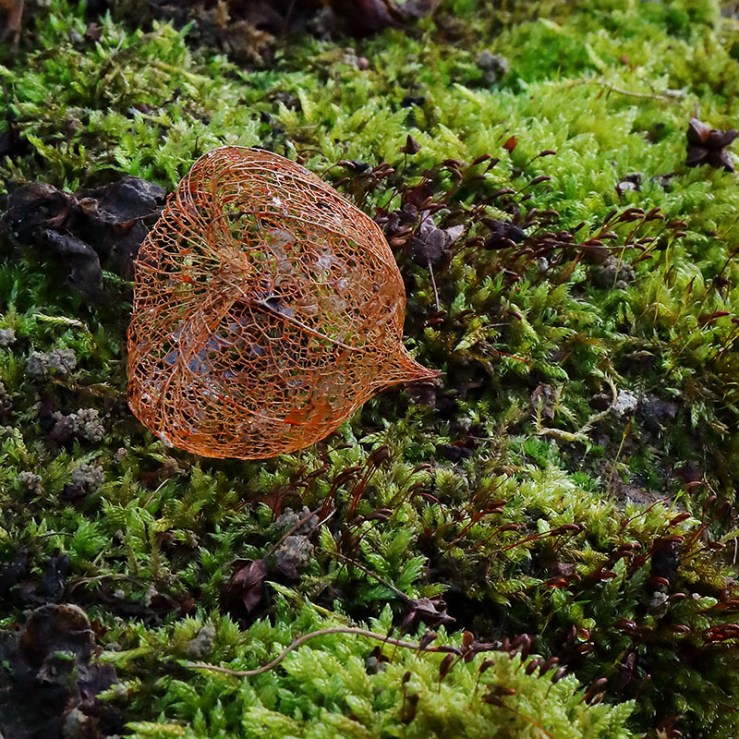
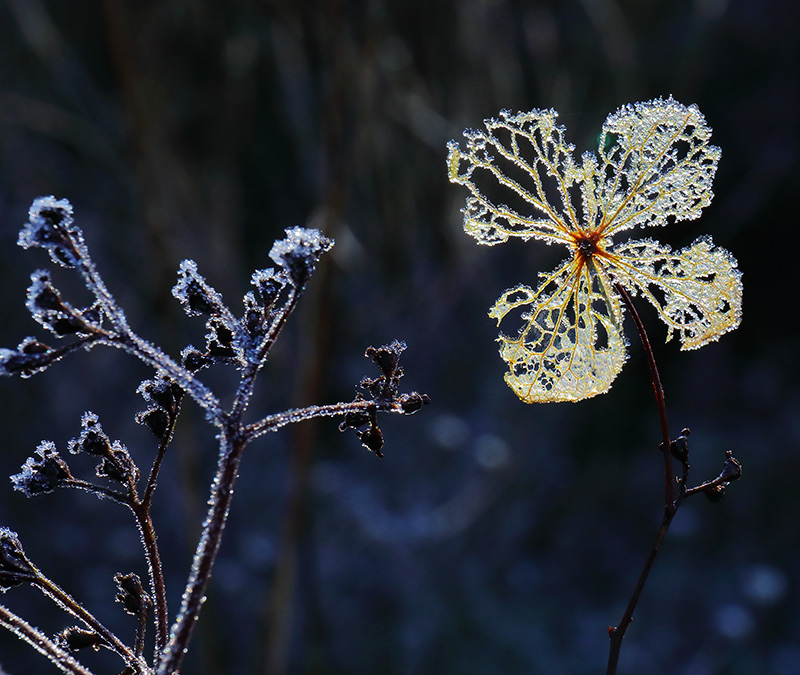
When I visited Fullers Mill last month I noticed that the remains of their Chinese lanterns (Physalis alkekengi) had turned into little skeleton pods. I occasionally find leaf skeletons, as well as the skeletonised flowers of hydrangea, but this was a first for me.
I love the lace-like look of the veins left after the papery tissue of the pod has decomposed. To me, this is much more attractive than the orange ‘lanterns’ of the earlier stage (shown below). I’ve frequently seen these in gardens here, but only while they still had a solid pod, never before in the skeletonised form.
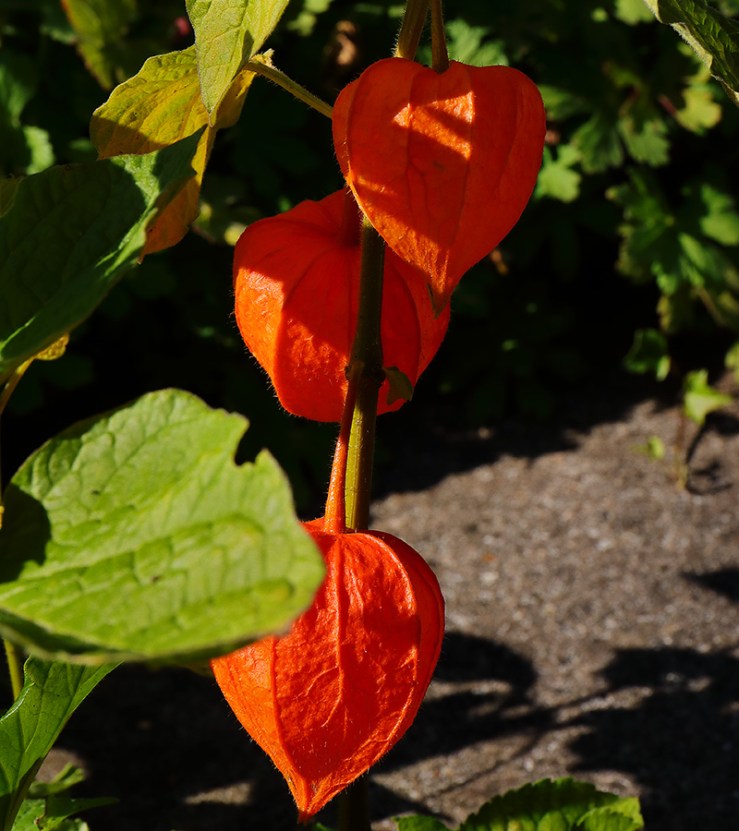
My curiosity about why some plants have parts that skeletonise led me to a swift dig around the internet. Apparently the veins are made up of lignin, a much more robust compound than the soft tissue of leaves, petals, or in this case, pods. The lignin structure of the veins can survive after the rest has decayed away. (Sometimes the skeletonisation is caused by insect damage, but the sheer number of pod skeletons showed that it wasn’t the case here.) Leaves with a particularly strong vein structure are more likely to work, whereas those with a protective, waxy surface are very unlikely to. A damp and sheltered environment, such as found amongst the trees at Fullers Mill, helps to encourage natural decay. In my own garden, I’ve noticed that I occasionally find skeletonised hydrangea flowers in a cool, slightly damp and sheltered area.
Although I’m not very keen on the orange pods, I might be tempted to grow some physalis. It would be worth it for the skeleton pods, and I can imagine how beautiful they would look with a coating of frost. I may have to go and look for some seeds!
 Ann Mackay: Inspired by Nature