Cool Thoughts: Frosty Memories

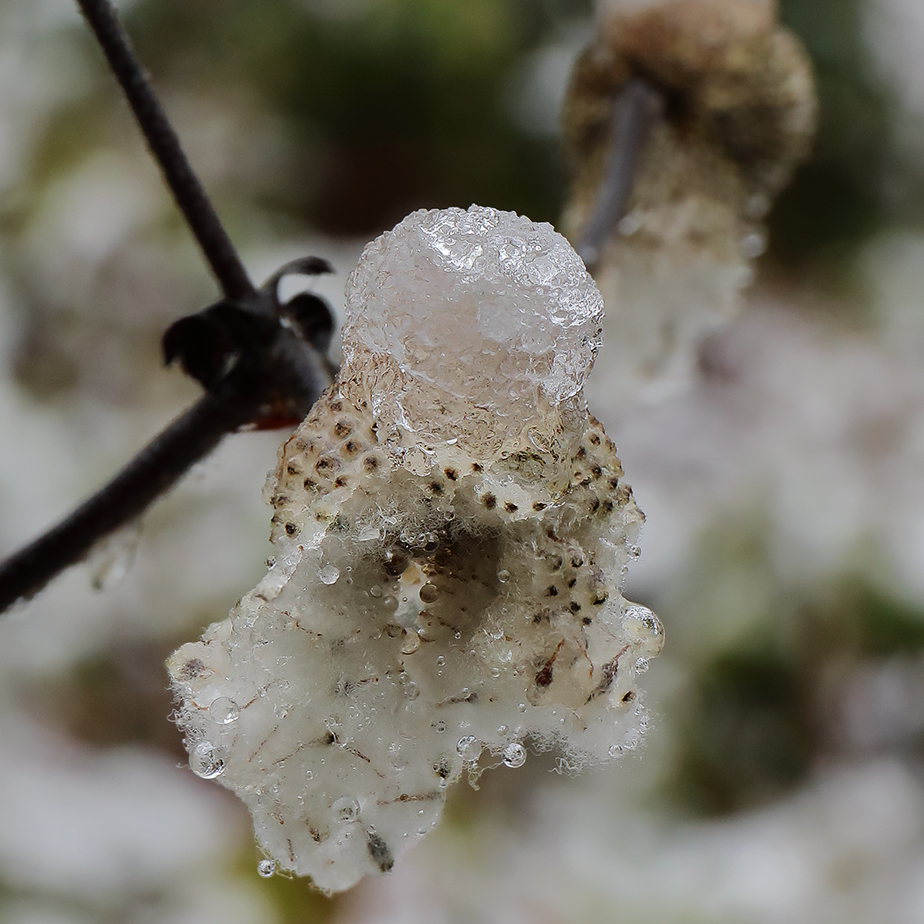
Snow on anemone seed head

NB: A note for WordPress Reader users – you need to click on the title of the post again to see the full photograph. (Otherwise you see just a tiny section!)

I’d like to thank Tanja Britton for the idea for this post…we felt that some of my frosty photographs may bring a suggestion of coolness to these over-hot summer days. (The temperatures are still higher than normal in the UK and, I believe, in many areas elsewhere.)

Snow is infrequent in our winter in Suffolk now, so the Japanese anemone seedhead, with its tiny cap of snow, (top photo) is a rare image for me. Frost is much more usual in our winters, so I leave seedheads to see if they will become interesting subjects to photograph. The frost can make something magical out of the most ordinary plant remains, as you can see from the photo below. The honesty seedheads were long past their best and getting very scruffy, but with a bit of frost and some sunshine, they’re suddenly delicate and attractive.

frosted honesty seed pods
The remains of honesty seedheads look much better after the frost.

Bronze fennel tries to take over my garden by spreading its seedlings everywhere but I resist the temptation to clear away the seedheads and I leave it intact for the frost. This plant never disappoints me when it’s frosted, and it can become most decorative, especially when the sun adds some sparkle.

frosted fennel seed head
A frosted fennel seedhead looks decorative in the sun.

If the frost is early, it can catch plants that are still in flower. The echinacea below was a new plant and had come into flower much later than normal. It was an unexpected sight one morning, to see it completely frozen through by the first frost. (It hasn’t happened to any of the echinacea flowers since.)
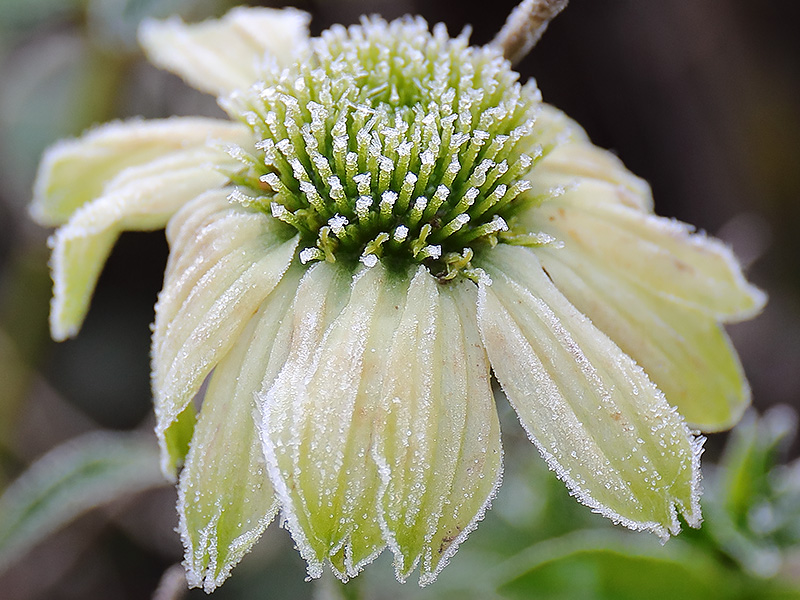
Echinacea purpurea – frozen through by an early frost!

A few flowers, such as the yellow winter jasmine, the pink-flowered shrub Viburnum bodnantense ‘Dawn’ and this winter-flowering iris (below) have flowers through much of the winter. They look especially appealing with a touch of frost (although that shortens the life of the individual flowers).
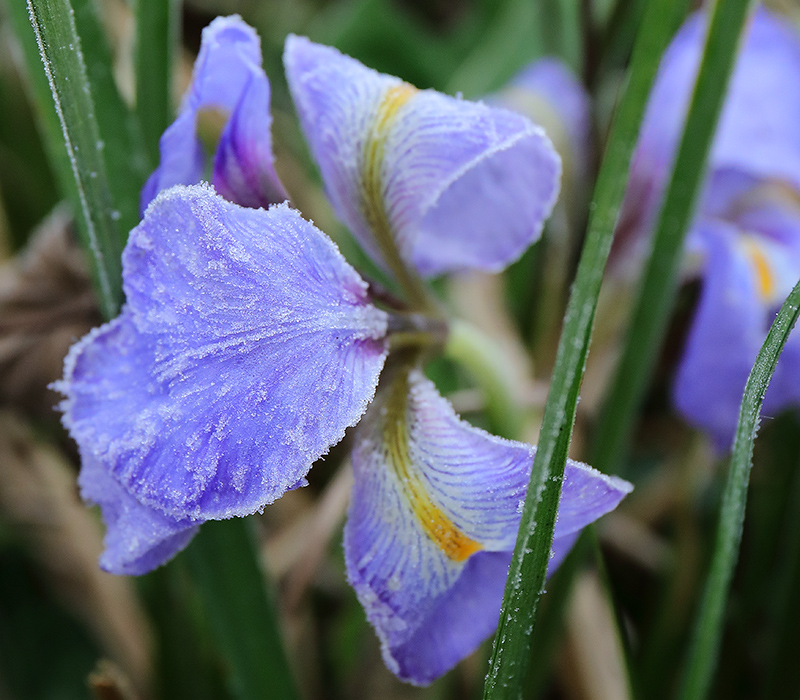
winter-flowering iris
Iris unguicularis – a winter-flowering iris that frequently has frosted flowers.

I’m glad that the roses in my garden right now haven’t got any frost on them though! Zepherine Drouhin sometimes has a few flowers left just as the frosts are starting, so I always look to see if they’re in good enough condition for a photograph. Of course, when the frost melts, the flowers are left looking wilted and they won’t survive the damage the frost has done to the petals. But a photograph preserves the memory of them.
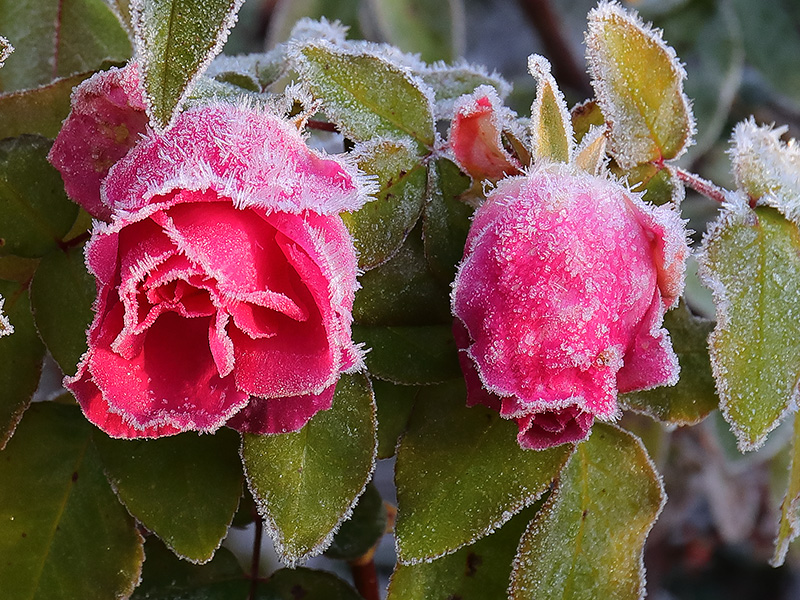
Rose 'Zepherine Drouhin', covered in frost.
Rose ‘Zepherine Drouhin’

Cool Whites

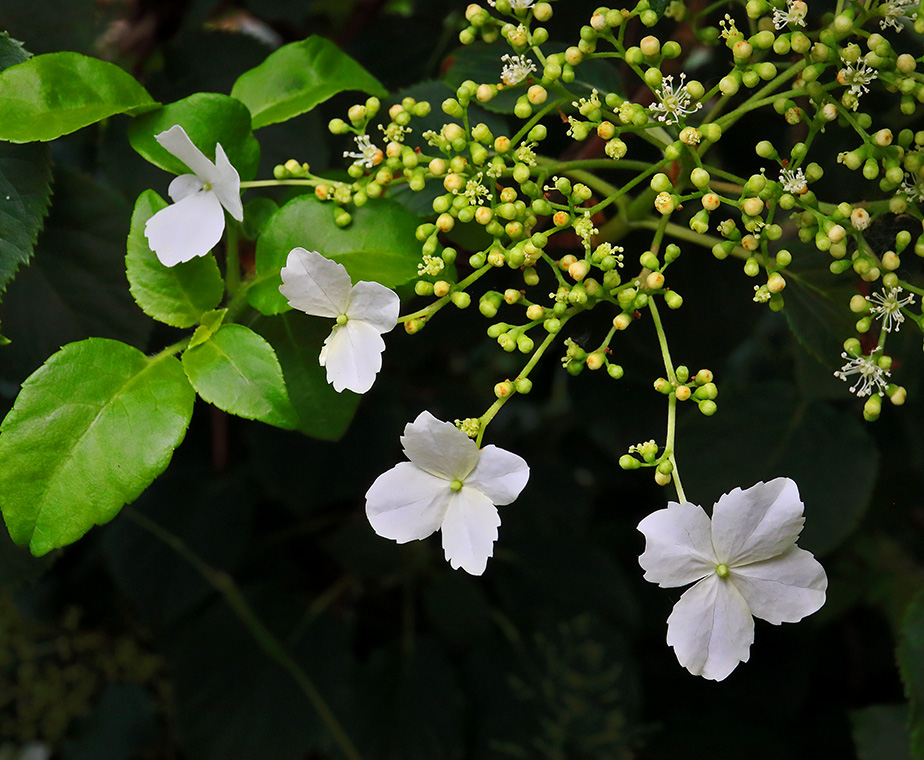
Hydrangea petiolaris

NB: A note for WordPress Reader users – you need to click on the title of the post again to see the full photograph. (Otherwise you see just a tiny section!)

To me, white flowers with green foliage have a lovely fresh and cool look…something that would be welcome in all the recent hot weather. (Fortunately the temperatures have dropped a bit, but it’s still hotter than normal.)

The climbing Hydrangea petiolaris in the top picture has recently finished flowering. During June and early July its airy white flowers looked graceful alongside our shady seating area. It’s going to get too big for its space, so I ought to prune it back now the flowers are over. However, I like to leave some of the flowers to dry out so that I can photograph them in the frost. It’s hard to imagine frost right now, but it does look deliciously cool, as you can see below.

Frosted climbing hydrangea
Frosty flowers of climbing hydrangea, photographed in winter 2019.

We have just a few white flowers in our garden. It’s still a little early for the white Japanese anemones. These struggle a bit in the heat and do need watering to keep them going, so I’m not expecting great results from them this year. And I haven’t grown any of the white cosmos this year, so I’m rather missing it.

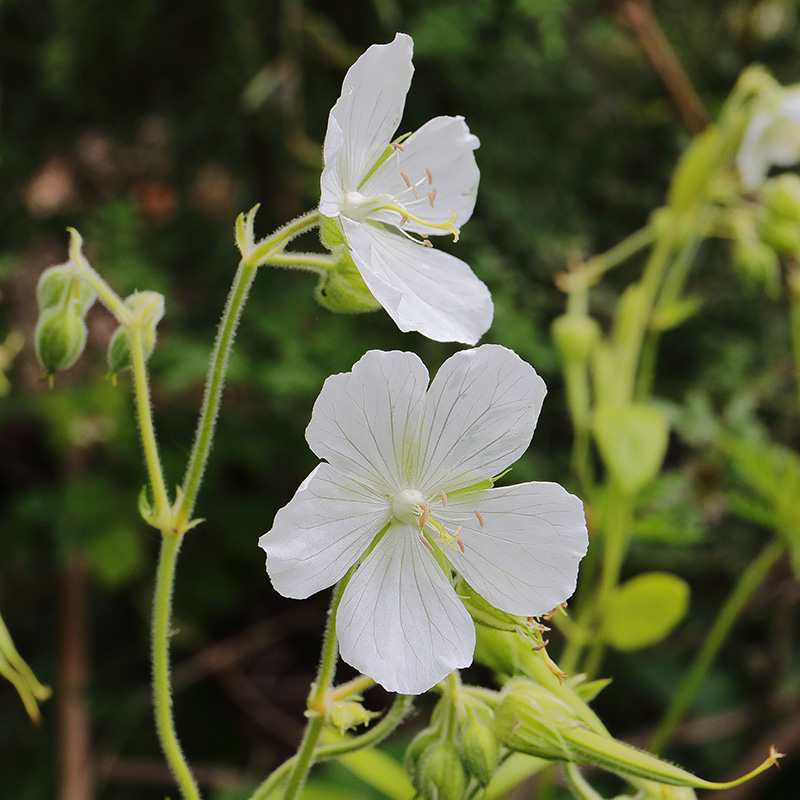
The white geranium below was originally planted years ago but has now managed to spread itself around the garden by self-seeding. It’s very welcome, so I hope it will continue it’s journey around the garden. Most of my geraniums form spreading clumps but this one seems so far to be much more compact. That’s great, because it means that it doesn’t cause much disruption to other plants and can fit itself into gaps quite easily.

white hardy geranium flowers
A white geranium (name unknown) that seeds itself around.

A plant that I’ve only started to notice recently is Gillenia trifoliata. The plant below was growing at Fullers Mill Garden, and being able to see it close up – rather than in a photo or on TV – made me realise how pretty and delicate the effect of the tiny white flowers is. If I can find space I’d like to grow it, but there’s already a list of plants I’d like to find room for…

Gillenia trifoliata flowers
Gillenia trifoliata (Bowman’s root)

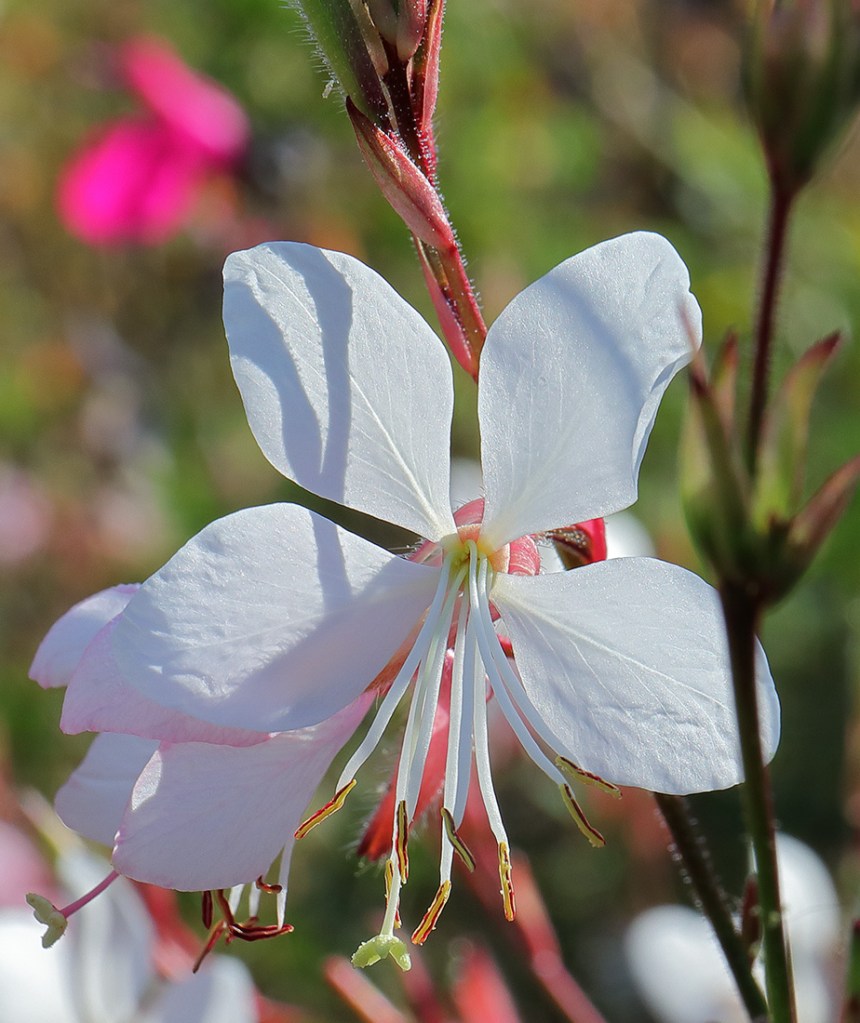
The Gillenia makes me think of the flowers of Gaura lindheimeri, which are just starting to come out in my garden and will last into the late autumn. Gaura is great here because it doesn’t take up a lot of room and the flowers weave themselves through and around the other plants. I’m looking forward to seeing their flowers dancing in the borders like little white butterflies very soon.

Flower of Gaura lindheimeri
The flowers of Gaura lindheimeri are just beginning to open.

Too Hot!

Leopard Lily (Lilium pardalinum)

NB: A note for WordPress Reader users – you need to click on the title of the post again to see the full photograph. (Otherwise you see just a tiny section!)

Flowers with bright, hot colours feel particularly appropriate to post after the hottest week I’ve ever experienced. The temperatures have been hotter than I could ever have imagined in the UK, reaching over 40C in a number of places. (Here in Suffolk it was a couple of degrees cooler, but still very difficult to cope with.)

We were lucky. Using fans to keep ourselves and our two cats reasonably cool worked. (Although there were a couple of panicky moments when the electricity went off. Fortunately it came back on both times, after just a few minutes.)

Elsewhere in in England (mostly in the London area) there were those who were desperately unlucky. In several places people have been made homeless as houses and possessions were burned to nothing but ash by wildfires. And I’m sure we’ve all seen the news about the dreadful wildfires that have been causing huge destruction across Europe.

Surely there cannot be any doubt that our climate is changing massively from what we are used to. Now is the time to do everything we can to care for our environment, our world and all that lives upon it. The changes we individually make may be small, but they all count. Together they help.

Daylily (Hemerocallis)
This photo: Daylily (Hemerocallis) Top photo: Leopard Lily

In the Pink

Clematis Hagley Hybrid

NB: A note for WordPress Reader users – you need to click on the title of the post again to see the full photograph. (Otherwise you see just a tiny section!)

A couple of weeks ago, the garden seemed to be full of blue and purple-blue flowers. Now it’s the turn of pink to come to the fore. The pink flowers growing here range from the softest and palest of shades (like last week’s water lily) to the most vivid of fuchsia-pinks. The shades here are somewhere in the middle.

Clematis ‘Hagley Hybrid’ (above) is one of the softer pinks, especially on a day when the sunlight is not very strong. (I’ve seen it look much brighter than this on a day with very bright sunlight. The age of the flower will make a difference too. The newly-opened flowers are a little brighter.)

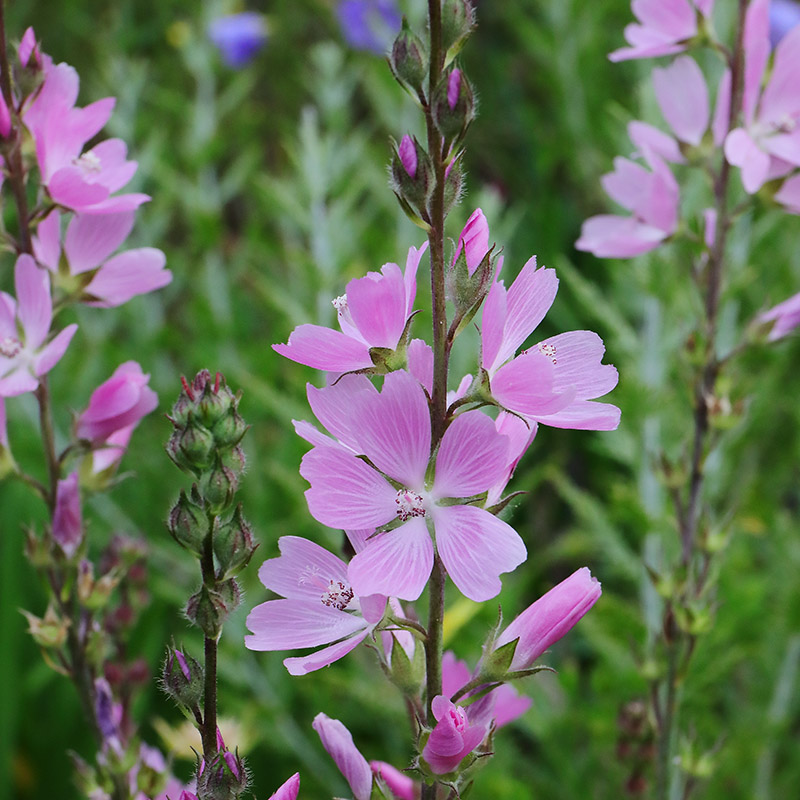
Sidalcea 'Party Girl' (prairie mallow)
Sidalcea ‘Party Girl’ (prairie mallow)

Another soft pink is the little prairie mallow above. It is Sidalcea ‘Party Girl’. The flowers are small and delicate – each one measures just 5cm across. They’re like miniature hollyhocks, which makes me wonder what it would be like to have normal large hollyhocks nearby. The difference in scale could be a bit mind-boggling!

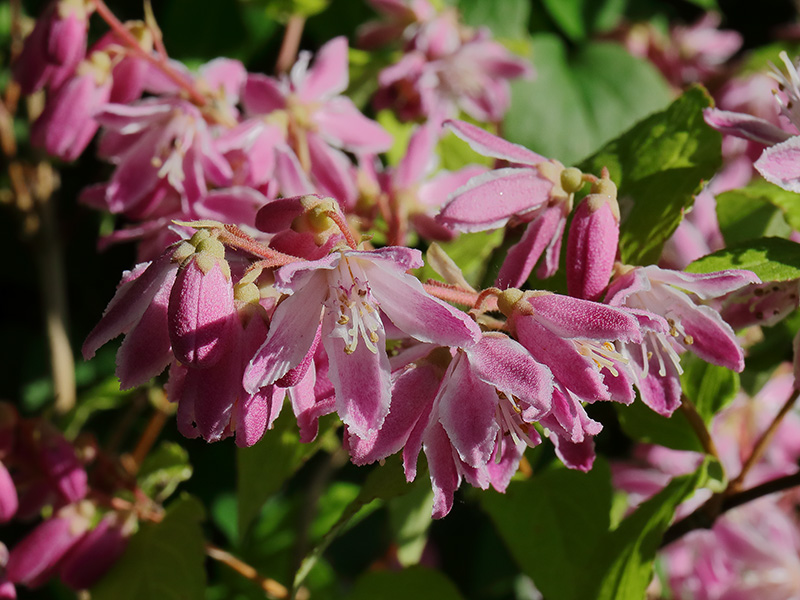
The pink of the deutzia below is a deeper and brighter shade than the others. I haven’t yet planted this shrub out, but had been wandering around the garden with it, looking to find it a home. (Like many gardeners, I too often buy a plant and then have to work out where I have room for it!)

Deutzia x hybrida Strawberry Fields

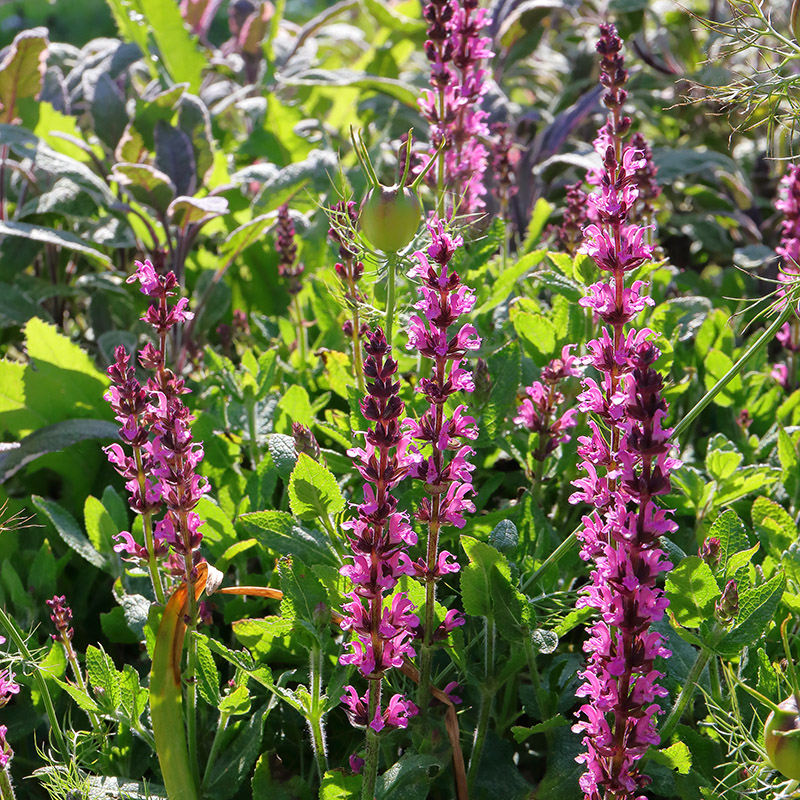
Wherever I eventually manage to plant the deutzia, I think it would look good with this pink salvia. (It’s ‘Rose Queen’.) The low evening sunlight shining through the pink flowers makes them glow with a rich pink which is very similar to the deutzia.

This low slanting light, whether it’s evening or early morning has a wonderful effect on the colours of plants. I’d love to be able to plant a border just so that it would catch the light at both the start and the end of the day. That’s giving me ideas about where I might plant the deutzia…

Salvia 'Rose Queen'
Salvia ‘Rose Queen’

A Velvet Touch

Rose 'Rhapsody in Blue'

NB: A note for WordPress Reader users – you need to click on the title of the post again to see the full photograph. (Otherwise you see just a tiny section!)

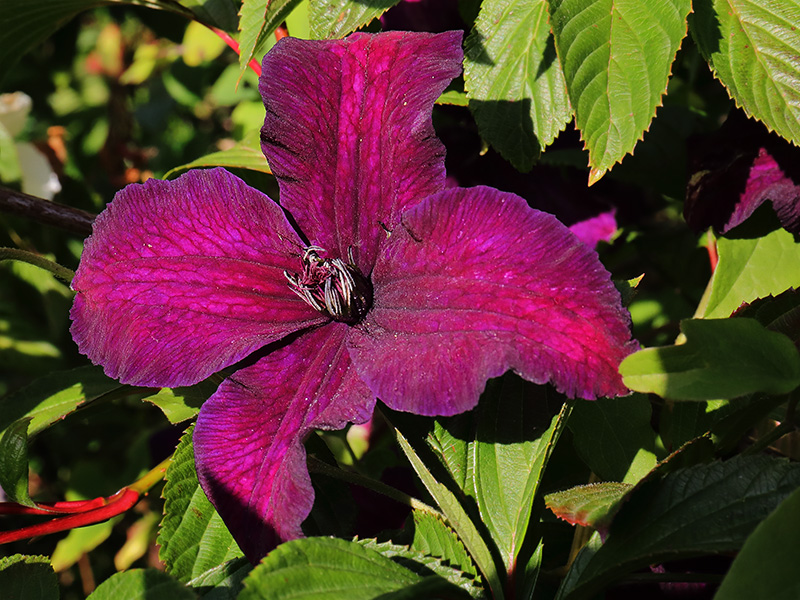
Some flowers have a very velvety look to their petals. The two plants in this post (rose ‘Rhapsody in Blue’ and clematis ‘Dark Eyes’) have especially dark and velvety flowers. But, having investigated, I can tell you that the flowers look a lot more like velvet than they actually feel. (They are, though, very soft to the touch.)

There was actually a study into the reasons for the velvety appearance of some petals. As I understand it, it’s all down to the dark colour of the flower, the shape of the cells within the petal and a low angle of light. (If you want to read all about it, you can find the report here.)

The feel of a petal or leaf is something that I tend not to think about very much when I’m planning what to plant. But there’s no doubt that textures add a stimulating element to a garden. The soft hairs on the flowers and leaves of pulsatilla (which you can see in an earlier blog post) are a great example of texture adding interest. While some plants are hairy, other plants are smooth – like the star-shaped flowers of Allium christophii, which have an almost metallic-looking sheen.

There’s lots of choice amongst the flowers that have a velvety lustre to their petals. The most obvious may be the classic red rose. Then, for instance, there are deep blue delphiniums, dark-flowered pelargoniums and purple, crimson or almost black petunias. Or, in mid and late summer, there are the rich, dark purples and reds of dahlias and the bright orange of tithonia (Mexican sunflower), which you can see here. All of them contribute something extra to the garden. They give that feeling of luxury, a suggestion of the opulence of rich fabrics, and the engagement of the sometimes-neglected sense of touch.

Dark red clematis
Clematis ‘Dark Eyes’

Beautiful Blues

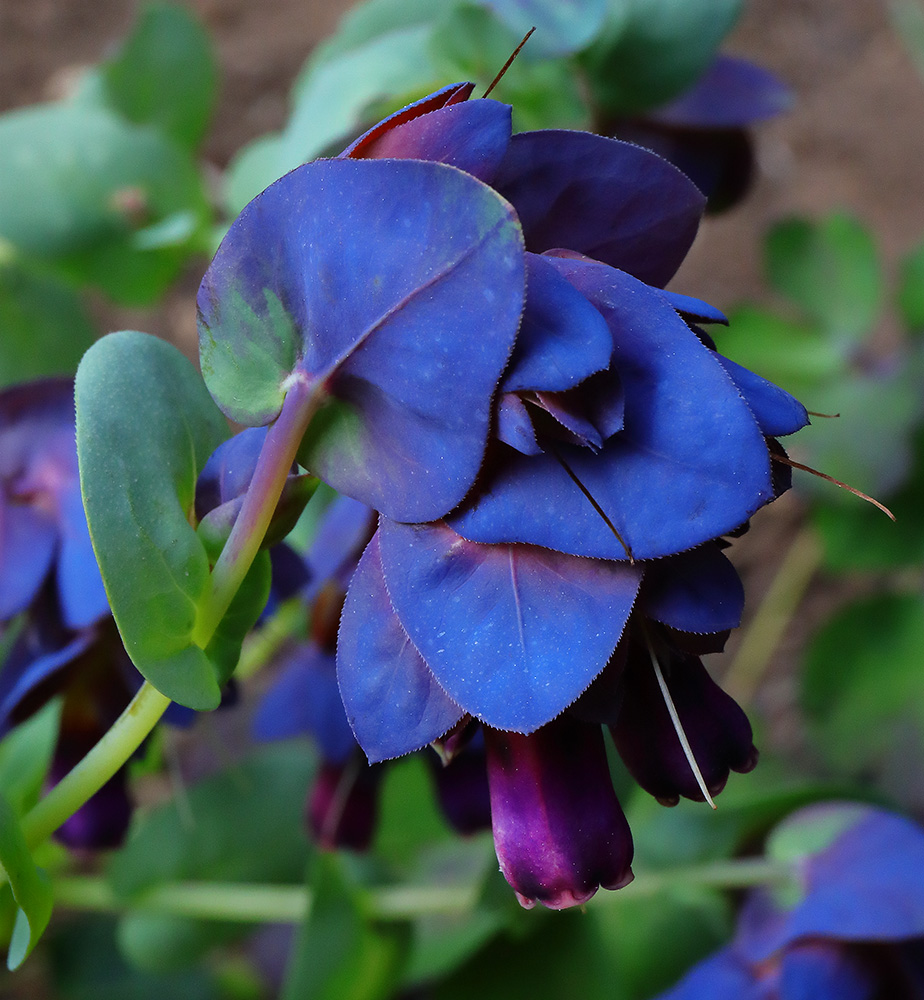
Cerinthe major 'Purpurascens'

NB: A note for WordPress Reader users – you need to click on the title of the post again to see the full photograph. (Otherwise you see just a tiny section!)

As summer begins, there are a number of blue flowers appearing in the garden. My favourite colours are blues and purples, so it feels like a bit of a treat for me. The flowers I like best are those where the blue shades into a different blue or into a purple. There’s something about a colour being slightly mixed, rather than a solid shade, that makes it more interesting to see.

The plant above is Cerinthe major ‘Purpurascens’, aka Honeywort (or the ‘Blue Shrimp Plant’ in the USA). It’s normally an annual, but if the winter is mild enough it can survive into the next year. That’s what has happened here, so this year we have a much larger plant than we usually would.

This plant is one I particularly like for the deep blue bracts that surround the small purple flowers. The blue bracts are made more attractive by the way they are tinted with purple or green – here even the stem has a blush of purple. The colouring is more intense when it’s cold, so this has been at its best over the cool spring months. I’ll be interested to see if the colours become paler as the summer weather heats up.

Baptisia australis

A simpler colouring is that of the Baptisia australis or ‘False Indigo’ (above). Less complex than the Cerinthe maybe, but it is a lovely shade of deep violet-purple that I find quite irresistible. It’s an easy plant to grow here because it copes well with drought and it is often suggested as an alternative to lupins. For me, the Baptisia is certainly the easier choice, as lupins struggle very unhappily here and I’ve managed to lose a few.

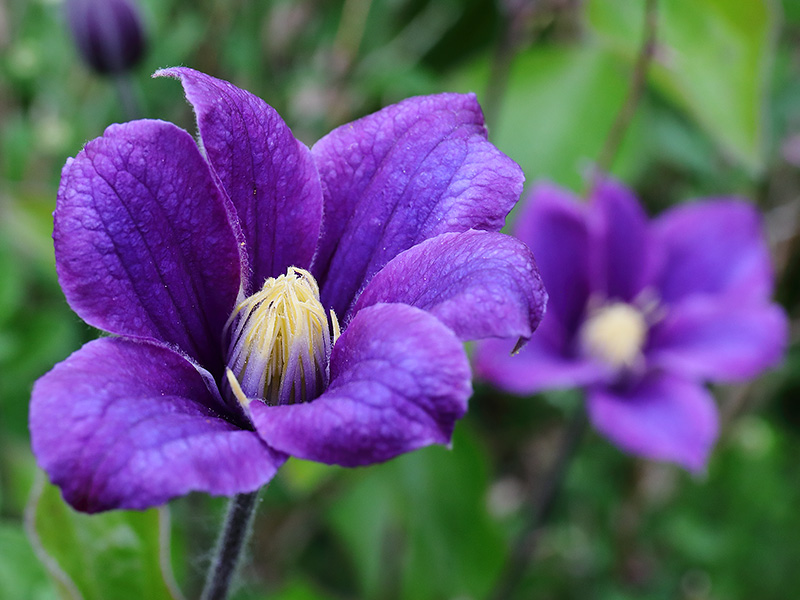
Clematis ‘Arabella’ (below) has flowers that are a mauve shade when they first open, gradually becoming more blue as they age. So the one plant can have a wide variety of flowers at the same time. (In fact, when I looked at it today, for a moment I thought there was a purple clematis growing beside it, so dark were the newest flowers.) The soft blending of mauve and blue shades in Arabella’s petals delights me. That means there’s good chance that I’ll be trying to grow this small clematis elsewhere in the garden too.

Soon, these beauties will be joined by different shades of blue, as the flowers of campanulas, scabious, geraniums and catanache start to open. I’m looking forward to some summer blues!

Clematis Arabella

It’s time for Irises!

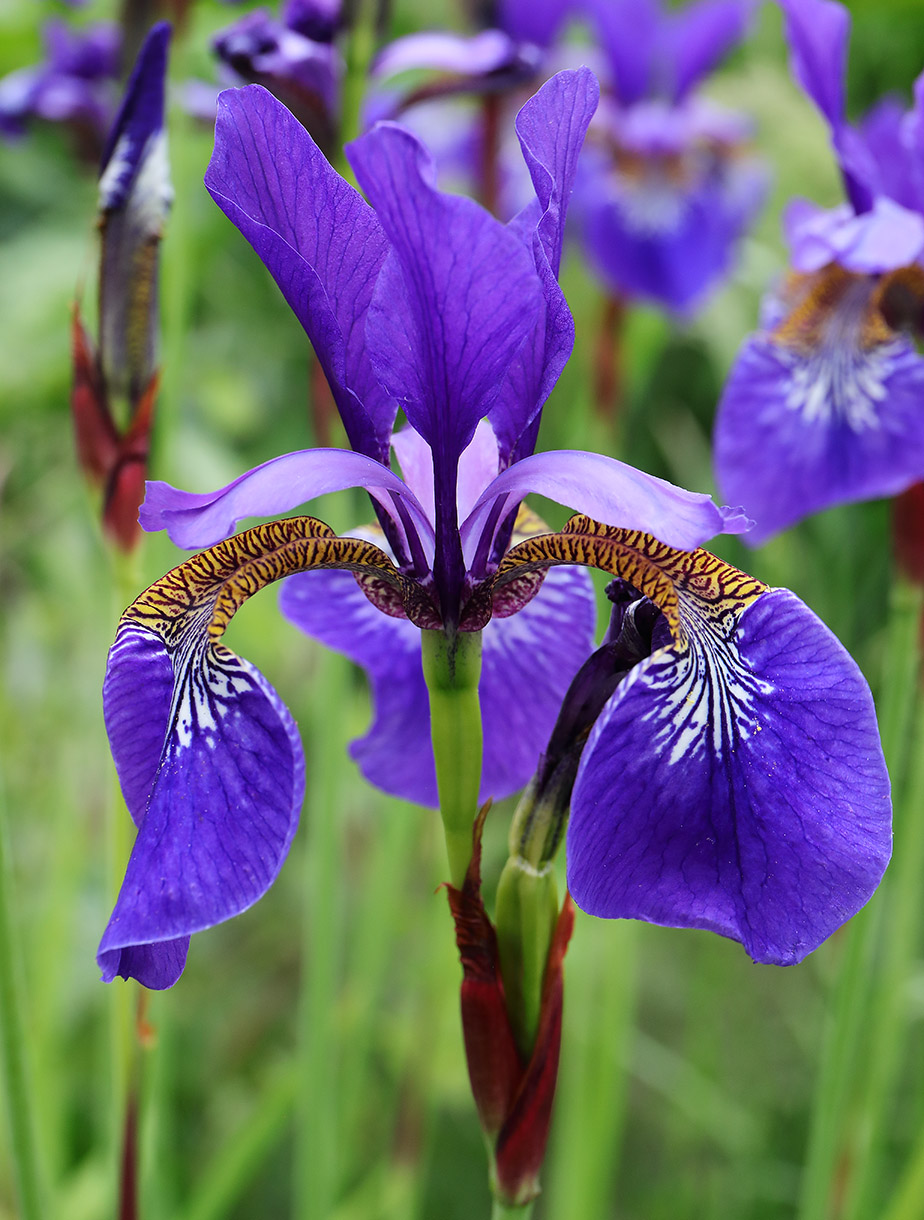
Iris sibirica

NB: A note for WordPress Reader users – you need to click on the title of the post again to see the full photograph. (Otherwise you see just a tiny section!)

I enjoy this time of year because there are so many lovely flowers around. Some in my own garden, others in the gardens of friends and neighbours. And of course, there are the temptations of nurseries and garden centres.

One of the flowers that has attracted me most over the years is the iris. There’s a wonderful array of flowers of all sorts of colours, markings and sizes and I’d love to grow lots of them. But where would I put them? For now, I’ll just have to settle for having a few that I especially like, and that are easy to grow.

Siberian irises are amongst my favourites. The flower in the top photograph was simply labelled ‘Iris sibirica’, so I have no idea of the cultivar. I do know that the iris in the bottom photo is ‘Currier’ and I also have ‘Silver Edge’. (I photographed ‘Silver Edge’ for this post last spring.)

With all of these Siberian irises, a large part of the appeal for me is the intricate veining on the lower petals (actually sepals, known as ‘falls’). The combination of lines and spots is irresistible as a subject to photograph. Of course they are there to serve a more important purpose – that of creating a well-signposted route for bees to the flower’s pollen. Lucky for us that practicality in nature can be so beautiful!

Iris sibirica 'Currier'
Iris sibirica ‘Currier’

Transitory Glories: Tulips (2)

NB: A note for WordPress Reader users – you need to click on the title of the post again to see the full photograph. (Otherwise you see just a tiny section!)

As is usual here in spring, a lot of the flowers pass me by all too quickly. Sometimes I feel that I barely have time to notice one or two of them before they are already going over. (This year it was the camassias that have disappeared too soon for me. If I had been paying more attention I would have taken some photographs of them.)

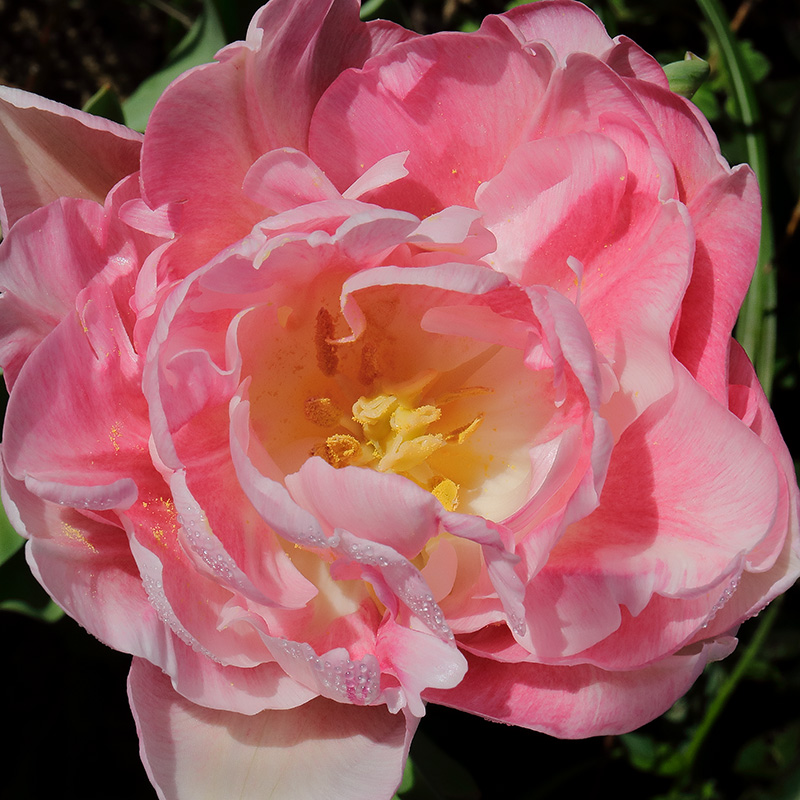
Luckily, that hasn’t applied to the tulips because they’re near where I’ve been working in the garden for the last few weeks. Even then, their departure feels sudden and many have already been deadheaded. For a little while the flowers are eye-catching in their glorious colours, flaunting their bright petals and demanding to be noticed. They are already mostly gone and I’m left wondering how the time has managed to pass so quickly!

Tulip ‘Upstar’

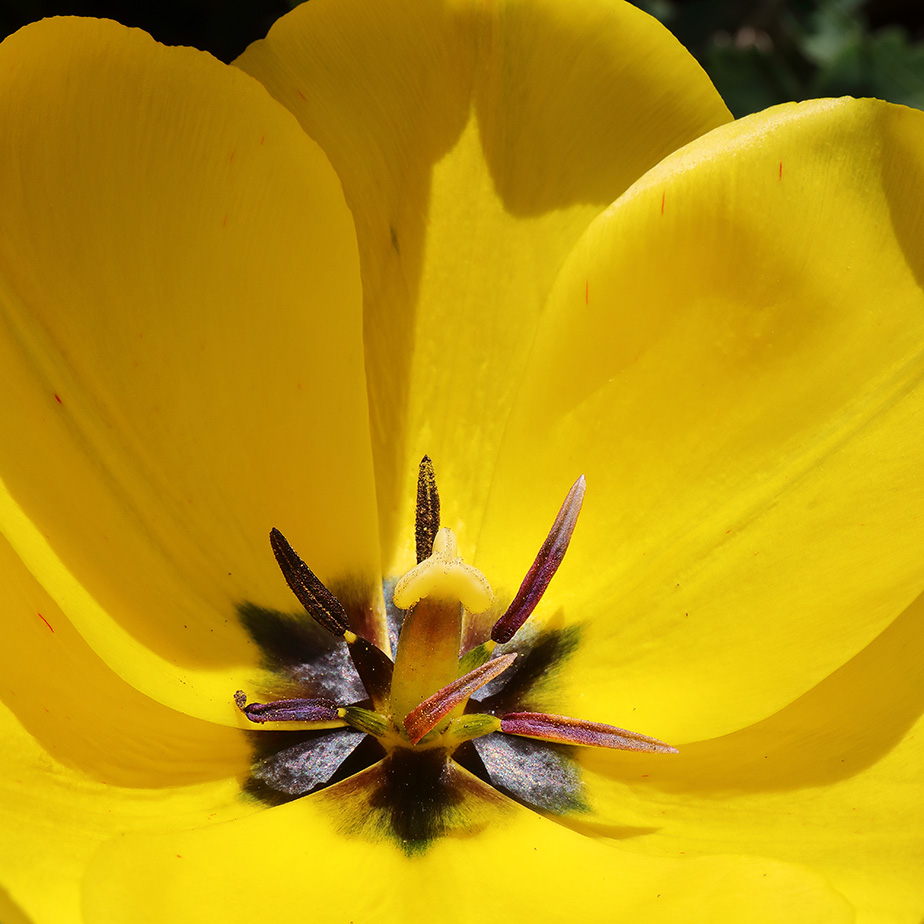
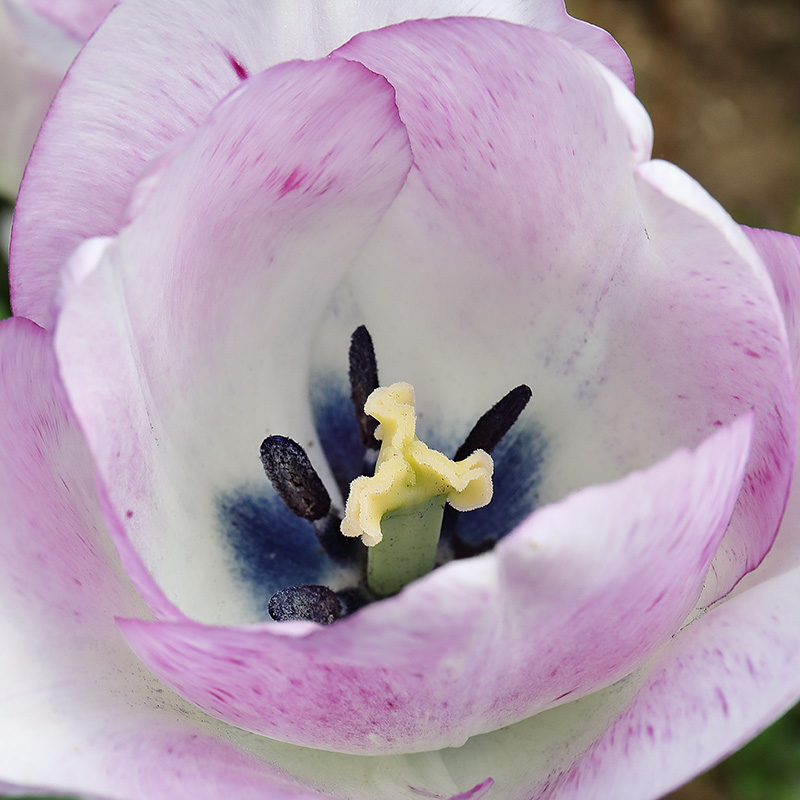
I guess if there’s a moral to that, it’s to make sure you stop and enjoy your garden at every stage through the year…something I’m still learning to do. The good thing is that these tulips have come back again for several years. (The ‘Upstar’ and ‘Shirley’ tulips have only been in the garden for three years, so I shall have to wait and see how long-lived they are. The yellow tulip has been in the garden for a very long time – they seem to last forever!)

I’ve been discouraged by tulips fizzling out quite quickly in the past, not realising that there are some that are just short-lived. Now I’m more likely to experiment so that I will have something new to photograph. And if they don’t last for many years, that just gives room for a new variety. Meanwhile, I’ll try to make sure I take the time to enjoy the flowers in the garden before they fade…and for those I do miss, there’s always next year!

Triumph tulip ‘Shirley’

Tulip Confusion

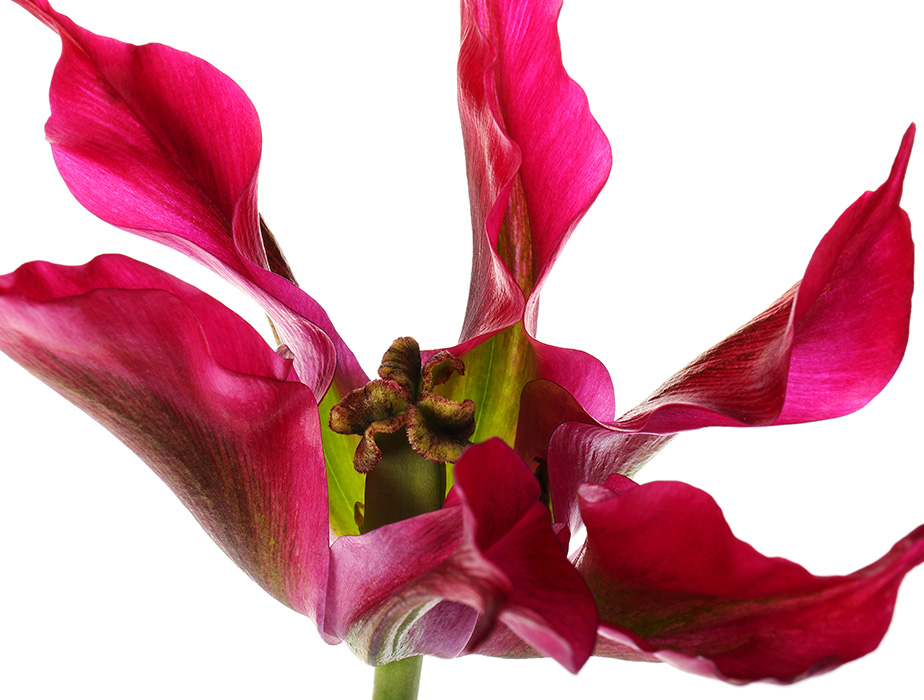
Red viridiflora tulip

NB: A note for WordPress Reader users – you need to click on the title of the post again to see the full photograph. (Otherwise you see just a tiny section!)

Packing flower bulbs must be a tricky job. If something goes awry and the wrong variety gets into a batch that’s being packed, how could you tell? So it’s not very surprising if something turns out to be different to what you thought you’d bought…like the tulip here. The pack was labelled ‘Hollywood Star’ but that tulip looks different to this one.

The flowers of Hollywood Star are much more red than the magenta here, and a different shape. They’re more the usual rounded tulip shape that you might expect. This one is different. It’s a lily-flowered tulip, with narrow petals that curve backwards. Happily for me, that has made this a more interesting flower to photograph because the petals have some lovely wavy curves. To me, the shapes they make suggest energy and a tendency to do their own thing. It also makes each flower slightly different from the next, so that gives more variety to my photographs.

This labelling mistake has turned out well for me. As a garden flower (rather than just a photographic subject), I find I prefer the unpredictability of this tulip over something more uniform. That makes me wonder if it’s good to sometimes have less control in the garden. Unexpected planting can certainly make life more interesting!

I still don’t know what this tulip is. There is a slight green marking at the base of the petals, so, like Hollywood Star, it is a viridiflora type. From looking at photos elsewhere, I think it’s probably ‘Doll’s Minuet, so if I want to grow more, that’s what I’ll look for. Will I end up with something different? Haha, maybe!

Red viridiflora tulip

Blossom Time (2)

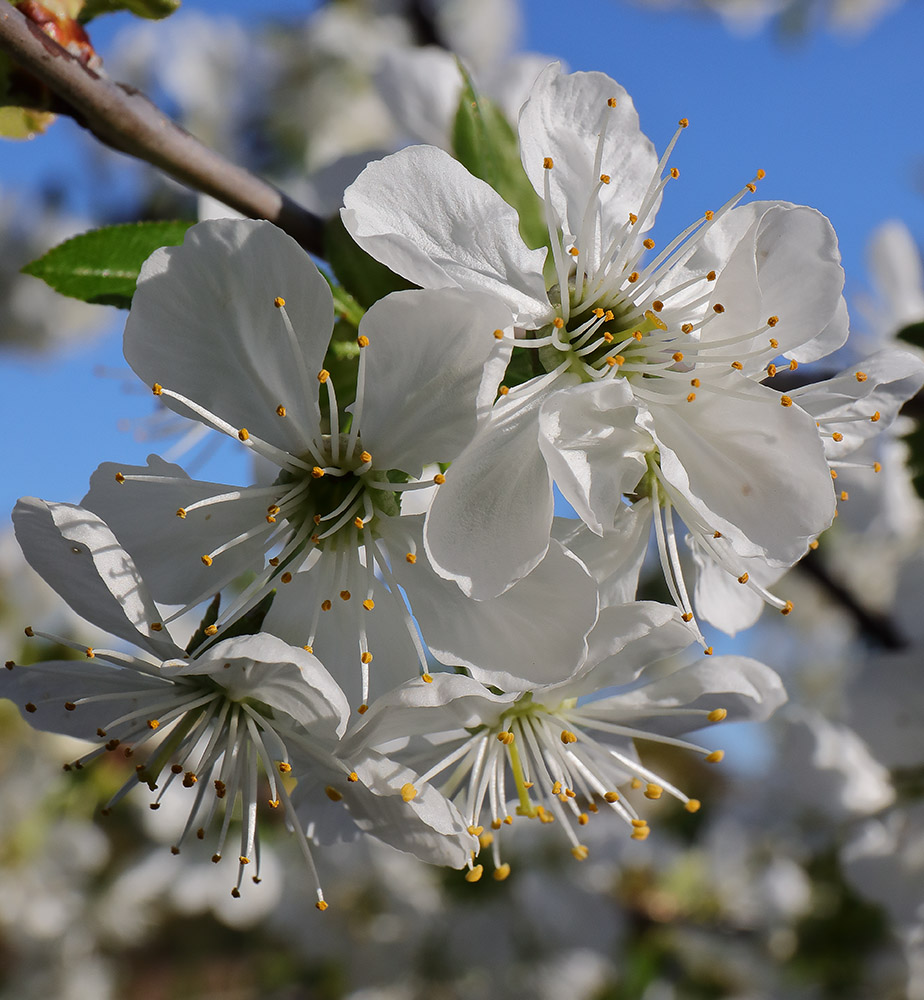
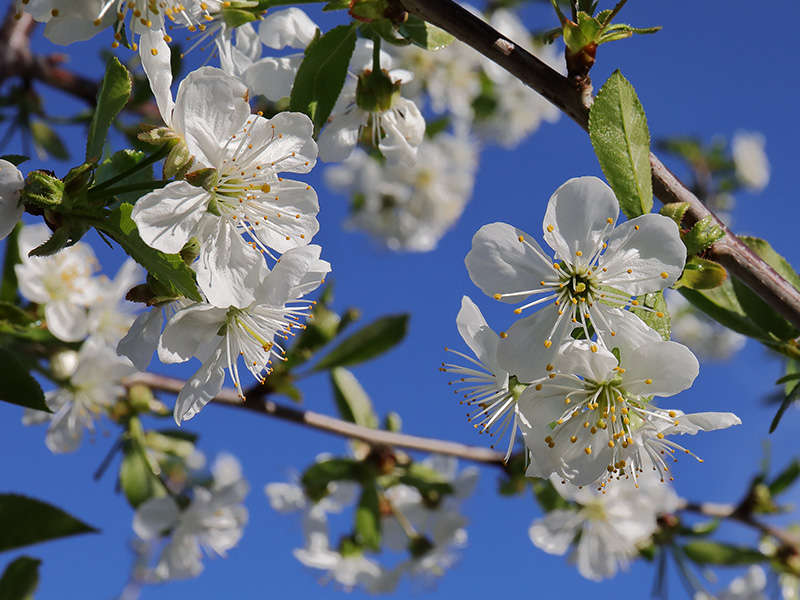
Cherry tree blossom

NB: A note for WordPress Reader users – you need to click on the title of the post again to see the full photograph. (Otherwise you see just a tiny section!)

This year the old cherry tree (‘Kanzan’) in our front garden has only about a quarter of the flowers it used to produce. It’s probably not going to survive a lot longer and I’ll miss the fluffy pink blossoms. (They’re double flowers, so not so good for bees – if I had chosen the tree, it would have been a single-flowered variety.)

While there may be less pink blossom, we do have lots of white cherry blossom in the garden on a young fruit tree. To me, the flowers are every bit as pretty as those of the ornamental varieties. Plus, you have the added bonus of fruit. (Or the blackbirds do, if you’re not fast enough off the mark!)

I’m not sure what this tree is now – probably a morello – because it was an impulse buy by my husband along with a plum tree. Not the best way to buy things, but I have to admit to doing the same thing with perennials. But if it is a morello, then it’s much less sour than I would expect. I like to eat them straight off the tree – but then I do like the sour cherries you get in Turkey too. Mmm!

Given how good the flower display on the fruit trees has been this year, I’m keen to somehow find a bit more space for fruit in the garden. Having some organic food of your own seems like a very good idea these days and this is a fairly easy way to do it. (But not always successful. The plum tree planted at the same time as the cherry has never yet produced fruit. It does look very pretty when it’s in flower though.)

Space may be the only problem with my plan. I have a pear tree that I bought as a bare-root plant and planted up into a large container. It’s still waiting for a home after a couple of years. (Good thing it’s in a big pot!) It should get planted out later this year, but first we have to move our greenhouse and then work out the best place for the pear. I’m looking forward to some fruit from it in the future!

You can see my post from last year about our ‘Kanzan’ cherry tree here: https://annmackay.blog/2021/05/02/frothy-pinks-cherry-blossom/

Cherry tree blossom