Rain At Last!

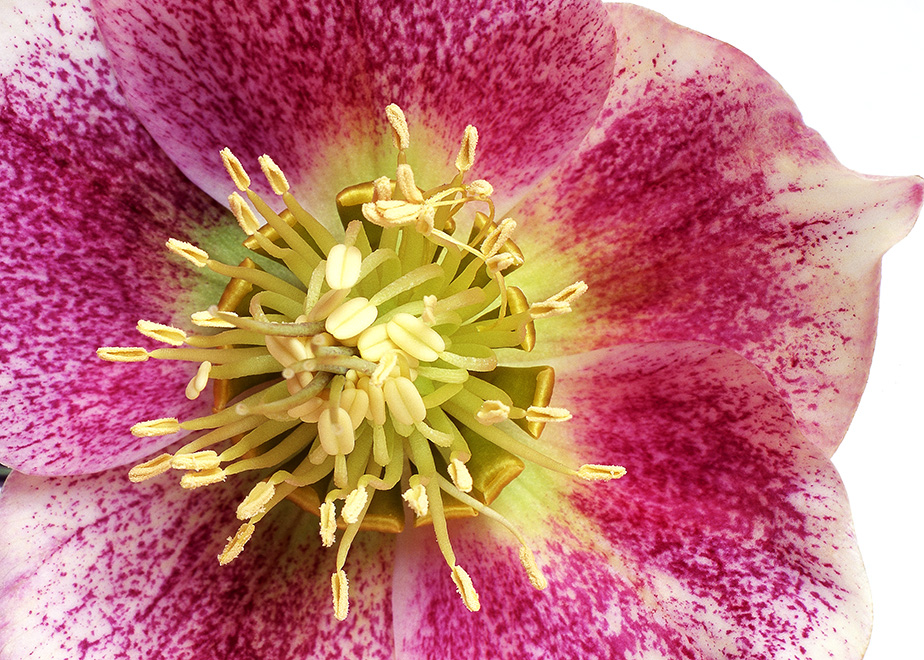
Japanese anemone 'September Charm'

It’s never been so good to see rain. We’re in Suffolk in the UK and this summer has been hotter and drier than any I’ve experienced before.

With record-breaking temperatures and no rain for many weeks, gardeners here have been frantically watering and worrying about whether their gardens would survive.

Somehow we’ve been lucky. Only a few of the plants in our garden have been badly affected.

One of these is the Japanese anemone ‘September Charm’. (Despite its name, it always starts to flower here by the end of July and finishes in August.) This year’s flowers are smaller and some of the leaves are wilting. But I haven’t watered it because it’s a rampant thug and I’m trying to discourage it from spreading everywhere. (Despite its ambitions to take over, it can stay because it’s a good subject to photograph.)

Another plant which is struggling, even though I water it, is a lovely blue veronica. I really hope it survives because the slim spires of flower work so well as a contrast to the other plant shapes in the border.

A careful eye is kept on our one bush hydrangea and so far it’s doing quite well, with just the occasional watering. (Bath-time for the tiny frogs that are living under it at the moment!) It might not be the most suitable plant for our hot, dry garden but I had to have it – the lacecap flowers are lovely to photograph.

(There are also a couple of climbing hydrangeas, but I never water them and they seem to do just fine.)

Many other plants have coped well with the drought. A hibiscus (‘Blue Bird’) has had very infrequent watering. (I have a sneaky dodge here. I’ve pushed a length of plastic pipe into the ground beside the rootball. Watering into the pipe means that the water is carried right down deep to the roots.)

Hibiscus 'Blue Bird' flower
Hibiscus ‘Blue Bird’ has flowered well this year.

Other happy plants include a number of trees and shrubs. (The mature ones seem to have had no problems.) I’ve been particularly impressed by a purple smoke bush, ceanothus, dark-leaved elders (‘Black Lace’ and ‘Black Beauty’), a Himalayan indigo and a cut-leaf lilac (Syringa x laciniata), all of which are still relatively young and have had no watering at all this summer.

Many of the smaller plants that have done well (agapanthus, sedums, salvias, gaura, Russian sage, Anthemis tinctoria, stipa tenuissima) were chosen after reading ‘Beth Chatto’s Gravel Garden’. This is a tremendously useful book which takes you season-by-season through everything you need to know about creating a garden that will survive drought and I can really recommend it.

Have you any tips for keeping a garden going through drought conditions? Any ideas, suggestions for good plants etc. would be very welcome in the comments…
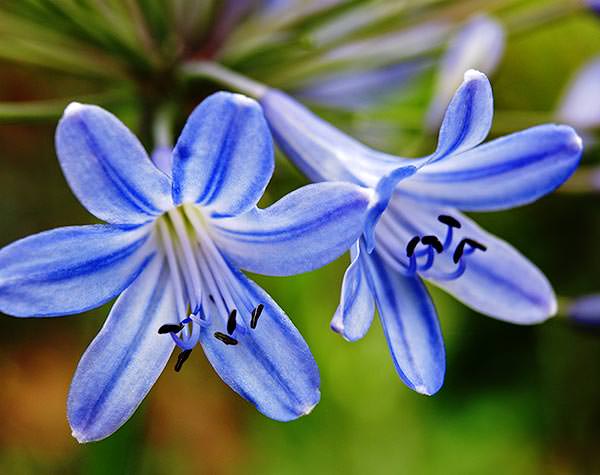
Blue agapanthus flowers
Agapanthus has done well despite the drought.

Sunny Yellows

I don’t have a lot of yellow in my garden.

There’s some – we have a winter-flowering jasmine and following that there are the spring bulbs. (A few crocuses, lots more daffodils and some bright yellow tulips that have probably been in the garden for many years.)

Later, as different flowers open, the garden turns largely lilac, pink, and blue. There are also lots of deep reds, bronzes and browns. These darker shades could seem a bit sombre, so a touch of yellow in summer enlivens the whole garden.

The richest and most intense of the yellows in the garden here is the rudbekia. It’s a plant that I’ve lost in the past because it prefers a moist soil and our rainfall in this part of the UK (Suffolk) is very low. During the drought this year, I’m having to keep it well-watered. Fingers crossed that this one will survive!

Easier yellows have included a potentilla and the little daisy flowers of Anthemis tinctoria ‘E. C. Buxton’, both of which have produced a mass of flowers over a long period. Easier still is the evening primrose, because it self-seeds generously and just pops up wherever it feels like it. It’s a delight to come across the unexpected pale gleam of its flowers as night begins to fall.

Another easy way to add some yellow is to simply buy a few plants in pots. I’ve done this when I’ve spotted something I want to photograph. (Oh, that happens a lot!)

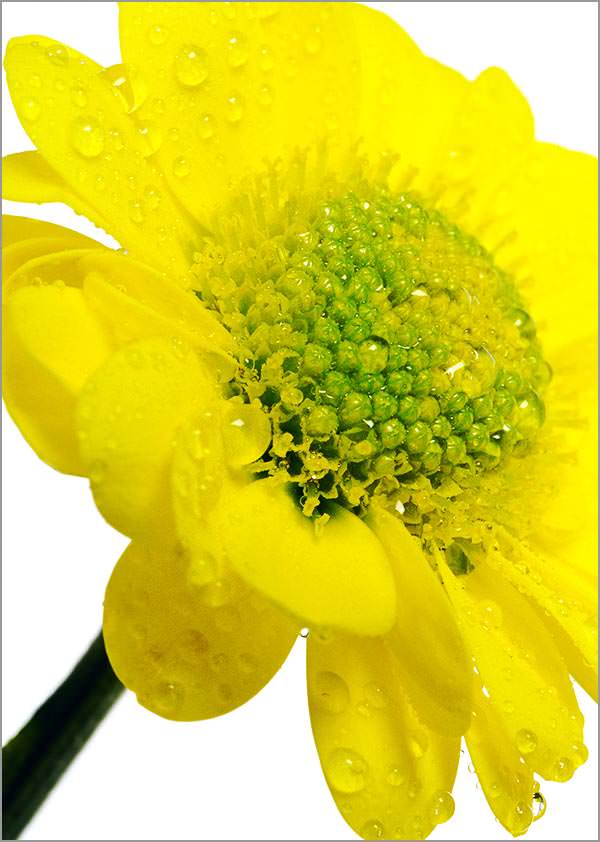
yellow chrysanthemum with water drops
Chrysanthemum grown in a pot to photograph

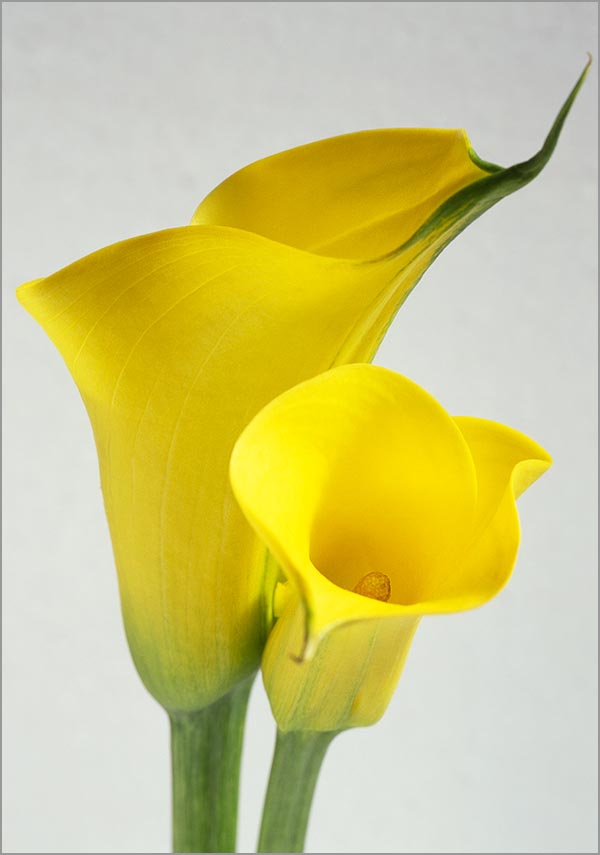
The daisy flowers of chrysanthemums and the elegant flowers of calla lilies are inviting subjects to photograph. And the yellow of the flowers here makes a change from the pinks, blues and purples that I more often have available for my photography.

yellow calla lilies
I enjoy photographing calla lilies

For the future, there’s a yellow flower that I’d like to grow here that will be the cause of a lot more work than any of the others. A waterlily. (Of course, I like to photograph waterlilies in other colours too.)

First, I’m going to have to build a pond….but that’s a project for the autumn and early winter because the ground is now rock hard. (We haven’t had a drop of rain in many weeks and there’s none forecast for the next couple of weeks either.)

I think the work will be well worth it, though. (But my back will probably disagree!) For I do love pond plants, especially waterlilies.

yellow waterlily
I saved my favourite for last!

I hope you enjoyed this little bit of sunshine!

A Summer Pleasure

One of the pleasures of summertime is spending a lazy afternoon wandering around someone else’s garden.

Garden-visiting is a source of inspiration for me. It gives me ideas for how I can improve my own garden. (Seeing new plant combinations, and even just the size that mature plants can get to, is tremendously helpful.) And – in many ways more important for me – it allows me to see plants that I would like to have growing in my own garden so that I can photograph them.

My hubby and I had the chance to spend a couple of days staying at Huntingdon (in Cambridgeshire) this week, so we took the chance to pay a visit to the garden at The Manor in Hemingford Grey.

The Manor at Hemingford Grey is said to be one of England’s oldest continuously-inhabited houses. Building was begun by the Normans in the 1130s. (You can see the evidence of this on one side of the house where the windows have the typical Norman building-style that you can see on old churches. Look out for the round-headed window with it’s zig-zag ornamentation in stone above. Lower down on the same wall you can also see a narrow slit of a window…just like you might find on an old castle wall.)

We entered the garden from the path along the River Ouse, crossing a lawn by walking along a path bordered with topiary yews to reach the house itself. Around the house, the garden looked, to me, like a cottage garden on a big scale. It felt relaxed and welcoming in its informality – just the place to put visitors at their ease.

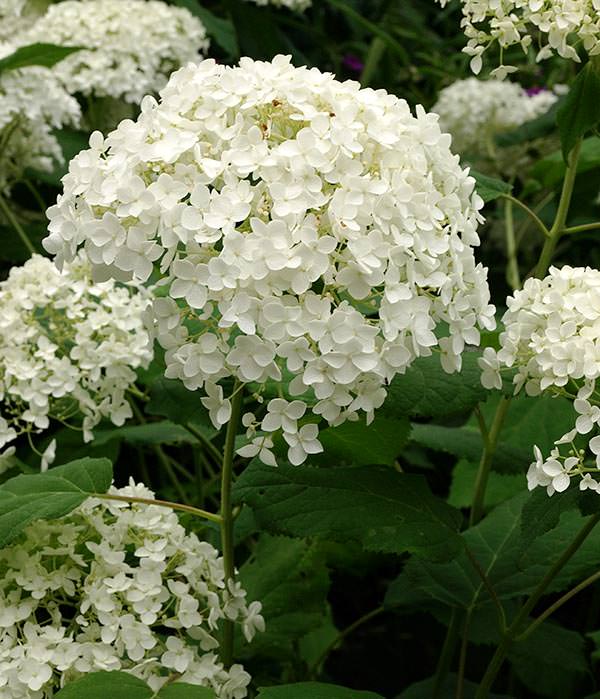
white hydrangea
White hydrangeas add a dreamy softness to the planting

Visiting in mid-July meant that the roses that the garden is well-known for were over and the flower borders were taking on a late-summer feel. Some areas were bright with the reds and yellows of crocosmias and rudbekias, while other areas were more delicate, with plants such as hydrangeas and daucus carota (wild carrot) adding a more romantic feel.

yellow rudbekia at the Manor, Hemingford Grey
Bright rudbekias gave a sunny touch to the borders

I enjoyed meandering around the garden with camera in hand. Photographing flowers in a garden that you’re visiting is more difficult than it would be in your own garden. You can’t use a tripod, so a macro lens isn’t ideal, nor do you have any control over lighting or the placing of the plant. So for me, the camera is more of a notebook-tool when I’m garden-visiting. It lets me see what plants appeal to me as future subjects and what their possibilities may be. (And it fuels my plant-buying too!)

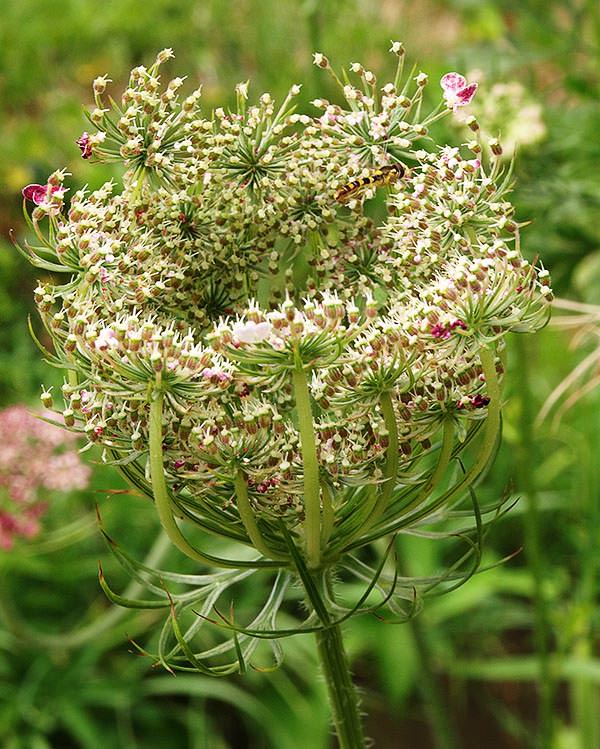
Daucus carota (wild carrot)
Daucus carota (wild carrot) is a plant that I want to grow in my own garden.

One of the plants that really caught my eye was the wild carrot (Daucus carota). It is a wonderful shape for photographing and would repay the effort of using a proper macro lens and a good hefty tripod. I have already sown a few plants, which are still tiny and won’t flower until next year. So it was interesting to see the full-grown plant here and to see just how lovely the structure and textures of the plant are. (I think they were probably growing the same variety as I have sown – ‘Dara’, which produces flowers in pink, burgundy-red and white and gives a beautifully delicate effect.)

It’s lovely to visit a garden and see plants through someone else’s eyes,  to see their vision for the space within their garden, and to see their own ways of combining plants. This is a garden that I’ll make the effort to come back to again – hopefully timing a visit so that I can see their wonderful collection of irises and then again so that I can see their roses.

We could have visited the house as well as the garden and will do next time. (Visits to the house need to be booked beforehand.) Many people come to see the house because it is the setting for the series of children’s books about ‘Green Knowe’ by Lucy Boston. Her daughter-in-law, Diana Boston, gives a tour of the house that sounds both charming and highly entertaining and would be an essential for fans of the Green Knowe books.

The Manor at Hemingford Grey has a website, which you can see here:  https://www.greenknowe.co.uk/

Astrantia – A Pretty Flower With An Intriguing Past

In last week’s post, I said that a flower’s structure is one of the main things that makes me want to photograph it.

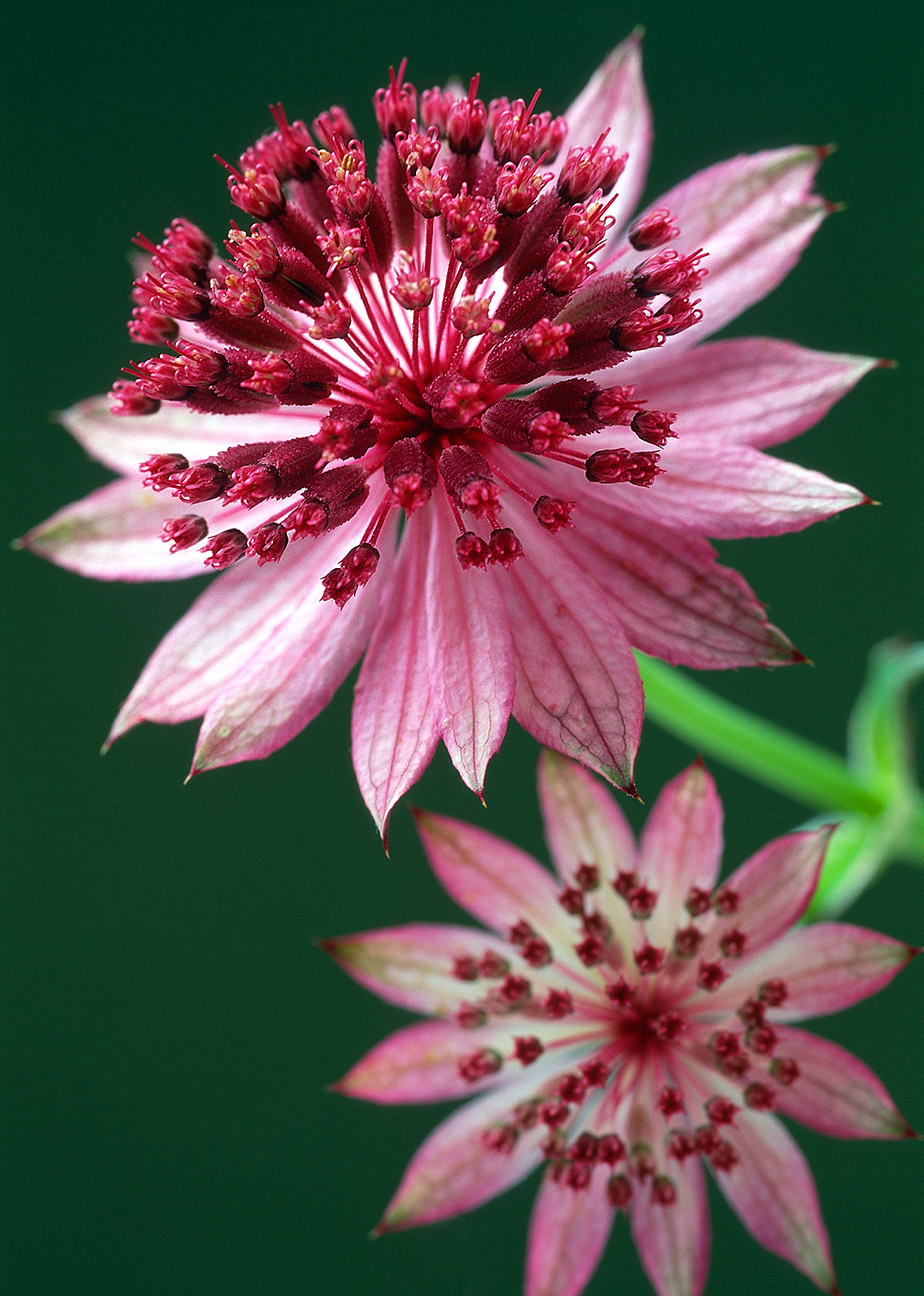
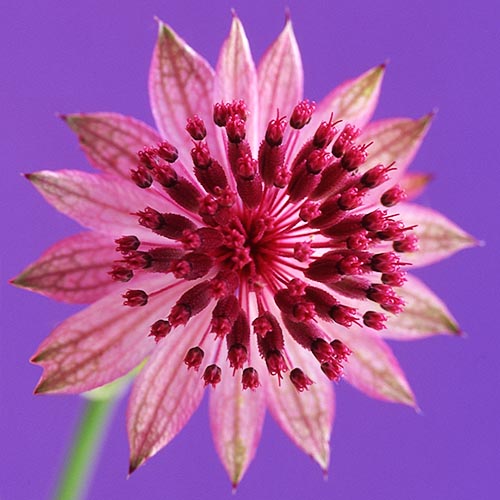
Astrantias are a good example of this. The shapes created by the outer ruff of petal-like bracts and the inner ‘pincushion’ of tiny flowers make it irresistible to me and my camera.

The astrantia flower offers plenty of detail to photograph. The inner pincushion of flowers has stamens that are like little threads. Just behind each minute flower is a ribbed part that looks like a miniature corn-cob – this will eventually become the seed.

Behind the flowers, the papery bracts are delicately veined with pink or green. Choosing to either bring these veins into sharp focus or to let them blur softly into the background allows for a different feel to the resulting photograph. To take advantage of this, I usually make a series of photographs. Experimenting with different depths of focus and photographing from varied angles is a very pleasant way to spend a morning and it’s ever so easy for time to just pass me by…

The shape of the astrantia flower has given it one of it’s common names – ‘Hattie’s Pincushion’. Who Hattie was, I have absolutely no idea. But it’s a sweet little flower to have as the last trace of her memory.

Astrantia’s other common name is ‘Masterwort’ and it’s this name that you find in historical references.

As ‘Masterwort’, astrantia was believed to have a number of medicinal uses. In ‘Culpeper’s Complete Herbal’, Nicholas Culpeper describes many ways that it could help his patients.

Maladies ranged from ‘all cold griefs and diseases, both of the stomach and body’, to cleansing and healing wounds, and preventing rheumatism and gout. Culpeper also suggests that it should be taken with wine to ‘extract much water and phlegm from the brain, purging and easing it from what oppresses it’.

However, I really wouldn’t recommend trying astrantia as a remedy for any of the ills that Culpeper mentions. His herbal was completed in 1653 and medicine has changed a bit since then!

Nowadays, being ‘a pretty face’ is quite enough for astrantia. It has become popular with garden designers and is easy to grow. Since astrantias prefer moist soil, I find that I need to keep them watered in my dry Suffolk garden. But they grow happily in shade and mix beautifully with other plants. (I think they’d look great combined with grasses, so I plan to try them with Stipa tenuissima next year.) For many gardeners, perhaps the best thing about astrantias is that slugs don’t seem to eat them. Yes, a plant that’s pretty much slug-proof – how wonderful!

Pink astrantia
Astrantias can be pink, red or white.

A Photographer’s Garden

As both a photographer and a gardener, obviously I tend to choose plants that I think will make a good photograph. The flowers I choose are often fairly large with a complex structure or interesting markings – something to hold the interest of the viewer.

It probably won’t take you long to spot my favourites on this blog. Passionflowers, hellebores, clematis, tulips and alliums are just a few of the flowers that give me the urge to grab my camera. (And, um, a strong urge to visit garden centres too!)

Buying plants to photograph means that I’ll have plenty of subjects for pictures. But buying one each of these plants won’t add up to good garden design. Instead, if I don’t restrain my plant-hunting, I’ll end up with a very bitty-looking garden.

Of course, the remedy is simple. We’re told to plant in groups of three or five, or in drifts if we’re lucky enough to have the space. Yeah, fine! That just gets a bit expensive at the garden centre….

Luckily, lots of the plants I’ve chosen are easy to propagate or else like to spread or seed themselves about. These plants are gradually becoming the backbone of my garden and they make it look a bit more cohesive.

There’s a snag here though. (There would be!) Some plants are getting just a bit too enthusiastic. Tall red scabious are getting absolutely everywhere, the geraniums are ruthlessly trying to smother the young astrantia plants nearby, and Japanese anemones are doing their best to take over the entire garden.

It appears that this photographer’s garden is going to be a constant balancing act. (And some of the more thuggish plants will have to be forced to mind their manners. That may take quite a bit of effort on my part.)

I hope you have the chance to enjoy a garden in this wonderful weather.

My Favourite Source of Inspiration

garden border in summer

I’ve always loved gardens. Early morning in summer is the best time in mine. It’s still peaceful then, and the demands of the day can be ignored for a little while.

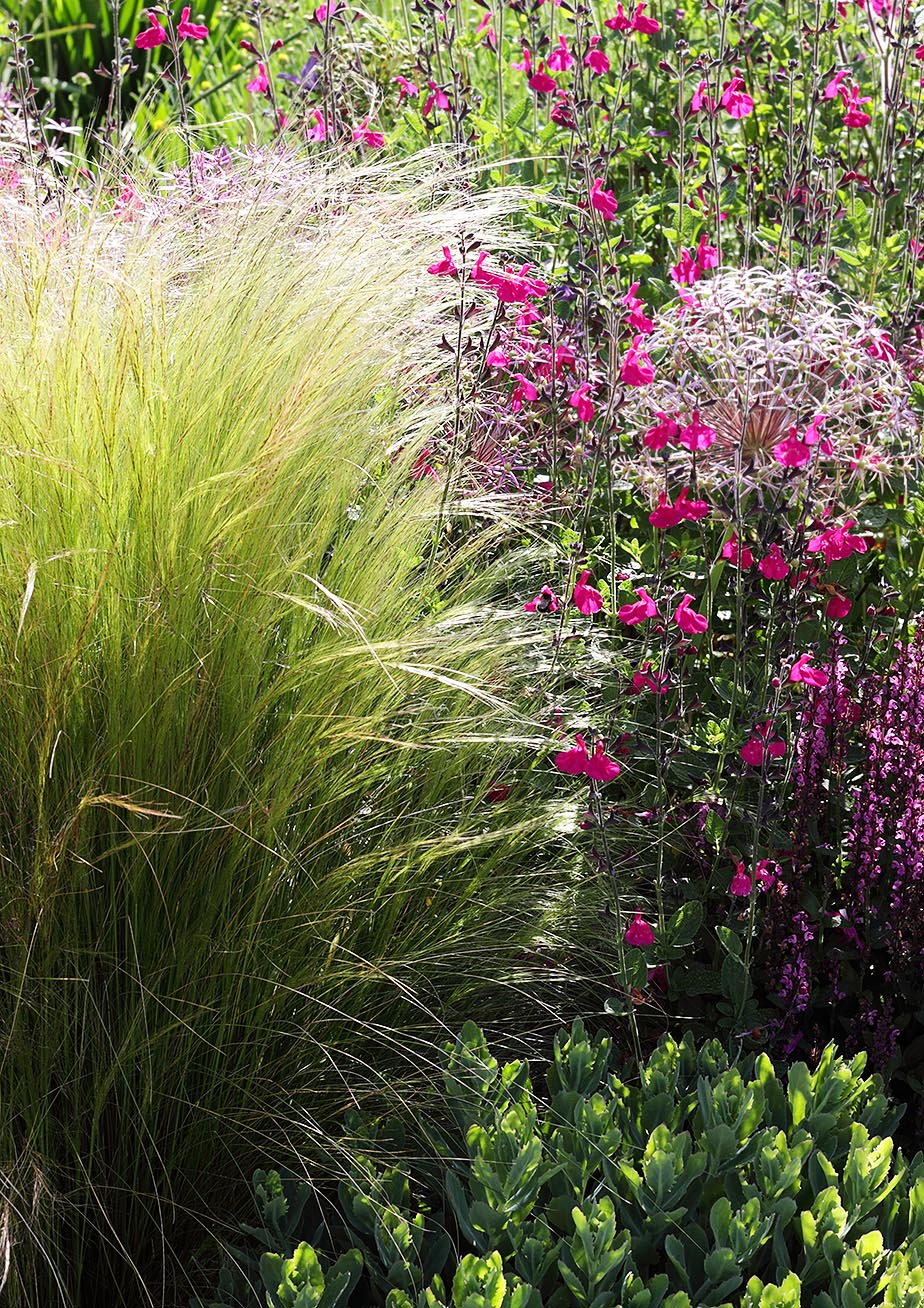
Part of what makes it feel so special to me is the quality of the light at that time of day. It hasn’t yet got the bright glare that it will have later on. Instead, the light slants into the garden, picking out the textures of soft, feathery grass heads and glowing through the translucent petals of flowers. It brings a feeling of joy.

I’m certainly not an expert gardener, so it feels like a small miracle when plants grow well. (Especially if they haven’t had the care they should!) Self-seeded ”babies” are an excitement and sometimes a mystery…

sweet pea and aster flowers
Sweet peas and asters grown for a photograph

There are failures too, and there are always plenty of weeds, but somehow the garden always feels like a place of hope.

From childhood, I’ve been attracted by the look of plants. Not just for their colours, but for their textures and their structures too. (Think of the velvety petals of a petunia or of almost metallic-looking Allium christophii flowers.)

As I’ve grown older, my interest has widened to include the history of plants, the folklore, the stories told about them. (In general the relationship between man and plants. Probably because, for me, it represents the link between ourselves and nature. Because we are a part of nature too.)

There you have it – I’m a plant nut! (And always will be.) And yes, you may have found me out – photographing plants makes an excellent excuse for buying more!

clematis flower close-up
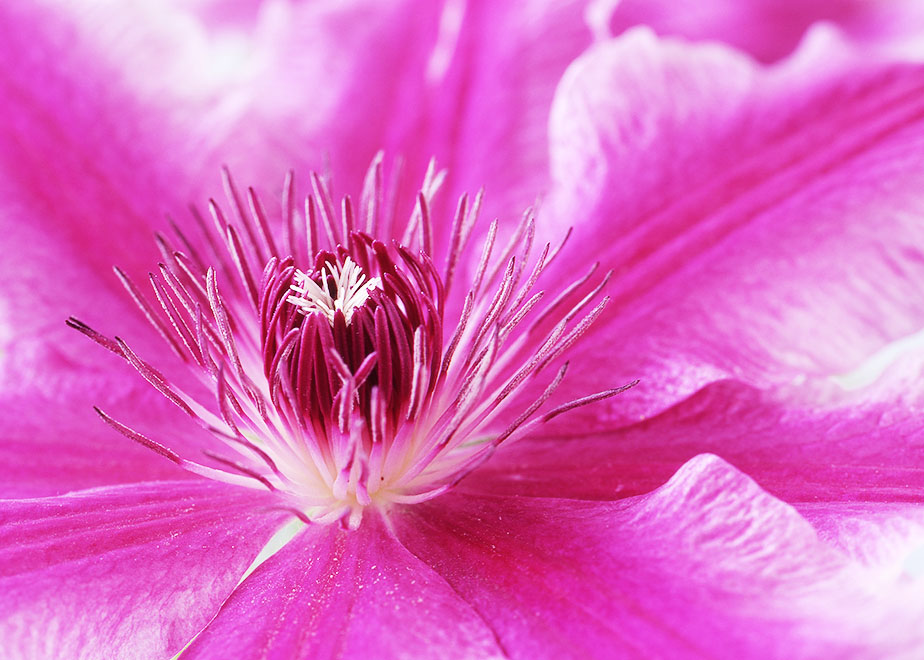
One of my favourites – a clematis

Is Dabbling Dangerous?

I’ve recently been enjoying the blog of the artist Danny Gregory. Reading through some of his older posts, I came across one from 2015 that seemed especially relevant to this blog and to my own creative process.

In the piece, entitled, ”The Dangers of Dabbling”, Danny Gregory says that although he admits to being ”a dabbler in all sorts of things”, we ought to avoid it. He tells us that we should concentrate on the work that we feel called to do, and not let ourselves be distracted by dabbling in other areas.

I do agree that if you want to be good at something, then you’ll need to focus and work hard. But does that mean that also trying out other things is necessarily bad? Can time spent on other interests bring something to your principal work? Is it possible for ”dabbling” to be a good thing?

As far as art is concerned, I believe it can be. Because it seems to me that, for mixed-media artists, experimenting and challenging yourself with new materials and methods is part of your artistic growth.

Several artists have particularly inspired me with their exciting combinations of techniques and materials.

Dorothy Simpson Krause wrote about bringing together collage, printmaking, photography and painting to create beautiful artists’ books in ”Book + Art”. (I love this book. It makes me want to try making my own artists’ books.)

Patti Roberts-Pizzuto creates delicate artworks by combining her drawings with stitching on paper, which is then dipped in beeswax. Wen Redmond also uses stitch in her work. To this she may add digital imagery, mono-printing, paint, or more, to create pieces which are wonderfully unique and expressive.

While none of these artists could be called a ”dabbler”, they do show that different techniques can be brought together in new and adventurous ways to create successful artworks.

So what about dabbling, then? Well, for me (as very much a learner) it gives the opportunity to find out what creative processes appeal to me and whether I can find a way to combine them with my photography. For artists, dabbling may provide a way to travel beyond the confines of the core work. It allows new ideas to form and new combinations to be made, which can lead to unexpected and exciting results.

There’s no doubt, if I was to stick to purely photography, then I would be that much better at it. But trying out other art forms and finding ways to use them alongside my photography may give me something that is truly ‘mine’ and expresses my own unique voice.

I’m not afraid to dabble…are you?

You can see the work of the artists I’ve mentioned here:

And Danny Gregory’s blog is here. I can thoroughly recommend it!

Combining Photography With Printmaking (An Experiment)

passionflower print

Photography has always been my main creative pursuit. However, when my husband and I moved from Scotland to Suffolk, I was delighted to discover that our new home was near a rather wonderful printmakers’ workshop.

The workshop is part of Gainsborough’s House, a museum and art gallery which celebrates the life of painter Thomas Gainsborough. It offers courses in all kinds of printmaking and there is a well-equipped studio for the use of its members. I’ve learned the basics of several printmaking techniques there and I’ve wondered about combining them with photography.

The picture at the top of this post is a digital mix of a photograph of a passionflower and an intaglio print of the same image.

For the intaglio print, I used ImagOn printmaking film, which allows a printmaking plate to be made from photo-generated imagery. In short, this film is adhered to a plate (which can be metal or plastic) before being exposed to UV light with the artwork/photopositive and then being developed.

This process is very similar to photographic darkroom work and has the same need for making test pieces to work out the correct exposure and development times. (If, like me, you’ve been through the ‘old’ days of film and black and white printing, you could feel quite at home with this.)

Photograph of a passionflower
The original passionflower photograph

To create the image for the ”photopositive”, I used Photoshop. First, I converted the photograph to monochrome and then I adjusted the contrast so that the tones were either solid black or white. This image was printed on very thin paper, which was made more translucent by coating it thinly with vegetable oil. A slightly messy process! But it gave a good image to expose onto the printmaking plate.

The processed plate was a little tricky to print from because the lines of the image were quite wide and the depth of film on the plate was shallow. This meant that the ‘grooves’ on the plate didn’t retain ink well when the excess ink was wiped from the plate. Very frustrating! It took quite a few attempts before I managed to get enough ink to stay in the grooves to make the print.

Intaglio print of a passionflower
The intaglio print

The scanned intaglio print was combined with the original photograph by stacking the images together in Photoshop. A bit of work was needed to remove the background of the intaglio print and to make adjustments to exposure, colour and saturation to get the two images to blend well.

I enjoyed my experiment and I reckon that I’ll be trying more combinations like this. The results are quite different from either either photography or printmaking and it feels as if there are all sorts of possibilities.

You can find out more about ImagOn printmaking film here.

If you would like to read about Gainsborough’s House Print Workshop, you can find their site here.

Have you experimented with combining photography and printmaking? I’d love to hear about it in the comments…

A Time For New Growth

Allium Christophii

Do you have things that you want to do – really want to do – but never find the time for? Important things that get swept aside by life’s demands and responsibilities?

If you do, you’ll understand how I feel. Over the last couple of years there have been creative processes I’ve wanted to learn and ideas I’ve had for ways to combine my photography with mixed-media art. But I haven’t given them the time they deserve.

A comment from my mother made me realise that I’ve reached the time where I want to get on with all these things. She looked me in the eye and said, ”You know, if there’s something you want to do, you must get on and do it now.”

Nothing unusual in that, you might think. But, at 91, Mum was suffering from severe dementia and was rarely able to communicate clearly. Usually her sentences would start off with something familiar but then drift off into nonsense. ”Tell me this,” she’d say. ”Are you up or down?” You can imagine my puzzlement in trying to figure out that one!

I’m sure you can now see why Mum’s moment of clarity made such an impression on me. Somehow she was able to think out and communicate her feelings about getting on and doing the things that really matter. It makes me believe that Mum was still aware that there were things that she wished that she had done. The persistence of this thought, even through the late stages of dementia, surely shows how important it is to do the things we care about.

So I am writing this blog as a way of urging myself forwards. When I learn new techniques for printmaking, collage and mixed-media art, I’ll be able to write about them here. This will also be a space where I can share my main passion – photography – and the inspiration behind it. (Which, as you will have guessed from the title of this site, is nature – plants in particular.)

This is the time of year that I love best – a time that makes me feel excited and energized. Everything in the garden is racing into summer. The trees are in full leaf and there is a rapidly-changing procession of colours as the flowers bloom. New growth is everywhere. Now it’s time for me to grab my camera and see if I can do a bit of growing too…

Are you in the same situation as me? If so, I hope you’ll be able to snatch the chance to do whatever it is that you really want to do. Time is never easy to find but it passes all too quickly and can leave us regretting the things we’ve left undone. Go for it!

young fern fronds
The unfurling new growth of a fern