Pennies from Heaven

Frosted honesty seed heads

NB: A note for WordPress Reader users – you need to click on the title of the post again to come out of the reader and go to the post itself. This allows you to see the whole of the top photograph. (Otherwise you may see just a tiny section!)

Apparently honesty (Lunaria annua) has around 25 common names. (According to the RHS, you can see their list here.) That’s a lot of names, probably because it’s a plant that has been in our gardens for a very long time. It is known to have been in cultivation in the UK since the sixteenth century and is mentioned in Gerard’s Herbal at that time.

Among these names are several that relate to money, including ‘St Peter’s pence’ and, in an interesting contrast, ‘Judas’s penny’. The names ‘money flower, ‘penny flower’ and ‘silver dollar’ have their origins in the way the seed pods look like coins. The name ‘money-in-both-pockets’ was probably given to the plant for the same reason, but to me, the pods also look like tiny pockets with the coins – seeds – inside. That the seeds are visible through the outer layers of the pods has given rise to the name most of us know it by, the familiar ‘honesty’.

The money-inspired names gave me a fair excuse for the title of this post. (Finding new titles can be hard at times!) But there are many names with other inspirations. ‘Grandpa’s specs’, for instance, which makes me smile, while ‘matrimony’ makes me wonder. (A hopeful name, arising from the plant’s associations with both honesty and prosperity, perhaps?) ‘White satin’, ‘silver leaf’ and ‘satin pod’ are all very descriptive of the central membrane that is left when the outer layers of the seed pods fall away.

But the names that appeal to me most are those that refer to the moon-like appearance of the pods. There’s the Latin name, of course – ‘luna’ means ‘moon’. Then there’s ‘moonwort’ and ‘moon seed’, both of which make me imagine honesty’s tiny papery moons gleaming in the reflected moonlight of an autumn evening.

The seeds have been gathered from the seed pods photographed here, and sprinkled where I’d like the plants to come up in future. Now only the silvery central discs are left and are dripping with slowly thawing frost. To me, they look even more like tiny glowing moons. I see them as little wintry moon-pennies.

In the spirit of honesty, I must admit that I’ve never actually heard anyone use the names mentioned here. Lunaria has always been ‘honesty’ to me. It’s a little sad for old names to die out and be forgotten. They’re part of our culture and the history of our relationship with plants..

Frost melting on honesty (Lunaria annua) seed heads

Small Changes

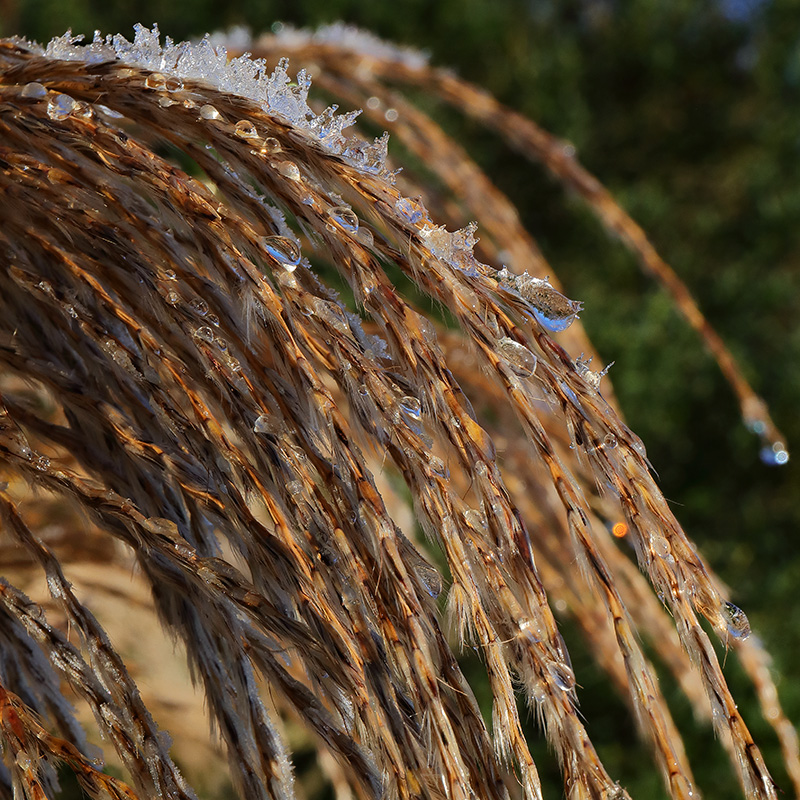
Frosted Miscanthus seed heads

NB: A note for WordPress Reader users – you need to click on the title of the post again to come out of the reader and go to the post itself. This allows you to see the whole of the top photograph. (Otherwise you may see just a tiny section!)

A lot of changes in the garden take place slowly, sometimes without being noticed until they’re complete. But frost, and the way it changes to semi-frozen beads before melting into glistening droplets has been a very visible feature here recently.

The top photograph shows the process of the thaw caught mid-way. There’s still an icy ridge of frost crystals running along the seed head, but below it the sun has melted the rest. It was the first time that I’ve photographed these Miscanthus seed heads – the frost added something extra to give interest to the image. (And they do tend to blow around in any breeze, so very still weather is needed for a decent photo.)

Frosted Miscanthus seed heads
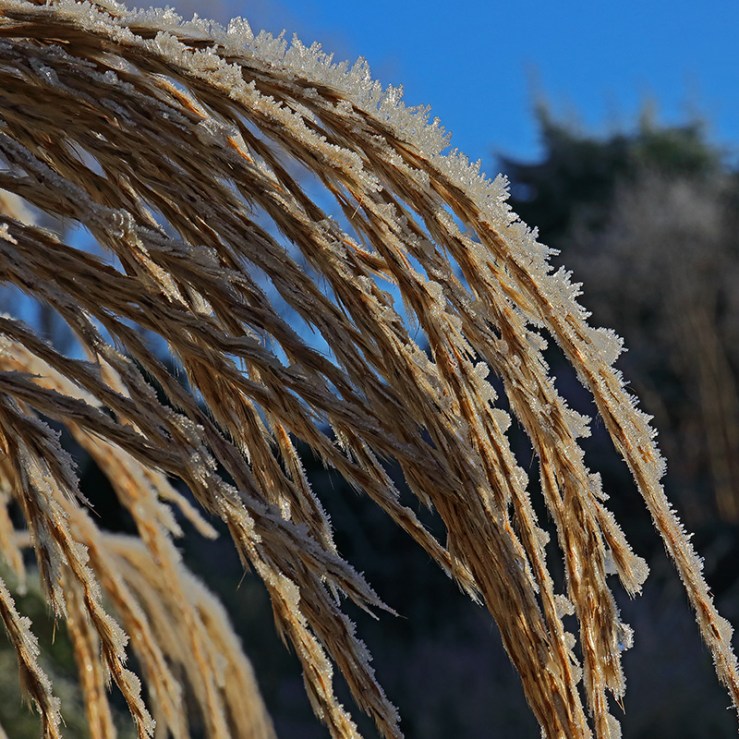
The Miscanthus seed heads were at their frostiest for this photograph.

You can see the seed head at its most frost-covered in the image above. It didn’t stay that way for long because the Miscanthus is growing in the area that gets the first sun of the morning. Any frost on this grass melts away very quickly. It’s only because we had several days of very low temperatures that there was this build-up of frost crystals.

Those frost crystals soon thawed in the sun and became the icy little drops that are seen in the photo below. But this wasn’t the only change taking place as I photographed the Miscanthus. I was surprised to see how quickly the hairs on the individual grass seeds fluffed out in the sun. (You can see how dry and airy-looking they’ve become in a very short space of time.)

I suppose the seeds must be programmed to wait until there’s some warmth before opening out their hairs and getting ready to fly away in the wind. Later on, when it was cooler, I noticed that they had closed up again. Since that morning, I’ve seen the fluffiness appear in the sunshine and disappear as the hairs close when it’s cold. Perhaps this is a way of protecting the seed-hairs in bad weather, so that they don’t get bedraggled, and allowing them to stay dry enough to let the seeds float away when the time is right. It’s an intriguing little change that had gone unnoticed here before.

Here the Miscanthus seed heads have suddenly opened up and become fluffy.

Winter Leaves

Frosted Mahonia Leaves

NB: A note for WordPress Reader users – you need to click on the title of the post again to come out of the reader and go to the post itself. This allows you to see the whole of the top photograph. (Otherwise you may see just a tiny section!)

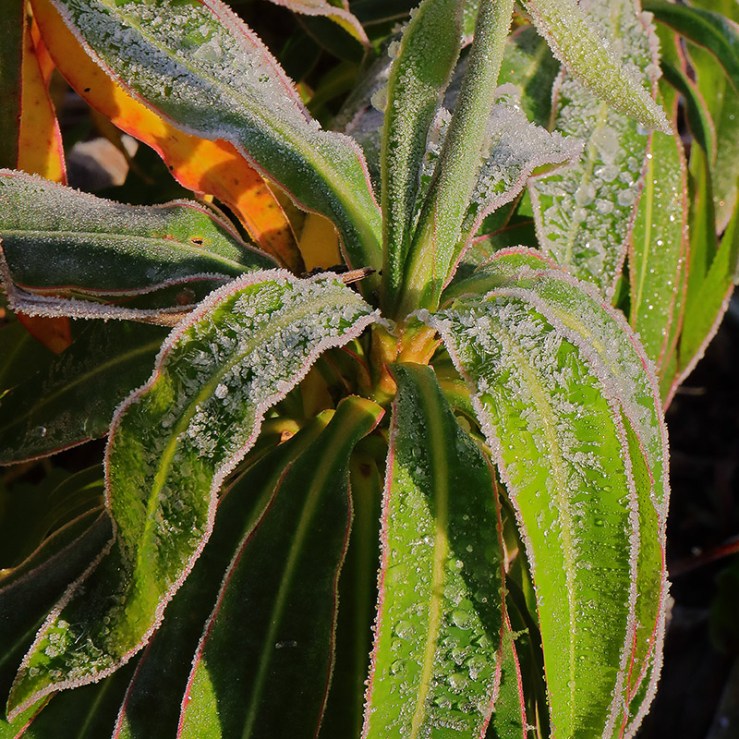
The leaves here are mostly long gone, but the few that remain can give an interesting texture to the frosted garden. The gently curving leaves in the photograph above are those of Mahonia eurybracteata ‘Soft Caress’. This small shrub is in a very sheltered position, so this is the first year that I’ve seen frost on it.

This Mahonia is very different from the larger one (probably a Mahonia japonica) at the back of our garden. ‘Soft Caress’ is smaller (3 to 4ft high) and not as hardy. It’s a cultivar that doesn’t like to be in a hot, dry position, so I’ve planted it where it is shaded by other larger shrubs.

Unlike other varieties of Mahonia, the leaves of this one aren’t prickly (hence the name), so it’s a much ‘friendlier’ plant to have around. I like the effect of its foliage so much that I’d like to grow it elsewhere in the garden too, but that will be if I can find a suitable spot for another one. (Most of our garden is likely to be a bit too hot and dry in summer.)

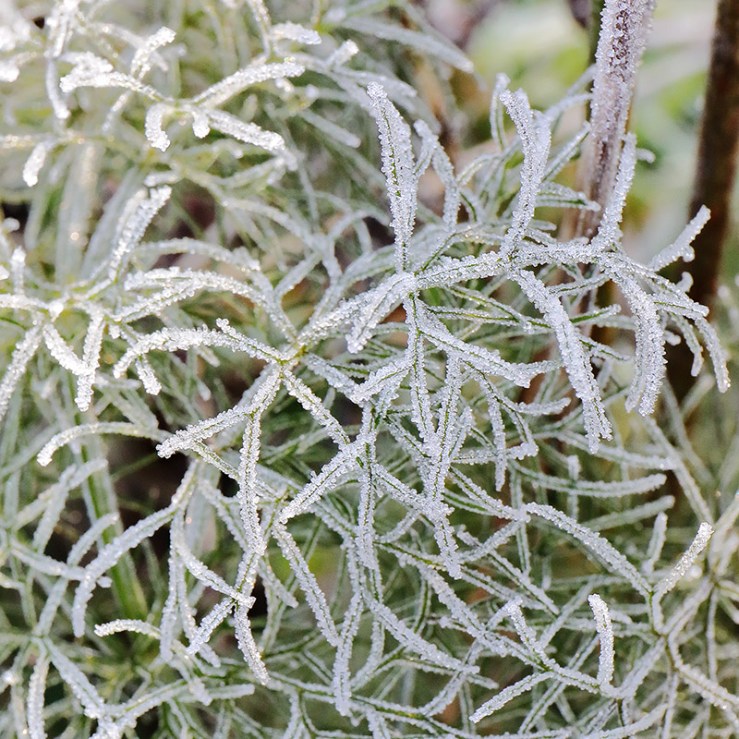
The second set of leaves are those of a fennel. We have lots of bronze fennel in the garden (it spreads very easily from seed), but I notice that this one is green. I think a bee must have brought in some pollen from a green fennel and that this is a cross between it and one of our bronze plants. We’ll probably end up with more green ones, but I’ve been getting rid of a lot of the self-sown seedlings. If I didn’t, they’d soon take over the garden! But I would never get rid of them all. They look far too good when frosted for me to do that, and I love to photograph both the leaves and the seed heads. (As you may have noticed…you can see a couple of my favourites on this post.) ❄

frosted fennel leaves
Fennel leaves become a delicate tracery when the frost gets to them.

A Cold Start

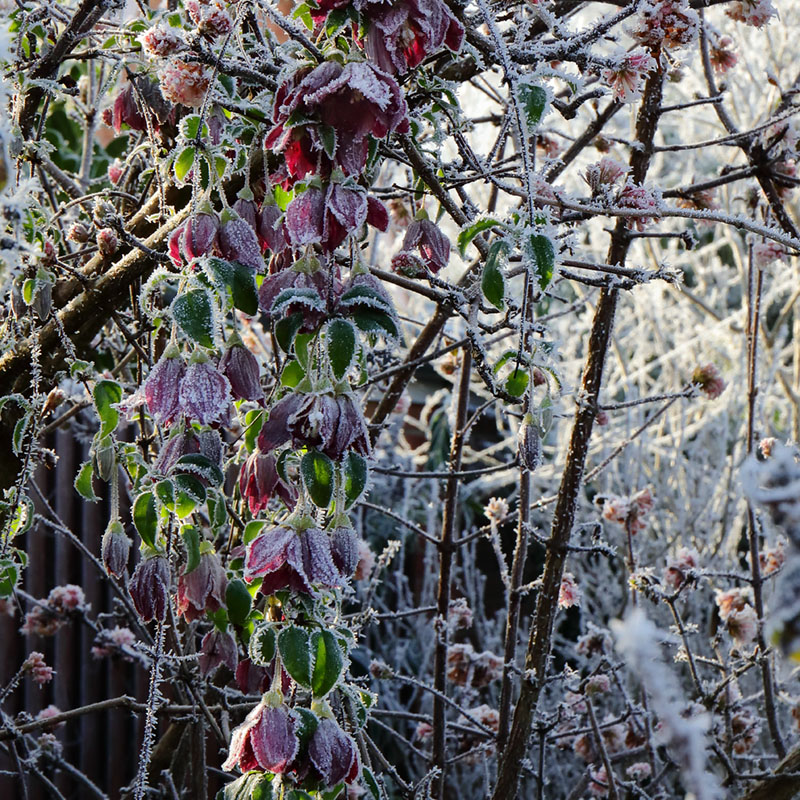
Frosted clematis flowers (Clematis cirrhosa 'Landsdowne Gem')

NB: A note for WordPress Reader users – you need to click on the title of the post again to come out of the reader and go to the post itself. This allows you to see the whole of the top photograph. (Otherwise you may see just a tiny section!)

January usually means a change to colder weather here. December can be quite mild and often doesn’t feel particularly wintry to me, but the start of the new year tends to bring a drop in temperatures.

True to form, we have frosty weather here now, so it’s a good time to get busy with the camera. The images here, though, are not from this winter but were taken a couple of years ago. We don’t often get such a heavy frost, so on that glacial morning I photographed everything I could find. (I’m still processing the photos now!) It could be a long time before frost encrusts everything as heavily again. The freezing weather doesn’t last long enough – this was the result of several icy-cold nights.

Right now, the frost is coming and going and I seize the chance to take a few photographs on those cold mornings. It does look as if we might have a run of several sub-zero nights in the coming week, so perhaps the frost will have a chance to build up…I’ll have my camera ready just in case.

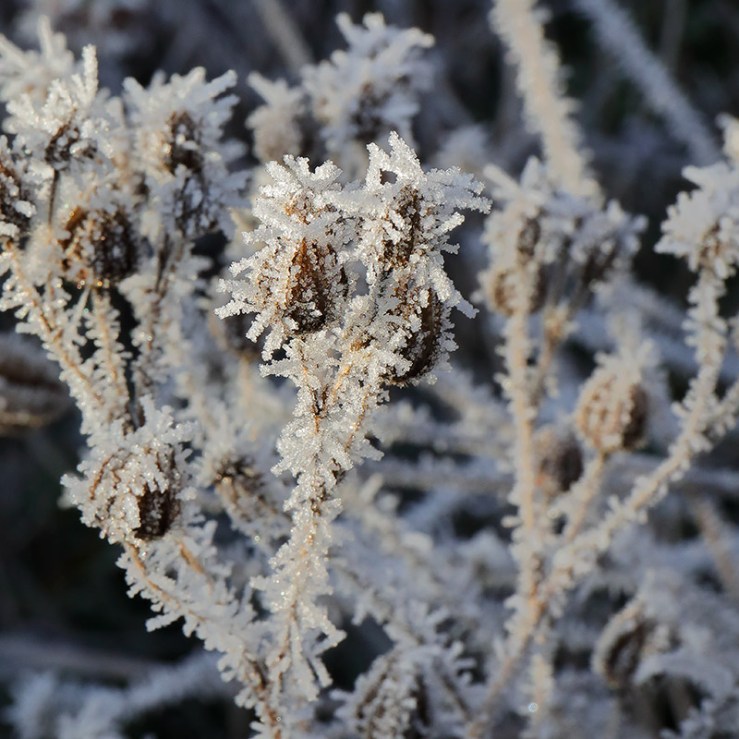
(The plants here are Clematis ‘Lansdowne Gem’, which flowers in winter, and the seed heads of Potentilla recta var. sulphurea (sulphur cinquefoil). If you’d like to see what the clematis looked like before the frost got to it, there’s a post about it here.)

Frosted seed heads of potentilla

May Your New Year be Bright and Happy

Frosted flowers of Viburnum bodnantense 'Dawn'

NB: A note for WordPress Reader users – you need to click on the title of the post again to come out of the reader and go to the post itself. This allows you to see the whole of the top photograph. (Otherwise you may see just a tiny section!)

It’s the time when we look back at the old year and forward to the new year. I hope that 2024 has been good to you and that 2025 will be a very happy and healthy year for you. May your New Year celebrations be fun and full of joy and the start of a year that fulfils your hopes and plans. Happy New Year!

Wishing You Joy at Christmas.

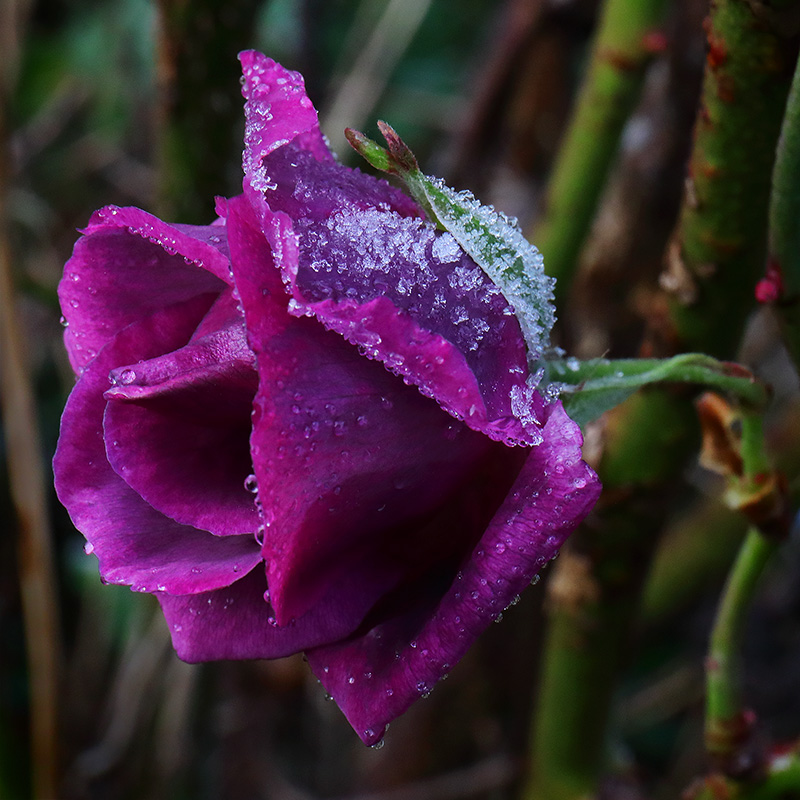
Frosted rose 'Rhapsody in Blue'

NB: A note for WordPress Reader users – you need to click on the title of the post again to come out of the reader and go to the post itself. This allows you to see the whole of the top photograph. (Otherwise you may see just a tiny section!)

Wherever you are in the world, and whether Christmas is something you celebrate or not, I hope that this is a time of joy and peace for you. The ‘blogging world’ is a wide and varied one. It encompasses people who are very different from one another, but are brought together by common interests and a sense of camaraderie. I enjoy the relationships that have built up with both those who read my blogs, and those who write the blogs I read, and I wish you all great happiness at this festive time of year. Merry Christmas to you all!

(P.S. The rose is ‘Rhapsody in Blue’, which finished flowering long before now. One year, however, it managed to produce a few flowers late enough for them to get frosted – a photographic bonus for me!)🎄

Caught by a Winter Chill

NB: A note for WordPress Reader users – you need to click on the title of the post again to come out of the reader and go to the post itself. This allows you to see the whole of the top photograph. (Otherwise you may see just a tiny section!)

Most of the flowers in my garden disappear long before December. Unusually, the astrantia (top) managed to hold onto several flowers until well into one winter. Over a couple of very cold mornings it provided me with a delicate little subject for photography, and a good reason for getting very cold fingers and toes!

The scabious in the picture below was newly-planted just a few months ago and still had several buds at the time. I didn’t know if the last ones would open, but this one has. It was just in time to get caught by a heavy frost. The frost didn’t last long – you can see the droplets forming as it melts.

There’s always a chance that the last autumn flowers will get a touch of early frost. I was lucky, however, that these two plants were still in flower when the heavier frosts arrived. There’s often very little left to photograph by that time. The frost lasted well on these flowers because they’re both on the side of the garden that’s shaded from the morning sun. If they’d been over on the sunny side, the frost on them would have melted early, long before I’d have had time to get outside with my camera.

Luck can play a large part in my photography. There are many things that I have little control over and there are also the unexpected surprises that nature brings. I just have to keep my eyes open for them! ❄

A flower of Scabiosa caucasica ‘Fama White’ is covered in a frost that’s just starting to melt.

Ordinary Things

Frosted Stipa gigantea (golden oats)

NB: A note for WordPress Reader users – you need to click on the title of the post again to come out of the reader and go to the post itself. This allows you to see the whole of the top photograph. (Otherwise you may see just a tiny section!)

After a long spell of mild and rainy weather, we at last had some frost. Photographically, it was a bit disappointing because it was mostly on the lawn and shorter plants. The taller plants, such as the Stipa gigantea (golden oats) above, had very little frost. So there were not many opportunities for photography. The pictures you see here are from last year.

Despite the thin coating of frost, it has felt really cold this week. The ground is frozen hard and there is thick ice over the top of the pond and in containers of saved rainwater. Only the week before, I had been able to spend time doing some weeding in the garden – not a chance of that now!

For the sake of this blog, I’m glad that I took lots of photos during last winter’s heavy frosts. The weather can’t be taken for granted, so there’s no guarantee of having anything to photograph at this time of year. Luckily for me, when it is frosty, the most ordinary of things look a lot more interesting!

frosted blackberry leaf
A blackberry leaf looks as if its edges have been dipped in sugar.

Frost and After

frosted gaura flower

NB: A note for WordPress Reader users – you need to click on the title of the post again to come out of the reader and go to the post itself. This allows you to see the whole of the top photograph. (Otherwise you may see just a tiny section!)

Last year’s hoar frost made icy little sculptures out of many of my garden plants. The one you see here is Gaura lindheimeri. (Now known as Oenothera lindheimeri, but I still call it by it’s old name. There are too many plant name-changes to keep up with these days!) This plant carries on flowering until late in the year, so frequently ends up covered in frost.

The area where the gaura is growing stays in the shade for much of the day in winter, so the frost lasts here for a long time. That gives me plenty of opportunities for taking photographs, but means that the sun doesn’t reach the frost to make it sparkle. So photography here is a bit of a compromise. Perhaps I should consider the effect of sun on frost when planting!

Eventually the frost will go, changing the look of the flower again. This time the petals are likely to be left translucent and looking very fragile indeed. (They usually wilt quickly after being frosted.) The drops of melted frost give an interesting texture to the flower – you can see right through the petals to the drops that are actually on the other side. ❄

Gaura with melted frost drops

From Very Little…

Frosted Pulsatilla Leaves

NB: A note for WordPress Reader users – you need to click on the title of the post again to come out of the reader and go to the post itself. This allows you to see the whole of the top photograph. (Otherwise you may see just a tiny section!)

Frost has an amazing ability to enhance the smallest of garden details. It takes very little to allow it to create a fleeting beauty. Anything can suddenly become attractive when encrusted by these tiny, white crystals of ice.

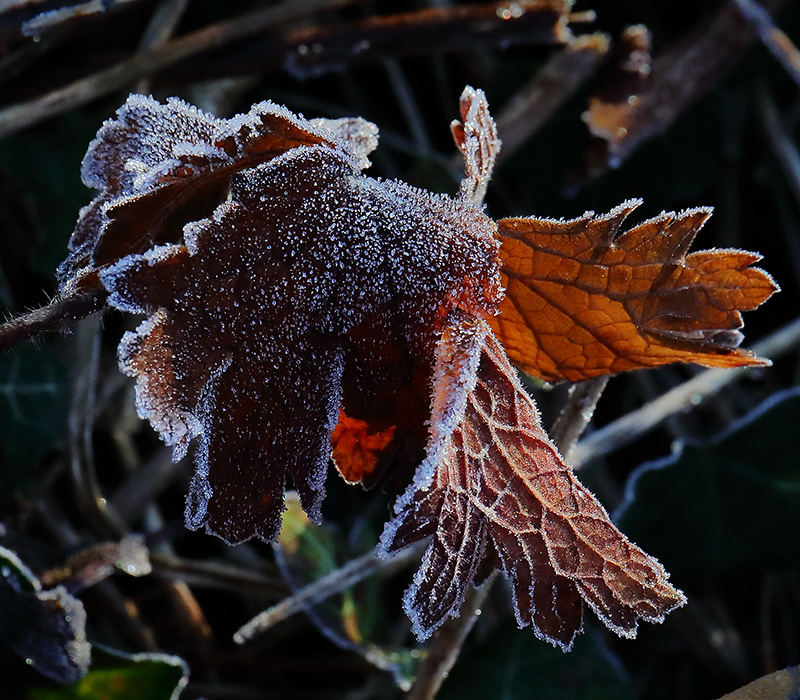
The last of the year’s flowers, dried-out seed heads, leaves, or slender grasses stilled by the cold air – all are made much more interesting to look at by a touch of frost. These are the leaves of Pulsatilla vulgaris (pasqueflower). In spring they are soft and hairy and a delight to stroke. By winter those hairs have disappeared, giving the curving shapes of the deeply-cut leaves more prominence. To my mind, the dead and frosted leaves suggest the look of a woodcut image or engraved stone.

As I’m writing this, the ground is still frozen. Tomorrow, though, is forecast to be milder and rainy, so the magic of the frost will be gone from the garden. These leaves won’t last long once the frost has finished with them, but will be left limp and probably rather translucent. The frost will have helped them along their path of decomposition and their eventual contribution to the richness of the garden soil. 🍂

Frosted Pulsatilla Leaves