A Splash of Red

Red Echinacea

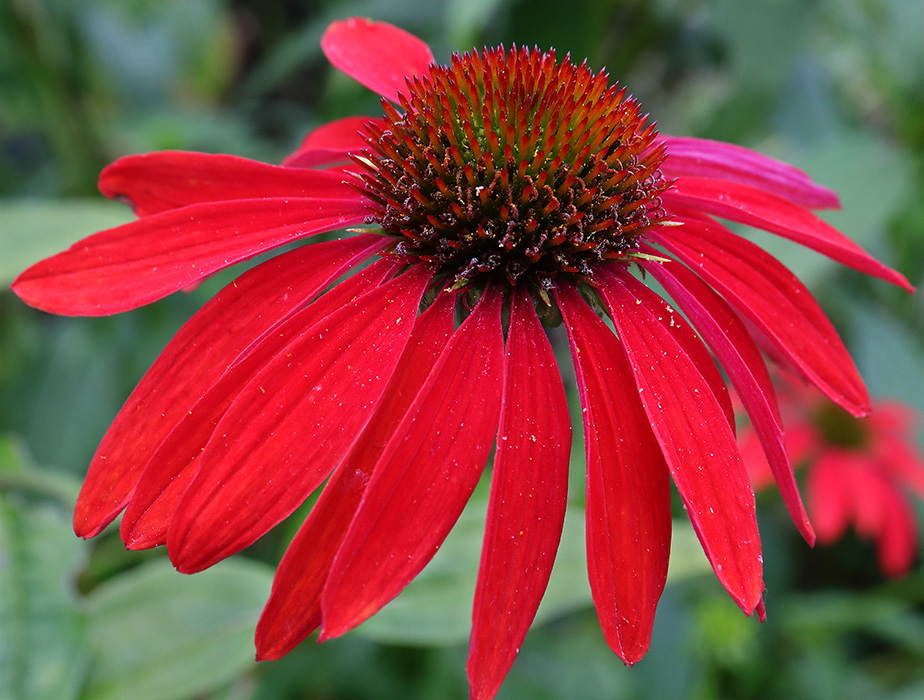
The red echinacea I planted last year has done well this summer. (The orange and orangey-pink plants have been fine too, but not as luxuriant.) And it’s been great to have this vibrant scarlet blaze to brighten up what has been an unusually cloudy and grey few weeks.

These showy flowers demand attention. They could overshadow the plants around them, so I have some thinking to do before I plant up the rest of that area.

At the moment I’m planning to add some more hot colours. I have an orange hyssop (agastache) which I bought unlabelled from a local nursery. It would look good planted nearby but I’ll probably keep it in a pot for now because I don’t know if it’s hardy enough to spend the winter outside. (I don’t know how big it will get either, so this will also let me find out how much space it needs.)

Red echinacea flowers

Other plants for this area have a slightly ‘prairie’ feel. There are dainty yellow kniphofias, a red helenium and arching Mexican feather grass (stipa tenuissima). Scattered around the area are tall dark red scabious and yellow potentilla, both of which seed themselves everywhere. There’s a long way to go (and few weeds to remove) before this small part of the garden becomes a fully-fledged border. It is starting to look interesting, though, and it makes a change to experiment with plants that might not fit in elsewhere.

Finding more plants for this area may have to wait for next year. (We have been out to some of the nurseries around us, but have stayed quite close to home so far, so choice is limited.) Meanwhile, I’m delighted to see that the echinceas have produced a few seedlings – I wonder what colour their flowers will turn out to be? Given that there are plants with red, orange and a bright pink that has an orange blush to the petals, the possibilities are interesting. I’ll just have to wait and see – hope there’s some red amongst them!
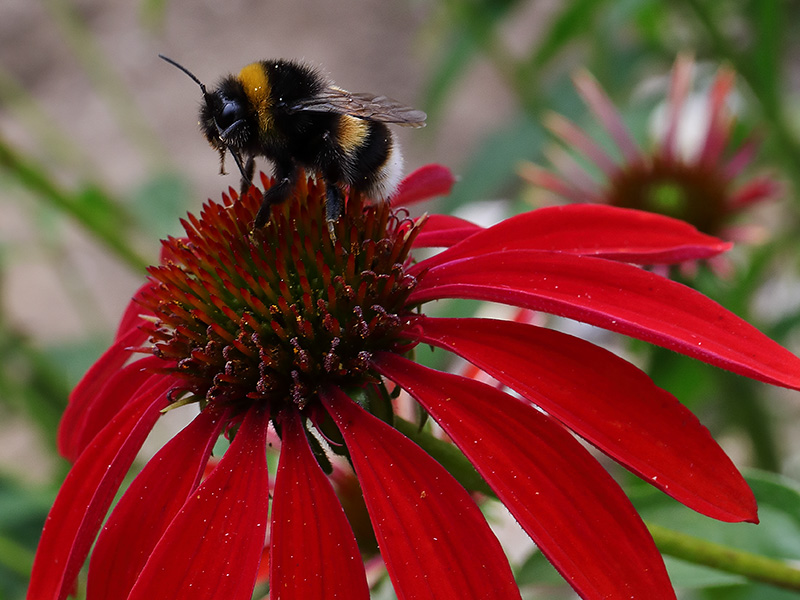
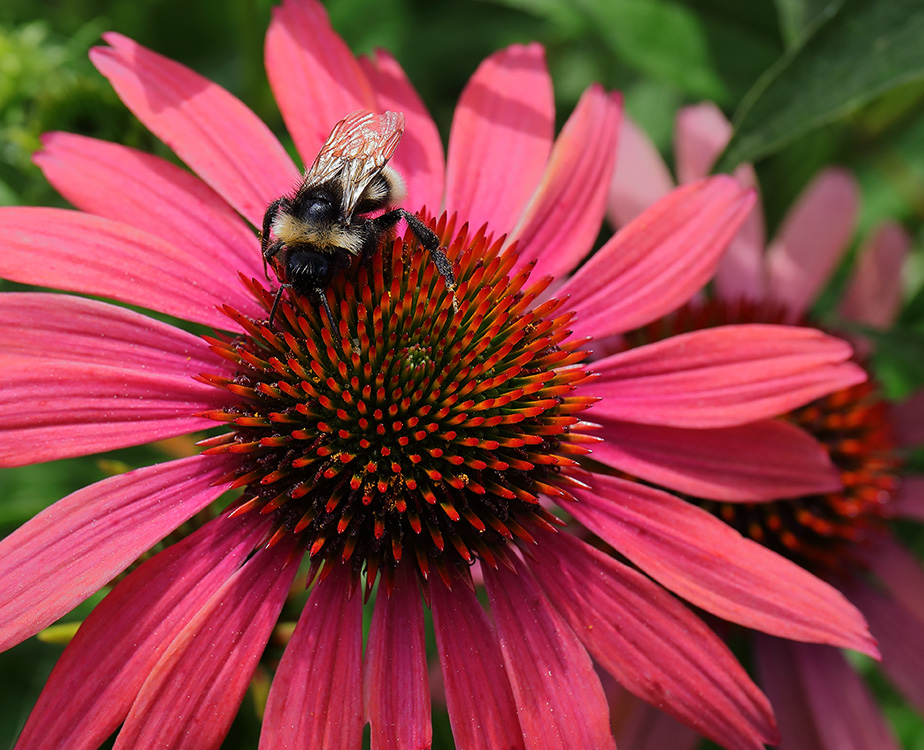
Bee on red echinacea flower

Much Missed: White Passionflower

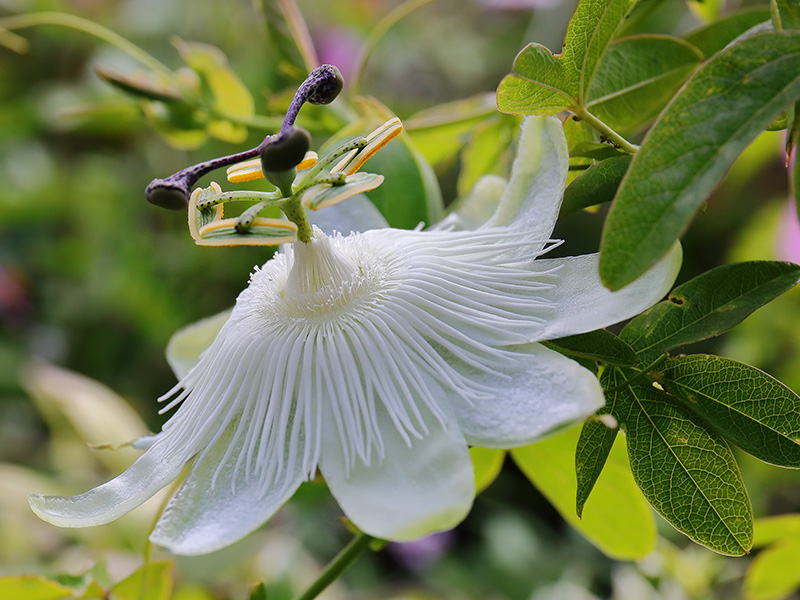
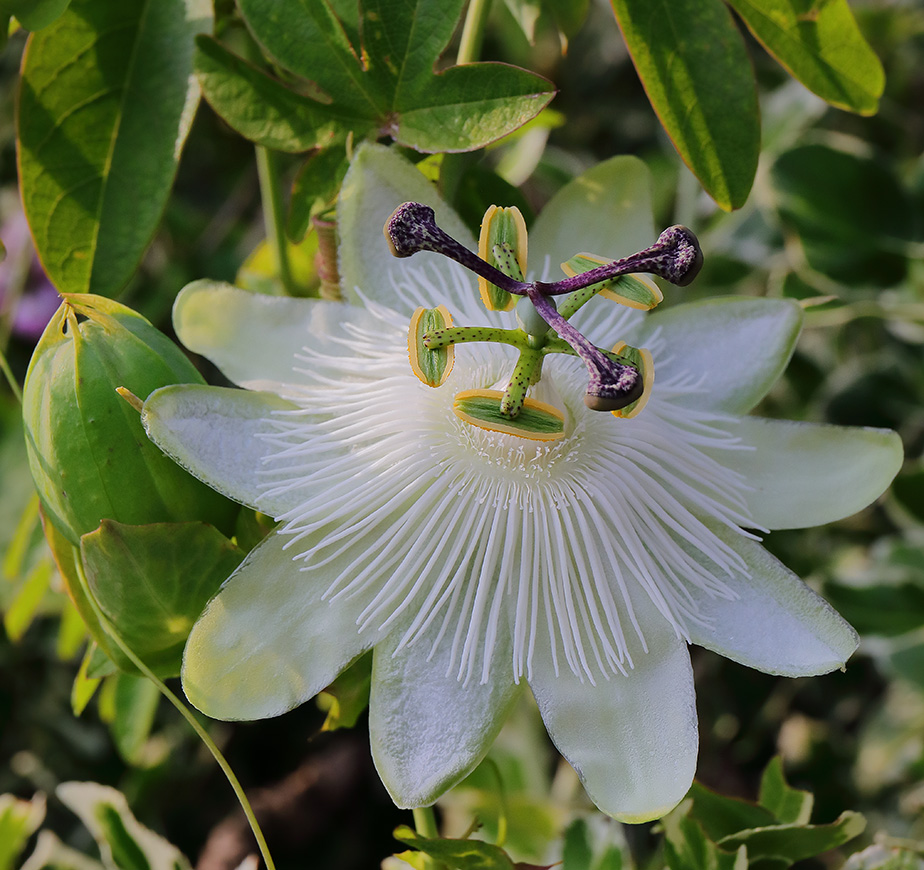
Passiflora Constance Elliot

Occasionally I lose a plant that I really miss. There have been plants that haven’t survived after I’ve planted them. Usually because I’ve put them in the wrong place in the garden or because I’ve bought something that doesn’t suit our climate or soil.

It may be that the plant is short-lived anyway, or else that it isn’t very hardy and will be unlikely to survive a hard winter. That was the case with the lovely white passionflower ‘Constance Elliot’. This passionflower was growing alongside a grape vine on our arbour. It seemed fairly happy there as it wove its way through the vine leaves and produced a sprinkling of gleaming white flowers.

This year it failed to reappear in spring. I waited hopefully in case it was just late, but no, it was gone. I was lucky to get a few years from it as I knew it might not cope with a really hard frost. It was always going to be chancy whether it could survive in a fairly exposed area of our garden.

Passiflora Constance Elliot

I particularly loved this plant. The white flowers had a great freshness against their background of green leaves. They had a simpler, somehow more ‘natural’ look than the Passiflora caerulea has. I enjoy the flowers of caerulea with their lovely rings of blue filaments, but I feel that the plainer white flowers of Constance Elliot fit into our garden more easily. (Caerulea is great for the conservatory, where things can be a bit more exotic.)

Fortunately, I had taken the opportunity to photograph this passionflower both in the garden and in the studio. It makes an interesting change to photograph after caerulea (where the blue filaments tend to dominate the image). The mostly white colouration of the flowers means that there is more emphasis on the shapes of the flower as a whole and on the dark purple markings of the stigmas and the yellow pollen on the anthers.

Normally I would have just bought a replacement for the plant but I haven’t seen them around so much this year. (Actually, I think that’s just because I haven’t been out much. The plants are probably out there.) The garden centres and other stores often have them as small, very inexpensive plants that can be quickly grown on in a warm year, but I haven’t seen them there. It could be that Brexit has caused problems with some plant supplies – I don’t know. I do know that I will be on the lookout for another plant of ‘Constance Elliot’ next year!

Passiflora Constance Elliot

Getting There…

Cosmos 'Candy Stripe'

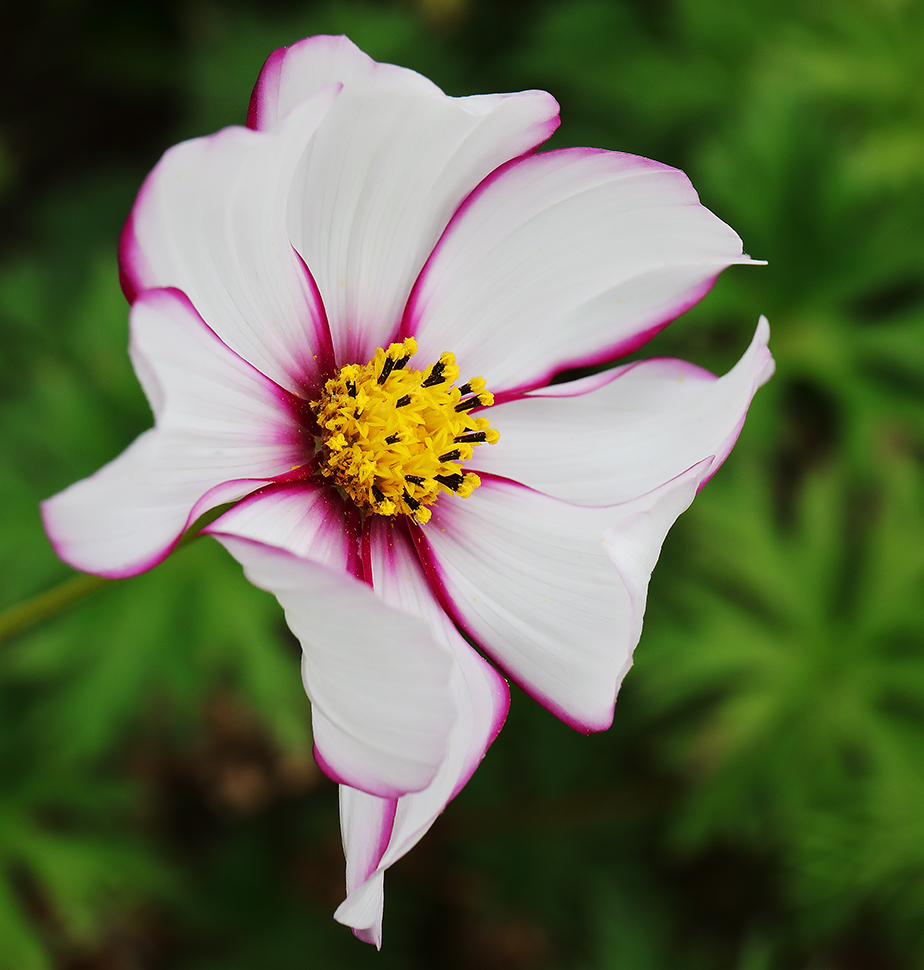
A couple of weeks ago I posted photographs of flowers of our Cosmos ‘Candy Stripe’. They were showing very little of the bright pink markings on the edges of the petals that they’re grown for. While I enjoy having variety among the flowers that come up from seed, I was hoping that they would show some of the ‘expected’ markings.

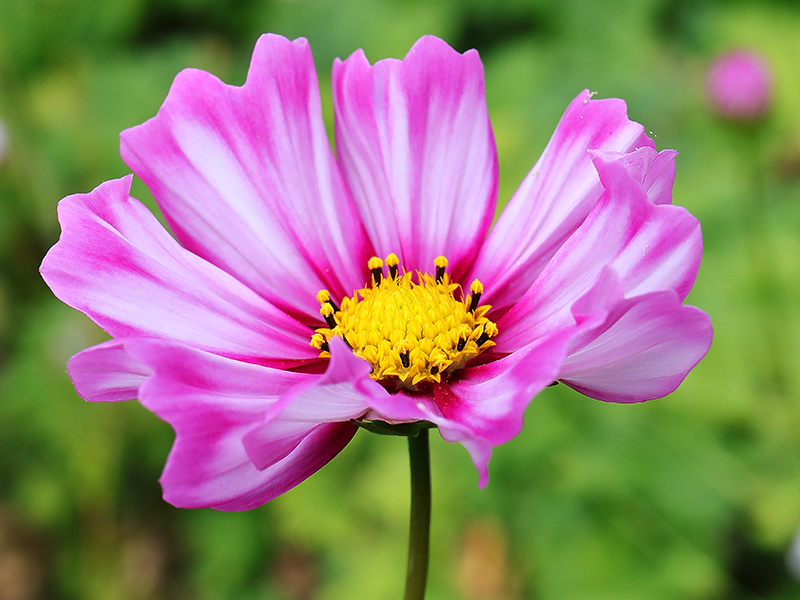
As you can see from the top photo, the flowers are becoming much closer to having the pink edge all the way around each white petal. They are now much more like those illustrated on seed-packets and adverts. The flowers are very different to the others in our garden, most of which have solid-coloured petals.

I also hoped that there would be some of the darker flowers with pale pink petals surrounded by the darker pink edge. I’m delighted to be able to show you that yes, I now have those opening too.

Photographing these was a bit tricky because it’s been breezy here for a while. It’s a matter of trying to choose a moment when the wind dies down to press the shutter button…not easy, haha! So I should really pick some of these and photograph them indoors – much better for getting clear detail. That might not be soon, though, because there is so much to do in the garden right now. But it is lovely to be able to enjoy these flowers while I’m working. It makes life feel good!

You can read my previous post about cosmos here: https://annmackay.blog/2021/08/01/not-as-expected-variations/

Cosmos 'Candy Stripe'

Not as Expected: Variations

Cosmos bipinnatus flower

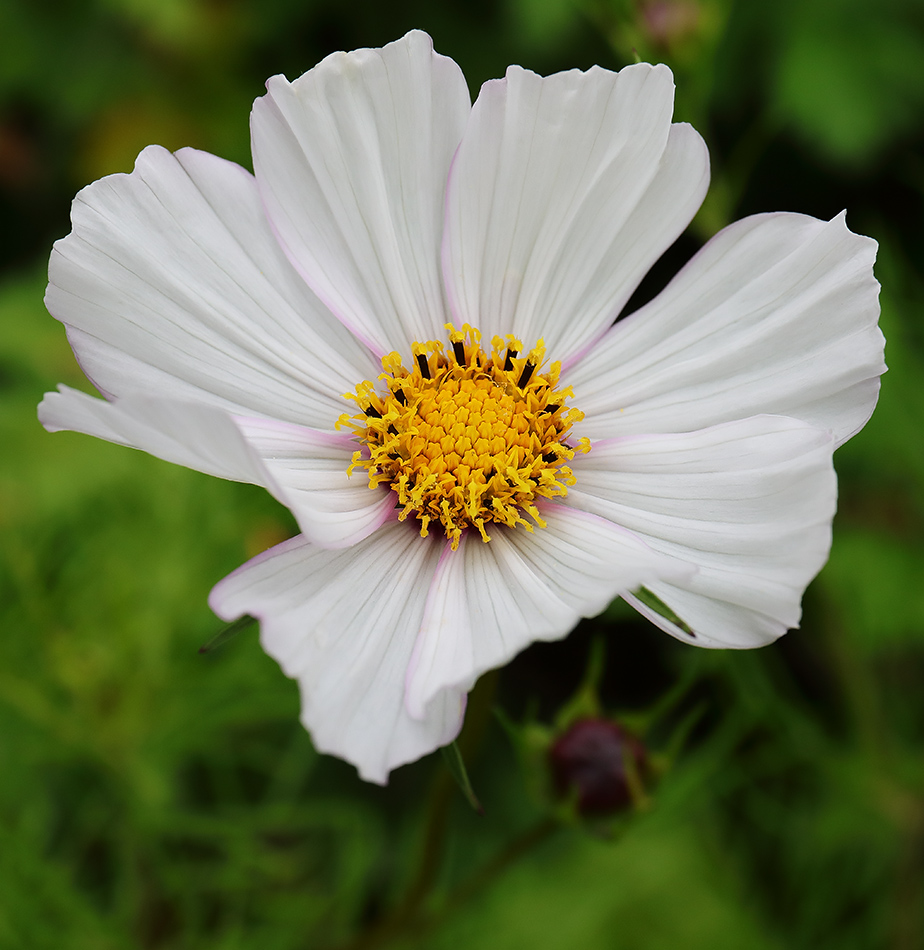
Sometimes the flowers you plant come up a bit different from the image on the seed packet. That’s the case with this Cosmos ‘Candy Stripe’. Most of the seed companies advertise this plant with images of white flowers with a rich raspberry-coloured stripe all the way round the edge of each petal.

One or two of the companies, though, show you what will actually grow – flowers with a very varied mix of colourations. Some will be almost pure white with just a few traces of pink here and there along the petal edges (as in my photo above). Others may have petals that are partly edged in pink (below). Or the flowers may be mostly blushed with a soft pink but with a darker pink around the outside of the petal.

For me, this is part of the appeal of growing plants like these. Every year I try to grow one or two annuals to give me something new to photograph. So when the result is a little unpredictable, and as beautifully varied as these cosmos flowers, it becomes far more interesting. Having all the different colourations gives me more to photograph and makes it fun to see what new flowers each day brings. I had hoped to photograph one of the flowers with the full markings on the petals, but left it too late. When I went back out to photograph it, the wind had stripped all but two petals off the flower I wanted. (The weather is a bit rough at the moment!)

Happily for me, I can see that there are some darker flowers opening so I’ll soon be able to take some quite different photographs. That’s the joy of growing a flower that is variable and has the capacity to both surprise and delight. (I just hope the wild winds and rain aren’t too unkind to them!)

Cosmos bipinnatus flower

Little Visitors

After the bees got all the attention last week, I thought I’d pay some to a few of our other garden visitors. I find a lot more wildlife in the garden here than in our previous garden, so there’s often something new or unfamiliar.

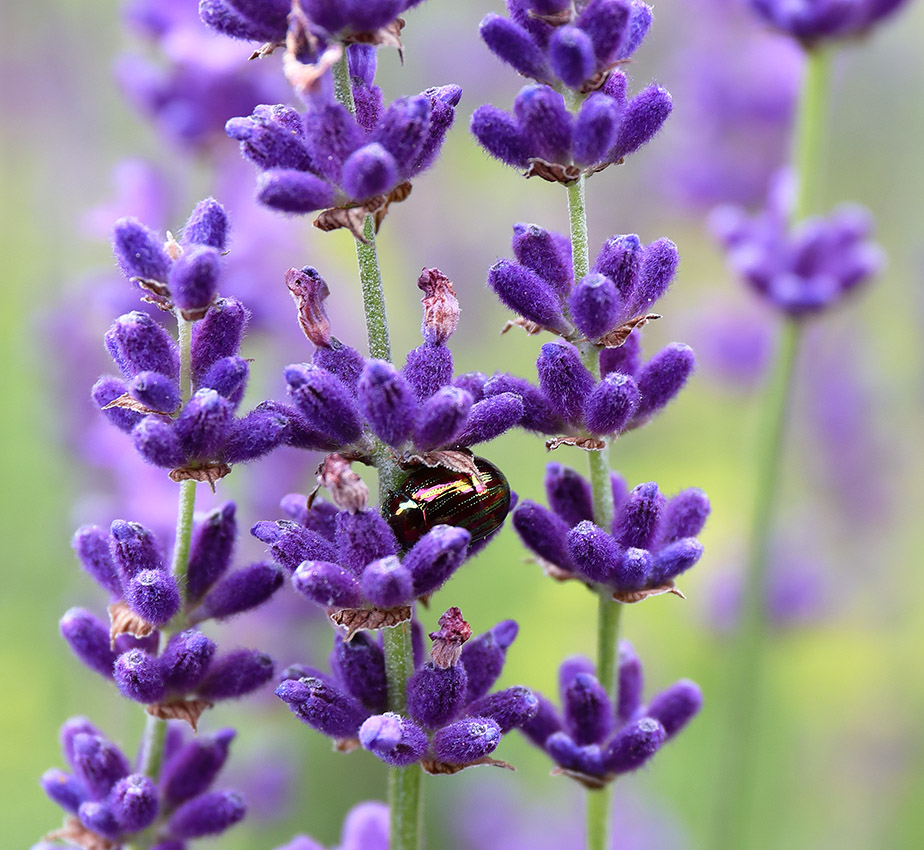
The metallic-looking little beetle in the top photo is a first for me. I’d never seen one before but I have read about them. This is a rosemary beetle (Chrysolina americana) and actually an unwelcome intruder because it feeds on various aromatic plants. (These include rosemary, lavender, sage and thyme, all of which grow in our garden.) Luckily I’ve only seen the one so far, so I hope it hasn’t brought its friends! Apparently the damage they do may not harm the plants much, and the beetles themselves can just be picked off the plants.

I never use chemicals in the garden and prefer to hope that predators will naturally get rid of pests. In the case of rosemary beetles, their larva are eaten by birds, frogs and other beetles. So it’s good to have plenty of hungry carnivorous beasties around!

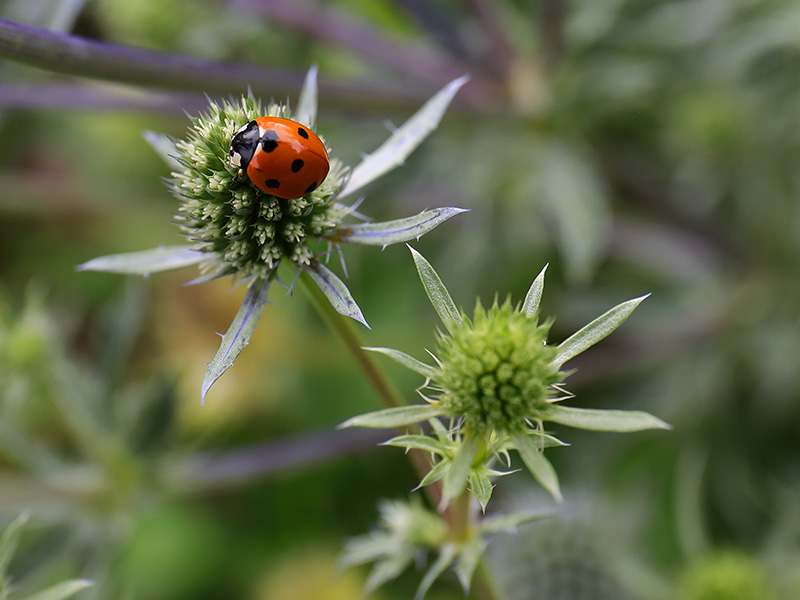
Greenfly tend to suddenly appear in large numbers every summer but luckily the ladybirds do too. A few weeks ago I found the weird-looking larvae of ladybirds in amongst a swarm of greenfly – I hope they had good appetites! There are lots of ladybirds around this year so I think they must have had a an easy winter. (I tend to see them grouped in curled up leaves that have fallen in autumn. Our garden is never too tidy, so there are plenty of places for them to hibernate.)

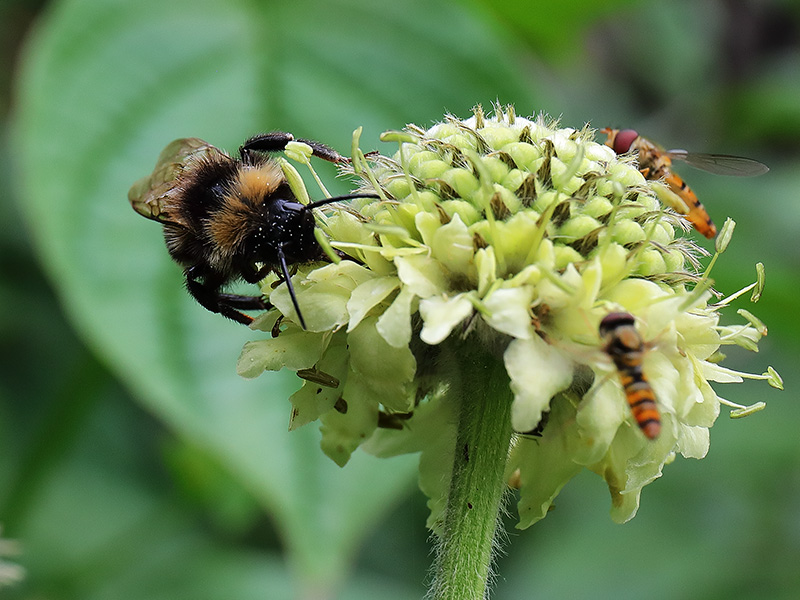
Another visitor that comes here in large numbers is the hoverfly. (Pictured above.) There are always a lot of these tiny pollinators around the garden – many more than there are bees. I like to watch these little brightly-coloured flies as they zoom around amongst the flower heads. And I find they will often be very obliging and sit still for long enough for me to focus on them when I’m out with my camera. Wish the bees would do that too!

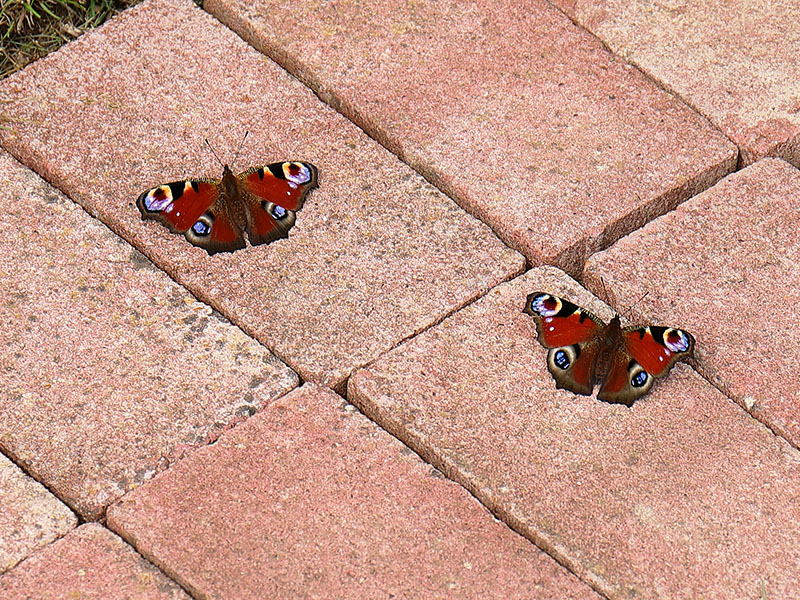
The visitors that we’re missing this year are butterflies. There have been a few Red Admirals and some Large Whites but not much else. Last year there were often Peacock butterflies (below) sunning themselves on our brick path – sometimes as many as a dozen along the length of it. This year I have seen none so far. The low numbers are probably due to all the cold and rain we’ve had this year, so perhaps things will improve as the weather does. The ‘Big Butterfly Count’ survey is being held in the UK at the moment. Let’s hope that the results of that are a bit more encouraging!

Bees’ Needs Week 2021

Bumblebee on echinacea flower

The summer feels like it’s going by too quickly. (As always!) Already the flowers that I associate with late summer are starting to make an appearance. I’ve noticed the first pale pink flowers to open on my patch of Japanese anemones, and the echinacea plants (above) are now beginning to display their brightly-coloured daisies.

There are lots of flowers in the garden at the moment so there are also plenty of bees and hoverflies around. That’s very appropriate because this week has been the annual ‘Bees’ Needs Week’ in the UK. This is a campaign to encourage us to grow suitable plants for bees and pollinators and to allow areas in our gardens to be wild enough to create a habitat for them.

Bee on Cephelaria gigantea (giant scabious)

Interest in helping bees (and wildlife in general) has grown greatly in recent years, with many gardeners delighted to provide spaces for nature. Now local councils and other bodies are taking a more sympathetic stance too. They have been allowing areas of grass to remain uncut for longer and even encouraging wild patches and mini meadows in previously manicured areas.

It’s good to see the bees back again here after a couple of weeks that have been unusually wet and much cooler than normal. Certain flowers are particularly successful at attracting bees. Here it’s the various members of the scabious family that seem to always have bees and hoverflies around them.

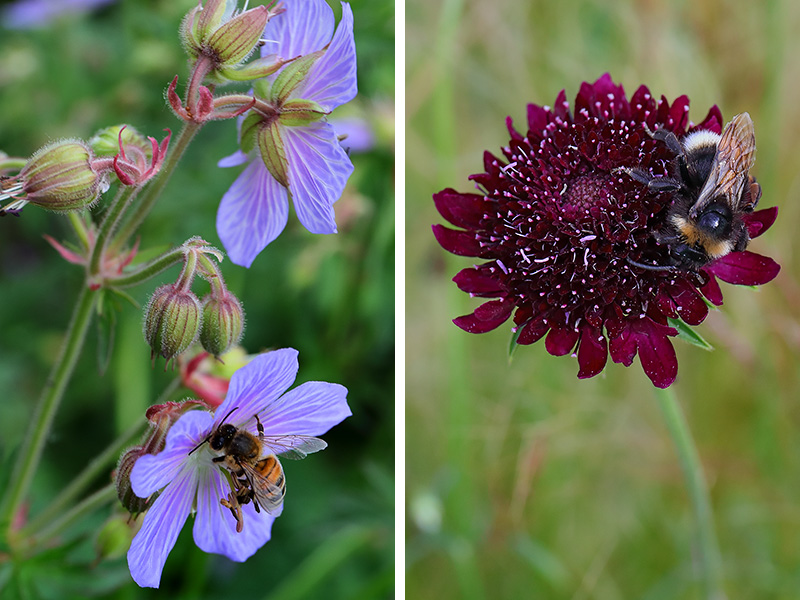
The pale yellow flowers of the giant scabious (Cephalaria gigantea, above) are a recent addition to the garden and have proved very popular. Their impressive height makes it a little difficult for me to photograph the bees on them though! (They can get up to 8 ft. tall, but mine have still some way to go.) Scabiosa atropurpurea (below, right) is up to about 3 ft. tall, so much easier to photograph!

L: Honeybee on geranium, R: Bumblebee on scabious flower

The blue geranium pictured on the left (‘Mrs. Kendall Clark’) has finished flowering but geranium ‘Rozanne’ is ready to take over its role. However, although the bees enjoy it, there weren’t any on its flowers when I took my photographs.

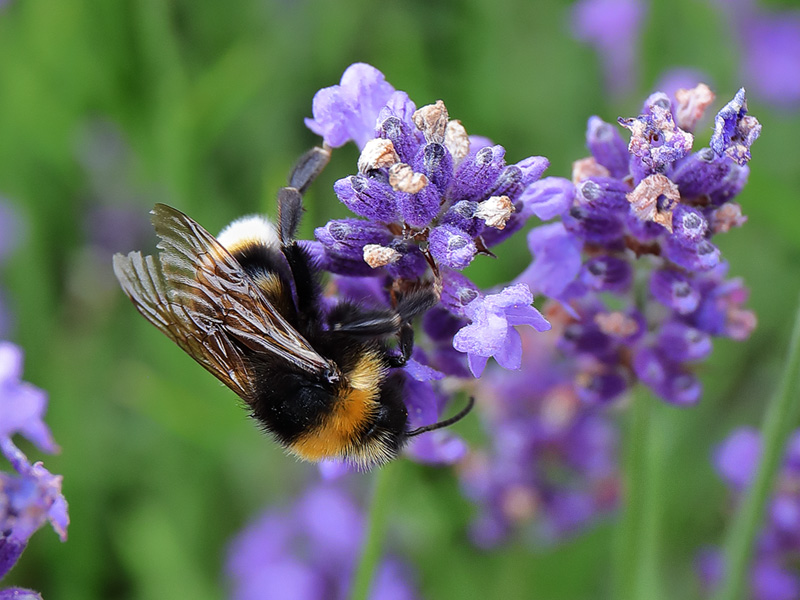
I think the bees weren’t interested in the flowers of Rozanne because the lavender beside it was in full flower and more alluring. I watched lots of these buff-tailed bumblebees (below) buzzing from flower to flower, clearly intent on making the most of the nectar in the tiny flowers before they all go over. (Bumblebees have longer tongues than honeybees, which makes it easier and quicker for them to access the nectar in lavender than it is for honeybees. This means they tend to move around the flowers quite fast – so harder work for the photographer!)

Given how much the bees enjoy the lavender, I’ll plant more of it for next summer. (Angustifolia varieties are reckoned to be particularly good.) I’m very happy to be able to provide something for the bees here. It seems only fair when I enjoy going on a ‘bee-hunt’ with my camera – and of course, we need our bees!

Bumblebee on lavender

Something Sweet: Scabiosa columbaria ‘Flutter Rose Pink’

Pink scabious flower

As you can imagine, I haven’t bought many plants during the pandemic. Recently we have ventured out to a few of our favourite nurseries and we have treated ourselves to one or two new plants.

This pretty scabious is one of the plants that appealed to me most. It’s an undeniably feminine looking flower, with all those frilly petals in a sweet shade of pink. I’m sure it will add something special to a border that has lots of smaller, simpler flowers.

Reading about it tells me that I can expect flowers for a long time over the year – right through from spring into autumn. (I’d noticed this long flowering period from the other plants from the scabious family already in the garden.)

‘Flutter Rose Pink’ should be happy here because it likes sun and good drainage. (It’s said to be drought-tolerant, which makes it very suitable for our East-Anglian climate.) The other scabious relatives in the garden include a smaller Scabiosa columbaria in a pale blue, the tall yellow Cephalaria gigantea, Knautia macedonica in reds and pinks and a very dark red Scabiosa atropurpurea. All of them do well here and generously seed themselves around the garden. I’m hoping the new scabious will do the same!

My new plant is a treat for me but will be one for the pollinators here too. I’ve found that the various scabious are extremely popular with bees, hoverflies and butterflies. Because they keep flowering until late in the year, they are a reliable food source for these insects. ( That’s especially true of the knautia, which can produce flowers right up to the start of winter. It’s great for frosted-flower photos and feeds the latest of bees.)

Now I just have to decide where to plant my new scabious…

Pink scabious flower
Scabiosa columbaria ‘Flutter Rose Pink’

Colour Change: Nigella

Nigella damscena flowers

Since my post about colour-changing spring peas, I’ve been looking out for more flowers that change colour. There’s been one practically right in front of me but I hadn’t noticed it until now.

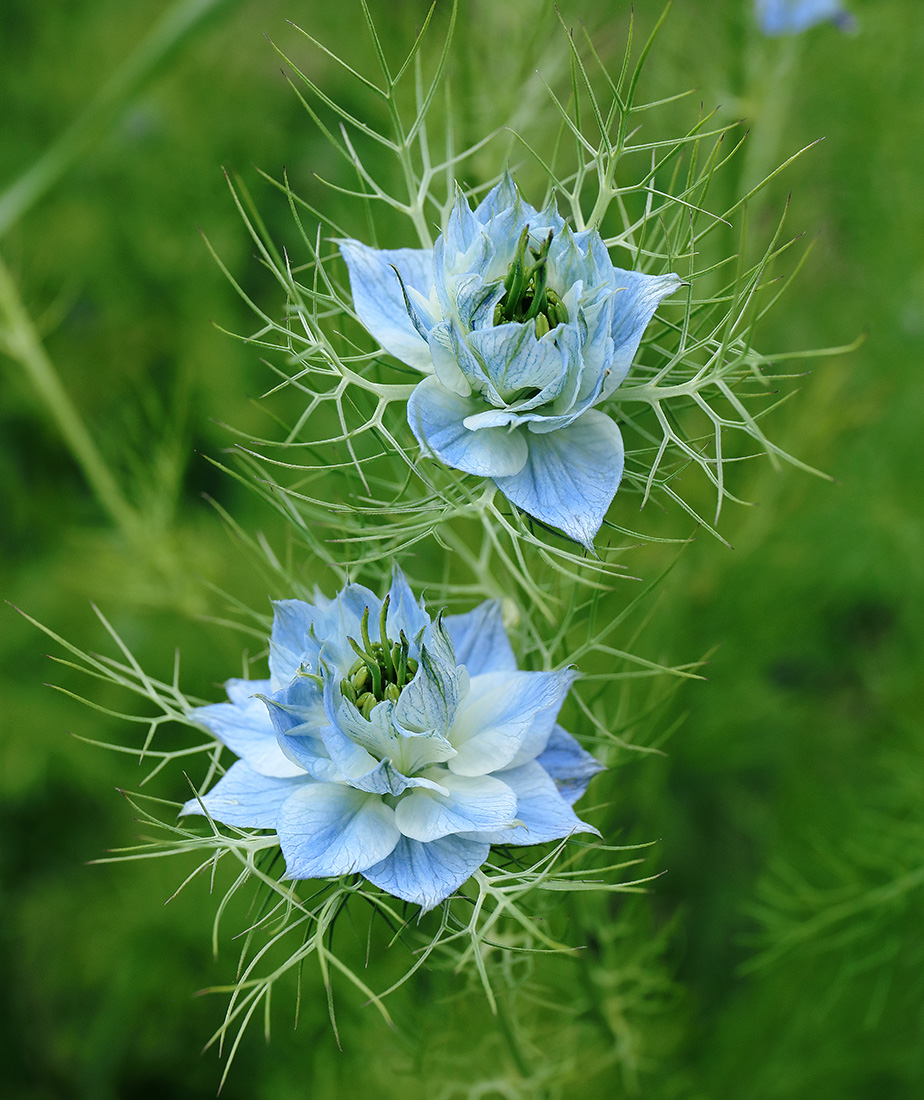
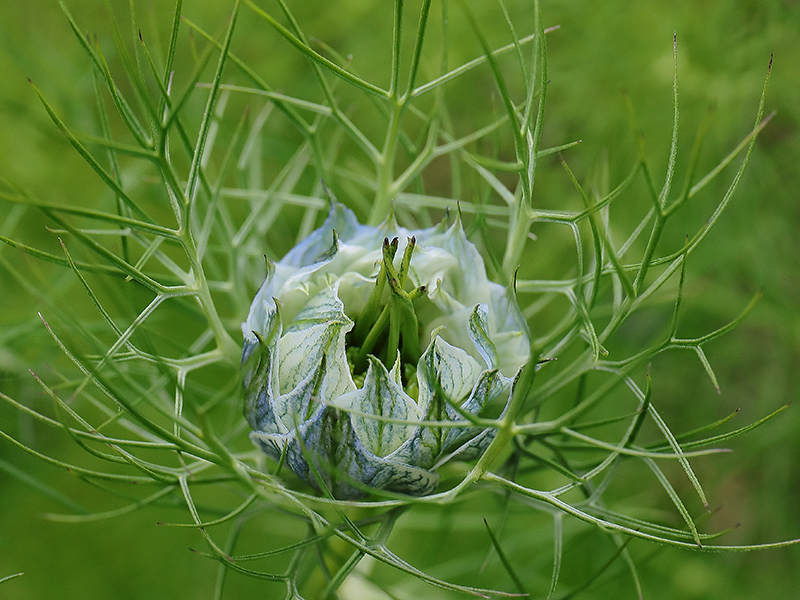
Nigella damascena (probably ‘Miss Jekyll’) has been seeding itself around our garden for a few years. It becomes covered in lots of soft blue flowers and some that are white with blue veins. I’d always liked the pale-coloured buds best as a subject to photograph because of the extra detail of the delicate blue veins on the bluish-white petals.

Nigella damascena bud about to open.
This light-coloured bud of a nigella flower is just about to open.

Despite photographing them fairly frequently, I hadn’t realised that these pale flowers were the immature colouration. I had thought that they were a variation and that the flowers just came in a mix of blues on each plant. However, I’ve just read online comments by other gardeners who say the lighter coloured flowers gradually darken to give the beautiful sky-blue of the mature flower.

I don’t know why I didn’t notice this before. Even now I’m wondering if it is really true. I’ve just been out in the garden to look at the plants and all the buds I could see were light-coloured. There were no darker blue buds. So it seems that all the flowers do indeed start off as a white slightly flushed with a pale blue and with the blue and green veins as shown above.

Most of the mature flowers were blue but I could see one or two that were still pale. Maybe they will darken to the same blue as the rest if given time. Or will they? It will be difficult to tell because the seed pods develop quickly, so the whole plant is always changing. Perhaps some flowers simply don’t mature as fully as others before their petals drop. Trying to find the answer will give me a very good reason to look at these pretty flowers more often!

Blue Nigella damascena flower
This nigella flower has matured to a lovely blue.

Under Attack!

Iris Silver Edge

Normally I don’t have many problems with slugs and snails in the garden, probably because we have a low rainfall here. But when they do appear, it seems that they’re keen to snack on the flowers that I most want to photograph.

Some flowers seem to be particularly tempting to the hungry critters. For a few years we had a lovely pale blue clematis (Perle d’Azur) in a large wooden tub. Well, it should have been lovely, and sometimes it was, but just for a little while. Sooner or later the slugs and snails would find it and reduce the flowers to lacework.

Irises are another flower that tend to get a bit chewed. Sometimes, as with the top photograph, I have to avoid having damaged parts of the petals show. With this one (Iris sibirica ‘Silver Edge’), I had to find a low angle that hid a prominent hole in one petal and then crop to remove extensive damage on another petal.

The occasional damaged petal is one thing, but sometimes the damage is much worse. While living in Scotland (more slugs and snails there!) I decided to grow an assortment of sunflowers to photograph. So I was dismayed to discover that all my seedlings had their stems chewed right through at the base. No sunflowers for me!

I’ve had similar damage to the irises too. I was glad to be able to photograph the iris below because the year before I was denied that chance. The buds on the iris’s first and single flower stem were almost ready to open and looked really promising with their soft shades of caramel and pink. Excitedly, I visited in the morning to see if the top flower had opened and was ready for me to photograph it. Imagine my disappointment when I discovered the flower stem lying on the ground, looking sad and wilted, with its stem chewed the whole way through. I could have cried!

Since then, I have discovered that it helps to surround vulnerable plants with a circle of either gritty sand or wood ash from our woodburner. But sometimes only careful cropping or the use of digital heal and clone tools can save a photograph.

Bearded iris 'Top Gun'

Gone Blue: Colour-Changing Flowers

Lathyrus vernus (spring pea) flowers

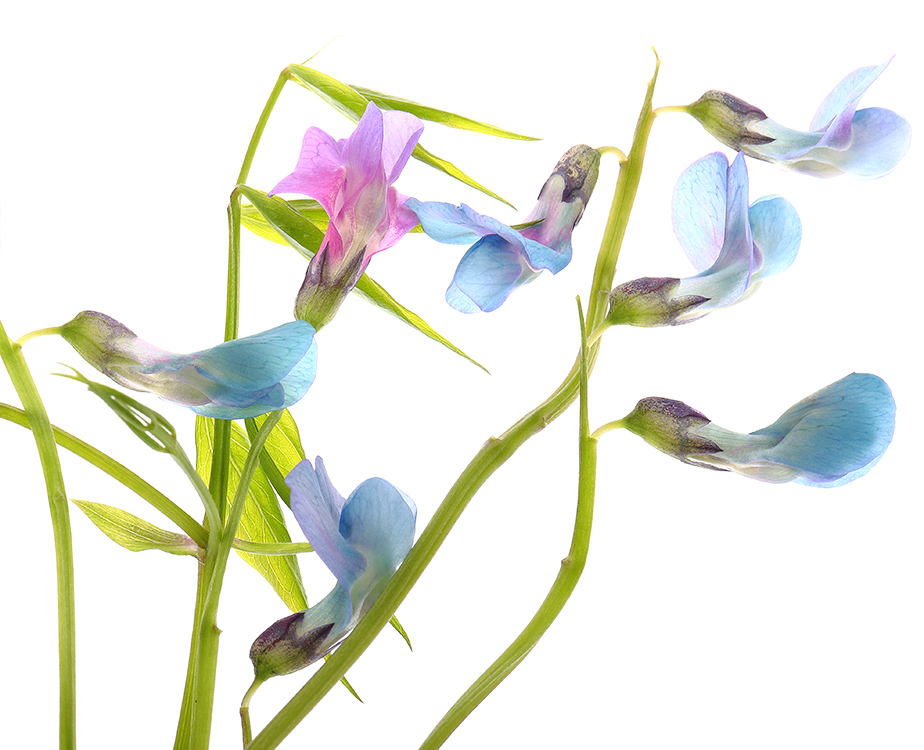
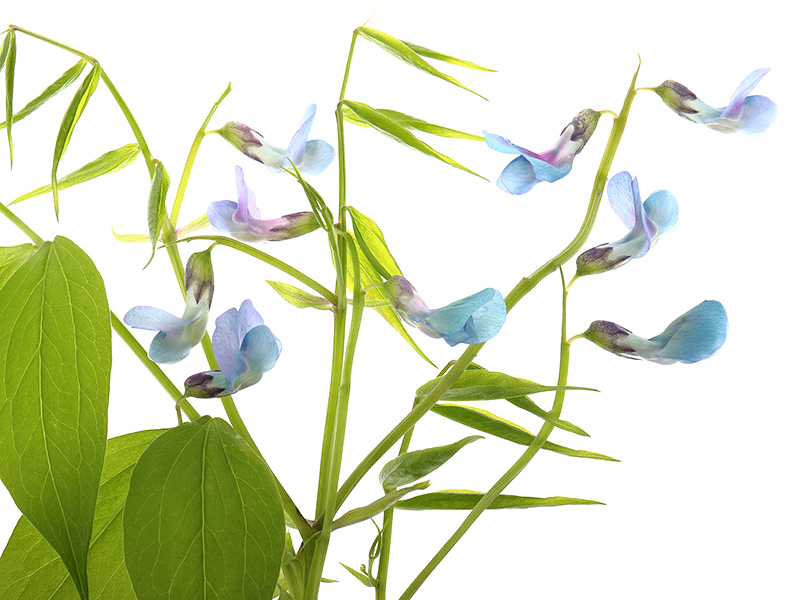
Last month I photographed these tiny spring pea (Lathyrus vernus) flowers. After I had finished photographing them I noticed that they were still changing colour after they had been picked.

The flowers had started off as a purple-pink but were changing to blue as they aged. I wondered if they would turn entirely blue and I found, after a couple of days, that almost all of them had. (As you can see, there is one flower that has stubbornly managed to remain pink in the top photograph. However, I reckon it would have turned blue too if it had been able to last long enough.)

Having flowers that change colour is a bonus for a photographer, allowing a whole new set of photographs to be made of the same subject. It’s also fascinating to watch as this happens.

Apparently the reasons for this kind of colour change are practical. It lets pollinating insects know that the individual flower has already been pollinated and will now have little pollen or nectar left to offer them. This helps the plant by directing the attention of pollinators to those other flowers that are still waiting to be pollinated.

Colour change happens in other plants too. The one that I’m most aware of at the moment is Salvia ‘Hot Lips’. That’s because I bought what I thought was an un-labelled sage with a good bright red flower which would be ideal for an area of planting with hot colours. (I already had the magenta-flowered Salvia microphylla, which flowers really well here. This looked like a red version of it.)

I was a bit surprised later on, when the new flowers on the plant began opening in the well-known red and white bicolours of Hot Lips. From what I’ve read, the flowers on this plant can be red, bicoloured, or white, depending on temperature or growing conditions. So it’s an interesting plant to watch but not so useful if you have a particular colour scheme in mind!

Colour change isn’t something I’ve been much aware of in the past. But now it has me intrigued and I can see that it may give me good photographic opportunities too. So I’ll be keeping an eye open for other plants that do this…there’s always something interesting happening in gardens!

You can see my post with the spring peas still in their original pinks and purples here.

Lathyrus vernus (spring pea) flowers