Pennies from Heaven

Frosted honesty seed heads

NB: A note for WordPress Reader users – you need to click on the title of the post again to come out of the reader and go to the post itself. This allows you to see the whole of the top photograph. (Otherwise you may see just a tiny section!)

Apparently honesty (Lunaria annua) has around 25 common names. (According to the RHS, you can see their list here.) That’s a lot of names, probably because it’s a plant that has been in our gardens for a very long time. It is known to have been in cultivation in the UK since the sixteenth century and is mentioned in Gerard’s Herbal at that time.

Among these names are several that relate to money, including ‘St Peter’s pence’ and, in an interesting contrast, ‘Judas’s penny’. The names ‘money flower, ‘penny flower’ and ‘silver dollar’ have their origins in the way the seed pods look like coins. The name ‘money-in-both-pockets’ was probably given to the plant for the same reason, but to me, the pods also look like tiny pockets with the coins – seeds – inside. That the seeds are visible through the outer layers of the pods has given rise to the name most of us know it by, the familiar ‘honesty’.

The money-inspired names gave me a fair excuse for the title of this post. (Finding new titles can be hard at times!) But there are many names with other inspirations. ‘Grandpa’s specs’, for instance, which makes me smile, while ‘matrimony’ makes me wonder. (A hopeful name, arising from the plant’s associations with both honesty and prosperity, perhaps?) ‘White satin’, ‘silver leaf’ and ‘satin pod’ are all very descriptive of the central membrane that is left when the outer layers of the seed pods fall away.

But the names that appeal to me most are those that refer to the moon-like appearance of the pods. There’s the Latin name, of course – ‘luna’ means ‘moon’. Then there’s ‘moonwort’ and ‘moon seed’, both of which make me imagine honesty’s tiny papery moons gleaming in the reflected moonlight of an autumn evening.

The seeds have been gathered from the seed pods photographed here, and sprinkled where I’d like the plants to come up in future. Now only the silvery central discs are left and are dripping with slowly thawing frost. To me, they look even more like tiny glowing moons. I see them as little wintry moon-pennies.

In the spirit of honesty, I must admit that I’ve never actually heard anyone use the names mentioned here. Lunaria has always been ‘honesty’ to me. It’s a little sad for old names to die out and be forgotten. They’re part of our culture and the history of our relationship with plants..

Frost melting on honesty (Lunaria annua) seed heads

Small Changes

Frosted Miscanthus seed heads

NB: A note for WordPress Reader users – you need to click on the title of the post again to come out of the reader and go to the post itself. This allows you to see the whole of the top photograph. (Otherwise you may see just a tiny section!)

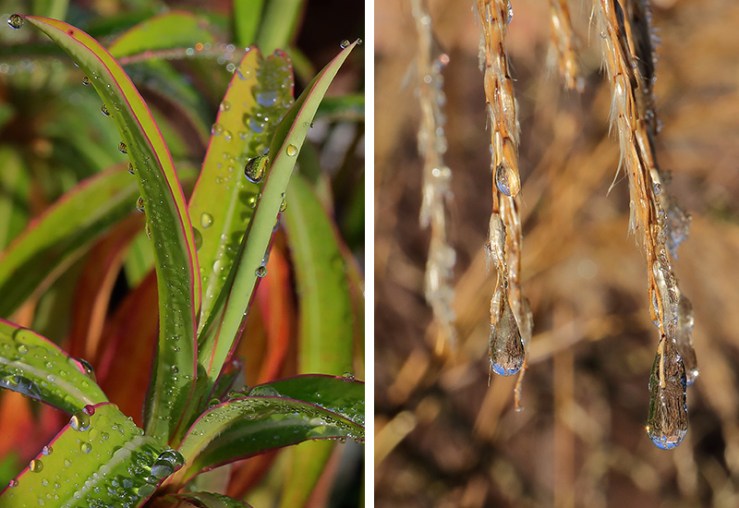
A lot of changes in the garden take place slowly, sometimes without being noticed until they’re complete. But frost, and the way it changes to semi-frozen beads before melting into glistening droplets has been a very visible feature here recently.

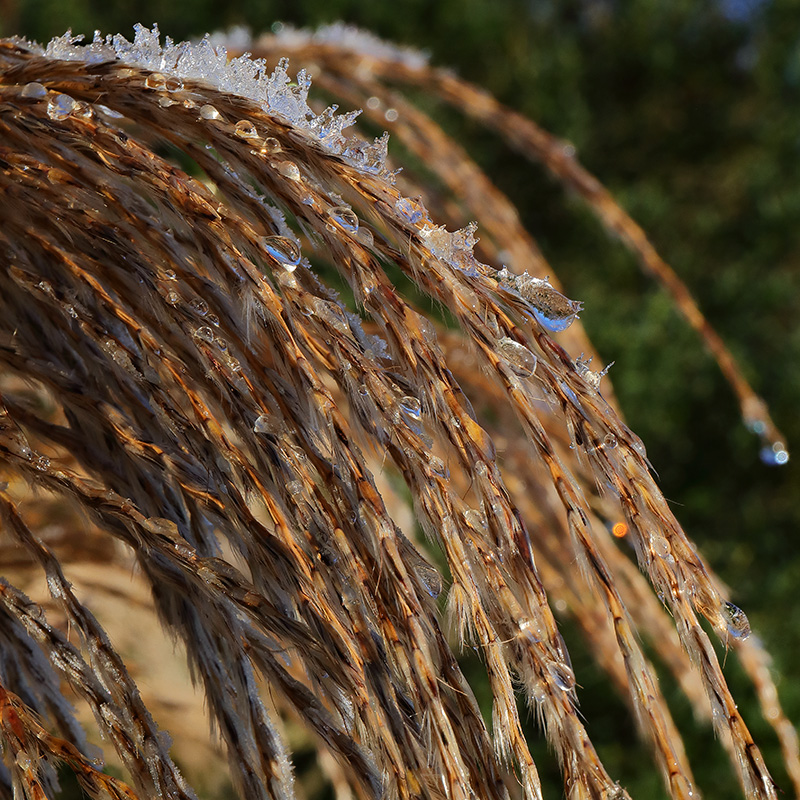
The top photograph shows the process of the thaw caught mid-way. There’s still an icy ridge of frost crystals running along the seed head, but below it the sun has melted the rest. It was the first time that I’ve photographed these Miscanthus seed heads – the frost added something extra to give interest to the image. (And they do tend to blow around in any breeze, so very still weather is needed for a decent photo.)

Frosted Miscanthus seed heads
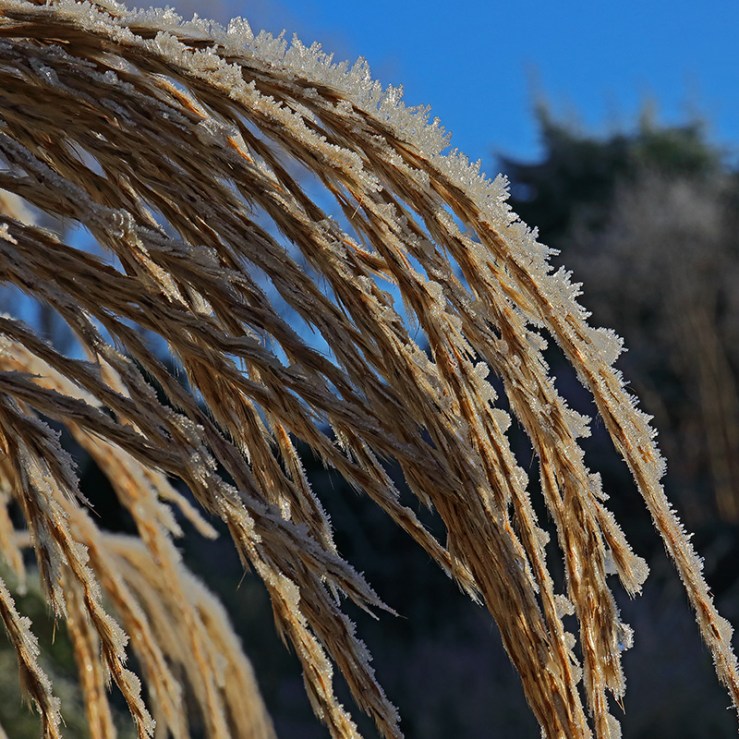
The Miscanthus seed heads were at their frostiest for this photograph.

You can see the seed head at its most frost-covered in the image above. It didn’t stay that way for long because the Miscanthus is growing in the area that gets the first sun of the morning. Any frost on this grass melts away very quickly. It’s only because we had several days of very low temperatures that there was this build-up of frost crystals.

Those frost crystals soon thawed in the sun and became the icy little drops that are seen in the photo below. But this wasn’t the only change taking place as I photographed the Miscanthus. I was surprised to see how quickly the hairs on the individual grass seeds fluffed out in the sun. (You can see how dry and airy-looking they’ve become in a very short space of time.)

I suppose the seeds must be programmed to wait until there’s some warmth before opening out their hairs and getting ready to fly away in the wind. Later on, when it was cooler, I noticed that they had closed up again. Since that morning, I’ve seen the fluffiness appear in the sunshine and disappear as the hairs close when it’s cold. Perhaps this is a way of protecting the seed-hairs in bad weather, so that they don’t get bedraggled, and allowing them to stay dry enough to let the seeds float away when the time is right. It’s an intriguing little change that had gone unnoticed here before.

Here the Miscanthus seed heads have suddenly opened up and become fluffy.

Asleep in the Shade

Frosted hellebore buds

NB: A note for WordPress Reader users – you need to click on the title of the post again to come out of the reader and go to the post itself. This allows you to see the whole of the top photograph. (Otherwise you may see just a tiny section!)

During the run of frosty mornings this week, I spent a lot of time photographing plants in the garden. While busy in amongst the icy foliage, I looked down by my feet and noticed that even the hellebores appeared to be frozen. I haven’t seen them frosted before because the areas they’re in are usually too well-protected by nearby shrubs. To my fanciful imagination, they look as if they’re all tucked up, sleeping soundly and waiting for warmer weather.

These hellebores manage to be in flower very early in the year and their presence reminds me that winter won’t be here forever…spring will come! As it happens, the flowers appear to have emerged slightly earlier than they have in previous years. (Up until now I’ve seen them in flower here at the start of February. Perhaps the earlier flowering is because the plants are now becoming more established.) It was still less than halfway through January when I photographed them, so there is likely to be more cold weather for them to face.

Freezing temperatures don’t seem to bother these tough little plants, despite their glamorous appearance. I’m grateful for their resilience. It would be wonderful if all the rest of the plants in the garden could be relied upon to come through winter so well. (But I can only blame myself for the less hardy plants chosen for here. And what would life be without the excitement of a little bit of risk…?)

Frosted hellebore flowers

Winter Leaves

Frosted Mahonia Leaves

NB: A note for WordPress Reader users – you need to click on the title of the post again to come out of the reader and go to the post itself. This allows you to see the whole of the top photograph. (Otherwise you may see just a tiny section!)

The leaves here are mostly long gone, but the few that remain can give an interesting texture to the frosted garden. The gently curving leaves in the photograph above are those of Mahonia eurybracteata ‘Soft Caress’. This small shrub is in a very sheltered position, so this is the first year that I’ve seen frost on it.

This Mahonia is very different from the larger one (probably a Mahonia japonica) at the back of our garden. ‘Soft Caress’ is smaller (3 to 4ft high) and not as hardy. It’s a cultivar that doesn’t like to be in a hot, dry position, so I’ve planted it where it is shaded by other larger shrubs.

Unlike other varieties of Mahonia, the leaves of this one aren’t prickly (hence the name), so it’s a much ‘friendlier’ plant to have around. I like the effect of its foliage so much that I’d like to grow it elsewhere in the garden too, but that will be if I can find a suitable spot for another one. (Most of our garden is likely to be a bit too hot and dry in summer.)

The second set of leaves are those of a fennel. We have lots of bronze fennel in the garden (it spreads very easily from seed), but I notice that this one is green. I think a bee must have brought in some pollen from a green fennel and that this is a cross between it and one of our bronze plants. We’ll probably end up with more green ones, but I’ve been getting rid of a lot of the self-sown seedlings. If I didn’t, they’d soon take over the garden! But I would never get rid of them all. They look far too good when frosted for me to do that, and I love to photograph both the leaves and the seed heads. (As you may have noticed…you can see a couple of my favourites on this post.) ❄

frosted fennel leaves
Fennel leaves become a delicate tracery when the frost gets to them.

A Cold Start

Frosted clematis flowers (Clematis cirrhosa 'Landsdowne Gem')

NB: A note for WordPress Reader users – you need to click on the title of the post again to come out of the reader and go to the post itself. This allows you to see the whole of the top photograph. (Otherwise you may see just a tiny section!)

January usually means a change to colder weather here. December can be quite mild and often doesn’t feel particularly wintry to me, but the start of the new year tends to bring a drop in temperatures.

True to form, we have frosty weather here now, so it’s a good time to get busy with the camera. The images here, though, are not from this winter but were taken a couple of years ago. We don’t often get such a heavy frost, so on that glacial morning I photographed everything I could find. (I’m still processing the photos now!) It could be a long time before frost encrusts everything as heavily again. The freezing weather doesn’t last long enough – this was the result of several icy-cold nights.

Right now, the frost is coming and going and I seize the chance to take a few photographs on those cold mornings. It does look as if we might have a run of several sub-zero nights in the coming week, so perhaps the frost will have a chance to build up…I’ll have my camera ready just in case.

(The plants here are Clematis ‘Lansdowne Gem’, which flowers in winter, and the seed heads of Potentilla recta var. sulphurea (sulphur cinquefoil). If you’d like to see what the clematis looked like before the frost got to it, there’s a post about it here.)

Frosted seed heads of potentilla

May Your New Year be Bright and Happy

Frosted flowers of Viburnum bodnantense 'Dawn'

NB: A note for WordPress Reader users – you need to click on the title of the post again to come out of the reader and go to the post itself. This allows you to see the whole of the top photograph. (Otherwise you may see just a tiny section!)

It’s the time when we look back at the old year and forward to the new year. I hope that 2024 has been good to you and that 2025 will be a very happy and healthy year for you. May your New Year celebrations be fun and full of joy and the start of a year that fulfils your hopes and plans. Happy New Year!

Caught by a Winter Chill

NB: A note for WordPress Reader users – you need to click on the title of the post again to come out of the reader and go to the post itself. This allows you to see the whole of the top photograph. (Otherwise you may see just a tiny section!)

Most of the flowers in my garden disappear long before December. Unusually, the astrantia (top) managed to hold onto several flowers until well into one winter. Over a couple of very cold mornings it provided me with a delicate little subject for photography, and a good reason for getting very cold fingers and toes!

The scabious in the picture below was newly-planted just a few months ago and still had several buds at the time. I didn’t know if the last ones would open, but this one has. It was just in time to get caught by a heavy frost. The frost didn’t last long – you can see the droplets forming as it melts.

There’s always a chance that the last autumn flowers will get a touch of early frost. I was lucky, however, that these two plants were still in flower when the heavier frosts arrived. There’s often very little left to photograph by that time. The frost lasted well on these flowers because they’re both on the side of the garden that’s shaded from the morning sun. If they’d been over on the sunny side, the frost on them would have melted early, long before I’d have had time to get outside with my camera.

Luck can play a large part in my photography. There are many things that I have little control over and there are also the unexpected surprises that nature brings. I just have to keep my eyes open for them! ❄

A flower of Scabiosa caucasica ‘Fama White’ is covered in a frost that’s just starting to melt.

Frosted Fragility

NB: A note for WordPress Reader users – you need to click on the title of the post again to come out of the reader and go to the post itself. This allows you to see the whole of the top photograph. (Otherwise you may see just a tiny section!)

Frost gives me good opportunities for garden photography in winter, but it’s generally not good news for the flowers in my pictures. The rose photographed last week was robust enough to survive, although it may not open any more fully. Most frozen blooms, however, are left with wilted and sagging petals when they thaw.

That’s not a worry, since the frost will usually just have finished off the last of the flowers from autumn. The plants will flower again next year – if they’re hardy. But there are some that are only borderline hardy and will only survive if the winter doesn’t get too cold for them.

The salvia above (Salvia involucrata ‘Bethellii’) may withstand temperatures down to about -5℃ and this plant managed to come through several winters. A far colder spell than we’ve had for a long time was too much for it, though, and it didn’t reappear the following spring. Some cuttings from the plant did survive that unusually cold period. They are in a huge pot that’s part of a collection of containers that my husband has planted up to go in front of the house. There it’s sheltered by the house wall. It benefits from a sunny, south-facing position and the warmth that radiates from both the wall and the paved driveway below it. This just shows how microclimates can vary within a garden!

The little daisy below was, I think, Rhodanthemum ‘Moondance’. (The leaves belong to the plant behind it.) It should have coped with winter. In this case it was probably the heavy winter rain that killed it rather than the cold. It’s a Mediterranean plant that likes good drainage. Here our summers are normally very dry, but, awkwardly, our winters can be rainy and wet. That means that I do sometimes lose plants if I haven’t given them good enough drainage. I think I’m lucky that so much does survive! 🌿

Hello Frost!

Frosted Rose 'Zepherine Drouhin'

NB: A note for WordPress Reader users – you need to click on the title of the post again to come out of the reader and go to the post itself. This allows you to see the whole of the top photograph. (Otherwise you may see just a tiny section!)

Last week I was hoping for the frost and sunshine that the forecast promised, but with no luck. Instead a frosty morning arrived unexpectedly a couple of days ago. There was even some sun…ideal for photography!

The rose you see here is Zepherine Drouhin, a fragrant climber that has no thorns. (A thornless rose is a delight – no getting scratched when you’re weeding beside it.) It often has a few flowers left late in the year, so is a frequent subject in my frost pictures. Luckily, it is even in a helpful position – just where it is protected from the earliest sun by nearby trees, but where the sun can make it sparkle by the time I’m likely to be outside with my camera.

The rose’s position with regard to the sun makes a huge difference. One side of my garden catches the earliest sun. That means any frost there is very quick to melt and it is often gone before I can photograph it.

In contrast, the other side of the garden remains in deep shade for a long time. This side is where the flowers that get deeply frozen usually are, but there is much less light to play with. It occurs to me now, that I should bring a big reflector outside to see if I can reflect some sun onto subjects there. Why hadn’t I thought of that before? Hmm, in too much of a rush to get outside while there was still frost, I guess…❄

Frosted rose petal
There’s not much left of this rose (‘Zepherine Drouhin’).

Almost, but Not Quite…

Frosted fig leaf.

NB: A note for WordPress Reader users – you need to click on the title of the post again to come out of the reader and go to the post itself. This allows you to see the whole of the top photograph. (Otherwise you may see just a tiny section!)

This week the weather forecast promised us frost and sunshine – a great combination for photography. Unfortunately, our two very cold mornings didn’t give the conditions I had hoped for. The first morning had plenty of frost, but was exceedingly grey and dull until about the middle of the day, then the next day the ground was frozen but there wasn’t any visible frost on the plants.

The photographs here are from previous winters. The frost on honesty pods (below) is a subject that I’d like to pursue further. I’ve even prepared a few of the dried pods by picking some, peeling the outer skins from the seed pods, and then leaving them in a position where they’re likely to catch both frost and sun. Now I have to wait for the weather to play along!

frosted honesty seed pods
Frost can make a lot out of very little!

While I keep a watch on the weather, I’ve been staying warm indoors and learning a bit more about printmaking. It’s been a long time since I did printmaking of any kind. I am now trying out methods that I can fairly easily do at home, rather than needing the facilities of a printmaking workshop. There’s a lot for me to learn and it may be a little while before I have results that I can show here, but it will keep me happily occupied while it’s cold outside. ❄

Rose 'Zepherine Drouhin', covered in frost.
Frost sometimes manages to catch the last flowers of Rose ‘Zepherine Drouhin’.