Brief Glories

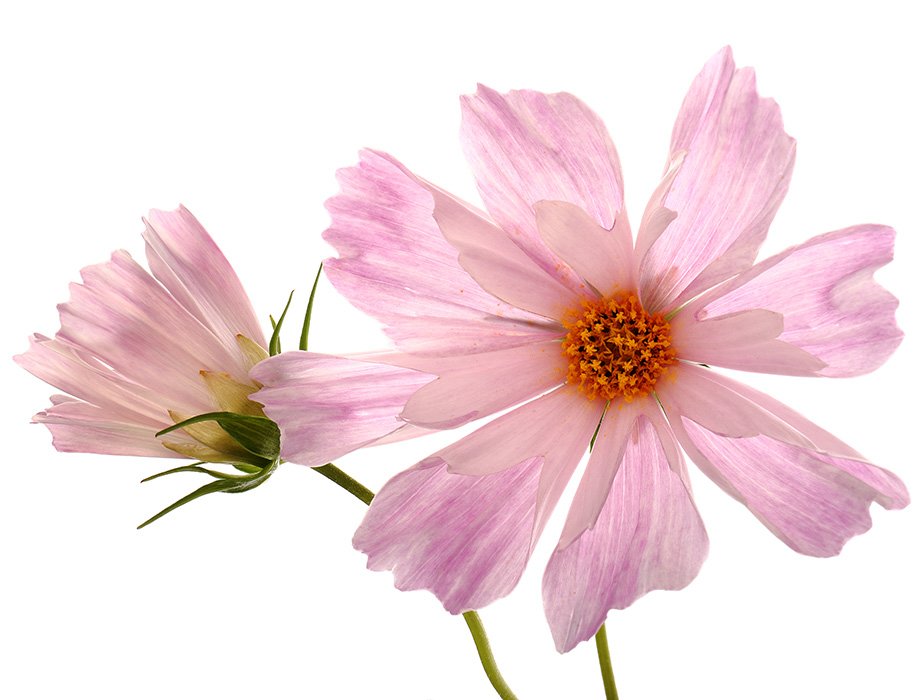
Flowers of Cosmos 'Seashells'

NB: A note for WordPress Reader users – you need to click on the title of the post again to see the full photograph. (Otherwise you see just a tiny section!)

My title isn’t entirely true! Annuals, like the cosmos in this post, can flower for months. But here I’m thinking of the difference between annuals and perennials.

Most of my garden is made up of perennials because I rely on them coming back year after year and gradually spreading. I wouldn’t have time to grow much from seed every year, so I need plants that are long-lived and can pretty much do their own thing once they are planted.

That makes lots of sense for building up the planting of the garden. But annuals have the advantage of providing me with something new to photograph. These – such as the zinnias, cosmos and nigella I’ve grown in past years – add some variety to the images I can create. This year I’ve missed having that variety because I didn’t grow any annuals at all.

There are sometimes a few annuals and biennials that reappear from self-sown seed. The love-in-a-mist (nigella) manages to spread itself around, as do evening primroses, wild carrot (daucus) and borage (which gets everywhere if it gets a chance). This year I’ve noticed that there is a small self-sown cosmos in a border. I’ve never had them do this before, so it’s an unexpected surprise and I’ll have to wait to see what the flower will be. (Probably a pink and white ‘Candy Stripe’, since they were the most recent. You can see them here.)

Waiting for that little cosmos bud to open is making me feel that I must make time to sow some annuals next year. I’ve missed the added interest and excitement that growing something new and unfamiliar from seed brings. Hmm, now I need to look at some seed catalogues… 🙂

Flower of Cosmos 'Seashells'
Flower of Cosmos ‘Seashells’

Low-Growing Beauties: Herbaceous Clematis

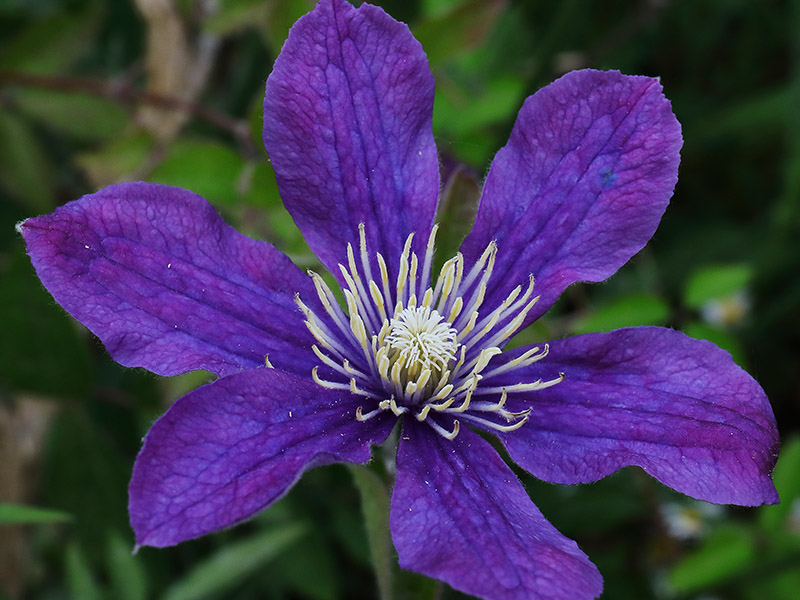
Clematis Sapphire Indigo

NB: A note for WordPress Reader users – you need to click on the title of the post again to see the full photograph. (Otherwise you see just a tiny section!)

Tall, climbing clematis are amongst my favourite plants. I love the different flower forms, as well as their wonderfully rich colours and the velvety look of their petals. But I can struggle to keep them going here, in the dry and baking soil of my East-Anglian garden.

The short-growing herbaceous varieties of clematis may be a dependable alternative here. I have two at the moment: ‘Sapphire Indigo’ ( just opening in the top photograph) and the popular ‘Arabella’ below. They have been in the garden for a number of years and have managed to come through the drought and unusually high temperatures of this summer without any extra watering. Both are still in flower now, at the beginning of October and have been in flower on and off from June. (They would probably be more constantly in flower if they had more moisture.)

Clematis Arabella
Clematis Arabella

Reading up on these clematis tells me that they don’t suffer from clematis wilt and that they are long-lived. They have no tendrils to help them climb and are only 30 to 60 cm tall, so are good where they can grow through another plant for some support. I have ‘Arabella’ growing through a shrubby sage that gets to over 60 cm and provides a useful home where the clematis can lean against its twiggy framework.

The only problem that I’ve found so far is that slugs and snails like snacking on the flowers. So I’ll need to find something gritty or prickly (we have a holly and mahonia bushes, so perhaps some of their leaves) to sprinkle around the stems in the hope of keeping these marauders away.

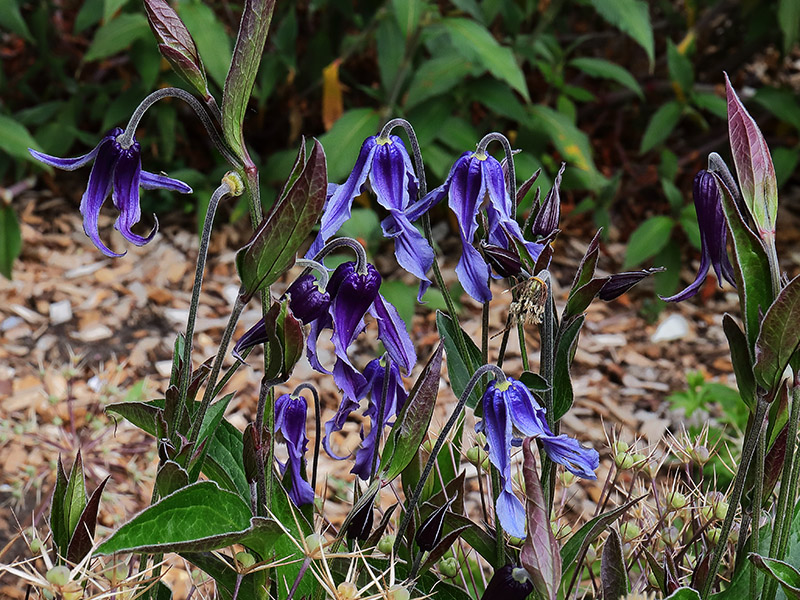
The flowers on these two plants start off with a lot of purple in their colour when they first open and then gradually become more blue as they age. (You can see the newly-opened flowers of ‘Arabella’ here.) My last photograph is another purply-blue short-growing clematis, probably a clematis integrifolia. This one was photographed on a visit to Fullers Mill Garden and is one that I would like to try here. These lovely purple-blues are my favourites, but I’m sure I’ll be tempted by pink and white varieties too. For now though, I’m going back outside with my camera to take some more pictures of ‘Sapphire Indigo’…

Clematis integrifolia

Glowing Embers

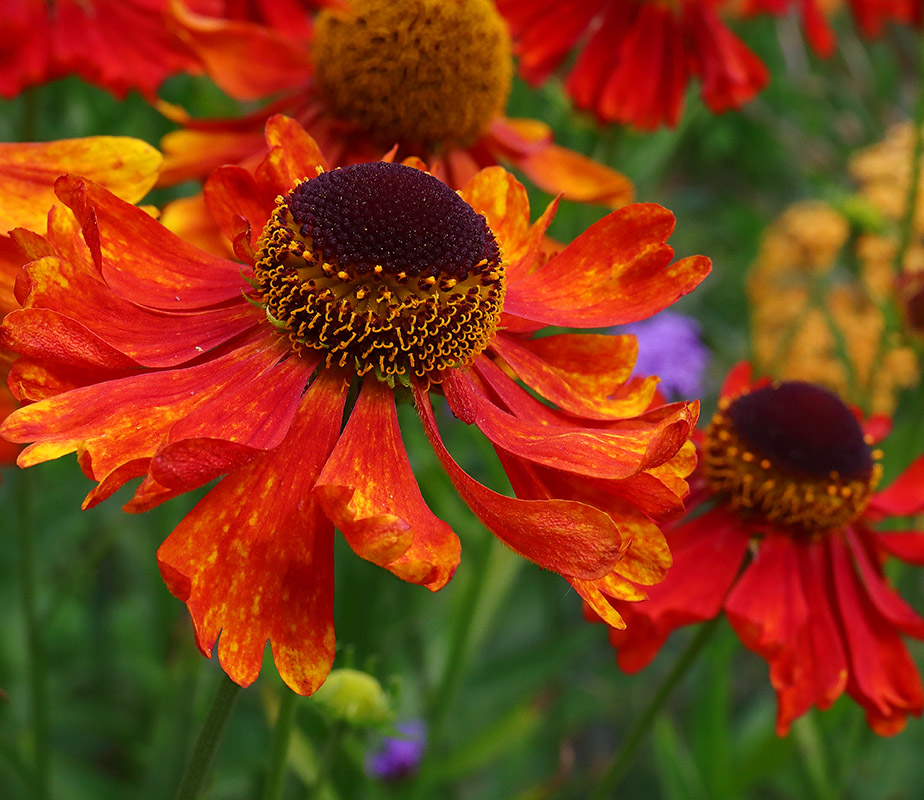
helenium flowers

NB: A note for WordPress Reader users – you need to click on the title of the post again to see the full photograph. (Otherwise you see just a tiny section!)

Here we’ve gone from unusually high temperatures to autumnal chills in a very short time. I’m still wondering how the summer disappeared so quickly. (And hoping for some more gentle sunshine that we can enjoy rather than be baked by.)

Late summer flowers have become a memory too. These heleniums (aka sneezeweed) are in colours that remind me of that summer heat. They are fiery and glowing and demanded to be gazed at and photographed.

The heleniums in the top image were in a garden I visited. I wouldn’t plant this particular helenium in my own garden because I’m not keen on its combination of colours. However, the flowers made a good picture anyway, so I was pleased to be able to photograph them.

The flowers in the bottom photograph were in my own garden. (Unfortunately the plant didn’t come back this spring – but I think it would have struggled to survive this dry summer, even if it had.) The colour here is much redder than the other plant and makes me think of the hot embers of a fire. Maybe I’ll try to grow it again in the future.

helenium flowers

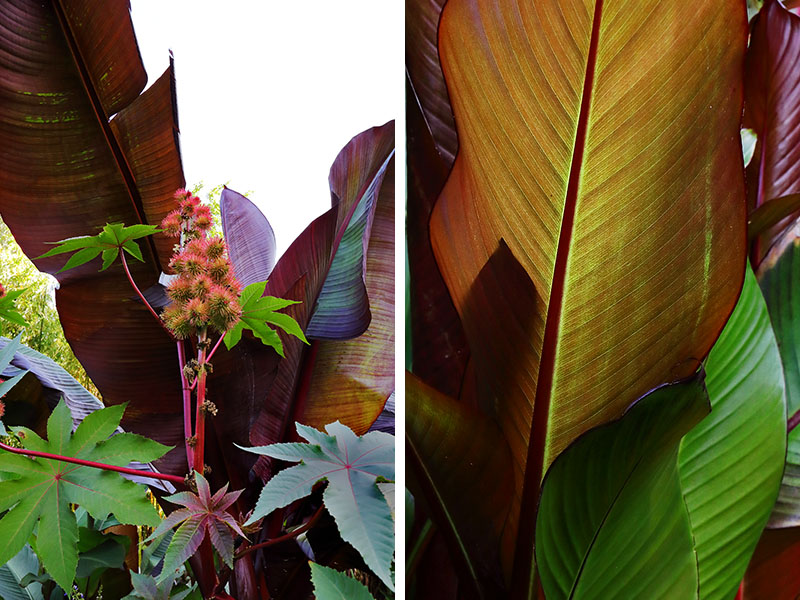
Into the Jungle: Henstead Exotic Garden

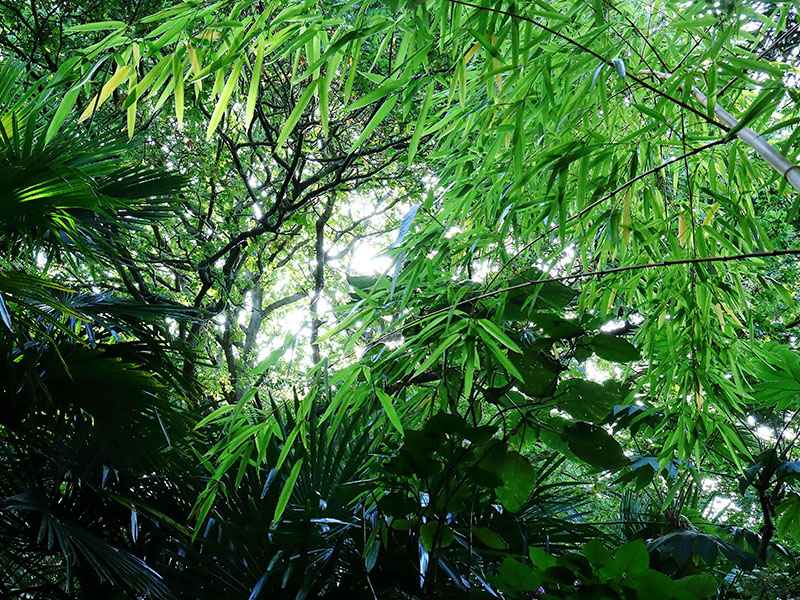
Henstead Exotic Garden

NB: A note for WordPress Reader users – you need to click on the title of the post again to see the full photograph. (Otherwise you see just a tiny section!)

Last weekend I went to visit Henstead Exotic Garden near Beccles in Suffolk. The weather was still very warm, so it was a great pleasure to spend time in a garden that provided plenty of shade.

That precious shade was provided by the many trees, shrubs and bamboos growing in the garden. Amongst these are around 100 palms, giant yellow bamboo that can grow a foot a day (plants grow fast in the warmth here) and beautiful red-leaved bananas.

Henstead Exotic Garden

The garden has been established for less than 20 years, with its owner, Andrew Brogan, having moved to Suffolk in 2004. It is not what you might expect to see in Suffolk. This garden survives winters here because many of the palms and other exotics are actually quite hardy and due to its sheltered site, surrounded by a belt of older trees. (These include yews and oaks, some of which are up to 300 years old.) Additionally, the garden is only two miles from the coast, which protects it from having prolonged frosts.

Henstead Exotic Garden

The deep shade created by the lush growth of the plants at this time of year made trying to photograph it very tricky. It was very dark in many areas. (But, oh, I did enjoy the cool!) I tend to prefer not to use the higher ISO speeds on my camera, but this time I really had no choice.

It was so much easier when I emerged from under the leafy canopy into the nursery area. Here there was a large open area that allowed me plenty of light to photograph some of the plants in containers. (The nursery area is packed with all sorts of serious temptations, many at very reasonable prices…easy to spend a long time at this bit!)

Henstead Exotic Garden

I reckon I’ll have to return to the garden earlier in the year in future, so that I can photograph some of the lovely garden features that were hidden in it’s dark depths. There were ponds and an artificial stream that would be easier to photograph at a time when the canopy above hasn’t yet filled out.

There were interesting buildings too – the main one being a large tropical-styled summerhouse, which must be an inviting place to spend a relaxed hour or two. There was also a ‘Thai pavilion’ and viewing area which visitors clamber up to via some rather deep steps – an exciting viewpoint up close to the trees and bamboos! I thoroughly enjoyed my visit to this very different garden – I’ll be back!

Henstead Exotic Garden

Cool Thoughts: Frosty Memories

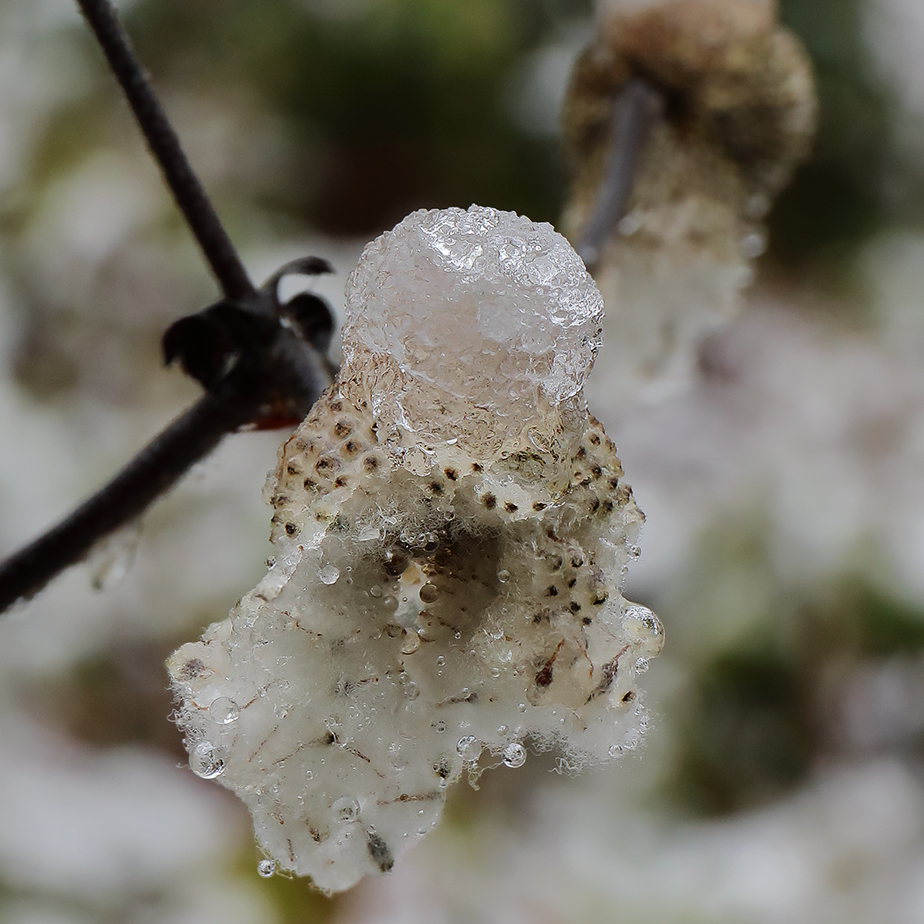
Snow on anemone seed head

NB: A note for WordPress Reader users – you need to click on the title of the post again to see the full photograph. (Otherwise you see just a tiny section!)

I’d like to thank Tanja Britton for the idea for this post…we felt that some of my frosty photographs may bring a suggestion of coolness to these over-hot summer days. (The temperatures are still higher than normal in the UK and, I believe, in many areas elsewhere.)

Snow is infrequent in our winter in Suffolk now, so the Japanese anemone seedhead, with its tiny cap of snow, (top photo) is a rare image for me. Frost is much more usual in our winters, so I leave seedheads to see if they will become interesting subjects to photograph. The frost can make something magical out of the most ordinary plant remains, as you can see from the photo below. The honesty seedheads were long past their best and getting very scruffy, but with a bit of frost and some sunshine, they’re suddenly delicate and attractive.

frosted honesty seed pods
The remains of honesty seedheads look much better after the frost.

Bronze fennel tries to take over my garden by spreading its seedlings everywhere but I resist the temptation to clear away the seedheads and I leave it intact for the frost. This plant never disappoints me when it’s frosted, and it can become most decorative, especially when the sun adds some sparkle.

frosted fennel seed head
A frosted fennel seedhead looks decorative in the sun.

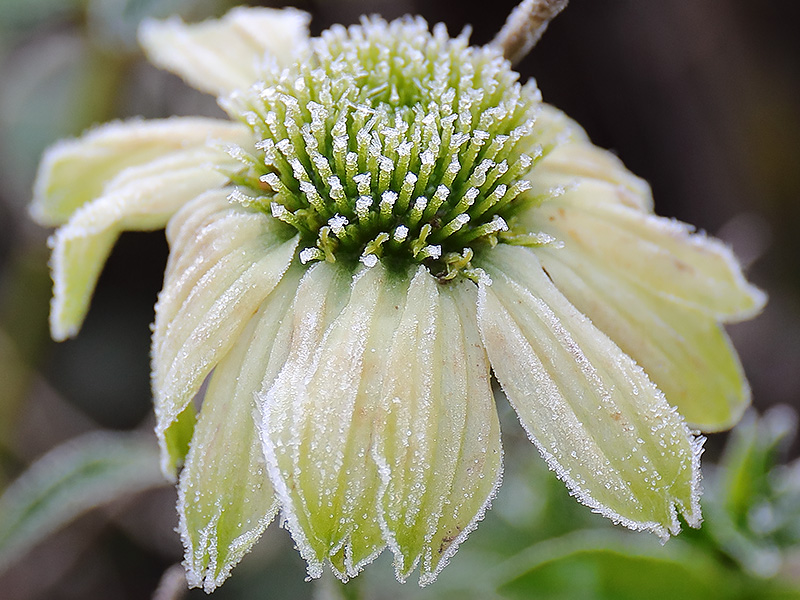
If the frost is early, it can catch plants that are still in flower. The echinacea below was a new plant and had come into flower much later than normal. It was an unexpected sight one morning, to see it completely frozen through by the first frost. (It hasn’t happened to any of the echinacea flowers since.)

Echinacea purpurea – frozen through by an early frost!

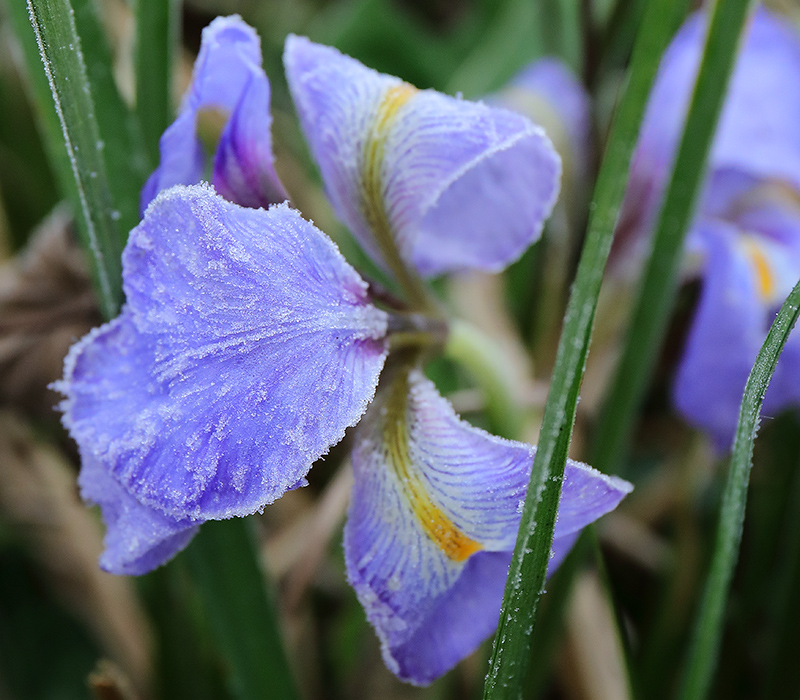
A few flowers, such as the yellow winter jasmine, the pink-flowered shrub Viburnum bodnantense ‘Dawn’ and this winter-flowering iris (below) have flowers through much of the winter. They look especially appealing with a touch of frost (although that shortens the life of the individual flowers).

winter-flowering iris
Iris unguicularis – a winter-flowering iris that frequently has frosted flowers.

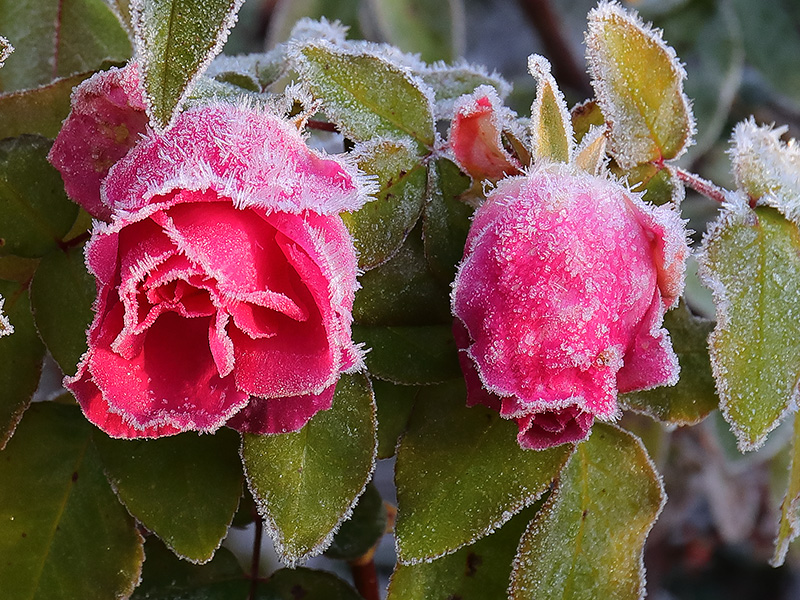
I’m glad that the roses in my garden right now haven’t got any frost on them though! Zepherine Drouhin sometimes has a few flowers left just as the frosts are starting, so I always look to see if they’re in good enough condition for a photograph. Of course, when the frost melts, the flowers are left looking wilted and they won’t survive the damage the frost has done to the petals. But a photograph preserves the memory of them.

Rose 'Zepherine Drouhin', covered in frost.
Rose ‘Zepherine Drouhin’

Cool Whites

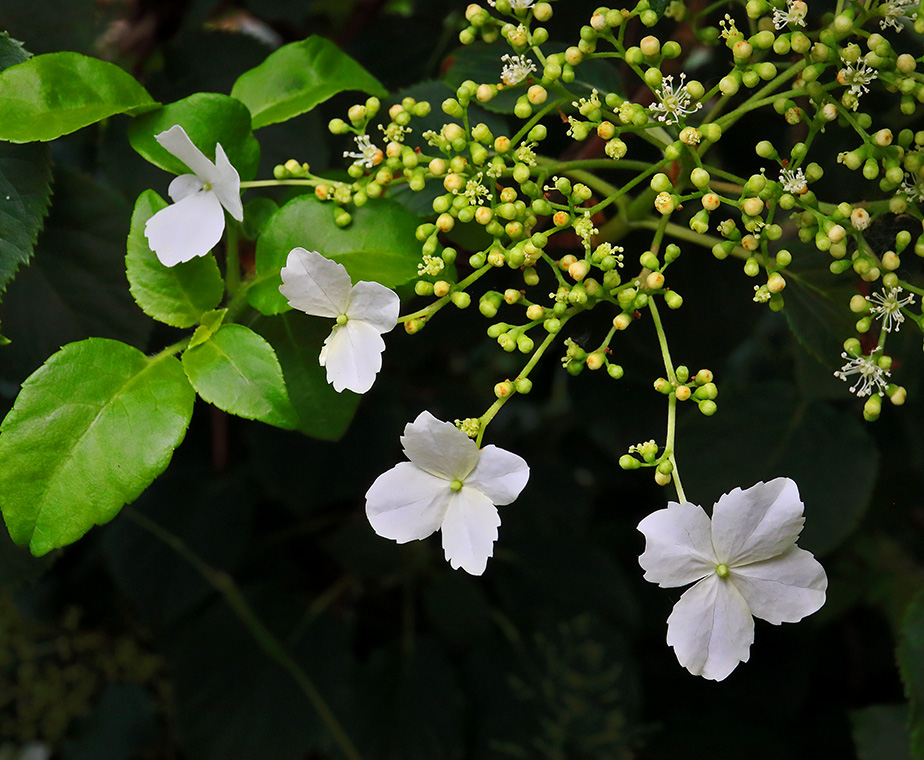
Hydrangea petiolaris

NB: A note for WordPress Reader users – you need to click on the title of the post again to see the full photograph. (Otherwise you see just a tiny section!)

To me, white flowers with green foliage have a lovely fresh and cool look…something that would be welcome in all the recent hot weather. (Fortunately the temperatures have dropped a bit, but it’s still hotter than normal.)

The climbing Hydrangea petiolaris in the top picture has recently finished flowering. During June and early July its airy white flowers looked graceful alongside our shady seating area. It’s going to get too big for its space, so I ought to prune it back now the flowers are over. However, I like to leave some of the flowers to dry out so that I can photograph them in the frost. It’s hard to imagine frost right now, but it does look deliciously cool, as you can see below.

Frosted climbing hydrangea
Frosty flowers of climbing hydrangea, photographed in winter 2019.

We have just a few white flowers in our garden. It’s still a little early for the white Japanese anemones. These struggle a bit in the heat and do need watering to keep them going, so I’m not expecting great results from them this year. And I haven’t grown any of the white cosmos this year, so I’m rather missing it.

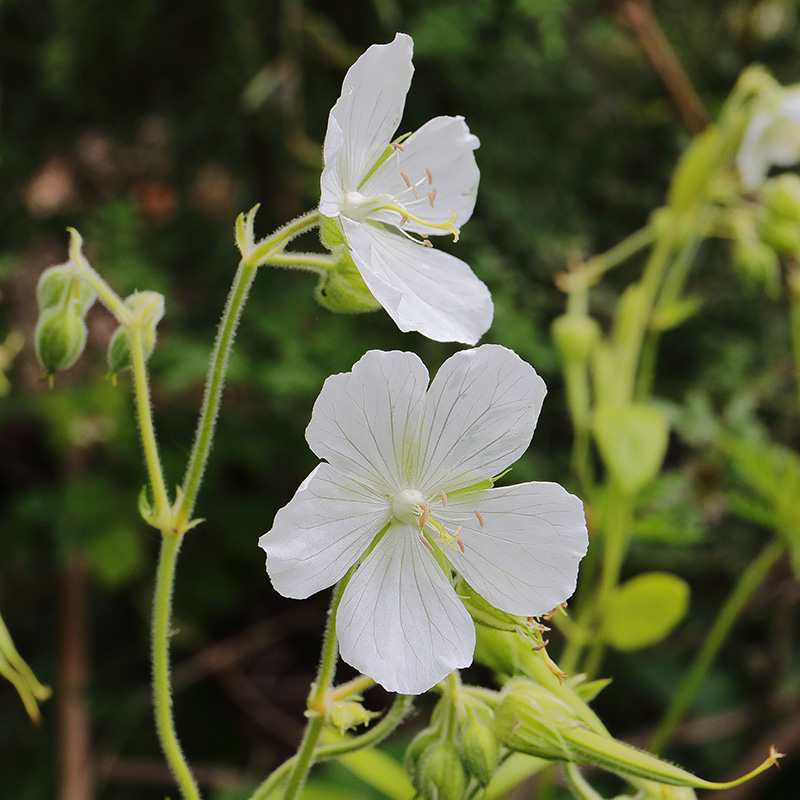
The white geranium below was originally planted years ago but has now managed to spread itself around the garden by self-seeding. It’s very welcome, so I hope it will continue it’s journey around the garden. Most of my geraniums form spreading clumps but this one seems so far to be much more compact. That’s great, because it means that it doesn’t cause much disruption to other plants and can fit itself into gaps quite easily.

white hardy geranium flowers
A white geranium (name unknown) that seeds itself around.

A plant that I’ve only started to notice recently is Gillenia trifoliata. The plant below was growing at Fullers Mill Garden, and being able to see it close up – rather than in a photo or on TV – made me realise how pretty and delicate the effect of the tiny white flowers is. If I can find space I’d like to grow it, but there’s already a list of plants I’d like to find room for…

Gillenia trifoliata flowers
Gillenia trifoliata (Bowman’s root)

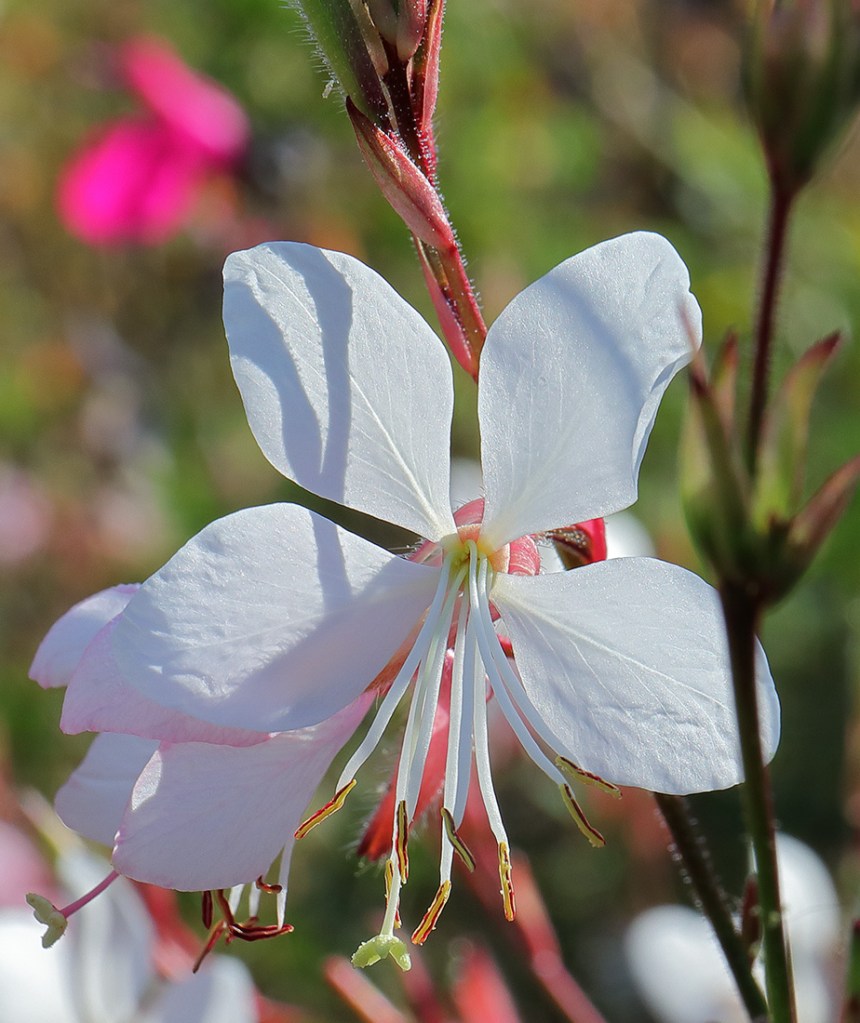
The Gillenia makes me think of the flowers of Gaura lindheimeri, which are just starting to come out in my garden and will last into the late autumn. Gaura is great here because it doesn’t take up a lot of room and the flowers weave themselves through and around the other plants. I’m looking forward to seeing their flowers dancing in the borders like little white butterflies very soon.

Flower of Gaura lindheimeri
The flowers of Gaura lindheimeri are just beginning to open.

For the Bees

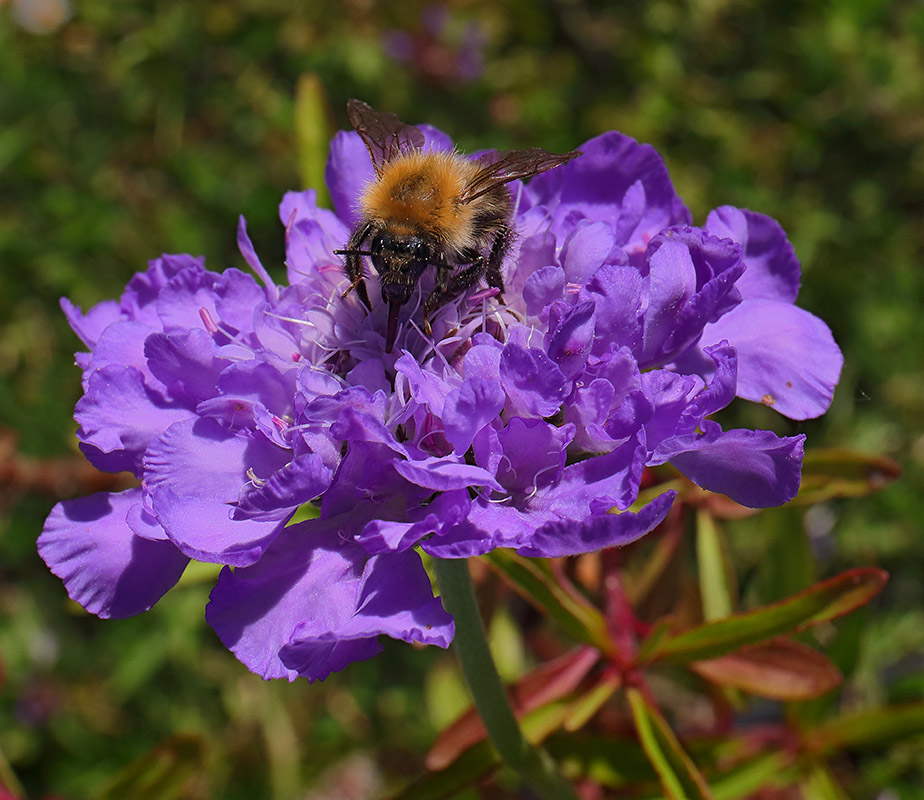
Common Carder Bee on Scabious flower

NB: A note for WordPress Reader users – you need to click on the title of the post again to see the full photograph. (Otherwise you see just a tiny section!)

Helping bees is the annual focus of ‘Bees’ Needs Week’ again, starting tomorrow. By helping bees to survive and thrive, we’re really helping ourselves. A large part of agriculture relies on bees (and other pollinators) to pollinate the crops that provide our own food.

It seems deeply ironic to me that while agriculture relies on wild pollinators to pollinate an estimated 85-95% of the UK crops that require it, that agriculture is also a main reason for their decline. The destruction of wild habitats by intensive farming and the use of pesticides and weedkillers is making the survival of insects more difficult. But we can all help to fight the decline in wild bees and other insects in our own gardens, on balconies, allotments, and on any patch of spare ground.

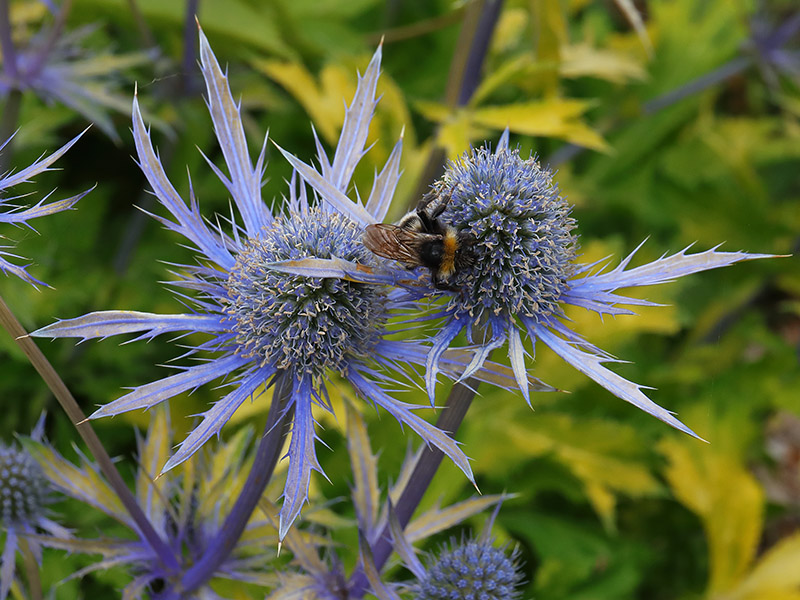
Bumblebee on Eryngium

Plants with plenty of pollen and nectar are the most obvious thing we can provide. A wide variety of garden plants are attractive to bees, so there’s lots to choose from for the gardener. There is a list of some of the best plants for bumblebees here. And here is an excellent (and longer) list of good pollinator plants from bee expert Dave Goulson. (Scroll down his page for it.)

If you garden, you’ll soon notice which of your plants the bees prefer. I try to be aware of the most popular flowers in my own garden and grow a few more of them if I can squeeze them in. I keep an eye open for the plants that are being visited by bees in other people’s gardens too.

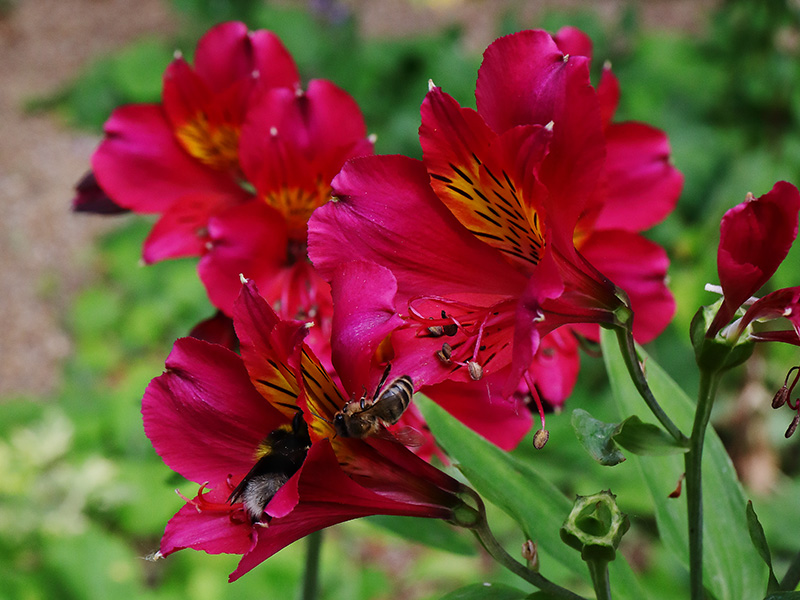
I was very pleased to see the bees on the alstroemeria in the photograph below because it’s one that I’d like to plant here. It looks to me as if the honeybee is impatiently waiting for the bumblebee to get out of that flower! (I wonder why that one – there were plenty of others to choose from.)

Bees on Alstroemeria
Honeybee and Bumblebee on Alstroemeria: ‘Hey wake up in there, it’s my turn!’

Water, obviously, is another essential to life for the bees and you can make their search for it easier and safer by providing some. (It’s easy for bees to drown in deep water.) The recommended method is simply to fill a shallow bowl with pebbles and top it up with water. Then the bees can land on a pebble and stand there safely while drinking. But do remember to change the water occasionally so that you don’t get any mosquitos breeding in there!

Planting for bees brings a lot of satisfaction to my own garden. In late spring the distinct buzzing of bees from our ceanothus bush makes me grin…they sound so busy there! And the catmint attracts not only our cats but lots of bees too. They also love our apple trees, the lavender, thyme, alliums, hardy geraniums, and daisies of all kinds. Best of all here are the different varieties of scabious (top photo), which flower for a long time and always seem to have a bee or other pollinator somewhere. (OK, that is an exaggeration, but they are very popular.)

I hope that this will give you some ideas about a plant or two to add to your own space for the bees. Happy (buzzing) Bees Needs Week!

Honeybee on Astrantia

Fullers Mill Garden Revisited

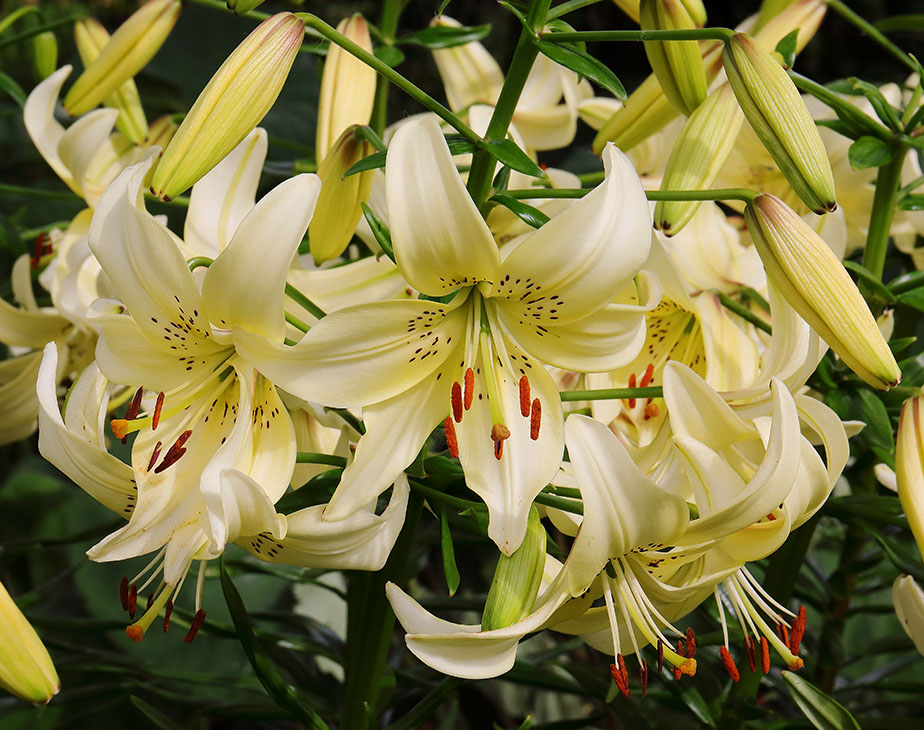
Pale yellow lilies

NB: A note for WordPress Reader users – you need to click on the title of the post again to see the full photograph. (Otherwise you see just a tiny section!)

This week I was lucky enough to be able to visit one of my favourite places – Fullers Mill Garden near Bury St Edmunds in Suffolk. Because of the pandemic, it’s been a long time since we visited any gardens.

This year we’ve enjoyed wandering around the open gardens in some neighbouring villages. Great for getting new ideas for our own garden, but I don’t bring my camera to those because it feels like an invasion of the owner’s privacy. It’s a different thing with the big gardens that are open to the public. These provide lots to keep me and my camera busy!

Fullers Mill Garden
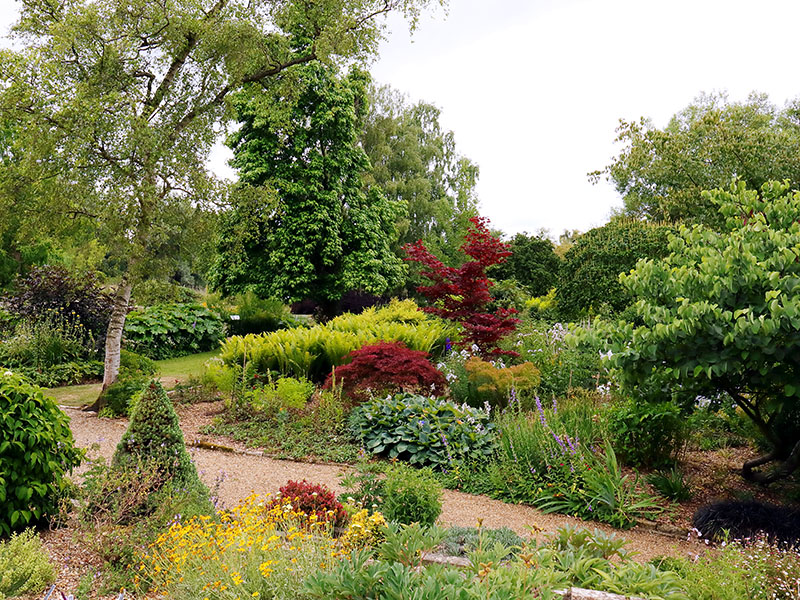
A small part of the upper area of the garden – there’s lots more.

My previous visits to Fullers Mill were both in September, so by then a lot of the most interesting flowers had gone over. This time I saw many of the large collection of lilies in flower. (These will be shown in a later post.)

It was a huge pleasure to be in the gardens when so many of the plants looked their best. There has been some rain recently, which has helped them stay fresh and vibrant. Suffolk can be dry and drought-ridden, so garden-visiting is best done before the summer gets too hot.

Fullers Mill Garden
Bright yellow livens up the borders.

The planting combinations appealed to me and made me think more carefully about those in my own garden. I particularly liked the yellow and blue mix above. The yellow of the ‘red hot pokers’ with that of the broom, but having totally different flower shapes, was something I’d love to plant in my own garden.

Fullers Mill Garden
The clematis with the allium seed heads delighted me.

The combination of herbaceous clematis with the seed heads of the Allium christophii was another combination I’d love to try. It’s the way that the soft purple remaining in the allium flower stems echoes the brownish-purple of the young leaves and the buds of the clematis that pleases me.

Fullers Mill Garden
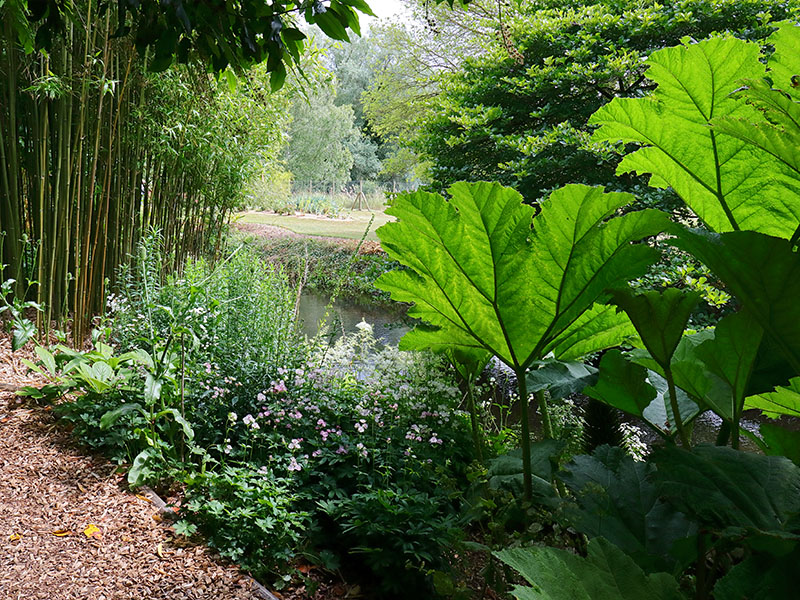
Gunnera and bamboo on one of the river banks gave a softer, more natural feel.

The garden is beautifully maintained by Perennial (The Gardeners’ Royal Benevolent Society). It was gifted to them by Bernard Tickner, the owner and creator of Fullers Mill Garden. They keep the garden well stocked with plants but allow some areas to feel more relaxed and natural (around the rivers that run through it, for instance). I think this makes it more relaxing for the visitor too.

I plan to visit Fullers Mill again during the summer. I’m sure there will be plenty to see and to photograph too. (There isn’t much that you haven’t already seen in my own small garden, so I’m glad to find something new to share here.) It’s a visit I’m certainly looking forward to. You can read my earlier post about Fullers Mill here.

Fullers Mill Garden

In the Pink

Clematis Hagley Hybrid

NB: A note for WordPress Reader users – you need to click on the title of the post again to see the full photograph. (Otherwise you see just a tiny section!)

A couple of weeks ago, the garden seemed to be full of blue and purple-blue flowers. Now it’s the turn of pink to come to the fore. The pink flowers growing here range from the softest and palest of shades (like last week’s water lily) to the most vivid of fuchsia-pinks. The shades here are somewhere in the middle.

Clematis ‘Hagley Hybrid’ (above) is one of the softer pinks, especially on a day when the sunlight is not very strong. (I’ve seen it look much brighter than this on a day with very bright sunlight. The age of the flower will make a difference too. The newly-opened flowers are a little brighter.)

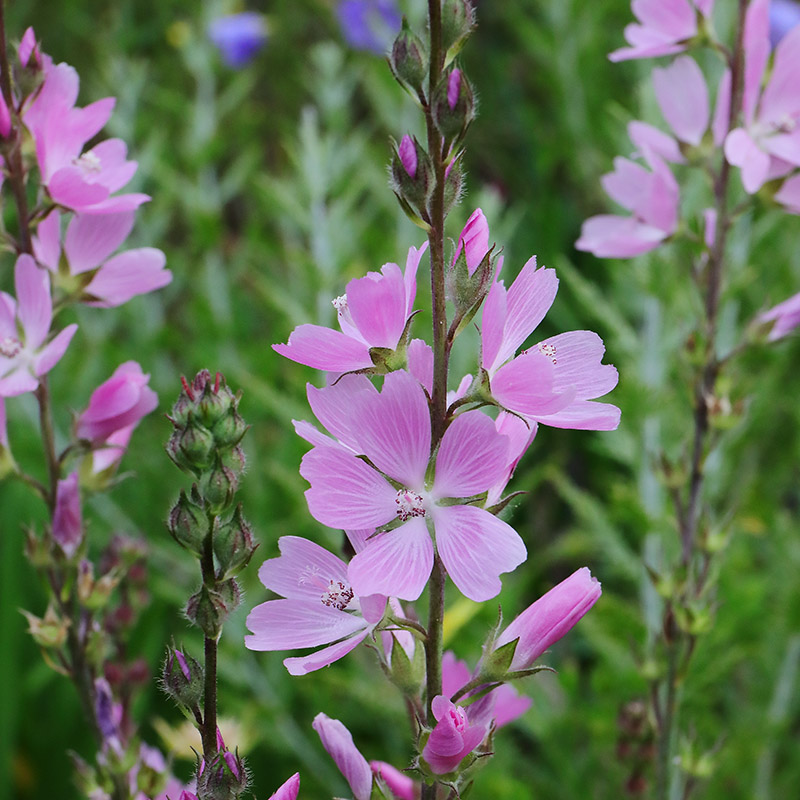
Sidalcea 'Party Girl' (prairie mallow)
Sidalcea ‘Party Girl’ (prairie mallow)

Another soft pink is the little prairie mallow above. It is Sidalcea ‘Party Girl’. The flowers are small and delicate – each one measures just 5cm across. They’re like miniature hollyhocks, which makes me wonder what it would be like to have normal large hollyhocks nearby. The difference in scale could be a bit mind-boggling!

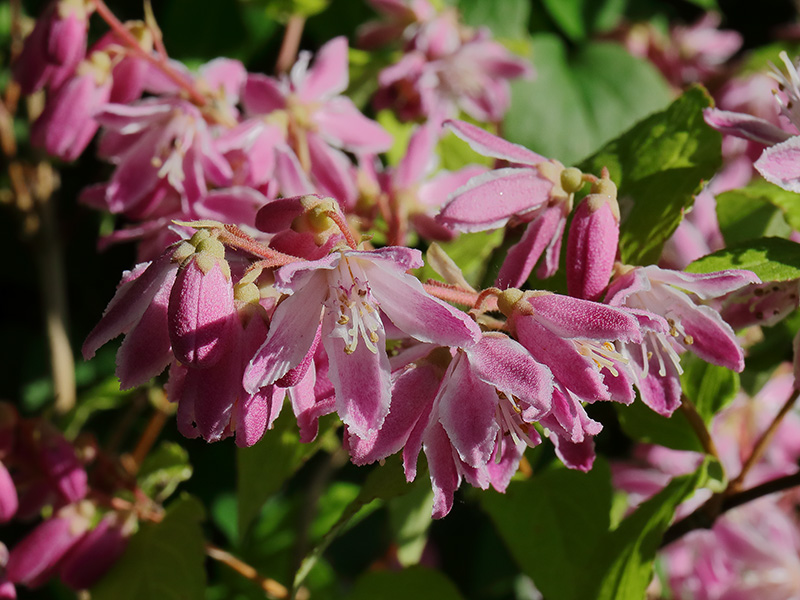
The pink of the deutzia below is a deeper and brighter shade than the others. I haven’t yet planted this shrub out, but had been wandering around the garden with it, looking to find it a home. (Like many gardeners, I too often buy a plant and then have to work out where I have room for it!)

Deutzia x hybrida Strawberry Fields

Wherever I eventually manage to plant the deutzia, I think it would look good with this pink salvia. (It’s ‘Rose Queen’.) The low evening sunlight shining through the pink flowers makes them glow with a rich pink which is very similar to the deutzia.

This low slanting light, whether it’s evening or early morning has a wonderful effect on the colours of plants. I’d love to be able to plant a border just so that it would catch the light at both the start and the end of the day. That’s giving me ideas about where I might plant the deutzia…

Salvia 'Rose Queen'
Salvia ‘Rose Queen’

A Velvet Touch

Rose 'Rhapsody in Blue'

NB: A note for WordPress Reader users – you need to click on the title of the post again to see the full photograph. (Otherwise you see just a tiny section!)

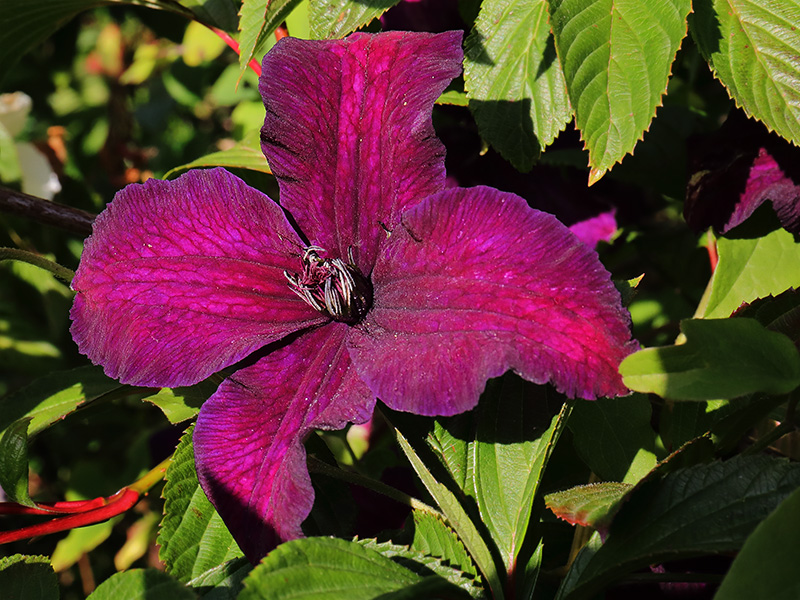
Some flowers have a very velvety look to their petals. The two plants in this post (rose ‘Rhapsody in Blue’ and clematis ‘Dark Eyes’) have especially dark and velvety flowers. But, having investigated, I can tell you that the flowers look a lot more like velvet than they actually feel. (They are, though, very soft to the touch.)

There was actually a study into the reasons for the velvety appearance of some petals. As I understand it, it’s all down to the dark colour of the flower, the shape of the cells within the petal and a low angle of light. (If you want to read all about it, you can find the report here.)

The feel of a petal or leaf is something that I tend not to think about very much when I’m planning what to plant. But there’s no doubt that textures add a stimulating element to a garden. The soft hairs on the flowers and leaves of pulsatilla (which you can see in an earlier blog post) are a great example of texture adding interest. While some plants are hairy, other plants are smooth – like the star-shaped flowers of Allium christophii, which have an almost metallic-looking sheen.

There’s lots of choice amongst the flowers that have a velvety lustre to their petals. The most obvious may be the classic red rose. Then, for instance, there are deep blue delphiniums, dark-flowered pelargoniums and purple, crimson or almost black petunias. Or, in mid and late summer, there are the rich, dark purples and reds of dahlias and the bright orange of tithonia (Mexican sunflower), which you can see here. All of them contribute something extra to the garden. They give that feeling of luxury, a suggestion of the opulence of rich fabrics, and the engagement of the sometimes-neglected sense of touch.

Dark red clematis
Clematis ‘Dark Eyes’