Winter Bee-Feast

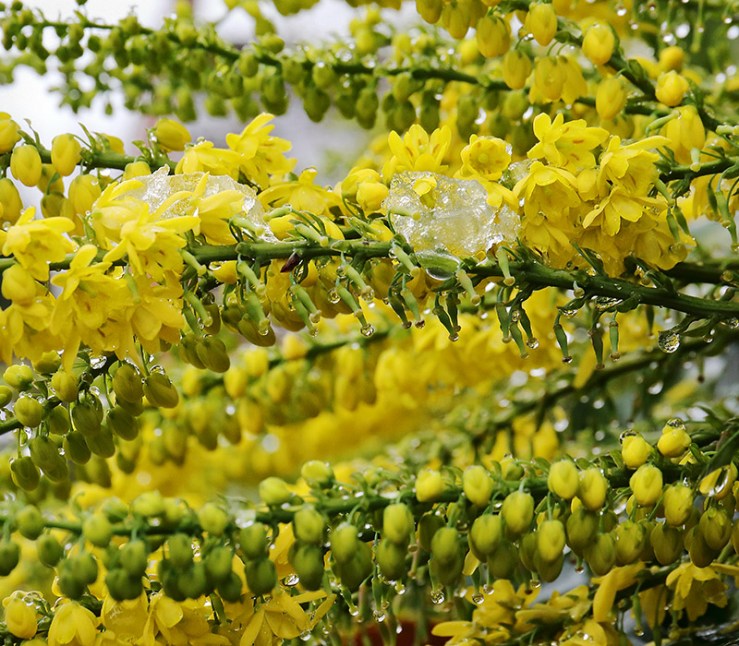
mahonia flowers with melted frost

NB: A note for WordPress Reader users – you need to click on the title of the post again to come out of the reader and go to the post itself. This allows you to see the whole of the top photograph. (Otherwise you may see just a tiny section!)

As I’ve been working in the garden in recent days, I’ve noticed that there are still a few buff-tailed bumblebees around. They’ve been attracted to the yellow flowers of our mahonia, which is a great source of nectar and pollen during late autumn and winter.

While most bumblebee colonies die off for the winter, with just the mated queens hibernating and then starting new colonies in spring, the buff-tails (Bombus terrestris) can stay active. 30 years or so ago, buff-tailed queens would have hibernated too, but in more recent times both queens and workers may be seen flying in winter. It seems that this is the result of winters becoming milder, especially in southern areas of the UK.

There are not many sources of nectar for winter-active bumblebees, so the mahonia, which is a large shrub and well-covered with flowers, has become a valued feature of our garden. (By the time the mahonia has finished flowering, there will be some hellebores and later on there is the plum blossom. We do, however, want to increase the available food for bumblebees over winter.)

As you can see from the photographs, the mahonia flowers don’t mind a bit of frost or snow. Ours has the sunniest spot in the garden, so bees can enjoy the warmth of any sunshine right from early morning until sunset. The shrub was already here (and mature) when we came to this house, so I can’t be sure of the cultivar, but it does look like the very popular Mahonia x media ‘Charity’. I’m certainly very glad that a previous owner did plant it and I should think that the bumblebees are too! 🐝

mahonia flowers with melting snow

Snow melting from mahonia flowers doesn’t seem to cause them much damage.

A Chilly Glimpse of Winter

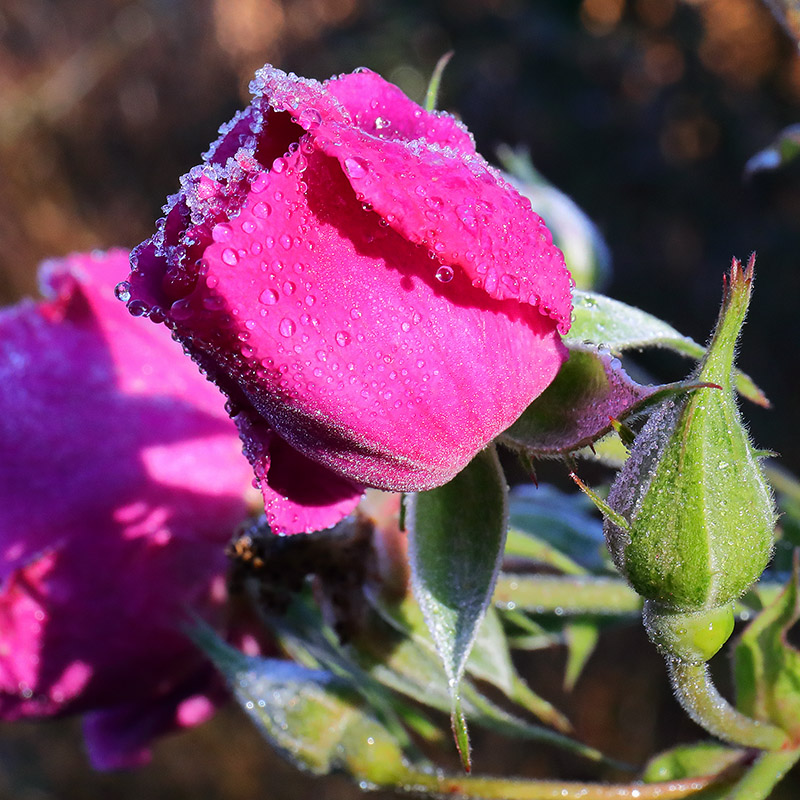
A frosted rose

NB: A note for WordPress Reader users – you need to click on the title of the post again to come out of the reader and go to the post itself. This allows you to see the whole of the top photograph. (Otherwise you may see just a tiny section!)

We had our first glimpse of winter this week, with a frost over most of the garden. There had been a dusting of frost over house rooftops and cars before that, but this was the first real cold of the year.

I’m always hoping that there will still be a few flowers around when the frosts arrive. There’s often a few lingering roses and, when frosted, these make likely subjects for a wintry photograph. The rose here is ‘Rhapsody in Blue’, although these flowers look more magenta than the usual dark purple. I don’t know why. Maybe it’s due to the effects of early morning light, or it might be because the petals are frozen. Whatever the reason, they look much lighter than they usually do. (However, you can see a slight trace of the darker colour on some of the petals in the photo below.)

At the start of winter there are not many flowers remaining in the garden. At the moment there are these roses, a couple of flowering shrubs, and here and there a flower or two still clinging onto the smaller plants. At the sunnier end of the garden, the few bumblebees that are still active are making good use of the yellow flowers of the mahonia bush. Nearer the house, the scented pink flowers of Viburnum bodnantense ‘Dawn’ should be with us right through until early spring.

Photography in the garden can be very limited at this time of year, so if there’s a frosty morning I like to make the most of it and get outside before it melts. While the gardener in me worries about the effects of frost on plants that aren’t entirely hardy, my creative side is delighted to find something to photograph. I often have mixed feelings when things turn icy! ❄

Frosted roses and buds
Only a slight trace of the usual dark purple is visible on the petals of this frosted flower of ‘Rhapsody in Blue’.

Just in Time!

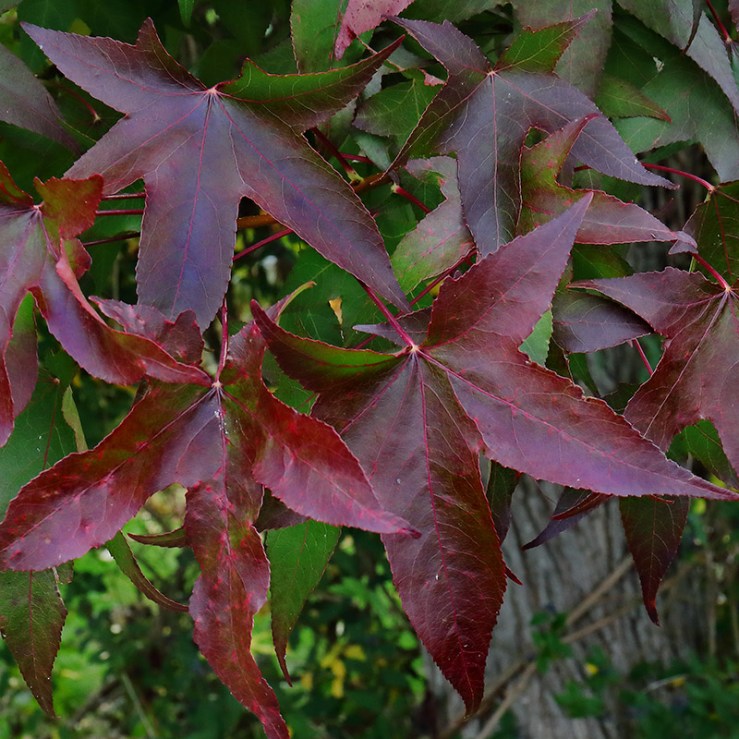
Liquidambar leaves in autumn

NB: A note for WordPress Reader users – you need to click on the title of the post again to come out of the reader and go to the post itself. This allows you to see the whole of the top photograph. (Otherwise you may see just a tiny section!)

On my visits to Fullers Mill Garden, I’d noticed a large Liquidambar (sweet gum tree). I’d hoped that I would get the chance to see its autumn leaves before the garden closed for the winter. As it turned out, my last visit of the year was about a fortnight before the end of the season and I was lucky enough to see the first of the Liquidambar leaves turn colour.

Although most of the leaves were still green on my last visit, there were those that created a beautiful display of red, orange and yellow. Strikingly, it also had leaves that were a dark purple. The garden closed near the end of October, so it was a bit early for the tree to produce its best display. I’m sure it will be magnificent around now!

Liquidambar leaves in autumn
Autumn leaves of Liquidambar styraciflua (sweet gum) that have turned dark purple and red.

The reddest leaves were on a different tree. This was a very much smaller Liquidambar, which I might have mistaken for a maple if I hadn’t noticed the distinctive spiky seed pods. As you can see in the photo below, this youngster was way ahead of the large tree in the colour-change process.

Most autumn leaves around here are yellow. We don’t see many that are red, so the Liquidambar trees in Fullers Mill Garden are a sight to enjoy. In future, I’ll make sure to visit the garden on the very last day that I can before it closes, in the hope of seeing these lovely trees at their most spectacular.

Liquidambar seed pods and leaves in autumn

Wild Beauty: White Campion

White campion (Silene latifolia) in flower

NB: A note for WordPress Reader users – you need to click on the title of the post again to come out of the reader and go to the post itself. This allows you to see the whole of the top photograph. (Otherwise you may see just a tiny section!)

These pretty little flowers are white campion (Silene latifolia), a wildflower that likes the well-drained soil in my garden. The plants have seeded themselves here and there, probably arriving from the nearby field edges.

I have pulled out one or two of them, but only if they’re crowding another plant, or in some other unsuitable position. In the past, I think many gardeners would have regarded this plant as a weed, but over recent years, we’ve become interested in having wildflowers in our gardens.

Now we are seeing both the beauty and the value to wildlife of these unexpected gifts from nature. White campion is a good source of nectar and particularly good for moths, who are attracted to its night-scented flowers. The related red campion (Silene dioica, shown below) is more attractive to bees and other daytime pollinators. (I don’t have this one in my garden. The photograph was taken in a wild area of a garden I visited.)

Another relative of white campion is bladder campion (Silene vulgaris). These two look very similar, except that bladder campion has an inflated calyx (the part behind the flower petals) that looks like a tiny balloon and has a much rounder shape than that of the white campion. It gives an interesting look to the plant, however, to my mind, the flowers of white campion are more attractive, especially when covered with raindrops. I hope that any moths around here will think so too!

The small pink flowers of red campion (Silene dioica or Lychnis dioica)

Buzzy Sunday

Buff-tailed bumblebee (Bombus terrestris) on catnip (Nepeta) flowers.

NB: A note for WordPress Reader users – you need to click on the title of the post again to come out of the reader and go to the post itself. This allows you to see the whole of the top photograph. (Otherwise you may see just a tiny section!)

You may have noticed that my usual weekly post arrived on Friday instead of today – if you missed it, it’s here. (I messed up and published instead of scheduling. Somehow I got distracted because at the same time I was trying to connect my social media accounts to my blog posting. Oops!)

Anyway, here’s a lovely little bumblebee to let you know what’s going on. Hopefully I’ll be back to normal next Sunday! And there’s a little bit of good news – my garden is buzzing with more bees than last summer, probably because of the warmer weather. 🐝

Signals for Bees: Pulmonaria

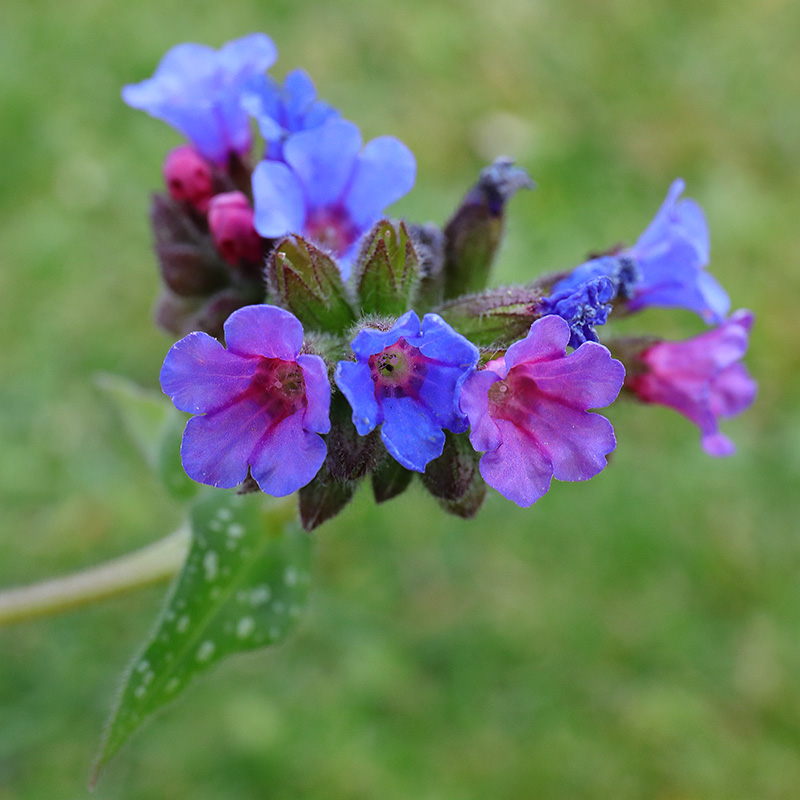
Blue and pink Pulmonaria (lungwort) flowers

NB: A note for WordPress Reader users – you need to click on the title of the post again to come out of the reader and go to the post itself. This allows you to see the whole of the top photograph. (Otherwise you may see just a tiny section!)

Pulmonaria (lungwort), like some other plants, changes its flower colour, presumably as a message to bees. The flowers start off by opening pink and gradually change through violet to a bold blue. If you look at the background to the top photo, you can (I hope) make out the deep pink unopened buds, while, just behind the foreground flowers, there are the shrivelled blue remains of a dead flower.

I’ve mentioned flower colour change in previous posts: Lathyrus vernus (spring vetchling or spring pea) changes colour in the same way, going from a pale magenta-pink to a soft blue, while Nigella damascena flowers changed from white with blue veining or a pale blue to a much deeper blue.

Not all pulmonarias have this colour sequence. There are now cultivars which mature to a much softer lavender-blue. Others change from red to a softer pink and there are some that have pink buds that open to pale blue or white flowers…lots of tempting choice for the gardener!

The flowers of pulmonaria are small, but the variation in colours on the plant at the same time make them more attractive and worth the effort of a close look. As a plant that can begin to flower in late winter, those small flowers are particularly valuable to the first bees visiting the garden.

It is believed that the colour-change in the pulmonaria flowers allows the plant to let the bees know which flowers are freshest and still have plenty of nectar. That ensures that bees are likely to visit those flowers that are still to be pollinated. This strikes me as clever evolution and particularly good design by nature. I’m sure the bees must appreciate the convenience and saving of their time and effort too! 🐝

Spotted leaves and blue flower of Pulmonaria (lungwort)
The shape of lungwort’s leaves (like a lung) gave rise to the plant’s name. Their white spots were once believed to indicate that they could be used to treat lung diseases.

Gleaming Gems: Tulipa humulis ‘Little Beauty’

The red and purple flowers of Tulip 'Little Beauty'

NB: A note for WordPress Reader users – you need to click on the title of the post again to come out of the reader and go to the post itself. This allows you to see the whole of the top photograph. (Otherwise you may see just a tiny section!)

These bright little flowers are Tulipa humilis ‘Little Beauty’, a dwarf tulip that is creating a vibrant glow of colour here in my garden. They are very small tulips, growing only 4 to 6 inches high, with flowers around the size of a large crocus.

My reason for planting these, as opposed to the bigger tulip cultivars, is that they are a species tulip. That means that they are fully perennial and will probably multiply over the years. Most of my larger tulips have gradually died out and now there are just a few lonely leftovers scattered here and there in the borders. (The exception to this is a clump of viridiflora tulips which continue to flower well and slowly increase in numbers.)

I’m glad to say that these dwarf tulips have been a success since they were planted in 2002, having – so far – reliably reappeared each spring. Their resilience encourages me to try more species tulips in future. (I still like the bigger hybrid tulips, but to avoid the sad look of stray tulips left alone as they dwindle, I’d plant the hybrids in pots initially. After their first year I could move the bulbs to a mixed cut-flower area in our planned veggie garden to see if any survive and flower again.)

Tiny though they are, these tulips make plenty of impact when the sun shines. Then the petals open wide, allowing you to see their attractive markings. Inside the deep crimson flowers are centres of a rich purple-blue, edged by a border of pale pink. For me, ‘Little Beauty’ certainly lives up to its name, with its vivid colouration adding a lively gleam to the springtime garden.

Reddish-pink flowers of Tulipa humilis 'Little Beauty', which have a purple centre.
The crimson flowers of Tulipa humilis ‘Little Beauty’ have a purple-blue centre.

Things are Starting to Buzz…

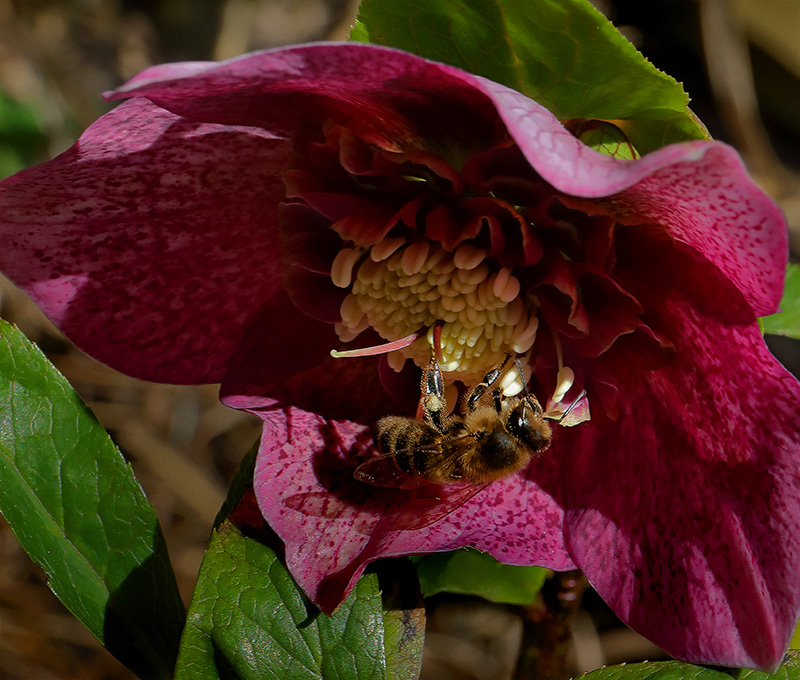
pink spotted hellebore with a honeybee

NB: A note for WordPress Reader users – you need to click on the title of the post again to come out of the reader and go to the post itself. This allows you to see the whole of the top photograph. (Otherwise you may see just a tiny section!)

The sudden warmth in the sunshine over the last few days has brought more life to the garden. The birds have been singing and busily getting ready for spring for a little while. Now they’ve been joined by the first of the butterflies (peacock and brimstone so far) and both bumblebees and honey bees.

I hope the insects won’t be caught out by cooler temperatures next week and some sub-zero nights yet to come. Last year was a bad one for bees and butterflies here, so they really need better conditions this year to boost their numbers. While there’s not much that I can do to protect them from a change in the weather, I can at least try to provide early-flowering plants so that they have something to feed on.

Currently there aren’t very many plants that are in flower here. The viburnum bushes still have their pink flowers and there several hellebores and some snowdrops and crocuses. But there could be more. Yellow winter aconite for instance, or blue Siberian squill. Chionodoxa (‘glory of the snow’) is another that offers blue flowers. Both it and Cyclamen coum come in a range of other colours, including pinks and white. These would all flower very early and provide food for insects at a time when it can be hard for them to find enough.

There have been a lot of changes in the garden over the last couple of years and I’ve lost a lot of small bulbs (mainly crocuses) by accidentally digging them up while moving plants or changing the layout of borders. I’m hoping that I’ll now have areas settled enough for bulbs to be reasonably safe. One of these areas is where I’ve planted a number of fruit trees. Early spring bulbs should grow well there and enjoy the sun before the leaf canopy appears. I want it to work because our little insect friends need a bit of help. 🐝

purple crocuses with a honey bee
A honey bee enjoys crocuses that have opened in the sun.

A Liminal Time

Frosted seedhead of wild carrot (Daucus carota)

NB: A note for WordPress Reader users – you need to click on the title of the post again to come out of the reader and go to the post itself. This allows you to see the whole of the top photograph. (Otherwise you may see just a tiny section!)

For the last week or two it has felt as if winter is ending, but spring is not quite here. This is a time of transition, and of hope inspired by the resurgence of nature. In fact, March 1st is the start of meteorological spring in the northern hemisphere, so technically, spring is here. (Unless you go by the astronomical definition, which says that spring starts at the Vernal Equinox, around March 20th.)

As far as our garden here is concerned, spring is just starting to show the first signs, but the cold of winter isn’t far behind us. There are still frosts on some mornings; enough to coat the grass but nothing as spectacular as the seed heads here. (These wild carrot seed heads were photographed back in January, when we had several days of heavy frost.) It may be tempting a chilly fate to say that winter is definitely over, but it feels like it is.

Frosted honesty (Lunaria annua) seed head lying on frosted grass
An honesty (Lunaria annua) seed head was caught in one of the last frosts of the year.

So winter appears to be gone…but spring isn’t entirely here. We’re at a threshold, where the season is neither one thing, nor yet the other. I think of it as ‘pre-spring’. It’s a short time when the approach of spring is eagerly looked for and plans made to welcome both new growth and new life.

Being poised on the brink of spring is an exciting time for me, and other gardeners too I’m sure. Everything starts to get busy now; the gardening year takes on a new urgency as we try to keep up with the rush of returning life that spring brings with it. And now it is time for this blog to put the frosty photographs away…I hope!🌱

Frosted seedhead of wild carrot (Daucus carota)
Daucus carota (wild carrot) coated in a heavy January frost

Pennies from Heaven

Frosted honesty seed heads

NB: A note for WordPress Reader users – you need to click on the title of the post again to come out of the reader and go to the post itself. This allows you to see the whole of the top photograph. (Otherwise you may see just a tiny section!)

Apparently honesty (Lunaria annua) has around 25 common names. (According to the RHS, you can see their list here.) That’s a lot of names, probably because it’s a plant that has been in our gardens for a very long time. It is known to have been in cultivation in the UK since the sixteenth century and is mentioned in Gerard’s Herbal at that time.

Among these names are several that relate to money, including ‘St Peter’s pence’ and, in an interesting contrast, ‘Judas’s penny’. The names ‘money flower, ‘penny flower’ and ‘silver dollar’ have their origins in the way the seed pods look like coins. The name ‘money-in-both-pockets’ was probably given to the plant for the same reason, but to me, the pods also look like tiny pockets with the coins – seeds – inside. That the seeds are visible through the outer layers of the pods has given rise to the name most of us know it by, the familiar ‘honesty’.

The money-inspired names gave me a fair excuse for the title of this post. (Finding new titles can be hard at times!) But there are many names with other inspirations. ‘Grandpa’s specs’, for instance, which makes me smile, while ‘matrimony’ makes me wonder. (A hopeful name, arising from the plant’s associations with both honesty and prosperity, perhaps?) ‘White satin’, ‘silver leaf’ and ‘satin pod’ are all very descriptive of the central membrane that is left when the outer layers of the seed pods fall away.

But the names that appeal to me most are those that refer to the moon-like appearance of the pods. There’s the Latin name, of course – ‘luna’ means ‘moon’. Then there’s ‘moonwort’ and ‘moon seed’, both of which make me imagine honesty’s tiny papery moons gleaming in the reflected moonlight of an autumn evening.

The seeds have been gathered from the seed pods photographed here, and sprinkled where I’d like the plants to come up in future. Now only the silvery central discs are left and are dripping with slowly thawing frost. To me, they look even more like tiny glowing moons. I see them as little wintry moon-pennies.

In the spirit of honesty, I must admit that I’ve never actually heard anyone use the names mentioned here. Lunaria has always been ‘honesty’ to me. It’s a little sad for old names to die out and be forgotten. They’re part of our culture and the history of our relationship with plants..

Frost melting on honesty (Lunaria annua) seed heads