NB: A note for WordPress Reader users – you need to click on the title of the post again to come out of the reader and go to the post itself. This allows you to see the whole of the top photograph. (Otherwise you may see just a tiny section!)
When frost is here, the stars of the garden are the seed heads. Their shapes become sculptural and exciting as they are made sparkly with frozen icy crystals. They’re the first thing I look for in winter photography, and a very satisfying subject for an appealing image.
But there aren’t a huge number of seed heads, and, of course, they are vastly outnumbered by the remaining leaves. Fortunately these leaves can often be very attractive with a sprinkling of frost and give their own photographic possibilities.
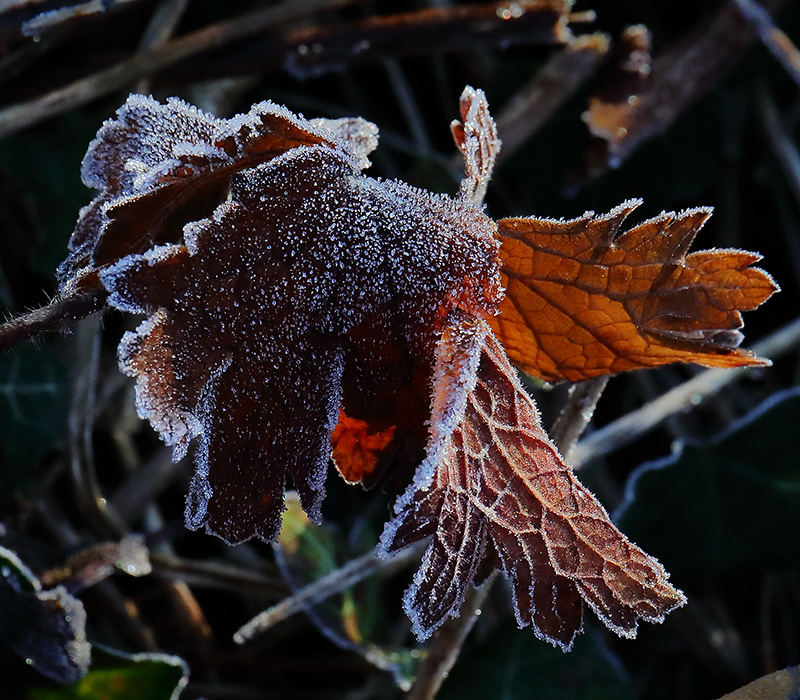
The leaf in the top photo is a Japanese anemone. These can take on interesting curvy shapes as they dry out and the brown colouring adds a bit of extra interest. There are usually lots of these leaves in the garden, but this year I have noticed that there are fewer. Perhaps the increasingly hot and dry summers have made these anemone clumps less inclined to spread and be thuggish. Although they can make themselves a nuisance, I will be sad if I lose the pretty show of flowers that they give in late summer and early autumn. It seems that climate change may be changing the nature of my garden.
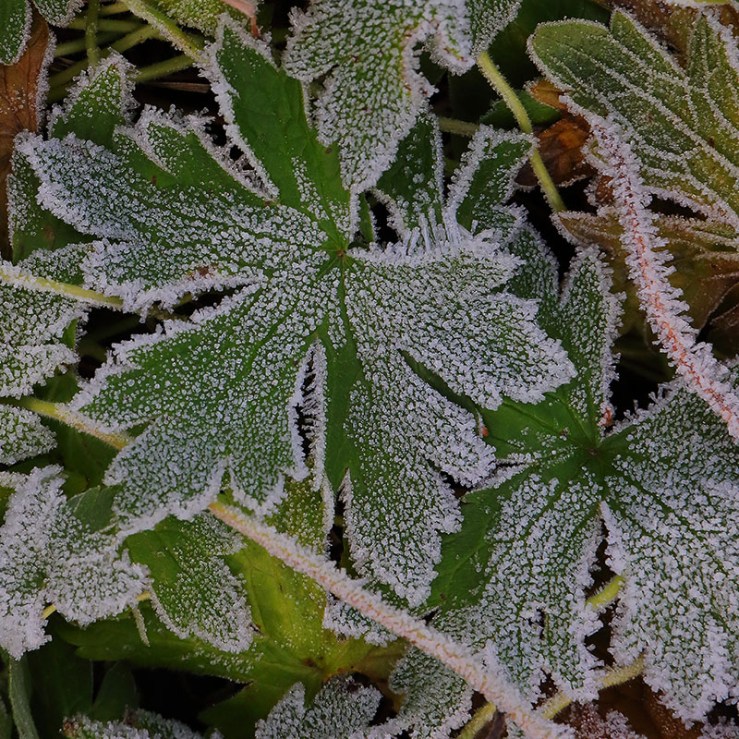
The picture immediately above shows a hardy geranium. These are plants that are good-looking in both leaf and flower, so I’ve been happy to find space for several of these in the garden. The way the frost outlines the deeply indented edges of the leaves emphasises their shape and creates an image that is both pleasing to see and inviting to photograph.
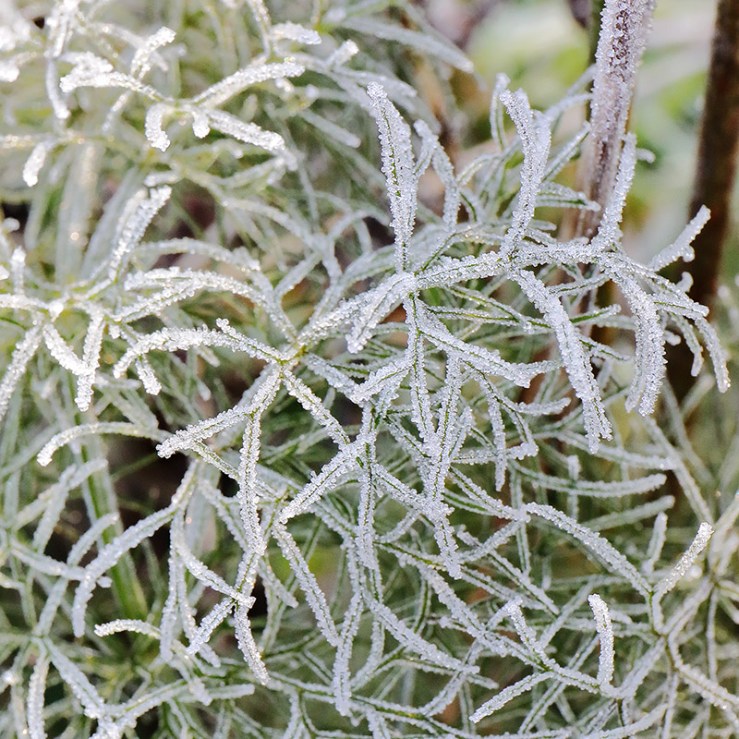
While the first two photographs were taken in this winter’s light frosts, the remaining two were taken in years when the frost was much heavier. A dense coating of frost crystals has given the feathery foliage of a bronze fennel the appearance of lace. (Normally the fennel leaves would be gone by the time there was much frost, but that year the frost arrived earlier.)
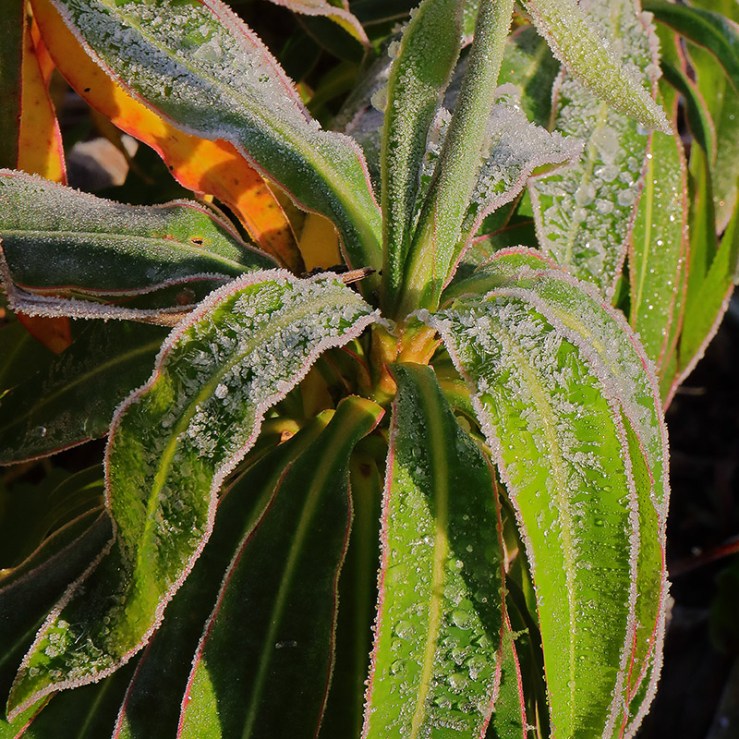
Below, frost on the leaves of Euphorbia mellifera will quickly melt in the strong sunshine of a bright winter morning. Despite looking more robust than the delicate fennel leaves, this euphorbia is less hardy and would probably be best given winter protection in areas colder than ours. Luckily for many of our plants, we don’t usually get very cold temperatures for long. As a gardener, I have reason to be very grateful that this winter has been fairly mild so far, even if that means fewer opportunities for winter photography. ❄
 Ann Mackay: Inspired by Nature