Softer Colours

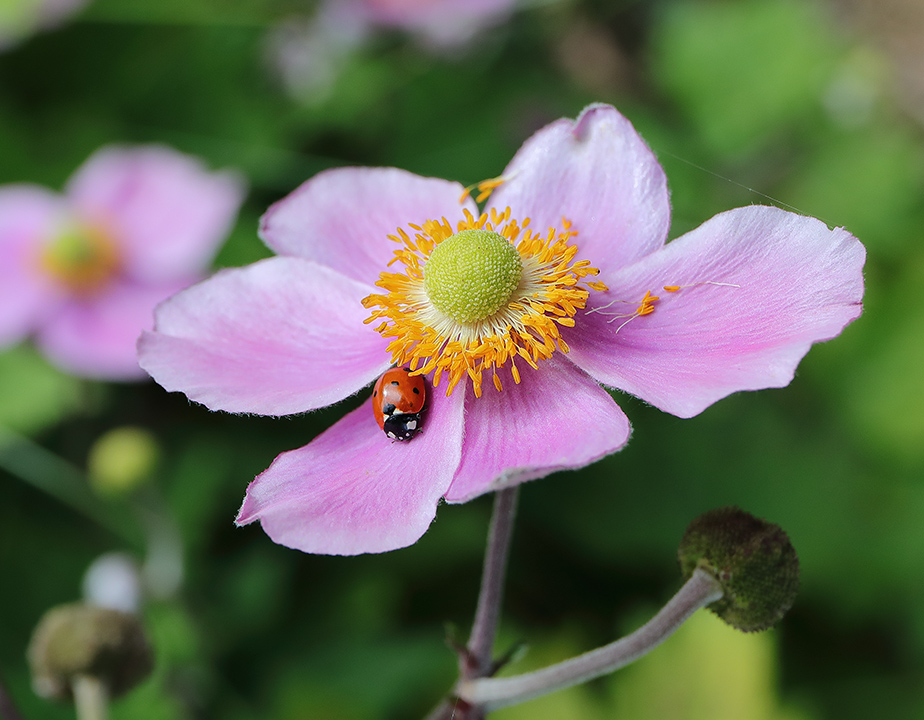
Ladybird on a pink Japanese anemone.

From my recent posts of zinnias, heleniums and echinaceas, you might be thinking that my garden is a blaze of bright colours at the moment.

But, in fact, it isn’t. There are areas of softer colours too, mainly because there are so many Japanese anemones. (They spread and get everywhere if they get the chance.) There are two pink ones – ‘September Charm’, which is the paler of the two, and ‘Hadspen Abundance’. (That’s the one in the top photo, complete with a little ladybird.)
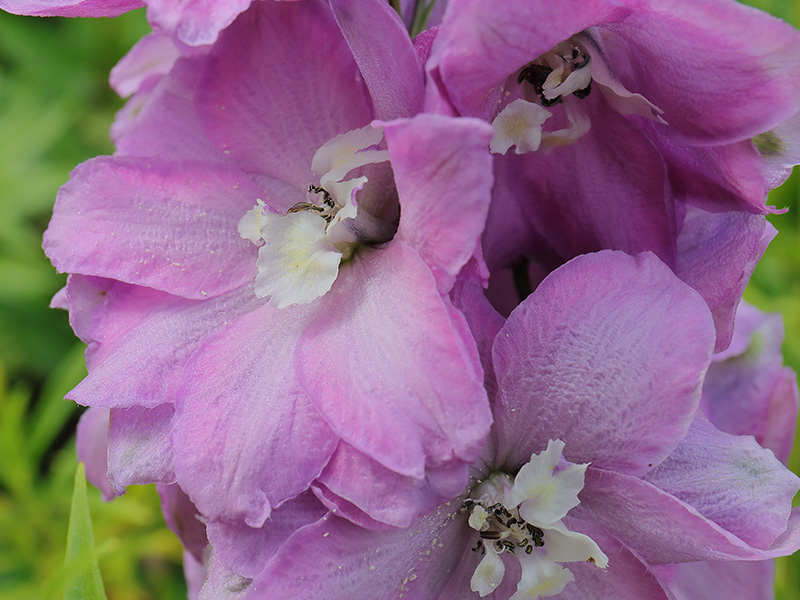
Pink delphinium close-up

The third anemone is ‘Honorine Jobert’, a white one that doesn’t seem to spread as aggressively as the other two.

Despite their desire to take over the garden, I’m happy to see the mass of soft pink anemone flowers. It’s a restful, relaxing colour. Next year, I’m thinking of moving some of them beside our main sitting area and combining them with pale purples, such as perovskia (Russian sage) and silver foliage. This should help to create a laid-back area where we can allow our cares and stresses to float away…hopefully!

Another soft pink, this time unexpected, has been a second flowering of one of the delphiniums. To be honest, I don’t expect these delphinium plants to last long here, but I couldn’t resist them when I saw the pink that also has tones of mauve. These plants really like to be well-fed and don’t like too much heat and drought, so our garden is very unsuitable. I shall just have to try to remember to water them with tomato food and enjoy them for as long as they survive.
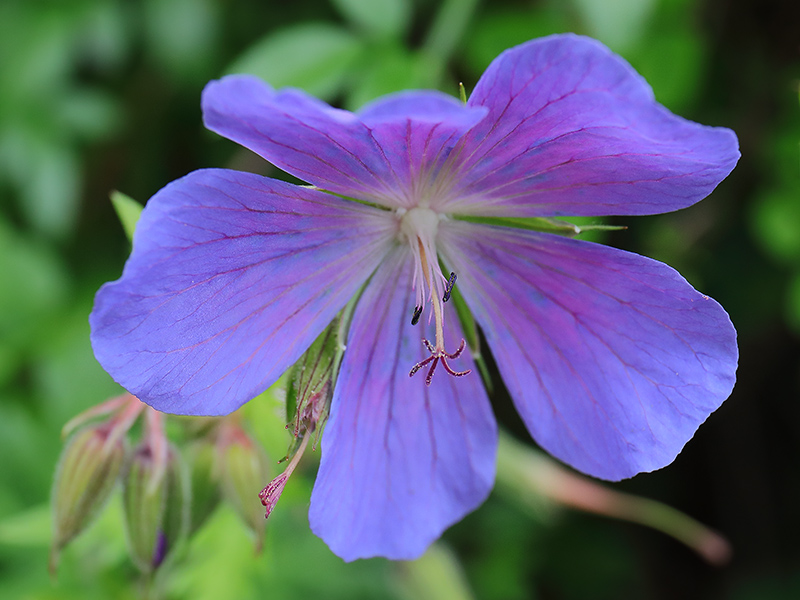
Blue geranium flower

A soft blue with a slight blush of magenta pink is a colouring I especially love and can be seen in the geranium pictured here. I’ve no idea what the variety is. (It was already in the garden when we arrived.) It manages to produce flowers over a long period and grows in the dry soil beneath several shrubs. Really, I ought to move a piece to somewhere where it would have more space and moisture, just to see what it can do.

The last of the more delicately-coloured flowers for this week is the blue scabious below. I find that scabious loves the sun and well-drained soil here. They flower over a long period and attract bees and butterflies, so there’s more than the pretty colour to enjoy. They’re almost finished for this year, but can produce the occasional late flower when you’re not expecting it.

It feels great to find a plant that is both delightful and happy in the conditions that you can give it, so next year I’ll be planning to plant more scabious varieties. And I’ll hope that there will be part of the garden that is full of gentle colours that bring rest and relaxation. (And, of course, bees and butterflies too!)
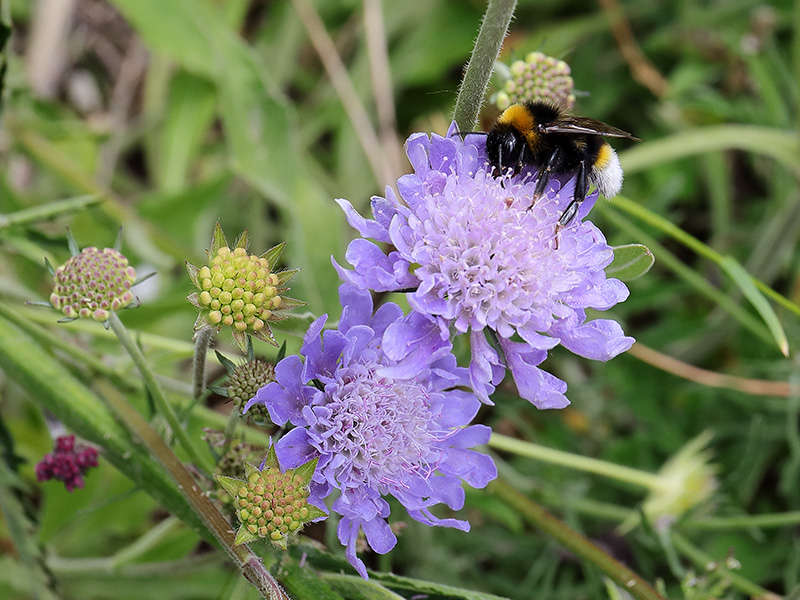
Bee on scabious flower.

Growing Flowers for Photography: Zinnias

Orange and pink zinnia flower

Every year I try to have something new to photograph in the garden. So it’s useful to plant a few annuals to give me the chance to try something different. This year a packet of mixed-colour Zinnia seed has produced a nice crop of willing photographic subjects.

I haven’t grown Zinnias for a long time – years ago in Scotland – but not since we moved here. Why I’ve allowed myself to miss out on them I can’t say. (Probably too busy weeding in springtime to grow much from seed!)

Intriguing shapes in the centre of this zinnia flower

The reward for taking a little time to grow these plants is a border full of colourful flowers that gleam like jewels. They include magenta-pink, a good strong red, an orange that vies with tithonia (Mexican sunflower) for sheer vibrance, and (perhaps the one I like best) a much softer orange that is blushed with magenta. It’s like the floral equivalent of a big bag of mixed sweeties (candy) for a photographer!

The shapes of the flowers are interesting too. I’ve always been attracted to the ring of tiny yellow flowers around the centre of the flower head. (These are the ‘disk flowers’ that make up the centre of a composite flower.) As these disk flowers gradually open closer to the very centre of the flower, the central disc can go from being flat to being conical, as in the top photograph. This gives an interesting variation in shape and more opportunities for different pictures.

There’s a fiery glow from this orange zinnia flower.

Zinnias are not just attractive to photographers, though. Bees love them too. The bee in the bottom photo seemed to have its face stuck right into one of the little disk florets. It was in no hurry to leave, so gave me another photographic opportunity. Thanks, little bee!

Late summer and autumn is a time when the garden here can start to run out of flowers, so the zinnias are especially welcome. And as a late-season bee plant, they are even more valuable. Next year I intend to find space to grow some more zinnias – so the bees and I will both be happy, and there will be lots more photographs. 🙂

Pink zinnia flower with a bumblebee

Didn’t Do My Homework: Heleniums

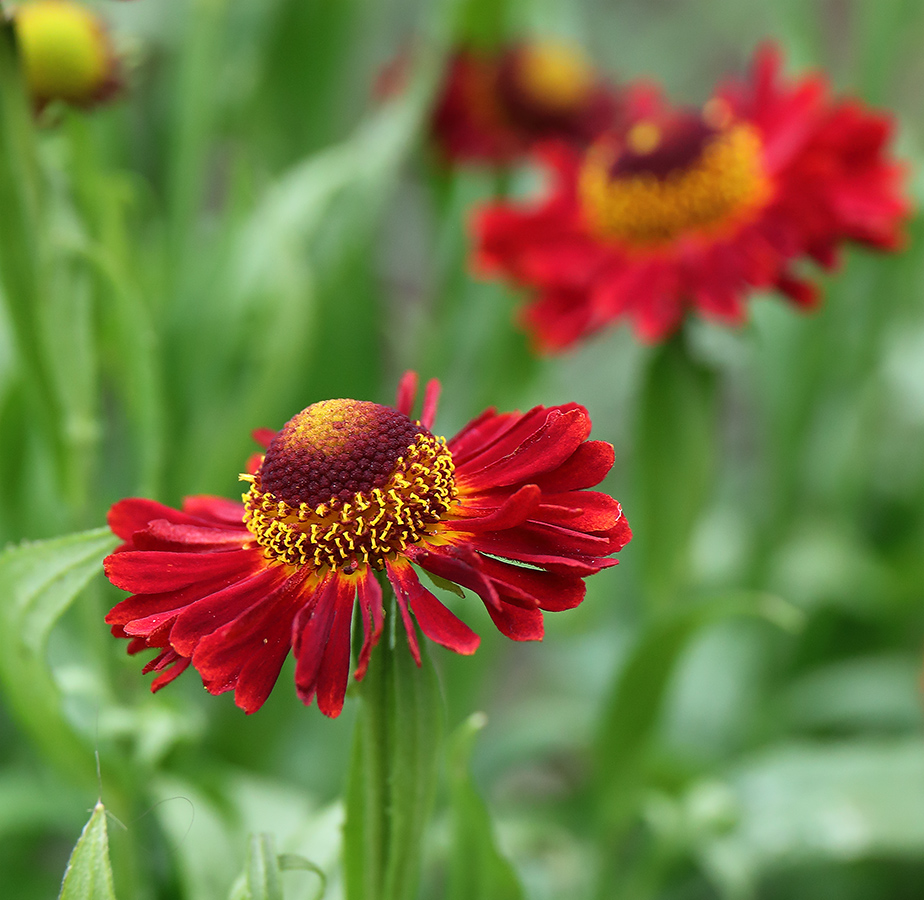
Red helenium flowers

Last year I bought a couple of helenium plants because I wanted to have as many late-season flowers as possible. (I’m always keen to prolong summer and keep the bees fed too.)

One plant was put into a border straight away, while the other has been in a large pot until recently. It is now in my ‘hot’ border. Both plants have been kept well-watered through the dry summer and are growing happily.

But that may be more by luck than any gardening skill on my part. Normally I make a point of checking the needs of any new plant on Google – sometimes even before I buy it. (I’m at my most impulsive in garden centres!) Not this time…I’ve only just discovered that heleniums like a much wetter soil than I’d thought. Luckily, it’s raining at the moment, so the plants are happy for now.

Soon, though, I will have to move the plants because they’re in the driest part of the garden and probably won’t survive there long. Later this year I want to build a bog garden and now this is making me think of having two ‘bog’ areas. One would be drier than the other, i.e. damp rather than truly boggy. Hopefully this would make it possible for me to give a good home to plants with a range of moisture needs. Will it work? I guess we’ll find out next year!

Incidentally, when I did get round to Googling heleniums, I discovered two facts that (together) intrigued me: that the common name ‘sneezeweed’ was given to the plant because the leaves used to be made into snuff and that all parts of the plant are poisonous to humans. Makes me wonder if anyone was ever poisoned with the snuff – maybe it’s better to just enjoy heleniums in our gardens and let them keep their leaves!

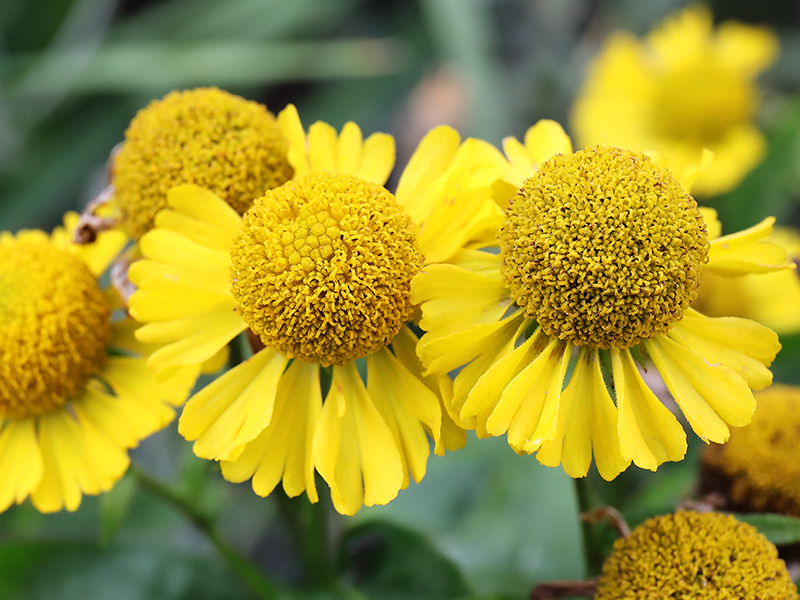
Yellow helenium flowers
These yellow helenium flowers look like little pom-poms!

A Ray of Sunshine: Helianthus ‘Lemon Queen’

Helianthus 'Lemon Queen'

At this stage of the summer, there are fewer flowers around for me to photograph. So I’m grateful that the perennial sunflower, Helianthus ‘Lemon Queen’, has done well this year.

In previous years this plant has struggled to survive. It would really prefer to be growing in a more fertile soil with a bit more moisture. Instead, it’s in a rather impoverished area that was close to where the roots of the neighbours’ conifers must have been.

Those huge trees were taken out a couple of years ago and the border on this side has been slowly recovering ever since. I thought the heat and drought of this summer would make the helianthus suffer badly, so I remembered to give it an occasional thorough watering. And I’ve been well rewarded with a healthy plant that’s just a little taller than me and covered in radiant yellow flowers.

The bees seem happy with the result too, and have been busily visiting the flowers. (That pleases me especially, because I want to keep up the supply of flowers for the bees and other pollinators for as long as possible in the year.)

Maybe next year I’ll try growing some of the bigger annual sunflowers too, if I can find the space. Talking of space, I’m waiting to see how far this sunflower will spread – some say that it can be invasive. But for now, I’m very happy to see these sunny little flowers brightening up my garden and feeding the bees.

Honeybee on a flower of Helianthus ‘Lemon Queen’

Longing for a Cool Space.

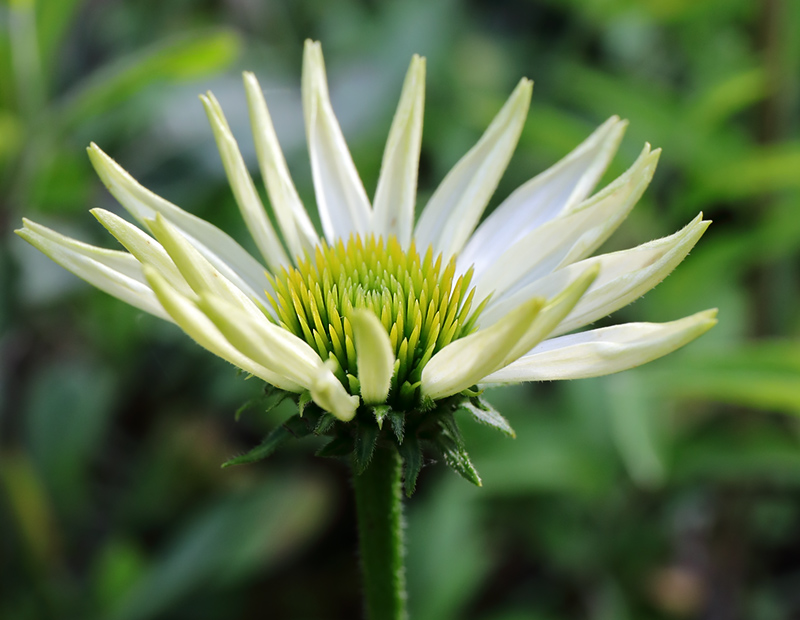
White echinacea flower - 'Powwow White'.

Last week was a busy one, with the first side of the garden now sporting a smart new fence. The neighbours will be glad that their puppy can no longer escape through the old fence and (possibly) to freedom.

But the increasingly hot weather has made the work harder. For the contractor who is building the new fence, and for me as I clear away the overgrowth of shrubs and ivy.

Temperatures here have been reaching over 30 degrees C. For the UK, that’s very hot. For someone brought up in Scotland, that’s really uncomfortable. And it has made me wish for a bit more shade in the garden.

This place has become more of a suntrap than ever since our neighbours removed a lot of tall trees from their garden. Now the centre of our garden fairly bakes in the sun. So I am wondering what shrubs or small tree(s) I can plant to create a cooler space, but without causing too much shade to other areas.

I find getting a good balance in this kind of planning to be a tricky business. Meanwhile, ‘a green thought in a green shade’ (a phrase from Andrew Marvell’s poem, ‘The Garden’) conjures up enticing images of a soothingly green and leafy space. Though frankly I wouldn’t mind what colour the thought was, so long as it was a cool one!

White echinacea flower - 'Powwow White'.
Fresh whites and greens: Echinacea ‘Powwow White’ stands up well to the summer heat.

Soft Blue: Himalayan Blue Poppy

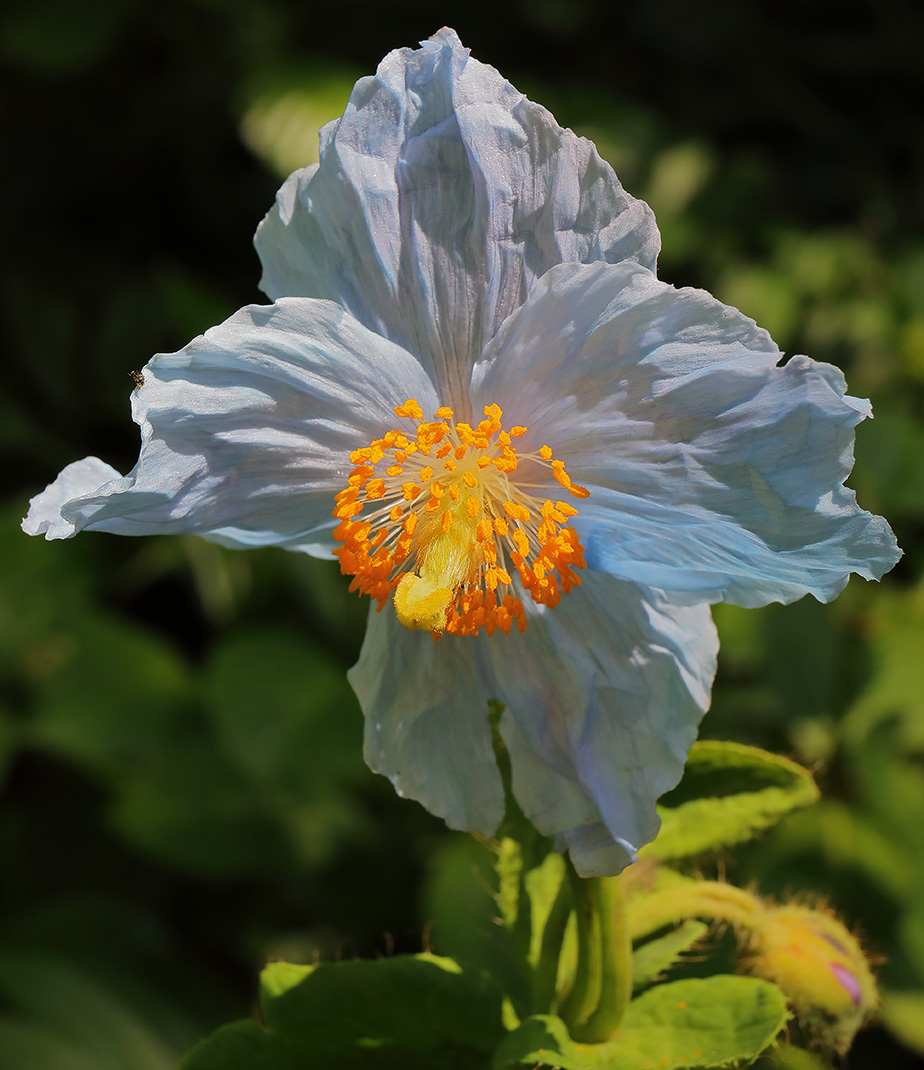
Meconopsis aka Himalayan blue poppy

This is a bit of a post and run today, because it has been a very busy time over the last week. It’s been frustrating not to have time to take new photographs, but hopefully I’ll be able to get back to doing what I love soon.

The photograph above is a flower I love to see – a Himalayan blue poppy (Meconopsis). It is frequently grown in Scotland, where the conditions suit it. (It looks wonderful near water, with trees and shrubs growing around it.)

I tried growing a couple of plants in our previous garden in Scotland, but they only lasted two or three years before dying out. At the time I thought I simply hadn’t kept them moist enough but I’ve learned since that they’re short-lived perennials. So maybe they wouldn’t have lasted a lot longer anyway.

There’s something about a plant being difficult to grow or hard to obtain that makes them all the more appealing to gardeners. I’m trying to learn to keep to plants that have a good chance in my very warm and dry garden (still a learning process). That means that I won’t be buying any blue poppies – they really wouldn’t like it here. But I can enjoy the memory of them.

The reason for being so busy this week is that we’re getting the garden ready for a contractor to come in and replace the fence around the garden. There’s far more to do than I had first realised and it seems to have taken a lot of time! Shrubs and trees have been cut back, lots of things, (including a large compost heap) have been moved and room still has to be found to store the new fence panels, posts and gravel boards…phew!

It will be a great relief to get this work done. The oldest part of the fence was blown down by gales in early spring. Since then it’s been cobbled together and propped up as best we can, so that the neighbours’ young dog can’t escape from their garden. (He managed it once, and had a lovely time playing and evading capture in our garden.) Originally the new fence was to be started mid-May – but Covid stopped it.

The job will take three weeks and there’s till plenty for me to do to create enough working space. After that I’ll be glad to get back to my photography and to planning some new planting!

Hungry Critters (1): Bees

Bumblebee on Knautia macedonica flower.

Sometimes it feels as if there is nothing much that you can do to help the problems of the world around you. But we’re not as powerless as we may think. Small actions do make an impact, even if it’s only in our own small area.

For me, environmental issues are something that I’ve been aware of for a long time and I’m especially concerned about the challenges faced by pollinating insects.

Bumblebee on a blue scabious flower.
Scabious is a great plant for bees.

In an attempt to do what I can to help, I have been trying to increase the number of plants that are good pollen and nectar sources in my garden. It does seem to be a case of ‘plant it and they will come’, because during the last couple of years I’ve noticed a big difference in the number of bees and hoverflies in the garden.

Luckily, just like the bees, I prefer the simpler flowers to highly-bred doubles. (Think of an open bowl-shape that gives easy access to the centre of the flower for short-tongued bees, and tubular flowers like the foxglove for long-tongued bees.)

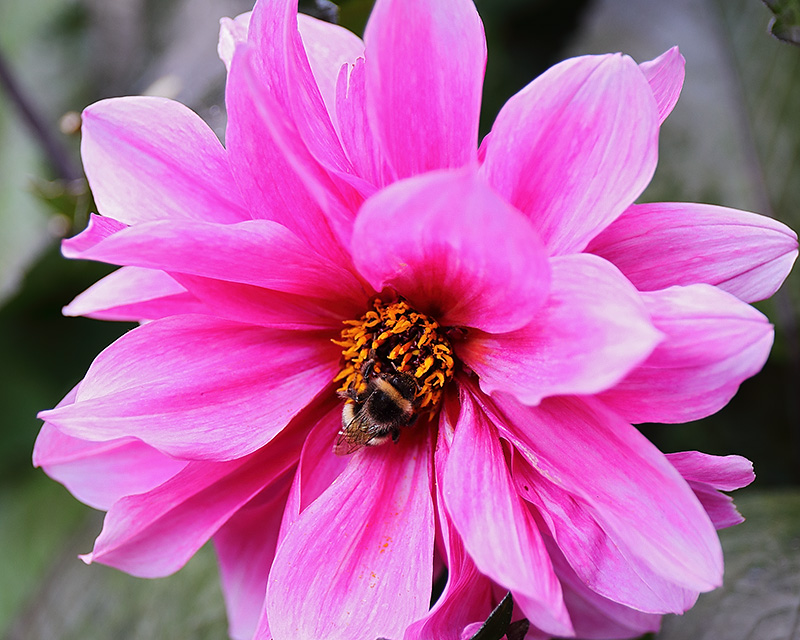
Bumblebee on a dahlia flower.
The open centre of this dahlia makes for easy access to bees.

For spring and summer, the garden has lots of good bee plants. Even in the winter there is mahonia, viburnum and ivy. But late autumn can be a bit sparse, especially after the sedums and asters have finished flowering.

So this year I’m hoping to find a bit more for my late autumn buzzy visitors. Can you imagine a better excuse for a bit of plant shopping?

This week is ‘Bees’ Needs Week’ in the UK and this year there will be online events to raise awareness of what can be done to help bees. You can read more about the work of the Bumblebee Conservation Trust here.

Honeybee on sedum flowers.
Sedums are among the best autumn-flowering plants for pollinators.

Evening Primroses: Ethereal Beauty

The heat of the last week has made working in the garden during the day very difficult. So I’ve spent most evenings out there instead.

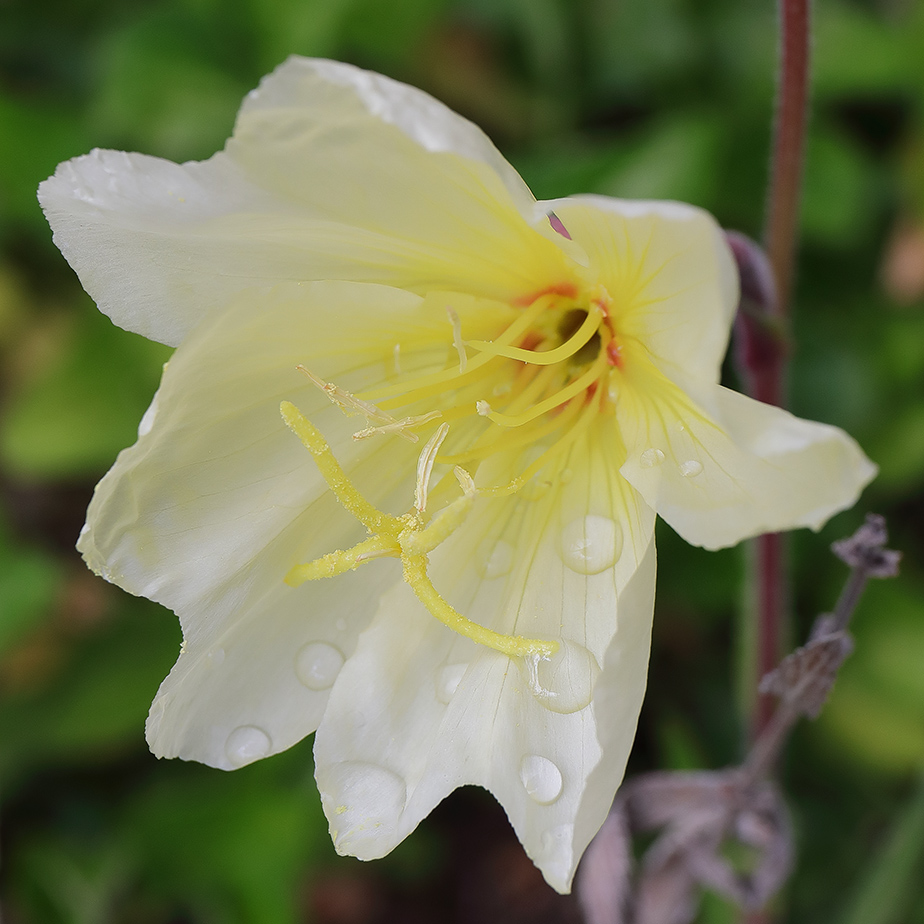
A perk of this change has been seeing the evening primroses at their best. The pale yellow flowers show up well even as the light starts to fade, looking delicate and ghostly above the shadowy foliage of the border.

But before it gets too dark, it’s worth taking a close look at the detail of the flowers. The long stamens and style, with its large, cross-shaped stigma are elegant and give a distinctive look to this evening primrose. (I believe it’s Oenothera stricta ‘Sulphurea’, a short-lived perennial.)

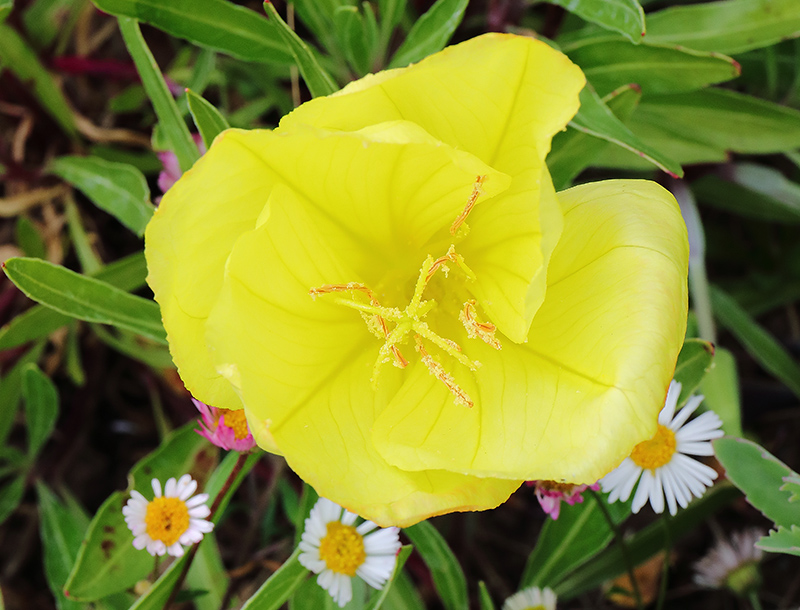
The evening primrose below is a different plant – this one is Oenothera macrocarpa. It’s much shorter and has darker yellow flowers, which stay open for longer. (They’ve been open all day here today, perhaps because it has been cool and rainy for a change.)

I hope that macrocarpa will self-seed around my garden the way Oenothera stricta does. They are drought tolerant and great for moths and early-morning bees, so they’ll be welcome wherever they pop up. I shall be sprinkling some of the seeds around as they ripen to give them a little help.

And before I go, I must just give this link for anyone who fancies a bit of armchair garden-visiting: https://ngs.org.uk/virtual-garden-visits/

The NGS is the National Gardens Scheme in the UK, which holds open days in private gardens aid of charities. (Mostly nursing and health charities, so particularly appropriate this year.)

Because the gardens have been unable to open to the public, they have posted videos of them instead. (Though now many of the gardens are starting to be able to open.) There are lots of excellent garden videos there, so I hope you enjoy them!

Crumpled Silk: Oriental Poppies

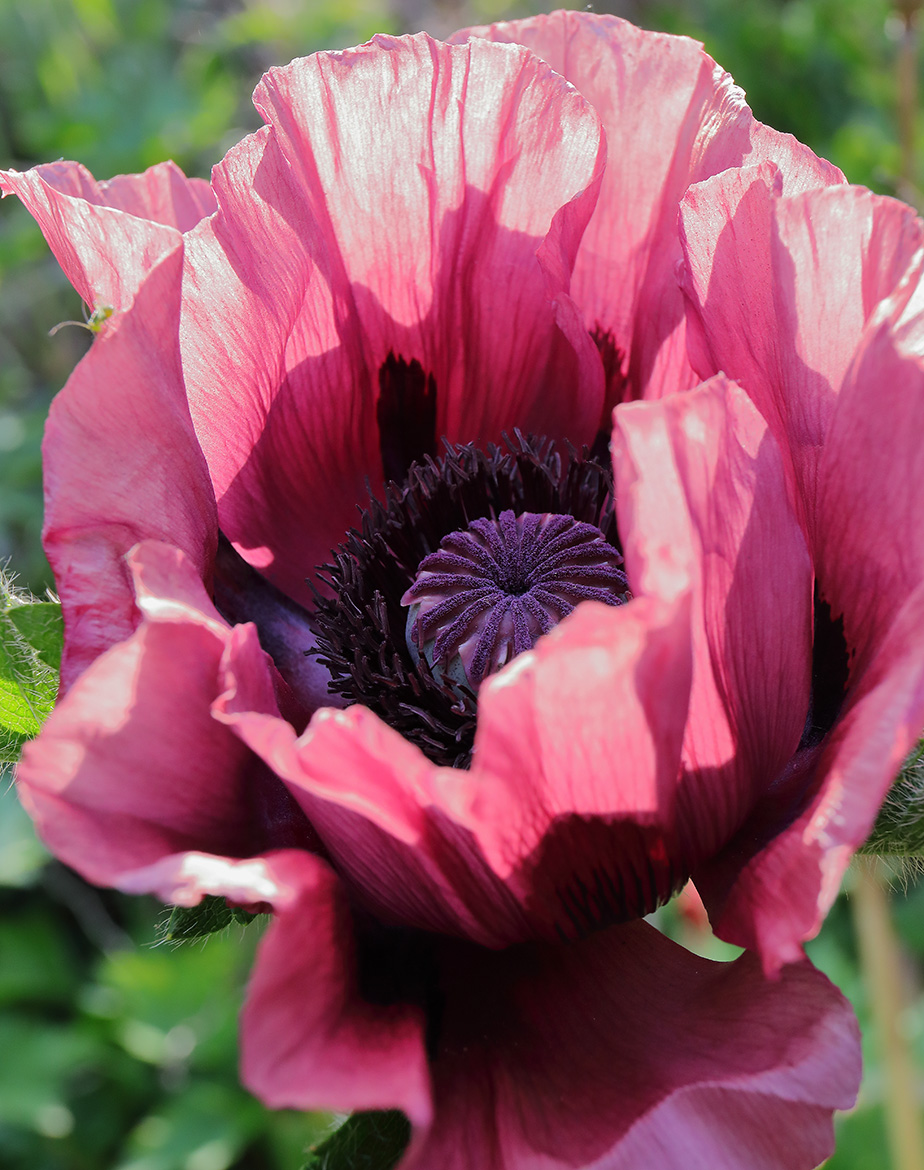
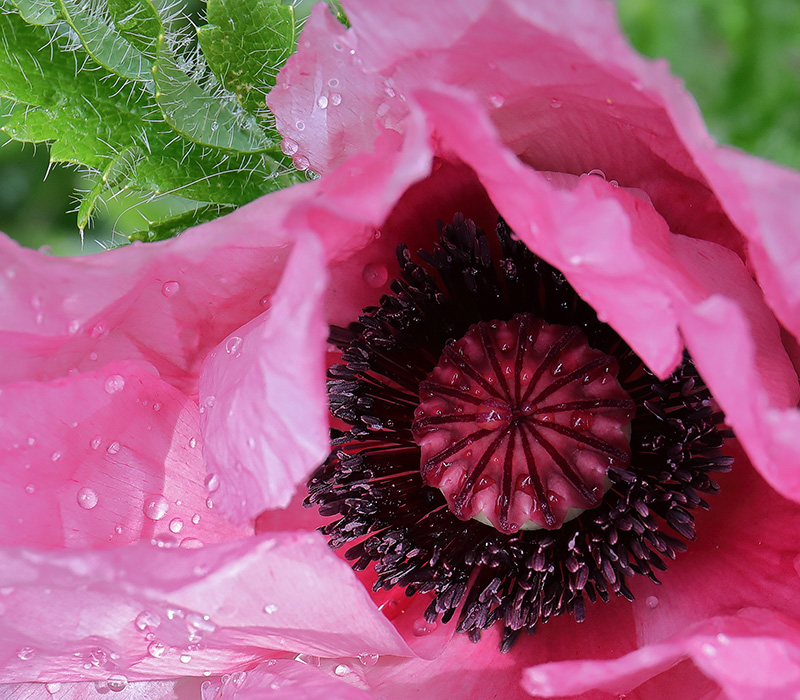
Papaver orientale Patty's Plum

Somehow it feels as if the summer is moving fast. It’s all the fault of the flowers in my garden. (Well, just some of them!)

One day the opening flowers of a plant are teasing you with a flash of colour as they strain to pop out of the confinement of their buds. And just a few days later they’re already gone, leaving you with just a passing memory.

Oriental poppies are amongst the fastest-moving. From that first hint of the glorious petals as the flower emerges, to the rounded seed-head, takes hardly any time.

But the crumpled silk flowers with their dark and mysterious centres are so gorgeous that their short life is something special for me. Nothing in my garden can match the flamboyance or drama of these prima donna blooms and every year I excitedly await the moment that they will open.

The poppy in the top photograph is ‘Patty’s Plum’, a very popular cultivar. The second photograph is of a poppy that was labelled ‘Lilac Girl’, but is really a pretty pink rather than lilac. I tried Googling this plant, but could find little information on it, other than that it may be a seedling of Patty’s Plum. In any case, it’s a lovely flower, and I shall look forward to seeing it again next year.

Papaver orientale 'Lilac Girl'
Papaver orientale, said to be ‘Lilac Girl’

Early Summer Clematis

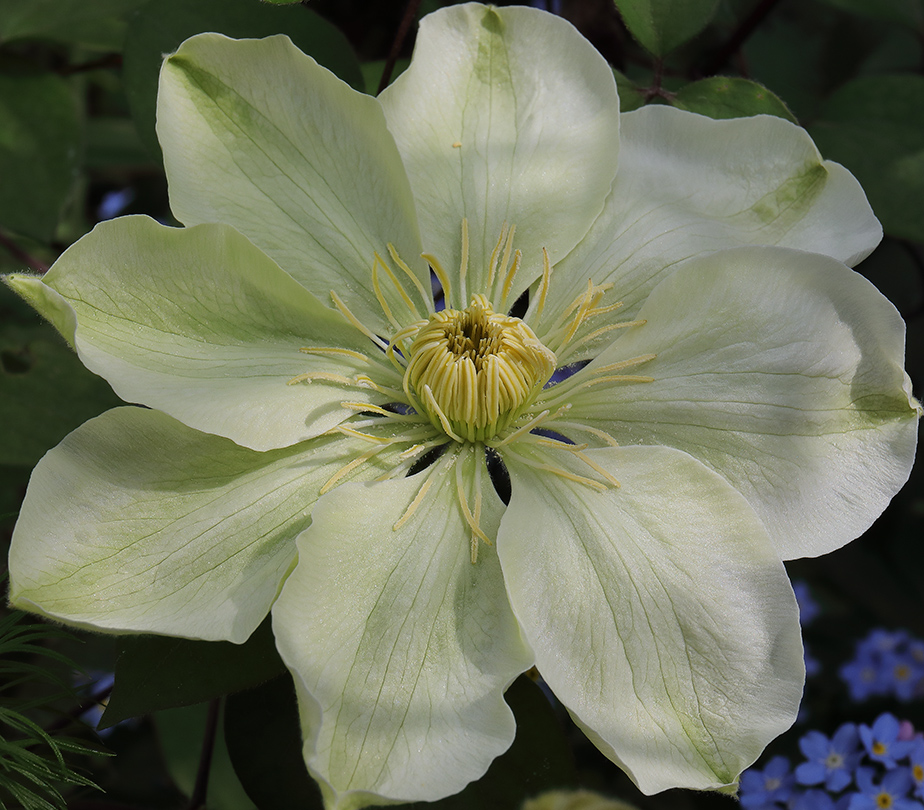
Flower of Clematis 'Guernsey Cream'

The clematis above (Guernsey Cream) was planted just last year. I had forgotten that it flowered early in the year, so it was a happy surprise to see lots of buds already beginning to open last month. I’m hoping that it will flower again in late August too.

The petals of this clematis have a green bar down the centre that is more strongly coloured if the plant has shade. In this particular flower, the bar marking wasn’t very pronounced. Instead, there was more of an overall green tinge which faded to cream as the flower aged.

Like many other pale-coloured clematis, strong sun makes the flower colour fade. So if you want to preserve the colour of a delicately-hued clematis, plant it somewhere that gives it some shade.

Clematis ‘Multi-Blue’

Unfortunately, Clematis ‘Multi-Blue’ has struggled this year. I planted it in an unsuitable position in the hottest part of the garden. Even with a bit of shading at its roots, the plant gets baked by the sun all day. When it’s windy, as it has been recently, it gets even more dried out. Lesson learned! I shall take a bit more care with future plantings.

‘Ernest Markham’ (below) is doing much better. Apparently this one can grow to 4 metres high, so it may take over in the shrub border behind it…I won’t mind if it does.

After weeks of drought and high temperatures, we’ve had a few days of wonderful, life-giving rain. It’s such a relief! And all the plants, including the clematis, are doing much better for it. The moist soil makes it possible to dig in the garden again and I’ll make sure to create some good planting-places for future clematis purchases. There are sure to be some!

Clematis ‘Ernest Markham’