Flamboyant and Frilly: Peonies

White peony flower

NB: A note for WordPress Reader users – you need to click on the title of the post again to see the full photograph. (Otherwise you see just a tiny section!)

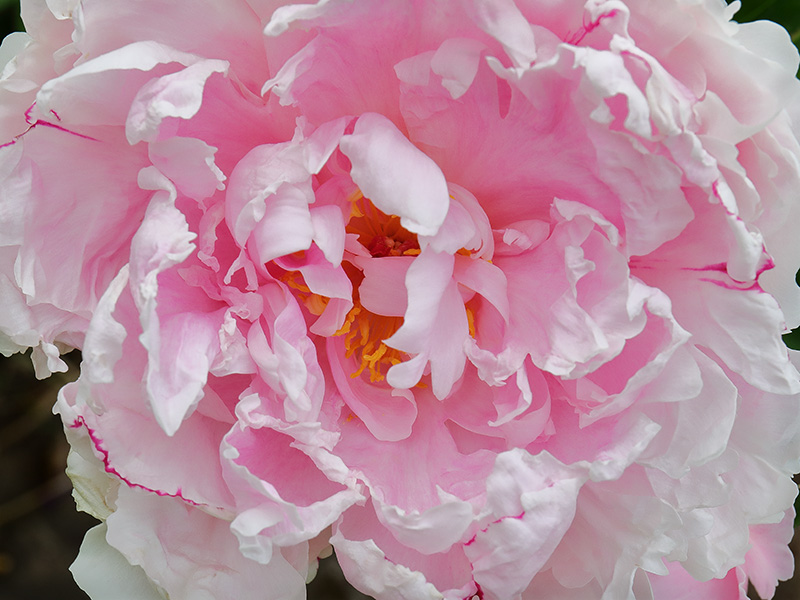
Peonies are amongst the flowers that seem most feminine to me. (Irises and oriental poppies are two of the others.) Peony petals, with their crinkles and ruffles, make me think of layers of silky fabric. Their colours, which range from the pale and delicate to the rich and sensuous, reinforce that impression.

The spectacular curls and swirls of the petals and the sheer flamboyance of the large flower heads make them a pleasure to photograph. The peonies in this post were photographed in gardens I visited, but hopefully I may find a bit of space to grow one or two in the garden here. (I used to grow a couple of red peonies when I lived in Scotland. They were trouble free there, but I suspect that the much drier conditions here won’t be ideal.)

While I’m still trying to figure out how I can somehow squeeze yet more plants into my garden, I’ll make the most of the plants that I have the chance to enjoy in other people’s gardens. Being able to see flowers I don’t grow (and sometimes seeing quite unexpected ones) is a large part of the reason for garden-visiting. These two beauties certainly made me smile!
Pink peony flower

Seeing the Details

White Iris

NB: A note for WordPress Reader users – you need to click on the title of the post again to see the full photograph. (Otherwise you see just a tiny section!)

This year I’ve been making more of an effort to visit other people’s gardens. Now that Covid is less of a worry (although still around), we’ve been trying to get out and about to enjoy the things we used to do.

Visiting gardens gives the pleasure of looking at plants I don’t have in my own garden. If it’s one of the bigger gardens that regularly opens to the public, I’ll bring my camera. (I don’t take it to the smaller private gardens, that just feels a bit intrusive.) Amongst the plants I love to see are irises. I’d grow more of them in my own garden if I could, but seeing them elsewhere is a good substitute.

Photographing flowers in someone else’s garden can be a bit tricky. You can’t move anything or walk wherever you want to to change a distracting background. Here I’ve decided to get as close as I could to these bearded irises and then crop the images. This gets rid of the remains of flowers that had already gone over. (So much easier to have a quick tidy in your own garden!)

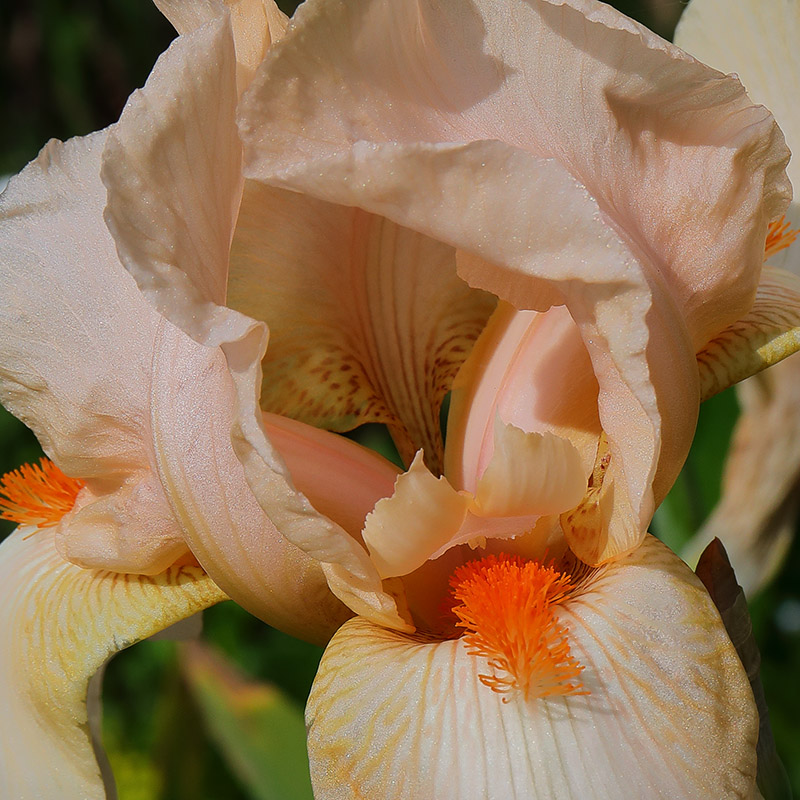
I was happy with the close-up of the white iris because I like the different colours of the flower’s markings. The pale orange iris doesn’t appeal to me quite so much because it’s a colour I’m less keen on. But the markings do help to make the photo a little more interesting. In my own garden I grow Siberian irises, which have beautiful markings. I photographed a couple of them last year for this post.

Pale orange iris

Primula Power

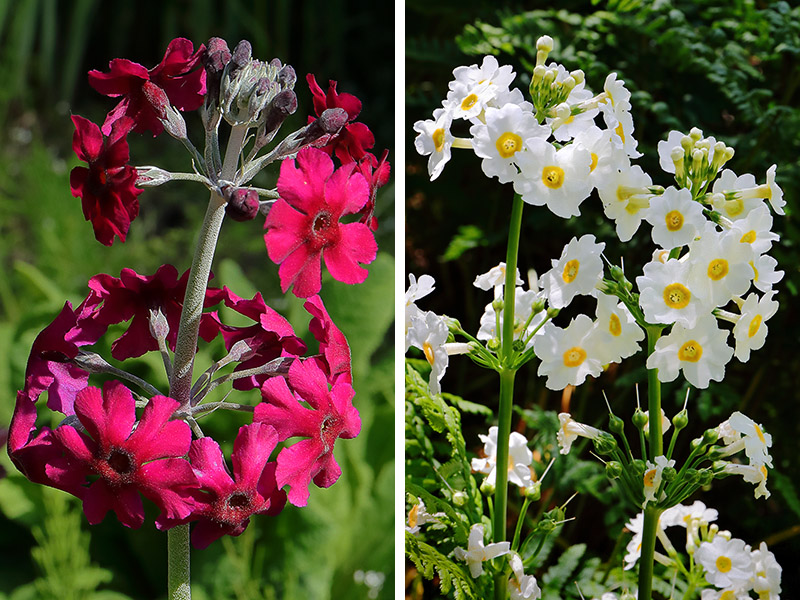
candelabra primula flowers (white)

NB: A note for WordPress Reader users – you need to click on the title of the post again to see the full photograph. (Otherwise you see just a tiny section!)

Visiting gardens and looking at the plants other people grow has always been something I enjoy. It’s tremendously useful too, allowing me to look out for plants I might like to try growing in my own garden.

Candelabra primulas are amongst the plants that have caught my attention. They wouldn’t normally be happy in my garden conditions, but at the moment I’m building a small bog garden here. This will give damper conditions than I can provide elsewhere in the garden and should suit these and a range of plants that will look good near the pond.

candelabra primula flowers (red)

These primulas have a very distinctive structure. The flowers are held in whorls around the stem. They make me think of an old-fashioned tiered cake-stand rather than a candelabra though! (The photos below give a good idea of the plant’s shape. As a new whorl comes into flower at the top, the lowest layer of flowers will be going over.)

candelabra primula flowers

There’s a lovely range of colours to choose from, with reds and pinks, oranges and yellows, and purples and mauves. I think the white ones (or perhaps yellow) would probably suit my planting best, but the glorious crimson flower really appealed to me.

As well as colours, there are a large number of species and hybrids. Some are bright and bold, while others are more delicate in appearance. The choice is wide, but space in my garden isn’t. So I will have to be restrained if I go shopping…

Candelabra primulas
Candelabra primulas, with hostas, irises and astilbe.

Spring Beauties: Rhododendrons

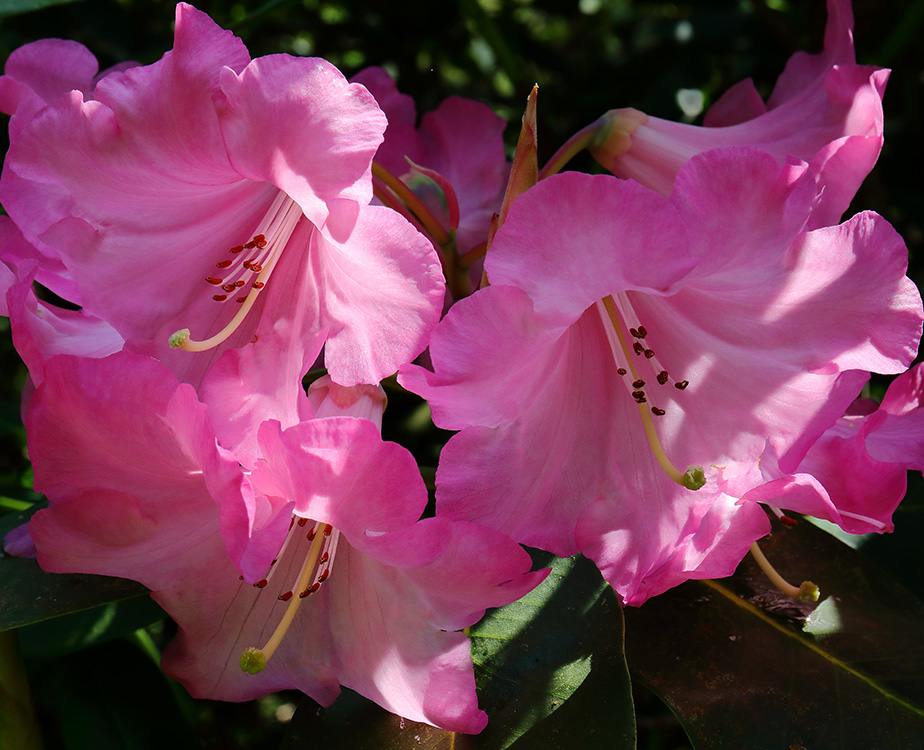
Pink rhododendron flowers

NB: A note for WordPress Reader users – you need to click on the title of the post again to see the full photograph. (Otherwise you see just a tiny section!)

Our previous garden was near Edinburgh in Scotland, so it won’t be surprising that we had a few rhododendrons growing there. However, we have none here in our garden in Suffolk and I must admit that I do miss their beauty.

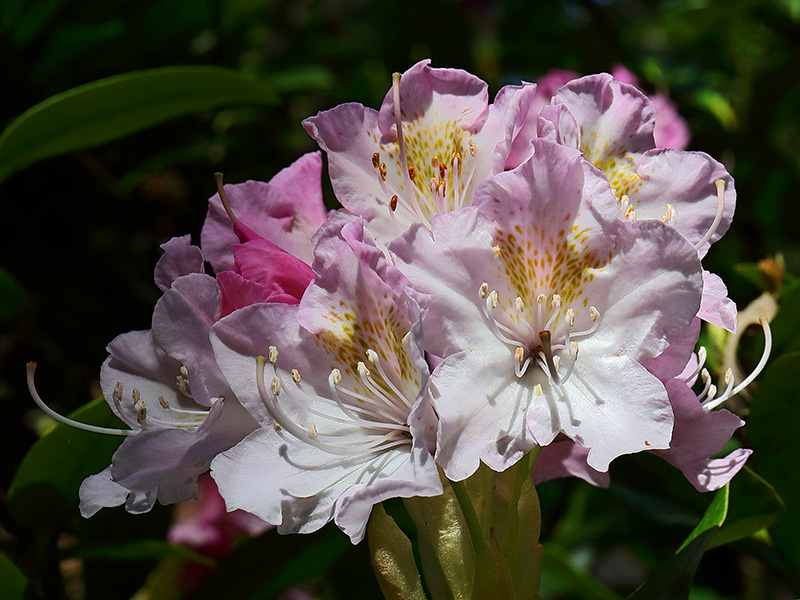
Although our garden wouldn’t be very suitable for growing rhododendrons (nor would it have the space), we do see them when we’re away from home. A couple of days away gave us the chance to see them in gardens that are rather cooler and moister than our own. It gave me the chance to photograph one or two of them too. So while I may never be likely to enjoy rhododendrons in this garden, I can still admire their loveliness when I’m out on a garden visit.

We’re back home after a mini-break, and now it’s time to get on with work here – there are plants calling for my attention. (And one or two new purchases… )

White and pink rhododendron flowers

Dicentra ‘Aurora’

Flowers of Dicentra 'Aurora'

NB: A note for WordPress Reader users – you need to click on the title of the post again to see the full photograph. (Otherwise you see just a tiny section!)

Recently I treated myself to this pretty Dicentra formosa ‘Aurora’ at a local plant market. It’s not the most practical of plants to choose for a Suffolk garden, given our often hot and dry weather. I do however have a couple of shady spots in the garden, so I’m hoping that it will be happy enough in one of them.

I must admit that there was a lot of nostalgia involved in choosing this plant. When we lived in Scotland I used to grow the very similar Dicentra formosa ‘Langtrees’. That one had very silver-grey foliage and made a wonderful ferny-looking ground cover. (It did die back if the weather got hot though, so needed to be amongst other plants that would hide bald patches.)

Dicentra formosa isn’t as showy as the better-known ‘Bleeding Heart’, Dicentra spectabilis, which has had its name changed to ‘Lamprocapnos spectabilis’. (Why are plant names inevitably changed to something that would make a great tongue-twister?) But I reckon this is a lovely plant which should look good alongside the other plants in my garden…if I can help it survive!

Flowers of Dicentra 'Aurora'
Dicentra ‘Aurora’