
NB: A note for WordPress Reader users – you need to click on the title of the post again to see the full photograph. (Otherwise you see just a tiny section!)
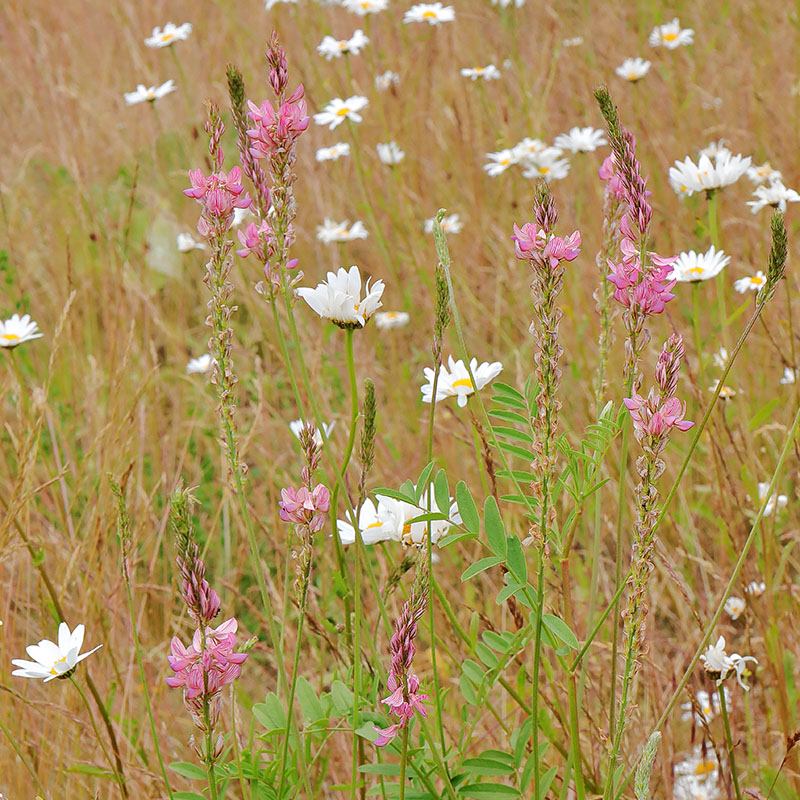
The flowers of sainfoin (Onobrychis viciifolia) were sprinkled throughout the meadow that I wrote about in last week’s post. It’s a plant that I had never seen before. I was enchanted by the spikes of delicate pink flowers with darker pink veining, so I took the opportunity to photograph it.
Reading up about this grassland plant afterwards, I discovered that it is a native of Europe and Asia. Sainfoin is an ancient forage crop grown to feed cattle, sheep and horses. It fell from favour in modern times but is apparently making a comeback. The plant has several benefits, including controlling worms in grazing animals and improving the quality of the soil by fixing nitrogen. (The common names of ‘healthy hay’ and ‘holy hay’ reflect the benefits to livestock.)
But it’s not the usefulness to animals that caught my attention. I’m far more interested in the benefits that sainfoin offers to bees and other pollinators. Apparently sainfoin produces large amounts of both pollen and nectar, making it very attractive to pollinating insects, including bumblebees and butterflies.
This suggests that it would be worth growing in a selection of wildflowers for a semi-wild area that will be a habitat for wildlife. It’s an idea that appeals to me greatly, but I would need to be able to fit my wild patch into a small space. A possibility for next year… 🙂








 Ann Mackay: Inspired by Nature