Heralds of a Wet and Windy Spring

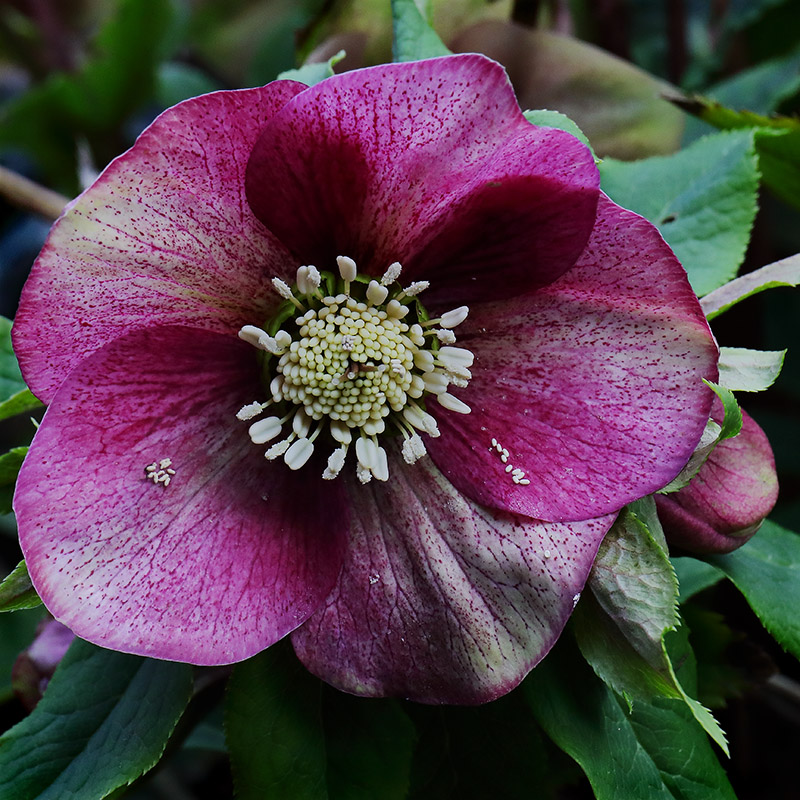
Hellebore flower

NB: A note for WordPress Reader users – you need to click on the title of the post again to come out of the reader and go to the post itself. This allows you to see the whole of the top photograph. (Otherwise you may see just a tiny section!)

Hellebores are resilient plants. They need to be, given that the weather in very early spring can be anywhere between sunshine and gentle breezes to the blast of high winds and freezing rain or snow. This year we’ve had a fairly benign mix – quite a lot of rain but sunshine too and no gales around here.

I did worry that this hellebore and the others that are planted beside it might suffer in the gusts of chilly air that are sent out from the air-source heat pump that we recently had installed. The heat pump works by extracting warmth from the air around it so the air it pushes back out is very cold. Luckily, it turns out that the airstream is just enough to the side of them not to be damaging.

Unfortunately, the site that had to be used for the heat pump meant that a path and a low retaining wall had to be dismantled to make room for it. Now both path and wall will need to be reinstated and the hellebores may be in the way. If possible, I’d rather not move them, especially when they seem happy in their present position. Hopefully, if I do, they’ll survive and bring more joy to next spring.

(Meanwhile, I’m wondering what has laid its eggs on the flower in the top photo…do you see those white ovals? Not slugs or snails, which have round eggs. Not to worry, I suspect the rain we’ve just had will have washed them off!)

Hellebore flowers

Briefly Brilliant

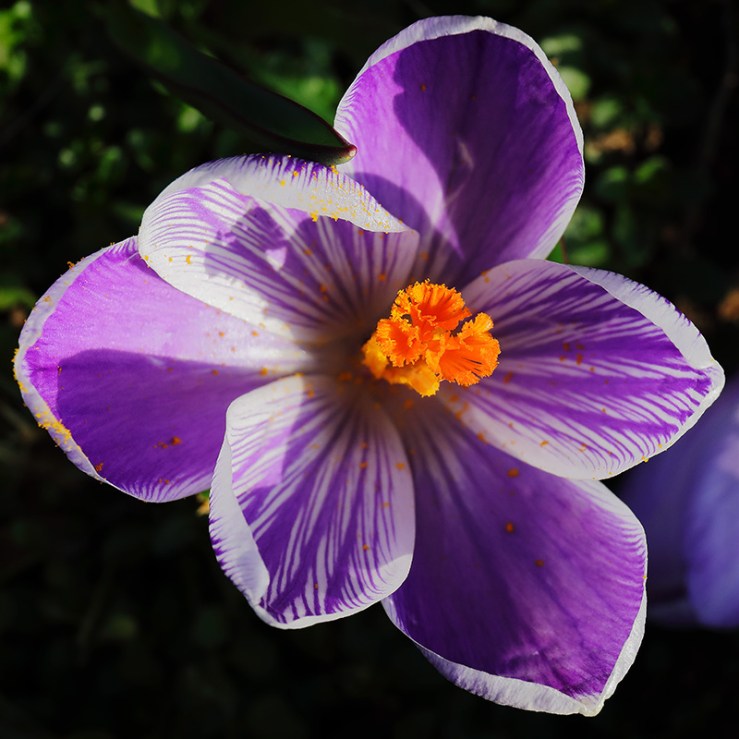
Crocus 'Prins Claus'

NB: A note for WordPress Reader users – you need to click on the title of the post again to come out of the reader and go to the post itself. This allows you to see the whole of the top photograph. (Otherwise you may see just a tiny section!)

The unusually wet weather has been very destructive to the crocuses this year. I don’t have many here, and those that have flowered have been quickly flattened by the rain. They end up looking like tiny scraps of brightly-coloured silk lying on the ground.

Luckily, other years have been kinder to these late-winter flowers and to the early bumblebees that were able to enjoy their nectar. (Crocuses are nicely timed to feed bumble bee queens that have just come out of hibernation.) The photographs here are from a sunny February a couple of years ago: at the top is ‘Prins Claus’, while the flower below is ‘Pickwick’.

Right now there is still one relatively undamaged group of purple crocuses which haven’t yet been rained flat. I can’t get at them to photograph them without tramping on a lot of wet soil (and thereby compressing it), so I’m unlikely to photograph them this year. But I can at least enjoy the sight of them and maybe the weather next year will allow me to photograph them then. Here’s hoping!

Crocus 'Pickwick'

A Welcome Sight

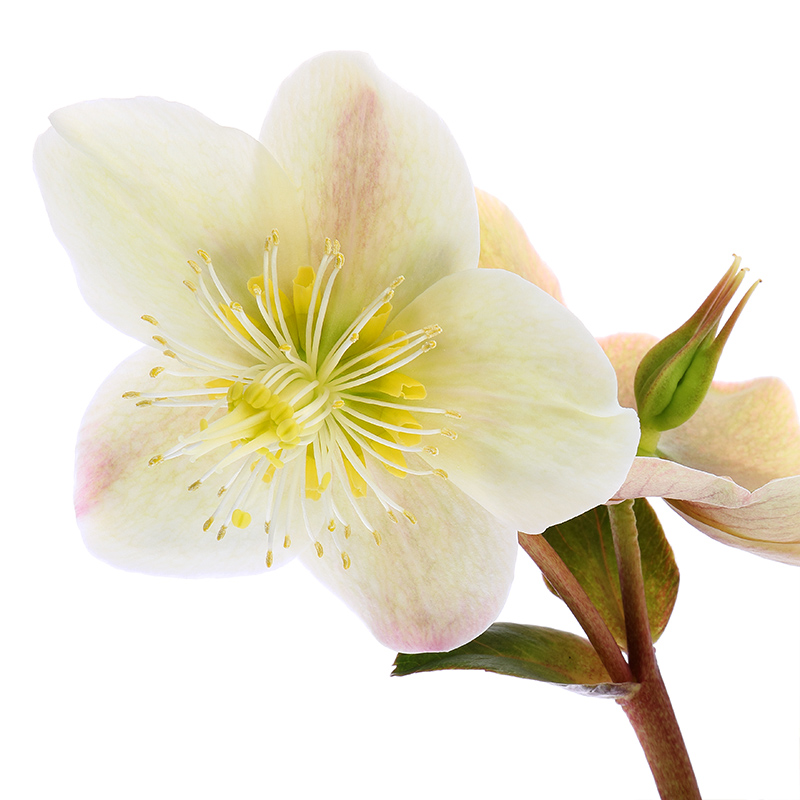
white hellebore flower ('Cinnamon Snow')

NB: A note for WordPress Reader users – you need to click on the title of the post again to see the full photograph. (Otherwise you see just a tiny section!)

February has brought the opening of hellebore flowers in my garden. Along with a scattering of snowdrops, they’re the first of the year’s flowers. (Although there are still pink flowers on the viburnum ‘Dawn’ and yellow ones on the winter-flowering jasmine. But they’ve been around for quite a while now.)

It’s a cheering sight to see something pretty at last, after a rather wet and muddy winter. And now I have something that makes me want to be outside in the garden with my camera…or else indoors in my little studio, as with the flower below. I reckon that I can promise that there will be more hellebore photographs here very soon!

hellebore flower - white with pink spots

Following a Trail: Otley Hall

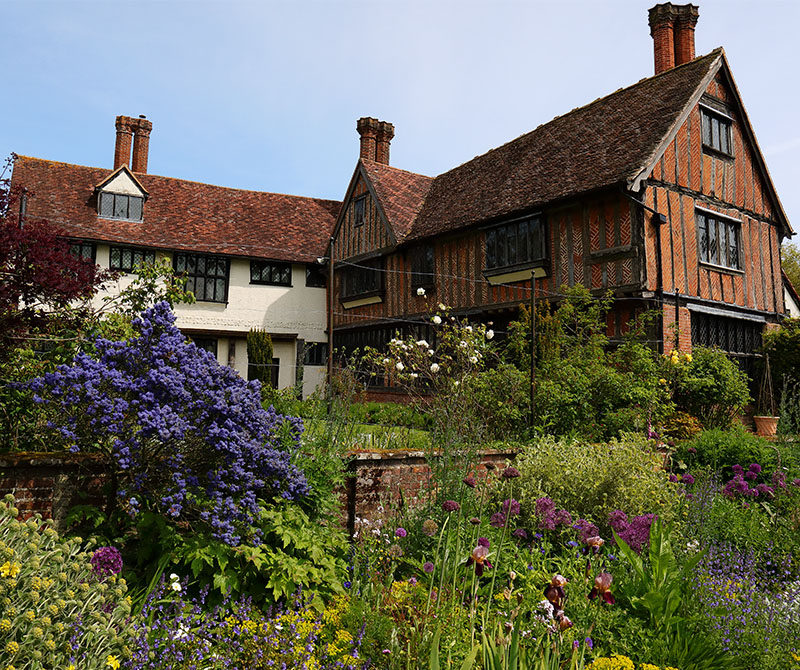
Otley Hall and garden

NB: A note for WordPress Reader users – you need to click on the title of the post again to come out of the reader and go to the post itself. This allows you to see the whole of the top photograph. (Otherwise you may see just a tiny section!)

Last year my husband and I joined other visitors on ‘The Great Garden Trail’. This is a summer-long event for which volunteers open their gardens to raise money for the St Elizabeth Hospice in Ipswich, Suffolk. Gardens of all sorts take part in the scheme, big and small, filled with exciting plants, or more modestly planted. Some of the gardens are the setting for interesting historic houses and occasionally there may be a village with many of its gardens open to explore.

Otley Hall turned out to be in the ‘modestly planted’ category. I would have been disappointed if I’d gone there just to see the gardens, but I also love Suffolk’s quaint medieval houses, so the visit was worthwhile.

Otley Hall
I couldn’t help but stop and admire the massive chimney, which looks as if it was built to impress anyone approaching the door.

Built in the early sixteenth century, Otley Hall is said to be the oldest house in Suffolk to have remained ‘largely intact’, with some parts of the building added later in the same century. Timber-framed buildings from medieval times are a feature of Suffolk’s countryside and many of its towns and villages. They make you feel as if you could step back in history by just walking inside them. (But we didn’t go inside this one – it was only the garden that was open on our visit.)

In the garden itself, my attention was captured by the beautiful irises which were in full flower, especially the white iris above, with the little hints of colour, and the blue one below. (Our visit was at the end of May, a little too early for the many roses there to be in bloom.)

The main flower borders edged a croquet lawn, one of several lawns throughout the gardens. Other grassy areas featured a labyrinth, ‘The Mount’ – an artificial mound which allows views of the surrounding countryside, and an H-shaped canal. (The house still has a moat on one side too.)

Otley’s ten acres have a mix of both formal gardens and informal, more natural grounds. For example, near the house there is a small ‘knot garden’ with box hedging and herbs planted up in a classic Tudor-style design. Elsewhere there are woodlands and hedgerows, maintained to encourage wildlife and areas planted up with wildflowers.

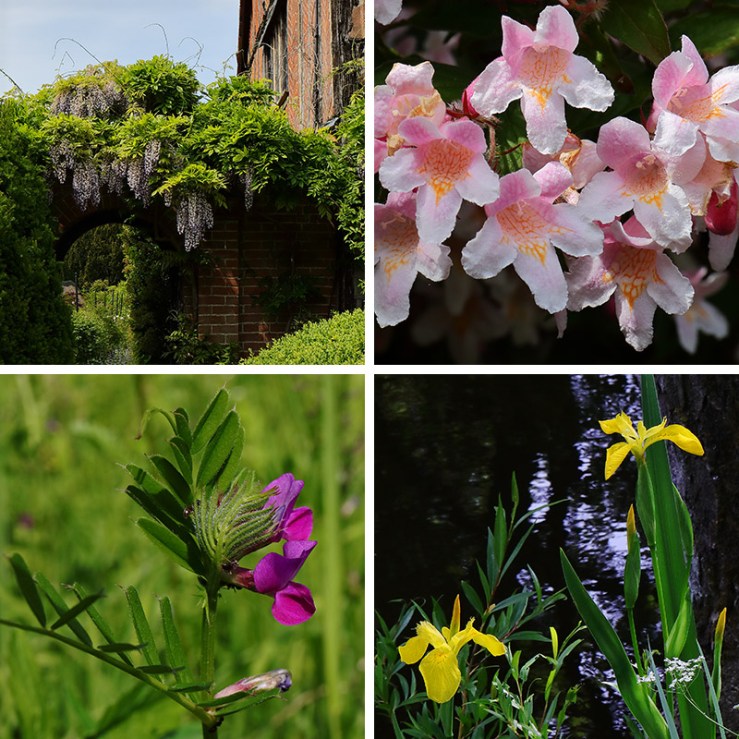
Formal and informal, clockwise from top left: wisteria on an arch beside the house, abelia growing beside a lawn, irises along the wilder edges of the canal, a vetch in a wildflower area.

The combination of traditional and wilder areas gives an easy-going feel to a stroll around the gardens of Otley Hall. It’s not the best garden for a plantaholic to visit, but it does offer a pleasant afternoon with the opportunity to see a fine example of a medieval timber-framed house. (It has an excellent cafe too…coffee and cake is an important part of our garden visits!)

Otley Hall
There’s a walk beside the moat which allows a glimpse of the back of the house.

(Almost) Silent Sunday: Looking Back

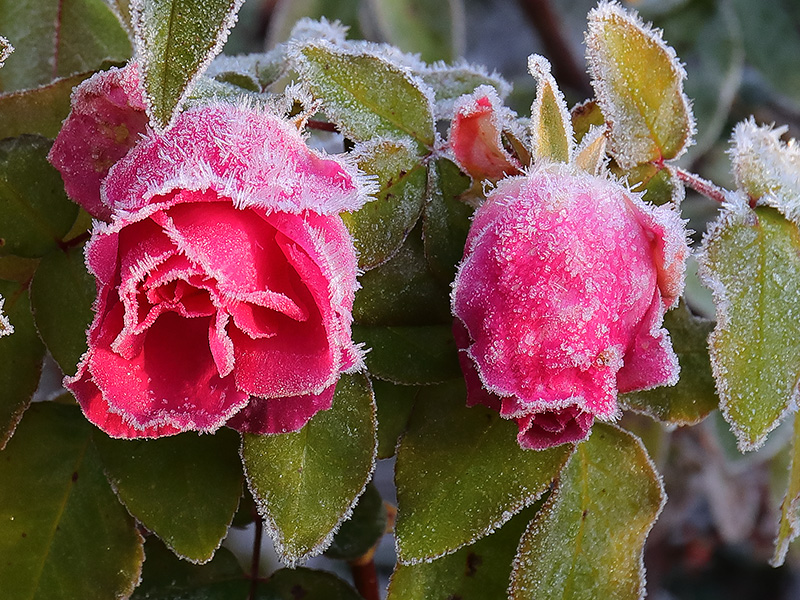
Rose 'Zepherine Drouhin', covered in frost.

NB: A note for WordPress Reader users – you need to click on the title of the post again to see the full photograph. (Otherwise you see just a tiny section!)

I have Covid (for the first time), so I’m using it as an excuse to take it easy this week and just re-posting a photograph from 2019. Sometimes I get lucky and there’s something still in flower when the first frosts arrive. This is the rose ‘Zepherine Drouhin’.

Ghosts: Frosted Allium Seed Heads

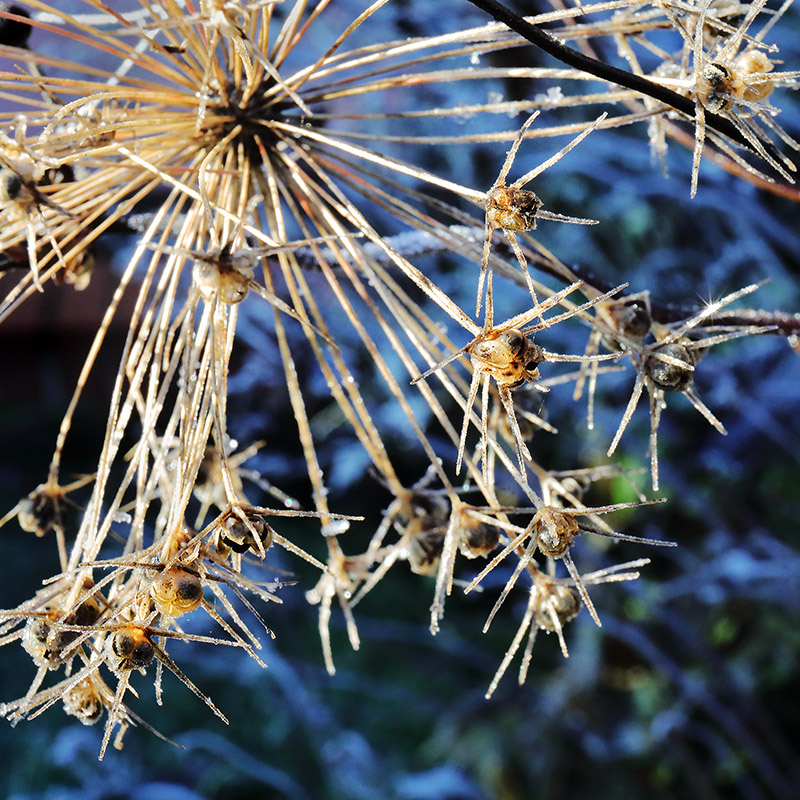
Frosted Allium christophii seed head

NB: A note for WordPress Reader users – you need to click on the title of the post again to see the full photograph. (Otherwise you see just a tiny section!)

The Allium christophii seed heads pictured here are held motionless in the thinnest coating of frost. On a freezing winter morning the tiny seed pods, and the remains of the flowers behind them, gleam softly in the early sun.

It has just occurred to me that it’s unusual for a seed head to retain the remains of the flower like this. The petals have lost their colour and their edges have curled inwards. They’ve shrunk a little as they’ve dried too, but those petals are still there. Now they are little icy stars.

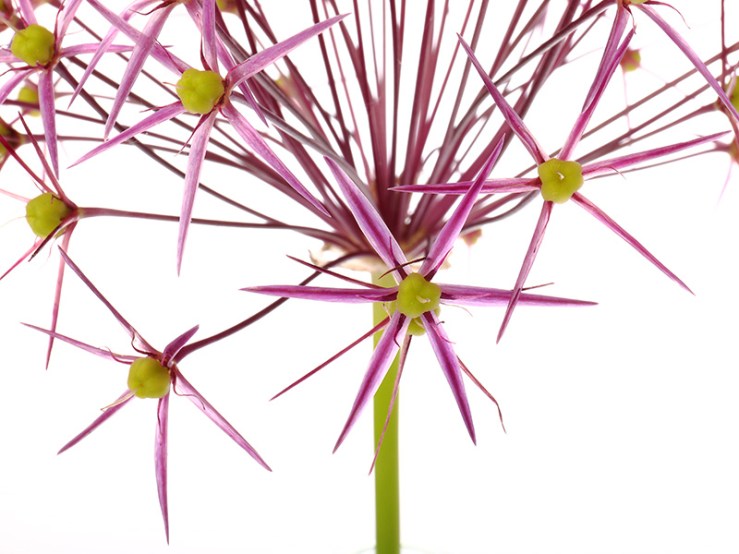
You can see what those stars looked like while the flower was still alive:

Allium christophii flower head

The living flowers are lilac, with a delicate metallic sheen. Already the green seed pods are forming in the centre of each individual floret. If you look closely you’ll see that there’s also an inner ring of filaments. (These are the lower part of the stamens, which would have held the anthers.) Their tapered, almost spiky, appearance makes them look like another set of much smaller petals.

Now my imagination is playing with the idea of having the ‘ghosts’ of the year’s flowers sprinkled throughout the garden. For company, the alliums would have hydrangeas (as in last week’s post) and perhaps, if there were any late flowers, astrantias. (But in both of these plants, what look like petals are not. The hydrangea has minute flowers surrounded by showy sepals and the astrantia has large bracts around a tiny pincushion-like arrangement of true flowers. Perhaps that is why they keep their flowery appearance for longer.)

Hmm, I wonder if a slightly spooky winter garden would be fun… 🙂

Frosted Allium christophii seed head

Frost and After

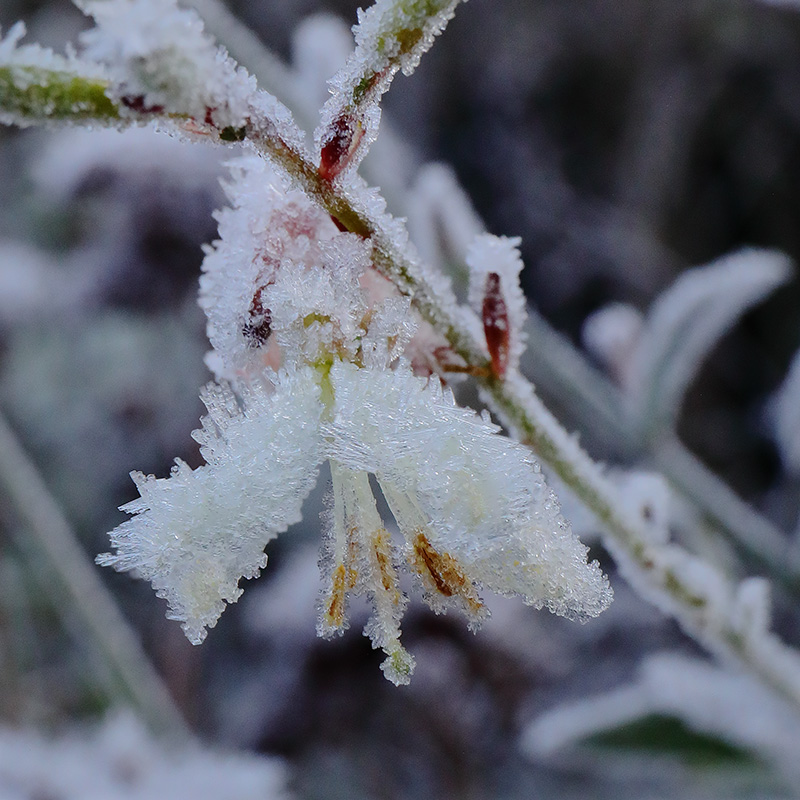
frosted gaura flower

NB: A note for WordPress Reader users – you need to click on the title of the post again to come out of the reader and go to the post itself. This allows you to see the whole of the top photograph. (Otherwise you may see just a tiny section!)

Last year’s hoar frost made icy little sculptures out of many of my garden plants. The one you see here is Gaura lindheimeri. (Now known as Oenothera lindheimeri, but I still call it by it’s old name. There are too many plant name-changes to keep up with these days!) This plant carries on flowering until late in the year, so frequently ends up covered in frost.

The area where the gaura is growing stays in the shade for much of the day in winter, so the frost lasts here for a long time. That gives me plenty of opportunities for taking photographs, but means that the sun doesn’t reach the frost to make it sparkle. So photography here is a bit of a compromise. Perhaps I should consider the effect of sun on frost when planting!

Eventually the frost will go, changing the look of the flower again. This time the petals are likely to be left translucent and looking very fragile indeed. (They usually wilt quickly after being frosted.) The drops of melted frost give an interesting texture to the flower – you can see right through the petals to the drops that are actually on the other side. ❄

Gaura with melted frost drops

Another (Almost) Silent Sunday

NB: A note for WordPress Reader users – you need to click on the title of the post again to come out of the reader and go to the post itself. This allows you to see the whole of the top photograph. (Otherwise you may see just a tiny section!)

It’s a re-post of an image from near the start of my blog (in 2018) for this week. We’re just getting back to normal here after having our new heating system installed and it’s good to be warm again. With a bit of luck I’ll be back to my garden and photography in the next few days. 🙂

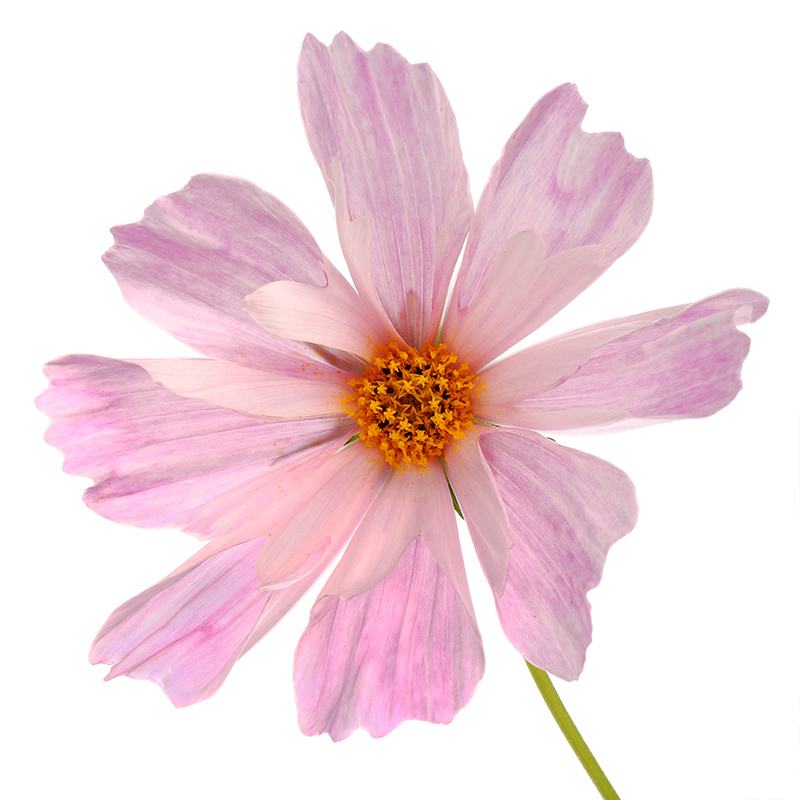
(Almost) Silent Sunday: Cosmos

Flower of Cosmos 'Seashells'

NB: A note for WordPress Reader users – you need to click on the title of the post again to come out of the reader and go to the post itself. This allows you to see the whole of the top photograph. (Otherwise you may see just a tiny section!)

It’s a post-and-run this week because we’re getting ready for work to start tomorrow to install our new heating system. There’s a slight feeling of chaos around here right now – hopefully it will be replaced by a good feeling of warmth soon! 🙂 (And the flower is Cosmos ‘Seashells’.)

A Remnant of Summer

Scabiosa 'Kudo White' flower with variegated sage

NB: A note for WordPress Reader users – you need to click on the title of the post again to see the full photograph. (Otherwise you see just a tiny section!)

After Storm Babet passed by, there was not a lot left in flower in the garden. The asters which had provided some late colour have mostly gone over, and the last purple-blue ones that hang on now look tattered and disheveled after all the rain.

The white scabious flower pictured above is one of the flowers that remain and it even has buds yet to open. I find that the scabious and related knautia plants do continue to produce a few flowers until late in the year if I remember to deadhead them. At this stage, any colour that remains in my garden is a bonus. If it’s something that bees and other pollinators like, it’s an even bigger bonus. Scabious is very popular with insects, so it is proving its value here.

The white-flowered plant is Scabiosa ‘Kudo White’ and the dark red one below is Scabiosa atropurpurea ‘Chile Black’. I hope that the white one will self-seed as readily as the dark scabious has. They are so attractive and long-flowering (right from the middle of summer) that I’d be happy to give them quite a bit of space in the borders.

Hmm…for some reason ‘Scabiosa’ sounds to me like something Hermione from the ‘Harry Potter’ books would say, with a deft flick of her wand. Maybe it’s a spell for filling a garden with flowers… 🙂

Flower of a red Scabious with a hoverfly
Scabious with hoverfly