Winter Bee-Feast

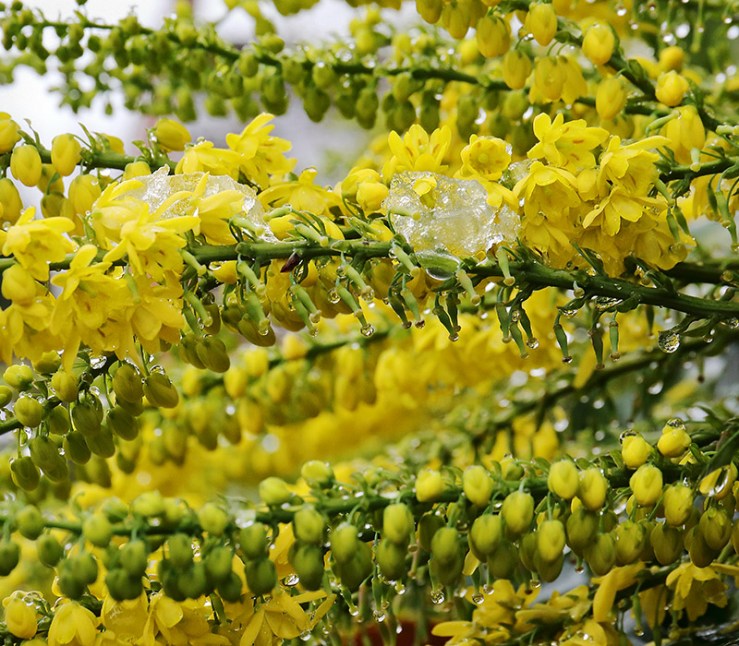
mahonia flowers with melted frost

NB: A note for WordPress Reader users – you need to click on the title of the post again to come out of the reader and go to the post itself. This allows you to see the whole of the top photograph. (Otherwise you may see just a tiny section!)

As I’ve been working in the garden in recent days, I’ve noticed that there are still a few buff-tailed bumblebees around. They’ve been attracted to the yellow flowers of our mahonia, which is a great source of nectar and pollen during late autumn and winter.

While most bumblebee colonies die off for the winter, with just the mated queens hibernating and then starting new colonies in spring, the buff-tails (Bombus terrestris) can stay active. 30 years or so ago, buff-tailed queens would have hibernated too, but in more recent times both queens and workers may be seen flying in winter. It seems that this is the result of winters becoming milder, especially in southern areas of the UK.

There are not many sources of nectar for winter-active bumblebees, so the mahonia, which is a large shrub and well-covered with flowers, has become a valued feature of our garden. (By the time the mahonia has finished flowering, there will be some hellebores and later on there is the plum blossom. We do, however, want to increase the available food for bumblebees over winter.)

As you can see from the photographs, the mahonia flowers don’t mind a bit of frost or snow. Ours has the sunniest spot in the garden, so bees can enjoy the warmth of any sunshine right from early morning until sunset. The shrub was already here (and mature) when we came to this house, so I can’t be sure of the cultivar, but it does look like the very popular Mahonia x media ‘Charity’. I’m certainly very glad that a previous owner did plant it and I should think that the bumblebees are too! 🐝

mahonia flowers with melting snow

Snow melting from mahonia flowers doesn’t seem to cause them much damage.

Signals for Bees: Pulmonaria

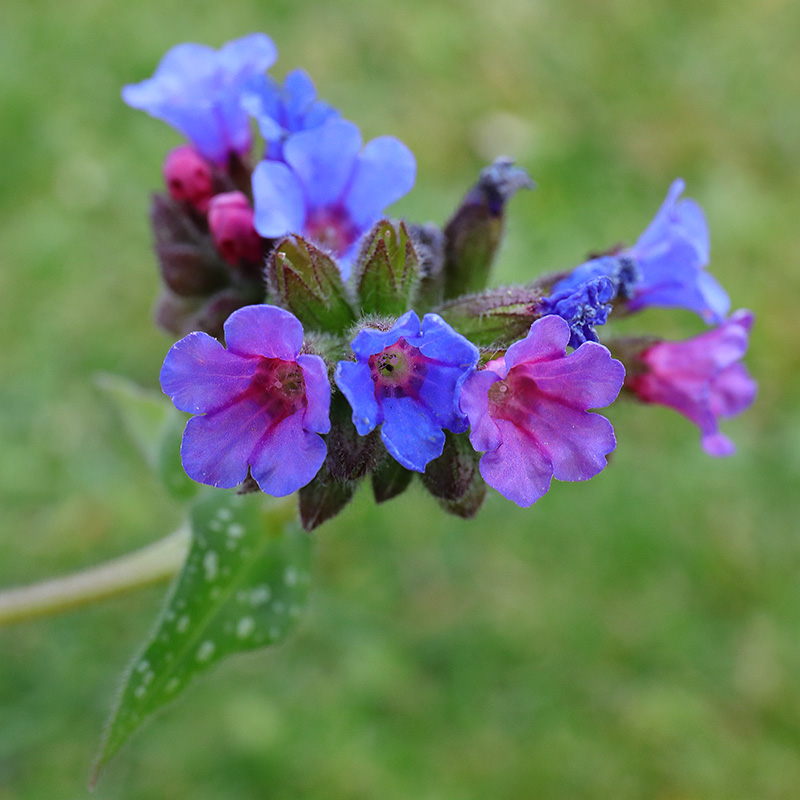
Blue and pink Pulmonaria (lungwort) flowers

NB: A note for WordPress Reader users – you need to click on the title of the post again to come out of the reader and go to the post itself. This allows you to see the whole of the top photograph. (Otherwise you may see just a tiny section!)

Pulmonaria (lungwort), like some other plants, changes its flower colour, presumably as a message to bees. The flowers start off by opening pink and gradually change through violet to a bold blue. If you look at the background to the top photo, you can (I hope) make out the deep pink unopened buds, while, just behind the foreground flowers, there are the shrivelled blue remains of a dead flower.

I’ve mentioned flower colour change in previous posts: Lathyrus vernus (spring vetchling or spring pea) changes colour in the same way, going from a pale magenta-pink to a soft blue, while Nigella damascena flowers changed from white with blue veining or a pale blue to a much deeper blue.

Not all pulmonarias have this colour sequence. There are now cultivars which mature to a much softer lavender-blue. Others change from red to a softer pink and there are some that have pink buds that open to pale blue or white flowers…lots of tempting choice for the gardener!

The flowers of pulmonaria are small, but the variation in colours on the plant at the same time make them more attractive and worth the effort of a close look. As a plant that can begin to flower in late winter, those small flowers are particularly valuable to the first bees visiting the garden.

It is believed that the colour-change in the pulmonaria flowers allows the plant to let the bees know which flowers are freshest and still have plenty of nectar. That ensures that bees are likely to visit those flowers that are still to be pollinated. This strikes me as clever evolution and particularly good design by nature. I’m sure the bees must appreciate the convenience and saving of their time and effort too! 🐝

Spotted leaves and blue flower of Pulmonaria (lungwort)
The shape of lungwort’s leaves (like a lung) gave rise to the plant’s name. Their white spots were once believed to indicate that they could be used to treat lung diseases.

Things are Starting to Buzz…

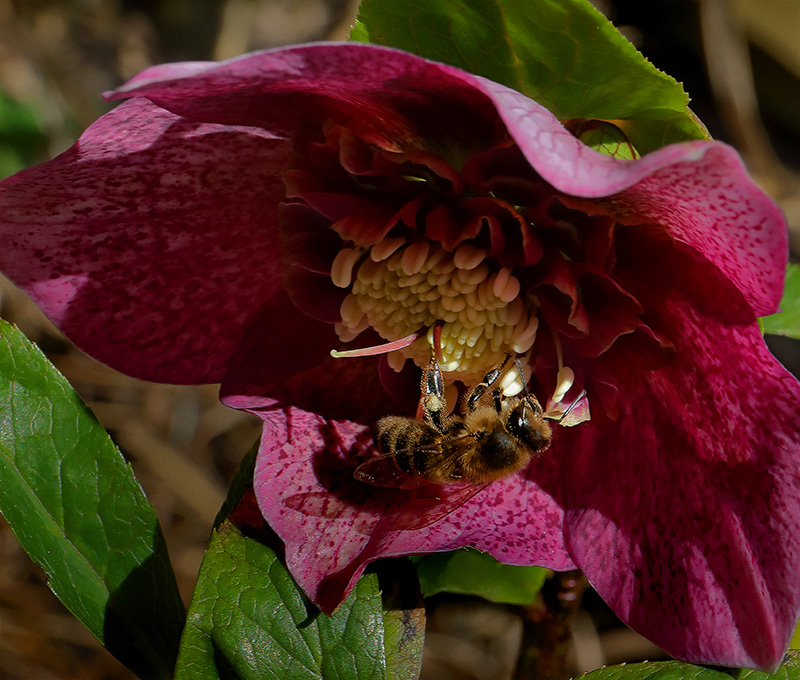
pink spotted hellebore with a honeybee

NB: A note for WordPress Reader users – you need to click on the title of the post again to come out of the reader and go to the post itself. This allows you to see the whole of the top photograph. (Otherwise you may see just a tiny section!)

The sudden warmth in the sunshine over the last few days has brought more life to the garden. The birds have been singing and busily getting ready for spring for a little while. Now they’ve been joined by the first of the butterflies (peacock and brimstone so far) and both bumblebees and honey bees.

I hope the insects won’t be caught out by cooler temperatures next week and some sub-zero nights yet to come. Last year was a bad one for bees and butterflies here, so they really need better conditions this year to boost their numbers. While there’s not much that I can do to protect them from a change in the weather, I can at least try to provide early-flowering plants so that they have something to feed on.

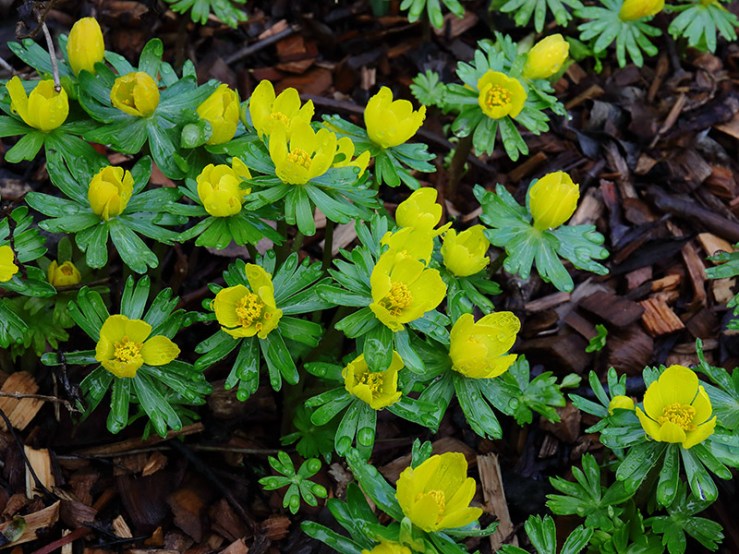
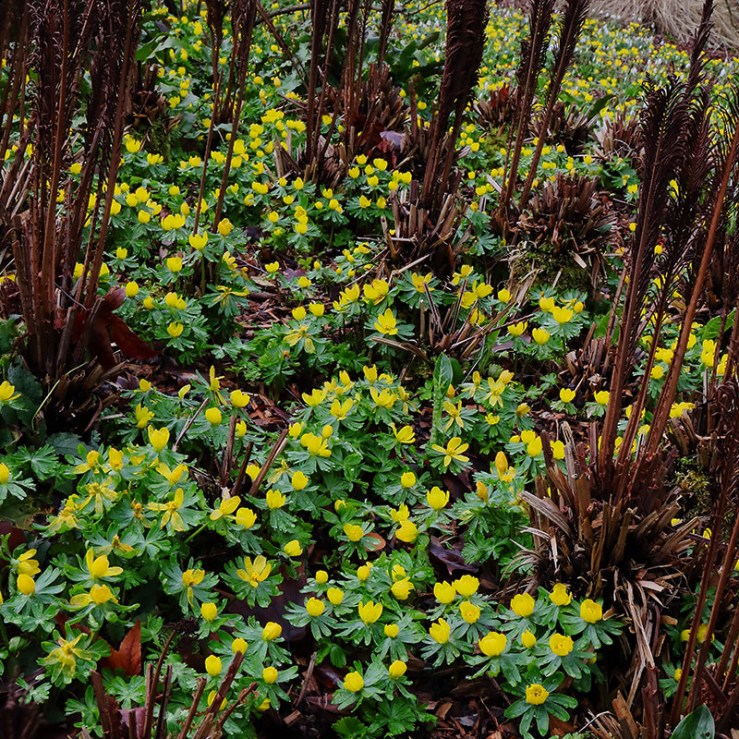
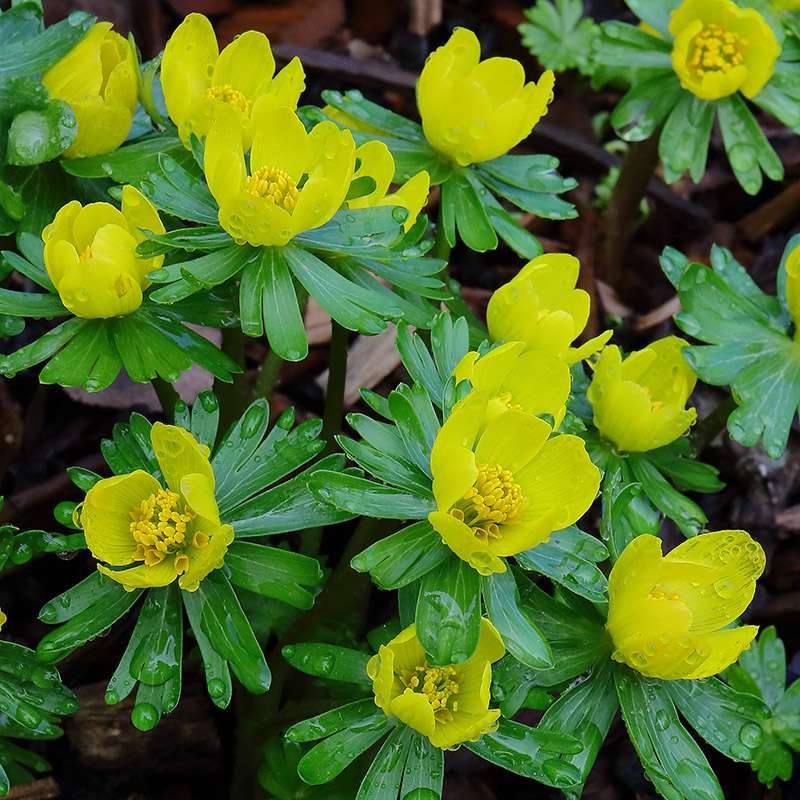
Currently there aren’t very many plants that are in flower here. The viburnum bushes still have their pink flowers and there several hellebores and some snowdrops and crocuses. But there could be more. Yellow winter aconite for instance, or blue Siberian squill. Chionodoxa (‘glory of the snow’) is another that offers blue flowers. Both it and Cyclamen coum come in a range of other colours, including pinks and white. These would all flower very early and provide food for insects at a time when it can be hard for them to find enough.

There have been a lot of changes in the garden over the last couple of years and I’ve lost a lot of small bulbs (mainly crocuses) by accidentally digging them up while moving plants or changing the layout of borders. I’m hoping that I’ll now have areas settled enough for bulbs to be reasonably safe. One of these areas is where I’ve planted a number of fruit trees. Early spring bulbs should grow well there and enjoy the sun before the leaf canopy appears. I want it to work because our little insect friends need a bit of help. 🐝

purple crocuses with a honey bee
A honey bee enjoys crocuses that have opened in the sun.

Daisy Days

Pink Michaelmas daisy

NB: A note for WordPress Reader users – you need to click on the title of the post again to come out of the reader and go to the post itself. This allows you to see the whole of the top photograph. (Otherwise you may see just a tiny section!)

Autumn means that there are few flowers left in the garden here, but there is at least a splash of colour still from the asters. The bright pink one above (name unknown because it came from a friend’s garden) is almost over now. It was glorious while it lasted, but now the softer shades of pink and blue have taken over.

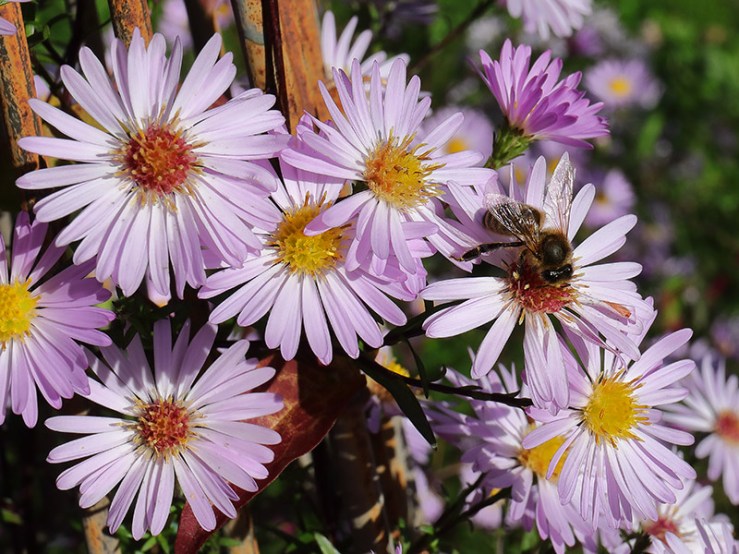
Honeybee on Michaelmas daisies
Honeybees were frequent visitors to these Michaelmas daisies.

The lavender-blue aster flowers have been especially popular with bees and hoverflies in the last week or so. We had a very hot and sunny spell, so the bees were out in force, making the most of the chance to find pollen and nectar before the flowers disappear. Every time I passed by these daisies, they seemed to be buzzing…a sound to make me happy!

Honeybee on pink Michaelmas daisies
This pink daisy seems less popular than the blue one, but still has its visitors.

It was interesting to see that there were fewer bees attracted to the pale pink asters. (I know the name of this one – Symphyotrichum laeve ‘Les Moutiers’. But I have to admit that I did a cut and paste for the name, rather than try to spell it!) Some time ago, I read that bees prefer blue and purple-blue flowers. That was probably the reason why they didn’t bother with this pink one as much.

I noticed too, that there were a lot more honeybees than bumblebees, but that won’t be surprising if there’s a hive not very far away. There were also what appeared to be a couple of tiny dark-coloured bees, but they were too quick for me to get a good look at them. A couple of weeks ago I wrote that this hasn’t been a good year for insects in the garden, so it was a pleasure to see these late flowers so busy with pollinators. Let’s hope they’re even busier next year!

Hoverfly on Michaelmas daisies
A hoverfly settles for a quick snack.

Late Arrivals

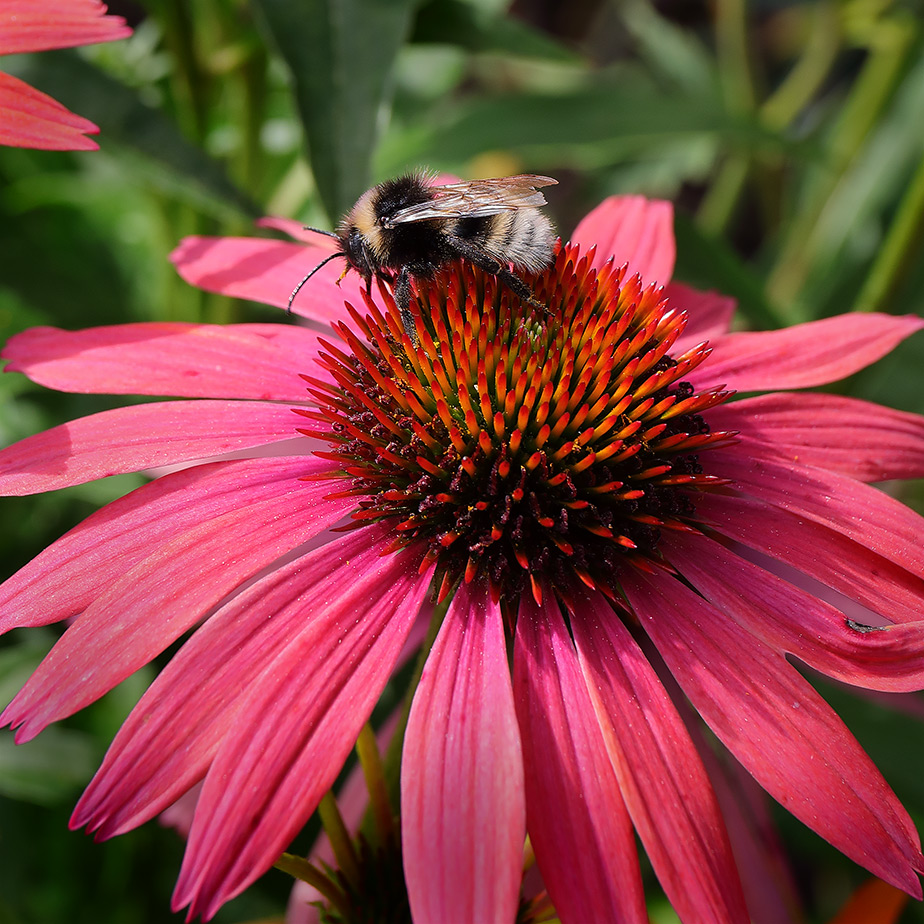
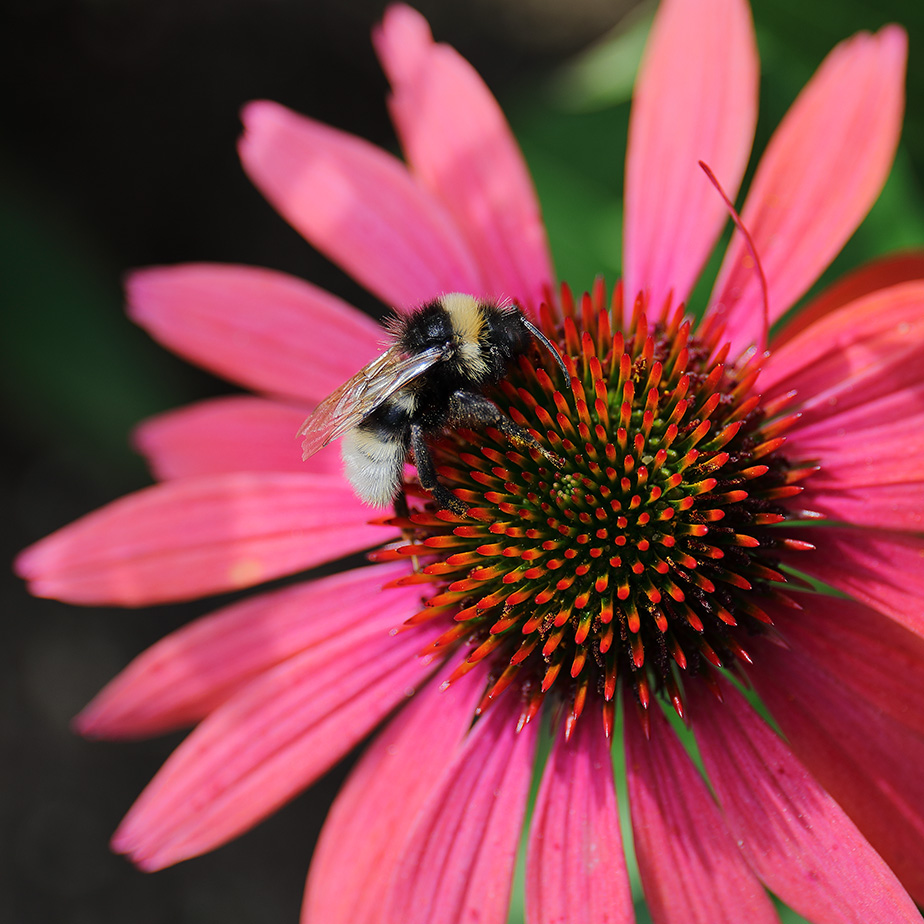
Bumblebee on echinacea flower

NB: A note for WordPress Reader users – you need to click on the title of the post again to see the full photograph. (Otherwise you see just a tiny section!)

This year was a worrying one as far as tiny visitors to the garden went. In spring and early summer it definitely felt as if there were fewer bees and other pollinators around. Butterflies, too, seemed scarcer this year. Things improved in the later part of the summer and there were days when there were a fair number of insects around, but not as good as previous years.

Last winter was a very cold one, with much harder frosts than we usually get. Presumably, this must have made it harder for hibernating insects to make it through to spring. I’ve also read that last year’s drought didn’t help insect numbers. Hopefully the wetter summer this year will have produced an improvement.

Common Carder bee
Common Carder bee

It was a relief to see bees and butterflies appearing as the summer progressed. But there were some things that I didn’t see here, such as the Small Tortoiseshell butterfly in the photo below.

Peacock butterflies were a rare sight here too, but Red Admirals appeared in good numbers. (They are the commonest butterflies in my garden, along with the Cabbage Whites.) The largest number I saw was on a particularly sunny day, when about a dozen Red Admirals and a solitary Peacock were feasting on a buddleia. For a few warm days there were enough of them around to swirl past me whenever I walked along the path and brushed against our butterfly bushes.

Small tortoiseshell butterfly
Small Tortoiseshell butterfly photographed in a previous summer

There was an increase in dragonflies visiting – they have obviously become more aware of our pond. It was amusing to watch these fairly heavy creatures try to settle on the nearby stems of evening primrose, which quickly bent and swayed under their weight. To give them better lookout posts, I pushed some big birch twigs into the pots of a couple of the pond plants. I hope they appreciated them!

Although this appeared to be a poor year for insects, there are some signs of hope in the attitudes towards their welfare. I’ve noticed a lot more wild plants and food plants for bees and butterflies in garden centres and nurseries, a response to the growing interest in gardening for wildlife. And, much to my delight, our local council stopped mowing many grassy areas. This means that the green that runs in front of the houses here is being allowed to become wilder. I’m hoping that in a few years we’ll have a decent little wildlife meadow out there!

Hoverfly on potentilla flower
Hoverfly on potentilla

For the Bees

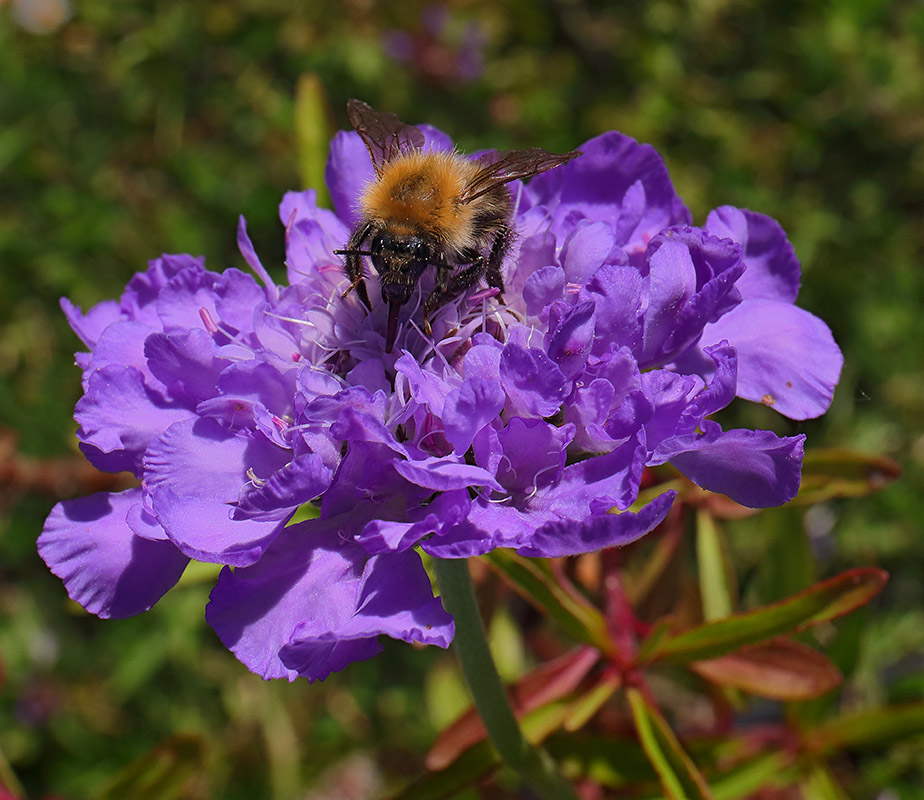
Common Carder Bee on Scabious flower

NB: A note for WordPress Reader users – you need to click on the title of the post again to see the full photograph. (Otherwise you see just a tiny section!)

Helping bees is the annual focus of ‘Bees’ Needs Week’ again, starting tomorrow. By helping bees to survive and thrive, we’re really helping ourselves. A large part of agriculture relies on bees (and other pollinators) to pollinate the crops that provide our own food.

It seems deeply ironic to me that while agriculture relies on wild pollinators to pollinate an estimated 85-95% of the UK crops that require it, that agriculture is also a main reason for their decline. The destruction of wild habitats by intensive farming and the use of pesticides and weedkillers is making the survival of insects more difficult. But we can all help to fight the decline in wild bees and other insects in our own gardens, on balconies, allotments, and on any patch of spare ground.

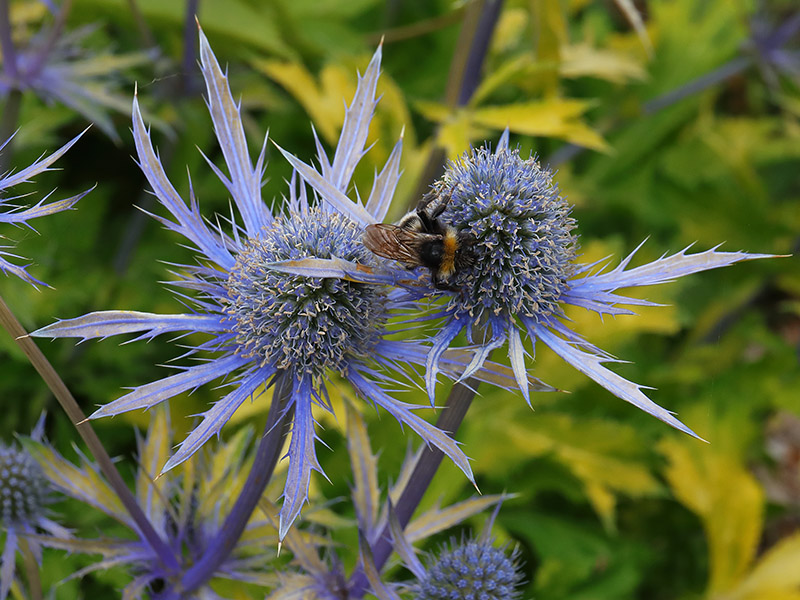
Bumblebee on Eryngium

Plants with plenty of pollen and nectar are the most obvious thing we can provide. A wide variety of garden plants are attractive to bees, so there’s lots to choose from for the gardener. There is a list of some of the best plants for bumblebees here. And here is an excellent (and longer) list of good pollinator plants from bee expert Dave Goulson. (Scroll down his page for it.)

If you garden, you’ll soon notice which of your plants the bees prefer. I try to be aware of the most popular flowers in my own garden and grow a few more of them if I can squeeze them in. I keep an eye open for the plants that are being visited by bees in other people’s gardens too.

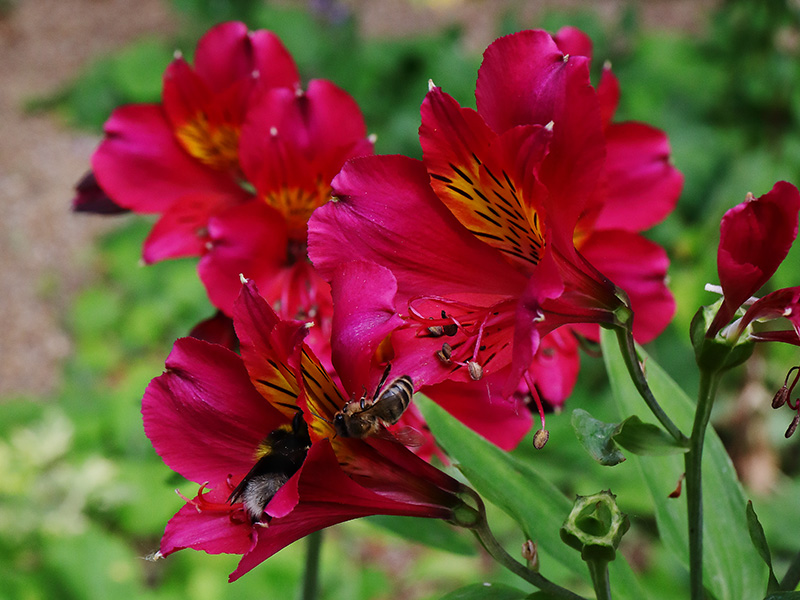
I was very pleased to see the bees on the alstroemeria in the photograph below because it’s one that I’d like to plant here. It looks to me as if the honeybee is impatiently waiting for the bumblebee to get out of that flower! (I wonder why that one – there were plenty of others to choose from.)

Bees on Alstroemeria
Honeybee and Bumblebee on Alstroemeria: ‘Hey wake up in there, it’s my turn!’

Water, obviously, is another essential to life for the bees and you can make their search for it easier and safer by providing some. (It’s easy for bees to drown in deep water.) The recommended method is simply to fill a shallow bowl with pebbles and top it up with water. Then the bees can land on a pebble and stand there safely while drinking. But do remember to change the water occasionally so that you don’t get any mosquitos breeding in there!

Planting for bees brings a lot of satisfaction to my own garden. In late spring the distinct buzzing of bees from our ceanothus bush makes me grin…they sound so busy there! And the catmint attracts not only our cats but lots of bees too. They also love our apple trees, the lavender, thyme, alliums, hardy geraniums, and daisies of all kinds. Best of all here are the different varieties of scabious (top photo), which flower for a long time and always seem to have a bee or other pollinator somewhere. (OK, that is an exaggeration, but they are very popular.)

I hope that this will give you some ideas about a plant or two to add to your own space for the bees. Happy (buzzing) Bees Needs Week!

Honeybee on Astrantia

Days of Celebration

Bumblebee on echinacea flower

NB: A note for WordPress Reader users – you need to click on the title of the post again to see the full photograph. (Otherwise you see just a tiny section!)

There have been two special days this week, both celebrating something dear to my heart. The first was the sixth international ‘Fascination of Plants Day’, coordinated by the European Plant Science Organisation on Wednesday (May 18th). The second was ‘World Bee Day’ on Friday (May 20th).

Anyone who has been reading this blog for a while will know how crazy I am about plants. Flowers and plants have been a special love for me for many years now. That has gradually led me into a love of bees and other pollinators too. (As far as I’m concerned, you really can’t have one without the other.) It’s appropriate that both days fall within the same week.

The Fascination of Plants Day was organised to get as many people as possible interested in plants, and in plant science and conservation. It aimed to increase the appreciation of the role they play in providing us with food and products such as pharmaceuticals. Considering that we would not be able to survive without plants (for even the air we breathe), their study has to be one of the most important areas of research.

Many plants wouldn’t be able to survive without bees and other insects to pollinate them. In the UK, a project to create ‘Bee Lines’ to connect areas of habitat throughout the country has been set up by the conservation group ‘Buglife’. You can see the details of how this will make it easier for bees and others to find the food and breeding areas they need here.

Anyone with a garden, or even just a balcony with pots or some window boxes, can grow plants which will help to keep bees alive. You can read advice on how you can help bumblebees in your garden on this page by the Bumblebee Conservation Trust. There is also a very informative plant list for bees written by Dave Goulson here.

This year I’ll be trying to add to the bee-friendly plants in the garden. I may even see a few species of bees that I hadn’t noticed before. (But I probably won’t be able to say what they are – I find bee identification very difficult!) It’s a joy to hear the garden buzzing with bees and to see them busy in the flowers.

Thank you to blogger Steven Schwartzman for kindly letting me know about Fascination for Plants Day.

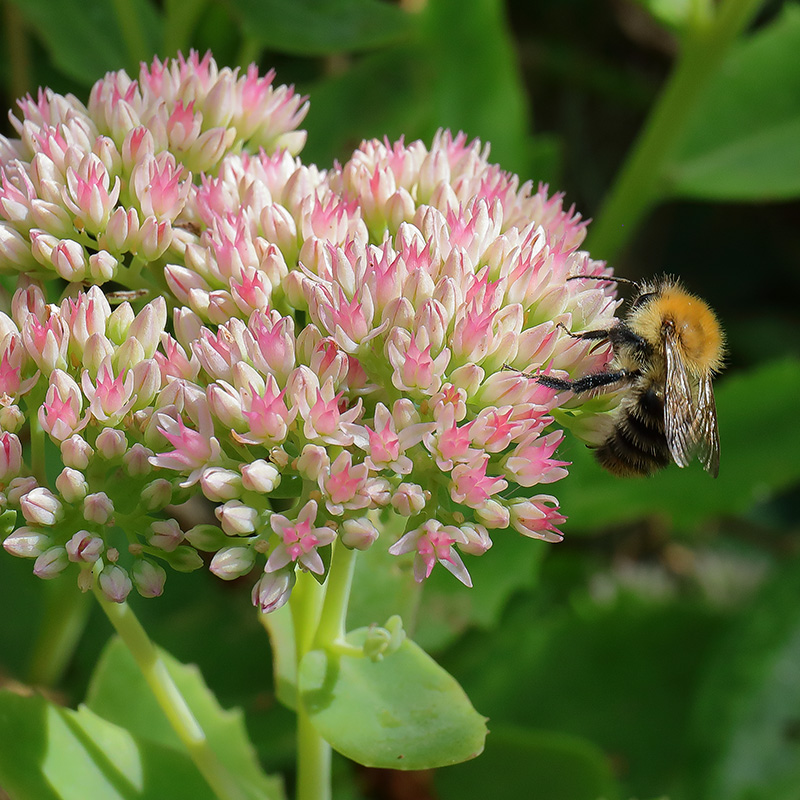
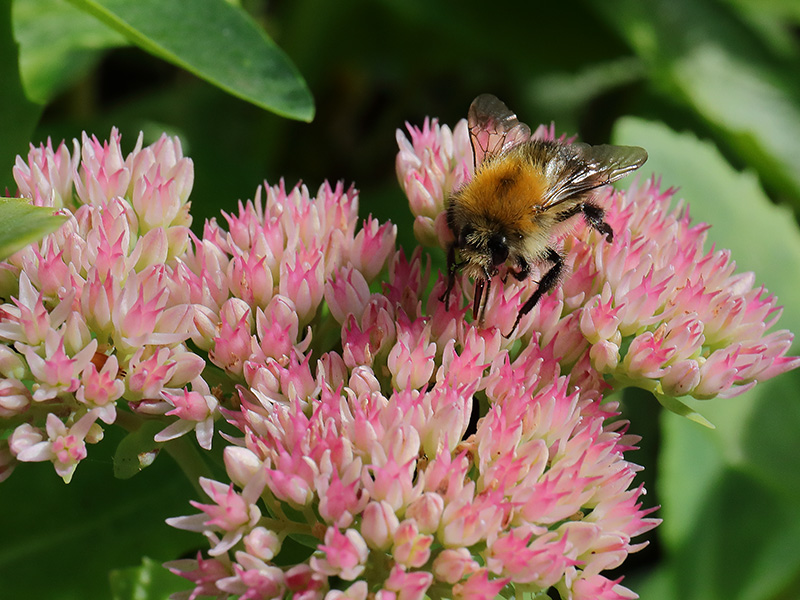
Common Carder bee on Sedum 'Autumn Joy'
Common Carder bee on Hylotelephium ‘Herbstfreude’, syn. Sedum ‘Autumn Joy’ (stonecrop)

Reaching for the Sky: Hollyhocks

I have been waiting for this pink hollyhock to finish flowering and for its seeds to ripen. At last it has, and I’ve cut down the old stems and taken them away to a sunny, sheltered spot where I’m hoping it will seed itself around. (I need to clear the hollyhock’s space so that it can become part of a new bog garden.)

The plant was the offspring of a series of hollyhocks that have self-sown in the area for the last few years. Originally I had planted a few seedlings bought at a community plant sale. I can’t now remember what colour the flowers were. Possibly yellow, because I do remember some very pretty double yellow flowers and it seems likely that they would eventually revert to producing plants with single flowers.

This year there was only the one plant. That’s probably a result of all the disturbance of having the fence renewed last year. But this single plant was much bigger than any of the previous hollyhocks. When I cut the stems, I measured the longest and found that it had reached a height of 10 feet. (Hollyhocks do grow tall, but are more likely to be 6 to 8 ft.) It was lucky that it hasn’t been windy enough to blow the stems over!

There’s a lot of discussion about whether hollyhocks are biennial or perennial. (They don’t flower until their second year.) The RHS says that they are short-lived perennials, so I’m happy to go with that. But I haven’t tried to move the hollyhock to a new position because they have deep tap roots and don’t like to be disturbed.

A reddish-pink hollyhock flower

If there’s time next year, I may grow some new plants from seed. I’d love to have a range of colours, including pale yellow, the really dark purples, and strong pinks like the flower above. This one sadly wasn’t in my garden, but was photographed outside a pretty cottage a few years ago. (I’ve seen a wonderful range of colours outside some of the pretty medieval cottages in the villages around here…the tall flowers and quaint cottages seem to go so well together!)

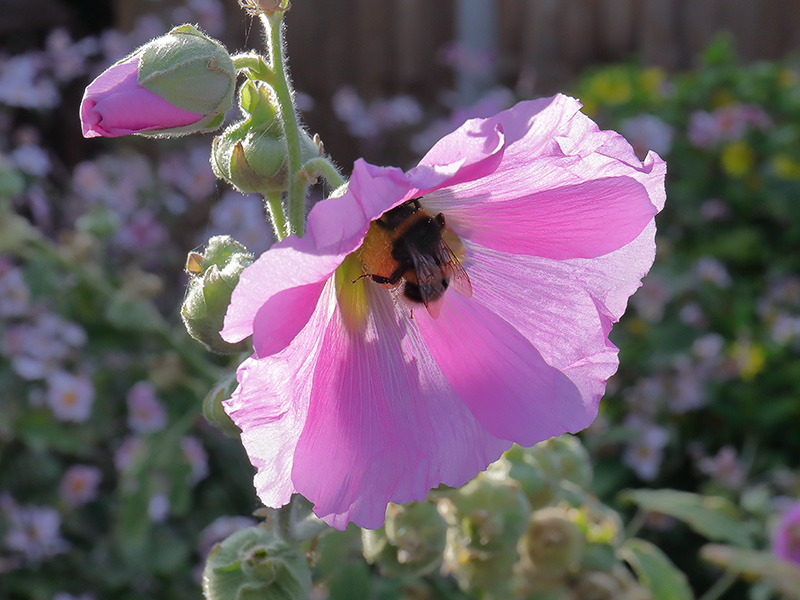
Whatever colours I might fancy in hollyhocks, the bees seemed happy with this year’s pink. This plant has attracted many bees, so that would be a good reason for keeping some of the same shade – and a good reason for growing varieties with single flowers rather than the doubles. If I manage to grow hollyhocks in a number of different colours, I must take note of which they prefer – could be an interesting little project!

Common Carder Bee: Bee I.D.

Common Carder Bee

In the last few years, I’ve become fascinated by the bees and other insects that visit my garden. Sometimes I like to just sit and watch as they go about their business among the flowers. It feels very relaxing and deeply peaceful.

There are several different species of bee that use the garden. Honeybees come here frequently. There’s usually a good number of buff-tailed bumblebees too, and just occasionally, a red-tailed bumblebee. And there’s the bumblebee pictured above – the common carder bee (Bombus pascuorum).

Common carder bee
Common carder bee on Caryopteris x clandonensis

I’d noticed these bees back in spring, visiting the white deadnettle and other early flowers. They moved about too much for me to get a really good look at them, or a clear photograph that showed their markings. Recently, I saw a couple of them enjoying the freshly-opened flowers of a sedum on a sunny afternoon. It made a good opportunity to photograph them.

Having photographs of the bees made it easier to identify them by comparing them to images on websites about bees. Even then, it can be very hard to be sure about identification, because many bees look very similar.

Honeybee on Sedum
For comparison: honeybee on sedum

To make it easier to see the differences between the commonest bees in my garden, I’ve posted a couple of comparison photos. Above is the honeybee. (The western or European honeybee, Apis mellifera.)

You can see that the honeybee’s colouration is quite like that of the common carder bee. But the carder is much hairier and a stronger ginger colour. (The common carder is also a bit bigger than the honeybee.)

If you look at the tails of the two bees, you’ll notice that the tail of the common carder has hairy stripes in black and white. While the honeybee also has a stripey look to its tail, they are quite different. Here the black areas of the tail look smooth and slightly shiny, with just very short and sparse pale-coloured hairs.

Bumblebee on a blue scabious flower.
For comparison (2): Buff-tailed bumblebee (I think!)

The other comparison (above) is the very common buff-tailed bumblebee. (Which can be distinguished from the white-tailed bumblebee by that very narrow orangey stripe at the top of its tail.) It looks quite different from the common carder bee, having a mostly black thorax with an orangey-yellow stripe just below the head, and another on the abdomen, just below the waist. (Mostly hidden here by the wings.)

One of my reasons for wanting to know which bees use my garden is so that I can try to make sure I have a range of flowers to suit them.

The common carder bees have been busy at the caryopteris flowers, even though the shrub has almost finished flowering for the year. Like a lot of other bees, they’re keen on the flowers of sedums at the moment, as well as the last of the catnip flowers. (When there’s not a cat sleeping in it!)

Now I must go and read up on what other flowers they like and what sorts of habitats suit them. I’m hoping for lots more of them next year!

Common Carder Bee
Common Carder Bee – it has a hairy face!

Bees’ Needs Week 2021

Bumblebee on echinacea flower

The summer feels like it’s going by too quickly. (As always!) Already the flowers that I associate with late summer are starting to make an appearance. I’ve noticed the first pale pink flowers to open on my patch of Japanese anemones, and the echinacea plants (above) are now beginning to display their brightly-coloured daisies.

There are lots of flowers in the garden at the moment so there are also plenty of bees and hoverflies around. That’s very appropriate because this week has been the annual ‘Bees’ Needs Week’ in the UK. This is a campaign to encourage us to grow suitable plants for bees and pollinators and to allow areas in our gardens to be wild enough to create a habitat for them.

Bee on Cephelaria gigantea (giant scabious)

Interest in helping bees (and wildlife in general) has grown greatly in recent years, with many gardeners delighted to provide spaces for nature. Now local councils and other bodies are taking a more sympathetic stance too. They have been allowing areas of grass to remain uncut for longer and even encouraging wild patches and mini meadows in previously manicured areas.

It’s good to see the bees back again here after a couple of weeks that have been unusually wet and much cooler than normal. Certain flowers are particularly successful at attracting bees. Here it’s the various members of the scabious family that seem to always have bees and hoverflies around them.

The pale yellow flowers of the giant scabious (Cephalaria gigantea, above) are a recent addition to the garden and have proved very popular. Their impressive height makes it a little difficult for me to photograph the bees on them though! (They can get up to 8 ft. tall, but mine have still some way to go.) Scabiosa atropurpurea (below, right) is up to about 3 ft. tall, so much easier to photograph!

L: Honeybee on geranium, R: Bumblebee on scabious flower

The blue geranium pictured on the left (‘Mrs. Kendall Clark’) has finished flowering but geranium ‘Rozanne’ is ready to take over its role. However, although the bees enjoy it, there weren’t any on its flowers when I took my photographs.

I think the bees weren’t interested in the flowers of Rozanne because the lavender beside it was in full flower and more alluring. I watched lots of these buff-tailed bumblebees (below) buzzing from flower to flower, clearly intent on making the most of the nectar in the tiny flowers before they all go over. (Bumblebees have longer tongues than honeybees, which makes it easier and quicker for them to access the nectar in lavender than it is for honeybees. This means they tend to move around the flowers quite fast – so harder work for the photographer!)

Given how much the bees enjoy the lavender, I’ll plant more of it for next summer. (Angustifolia varieties are reckoned to be particularly good.) I’m very happy to be able to provide something for the bees here. It seems only fair when I enjoy going on a ‘bee-hunt’ with my camera – and of course, we need our bees!

Bumblebee on lavender