Just in Time!

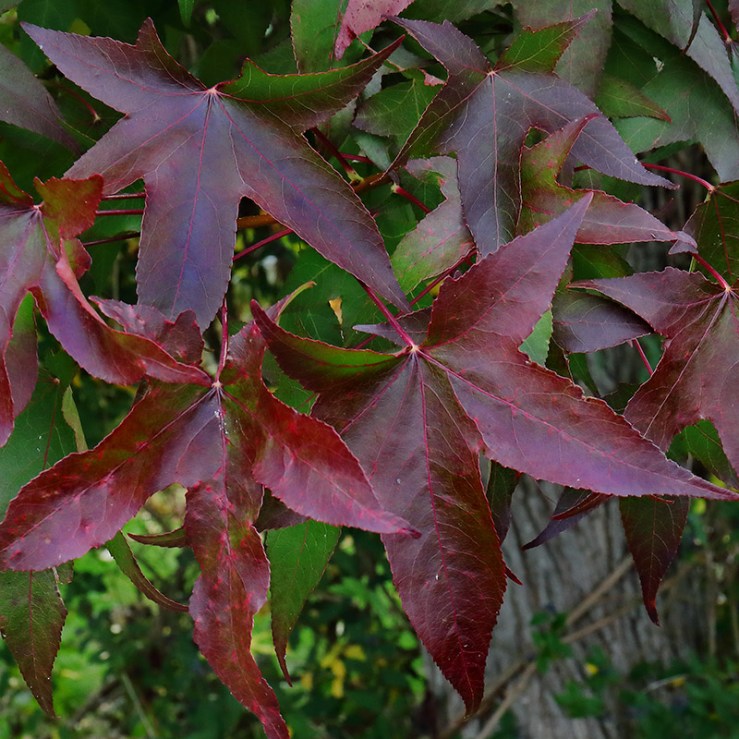
Liquidambar leaves in autumn

NB: A note for WordPress Reader users – you need to click on the title of the post again to come out of the reader and go to the post itself. This allows you to see the whole of the top photograph. (Otherwise you may see just a tiny section!)

On my visits to Fullers Mill Garden, I’d noticed a large Liquidambar (sweet gum tree). I’d hoped that I would get the chance to see its autumn leaves before the garden closed for the winter. As it turned out, my last visit of the year was about a fortnight before the end of the season and I was lucky enough to see the first of the Liquidambar leaves turn colour.

Although most of the leaves were still green on my last visit, there were those that created a beautiful display of red, orange and yellow. Strikingly, it also had leaves that were a dark purple. The garden closed near the end of October, so it was a bit early for the tree to produce its best display. I’m sure it will be magnificent around now!
Liquidambar leaves in autumn
Autumn leaves of Liquidambar styraciflua (sweet gum) that have turned dark purple and red.

The reddest leaves were on a different tree. This was a very much smaller Liquidambar, which I might have mistaken for a maple if I hadn’t noticed the distinctive spiky seed pods. As you can see in the photo below, this youngster was way ahead of the large tree in the colour-change process.

Most autumn leaves around here are yellow. We don’t see many that are red, so the Liquidambar trees in Fullers Mill Garden are a sight to enjoy. In future, I’ll make sure to visit the garden on the very last day that I can before it closes, in the hope of seeing these lovely trees at their most spectacular.

Liquidambar seed pods and leaves in autumn

Fruitful Times

Braeburn apples on the tree

NB: A note for WordPress Reader users – you need to click on the title of the post again to come out of the reader and go to the post itself. This allows you to see the whole of the top photograph. (Otherwise you may see just a tiny section!)

There are hardly any flowers left in the garden now, so almost everything is in shades of green, with a few leaves turning yellow here and there. (There are still the purple leaves of the smoke bush in the front garden. With a bit of luck, these will turn some interesting shades of yellow and orange – if they don’t get blown off first!)

During the last week, I’ve seen a bit of colour from fruits and berries in the garden. We finished picking the fruit from our apple trees a couple of days ago…you can see the last of the fruit on our Braeburn tree above. Our other apple tree is a Cox’s Orange Pippin which had already had its fruit picked a little while ago, so the Braeburn’s apples give later colour.

Near the apples we have a holly bush. I was considering cutting it back a lot this year because it has grown somewhat tall and spindly. I’m glad I didn’t do it, because this year there are more berries on it than I’ve seen before. This means a feast for the blackbirds!

The blackbirds (which are my favourite garden bird – alongside the robin) must do quite well here. We have two grapevines, one of which is huge and shades an arbour. The blackbirds seem to be constantly in and out of this when there are ripening grapes. We only eat a few of the grapes ourselves (they don’t get very sweet), so we don’t begrudge them to the birds. There are plenty of other berries, including the orange-red berries of our rowan tree and, later on, the ivy berries. It’s just as well that we have these to distract the birds, because blackbirds are partial to apples too… 🙂

Holly berries
The holly has more berries than usual this year.

A Remnant of Summer

Scabiosa 'Kudo White' flower with variegated sage

NB: A note for WordPress Reader users – you need to click on the title of the post again to see the full photograph. (Otherwise you see just a tiny section!)

After Storm Babet passed by, there was not a lot left in flower in the garden. The asters which had provided some late colour have mostly gone over, and the last purple-blue ones that hang on now look tattered and disheveled after all the rain.

The white scabious flower pictured above is one of the flowers that remain and it even has buds yet to open. I find that the scabious and related knautia plants do continue to produce a few flowers until late in the year if I remember to deadhead them. At this stage, any colour that remains in my garden is a bonus. If it’s something that bees and other pollinators like, it’s an even bigger bonus. Scabious is very popular with insects, so it is proving its value here.

The white-flowered plant is Scabiosa ‘Kudo White’ and the dark red one below is Scabiosa atropurpurea ‘Chile Black’. I hope that the white one will self-seed as readily as the dark scabious has. They are so attractive and long-flowering (right from the middle of summer) that I’d be happy to give them quite a bit of space in the borders.

Hmm…for some reason ‘Scabiosa’ sounds to me like something Hermione from the ‘Harry Potter’ books would say, with a deft flick of her wand. Maybe it’s a spell for filling a garden with flowers… 🙂

Flower of a red Scabious with a hoverfly
Scabious with hoverfly

Autumn Days

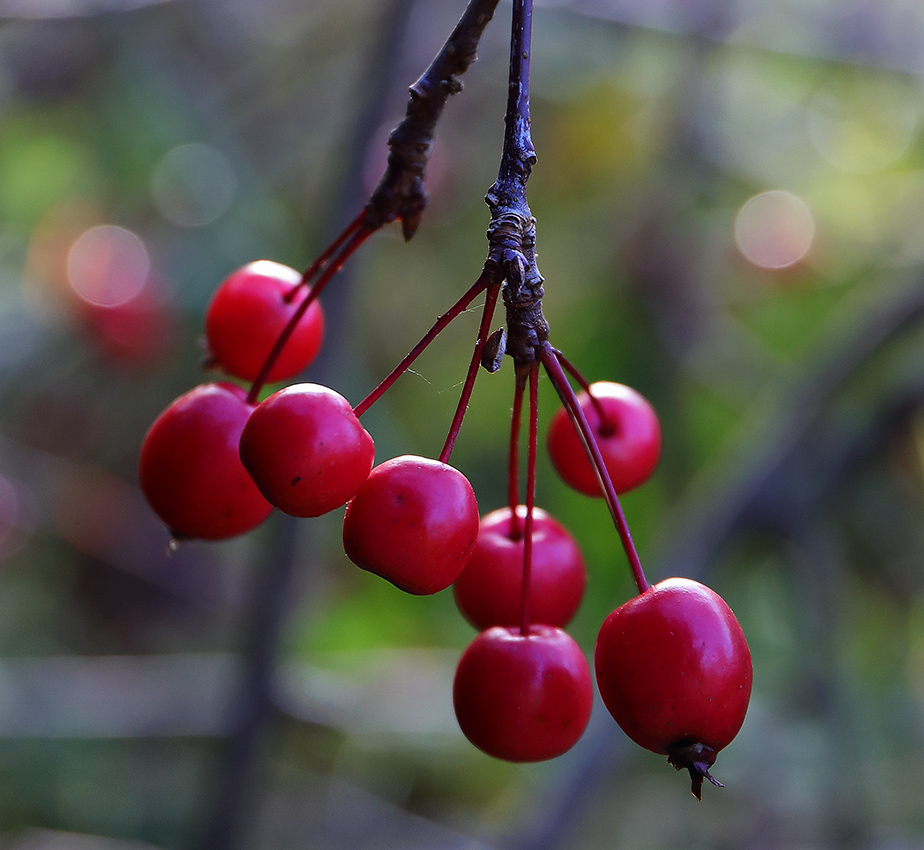
Crab apples

NB: A note for WordPress Reader users – you need to click on the title of the post again to see the full photograph. (Otherwise you see just a tiny section!)

Autumn brings a restrained feel to my garden. There is nothing showy here at the moment and the remaining touches of colour are easy to miss. But if the sun shines, there might be a sudden brief glow as it brings the leaves alive like small flames.

Mostly this is a time of rain (needed after the summer’s drought) and winds that tear the remaining leaves from the trees. Not so nice for gardening, until a dry and mild day comes along. Then I can get some digging done in the loosened soil. (It gets so dried out in summer that digging then is very hard work. Adding more compost will help, but it will take a lot to make a difference.)

As the autumn colours begin to fade or get blown away, new winter colour is starting to arrive. Bright yellow flowers are ready to open on both a mahonia and winter jasmine. Near the jasmine, a viburnum bush has the dark red bells of a winter-flowering clematis to accompany its own pink buds. And, at last, I can see buds of hesperantha (see this post) which should open soon. So I will still have one or two things to photograph while the winter draws closer.

Autumn leaves and berries

A Last Blaze of Colour

Cotinus (smoke bush) autumn leaves

NB: A note for WordPress Reader users – you need to click on the title of the post again to see the full photograph. (Otherwise you see just a tiny section!)

I took these photographs in my front garden just a couple of weeks ago. It already feels like a long time since we had such rich colours. These glowing leaves belong to a smoke bush (Cotinus coggygria ‘Royal Purple’) which has been positioned to allow us to see the evening sun shine through its branches.

During the summer the leaves are a striking deep purple. Autumn changes them to the glorious mix of reds, oranges and yellows that you see here. For a little while, this large shrub almost looked as if it had burst into flames. (Appropriate, I think, for a ‘Smoke Bush’!)

This was the last of the really warm colours as the garden is taken over by winter. The leaves on this smoke bush have now faded to a soft brownish yellow and will probably soon be blown away by the wind. But for this one shrub, there was a spectacularly fiery finale to it’s year.

Cotinus (smoke bush) autumn leaves

Some Autumn Reds

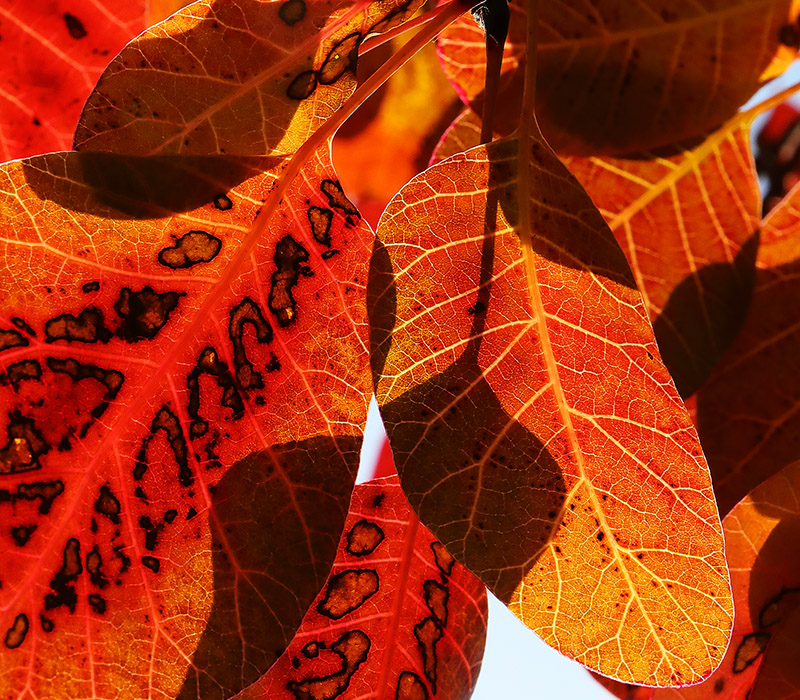
Autumn leaves - crab apple

NB: A note for WordPress Reader users – you need to click on the title of the post again to see the full photograph. (Otherwise you see just a tiny section!)

We had some good autumn reds in the garden this year – or maybe I should say orange for the photo above. It’s the fieriest that our leaves have managed in a long time. I should think the more intense colours developed because it’s been colder than most autumns, though not nearly as cold as we were used to in Scotland.

Our little crab apple tree (Malus ‘Royal Beauty’) has the brightest leaves in our autumn garden. Both photographs here are of this same tree, so you can see that they vary between orange and deep red. They have really been spectacular this year.

To photograph the leaves, I chose to shoot towards the sun. (I was lucky enough to catch the last bit of late sun before it left the back garden.) Doing this allows the strong light to shine through the leaves. As a result, they become ablaze with glowing colour that contrasts with the dark shadows cast by other leaves.

I love nature’s ability to imitate stained glass, if only for a short time. It makes the garden much more exciting to photograph at this time of year!

Autumn leaves - crab apple

Turning Point

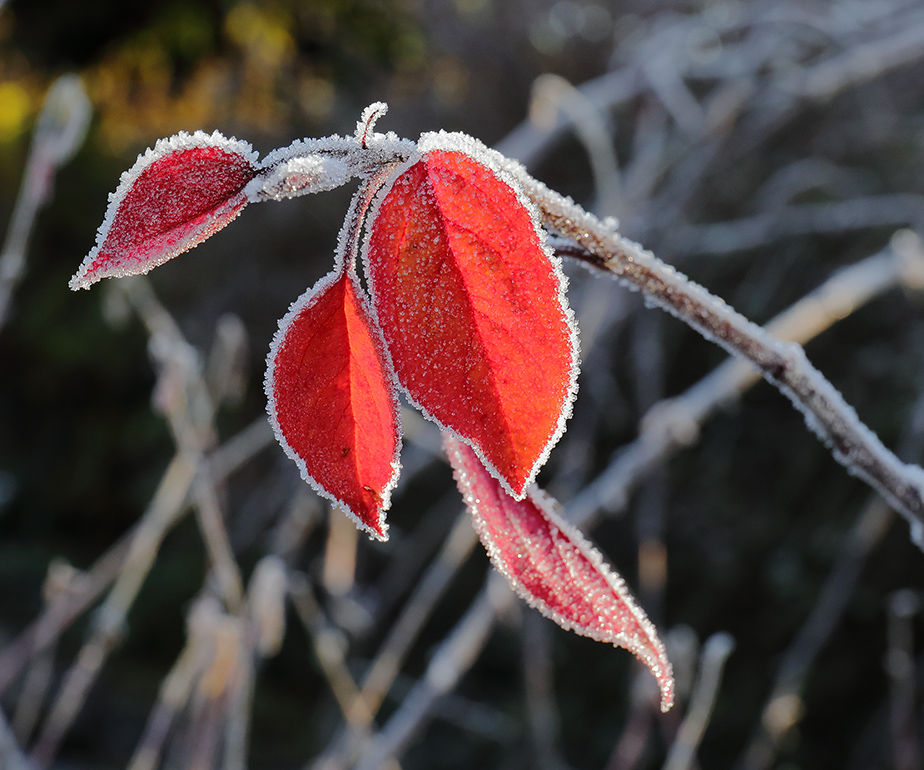
Frosted autumn leaves.

Friday morning brought the first of this year’s frosts. Only the grass was frosted. It didn’t cover the flowers and plants in tiny frozen crystals – so no photographs this time. (The photograph above was taken last November.) Little as it may be, the first frost marks a turning point in my garden year.

Soon the last of the flowers will be gone from the garden. The light frost was already enough to finish off the remaining flowers on my one red dahlia. Other flowers may continue for a little while but I could see that many had that translucent look that they get after being touched by frost. The cosmos probably won’t last long now, but the white gaura and geranium ‘Rozanne’ are still looking quite robust. Their flowers seem more able to cope with the earliest frosts.

Tender plants have already been rescued from the garden and tucked up somewhere sheltered for the winter. Inevitably, there are some plants in the garden that may not make it through if the winter is a hard one. This is always a slightly anxious time when I wonder how much of a gamble I can take with those, and try to find ways of protecting them from the cold.

It’s starting to get chilly and the leaves have mostly turned yellow and begun to drop to the ground. Even so, we do still get some bright and sunny days. When those days come along, I’m happy to get all warmly wrapped up so that I can spend a bit of time working in the garden. (There’s always plenty to do!) And I’ll be keeping a lookout for more frosty mornings, in the hope of finding good opportunities for photography.

The Last Flowers

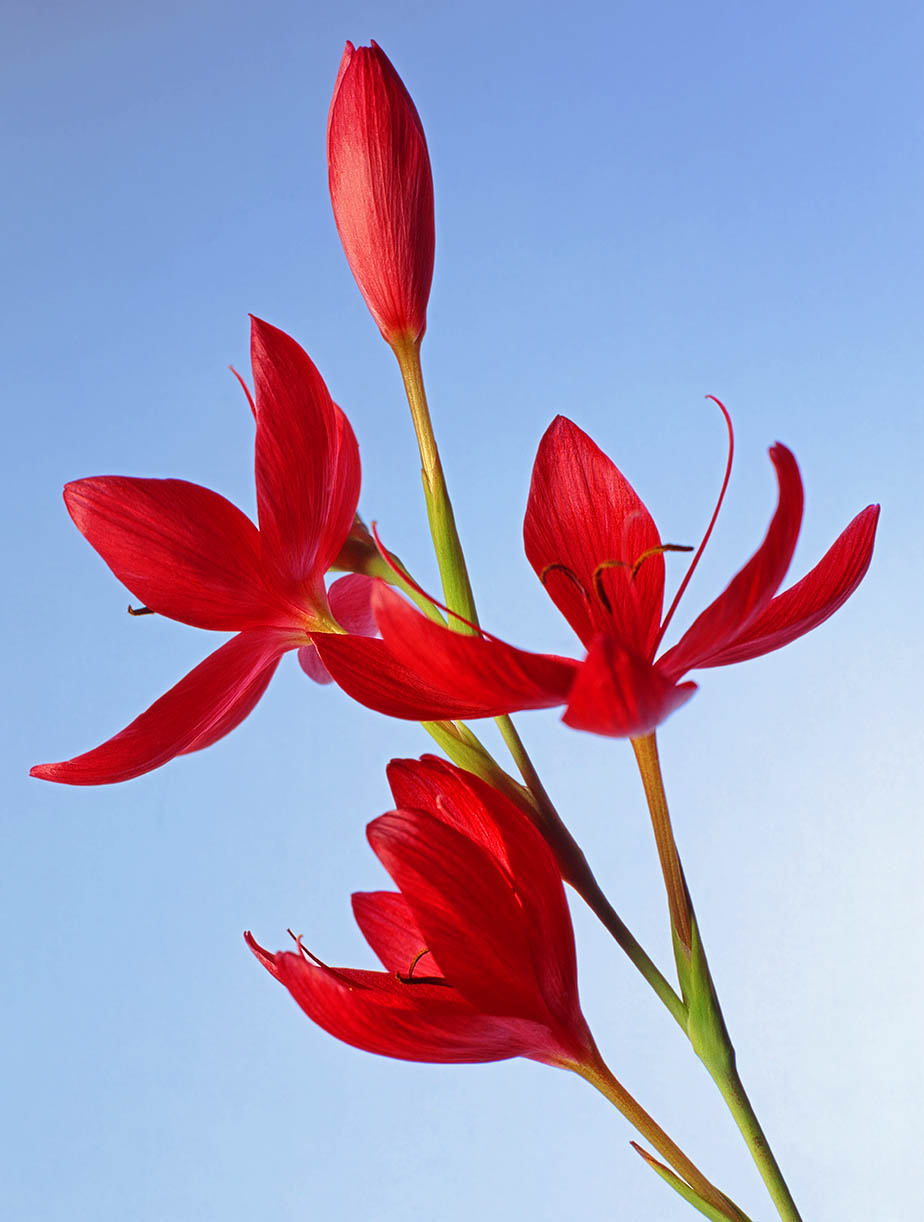
Hesperanthus coccinea 'Major'

Autumn is beautiful. Golden light filters through the trees, with their jewel-bright leaves set against a vibrant blue sky. (If you’re lucky – and we have been.)

Except when it’s not. Friday was suddenly grey and cold here in the east of England. Autumn quickly became a bit more serious and a heavy shower of hail was a brusque reminder that winter isn’t far off. (And the clocks going back this weekend will mean that time spent in the garden will have to finish earlier. There’s still lots of work to do out there and I have been known to continue until it’s dark.)

As always, I’m planning for the future and growing as much as I can to provide myself with flowers and plants to photograph. At the moment I’m working on the last bit of planting for the year. It should make a difference to next autumn, as the plants are mostly late-flowering. One that I’ve chosen because it is so good to photograph is Hesperanthus, also known as ‘Crimson Flag’. (You can see it in the picture above.) The plant used to be called Schizostylis, but the name changed a few years ago. Gardening is confusing at times!

Geranium'Rozanne'
Geranium ‘Rozanne’ flowers for months and continues into October and November if trimmed back in late summer.

Despite the cold turn to the weather, there are still some flowers in the garden. Geranium ‘Rozanne’ (pictured above) is still flowering its little socks off. I planted it late last autumn, so this is the first year that I’ve been able to see how long it will continue. It has done really well – flowering from early in the summer and still being well-covered in flowers now. I’m really glad of this, because it’s my chosen subject for the last week of my Natural History Illustration course. There aren’t many other flowers left in the garden for me to draw! (You can read about the drawing class here. It has been very worthwhile and now I feel that I’ll be able to continue to learn on my own.)

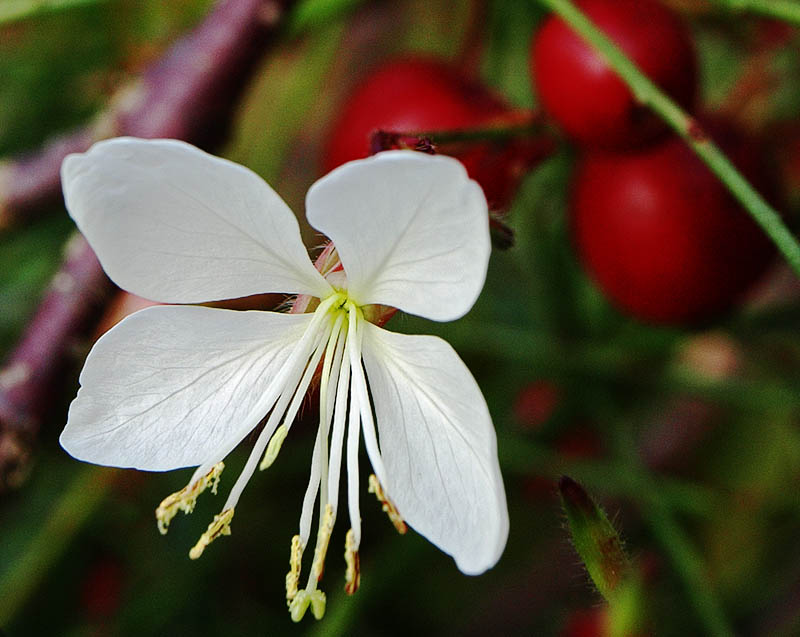
Elsewhere in the garden, there is a sprinkling of penstemon flowers, the last of the asters that are just about to finish, and some small dark crimson dianthus (pinks) that seem content to flower for a long time. The happy surprise has been to see how well a clump of Gaura lindheimeri is doing. I’ve tried to grow it a couple of times before and lost it in cold winters. This plant has survived and has been in flower from early summer. Its white, moth-like flowers are now creating a delicately lovely picture in combination with the red fruits of crab-apple ‘Royal Beauty’.

Have you any suggestions for extending the flowering season towards winter? I’d love to know what you grow – please feel free to comment!

Gaura linderheimeri flower
Gaura linderheimeri flower in front of the fruits of malus ‘Royal Beauty’