NB: A note for WordPress Reader users – you need to click on the title of the post again to come out of the reader and go to the post itself. This allows you to see the whole of the top photograph. (Otherwise you may see just a tiny section!)
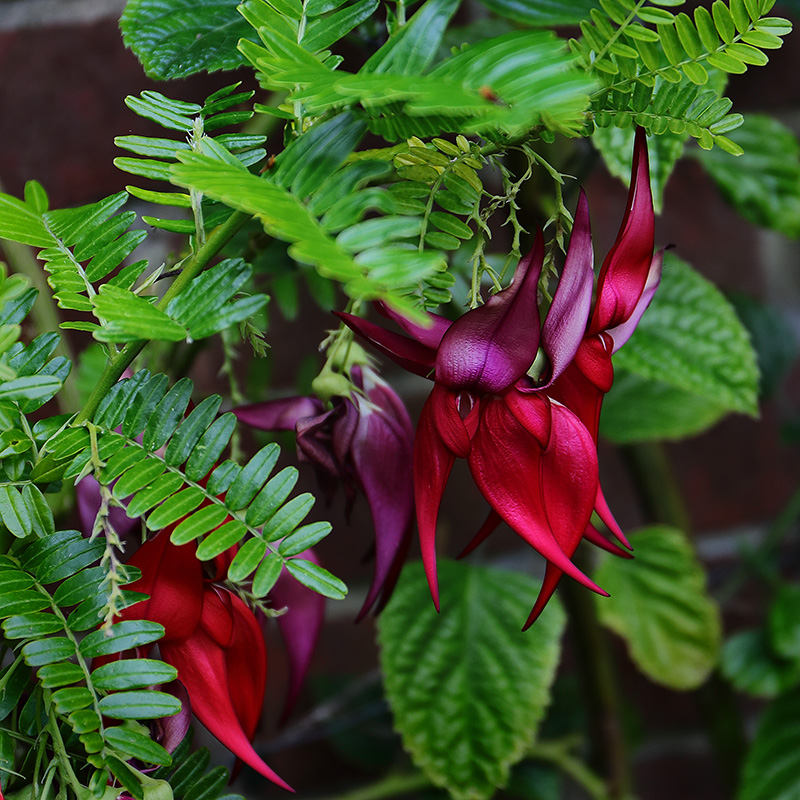
The sight of unfamiliar flowers and plants is one of the perks of visiting other people’s gardens. You never know what you may see. The plant shown here was one of the more surprising encounters I had when I saw it for the first time in a Norfolk garden four years ago. I had absolutely no idea what it was, but it looked strange and exotic to me.
This plant, with its weird flowers, felt like something that belonged in a botanic garden glasshouse, rather than outside in a British garden. It seemed too exotic to be hardy. Much later I found out that it was a Clianthus and will grow in a sunny position in mild areas. (The RHS says it can tolerate down to -5°C and suggest a cool greenhouse or conservatory for colder areas.)
Clianthus has several common names: glory pea, lobster claw and, from its native New Zealand, ‘kaka beak’. (Named after an NZ parrot, this colourful name is my favourite!) Growing against a wall, the plant looked like a climber, but is in fact a scrambling shrub. It’s a member of the pea family and has two species and a number of cultivars. (I don’t know what this one may be, possibly a cultivar, because it seems to develop more pink/purple in the fading flowers than I’ve seen in photographs of the species.)
I’m always pleased to get the opportunity to photograph a plant that I’m unlikely to be able to grow at home. I wonder what this year’s garden visits may allow me to photograph…🌿











 Ann Mackay: Inspired by Nature