NB: A note for WordPress Reader users – you need to click on the title of the post again to see the full photograph. (Otherwise you see just a tiny section!)
An awareness of the importance of wildflowers in creating spaces for nature is growing in the UK. Plants for bees and other insects are recognised as being vital to help species survive. Many gardeners are trying to help nature by allowing their gardens to become a little wilder, and some are creating their own ‘meadow’ areas within their gardens.
Recently I visited a large garden at a Suffolk farm and had a walk around the adjacent wildflower meadow. There are already a few wildflowers in my own garden and I’m interested to see what else I can grow to encourage insect life. (But without letting something take over the garden, e.g. white deadnettle. Although its flowers are great for bees in the early part of the year, I’m finding it almost impossible to stop the plant from spreading everywhere.)
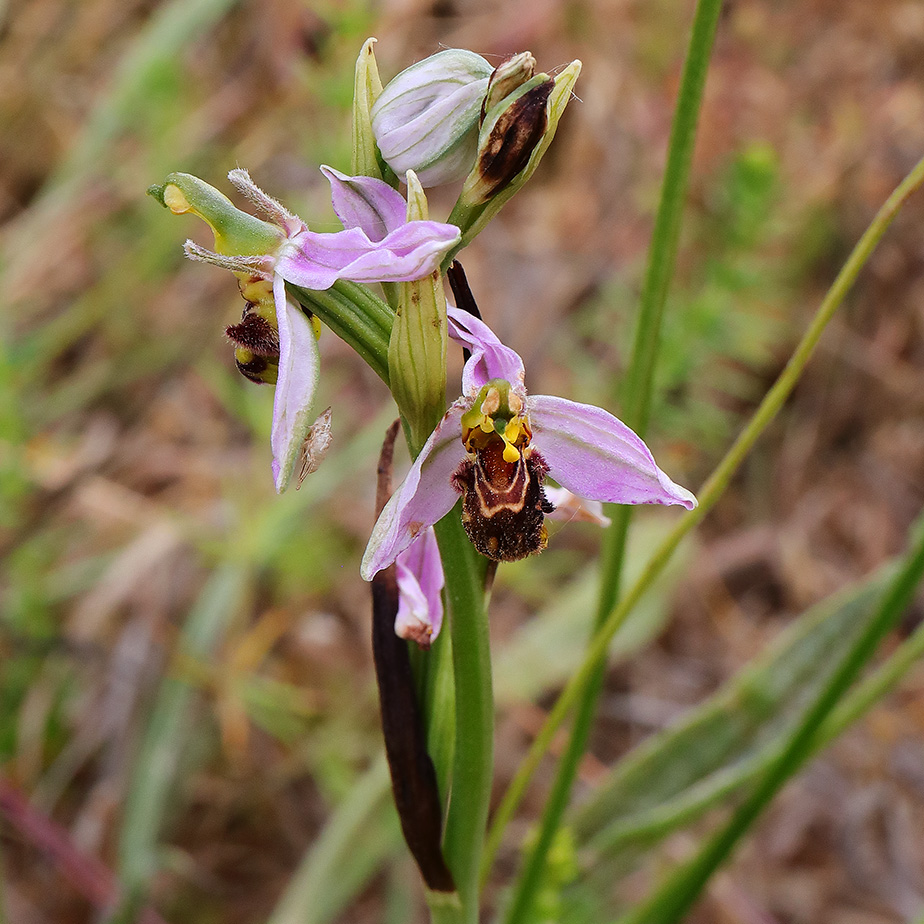
I’m on the lookout for wildflowers to grow, but I know that the plant in my top photograph is unlikely to appear in my garden. It’s a bee orchid (Ophrys apifera), an orchid that is native to the UK. This is a cheeky wee plant – the flowers mimic female bees so that the male bee comes along hoping to mate, but pollinates the flowers instead. (A bit disappointing for the bee, I reckon!) An uncommon plant, however, it does appear in meadows here in the east of England.
The plant below is one that I do already have, but mine is growing in a pot. This is bird’s foot trefoil (Lotus corniculatus), another native grassland plant which grows throughout the UK. The flowers are a great source of nectar for bees and it is a food plant for caterpillars too. It was interesting to see how it grows in the wild, but because the RHS website says it can become invasive, I will probably keep mine in its pot. (I like the idea of having pots of it dotted around the garden in sunny spots. The bees and butterflies would love it.)











 Ann Mackay: Inspired by Nature