Zingy Pinks

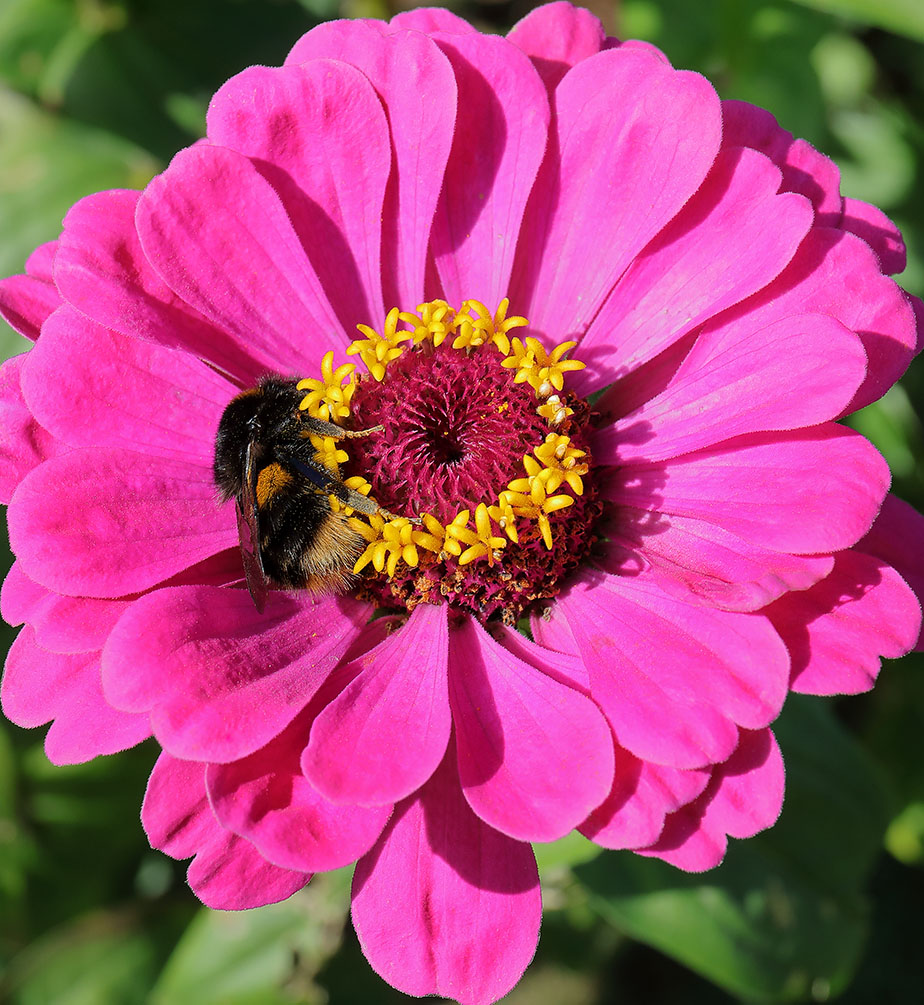
Bee sleeping in a zinnia flower.

The colours you tend to associate with late summer and early autumn are mostly reds, oranges and yellows. But there have been some really brilliant pinks around too.

These pink flowers are not pale and delicate – instead they demand attention and can compete with any of the bright flowers around at the end of summer. (I love the softer pinks too, but they would get a bit lost at a time when so many of the other plants are shining so dazzlingly.)
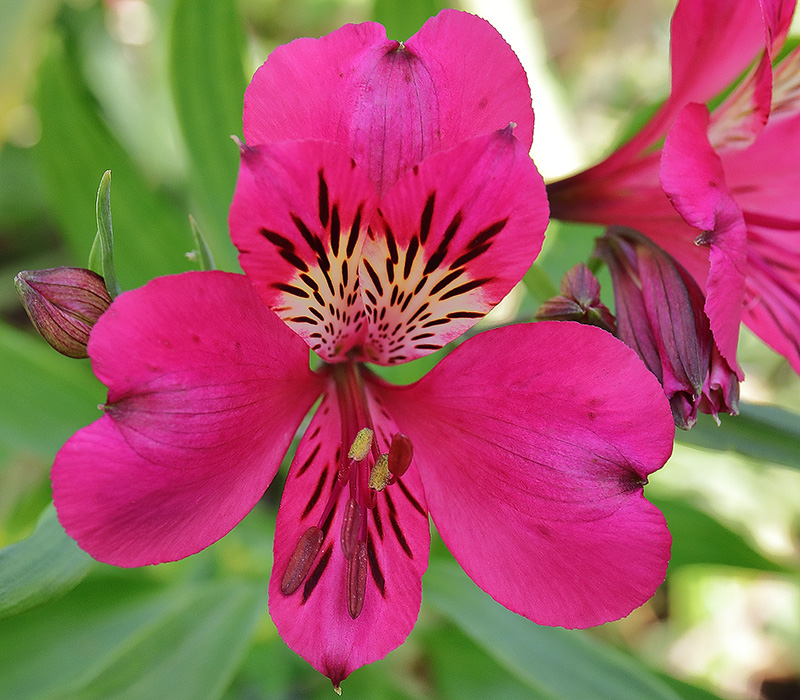
Pink Alstroememria-2913
The rich colours of this alstroemeria add sparkle to garden borders.

Zinnias (top photo) are great to photograph – the colours are vivid and the central boss of the flower has plenty of intricate detail to add interest to the image. I’ve grown them when we lived in Scotland but not yet down here. (Here I’ve mostly planted perennials.) I really should plant some, because the garden gets lots of sun and they should be very happy in our well-drained soil.

Alstoemerias are a satisfying flower to photograph, with their striking markings and depth of colour. They’re not common in gardens here, but I’ve started to see more of them in garden centres. Next year I’ll be tempted to give them a try, especially now that there are some hardier varieties that have a good chance of making it through the winter here. (I’d like to plant a deep pink one, as in the photo above.)

Pink echinacea flower
A slight hint of orange in this echinacea’s pink petals makes them more vibrant.

The echinacea above is one of a group that I bought from a nearby nursery, all in different colours. I think that they are getting used to  me coming in to look for something new to photograph! The echinaceas were fun – big, bold daisies with a lot of presence and very attractive colours. This one has just the tiniest amount of orange in the pink of its petals and that makes the colour shimmer in the sun.

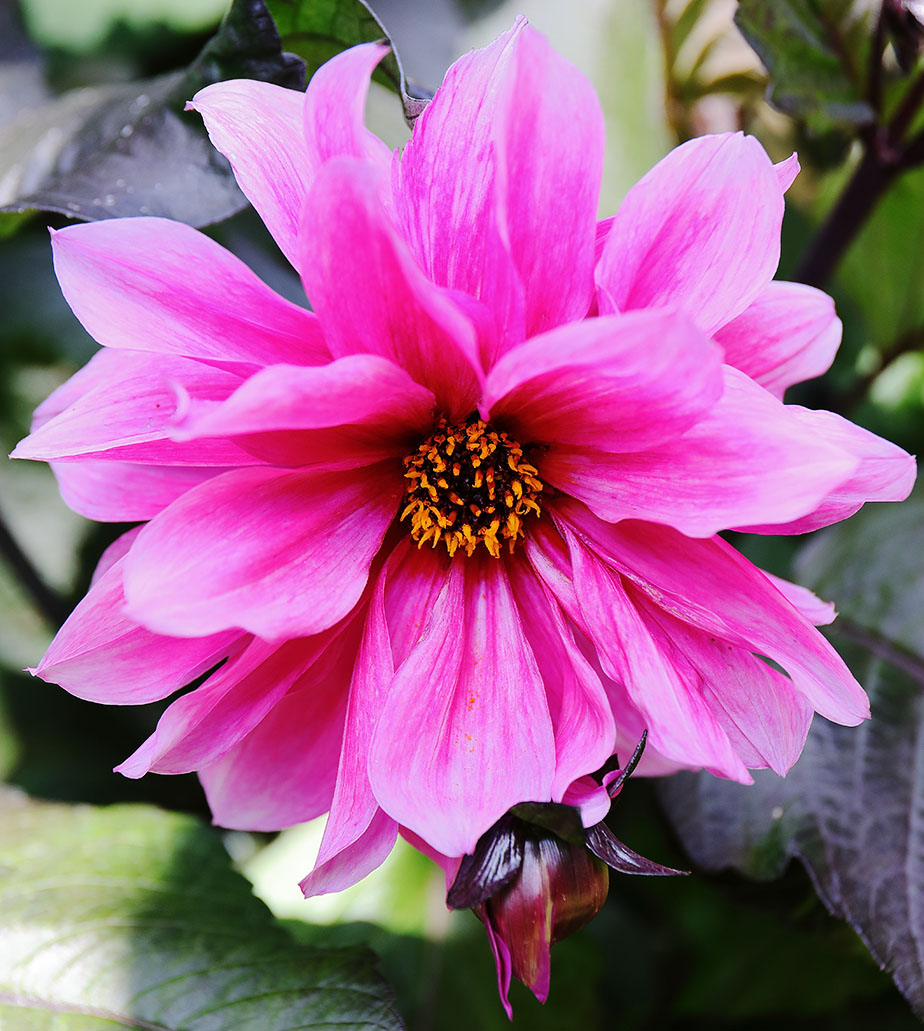
My last flower is probably opening up to be more orange than pink – it would have been interesting to see the fully-open dahlia. But I loved it at this stage, when it was still partly folded up on itself and showing the pink reverse of its petals. The pink and orange together have a great feeling of energy, a really lively sizzle of colour that would add excitement to any border.

This year I’ve been lucky  enough to see lots of lovely plants while I’ve been out visiting gardens. They’ve given me a lot of inspiration for what I’d like to grow here and inspiration for photographs too. There will certainly be room in the garden for some of the more intense pinks!

Dahlia  Flower Opening
A two-tone pink and orange dahlia flower gets ready to dazzle.

Frothy Lace: Wild Carrot

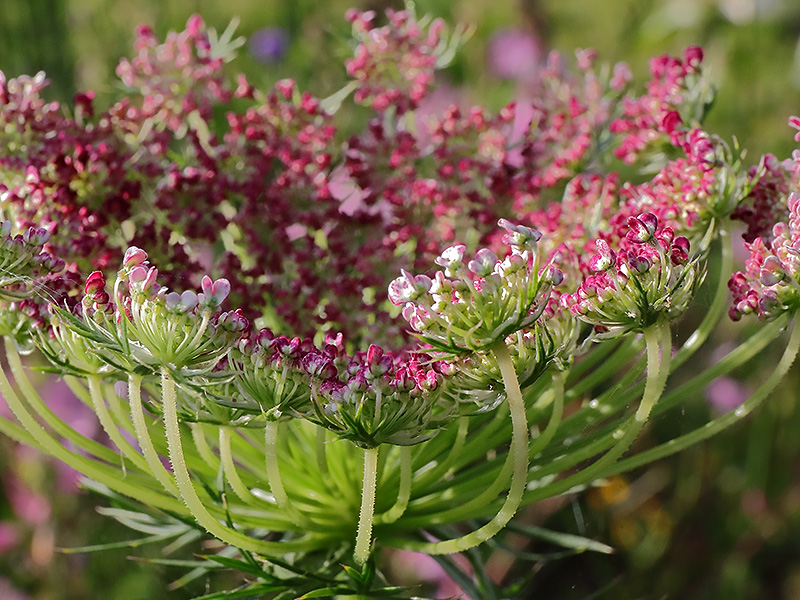
Seedhead of wild carrot (Daucus carota).

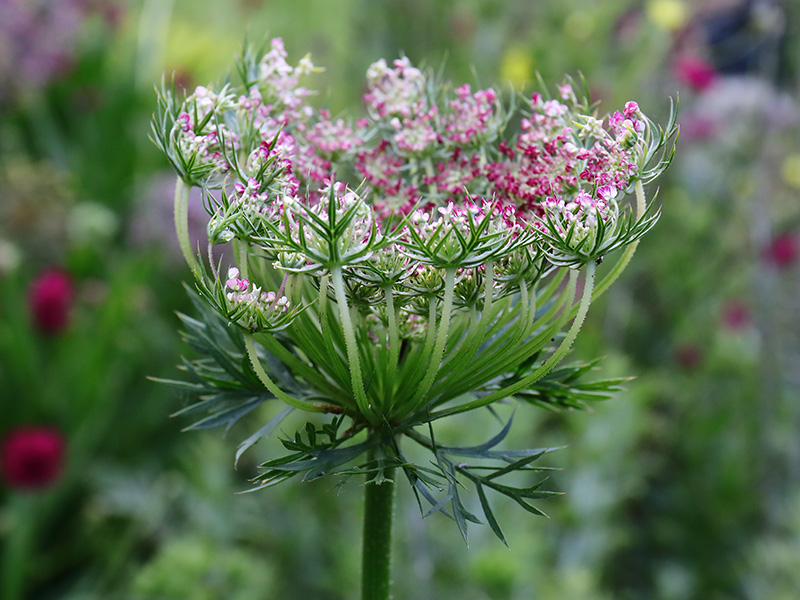
Lacy, dainty flowers held on stems that curve inwards into a concave shape, both when the flowers are just opening and later, when the seeds are forming  – this is the wild carrot (Daucus carota).

If you live in the USA, you may know this flower as ‘Queen Anne’s lace’, but in the UK we also call it ‘bishop’s lace’ or ‘bird’s nest’. (You can see why, from the photo above.) Just to add to the name confusion, Queen Anne’s Lace is a name also used for an entirely different plant in the UK (Anthriscus sylvestris, aka cow parsley).

Daucus-Wild Carrot-Seedhead-3246
Here, the tiny flowers are still folded shut. As the flowers open, the umbel will become less concave and flatten out.

Whatever name you know it by, the wild carrot, in its white-flowered form, is often seen growing along the edges of roads and fields. In recent years, new pink and burgundy-flowered cultivars have been developed and the plant has become popular in gardens.

Here I grow it for the light, airy feel that it adds to garden borders. I’m also growing it to photograph. There’s plenty to inspire me: delicate umbels of tiny flowers contrasting with the almost spiky-looking bracts below them, colours ranging from palest pinks to deep, dark reds, and that distinctive ‘bird’s nest’ shape.

Daucus-Wild Carrot-2305
Open flowers of Daucus carota ‘Dara’

Photographing the flowers in the garden can be a bit tricky. The large, lightweight flower heads tend to move in the slightest breeze, so getting a reasonably sharp photograph can take a lot of patience! They’re worth the effort though, and I know that I’ll go back to them again and again for more photographs.

Next year, when I hope to have a larger number of the flowers in the garden, I will cut some and bring them indoors to photograph in the studio. No breezes there! (Apparently they make a good cut flower, lasting well if you sear the stem ends in boiling water for a few seconds.)

Right now, the seeds of these plants are ready to gather. So I will collect them – some to sow now and some to sow next spring – in the hope of having lots more of this delightful plant.

Daucus-Wild Carrot-Seedhead-3246
The newly-emerging wild carrot flowers in springtime.

Rich With Colour: Dahlias

Pink dahlia flower

This year I’ve been trying to extend the flowering season in my garden a little. So I’ve planted echinaceas, heleniums, rudbekias and asters, which helped to keep the garden going through the transition into autumn.

But I’ve been missing out on one of the best flowers for this time of year – the dahlia.

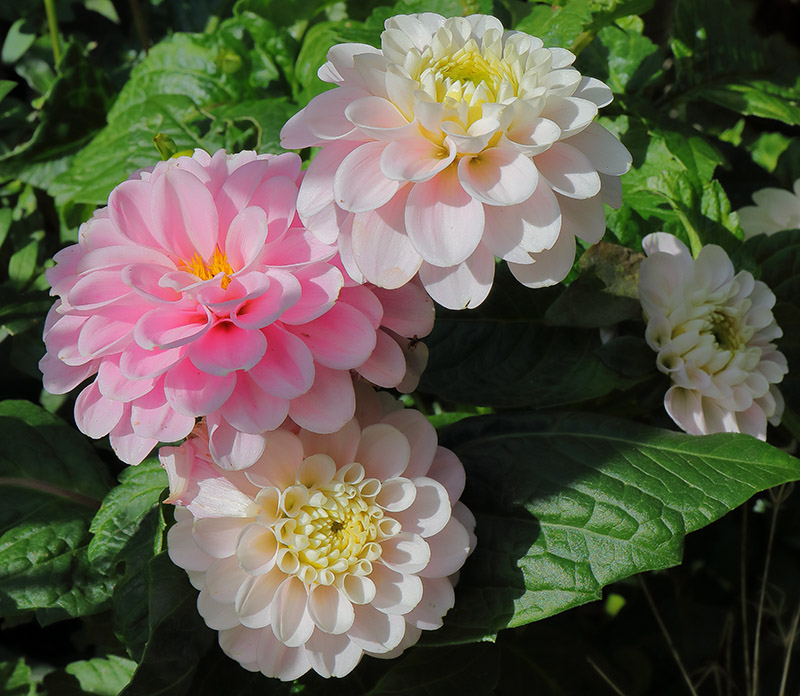
Dahlias-pink and white 3059
These little dahlias are quite cute!

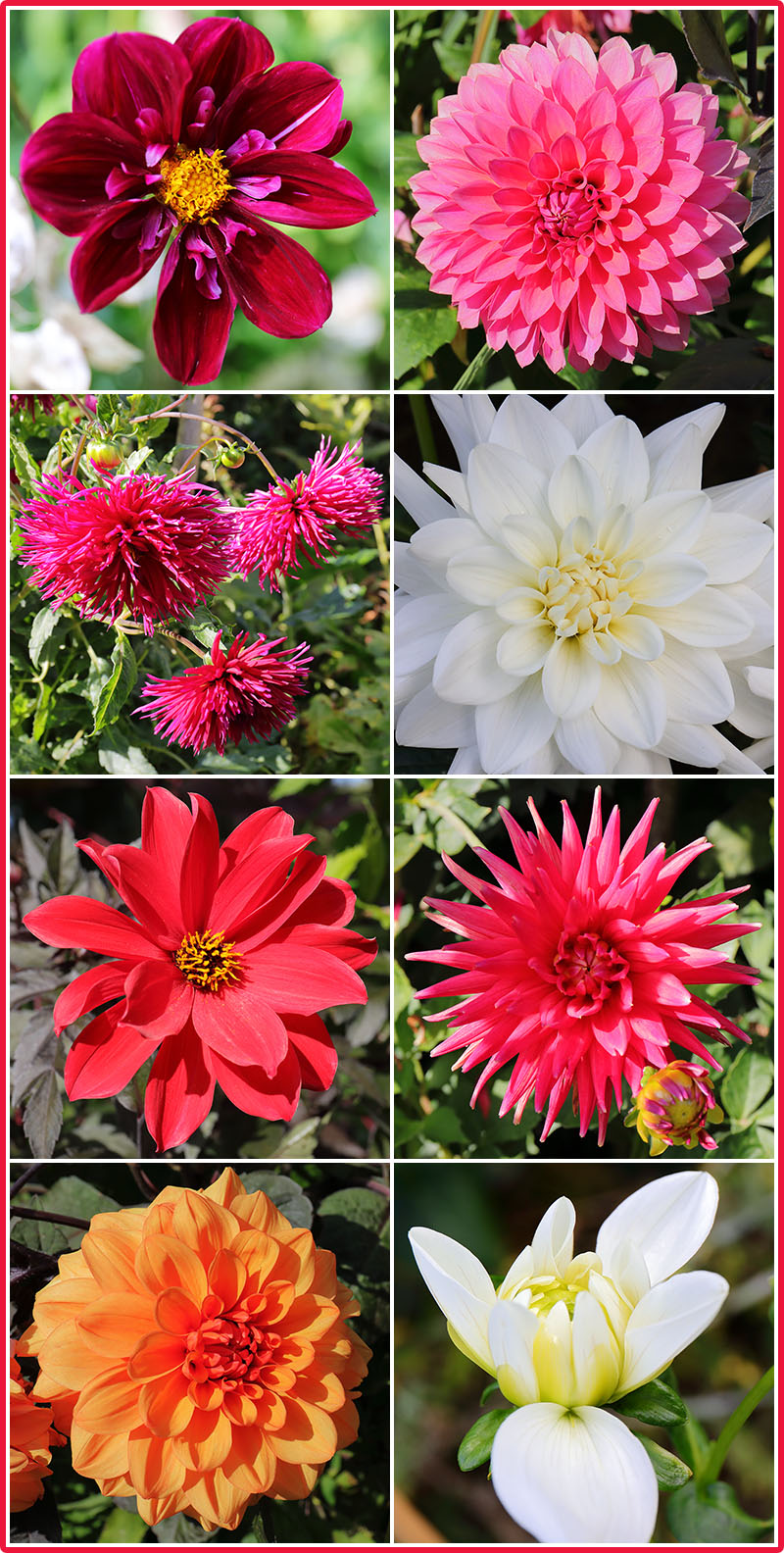
As a newcomer to dahlias, I find the choice of flowers quite bewildering. There are so many different types to get to know…cactus, semi-cactus, ball, pom-poms, anemone-flowered and more.

So far, I’ve decided that I like the peony-flowered and single dahlias the most because they have open centres (great for bees). The collarette dahlias are really interesting to photograph because they have two rings of petals – the large outer petals and a sweet little ring of twirly mini-petals around the central disc. (You can see one in the top-left corner of the photo-mosaic below.)

So far I’ve just planted two dahlias here. One is ‘Siberia’, a white, waterlily-flowered dahlia which you can also see in the mosaic below. The other is a seedling of ‘Bishop’s Children’ which has flowered in a rich bright red. That’s a small start, but next year I’ll be on the lookout for more.

Dahlias-8up-A
Some of the dahlias that I’ve photographed recently.

As usual, one of the biggest factors in my plant choices will be finding flowers that will make good photographs. Dahlias have a huge range of colours and shapes, so choosing will probably take some time.

For photography, I often look for flowers that have one colour with another blushed over them, or a different colour along the edges of petals, because it gives an interesting element to the photograph.

Shapes within the flower are important when photographing it too. Elegant curves, contrast of size and shape and interesting small details are all essential parts of a satisfying flower image.

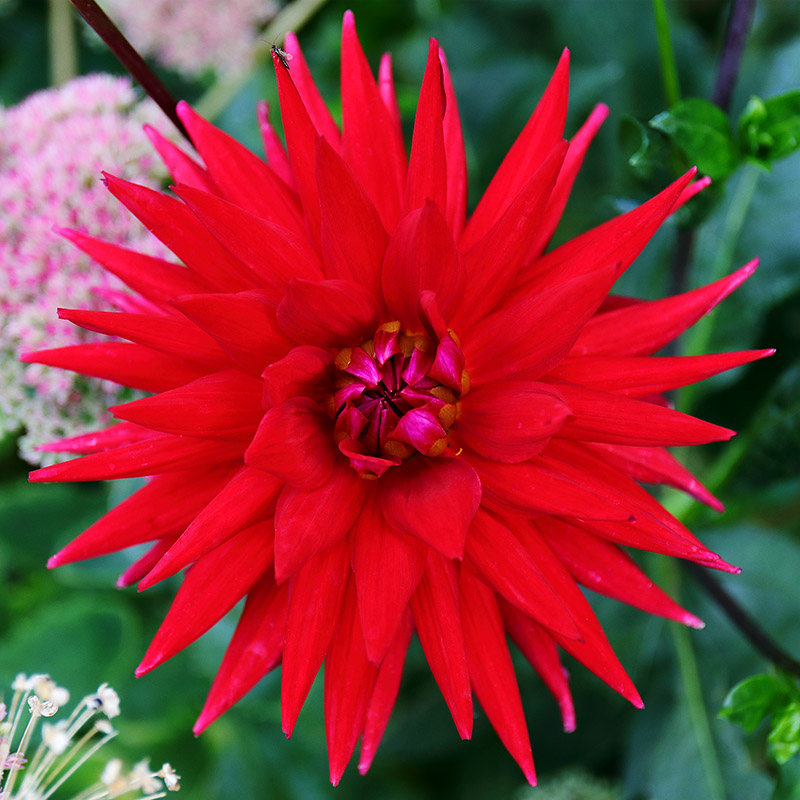
Dahlia-red-3077
The brightest of reds.

I can foresee a slight snag with my new interest in dahlias. It’s going to be hard to restrict myself to the plants I actually have room for! Well, that will be a problem for next year. This year I must get on and improve the soil in the borders for them. And I’ll start working on my dahlia ‘to buy’ list, while dreaming about the wonderfully rich colours that they will bring to my garden…

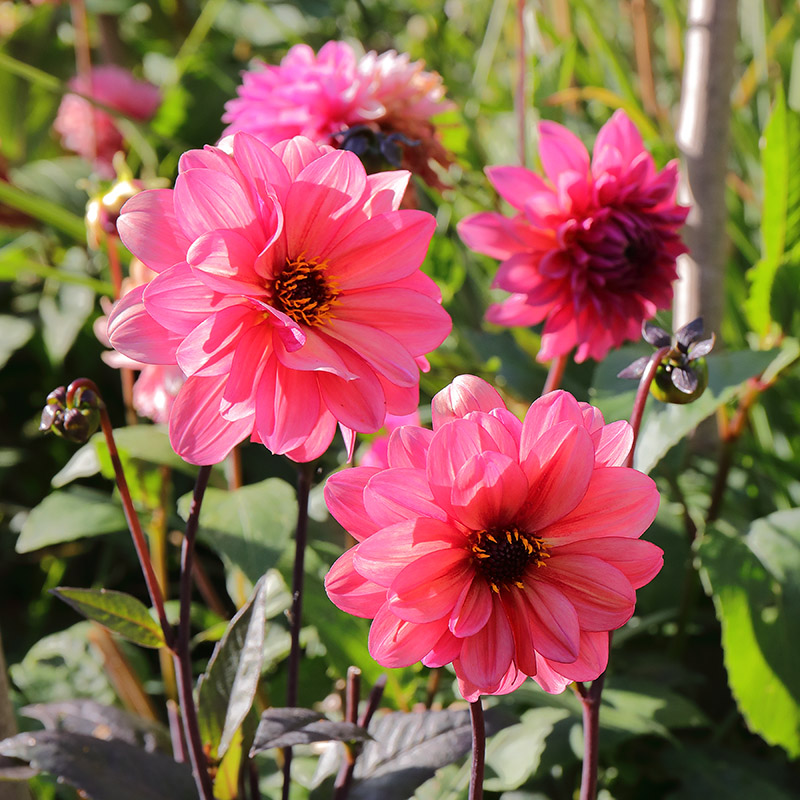
Dahlias-pink-3104
A dahlia that I’d love to grow.

Tougher Than it Looks: Hibiscus Syriacus

Hibiscus Blue Bird

Like many, the first time I saw hibiscus flowers was while on holiday in Spain. These were the red Hibiscus rosa-sinensis – flamboyant and very exotic-looking flowers that will always remind me of my parents’ garden there.

My parents had retired to Spain and spent over 20 years living there. On visits to them, I enjoyed looking after their little garden and visiting the nearby garden centre to buy plants for it. It was an exciting world of unfamiliar plants where I could have easily wandered for hours. (Nowadays those plants have become much more commonplace and are easily bought in UK garden centres.)

The Spanish garden centre was just a few minutes walk from my parents’ apartment, so a visit there became a frequent entertainment. (And it was a great place for buying gifts for my flower-loving mother.) My eye was often draw to the hibiscus plants there – both the usual red cultivar and the others that had flowers in a range of pinks, oranges and yellows.

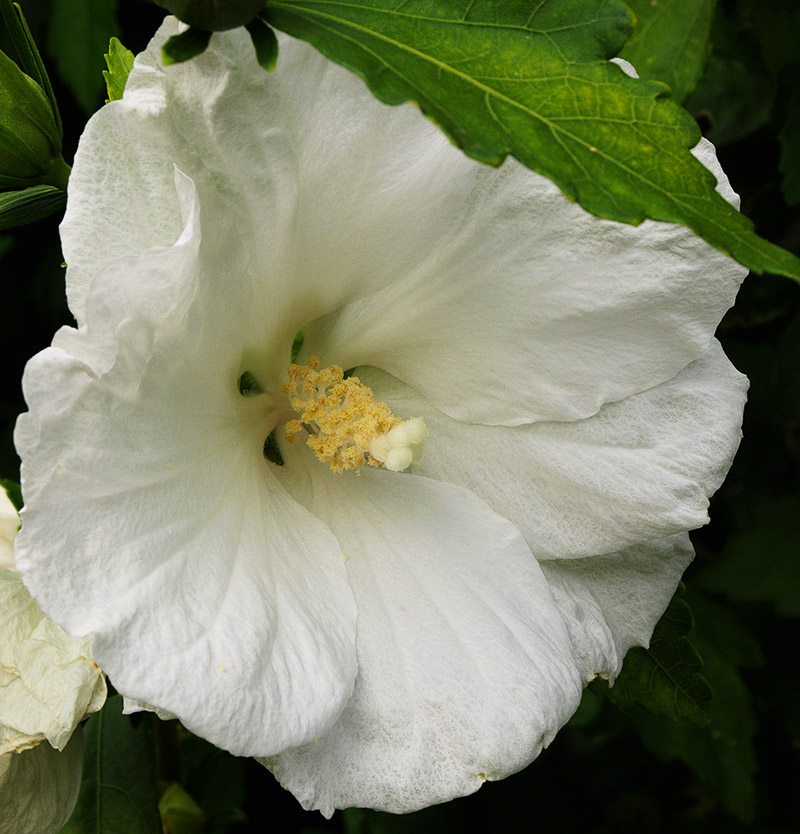
White hibiscus flower
This white hibiscus is much less showy than those with the red markings and it seems to be shyly hiding under the leaf!

Living in Scotland at the time, I had no idea that it was possible to grow hibiscus in the UK. It was only when I moved to Suffolk that I came across the hardy hibiscus shrubs (Hibiscus syriacus) and fell in love with them.

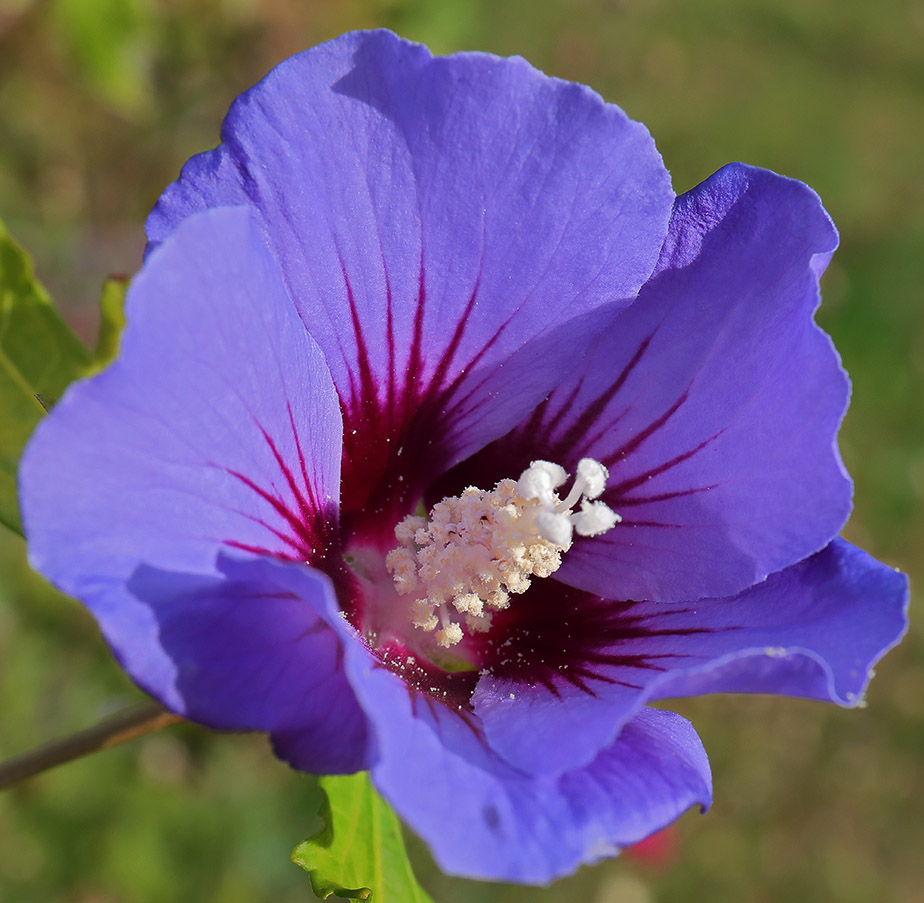
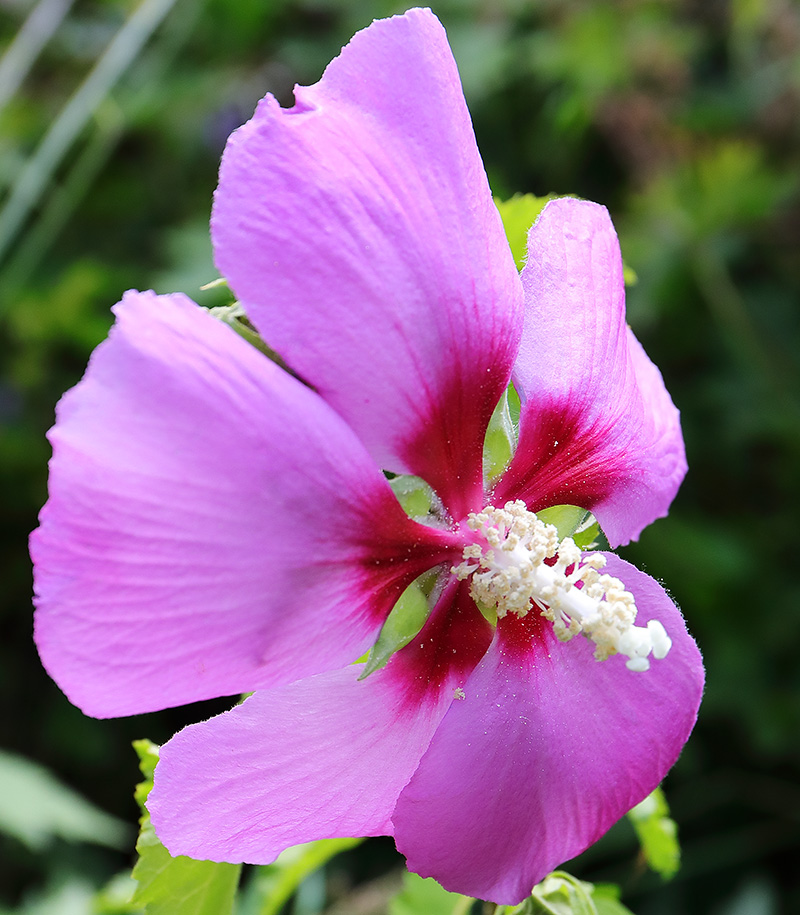
‘Blue Bird’ was one of the first of the hardy hibiscus that I came across and it’s flower colour has made it my favourite. These flowers vary from a quite definite blue, to a softer, more lavender shade. This is can be due to the flower aging, but can also be dependent on whether the shrub was grown from seed (very variable) or from a cutting. (I’ve read that hibiscus seedlings can be a nuisance in parts of the USA, but that isn’t a problem in chilly old Britain!)

So far I have two hibiscus shrubs in the garden – Blue Bird, which has flowered abundantly this year, and a young plant of ‘Walburton’s Rose Moon’. This second hibiscus has massive flowers that open to a much flatter shape than the more cup-shaped blooms of Blue Bird.

A white hibiscus would look good in a new area that I’m planting up – probably ‘Red Heart’ which has showy red markings in the centre of its flowers. Another possibility would be the much more restrained plain white cultivar (above), seen in a nearby garden.

The hibiscus flowers are almost over for this year (there’s just one pink one left), but I’m already looking forward to being able to spend more time photographing them next year.

Hibiscus Rose Moon 2615
Hibiscus Walburton’s Rose Moon

Late Summer Heat

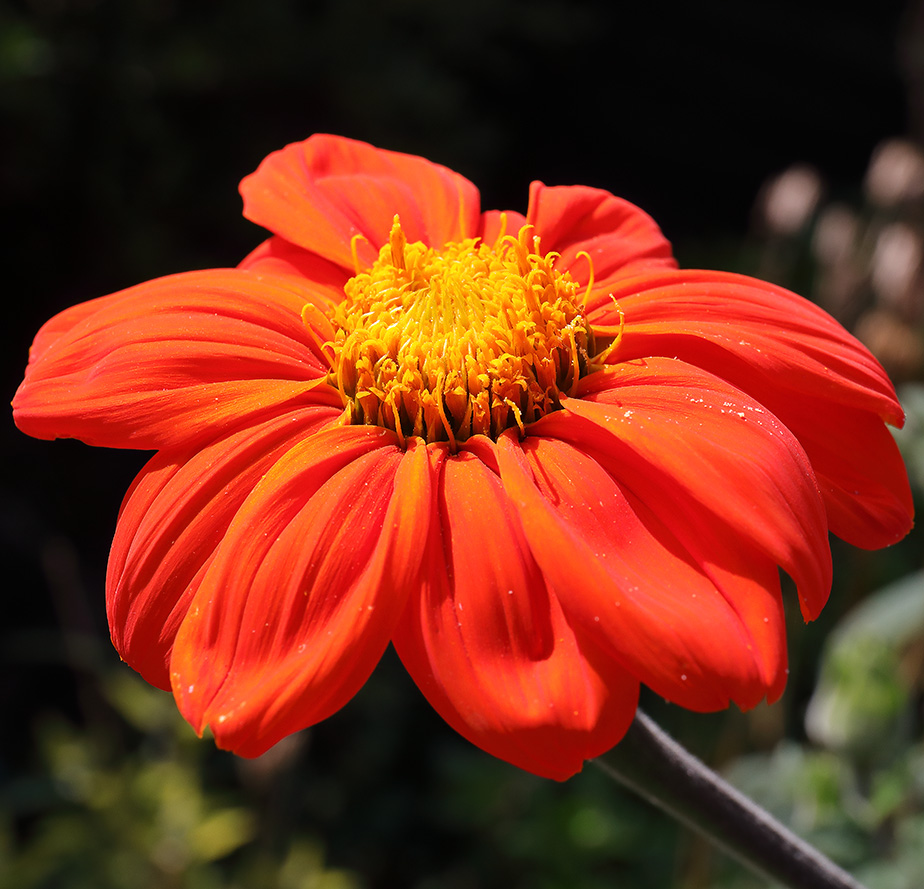
Tithonia rotundifolia 'Torch'

This post is a follow-up to last week’s ‘Late Summer Colour’. In it, I mentioned that I’d seen several especially striking orange flowers during my visit to Fullers Mill Garden and that I’d save them for their own post.

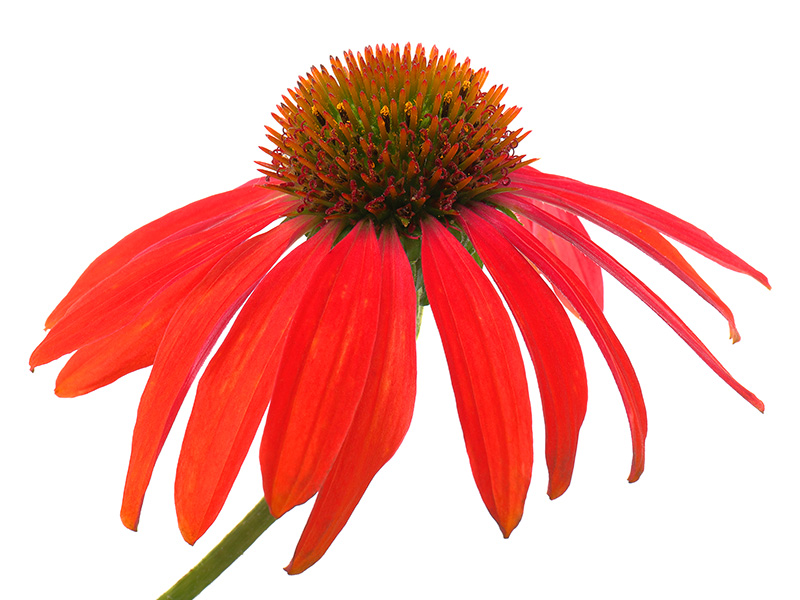
I’ve also included a couple of flowers from my own garden. The first is Tithonia rotundifolia ‘Torch’, which is so brilliant in the sunshine that the colours almost shimmer. And the other is the vibrant red-orange echinacea in the final photo. (I couldn’t resist buying this one, as a change from the pink echinaceas that I’ve grown in the past.)

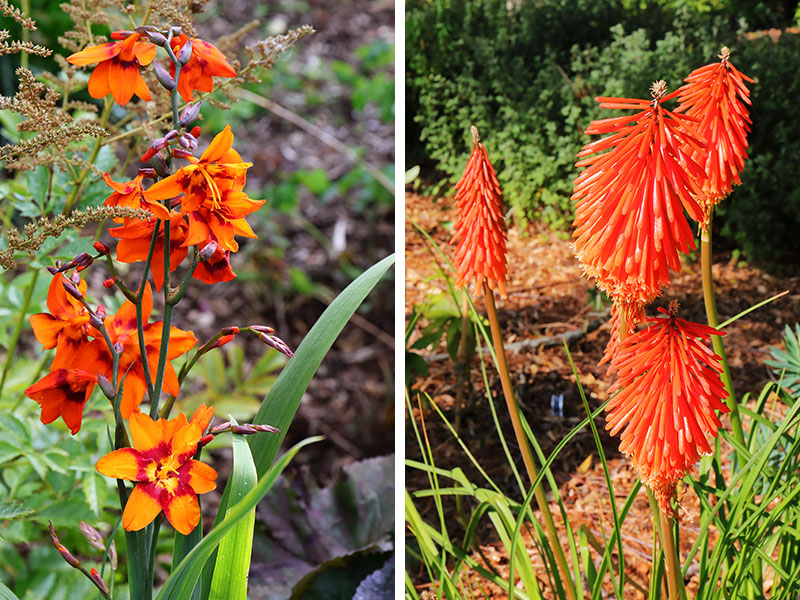
Orange-Crocosmia-Kniphofia-2-up
Left: Crocosmia ‘Emily McKenzie’ (aka montbretia).  Right: Kniphofia (‘red-hot pokers’).

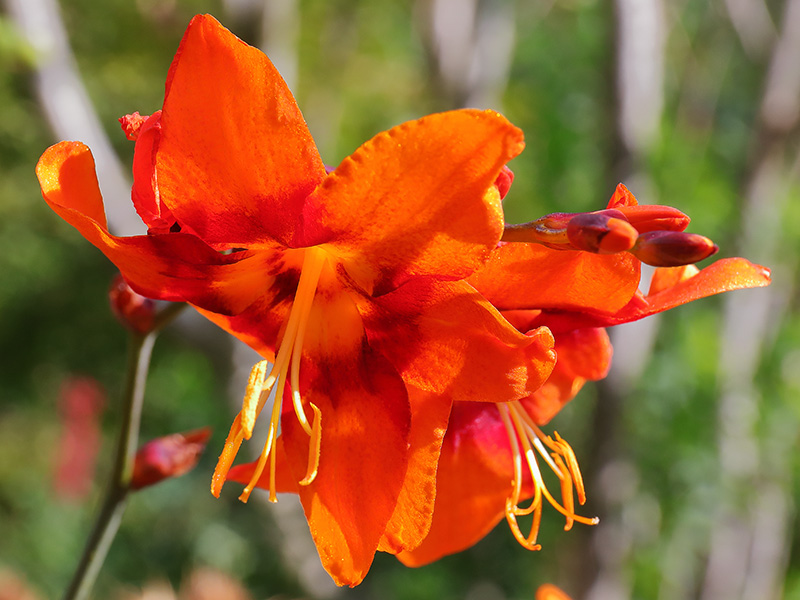
So, back to the flowers at Fullers Mill… Crocosmia ‘Emily McKenzie’ was particularly showy, with larger flowers than any of the other crocosmias that I’ve seen before. The richness of the orange, with the deep red markings and the glow from the light shining through the crocosmia’s petals made me think of a sumptuous silk.

Near the crocosmias were the bold flowers of red hot pokers (kniphofias), looking like fizzing orange rockets spurting up from the ground. (Which makes me wonder if it would be possible to plant a border to suggest fireworks. That could be fun!)

Crocosmia Emily Mackenzie 2916
Flower of Crocosmia ‘Emily McKenzie’

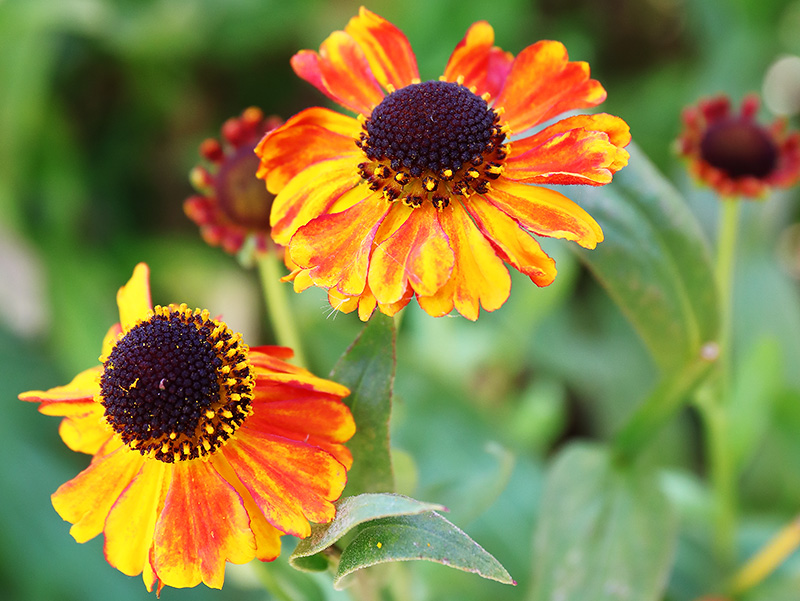
A little calmer than the dazzling oranges of the crocosmias  and kniphofias were the bi-coloured flowers of the heleniums. The helenium is certainly less flamboyant than the others. Even so, the golden-yellow and reddish-orange of its petals are vibrant, and they have a warmth that is typical of many of our late summer flowers.

Heleniums 2888
Helenium flowers (aka sneezeweed) radiate warmth.

Earlier in the summer the gardens in this area had a lot of the cooler colours in them – reds and pinks that contain some purple, magenta, lavender, blue and white. (We probably choose these colours because we want to create a suggestion of coolness to offset hot temperatures.)

But now, as the season gets closer to its end and the temperatures have dropped, the late-summer flowers are creating a feeling of warmth through their hot colours. (Which are enhanced by the warmer light towards the end of the day.) So these radiant orange flowers help us to hang on to the idea of summer for a bit longer – and I hope they continue to do so for a good while yet!

Orange Echinacea-2494
Another flower from my garden – a brilliant echinacea daisy.

Late Summer Colour

Lilium 'Black Beauty'

This year I haven’t had a lot of time to visit gardens, but I did manage to visit one of my favourites this week.

Last year I wrote a post about a visit to Fullers Mill Garden near Bury St Edmunds, in Suffolk. This year, my visit was slightly earlier and there were more plants still in flower.

Fullers Mill Garden 2993
A peaceful part of the garden.

Visiting a garden at different times is interesting because you notice different plants. And, for me, that means the chance to photograph them too.

This time, there were lilies still in flower, so I made a point of photographing some of those – also flowers I don’t see so often, such as eucomis and alstroemeria. There were plenty of the usual seasonal favourites: Japanese anemones, asters, dahlias, autumn crocuses, rudbekias, hydrangeas and hibiscus.

Pink flowers - lily and indigofera
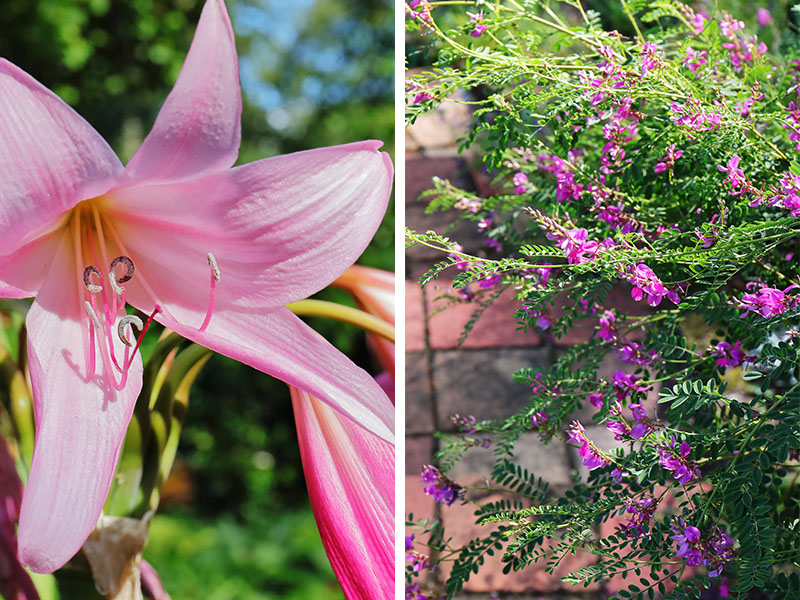
Pink flowers – lily and indigofera

It was a bit of a surprise to find flowers that had long gone over in my own garden – things like indigofera, agapanthus and astrantia. Maybe having more moisture in the soil means that flowers can last for longer.

There were plenty of bright colours still, the most noticeable being the oranges of crocosmia, heleniums and ‘red-hot pokers’ (kniphofia). They’ll get a post all of their own soon.

Fullers-Mill-eucomis
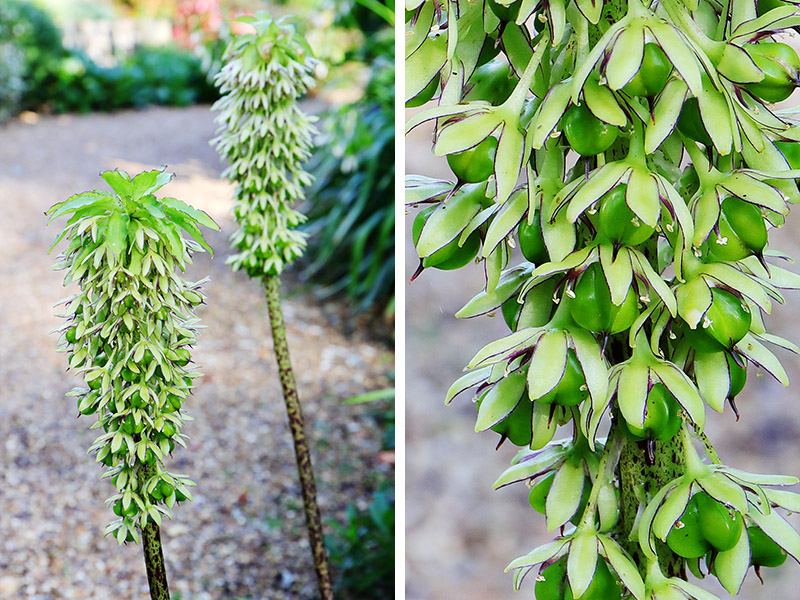
Eucomis bicolor with developing seed pods.

Fullers Mill is an exciting garden for a photographer to visit because of the sheer variety of plants and the lovely setting of the garden itself. I particularly enjoyed having the opportunity to photograph the almost sculptural-looking seed pods of the eucomis. It’s a plant I rarely see, but now I feel it would be fun to have in my own garden so that I can take more photographs of it.

Fullers-Mill-grass-helenium
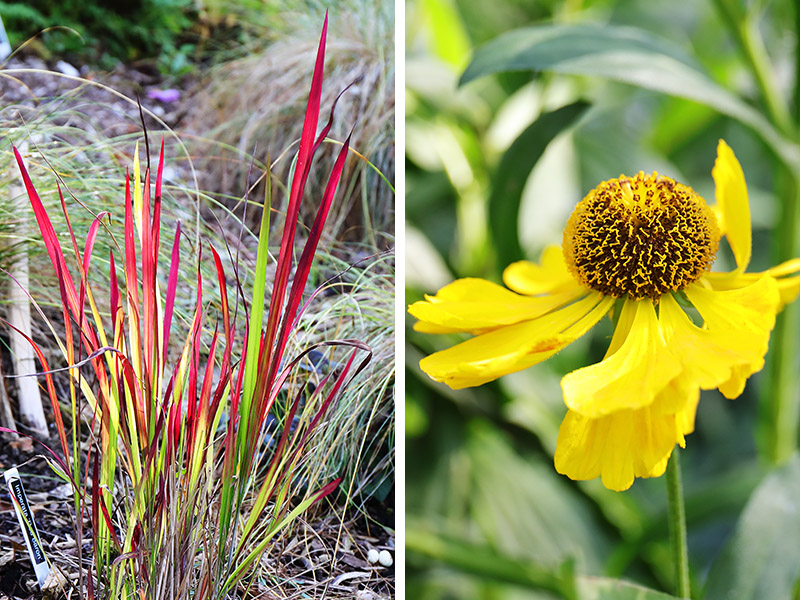
Imperata cylindrica ‘Red Baron (L) and a yellow helenium (R).

It was quite a windy day when we visited, so it was a challenge to photograph some of the flowers that tended to sway and dance in the breeze. The yellow helenium (above) was on of those that didn’t want to sit still and its petals look like swirling skirts – a dancer indeed!

Next year, I’d like to visit the garden in different seasons, especially in springtime. There is a great collection of irises which I’m sure would keep me happily occupied for a long time. But any time would be a good time to visit Fullers Mill Garden – there’s always something interesting to see and to photograph.

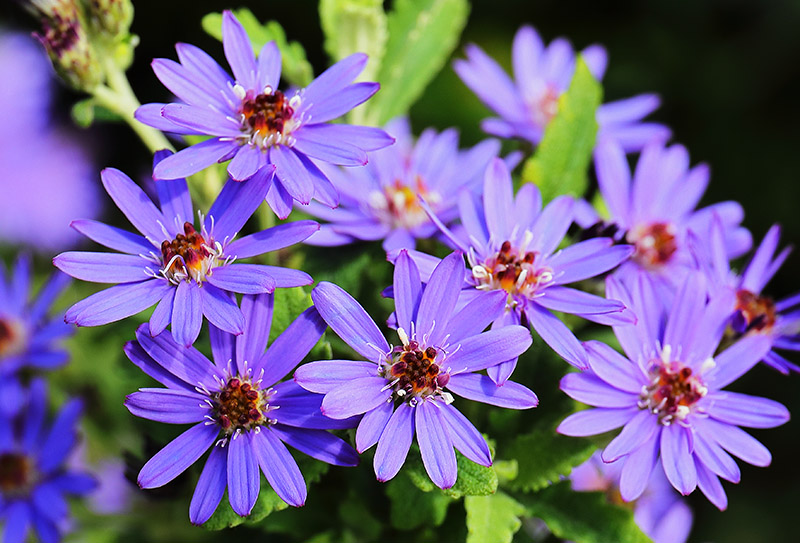
Asters 2894
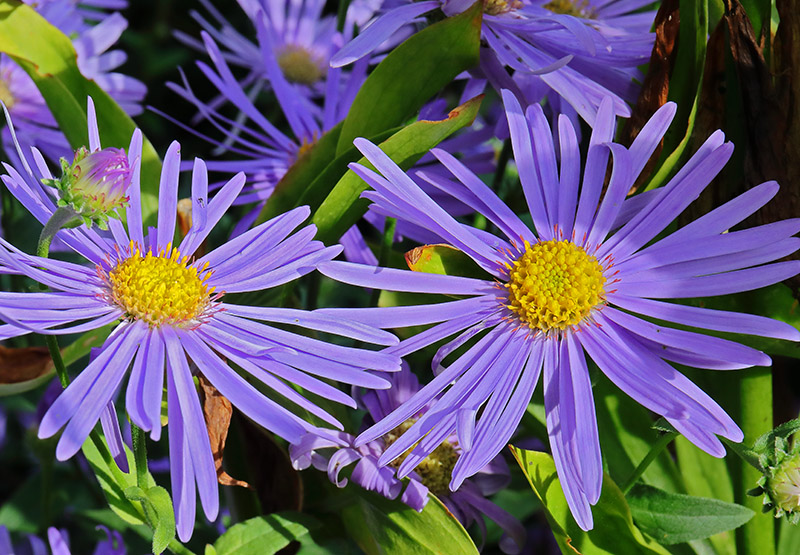
Lavender-blue asters – one of my favourites of the season.

Blue (and Violet and Purple) for Bees

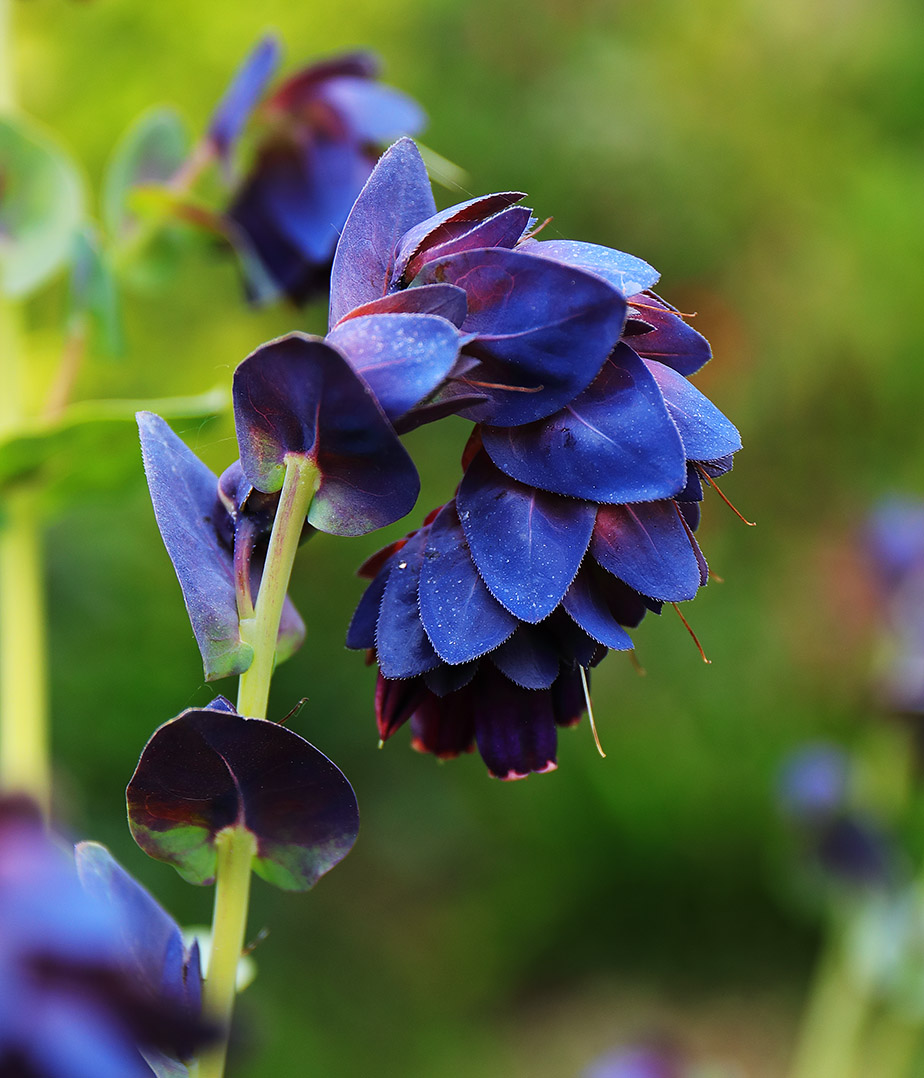
Cerinthe major 'Purpurascens' (Honeywort)

If you’ve been reading my blog for a while, you’ve probably noticed that blues and purples are my favourite colours in the garden.

Some of the darker flowers have a lovely velvety look – petunias and the deep purple morning glory ‘Grandpa Otts’ spring to mind. They just ask you to stroke them! And at the lighter end of the range, soft violets and lilac-blues are delicately beautiful.

So I’m delighted to read that bees share my attraction to these colours and often prefer blue and violet flowers.

Scientists studying bees’ vision have discovered that, unlike us, bees can see ultraviolet light. This allows bees to see the ultraviolet patterns that flowers use to show them where to find nectar.

(There’s even a colour named ‘bee’s purple’, which is a mixture of yellow and ultraviolet light and is visible to bees but not to us.)

Blue Olearia-1064
This blue daisy bush (Olearia) looks like an aster but flowers in spring and early summer.

A German scientific study  of bumblebees also found that (in an area where violet flowers produced the most nectar), they preferred violet over blue. This allowed the bees to collect more nectar than bees that didn’t show a preference.

Apparently the world bees see is a mixture of mostly blue, green and ultraviolet, also yellow and some orange, but no red. Red just looks like a black to bees, but bees have an excellent sense of smell, so that flowers in the red colour range can attract them by scent.

There are already a number of bee-friendly plants in blues and purples in my garden.

Cerinthe (top photo) is a marvelous plant for pollinators because it is especially rich in nectar, giving it the common name of ‘Honeywort’. (This cerinthe was photographed in a garden I was visiting in the spring. The cooler temperatures at that time gave it a much darker colouring than my own plants had in the warmth of summer.)

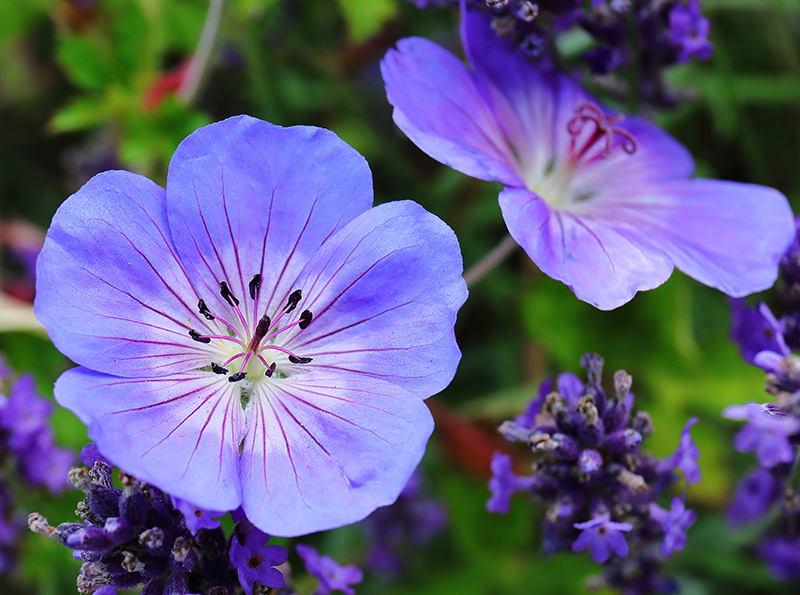
Flowers of Geranium 'Rozanne' with lavender.
Flowers of Geranium ‘Rozanne’ with lavender – a combination sure to attract bees!
The geranium ‘Rozanne’ is now lazily flopping into the lavender bushes beside it, creating a partnership that pleases both me and the bees. This geranium flowers over a long period, so it really earns its place in a bee-border.

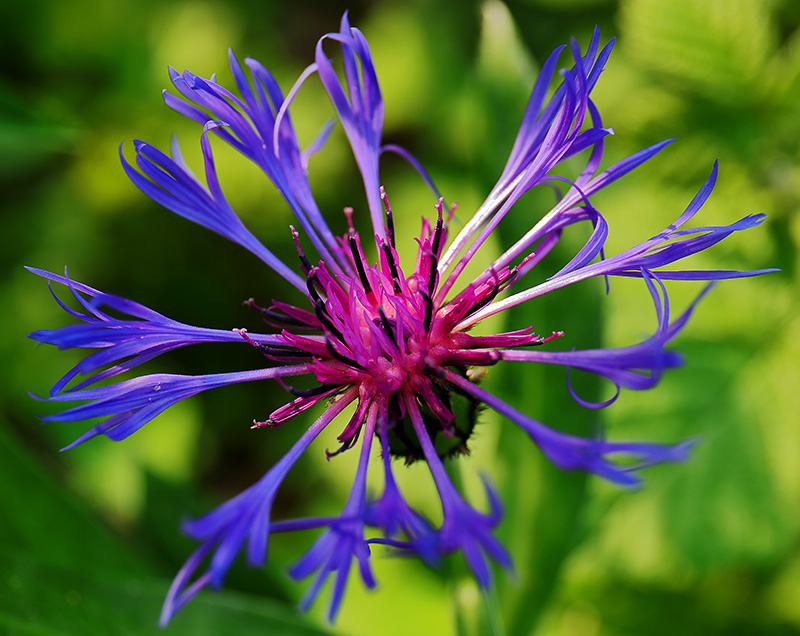
Another flower that is popular with bees and that self-sows around my garden is Centaurea montana – the perennial cornflower. It also attracts butterflies and moths, which means it works well as a pollinator magnet. The unusual flower shape and the combination of blue and magenta make it a lovely garden plant.

The daisy bush (Olearia) was photographed in a garden I visited in spring. Apparently it attracts both bees and butterflies – and I’m wondering if I can find a suitable space for one in my own garden…

As you might expect, I’m looking forward to checking out what violet, purple and blue flowers are best for bees. There will, of course, be plenty of other colours too. But, hey, I’m really pleased that my buzzy little friends share my colour preferences!
Flower of Centaurea montana
Centaurea montana is a very easy-to-grow plant that attracts bees, butterflies and moths.

Summer Scents: Philadelphus

Philadelphus Coronarius flowers

As a photographer, it would be easy for me to forget that being in a garden is not just a visual experience.

Scent is something that I tend not to think about until I am greeted by an unexpected waft of perfume from some nearby flowers.

For the past few weeks, a shrub in my neighbours’ garden has been flowering magnificently and leaning right over the fence into my garden. It has been a most welcome sight, but, beautiful as the flowers were, their scent was even more impressive. Strong and sweet, this scent has been filling the air near our back door and has made it a pleasure to step outside.

The shrub is a philadelphus or ‘mock orange’. I’m guessing, from its strong perfume and height (about 9-10 ft.) that it is likely to be Philadelphus coronarious. (You can see it in the top photo.) It has just finished flowering and now the two philadelphus shrubs in my own garden have taken over.

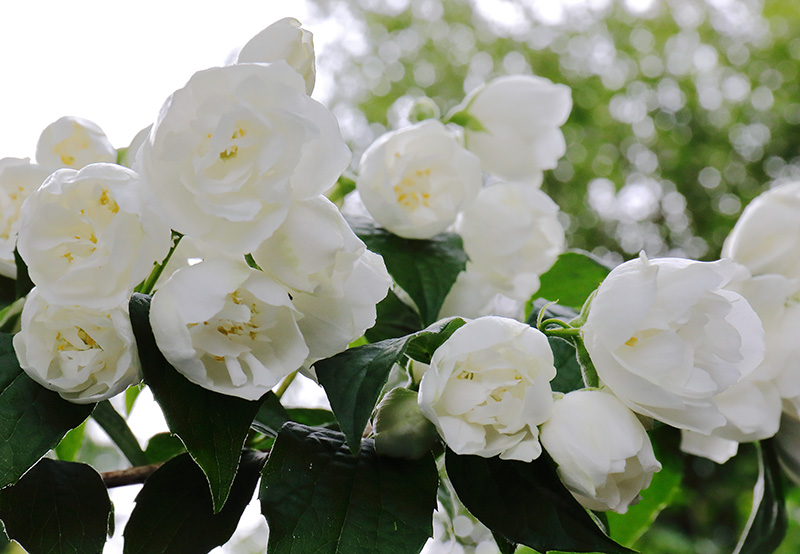
White philadelphus (mock orange) flowers
This Philadelphus was in the garden when we came here – I think it’s probably ‘Virginal’.

In the photograph above, you can see the older of these. I think it has been in the garden for a very long time and it was terribly overgrown and straggly when we arrived. I cut it back a lot and it has grown back strongly.

Despite now having quite a lot of shade from nearby trees, this philadelphus is heavily covered with flowers but their scent is not as strong as those on the neighbours’ shrub. By the look of it, I think that this one must be the cultivar ‘Virginal’ – it was one of the commonest ones. (Nowadays, there seems to be a very large number of cultivars available.)

In contrast, I do know the name of the philadelphus in the bottom photograph. It is ‘Belle Etoile’  – I’m sure, because I planted that one!

(Not knowing the full names of plants that you’ve ‘inherited’ or else photographed in other people’s gardens makes titling photographs accurately very difficult.)

Belle Etoile seems to have less scent than the others, however, it makes it up for that with the pretty purplish colouration at the centre. This makes it attractive to photograph, as well as blending it nicely with its dark pink and purple flowered neighbours in that border.

I’m enjoying the company of these lovely shrubs at the moment – what more could a flower photographer ask, than a beautiful subject that also happens to smell good while you’re working up close to it. Sweet!

Flowers of Philadelphus 'Belle Etoile'
Philadelphus ‘Belle Etoile’ has a magenta blush at the centre of the flower.

Rhododendrons: Woodland Beauty

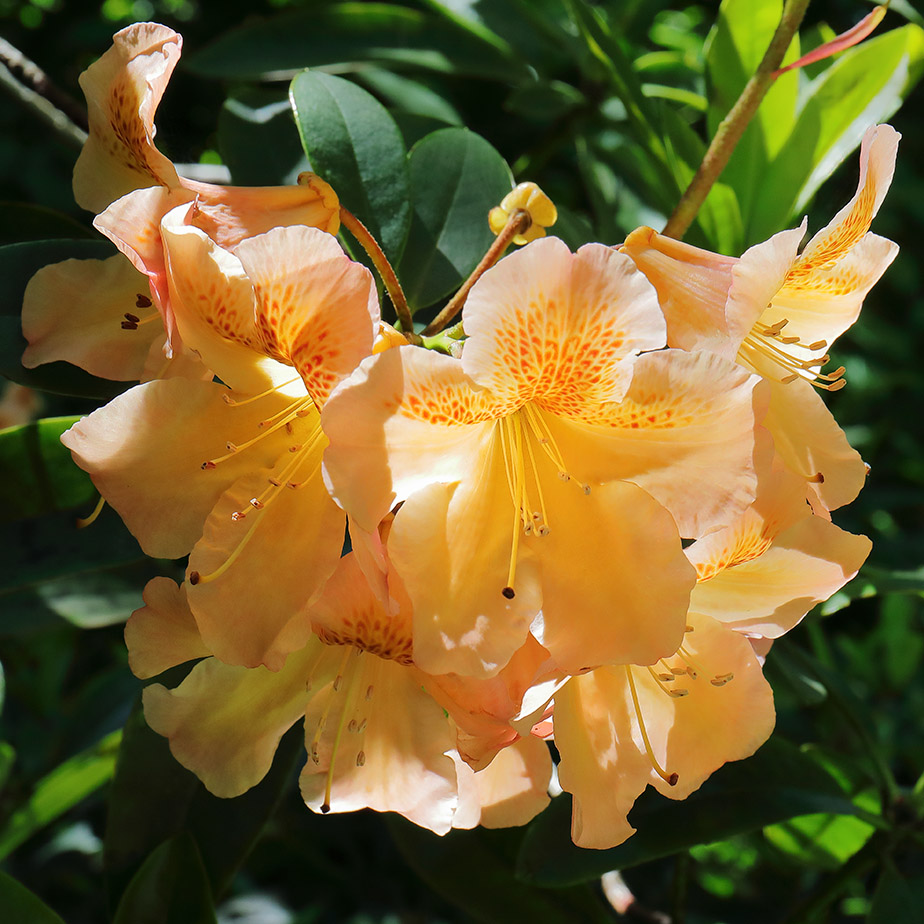
Orange rhododendron flowers

I was lucky enough to be able to get out and do some garden-visiting last weekend. It was incredibly hot, so I was happy to get out of the brilliant sunshine and into the garden’s wooded depths. Once there, I was delighted to find myself surrounded by the jewel-bright colours of rhododendrons in full flower.

It was difficult to get close to many of the flowers, but I was able to get near enough some of the prettiest to photograph them. (If you’re visiting a garden, that can be surprisingly difficult because it’s easy to get in the way of other visitors, especially if paths are narrow or you’re there at a busy time.)

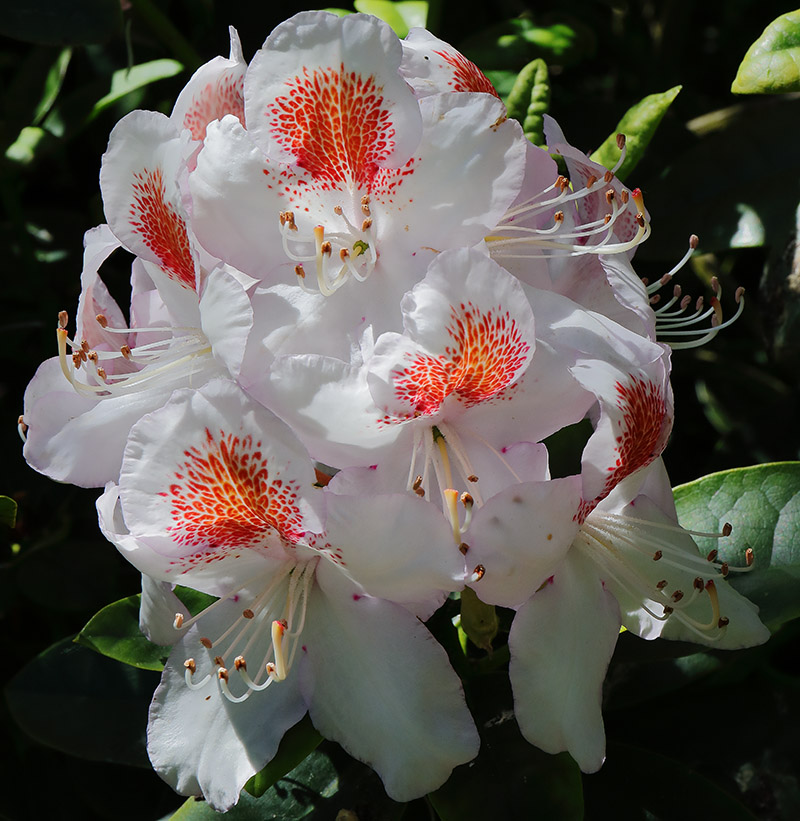
White rhododendron flowers with red/orange markings.
Spectacular red and orange markings drew my eye to this white rhododendron.

Having got close enough to a flower that’s still in good condition, the next problem is coping with the light. On a day with dazzling sunshine and trees overhead, it’s difficult for the camera to capture detail in both the highlight and shadow areas. If I was taking the photograph at home, I’d use a diffuser (basically a fine fabric stretched over a rigid frame) to soften the light falling on the flower.

Alternatively, if I hadn’t been in too much of a rush that morning, I should have remembered to bring a small fold-up reflector (or even just a piece of white paper or card) that I could use to bounce some of the bright light back into the shadows. I won’t make the mistake of being so unprepared next time!

Hoping that I could still get a reasonable photograph, I tried to find flowers that were more shaded. However, that wasn’t possible for many, including the white flowers above. So I decided to take the photograph anyway, bracketing the exposure a bit so that I could choose the best one.

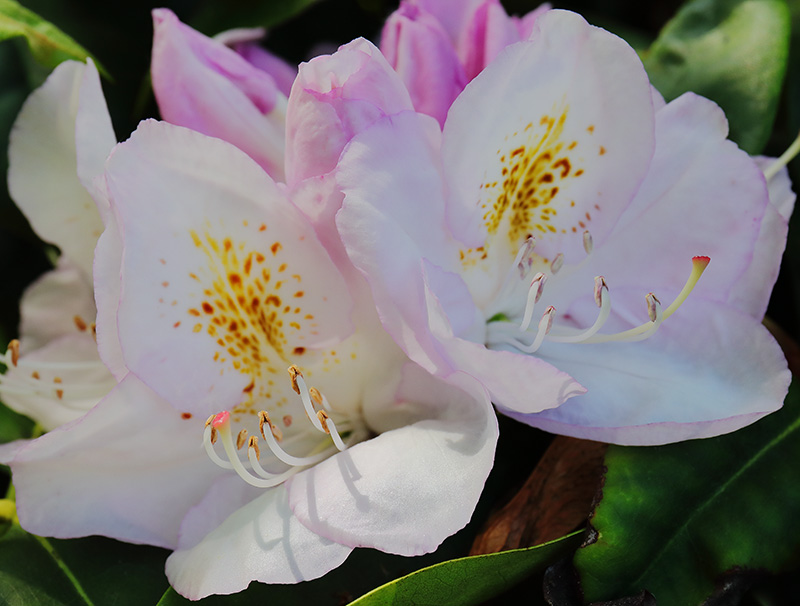
White rhododendron flowers tinted with pink
A slight pink blush to the white petals and deeper pink buds make these rhododendron flowers look especially delicate.

It’s at times like this, that shooting with the camera set to create RAW files really comes in useful. Once I was home, I was able to use the RAW development software to both darken the highlights, pulling back some of the detail into them, and lighten the shadows. There’s a limit to what software can do for you, but it shows that it’s always worth having a try at a photograph, even if the conditions aren’t ideal.

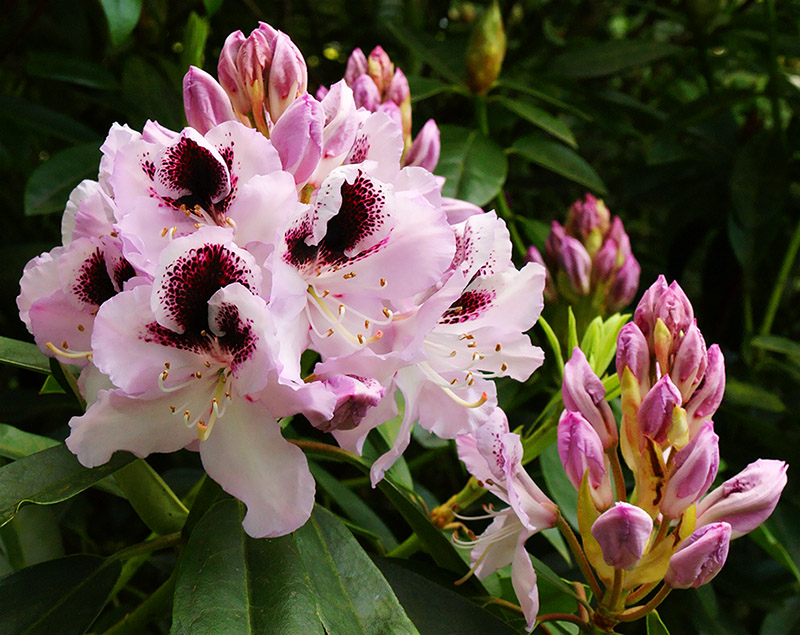
The photograph below was taken on a different day, when the light was more overcast. You can see that the effect is generally softer and that there are no harsh highlights or shadows to distract from the detail. A slightly grey day may not be what most day-trippers would wish for, but it certainly makes life easier for photographers!

Pink rhododendron flowers with dark red markings
The dark markings provide a bold contrast to the pretty pink of the petals.

In Evening Light

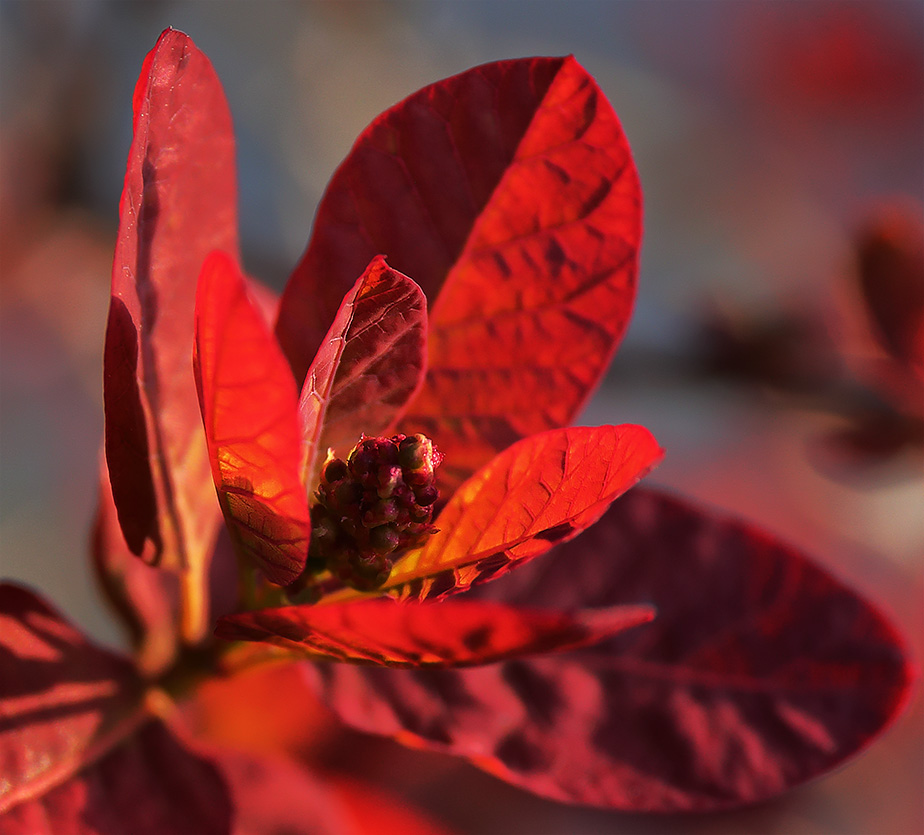
Leaves of the smoke bush (Cotinus coggygria)

After a busy day, getting out into the garden for a while is wonderfully calming and restorative. The garden can look its best in the evening light too, when the low-angled light creates long shadows and shows up the textures of the plants. Colours come alive in this light, especially where the sun passes through flowers and leaves. (Just like sun coming through a stained-glass window.)

If I can, I like to spend some time in the garden at this time of day. Maybe I’ll do a bit of weeding or simply sit for a while. What I prefer to do, though, is to take my camera for a wander around the garden.

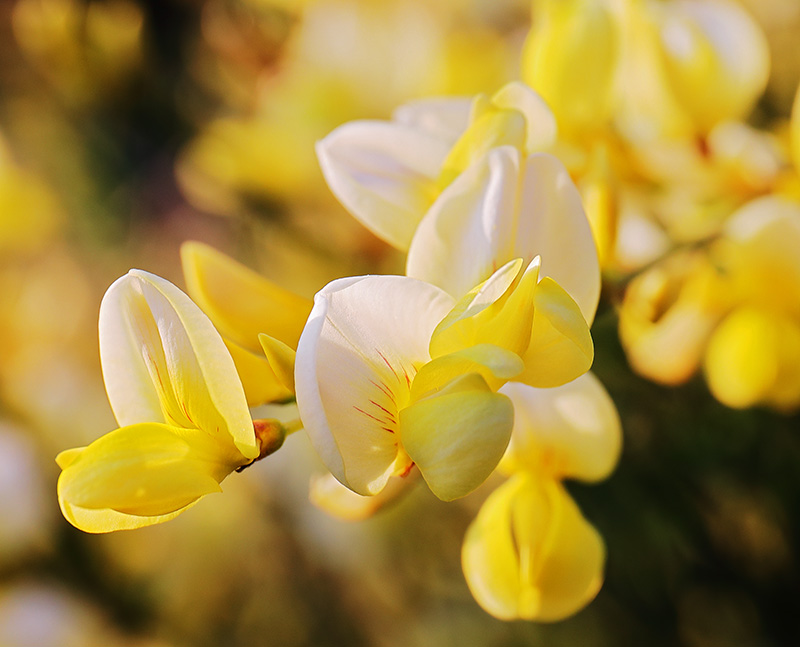
Yellow broom (Cytisus) flowers
Yellow broom (Cytisus) flowers gleam in the sun.

Late in the day, the light is warmer and yellower. (More of the blue in the light is absorbed by the atmosphere when it’s at this low angle.) It warms and intensifies the colours of flowers. Quite ordinary looking flowers like the broom above become much more appealing photographic subjects when the strong side-lighting shines through their petals and makes them glow.

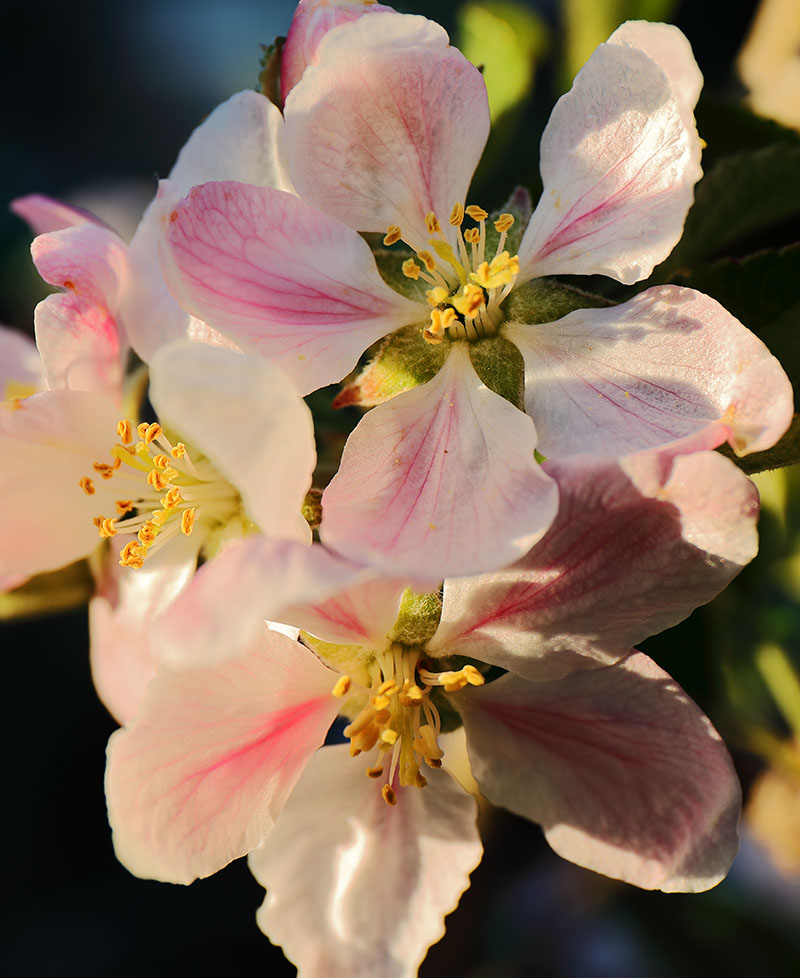
In the apple blossom photograph below, you can see that the evening light has an attractive warming effect on the petals of the flowers. This brings associations of pleasant evenings spent outside and can conjure up thoughts of the summer to come, or past memories of time in the garden. Just with the difference of the colour in the light, you can give a photograph a little suggestion of emotion and make it a bit more than a straightforward record of the flower.

Blossom on a Braeburn apple tree.
Blossom on our Braeburn apple tree.

Because evening light creates excellent side-lighting that picks out the texture in petals and leaves, it makes them appear more 3-D. (Like the rather crinkly surface of the apple blossom petals and the hairy calyx behind them.) The shapes of flowers and details such as the stamens are also highlighted and the whole flower can be ‘spotlit’ in a way that helps to bring it out from its background.

Early morning light has the same beautiful low-angle effects as evening light but there’s rarely time to take an unhurried stroll around the garden at that time of day. (Not here anyway – there’s cats to be fed, humans to be fed and other distractions!) And as the dawn becomes earlier and summer approaches, it’s less likely that I’ll be out of bed to catch that very early light. (But doesn’t it feel quite heavenly to be up really, really early, when no-one else is around but the birds, and you have the whole world to yourself? I love it if I can manage it! Sadly, that’s not very often.)

So evening time is, for me, a time I look forward to with anticipation on clear days. And when I’m gardening, I try to place plants that are especially colourful, or that have delicate structures, where the late sun can make the most of them. That smoke bush in the top photograph was planted where the setting sun could shine through its deep red leaves. It makes the shrub seem as if it’s alight. It’s amazing what a little bit of evening sunlight can do!

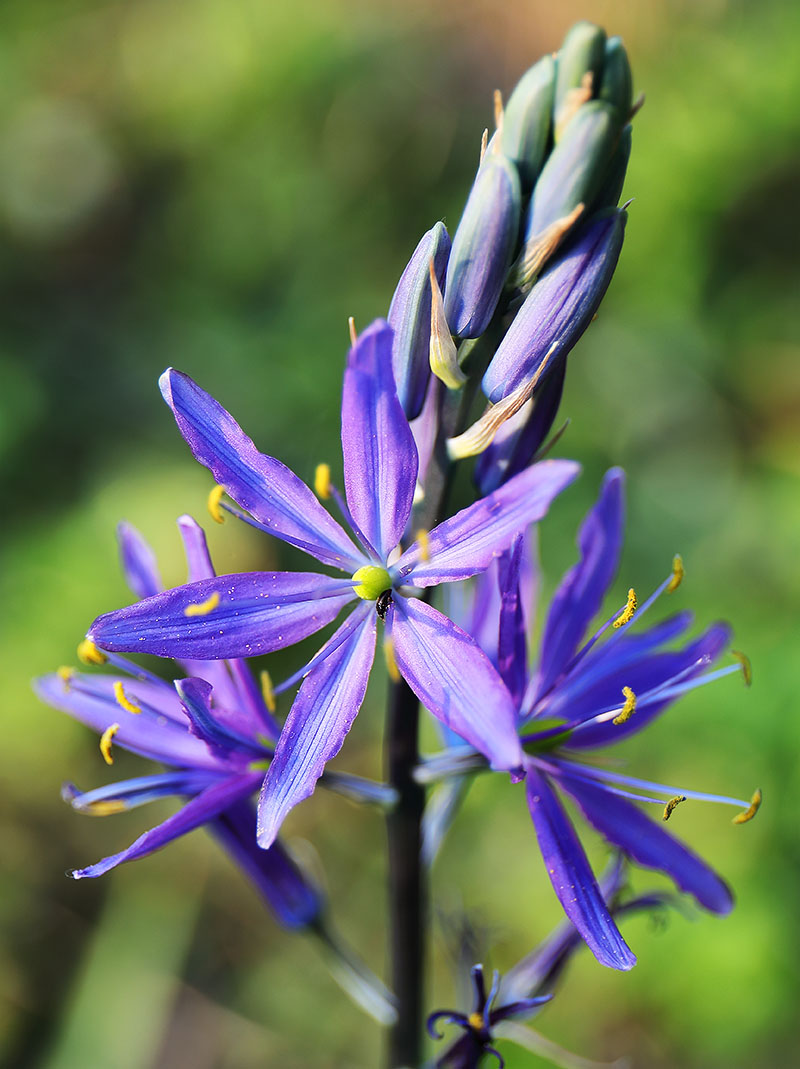
Camassia leichtlinii
This Camassia is in the last area to catch the sun and for a little while the colours become richer.