Ghosts: Frosted Allium Seed Heads

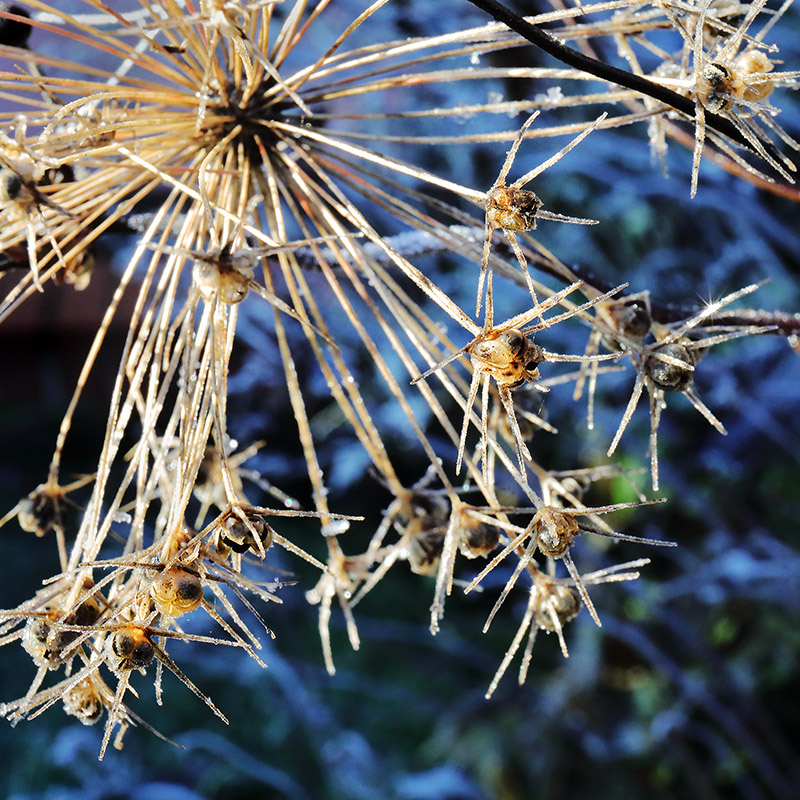
Frosted Allium christophii seed head

NB: A note for WordPress Reader users – you need to click on the title of the post again to see the full photograph. (Otherwise you see just a tiny section!)

The Allium christophii seed heads pictured here are held motionless in the thinnest coating of frost. On a freezing winter morning the tiny seed pods, and the remains of the flowers behind them, gleam softly in the early sun.

It has just occurred to me that it’s unusual for a seed head to retain the remains of the flower like this. The petals have lost their colour and their edges have curled inwards. They’ve shrunk a little as they’ve dried too, but those petals are still there. Now they are little icy stars.

You can see what those stars looked like while the flower was still alive:
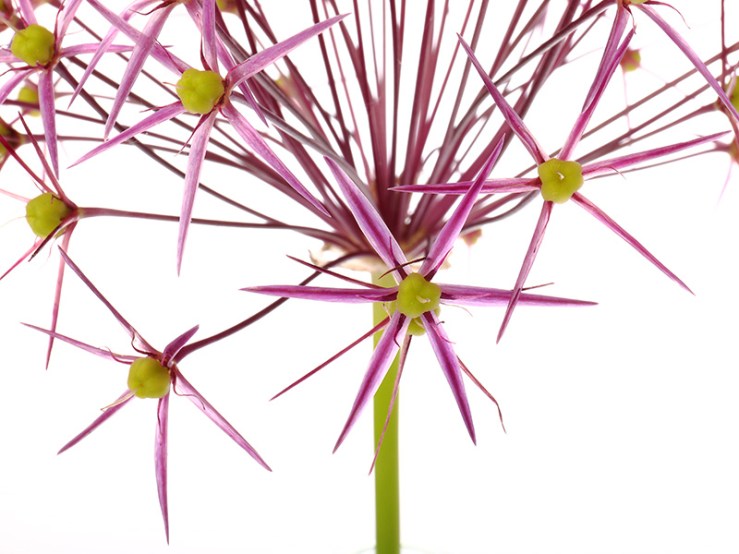
Allium christophii flower head

The living flowers are lilac, with a delicate metallic sheen. Already the green seed pods are forming in the centre of each individual floret. If you look closely you’ll see that there’s also an inner ring of filaments. (These are the lower part of the stamens, which would have held the anthers.) Their tapered, almost spiky, appearance makes them look like another set of much smaller petals.

Now my imagination is playing with the idea of having the ‘ghosts’ of the year’s flowers sprinkled throughout the garden. For company, the alliums would have hydrangeas (as in last week’s post) and perhaps, if there were any late flowers, astrantias. (But in both of these plants, what look like petals are not. The hydrangea has minute flowers surrounded by showy sepals and the astrantia has large bracts around a tiny pincushion-like arrangement of true flowers. Perhaps that is why they keep their flowery appearance for longer.)

Hmm, I wonder if a slightly spooky winter garden would be fun… 🙂

Frosted Allium christophii seed head

Happy Christmas to You!

frosted fennel

NB: A note for WordPress Reader users – you need to click on the title of the post again to come out of the reader and go to the post itself. This allows you to see the whole of the top photograph. (Otherwise you may see just a tiny section!)

I hope that this Christmas, whether you celebrate it or not, will bring you happiness and wellbeing. It has been a busy year for us, so a time of good cheer and a little bit of indulgence will be welcome. (We value quieter Christmases these days – they give a great feeling of peace and time to just relax.)

Despite my usual frosty photo for Christmas, it looks as if we’ll see no frost or snow over this year’s festive period. Christmas day is forecast to be sunny, so time outside in the garden is a possibility. But there will be no hoar-frost photos like this one taken last December…a rest for the camera maybe!

However you spend Christmas, I hope that it’s a good one. Merry Christmas! I wish you joy. 🎄

Frost and After

frosted gaura flower

NB: A note for WordPress Reader users – you need to click on the title of the post again to come out of the reader and go to the post itself. This allows you to see the whole of the top photograph. (Otherwise you may see just a tiny section!)

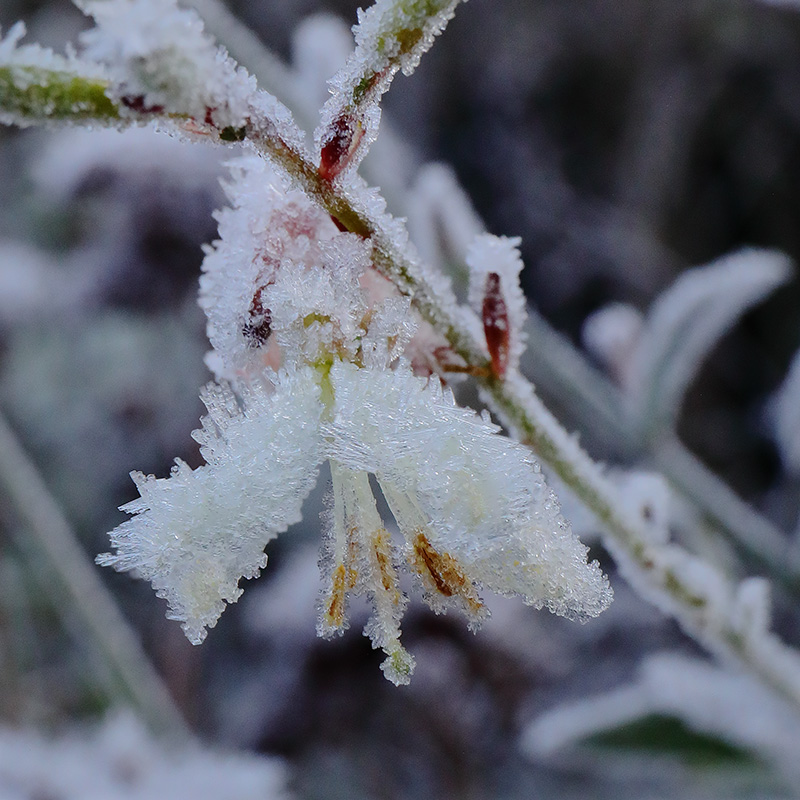
Last year’s hoar frost made icy little sculptures out of many of my garden plants. The one you see here is Gaura lindheimeri. (Now known as Oenothera lindheimeri, but I still call it by it’s old name. There are too many plant name-changes to keep up with these days!) This plant carries on flowering until late in the year, so frequently ends up covered in frost.

The area where the gaura is growing stays in the shade for much of the day in winter, so the frost lasts here for a long time. That gives me plenty of opportunities for taking photographs, but means that the sun doesn’t reach the frost to make it sparkle. So photography here is a bit of a compromise. Perhaps I should consider the effect of sun on frost when planting!

Eventually the frost will go, changing the look of the flower again. This time the petals are likely to be left translucent and looking very fragile indeed. (They usually wilt quickly after being frosted.) The drops of melted frost give an interesting texture to the flower – you can see right through the petals to the drops that are actually on the other side. ❄

Gaura with melted frost drops

From Very Little…

Frosted Pulsatilla Leaves

NB: A note for WordPress Reader users – you need to click on the title of the post again to come out of the reader and go to the post itself. This allows you to see the whole of the top photograph. (Otherwise you may see just a tiny section!)

Frost has an amazing ability to enhance the smallest of garden details. It takes very little to allow it to create a fleeting beauty. Anything can suddenly become attractive when encrusted by these tiny, white crystals of ice.

The last of the year’s flowers, dried-out seed heads, leaves, or slender grasses stilled by the cold air – all are made much more interesting to look at by a touch of frost. These are the leaves of Pulsatilla vulgaris (pasqueflower). In spring they are soft and hairy and a delight to stroke. By winter those hairs have disappeared, giving the curving shapes of the deeply-cut leaves more prominence. To my mind, the dead and frosted leaves suggest the look of a woodcut image or engraved stone.

As I’m writing this, the ground is still frozen. Tomorrow, though, is forecast to be milder and rainy, so the magic of the frost will be gone from the garden. These leaves won’t last long once the frost has finished with them, but will be left limp and probably rather translucent. The frost will have helped them along their path of decomposition and their eventual contribution to the richness of the garden soil. 🍂

Frosted Pulsatilla Leaves

Here Comes Winter

NB: A note for WordPress Reader users – you need to click on the title of the post again to come out of the reader and go to the post itself. This allows you to see the whole of the top photograph. (Otherwise you may see just a tiny section!)

Winter is fast approaching us, with some heavy frosts already here. But it hasn’t arrived quickly enough for frost to catch the leaves of this elder (Sambucus ‘Black Lace’) this year. The leaves stayed on the shrub unusually late last year – right into December – and gave me the chance of this photograph during a hoar frost.

Hoar frost itself is unusual here. This was the first time I’d seen it in my garden and I made the most of my chance to take some photos of it. (Got a bit frozen though!) This year I’ll be on the lookout for it happening again.

I’d have been happier if this year’s frosts had held off for a little while because I still have a lot of work to catch up with in the garden. Weeks of rain have meant that the ground was much too wet for planting and needed a chance to dry out. Now the ground has dried out and I have plants I want to move. There are others in pots that are waiting to be planted out. But the ground is frozen! I will just have to wait a little longer. Right now, it seems like a very good idea to stay indoors and warm, perhaps just venturing out for a few more frosty photos… 🙂

Frosted leaves of Elder

Another (Almost) Silent Sunday

NB: A note for WordPress Reader users – you need to click on the title of the post again to come out of the reader and go to the post itself. This allows you to see the whole of the top photograph. (Otherwise you may see just a tiny section!)

It’s a re-post of an image from near the start of my blog (in 2018) for this week. We’re just getting back to normal here after having our new heating system installed and it’s good to be warm again. With a bit of luck I’ll be back to my garden and photography in the next few days. 🙂

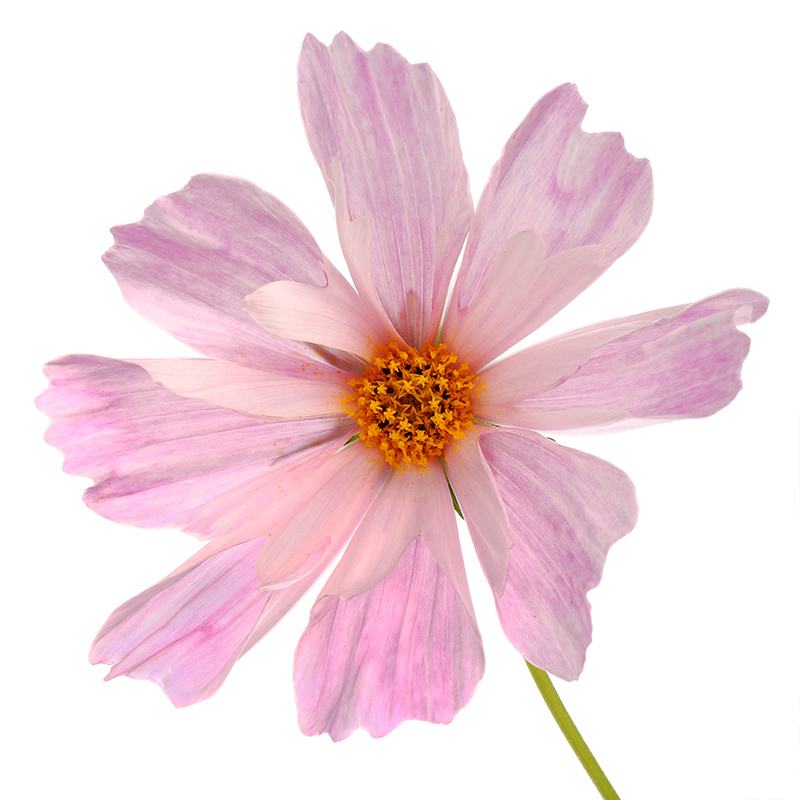
(Almost) Silent Sunday: Cosmos

Flower of Cosmos 'Seashells'

NB: A note for WordPress Reader users – you need to click on the title of the post again to come out of the reader and go to the post itself. This allows you to see the whole of the top photograph. (Otherwise you may see just a tiny section!)

It’s a post-and-run this week because we’re getting ready for work to start tomorrow to install our new heating system. There’s a slight feeling of chaos around here right now – hopefully it will be replaced by a good feeling of warmth soon! 🙂 (And the flower is Cosmos ‘Seashells’.)

Tranquillity Remembered: Wild Carrot in Autumn

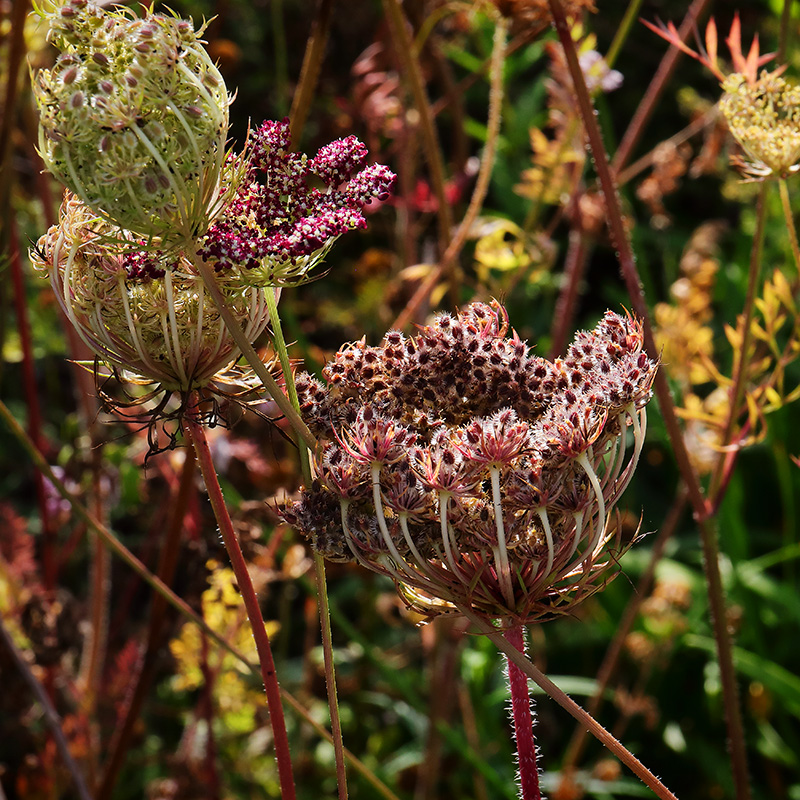
Daucus carota (wild carrot) in evening light in autumn

NB: A note for WordPress Reader users – you need to click on the title of the post again to come out of the reader and go to the post itself. This allows you to see the whole of the top photograph. (Otherwise you may see just a tiny section!)

Here’s a quick look back to wild carrot (Daucus carota) seed heads in early autumn, photographed in the light of a sunny evening.

Evening is a time I love in the garden, especially early on, while the sun is still out. It’s quiet and peaceful once the traffic of workers going home has gone, with just the occasional sounds made by a foraging bird. The light makes everything look better at this time of day.

Now the evenings are darker and those seed heads are gone. But there will be more new wild carrot plants in spring and sunny evenings will return. For now though, I’m very busy with preparations for a new central heating system being installed, so I haven’t had much time for the garden or photography. Our home has been in a state of disruption and reorganisation while we moved things around to allow the work to be done. Hopefully, all will be settled again soon and we will be warm this winter!

Fruitful Times

Braeburn apples on the tree

NB: A note for WordPress Reader users – you need to click on the title of the post again to come out of the reader and go to the post itself. This allows you to see the whole of the top photograph. (Otherwise you may see just a tiny section!)

There are hardly any flowers left in the garden now, so almost everything is in shades of green, with a few leaves turning yellow here and there. (There are still the purple leaves of the smoke bush in the front garden. With a bit of luck, these will turn some interesting shades of yellow and orange – if they don’t get blown off first!)

During the last week, I’ve seen a bit of colour from fruits and berries in the garden. We finished picking the fruit from our apple trees a couple of days ago…you can see the last of the fruit on our Braeburn tree above. Our other apple tree is a Cox’s Orange Pippin which had already had its fruit picked a little while ago, so the Braeburn’s apples give later colour.

Near the apples we have a holly bush. I was considering cutting it back a lot this year because it has grown somewhat tall and spindly. I’m glad I didn’t do it, because this year there are more berries on it than I’ve seen before. This means a feast for the blackbirds!

The blackbirds (which are my favourite garden bird – alongside the robin) must do quite well here. We have two grapevines, one of which is huge and shades an arbour. The blackbirds seem to be constantly in and out of this when there are ripening grapes. We only eat a few of the grapes ourselves (they don’t get very sweet), so we don’t begrudge them to the birds. There are plenty of other berries, including the orange-red berries of our rowan tree and, later on, the ivy berries. It’s just as well that we have these to distract the birds, because blackbirds are partial to apples too… 🙂

Holly berries
The holly has more berries than usual this year.

A Remnant of Summer

Scabiosa 'Kudo White' flower with variegated sage

NB: A note for WordPress Reader users – you need to click on the title of the post again to see the full photograph. (Otherwise you see just a tiny section!)

After Storm Babet passed by, there was not a lot left in flower in the garden. The asters which had provided some late colour have mostly gone over, and the last purple-blue ones that hang on now look tattered and disheveled after all the rain.

The white scabious flower pictured above is one of the flowers that remain and it even has buds yet to open. I find that the scabious and related knautia plants do continue to produce a few flowers until late in the year if I remember to deadhead them. At this stage, any colour that remains in my garden is a bonus. If it’s something that bees and other pollinators like, it’s an even bigger bonus. Scabious is very popular with insects, so it is proving its value here.

The white-flowered plant is Scabiosa ‘Kudo White’ and the dark red one below is Scabiosa atropurpurea ‘Chile Black’. I hope that the white one will self-seed as readily as the dark scabious has. They are so attractive and long-flowering (right from the middle of summer) that I’d be happy to give them quite a bit of space in the borders.

Hmm…for some reason ‘Scabiosa’ sounds to me like something Hermione from the ‘Harry Potter’ books would say, with a deft flick of her wand. Maybe it’s a spell for filling a garden with flowers… 🙂

Flower of a red Scabious with a hoverfly
Scabious with hoverfly