Procession of Yellows

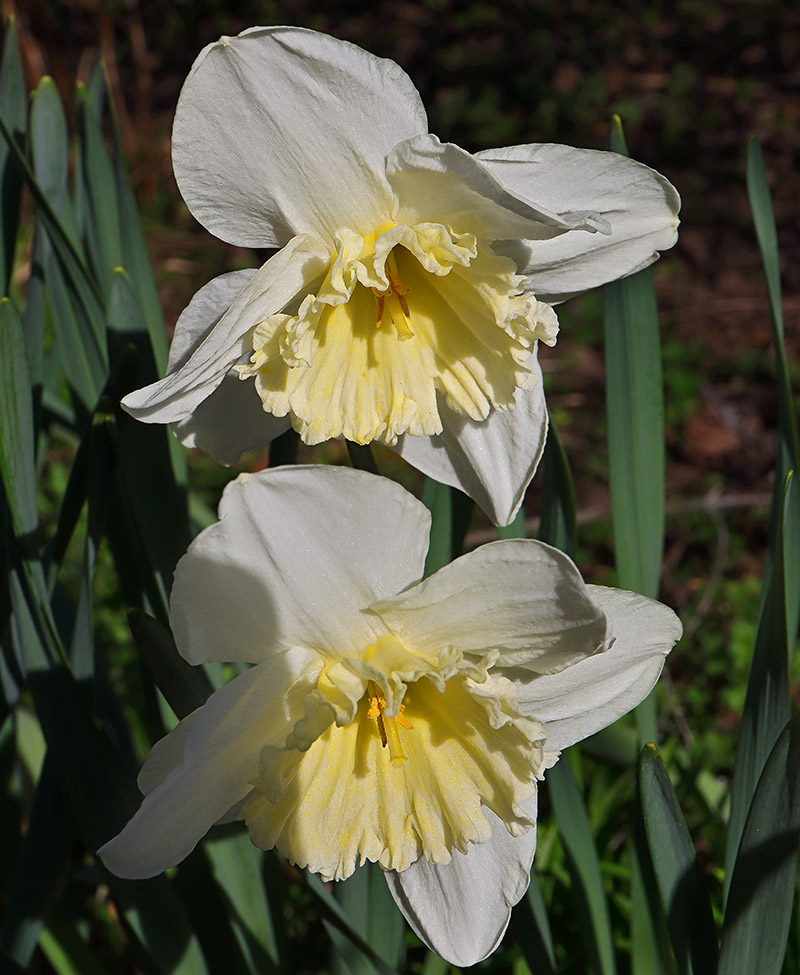
Daffodil 'Ice Follies'

NB: A note for WordPress Reader users – you need to click on the title of the post again to come out of the reader and go to the post itself. This allows you to see the whole of the top photograph. (Otherwise you may see just a tiny section!)

There’s no shortage of flower colour in spring but I think that the bright yellow of the more traditional-looking daffodils is the colour we associate most with the season. I have some of these daffodils here. They’re a reminder of the masses of golden daffodils in my parents’ garden and a cheerful sight to greet warmer days.

At this time of year, there are many yellow flowers around. They range in colour from the palest hints of yellow to a robust gleaming shade that demands attention. I particularly like the subtlety of some of the paler yellows. These can be found in daffodil varieties such as ‘Ice Follies’ (above). This one has a pale yellow trumpet surrounded by white outer petals and I have it planted alongside the delicate, creamy-coloured ‘Thalia’ in an airy combination that shimmers in low-angled spring sunlight.
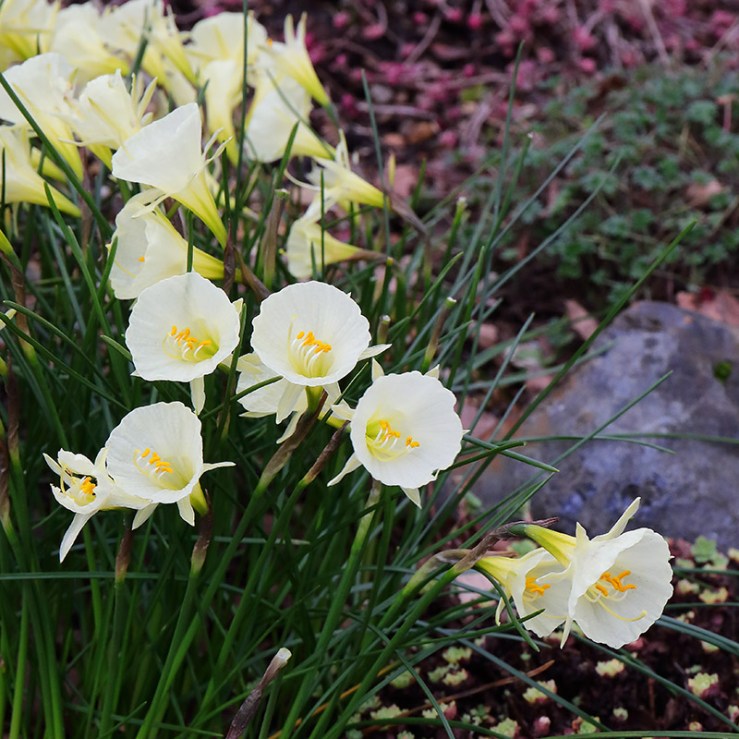
Pale yellow flowers of Narcissus bulbocodium

Narcissus bulbocodium known as the ‘hoop petticoat daffodil’ (above) is a delightful plant and one that I’d like to grow. The flowers are only six inches high, so I might be best to plant it in a pot rather than the ground, so that it isn’t overrun by its neighbours.
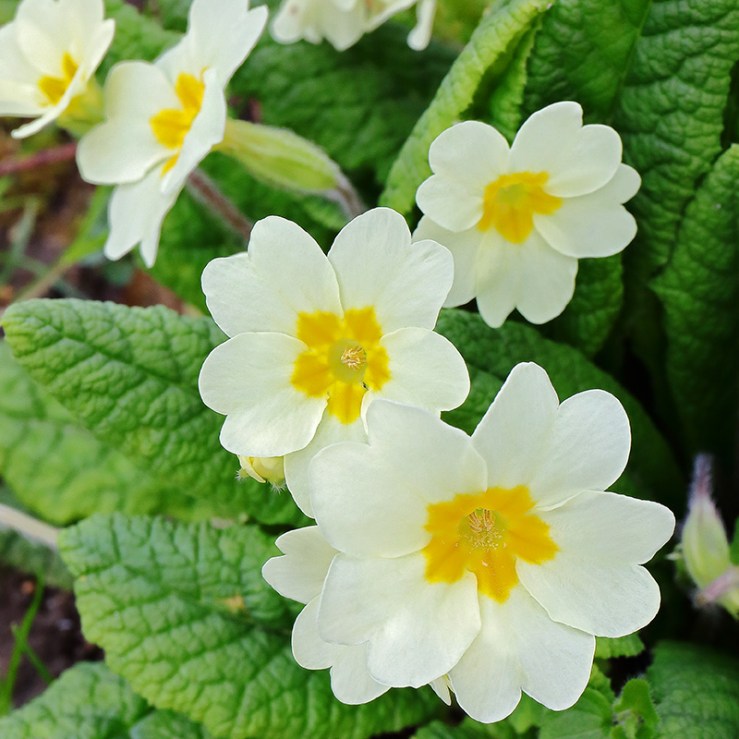
Flowers of Primula vulgaris (wild primrose)

A similar very pale yellow is seen in the primrose (Primula vulgaris). This is the wild primrose that that I remember as a common sight along roadside verges in my childhood. (Probably less common now.) I’m sad to see that mine have suffered in the very hot and dry summer of last year (and after losing the shade of a nearby tree), so this year the plants have fewer flowers. Clearly I need to take care to give them more water during periods of drought.
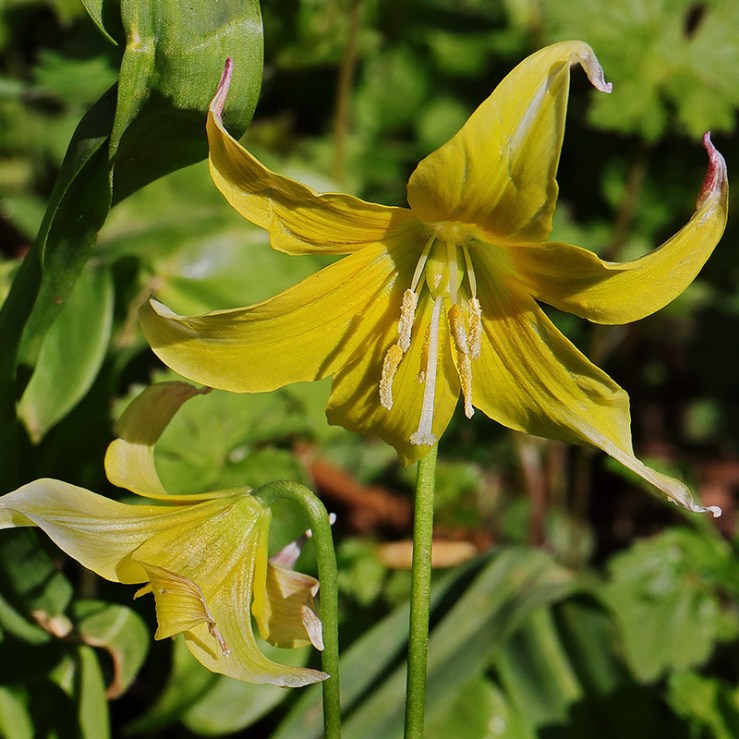
The dog’s tooth violet (Erythronium ‘Pagoda’) that you see above is one of the darker yellows in my garden. I enjoy the sight of the curving petals and the slightly Oriental-looking glamour of these little beauties. So far they have managed to survive in an area that probably gets more sun than they like. When I plant more, I’ll make sure to put them in a shadier spot.
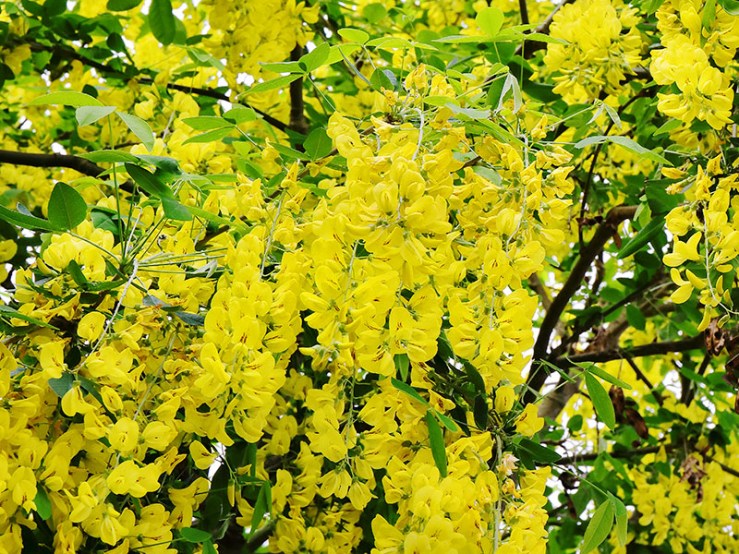
Laburnum tree in blossom

Later in the spring, the neighbours’ laburnum tree will create a spectacular display right by our driveway, so we will have some fabulous ‘borrowed’ colour in May. Before then, there should be some very bright yellow from our ‘Golden Apeldoorn’ tulips. These and some red Darwin hybrid tulips were already in the garden when we came, and have flowered reliably in all the years since. They’re a glorious sight when they open up wide on a sunny day…which seems like a good reason to plant some more.
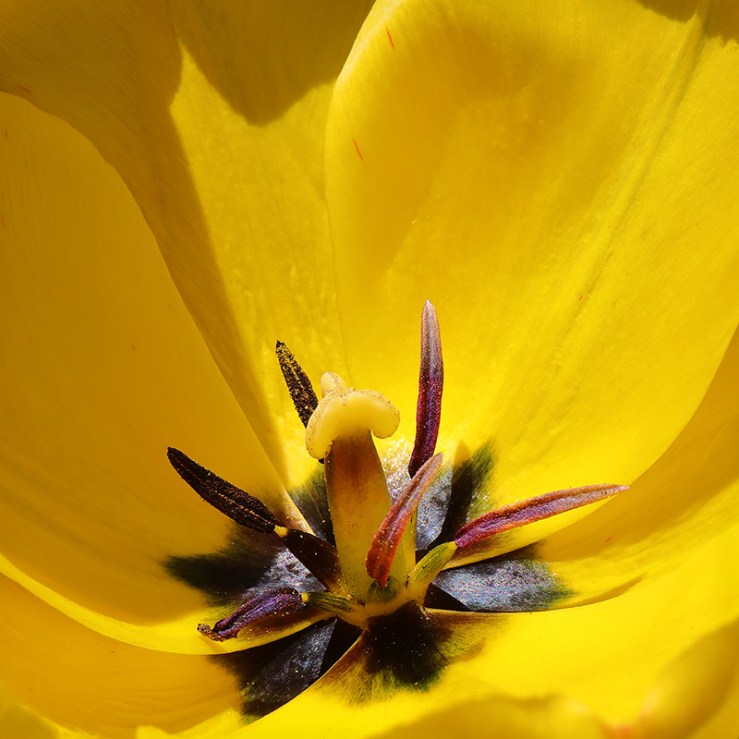
yellow tulip close-up

Shadow Play

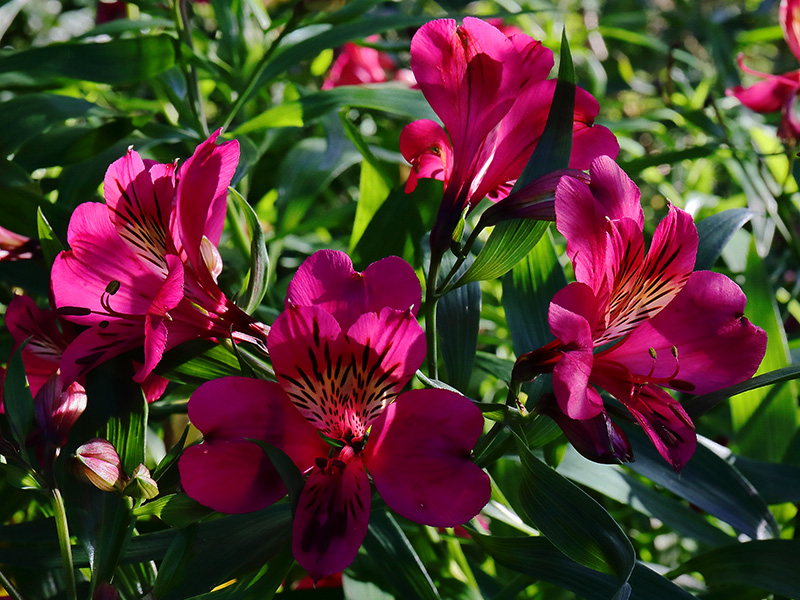
Alstroemeria flowers

NB: A note for WordPress Reader users – you need to click on the title of the post again to come out of the reader and go to the post itself. This allows you to see the whole of the top photograph. (Otherwise you may see just a tiny section!)

When I photograph a garden that I’m visiting, I obviously have little control over the light. On a sunny day, the contrast between the highlights and the shadows can be huge. Sometimes I can find a position where the shaded areas in the image won’t matter. Occasionally, for a close-up of a plant, I may use a small folding reflector, or a piece of white card or paper, to reflect more light into the shadows. (I don’t carry a flash because I try to carry as little weight as possible, apart from the camera.)

The alstroemerias in the photograph above were growing by trees that shaded them at times, including the time I was there. Different visits would possibly give the opportunity to photograph them without the shadows, but I like the rather ‘jungly’ feel that they give. (I think it suits the look of the flowers.) Those shadows also tell the viewer a little bit about the environs of the plant.

Henstead Exotic Garden

There was a lot more shade to deal with in my attempts to photograph Henstead Exotic Garden. The massive amount of foliage of all the palms, bamboos, tree ferns and other unusual trees and shrubs made it dark below. That meant it was difficult to get good results when photographing some of the plants at ground level. Instead, it was much easier to turn the camera upwards to capture the pattern of light and shade through the leaves.

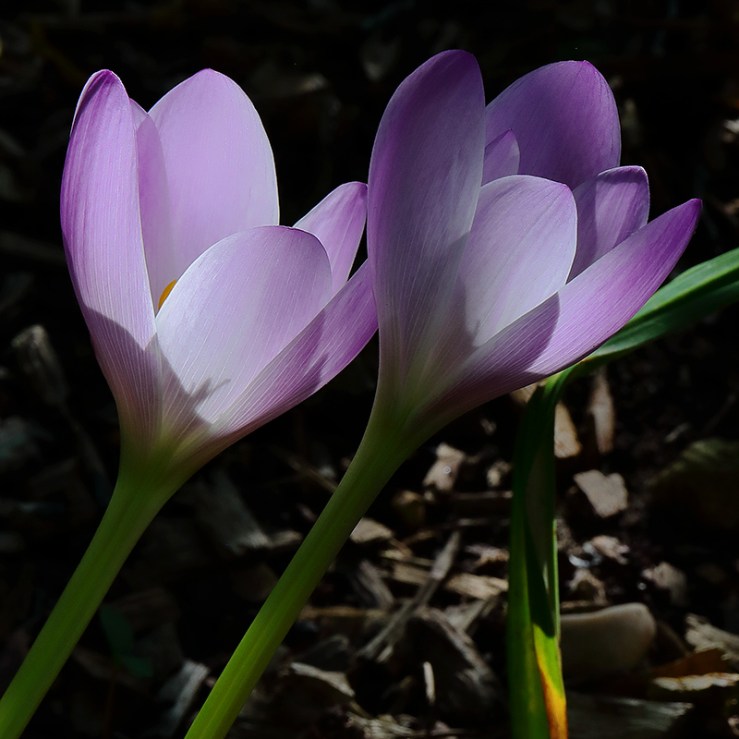
autumn crocuses (Colchicum)

Another patch of deep shade (photo above) made photographing these autumn crocuses come down to luck. Like the alstroemerias, a visit at a different time of day could have moved the shadows away from them. As it was, fortune smiled and there was just enough light to catch this shadowy pair against a dark background. (With a photograph in these conditions, I often find that I have to adjust the highlights downwards when making the RAW conversion. The range of contrast can be too much for the camera to capture otherwise.)

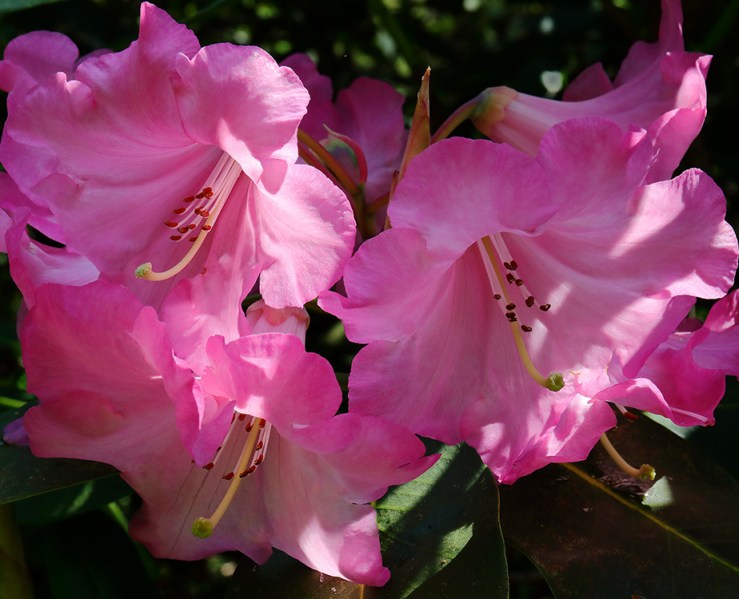
Pink rhododendron flowers

I had similar conditions to deal with when photographing the rhododendron above. It’s a shrub that is happy growing in the shade of taller trees, often where there will be bright sunlight falling through deep shadow…again a time when I have to rescue the highlights during RAW processing. (So much easier than during my days of using slide film!)

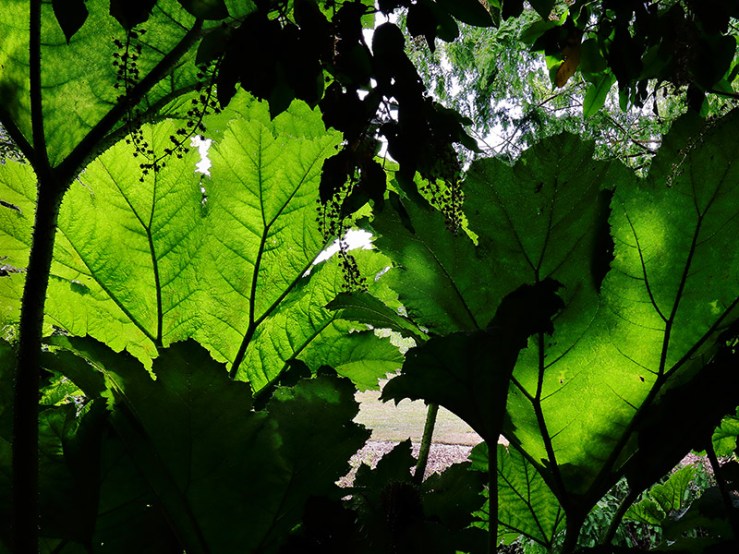
The bright green of the gunnera (below) attracted my attention, with the dark veins blocking the light that was coming through the huge leaves. For this image, I wanted the shadows to be dark so that they would contrast with the well-lit areas of the leaves. I’d like to come back to this spot on another sunny day and experiment a bit further…playing with shadows can be fun!

light and shadows on gunnera leaves

Tiny but Tough: Cyclamen coum

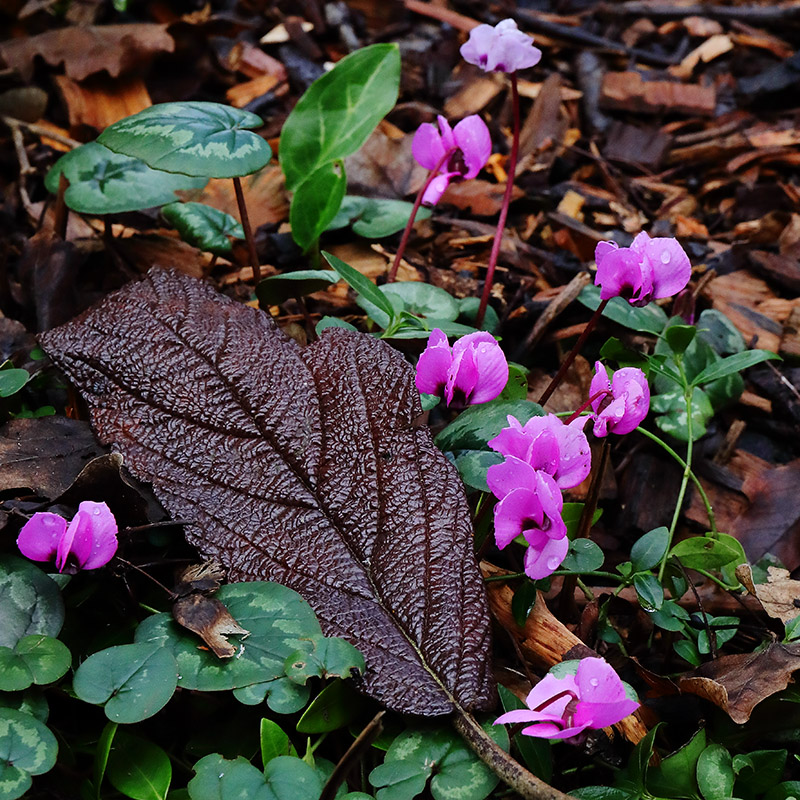
Cyclamen coum

NB: A note for WordPress Reader users – you need to click on the title of the post again to come out of the reader and go to the post itself. This allows you to see the whole of the top photograph. (Otherwise you may see just a tiny section!)

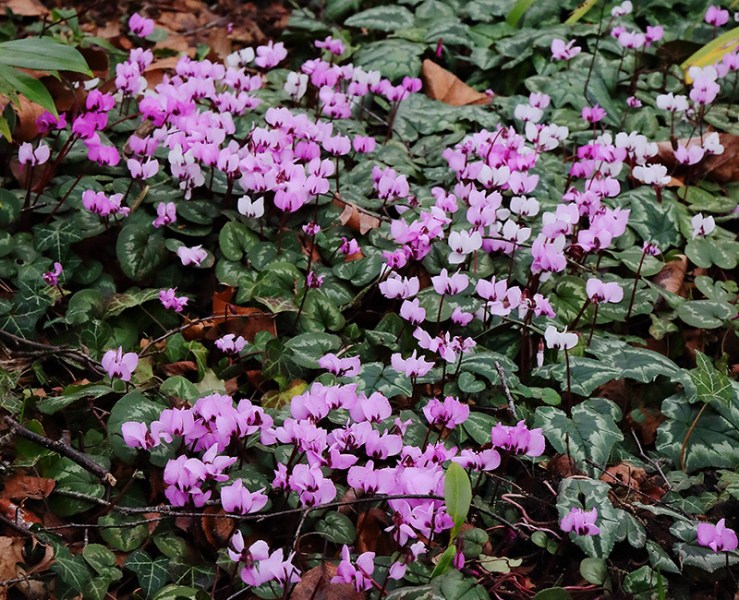
Last week I mentioned that hellebores flower through winter and early spring. Another flower that appears during the same period is Cyclamen coum, which produces its pink or white flowers from December to March. These tiny, delicate-looking flowers with their upswept petals bring a touch of colour to the greyest months.

Although the flowers may appear fragile, Cyclamen coum is thoroughly hardy, coping with temperatures down to minus 10°C. It likes a well-drained soil with plenty of humus and a little shelter. The leaves die back later in spring, reappearing in autumn, and it grows well in partial shade. This makes it a good plant for areas around trees and shrubs.

I have the autumn-flowering Cyclamen hederifolium growing here. The flowers are larger and manage to compete with the planting around them. Seeing how much smaller the flowers of C. coum are in comparison, made me feel that they would be somewhat lost in my garden (even more so where I leave the dead remains of the summer’s growth to shelter hibernating insects). Now though, I see that they can make quite an impact, especially where they manage to spread and create a mass of bright colour. There may be some Cyclamen coum corms on my shopping list for autumn!

A mass of tiny pink cyclamen flowers

Winter to Spring: Hellebores

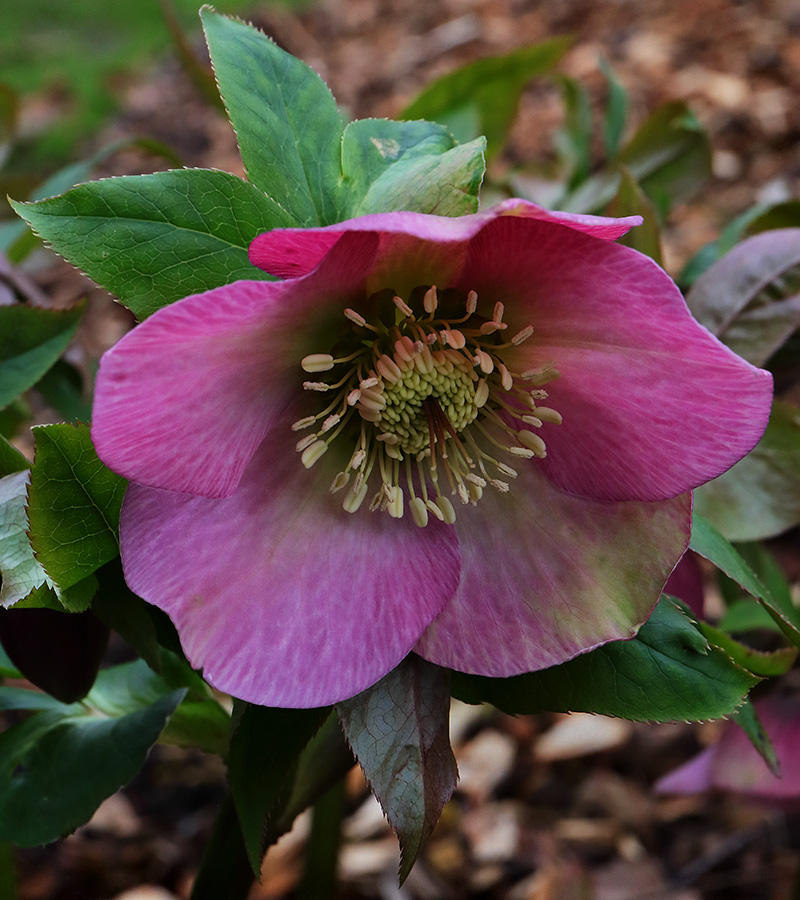
A pink hellebore flower

NB: A note for WordPress Reader users – you need to click on the title of the post again to come out of the reader and go to the post itself. This allows you to see the whole of the top photograph. (Otherwise you may see just a tiny section!)

Flowering from winter days right into mid-spring, hellebores are a lovely companion as I look for the signs of the re-emergence and renewal of life in the garden. For me, hellebores make the time of waiting for spring brighter and happier. Their flowers are with us from the coldest time of the year. They last through that subtle shift away from winter, accompanying us until the warmth and longer daylight of spring has created a rush of fresh growth and bright, new colours.

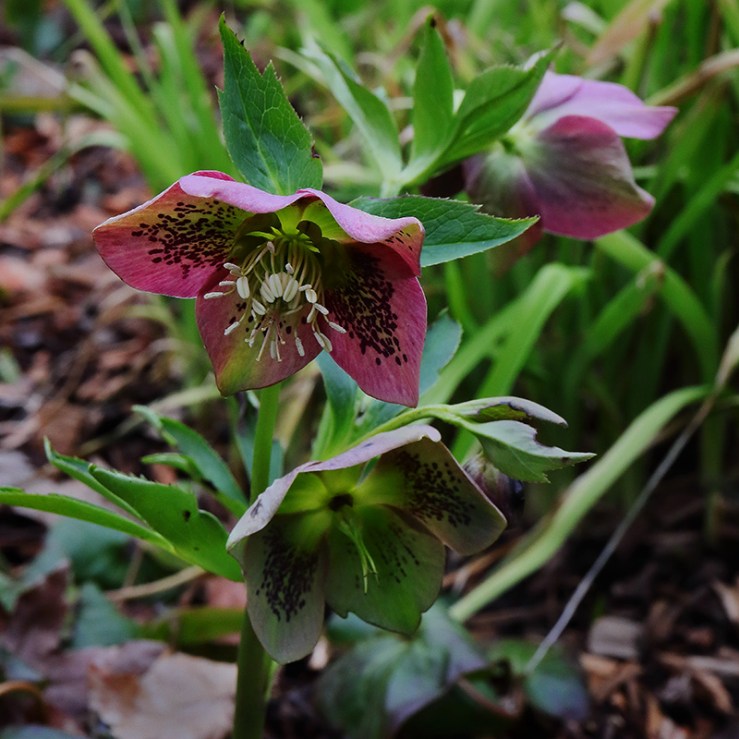
On a recent visit to Fullers Mill Garden, I took the opportunity to photograph some of their many hellebores. To do so, I had to find flowers that were slightly upturned rather than facing downward. Then I had to wait for the breeze to die away…so there was a fair bit of patience and sheer luck involved! (You see the results here.)

In my own garden, I have planted several newer cultivars. These have more upward-facing flowers than the older hellebores. Apart from making them more visible, this makes them much easier to photograph. (And I can’t resist photographing them, so they’re also likely to make an appearance on this blog soon.)

Winter is, thankfully, on its way out. Spring is slowly taking over and we have had a few days of sunshine at last. After such a wet couple of months, the gradual change to warmer weather is more than welcome. I’m glad to have had the company of hellebores throughout this time.

pink speckled hellebore flowers

Winter Begone!

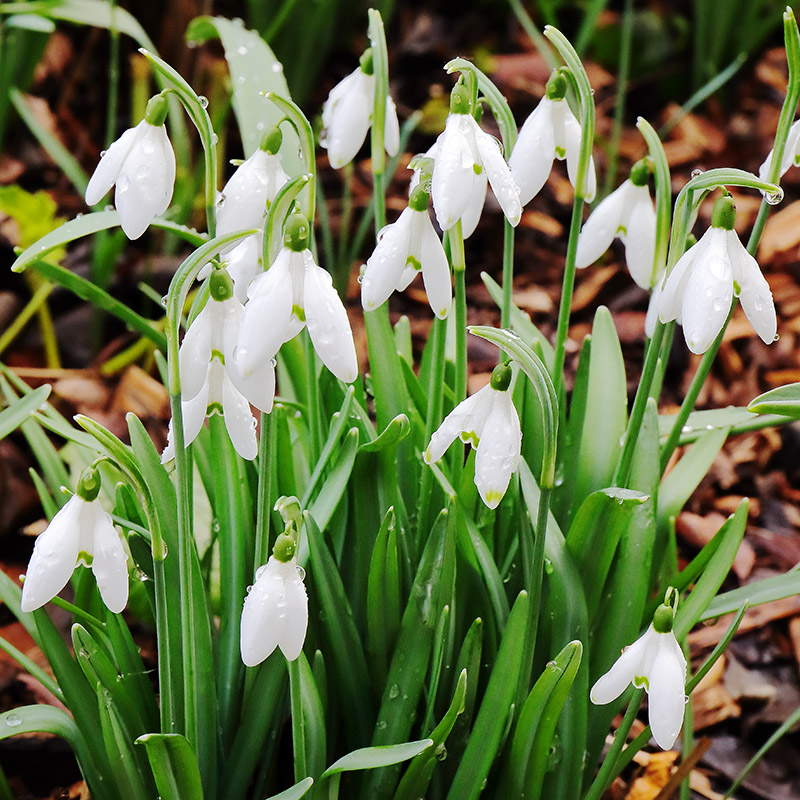
A clump of snowdrops with raindrops on the flowers

NB: A note for WordPress Reader users – you need to click on the title of the post again to come out of the reader and go to the post itself. This allows you to see the whole of the top photograph. (Otherwise you may see just a tiny section!)

I’ve had enough of winter and I’m keen for it to go and for spring to be with us. Although it hasn’t been very cold here, it feels as if it has been raining for months. The thought of a bright, sunny spring day is very appealing at this stage and I’m on the lookout for signs that winter is coming to an end.

Every new flower that appears now feels like a little gleam of hope and the sight of snowdrops (Galanthus) always feels like a promise that winter won’t last much longer. I have a few snowdrops here and there in the garden at the moment. It makes me smile to see them because I know that they will soon be joined by crocuses and the first of the daffodils.

The snowdrops you see here are from my recent visit to Fullers Mill. They have lots of different varieties, many larger than those I have at home, making them easier to photograph. Our visit was a bit on the damp side, so I didn’t get much time for spotting the different cultivars. I’m hoping that a second visit will be on a drier day. I’d rather see snowdrops than raindrops!

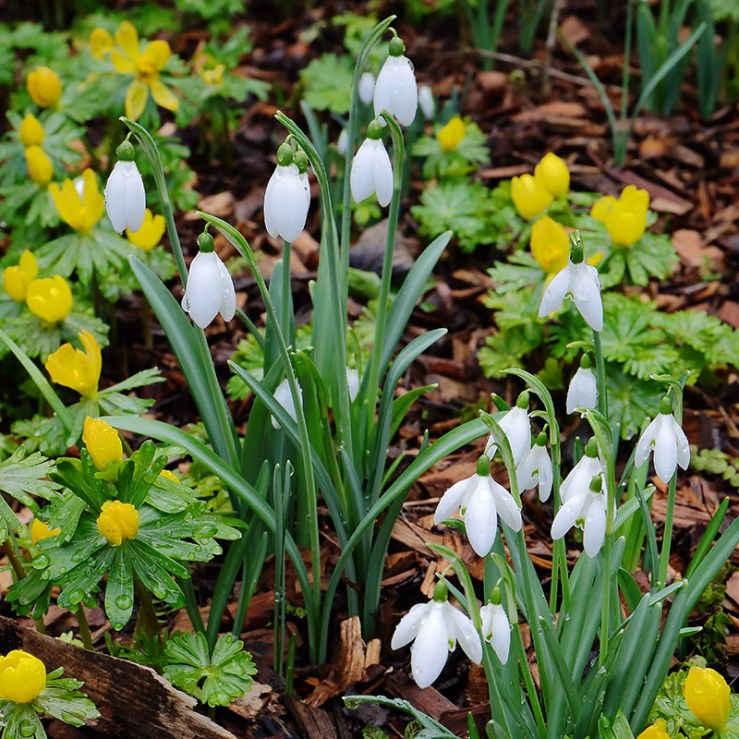
snowdrops and winter aconites
Snowdrops mix well with winter aconites, making an attractive combination.

Early Beauties: Winter Aconites

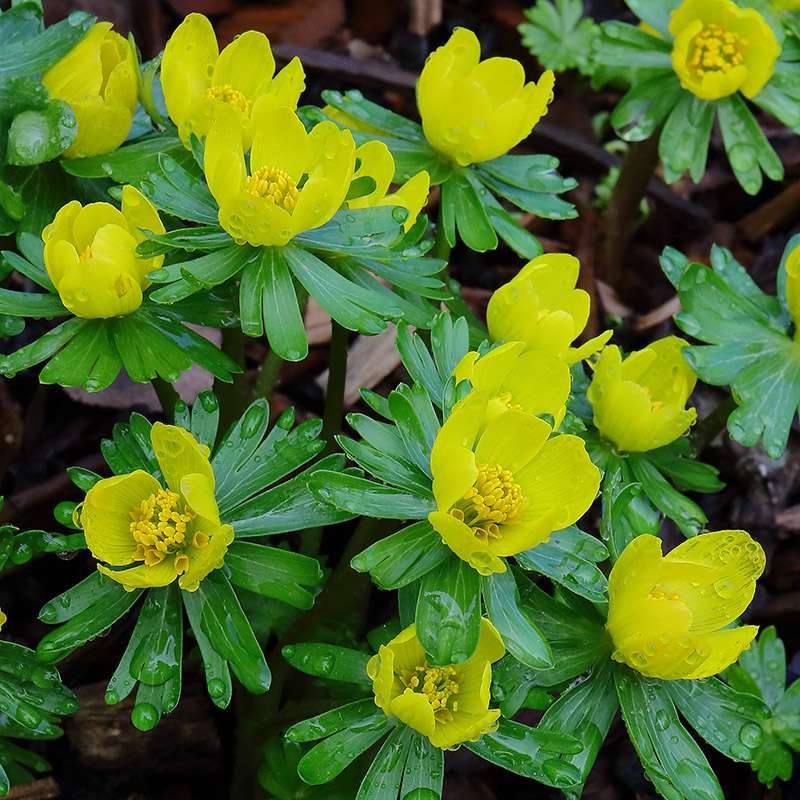
yellow flowers of winter aconite (Eranthis hyemalis)

NB: A note for WordPress Reader users – you need to click on the title of the post again to come out of the reader and go to the post itself. This allows you to see the whole of the top photograph. (Otherwise you may see just a tiny section!)

Spring is still some way off in the UK but a few flowers are gradually emerging. My favourite gardens at Fullers Mill are open during February to let visitors come and see the snowdrops, so of course I have visited to photograph those. But I was delighted to find these sunny midwinter beauties growing there too. These are winter aconites (Eranthis hyemalis), one of the earliest plants to flower in the year.

As you might guess from the appearance of the yellow flowers, the winter aconite is a member of the Ranunculaceae, the buttercup family. If you look closely at the top photograph, you can just see the tubular nectaries around the stamens…a feature shared with the closely-related hellebore. Flowering at the same time as hellebores means the two plants can be used in some very striking combinations. I’d love to try growing winter aconites with either a pure white hellebore or a very dark purple one. (Winter aconites do look lovely with snowdrops, and I’ll be able to share a photo of that combination in my next post.)

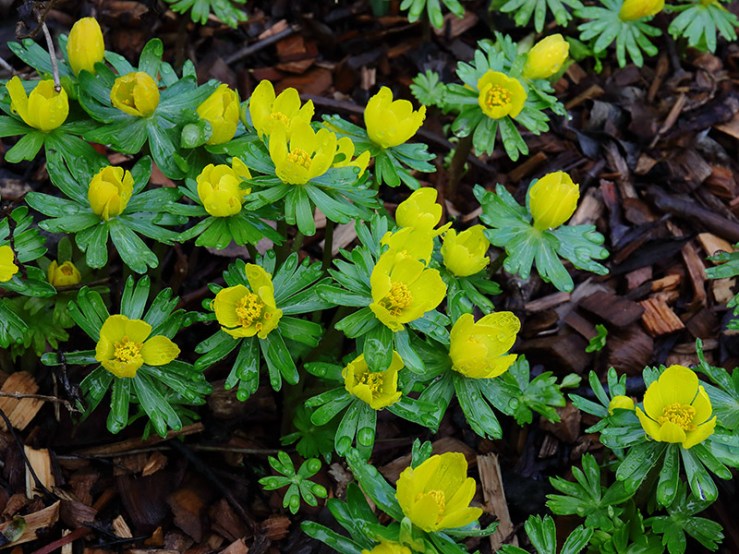
yellow flowers of winter aconite (Eranthis hyemalis)

This plant is versatile. It will grow in woodland and shady conditions or in sunny spots, preferring reasonably moist, fertile soil. If it’s happy with the site, it can spread over large areas, but it doesn’t take over for long as the leaves die back in late spring.

Appearing from late January makes this flower an excellent source of nectar and pollen for the first queen bumblebees to emerge from winter hibernation. It is valuable for honeybees too, and for any other pollinating insects that are active early in the year, making it an asset to a wildlife garden. Clearly, at a time when there are not many plants in flower, the winter aconite is more than just a pretty face!

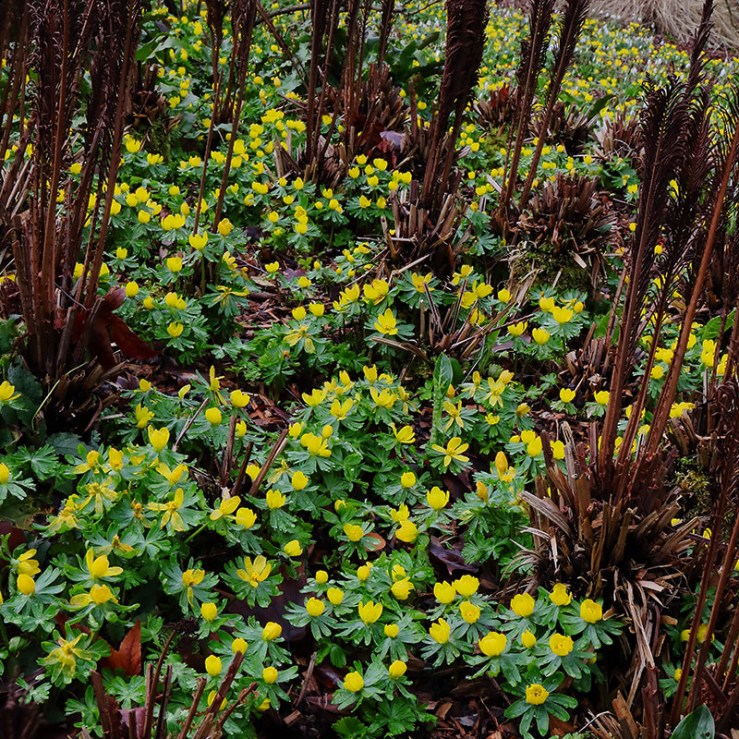
yellow flowers of winter aconite (Eranthis hyemalis)
The yellow flowers of winter aconite (Eranthis hyemalis) can spread over a large area.

(Almost) Silent Sunday: Frosty Rose

a frost-covered rose

NB: A note for WordPress Reader users – you need to click on the title of the post again to come out of the reader and go to the post itself. This allows you to see the whole of the top photograph. (Otherwise you may see just a tiny section!)

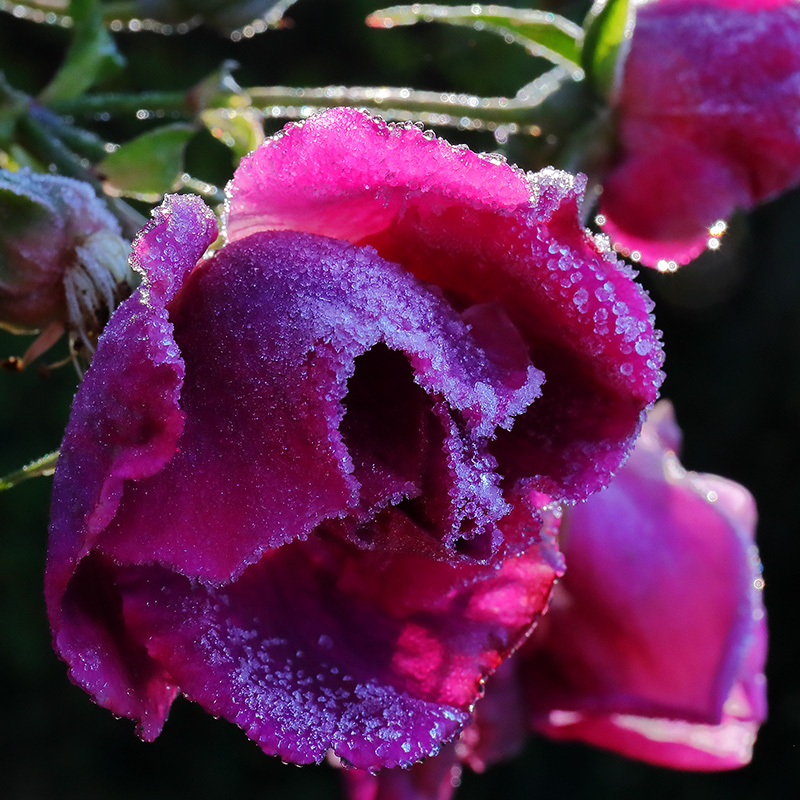
My attention is called away from the garden and photography this week, so I shall just leave this frosty rose for you, with a reminder that Valentine’s Day is coming up on Saturday. (The rose is ‘Rhapsody in Blue’, which is really more of a pinkish purple.)

A Play of Light

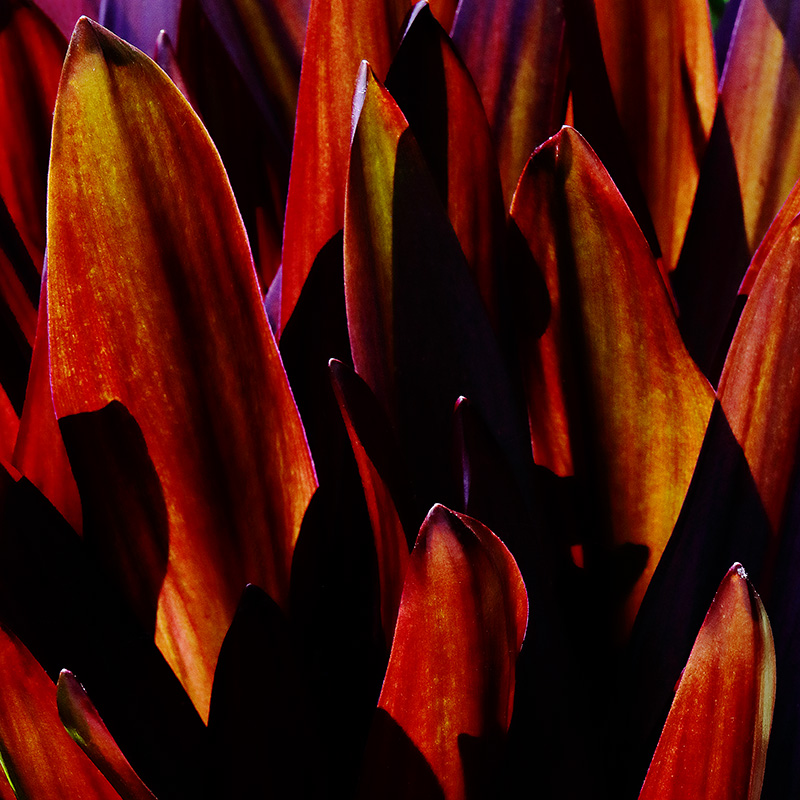
backlit eucomis leaves

NB: A note for WordPress Reader users – you need to click on the title of the post again to come out of the reader and go to the post itself. This allows you to see the whole of the top photograph. (Otherwise you may see just a tiny section!)

There can be no photography without light, but it offers more to experiment with than just that basic need. One of my favourite qualities to play with is translucence. Many flowers and leaves will allow light to pass through them and this can lead to some attractive images.

Despite their apparent density, the purplish-red leaves of the eucomis (pineapple lily) above were able to let light filter through. By luck, I happened to see them at a time when the sun was low-angled but still very strong. The bright light was able to penetrate the leaves, showing a range of reds and yellows that would not have been visible by normal reflected light. I have cropped the image tightly on the leaves to make the colours appear more flame-like.

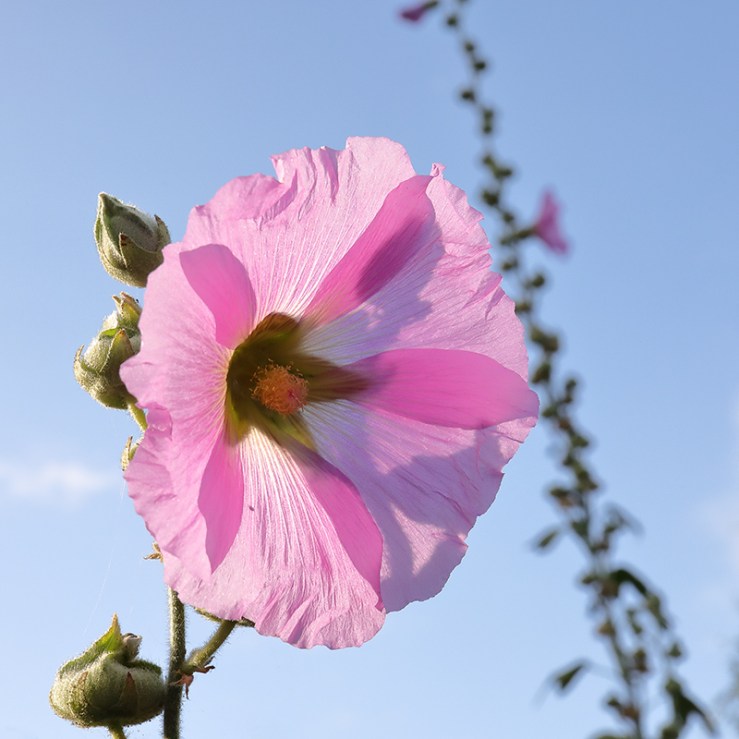
pink hollyhock flower against a blue sky

In my garden, hollyhocks are probably the flowers with the most translucent petals. These petals are especially thin, like fine coloured tissue, and allow light to pass through very easily. The flower above was one of the last on the plant, so by that time the stems were tall and reaching skyward, making it easy to position the camera where the semi-transparency of the flower would emphasise its airy floatiness.

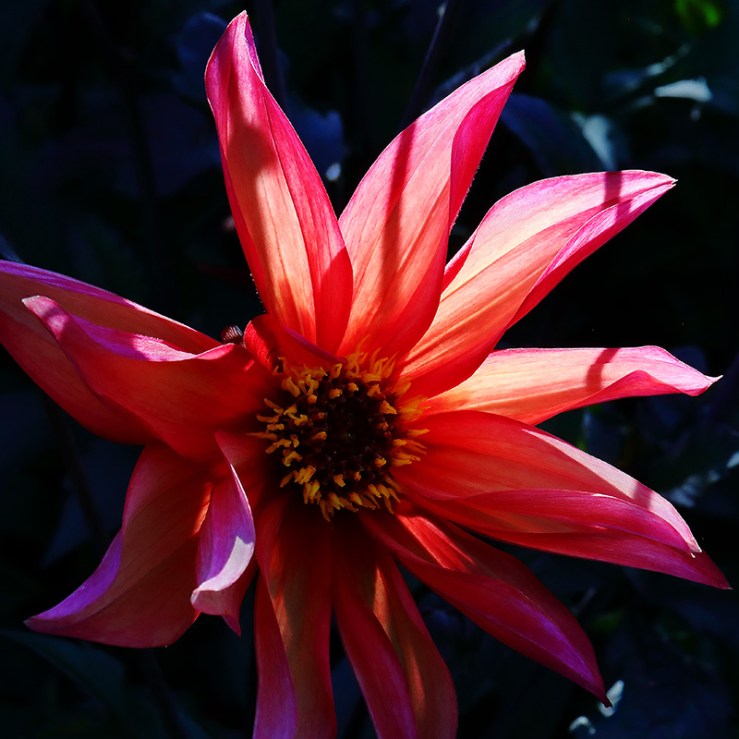
backlit red and orange dahlia flower

The dahlia, by contrast, was in a shady position, with sunlight reaching the top petals of the flower. Because this was not in my own garden, I was limited in where I could stand. It was disappointing not to be able to get the camera into a position where more of the petals would be lit up, so I’ve cropped the photo to give the upper part of the flower more importance.

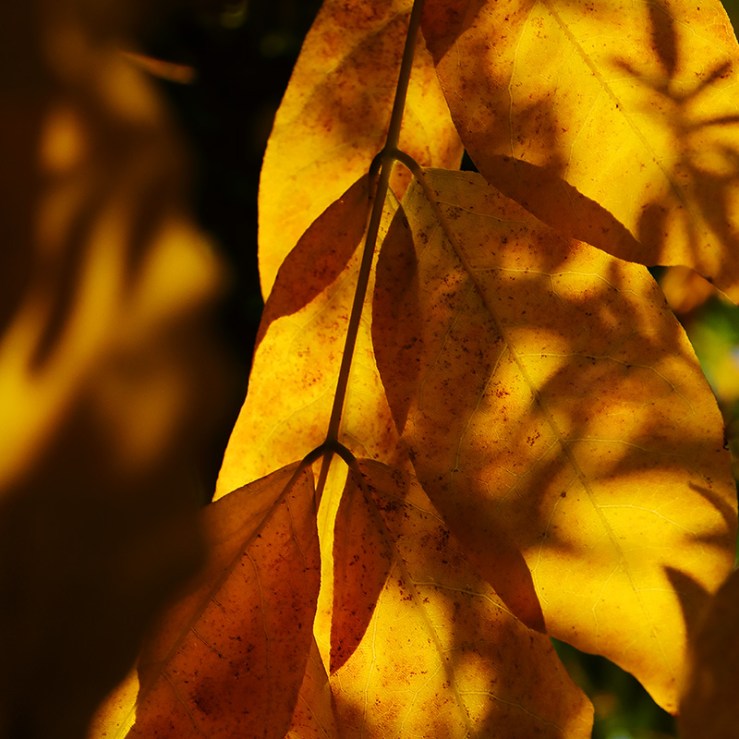
My garden doesn’t have a lot of colourful leaves in autumn, but our wisteria can turn a lovely shade of gold when the leaves are backlit by the afternoon sun. These leaves should really have been pruned off the climber in July, but I’m glad I left them because they were ideally placed to make a vivid image. The shadows that you see are from foliage on the far side of the leaves blocking the light. I reckon they add a lot to the photograph, which would have been much less interesting without them.

Wisteria leaves in autumn.

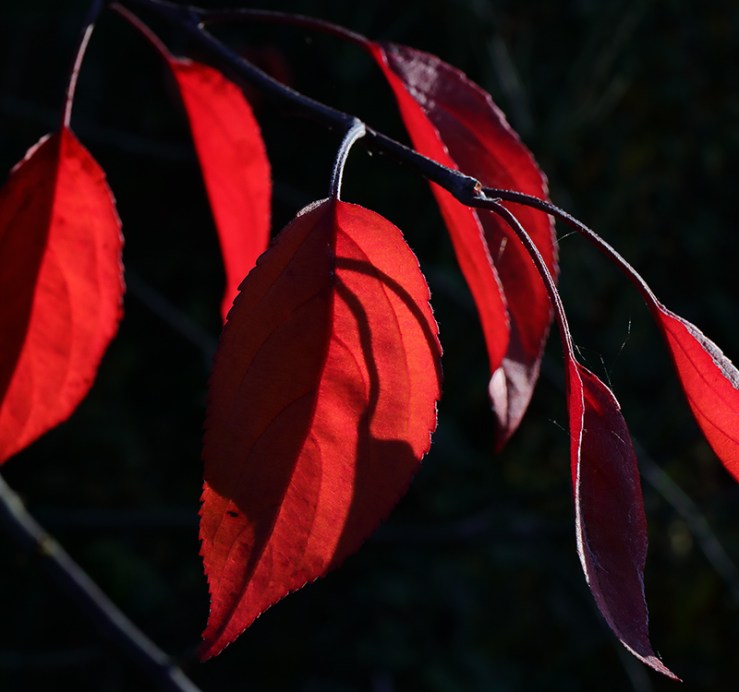
The last image (of autumn crab apple leaves) makes the same use of shadows. Here the leaves and stems on the right-hand side block the backlighting of the central leaf, adding the focal point of dark shadows on the glowing red.

Playing with translucence is a satisfying way to make photographs more vibrant and richly-coloured. It just needs the cooperation of the sun. There’s not much sunshine around at the moment, but spring will bring more opportunities to experiment with backlighting. Roll on spring!

Autumn leaves - crab apple

What Remains

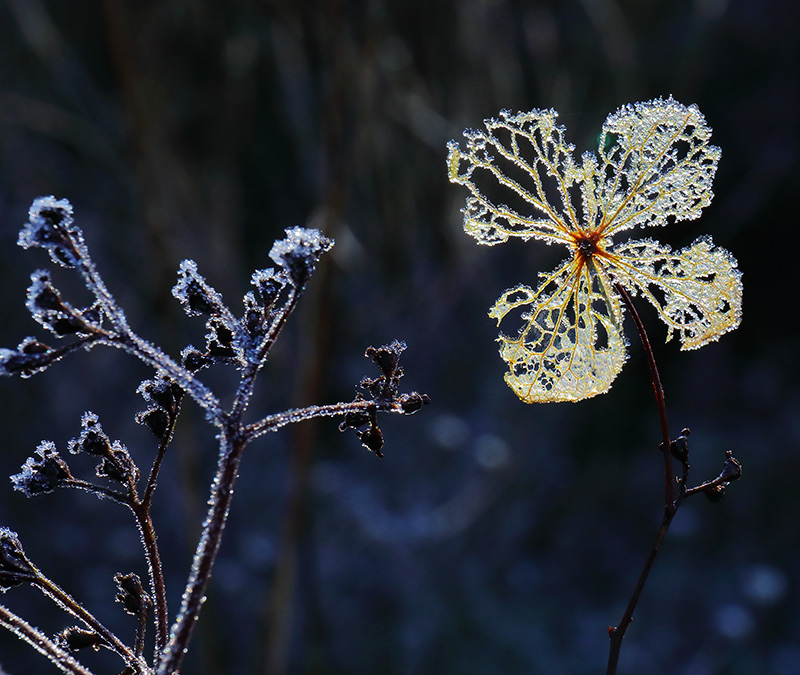
A frosted skeleton of a hydrangea flower

NB: A note for WordPress Reader users – you need to click on the title of the post again to come out of the reader and go to the post itself. This allows you to see the whole of the top photograph. (Otherwise you may see just a tiny section!)

My garden is full of the leftovers of summer and autumn. Clumps of curled and dried-out leaves, seed heads (many now empty of their cargo of seeds) and, here and there, the tattered remnants of flowers, all create an untidy patchwork. But that untidiness is a protection to the life lurking within: insects are hibernating in it and, below, the soil and the creatures that inhabit it are protected from the effect of heavy winter rains.

Everything is going through the long wait for spring. I won’t tidy up the dead growth until all the little lives it shelters are active again. By then there will be new leaves beginning to push up through the soil and the first spring bulbs will be in flower.

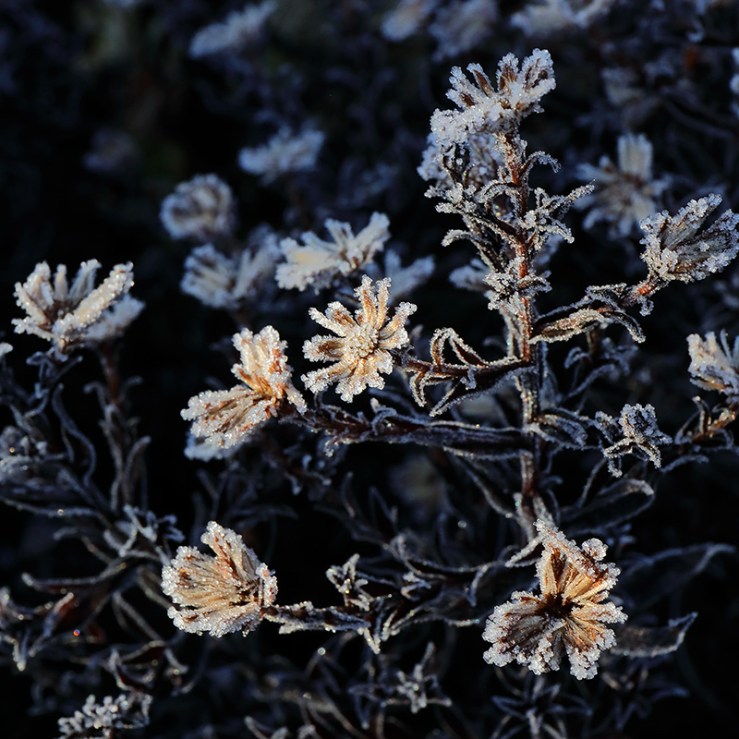
Meanwhile the frost makes patterns on the remains of last year’s plants. Old leaves are finely edged in white and the ghosts of past flowers appear to be encrusted with tiny white seed beads. (Above: a tiny skeletonised flower of a hydrangea has become encased in a coating of icy frost. Below: tiny bead-like frost crystals decorate what’s left of a clump of aster daisies.) The seemingly insignificant oddments of the garden year are enough for the frost to create its ephemeral magic. ❄

The frosted remains of aster flowers

Feeling Wintry

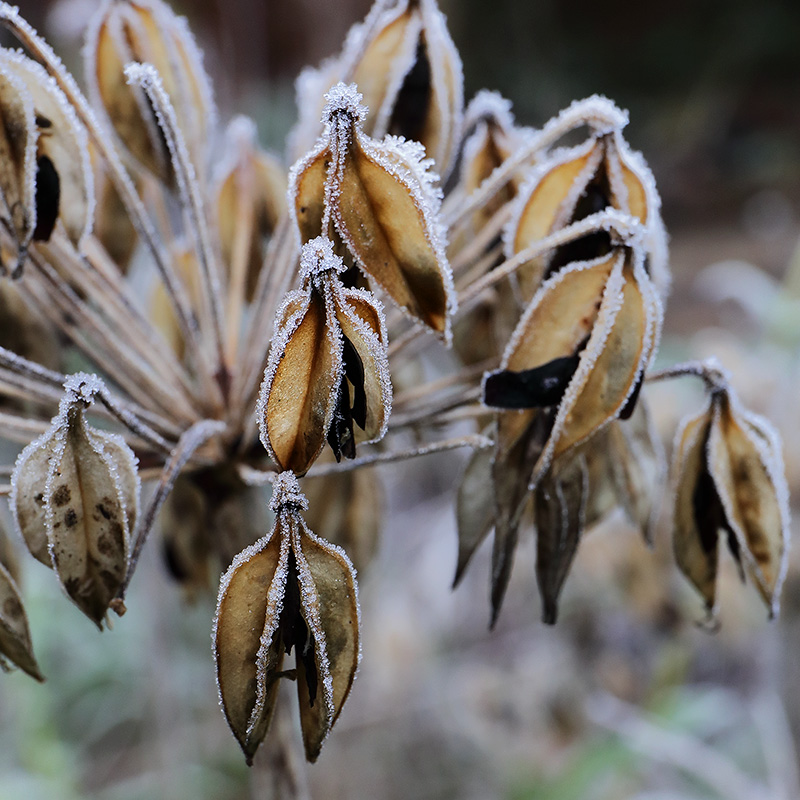
A frost-coated seed head of agapanthus

NB: A note for WordPress Reader users – you need to click on the title of the post again to come out of the reader and go to the post itself. This allows you to see the whole of the top photograph. (Otherwise you may see just a tiny section!)

Winter has asserted itself forcefully over most of the UK. In the last week or so, heavy snow and a damaging storm caused problems over other areas of the country. Here we have been more fortunate and have pretty much escaped both. Our light sprinkling of snow has now melted away, to be replaced by heavy rain and the promise of sleet.

Even the frosts of the previous days had little impact here. Although the ground was completely frozen, the frost itself affected only the grass and low-lying leaves, with none appearing on the upper parts of plants. So there was little of interest to photograph, which is unusual for frosty mornings here. However, that did allow me to stay indoors and keep warm rather than trying to navigate the slippery paths and ground outside. The time wasn’t wasted because I spent it catching up with processing a few older winter photographs.

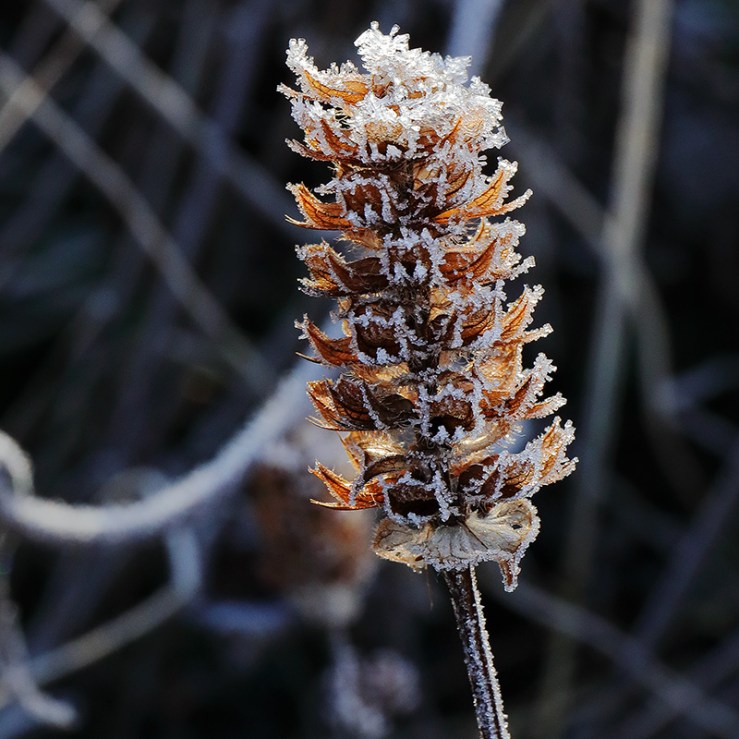
The pictures here show seed heads photographed in winters when we’ve had a bit more frost. I usually leave some seed heads standing, hoping that they will become covered in icy crystals and provide me with something to photograph. (I don’t tidy up much in the autumn anyway, because I know that there will be many ladybirds, and possibly other insects, hibernating in the undergrowth.)

The top photo shows the seed head of a hardy agapanthus which is able to survive outside in a garden border, rather than having to be kept in a pot and overwintered in a greenhouse. It is one of my favourite seed heads to photograph. The seed head below is betony (Betonica officinalis), which I was lucky enough to be able to photograph before it had completely dried out and lost its colour. (We must have had an early frost that year.)❄

A frosted seed head in the garden