Rainy Day Blues 1: Platycodon

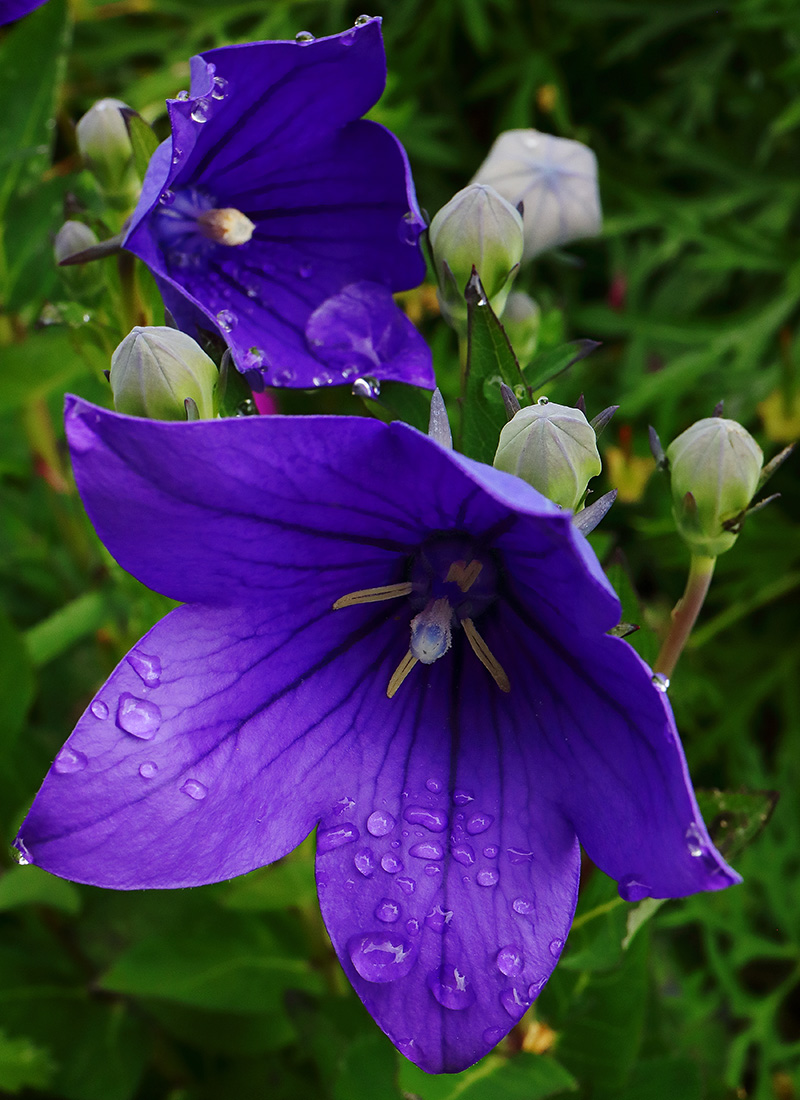
Flowers of Platycodon (balloon flower)

NB: A note for WordPress Reader users – you need to click on the title of the post again to come out of the reader and go to the post itself. This allows you to see the whole of the top photograph. (Otherwise you may see just a tiny section!)

This week’s garden photography has meant nipping out between showers. If you’ve been reading my blog for a little while, you’ll know that the climate here in the east of England tends to be very dry – actually the driest in the country. It doesn’t feel like it at the moment though! There has been plenty of rain and there’s a mad rush of growth in the garden as a result.

One plant that would probably prefer a bit more sunshine is this Platycodon grandiflorus, commonly known as ‘balloon flower’. (So named because the developing flower buds swell into odd little five-pointed ‘balloons’…a temptation for any child to pop them!)

Platycodon is a member of the campanula family and looks very similar to the campanulas growing close to it. Its flowers are bigger, at about three inches across, whereas the campanula flowers reach about two inches. It creates a lovely splash of blue which blends easily with the other colours in the border, especially the nearby yellow daisies of Anthemis tinctoria and a white campanula that grows next to it.

Blue is one of my favourite colours, so it was inevitable that I would buy a platycodon as soon as I saw it. It has settled in well since I planted it last year and there are now lots of flower buds on it. These should keep the blue flowers coming through summer. It is wet and grey here at the moment, but rainy day blues like these make me very happy.
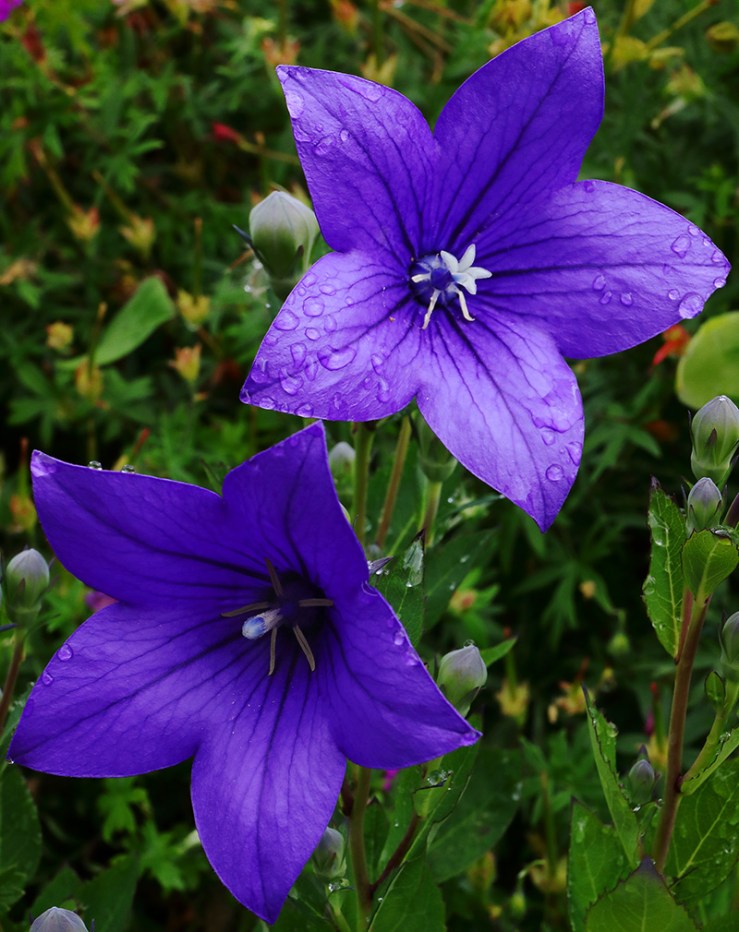
Flowers of Platycodon (balloon flower)

Pretty Pincushions

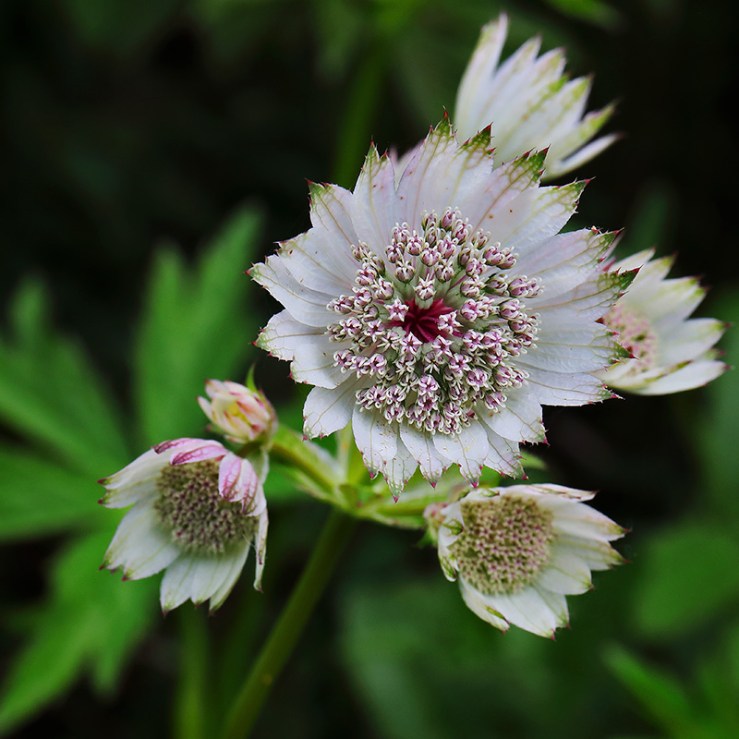
Astrantia flowers with raindrops

NB: A note for WordPress Reader users – you need to click on the title of the post again to come out of the reader and go to the post itself. This allows you to see the whole of the top photograph. (Otherwise you may see just a tiny section!)

The pincushion flowers of astrantia are making an impact in the garden at the moment. The flowers are quite different to anything else around them, so provide interest and variety to the border.

Over the years, I’ve tried growing several different cultivars of Astrantia major, notably the lovely pink ‘Roma’ and the darker red ‘Rubra’. Neither of those lasted very long, probably due to drought. The white cultivars in the garden now are doing better. That’s because I take more care to water them when the weather is very dry. (Not sure what they are. One was supposed to be ‘Shaggy’, with the longer bracts, but doesn’t look any different to the other plants. They probably all are simply the original species of Astrantia major, rather than one of the cultivars.)

I would like to try again with some of the coloured cultivars of astrantia, but will look for plants that are in flower. When grown from seed there can be variability in the plants, and those grown from the seed of cultivars or hybrids are unlikely to come true to the parent plant. That might mean the possibility of an interesting seedling or two. On the other hand, I wonder if they tend to revert to the commoner white.

At present, the astrantias here are looking good. That is likely to be because of all the rain we’ve had recently. It’s pouring down as I’m writing this and has been raining for a few days. I was able to get out and photograph the flowers above in a brief pause between showers – can you spot the raindrops? (The flowers below were photographed on a dry day that now feels like a long time ago!)

Astrantia flowers

The Gleam of Gold

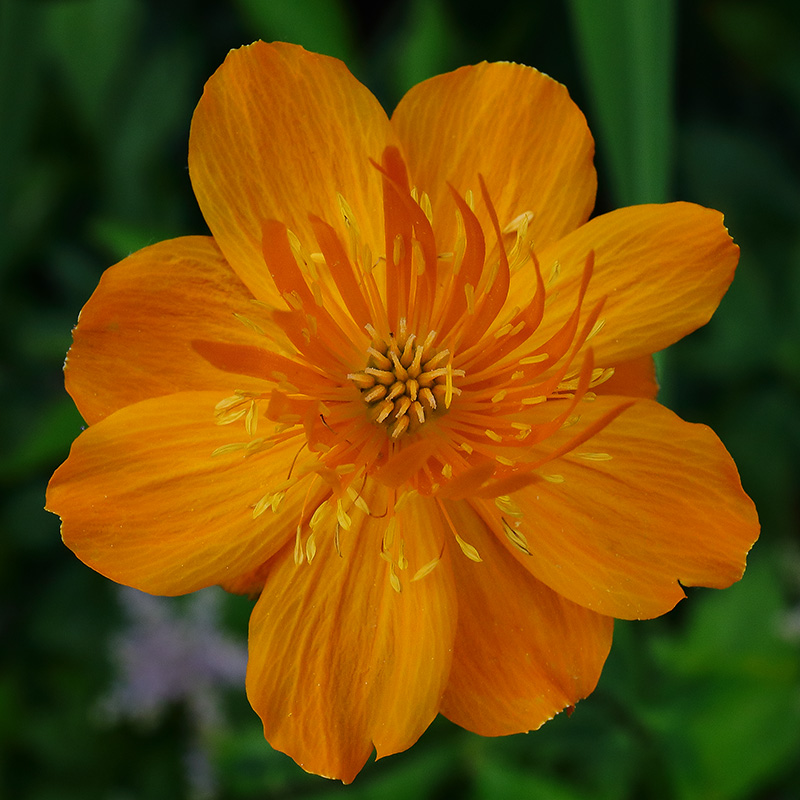
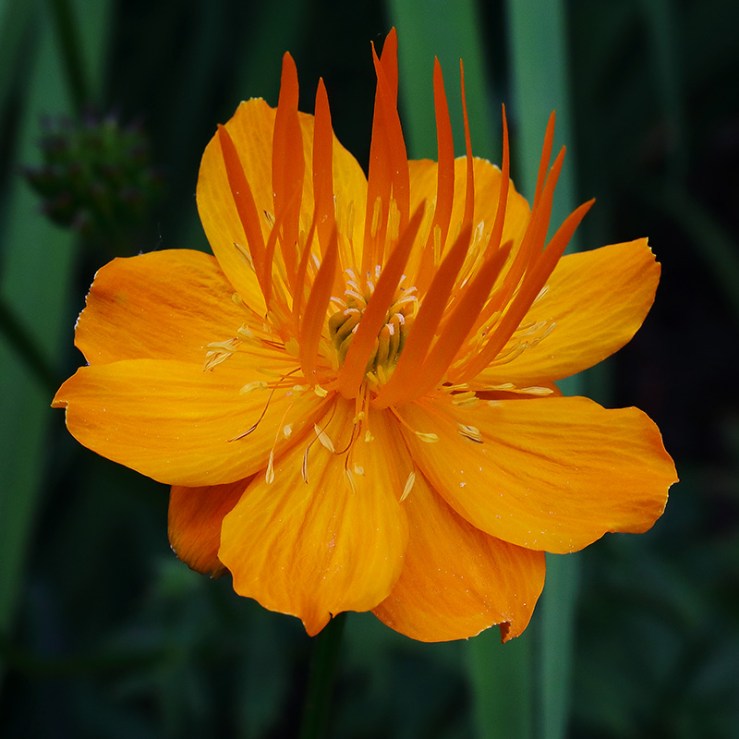
Flower of Trollius chinensis 'Golden Queen'

NB: A note for WordPress Reader users – you need to click on the title of the post again to come out of the reader and go to the post itself. This allows you to see the whole of the top photograph. (Otherwise you may see just a tiny section!)

The bog garden that I created last year has allowed me to grow a few plants that would find it hard to survive here otherwise. It’s a tiny space – about 5 to 6ft across – and now pretty much full. In it I have Siberian irises, astilbes, ragged robin ( Lychnis flos-cuculi) and the plant you see here, Trollius chinensis ‘Golden Queen’.

I’ve tried growing this plant in the ordinary garden soil here and failed; the conditions were too dry. It needs moist soil that doesn’t dry out, so was one of the plants I wanted to try in the bog garden. The bog garden does have to be kept watered, especially in the hot weather we’re having at the moment. It can accidentally dry out…oops! But it’s much easier to look after moisture-loving plants when they’re all in the same space. The water I give them lasts much longer too.

Although their name declares them to be ‘golden’, to me these flowers are more orange. Whatever their description, they are certainly bright and gleam out from their dark background of iris leaves and bronze elder. Their shape is unusual and eye-catching, with a central tuft that the RHS explains to be ‘nectar-bearing petals’, surrounded by a ring of ‘petal-like sepals’. (I’m continually impressed by the variety of flower forms that nature comes up with!)

At the moment, this and the other plants in the new bog garden seem to be doing well. However, that may mean that this small area gets overcrowded…maybe I’ll soon have to find somewhere to make another bog garden!🌿

Flower of Trollius chinensis 'Golden Queen'
Trollius chinensis ‘Golden Queen’ is also known by the common name ‘globeflower’.

Gradually…

Purple verbascum flowers

NB: A note for WordPress Reader users – you need to click on the title of the post again to come out of the reader and go to the post itself. This allows you to see the whole of the top photograph. (Otherwise you may see just a tiny section!)

It has been quite a while since the flowers started to open on the purple mullein in my garden. (This variety is Verbascum phoeniceum ‘Violetta’.) The photographs here were taken before mid-May; now in June we’re still only about half-way up the flower spike. It will be some time before I can photograph open flowers at the top!

An advantage of the way the opening of the individual flowers slowly progresses upwards is that it makes the flower spike last longer. That’s good for the visiting bees and makes for a longer-lasting splash of purple. A win-win, as far as I’m concerned!

As well as lasting for a long time, the numbers of these flowers is gradually increasing over the years too. Each plant isn’t long-lived but they self-seed readily and have scattered seedlings around the parent plants. (I’ll give them a bit of help and sprinkle some seed around the rest of the garden.) Because I have no other verbascums, these have remained the same purple as the original plants and, with time, I’m hoping to have lots of them dotted through the borders. Meanwhile, I’m waiting to be able to photograph the top of the flower spike when it opens…

Purple verbascum flower

Ah, If Only I Had More Space…

White peony flower

NB: A note for WordPress Reader users – you need to click on the title of the post again to come out of the reader and go to the post itself. This allows you to see the whole of the top photograph. (Otherwise you may see just a tiny section!)

Peonies are gloriously at their best this month. An ‘open gardens’ event in a nearby village has reminded me how wonderful they are in full flower. Several of the gardens had these huge, flamboyantly colourful blooms and I couldn’t help wishing for a bit more space for growing my own.

I have to admit to having a red peony that is sulking because the shrub behind it has swamped it over the last couple of years. No flowers from it this year, so I reckon it’s going to have to be moved…where to I have no idea! (But I will find another space for it eventually.)

The flowers here were actually photographed last summer, in one of the large gardens that we visited then. I slightly prefer the gentle grace of these white flowers to the more gaudy colours, although all are beautiful. These fabulous white flowers would be lovely in a calm, relaxing space alongside other white-flowered plants. The idea of a restrained and soothing colour scheme is very appealing for a little retreat from the busy world! 🌼

White peony flowers

Variations 2: The Pinks

Deep pink aquilegias

NB: A note for WordPress Reader users – you need to click on the title of the post again to come out of the reader and go to the post itself. This allows you to see the whole of the top photograph. (Otherwise you may see just a tiny section!)

After last week’s post about blue/purple aquilegias, I decided that the pink ones deserved a little attention too. Like the blues and purples, pinks also vary in colouring and add to the interest and diversity of the garden at this time of year. The darkest flowers (above) are my favourites, but the other aquilegias range from those that are just the palest of pinks, like the one below, to medium pinks and others that are closer to red.

There’s just a light pink blush to this flower’s petals.

Amongst the aquilegia flowers, I was intrigued to see that some of the pale pink flowers had random patches of a darker pink on their petals. Strange! It’s something I’ve seen elsewhere too, but I can’t remember seeing it on other flowers. I wonder if it’s just aquilegias that do this? (Hmm, there must be other flowers that do…) Perhaps it shows how mixed their colour genes are.

Pink aquilegia with random darker markings
This aquilegia doesn’t know which shade of pink it wants to be!

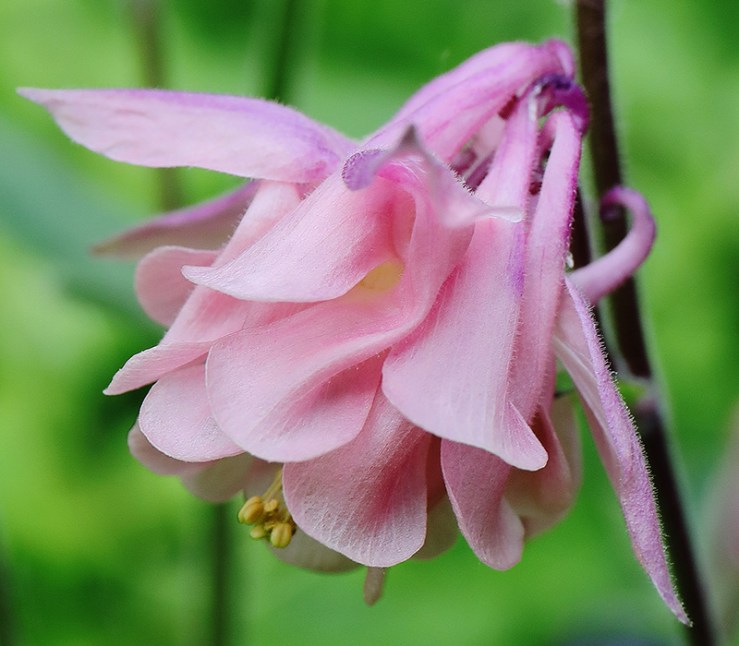
Not only do the colours vary in their flowers, the shape can too. You can see how aquilegias got one of their common names from the shape of the double flower below. It does indeed look like an old-fashioned ‘Granny’s Bonnet’. I hope that there will be plenty of seedlings from this year’s aquilegias – I’d love to have a great mix of colours and flower forms again.

Pale pink aquilegia
This pale pink aquilegia shows how it got the name ‘Granny’s Bonnet’.

Variations (1): Purple & Blue

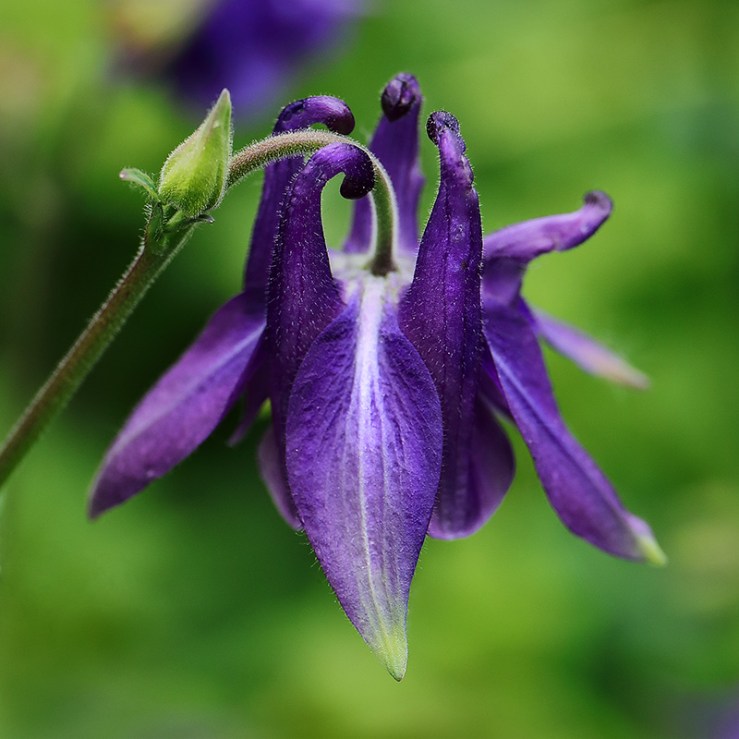
Aquilegia vulgaris flower

NB: A note for WordPress Reader users – you need to click on the title of the post again to come out of the reader and go to the post itself. This allows you to see the whole of the top photograph. (Otherwise you may see just a tiny section!)

Late spring is the time when Aquilegia vulgaris flowers in my garden. It self-seeds in great numbers, so I never know where it’ll pop up next. (Although I do try to give it a helping hand by scattering the seeds where I’d like them to come up.)

Their enthusiasm for self-seeding and the ability to cross-pollinate easily with other aquilegias means that new flower colours appear frequently. In my previous garden, in Scotland, I ended up with quite an array of pinks, blues and purples in many shades, as well as white. Sometimes the flower shape varied too, with double flowers appearing.

Aquilegia vulgaris flower

The conditions here in Suffolk are a bit on the dry side for aquilegias, which prefer a moist soil. However, too much moisture in a wet spring or summer can lead to ‘Aquilegia downy mildew’, which can kill the plants. (RHS info is here.) So I’m a bit worried about all the rain we’re having right now! I lost a number of aquilegias to this disease around five years ago and it has taken a long time to start to build up the collection of colours again. Currently there are several plants in the purple/blue range and a number of pink-flowered plants.

You can see how the colours here vary between the pinkish-purple at the top, through to a darker flower above, which has more deep blue in it. The lighter-coloured flower below (photographed a few years ago) was one of the closest to blue so far. It will be interesting to see whether we ever get a stronger blue. Meanwhile, I need to go out and photograph the pink aquilegias…let’s see what I can find!

Blue Aquilegia vulgaris (columbine)
This is probably the best blue that I’ve seen in the aquilegias here.

Sun-Lover: Bearded Iris

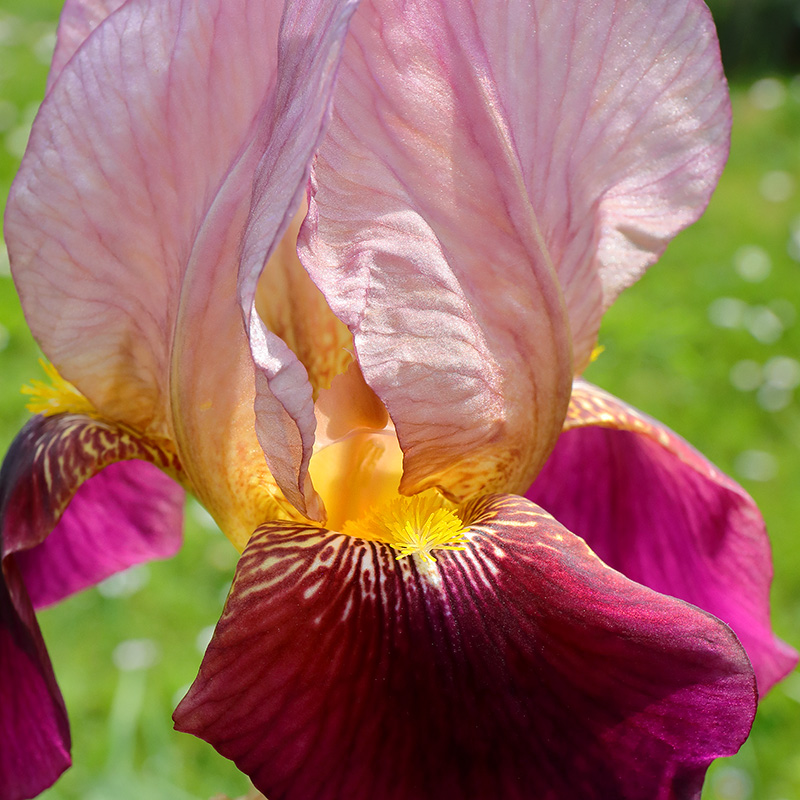
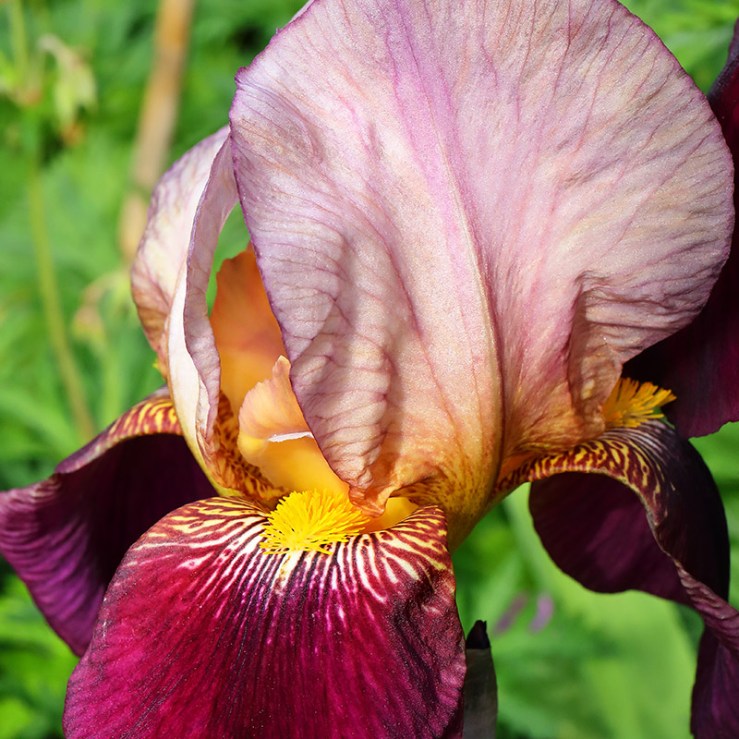
Bearded Iris

NB: A note for WordPress Reader users – you need to click on the title of the post again to come out of the reader and go to the post itself. This allows you to see the whole of the top photograph. (Otherwise you may see just a tiny section!)

This bearded iris (I believe it’s Iris germanica ‘Indian Chief’) burst into flower with a dramatic flourish during some recent hot weather. It’s glory didn’t last long. The short life of the flowers was made even shorter by heavy rain not long after I’d taken these photos. But I enjoyed seeing them while they lasted.

There would be more flowers on this iris if its rhizomes were not being overshadowed by a neighbouring geranium. The rhizomes really need to bake in the sun during summer. Unfortunately, however, I haven’t had time to do anything about the geranium’s sudden growth spurt and encroachment on the iris. It might be easiest to move the iris to a less crowded area and this is almost the right time to do it.

This is an amazingly active time in the garden, with the plants moving fast in growth and flowering. It’s a very busy time for me too, so it would be easy to miss the opportunity to enjoy and photograph those flowers that don’t last long. I’m glad I had the time to appreciate the iris’s presence before its flowers went over. Now I must decide whether to move it or the geranium…

Bearded Iris
Probably Iris germanica ‘Indian Chief’, a popular iris bred in the 1920s.

A Prelude to Summer

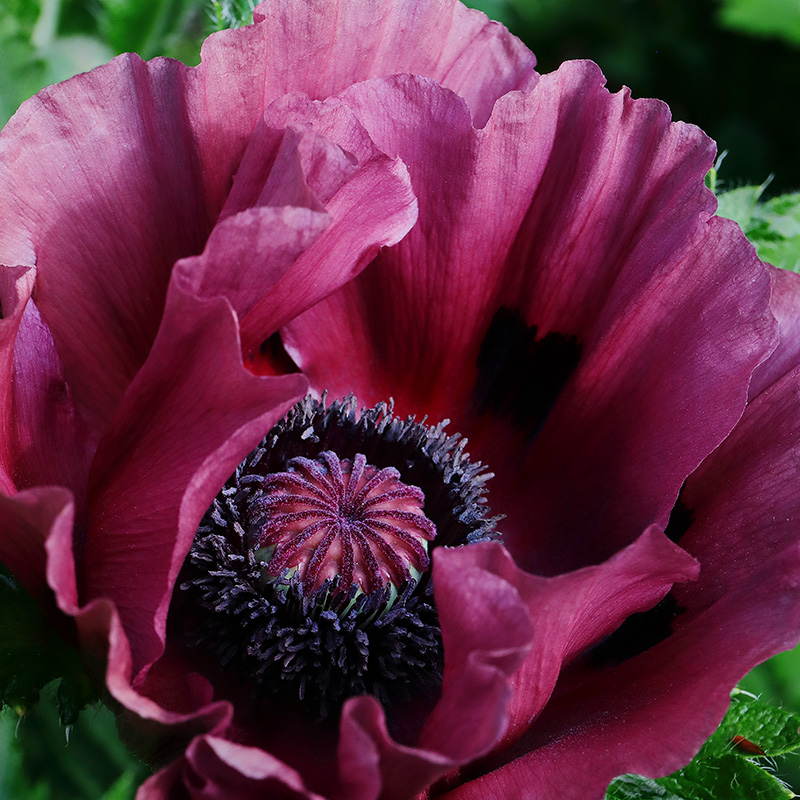
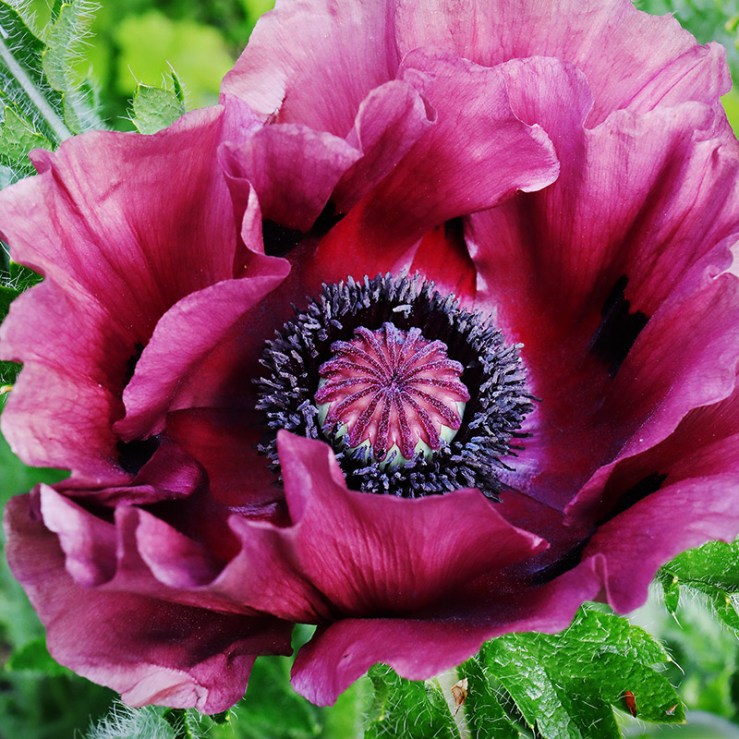
Oriental poppy 'Patty's Plum'

NB: A note for WordPress Reader users – you need to click on the title of the post again to come out of the reader and go to the post itself. This allows you to see the whole of the top photograph. (Otherwise you may see just a tiny section!)

Although it’s still only May, there are summery-looking flowers already open in my garden. Roses, irises, geraniums and verbascum are in flower right now, but it’s the oriental poppy ‘Patty’s Plum’ that makes me feel that the days are about to be much warmer and brighter.

There’s something about the look of these big, gaudy flowers that suggests they should be basking under blue skies and sunshine. Instead they are having to cope with this week’s wet weather. Fortunately I photographed the flowers here before they got a bit flattened by the heavy rain and there are plenty more unopened buds, so more flowers to come.

I wondered if this poppy had come into flower slightly earlier this year and took a look at the dates that I’ve photographed it over the last few years. This year it was May 13th, for the two years before it was around May 23rd and in 2021 it was 28th May. So perhaps the flowering time has crept forward a little.

It certainly feels as if there’s a headlong rush towards summer by all of the plants in the garden. Keeping up with everything that needs to be done is pretty much impossible at this time of year. Even so, it’s important to stop gardening for a little while and take some time to just enjoy the flowers while they’re at their best.

Oriental poppy 'Patty's Plum'
Transient beauty: Papaver orientale ‘Patty’s Plum’

Weird & Wonderful

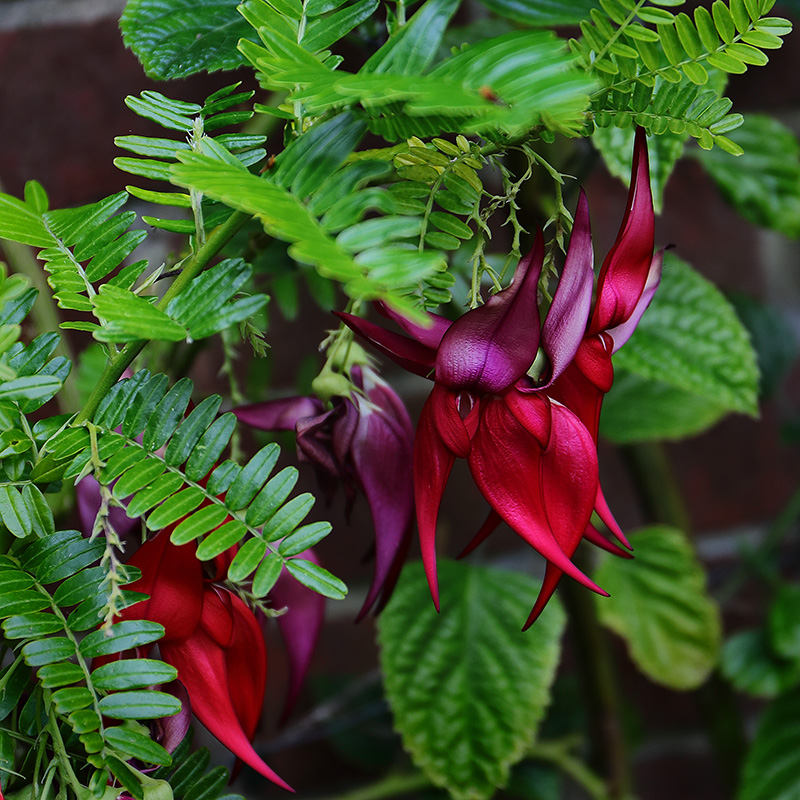
Clianthus flowers

NB: A note for WordPress Reader users – you need to click on the title of the post again to come out of the reader and go to the post itself. This allows you to see the whole of the top photograph. (Otherwise you may see just a tiny section!)

The sight of unfamiliar flowers and plants is one of the perks of visiting other people’s gardens. You never know what you may see. The plant shown here was one of the more surprising encounters I had when I saw it for the first time in a Norfolk garden four years ago. I had absolutely no idea what it was, but it looked strange and exotic to me.

This plant, with its weird flowers, felt like something that belonged in a botanic garden glasshouse, rather than outside in a British garden. It seemed too exotic to be hardy. Much later I found out that it was a Clianthus and will grow in a sunny position in mild areas. (The RHS says it can tolerate down to -5°C and suggest a cool greenhouse or conservatory for colder areas.)

Clianthus has several common names: glory pea, lobster claw and, from its native New Zealand, ‘kaka beak’. (Named after an NZ parrot, this colourful name is my favourite!) Growing against a wall, the plant looked like a climber, but is in fact a scrambling shrub. It’s a member of the pea family and has two species and a number of cultivars. (I don’t know what this one may be, possibly a cultivar, because it seems to develop more pink/purple in the fading flowers than I’ve seen in photographs of the species.)

I’m always pleased to get the opportunity to photograph a plant that I’m unlikely to be able to grow at home. I wonder what this year’s garden visits may allow me to photograph…🌿

Clianthus flowers