
NB: A note for WordPress Reader users – you need to click on the title of the post again to come out of the reader and go to the post itself. This allows you to see the whole of the top photograph. (Otherwise you may see just a tiny section!)
Back in August I posted about taking part in the annual ‘Big Butterfly Count’ which is held by UK charity Butterfly Conservation. The results of the nationwide count have now been published and they confirm that the UK has indeed had a very bad summer for butterflies. So much so, that the charity has labelled it a ‘butterfly emergency’.
This year’s count recorded the lowest number of butterflies in the 14-year history of its existence. A total of just over 935,000 butterflies and day-flying moths for 2024 was a drop of over a third in comparison to the figure of over 1.5 million for 2023. The average number of butterflies seen per count fell from last year’s 12 to seven for each count this year and there was also the highest ever number of counts where no butterflies were seen (9,000).
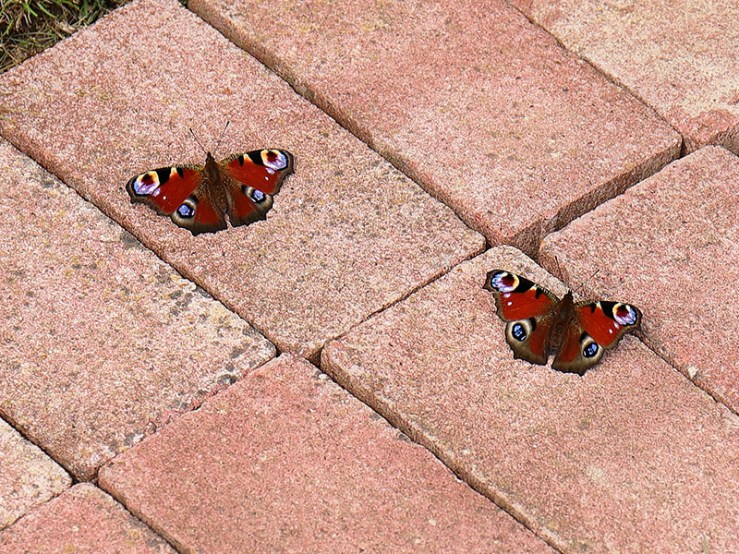
While habitat loss and this year’s wet and initially cool summer must both be at least partly to blame for the dramatic drop in butterfly numbers, Butterfly Conservation is seriously concerned about the effects of pesticides. Head of Science at Butterfly Conservation, Dr Richard Fox, said that neonicotinoid pesticides used on farmland can contaminate the wild plants growing around the edges of fields, killing the butterflies and moths and their caterpillars that feed on them.
In an effort to protect future generations of butterflies (and of course, other insects), Butterfly Conservation is calling for a complete ban on neonicotinoid pesticides in the UK. (They were banned in 2018, but an exception was made for their use on sugar beet.) The request for the ban is being made in an open letter to the Secretary of State and they are asking UK residents to support that request by signing their letter. You can find the letter here. (And you can see the full report on butterfly numbers here.)
The photographs in this post weren’t taken this year, but in 2020 and 2021. This year there were very few butterflies in my garden, so I had very little chance to photograph any. Like many people this year, I noticed that my garden was unusually empty of butterflies, bees, and the other insects that I normally expect to see here. (The small tortoiseshell in my top photo was one of England’s worst-affected species with a drop of 72% from the numbers in last year’s count. Holly blue numbers fell in England by 80% and red admirals by 82%.)
I hope that those who can sign this letter will do so – it’s a small chance to do something that may help preserve all of our insects, not only the beautiful butterflies.

 Ann Mackay: Inspired by Nature