A Plea for Butterflies

Small Tortoiseshell butterfly

NB: A note for WordPress Reader users – you need to click on the title of the post again to come out of the reader and go to the post itself. This allows you to see the whole of the top photograph. (Otherwise you may see just a tiny section!)

Back in August I posted about taking part in the annual ‘Big Butterfly Count’ which is held by UK charity Butterfly Conservation. The results of the nationwide count have now been published and they confirm that the UK has indeed had a very bad summer for butterflies. So much so, that the charity has labelled it a ‘butterfly emergency’.

This year’s count recorded the lowest number of butterflies in the 14-year history of its existence. A total of just over 935,000 butterflies and day-flying moths for 2024 was a drop of over a third in comparison to the figure of over 1.5 million for 2023. The average number of butterflies seen per count fell from last year’s 12 to seven for each count this year and there was also the highest ever number of counts where no butterflies were seen (9,000).
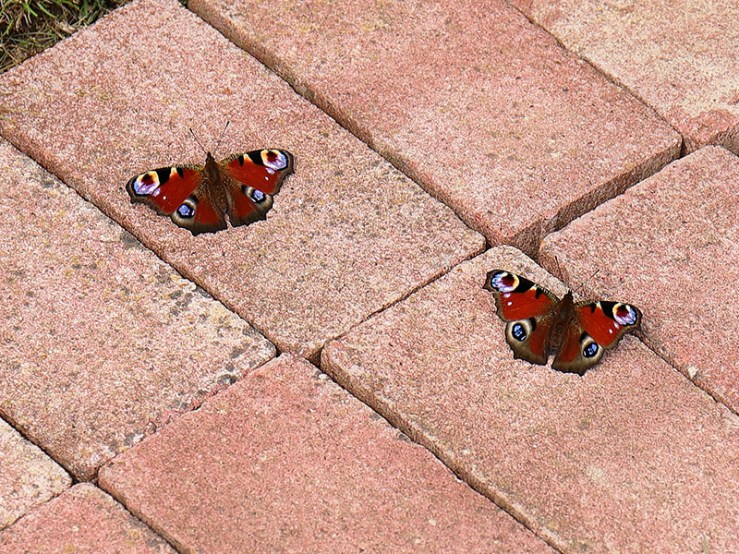
Peacock butterflies counted fell in numbers in England by 66%.

While habitat loss and this year’s wet and initially cool summer must both be at least partly to blame for the dramatic drop in butterfly numbers, Butterfly Conservation is seriously concerned about the effects of pesticides. Head of Science at Butterfly Conservation, Dr Richard Fox, said that neonicotinoid pesticides used on farmland can contaminate the wild plants growing around the edges of fields, killing the butterflies and moths and their caterpillars that feed on them.

In an effort to protect future generations of butterflies (and of course, other insects), Butterfly Conservation is calling for a complete ban on neonicotinoid pesticides in the UK. (They were banned in 2018, but an exception was made for their use on sugar beet.) The request for the ban is being made in an open letter to the Secretary of State and they are asking UK residents to support that request by signing their letter. You can find the letter here. (And you can see the full report on butterfly numbers here.)

The photographs in this post weren’t taken this year, but in 2020 and 2021. This year there were very few butterflies in my garden, so I had very little chance to photograph any. Like many people this year, I noticed that my garden was unusually empty of butterflies, bees, and the other insects that I normally expect to see here. (The small tortoiseshell in my top photo was one of England’s worst-affected species with a drop of 72% from the numbers in last year’s count. Holly blue numbers fell in England by 80% and red admirals by 82%.)

I hope that those who can sign this letter will do so – it’s a small chance to do something that may help preserve all of our insects, not only the beautiful butterflies.

Comma butterfly
A comma butterfly looking a bit the worse for wear – their count fell by 51% in England this year.

Small Signs of Hope

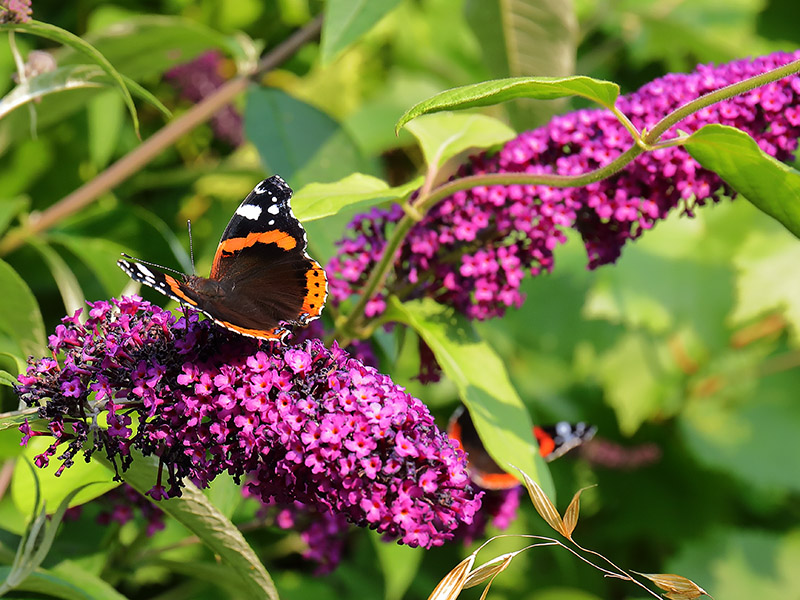
Red admiral butterfly on buddleia

NB: A note for WordPress Reader users – you need to click on the title of the post again to come out of the reader and go to the post itself. This allows you to see the whole of the top photograph. (Otherwise you may see just a tiny section!)

This summer butterflies have been pretty much absent. However, this week there have been several flitting around the garden and feasting on the last of the buddleia flowers. There weren’t many, but they were very welcome and they brought with them the hope that there may be more butterflies next year.

The red admiral shown here was one of a group of five that found the only buddleia that was still flowering well. This particular plant is one that I had intended to remove, but had found it impossible to dig out. (I have a number of more attractively-coloured named varieties in the garden, so I had decided to remove some of the more ‘ordinary’ buddleias. This one is one of the progeny of a massive shrub that was in the garden when we arrived. It seems that its family line is destined to continue!)

The severe and later than usual cutting-back prevented this buddleia from flowering at the same time as the others. That turned out to be an advantage for this group of late butterfly visitors. Next year I’ll cut the buddleias back at slightly different times so that the flowers will be spread over a longer period. Then there should still be something to feed butterflies that arrive later on, rather than all the flowers being over by this time.

The red admirals briefly had a small tortoiseshell butterfly as a companion, but I suspect they chased it away. I spotted it feeding much higher up and too far away for me to be able to photograph it. (But you can see a photo from a previous year in this post.) This was the only small tortoiseshell I’ve seen this year.

Other interesting visitors to the garden this week were a couple of elephant hawk-moths and one of their caterpillars. (Found on a very small potted fuchsia. I brought the pot up to a much larger fuchsia and later noticed that the caterpillar had very obligingly transferred itself to the less vulnerable plant.) This is only the second time that I’ve seen elephant hawk-moths here, so I’m hoping that there will be more in the garden next year. 🦋

Red Admiral butterfly on buddleia
Red admiral butterfly on buddleia

Missing: Butterflies…

Comma butterfly

NB: A note for WordPress Reader users – you need to click on the title of the post again to come out of the reader and go to the post itself. This allows you to see the whole of the top photograph. (Otherwise you may see just a tiny section!)

‘Where are the butterflies this year?’ I’ve heard that question from many folk here in the UK this year. The rain and lack of warmth earlier in the summer have been blamed, especially after the previous very wet and windy weather in the spring.

It has become warmer and more summery recently but there still aren’t many butterflies around. At this time of year I take part in the ‘Big Butterfly Count’, run by the UK charity, Butterfly Conservation. Butterfly Conservation has reported that the numbers of butterflies recorded this year are the lowest ever in the 14 years of holding it. Although the poor weather has made it hard for butterflies to fly and to mate this year, their numbers have already been in decline in recent decades. Much of this is attributed to the loss of habitats, pesticides, and now a changing climate.

My photographs here were not taken this summer, but in previous years. There simply haven’t been enough times when I’ve seen butterflies in the garden to be able to photograph them. For my count here, it was noticeable that there was a huge drop in the numbers of those that are usually the commonest. There was only one peacock butterfly and no red admirals at all. (I have in the past seen a dozen peacock butterflies sunning themselves on our brick path and around the same number of red admirals feasting on a buddleia.)

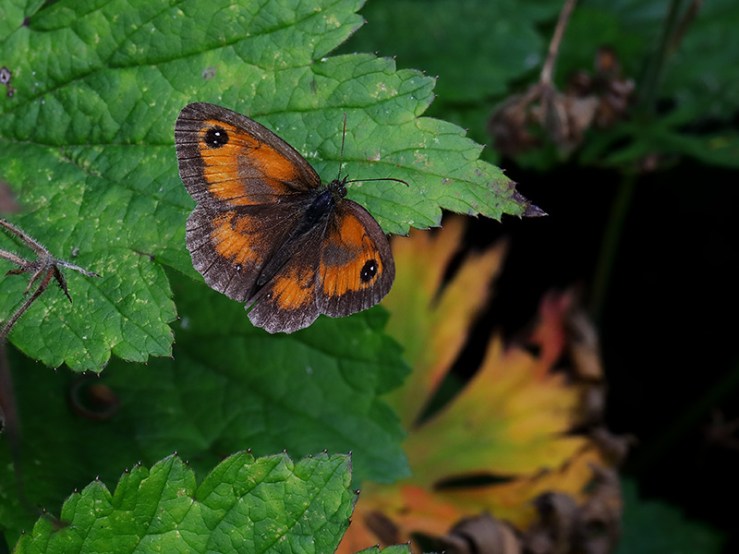
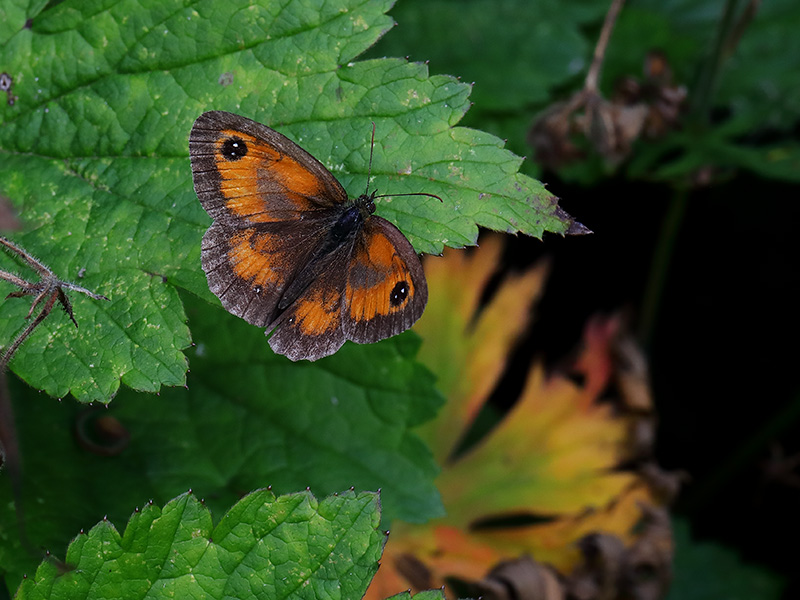
For one particular butterfly – the gatekeeper (below) – there was actually a slight rise in numbers. This year I saw five of them during the 15-minute count. Last year I think it was three. (We are probably seeing more of these because we now have both blackberries and thyme in the garden for the adults to feed on.) Other butterflies – large white, small white, and comma (top photo) were sighted but, again, in fewer numbers. There was a single brimstone, which I’ve only seen once during a count, but no small tortoiseshell this year.

It’s not just a poor year for butterflies here, but for bees too. Normally there would be lots in the garden, but now there are very few. (Spring was good at one point, and I noticed that the ajuga was absolutely buzzing while it was in flower.) I hope that the insect numbers will be able to recover in warmer years, but I feel that I may need to do more to provide both habitat and food to encourage these visitors. In particular, I’d like to grow food plants that will be available over a longer period, especially for any late-arriving butterflies and bees. 🦋

Gatekeeper butterfly
Gatekeeper butterfly on an anemone leaf

Out for the Big Butterfly Count

Peacock and Red Admiral butterflies

Recently I wrote that there had been few butterflies in the garden this summer. And I had seen no Peacock butterflies. Happily, some have now appeared, as you can see from the top picture (where it shares the buddleia flower with a Red Admiral.)

There aren’t as many butterflies as in last year’s really warm summer, but it’s great to see some. A little bit of sunshine and the scent of the buddleias has brought them into the garden to feast and sun themselves – conveniently for the ‘Big Butterfly Count’, which finishes this weekend.

Small Tortoiseshell butterfly
Small Tortoiseshell

The appearance of this Small Tortoiseshell butterfly was well-timed for my second go at the butterfly count. It’s the only one I’ve seen so far this year. In fact, I’ve only seen it a few times in the garden. I was delighted that I had my camera ready, and even happier that it didn’t fly away. (Most of the pictures here have been cropped from much bigger images because I couldn’t get close without disturbing the butterfly.)

Below is a butterfly that I’ve not noticed in the garden before. It’s a Gatekeeper and there were two of them, often in the same area. (The dark, band-like markings on the forewings of this one show that it’s a male.) These are common in hedgerows, grassland and around the edges of wooded areas, so they may have come from the woodlands across the road from us. There are plenty of trees and shrubs in the gardens around here and wilder areas with long grass too, so there could soon be more of them.

Gatekeeper butterfly
Male Gatekeeper butterfly

After I had photographed the Gatekeeper, I thought to myself that it would be good if I could find a Comma to photograph too. They are common butterflies and sure enough, a couple of them turned up. In fact the first one surprised me by landing on the grass at my feet and then deciding to perch on my leg for a while. So I got a rather dodgy photograph of that one and then managed to get a better photograph of the Comma below.

The butterfly that we see most often here is the Red Admiral. There’s usually several of these around on a sunny day and they’re pretty reliable when it comes to being around for the Big Butterfly Count. Afterwards they entertained me by chasing each other around the garden. It was amazing to see them spinning wildly through the air in the last of the evening sunshine.

Comma butterfly
Comma butterfly

While I was taking part in the butterfly count, I noticed that many of the butterflies came to feed on the buddleia plant that you see in the photographs here. This was good, because I hadn’t seen many on it before and I wondered if they preferred the paler purple varieties. This one is ‘Royal Red’. Here it looks more of a reddish purple but the colour changes a lot with the light and sometimes it’s a really lovely deep colour with more red in it. I’m glad to see that it does attract butterflies. I have several cuttings of it that are growing well, so I’ll plant them out in a sunny and sheltered area. Maybe they’ll bring in more butterflies for next year’s count.

There was a surprise while doing my first butterfly count for this year – a big hedgehog snoozing in the undergrowth! I haven’t seen one in this garden for a few years, so it’s good to know that they are around. It was worth having to restart that count just for the glimpse of him or her. (And don’t tell my cats, but I left out a bit of their food, which it ate pretty quickly.)

Red Admiral butterfly
Red Admiral on Buddleja davidii ‘Royal Red’

Hungry Critters 2: Butterflies

Peacock butterfly

Recently I’ve been chasing around after butterflies to take part in the ‘Big Butterfly Count’. This is a UK survey where people from all over the country count the numbers of butterflies and some day-flying moths that they see in a 15-minute period.

(Actually counting the butterflies was quite tricky – some had to be ignored because they were too fast moving for me. A sudden flash of something brownish could be one of many butterflies. How frustrating!)

Small tortoiseshell butterfly
Small Tortoiseshell butterfly photographed in early summer.

Butterflies were being counted from the middle of July to the end of the first week in August. Anyone can take part in the butterfly count (the more the better) and from anywhere – gardens, parks, fields or forests.

The butterfly count was set up because butterflies are important as both pollinators and as part of the natural food chain, and because they react quickly to changes in their environment. A decline in butterfly numbers is a strong indication that other wildlife species are also struggling.

Comma butterfly
Comma butterfly on a blackberry

Unfortunately, because I was so busy with preparations for the fence being renewed, I only managed the one count right at the end of the survey. By then, there were only a few butterflies left in the garden – several Red Admirals, a couple of Commas and lots of Large Whites (which were probably taking advantage of the neighbours’ veggie patch).

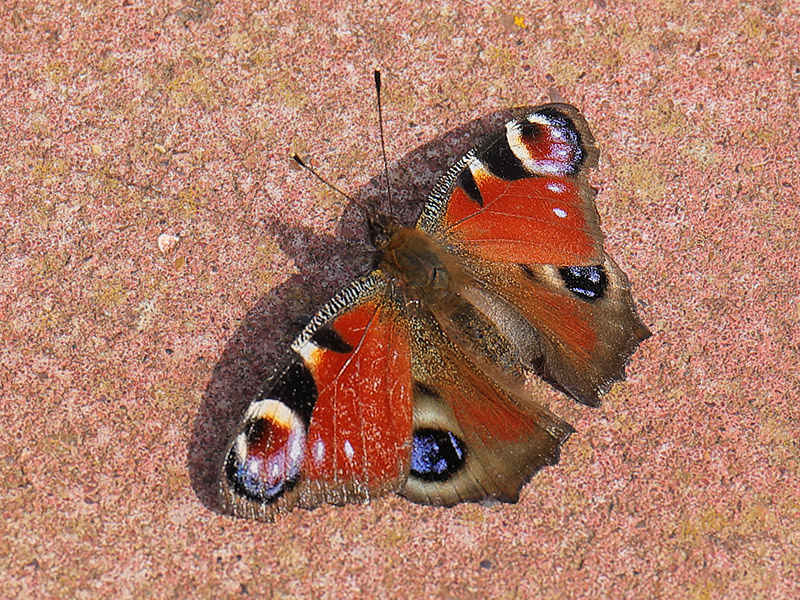
Just a couple of weeks before I did my count, there had been around ten to a dozen Peacock butterflies sunning themselves on our brick path. I had hoped to be able to include them in my count but when the time came, they had all disappeared.

red admiral butterfly
A Red Admiral butterfly enjoying sedum flowers.

Nor were there any Painted Ladies or Essex Skippers, both of which I often see here. And I think that the Small Tortoiseshell that I photographed in May or June was part of an early brood. I haven’t seen any recently, so maybe there won’t be any from a later brood to overwinter here.

The variability of butterfly numbers here (and those that are scarce or just not seen in my garden) makes me feel that I need to do more to help. Like making sure I don’t weed out the food plants needed for caterpillars! (Nettles and other invasives may have to go in large tubs though.) And I need to do a bit of research to discover more plants that I can grow for butterflies. I hope that next year I’ll be able to count more butterflies in my garden.

Peacock butterfly
A Peacock butterfly suns itself on a brick path.