
NB: A note for WordPress Reader users – you need to click on the title of the post again to come out of the reader and go to the post itself. This allows you to see the whole of the top photograph. (Otherwise you may see just a tiny section!)
‘Where are the butterflies this year?’ I’ve heard that question from many folk here in the UK this year. The rain and lack of warmth earlier in the summer have been blamed, especially after the previous very wet and windy weather in the spring.
It has become warmer and more summery recently but there still aren’t many butterflies around. At this time of year I take part in the ‘Big Butterfly Count’, run by the UK charity, Butterfly Conservation. Butterfly Conservation has reported that the numbers of butterflies recorded this year are the lowest ever in the 14 years of holding it. Although the poor weather has made it hard for butterflies to fly and to mate this year, their numbers have already been in decline in recent decades. Much of this is attributed to the loss of habitats, pesticides, and now a changing climate.
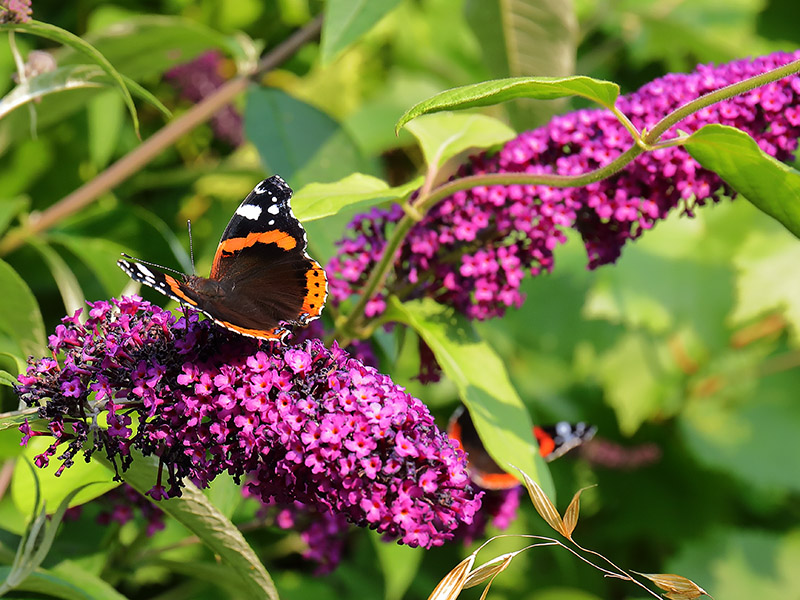
My photographs here were not taken this summer, but in previous years. There simply haven’t been enough times when I’ve seen butterflies in the garden to be able to photograph them. For my count here, it was noticeable that there was a huge drop in the numbers of those that are usually the commonest. There was only one peacock butterfly and no red admirals at all. (I have in the past seen a dozen peacock butterflies sunning themselves on our brick path and around the same number of red admirals feasting on a buddleia.)
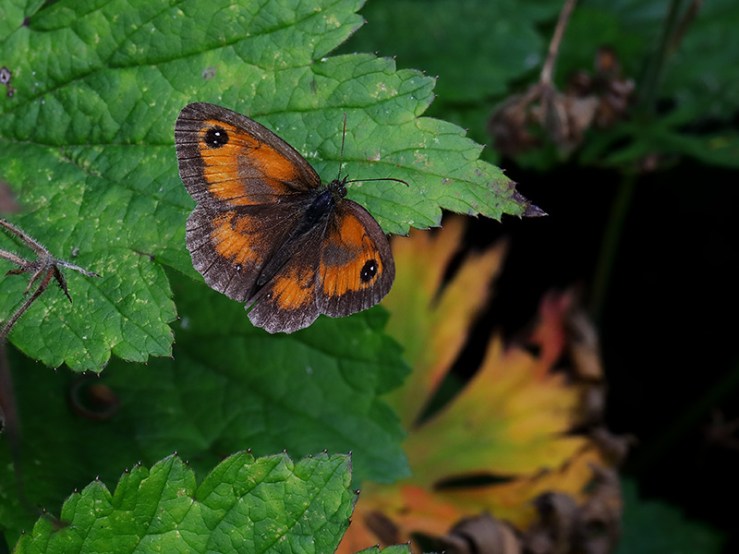
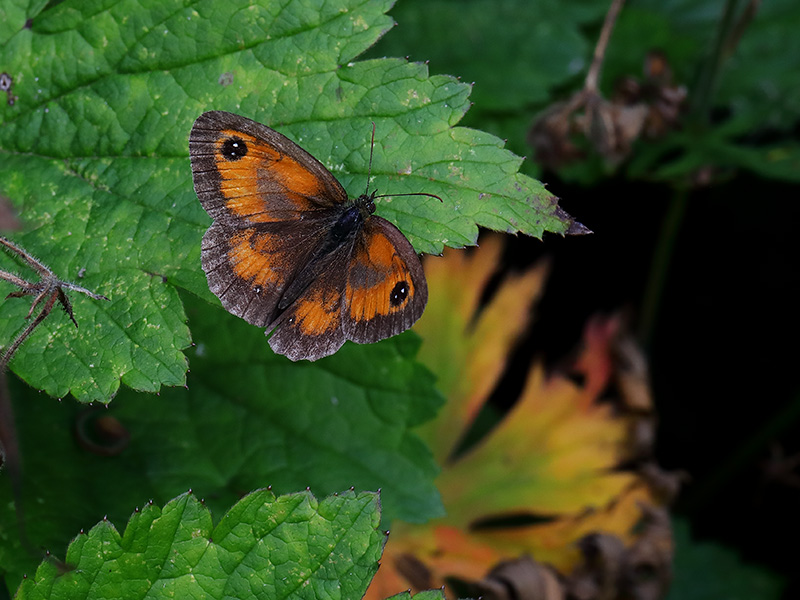
For one particular butterfly – the gatekeeper (below) – there was actually a slight rise in numbers. This year I saw five of them during the 15-minute count. Last year I think it was three. (We are probably seeing more of these because we now have both blackberries and thyme in the garden for the adults to feed on.) Other butterflies – large white, small white, and comma (top photo) were sighted but, again, in fewer numbers. There was a single brimstone, which I’ve only seen once during a count, but no small tortoiseshell this year.
It’s not just a poor year for butterflies here, but for bees too. Normally there would be lots in the garden, but now there are very few. (Spring was good at one point, and I noticed that the ajuga was absolutely buzzing while it was in flower.) I hope that the insect numbers will be able to recover in warmer years, but I feel that I may need to do more to provide both habitat and food to encourage these visitors. In particular, I’d like to grow food plants that will be available over a longer period, especially for any late-arriving butterflies and bees. 🦋



 Ann Mackay: Inspired by Nature