Rainy Days Remembered

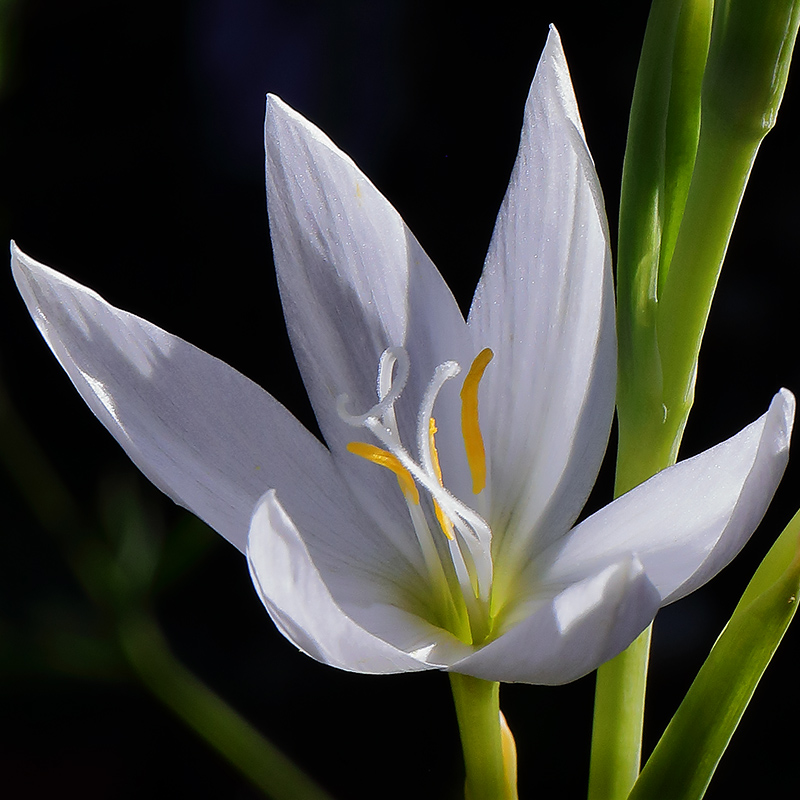
Flowers of Brodiea AKA Triteleia laxa

NB: A note for WordPress Reader users – you need to click on the title of the post again to come out of the reader and go to the post itself. This allows you to see the whole of the top photograph. (Otherwise you may see just a tiny section!)

These are pictures from earlier this summer, on a day in early July when the rain had left all the flowers glistening with raindrops. Summer rain is not something we can take for granted in the east of England. Long dry periods can leave the garden parched and the plants practically gasping for water.

This year we have had some very dry periods but those earlier rains, much heavier and more frequent than usual, have allowed the garden to grow more lush than we’d normally see. The grapevine that covers a small arbour for shade has turned into a monster with wildly waving arms (and grapes hidden under all that foliage). At this stage it’s almost inaccessible to prune. Next year I’ll have to make a point of cutting it back at a time when I can get a ladder close enough to the arbour to be able to get at the vine.

The wisteria that I planted to grow over and through an old laurel that has become a tree is also becoming overgrown. I’m really not sure how I’ll tackle this one – a pruner on a long extending pole helps, but isn’t enough. More drastic action may be required in future…

This summer’s extra rain brought us plenty of flowers. The Triteleia laxa (also known as Brodiaea) ‘Queen Fabiola’ in the top photograph is long-gone for this year. It is a perennial bulb and will come back into flower again from late next spring. However, in the photo below, the gaura (Oenothera lindheimeri) is still in full flower and will be for a long while yet. (It can flower well into the winter and often ends up covered in frost. You can see one of my frosty photos of it here.)

Both of these flowers looked lovely when coated in raindrops. Summer rain brings some variety to flower pictures and it shows that it can be good for both gardens and photography. Sometimes the rain is welcome!

Flowers of Gaura lindheimerii
Oenothera lindheimeri, formerly known as Gaura lindheimeri

Late Summer Glow

Cercis canadensis (redbud) leaf

NB: A note for WordPress Reader users – you need to click on the title of the post again to come out of the reader and go to the post itself. This allows you to see the whole of the top photograph. (Otherwise you may see just a tiny section!)

Late summer brings colours that make me think of autumn. It won’t be long before the leaves start to change colour and display the yellows, oranges and reds of the season. (But the red leaf above is that of a redbud, in its normal summer colour.) The photographs here are a mix of those taken in my own garden and others taken in Fullers Mill Garden, a favourite to visit.

red and orange flowers and seed pods
Clockwise from top left: the seed pods of Physalis alkekengi, orange echinacea, red dahlia, heleniums in a red and yellow mix

The orange echinacea and the red dahlia are amongst the hotter colours in my own garden. (I usually choose cooler colours, which dominate the rest of the planting here.) The heleniums (which have the entertaining common name of ‘sneezeweed’, because they were used to make snuff) were at Fullers Mill, along with the physalis (Chinese lanterns) and the redbud. I have to admit that the red and orange combination of the helenium is not one that I like. At least it’s not quite as bad as the multicoloured varieties of French marigold. I really dislike the combination of orange and a reddish brown (or is it a brownish red?).

The heleniums that I prefer are those with single-coloured flowers, both the yellow varieties and the red one that you see below. This plant is Helenium autumnale ‘Ranchera’, which I chose for the lovely deep red. Unfortunately though, it doesn’t like very dry soil, preferring consistently moist conditions. I tried to remember to water it, but was only able to keep it going for a couple of years. It eventually disappeared after a summer of struggling through drought. Perhaps if I manage to improve the soil enough (with lots and lots of compost) I’ll try it again.

Red Helenium (sneezeweed) flower and bud

A Flowery Indulgence

Purple alstroemeria flowers

NB: A note for WordPress Reader users – you need to click on the title of the post again to come out of the reader and go to the post itself. This allows you to see the whole of the top photograph. (Otherwise you may see just a tiny section!)

Hubby decided that he wanted to get some new plants for the potted display he keeps by our front door. This meant a very welcome trip to one of our local nurseries was in order. (We’re lucky in having a couple of nurseries nearby that have a good range of plants at moderate prices.)

As you can imagine, we came home with a good haul of new plants, including these two alstroemerias. I had wanted to buy some for a long time and was just waiting to see the right colours. If you’ve been reading my blog for a while, you won’t be at all surprised to see that these purple shades were my choice.

We all need an occasional indulgence – my favourite one is flowers. I love their beauty and they give me something that I want to photograph. They make me smile.

White and purple alstroemeria flower

(Almost) Silent Sunday: R and R

Pink-orange dahlia flower opening.

NB: A note for WordPress Reader users – you need to click on the title of the post again to come out of the reader and go to the post itself. This allows you to see the whole of the top photograph. (Otherwise you may see just a tiny section!)

Just a quick post-and-run this week. Hubby’s brother has come to stay and we’re having a few days off for rest & relaxation. (Probably some good food and wine too…)

Missing: Butterflies…

Comma butterfly

NB: A note for WordPress Reader users – you need to click on the title of the post again to come out of the reader and go to the post itself. This allows you to see the whole of the top photograph. (Otherwise you may see just a tiny section!)

‘Where are the butterflies this year?’ I’ve heard that question from many folk here in the UK this year. The rain and lack of warmth earlier in the summer have been blamed, especially after the previous very wet and windy weather in the spring.

It has become warmer and more summery recently but there still aren’t many butterflies around. At this time of year I take part in the ‘Big Butterfly Count’, run by the UK charity, Butterfly Conservation. Butterfly Conservation has reported that the numbers of butterflies recorded this year are the lowest ever in the 14 years of holding it. Although the poor weather has made it hard for butterflies to fly and to mate this year, their numbers have already been in decline in recent decades. Much of this is attributed to the loss of habitats, pesticides, and now a changing climate.

My photographs here were not taken this summer, but in previous years. There simply haven’t been enough times when I’ve seen butterflies in the garden to be able to photograph them. For my count here, it was noticeable that there was a huge drop in the numbers of those that are usually the commonest. There was only one peacock butterfly and no red admirals at all. (I have in the past seen a dozen peacock butterflies sunning themselves on our brick path and around the same number of red admirals feasting on a buddleia.)

For one particular butterfly – the gatekeeper (below) – there was actually a slight rise in numbers. This year I saw five of them during the 15-minute count. Last year I think it was three. (We are probably seeing more of these because we now have both blackberries and thyme in the garden for the adults to feed on.) Other butterflies – large white, small white, and comma (top photo) were sighted but, again, in fewer numbers. There was a single brimstone, which I’ve only seen once during a count, but no small tortoiseshell this year.

It’s not just a poor year for butterflies here, but for bees too. Normally there would be lots in the garden, but now there are very few. (Spring was good at one point, and I noticed that the ajuga was absolutely buzzing while it was in flower.) I hope that the insect numbers will be able to recover in warmer years, but I feel that I may need to do more to provide both habitat and food to encourage these visitors. In particular, I’d like to grow food plants that will be available over a longer period, especially for any late-arriving butterflies and bees. 🦋

Gatekeeper butterfly
Gatekeeper butterfly on an anemone leaf

After the Rain, Sunshine

Oenothera macrocarpa (Missouri evening primrose)

NB: A note for WordPress Reader users – you need to click on the title of the post again to come out of the reader and go to the post itself. This allows you to see the whole of the top photograph. (Otherwise you may see just a tiny section!)

During a recent break between rain showers, I went into the garden to take as many photos as I could of the raindrop-adorned plants. These evening primroses stood out as looking particularly sunny after a grey day. This one is Oenothera macrocarpa (Missouri evening primrose), which is quite different to the tall evening primroses that also grow here.

The biggest difference between this and the other evening primrose in our garden (which I believe is Oenothera stricta ‘Sulphurea’) is the growth habit. The Missouri evening primrose is an easy neighbour for the other plants in the border, spreading slowly on low, lax stems. It causes no problems for the other plants around it. ‘Sulphurea’, on the other hand, can be a bit of a thug because it can self-seed in such great numbers that it blocks light from the other plants beside it.

I made the mistake of letting many of Sulphurea’s seedlings remain in an area where they have now created a screen that hides the neighbouring shorter plants. Oops! They’ll have to be removed and I’ll spread the seed from them in a semi-wild area where the other plants are tall enough to compete.

Meanwhile, the Missouri evening primrose that you see here is behaving beautifully, so I’m likely to plant more of this one. Then there will be plenty of zingy yellow flowers to brighten the days when the sun is sulking behind clouds.

Oenothera macrocarpa (Missouri evening primrose)
Oenothera macrocarpa (Missouri evening primrose) is providing a colourful shelter for an ant.

Rainy Day Blues (2): Geranium Rozanne

Geranium Rozanne with raindrops

NB: A note for WordPress Reader users – you need to click on the title of the post again to come out of the reader and go to the post itself. This allows you to see the whole of the top photograph. (Otherwise you may see just a tiny section!)

More rain-splashed blue flowers for this week – though the reverse of the flower of Geranium ‘Rozanne’ is more of a purple-blue. A lot of supposedly blue flowers are, like this, not quite blue. I’ve just read that the reason for it is that plants don’t have any true blue pigments.

So how do plants like forget-me-nots and borage make their flowers look so blue? Apparently the colour comes from the chemical manipulation of the anthocyanin pigments that create reds. From the point of view of the plant, it’s worth the extra effort because the eyesight of bees is especially responsive to blue.

If I’d done a bit more science at school I might have known about this. That slight pinkish tint in many blue flowers has always intrigued me. Now I know why it’s there. (And now you know how I’ve been passing a rainy afternoon on the internet!)

Knowing that it is less easy for flowers to appear blue makes me appreciate the blue flowers in my garden even more. These pretty flowers of Geranium Rozanne have held up well in the recent rains; now that the sun is shining again I’ll make sure to get out and enjoy the sight of them.

Geranium Rozanne with raindrops
Geranium Rozanne doesn’t seem to mind the rain.

Rainy Day Blues 1: Platycodon

Flowers of Platycodon (balloon flower)

NB: A note for WordPress Reader users – you need to click on the title of the post again to come out of the reader and go to the post itself. This allows you to see the whole of the top photograph. (Otherwise you may see just a tiny section!)

This week’s garden photography has meant nipping out between showers. If you’ve been reading my blog for a little while, you’ll know that the climate here in the east of England tends to be very dry – actually the driest in the country. It doesn’t feel like it at the moment though! There has been plenty of rain and there’s a mad rush of growth in the garden as a result.

One plant that would probably prefer a bit more sunshine is this Platycodon grandiflorus, commonly known as ‘balloon flower’. (So named because the developing flower buds swell into odd little five-pointed ‘balloons’…a temptation for any child to pop them!)

Platycodon is a member of the campanula family and looks very similar to the campanulas growing close to it. Its flowers are bigger, at about three inches across, whereas the campanula flowers reach about two inches. It creates a lovely splash of blue which blends easily with the other colours in the border, especially the nearby yellow daisies of Anthemis tinctoria and a white campanula that grows next to it.

Blue is one of my favourite colours, so it was inevitable that I would buy a platycodon as soon as I saw it. It has settled in well since I planted it last year and there are now lots of flower buds on it. These should keep the blue flowers coming through summer. It is wet and grey here at the moment, but rainy day blues like these make me very happy.

Flowers of Platycodon (balloon flower)

Pretty Pincushions

Astrantia flowers with raindrops

NB: A note for WordPress Reader users – you need to click on the title of the post again to come out of the reader and go to the post itself. This allows you to see the whole of the top photograph. (Otherwise you may see just a tiny section!)

The pincushion flowers of astrantia are making an impact in the garden at the moment. The flowers are quite different to anything else around them, so provide interest and variety to the border.

Over the years, I’ve tried growing several different cultivars of Astrantia major, notably the lovely pink ‘Roma’ and the darker red ‘Rubra’. Neither of those lasted very long, probably due to drought. The white cultivars in the garden now are doing better. That’s because I take more care to water them when the weather is very dry. (Not sure what they are. One was supposed to be ‘Shaggy’, with the longer bracts, but doesn’t look any different to the other plants. They probably all are simply the original species of Astrantia major, rather than one of the cultivars.)

I would like to try again with some of the coloured cultivars of astrantia, but will look for plants that are in flower. When grown from seed there can be variability in the plants, and those grown from the seed of cultivars or hybrids are unlikely to come true to the parent plant. That might mean the possibility of an interesting seedling or two. On the other hand, I wonder if they tend to revert to the commoner white.

At present, the astrantias here are looking good. That is likely to be because of all the rain we’ve had recently. It’s pouring down as I’m writing this and has been raining for a few days. I was able to get out and photograph the flowers above in a brief pause between showers – can you spot the raindrops? (The flowers below were photographed on a dry day that now feels like a long time ago!)

Astrantia flowers

The Gleam of Gold

Flower of Trollius chinensis 'Golden Queen'

NB: A note for WordPress Reader users – you need to click on the title of the post again to come out of the reader and go to the post itself. This allows you to see the whole of the top photograph. (Otherwise you may see just a tiny section!)

The bog garden that I created last year has allowed me to grow a few plants that would find it hard to survive here otherwise. It’s a tiny space – about 5 to 6ft across – and now pretty much full. In it I have Siberian irises, astilbes, ragged robin ( Lychnis flos-cuculi) and the plant you see here, Trollius chinensis ‘Golden Queen’.

I’ve tried growing this plant in the ordinary garden soil here and failed; the conditions were too dry. It needs moist soil that doesn’t dry out, so was one of the plants I wanted to try in the bog garden. The bog garden does have to be kept watered, especially in the hot weather we’re having at the moment. It can accidentally dry out…oops! But it’s much easier to look after moisture-loving plants when they’re all in the same space. The water I give them lasts much longer too.

Although their name declares them to be ‘golden’, to me these flowers are more orange. Whatever their description, they are certainly bright and gleam out from their dark background of iris leaves and bronze elder. Their shape is unusual and eye-catching, with a central tuft that the RHS explains to be ‘nectar-bearing petals’, surrounded by a ring of ‘petal-like sepals’. (I’m continually impressed by the variety of flower forms that nature comes up with!)

At the moment, this and the other plants in the new bog garden seem to be doing well. However, that may mean that this small area gets overcrowded…maybe I’ll soon have to find somewhere to make another bog garden!🌿

Flower of Trollius chinensis 'Golden Queen'
Trollius chinensis ‘Golden Queen’ is also known by the common name ‘globeflower’.