
NB: A note for WordPress Reader users – you need to click on the title of the post again to come out of the reader and go to the post itself. This allows you to see the whole of the top photograph. (Otherwise you may see just a tiny section!)
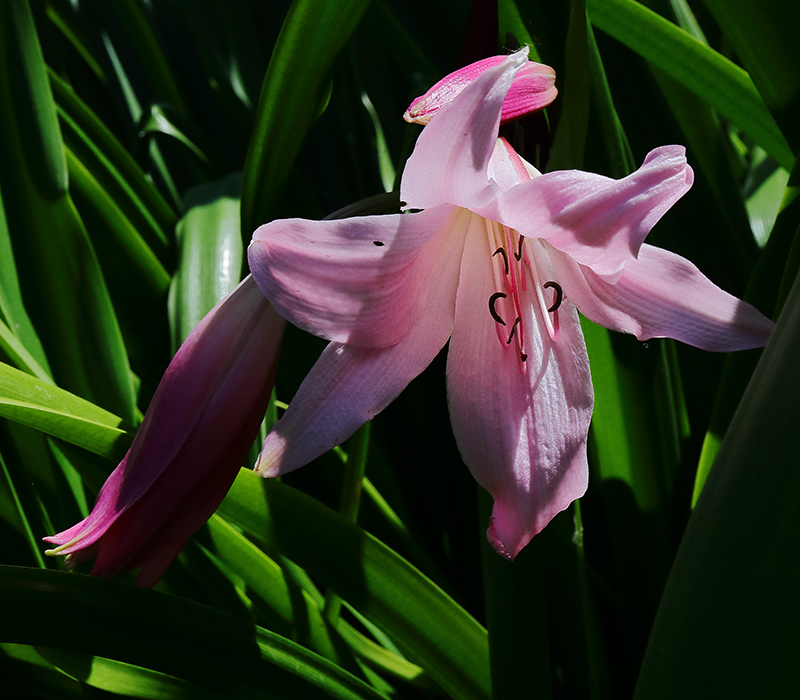
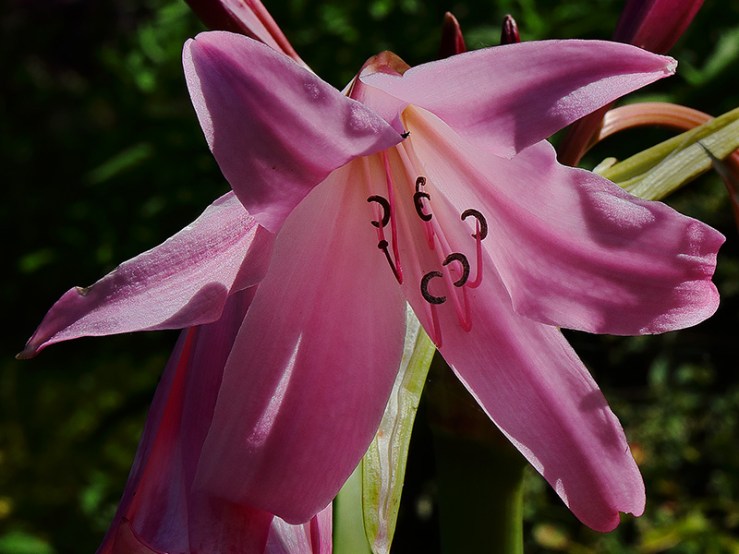
At first glance these photographs look as if they may be of spring crocuses. But these are bigger and in flower right now. In fact, despite the common name of ‘autumn crocus’, these aren’t crocuses but colchicums. This plant looks as if it is probably Colchicum ‘The Giant’; it certainly had very big flowers.
(Before we go further, let me mention that there are true autumn-flowering crocuses. Crocus speciosus, AKA Bieberstein’s crocus, is a lovely soft lilac-blue and the saffron crocus, Crocus sativus, also blooms in autumn.)
There are a number of different colchicums available to gardeners, mostly in shades of pinky-lilac but there are others with pure white flowers too. (I saw some of those on this visit to Fullers Mill Garden, but will save those photos for a later post.) There were also different flower shapes amongst the colchicums I saw, some with double pink flowers (probably ‘Waterlily’) and others with long, spidery-looking petals. There was even a yellow-flowered variety, Colchicum luteum.
I have grown a few colchicum bulbs in pots in the past (they didn’t come back the next year). I don’t grow them now. That’s because this plant is a member of the lily family, and, like the lily, is toxic to cats. In fact, every part of the colchicum is highly toxic and the RHS recommend that gloves should be worn when handling or planting bulbs. So they’re not a good choice if you have young children or pets. Sometimes it’s best not to have a plant in your own garden, but to just admire it growing elsewhere!









 Ann Mackay: Inspired by Nature