Winter Bee-Feast

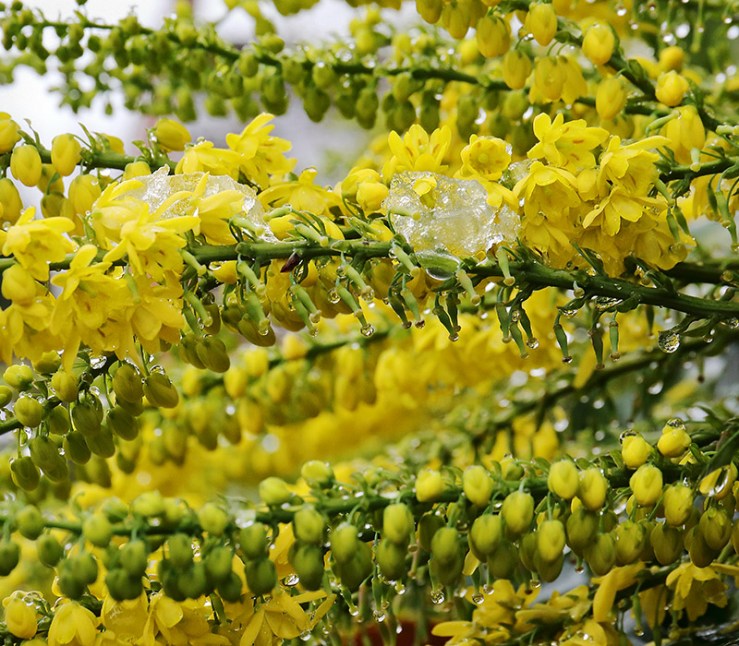
mahonia flowers with melted frost

NB: A note for WordPress Reader users – you need to click on the title of the post again to come out of the reader and go to the post itself. This allows you to see the whole of the top photograph. (Otherwise you may see just a tiny section!)

As I’ve been working in the garden in recent days, I’ve noticed that there are still a few buff-tailed bumblebees around. They’ve been attracted to the yellow flowers of our mahonia, which is a great source of nectar and pollen during late autumn and winter.

While most bumblebee colonies die off for the winter, with just the mated queens hibernating and then starting new colonies in spring, the buff-tails (Bombus terrestris) can stay active. 30 years or so ago, buff-tailed queens would have hibernated too, but in more recent times both queens and workers may be seen flying in winter. It seems that this is the result of winters becoming milder, especially in southern areas of the UK.

There are not many sources of nectar for winter-active bumblebees, so the mahonia, which is a large shrub and well-covered with flowers, has become a valued feature of our garden. (By the time the mahonia has finished flowering, there will be some hellebores and later on there is the plum blossom. We do, however, want to increase the available food for bumblebees over winter.)

As you can see from the photographs, the mahonia flowers don’t mind a bit of frost or snow. Ours has the sunniest spot in the garden, so bees can enjoy the warmth of any sunshine right from early morning until sunset. The shrub was already here (and mature) when we came to this house, so I can’t be sure of the cultivar, but it does look like the very popular Mahonia x media ‘Charity’. I’m certainly very glad that a previous owner did plant it and I should think that the bumblebees are too! 🐝

mahonia flowers with melting snow

Snow melting from mahonia flowers doesn’t seem to cause them much damage.

Things are Starting to Buzz…

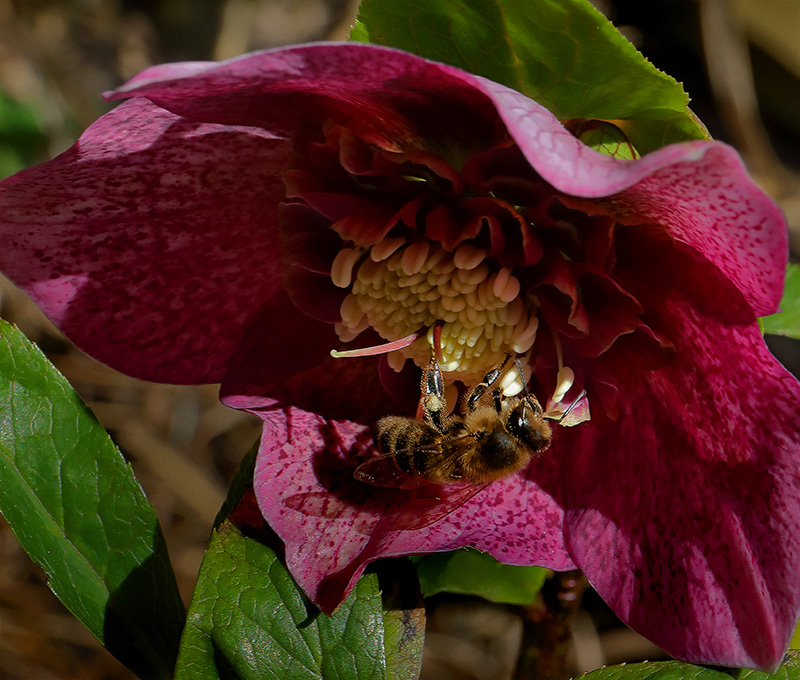
pink spotted hellebore with a honeybee

NB: A note for WordPress Reader users – you need to click on the title of the post again to come out of the reader and go to the post itself. This allows you to see the whole of the top photograph. (Otherwise you may see just a tiny section!)

The sudden warmth in the sunshine over the last few days has brought more life to the garden. The birds have been singing and busily getting ready for spring for a little while. Now they’ve been joined by the first of the butterflies (peacock and brimstone so far) and both bumblebees and honey bees.

I hope the insects won’t be caught out by cooler temperatures next week and some sub-zero nights yet to come. Last year was a bad one for bees and butterflies here, so they really need better conditions this year to boost their numbers. While there’s not much that I can do to protect them from a change in the weather, I can at least try to provide early-flowering plants so that they have something to feed on.

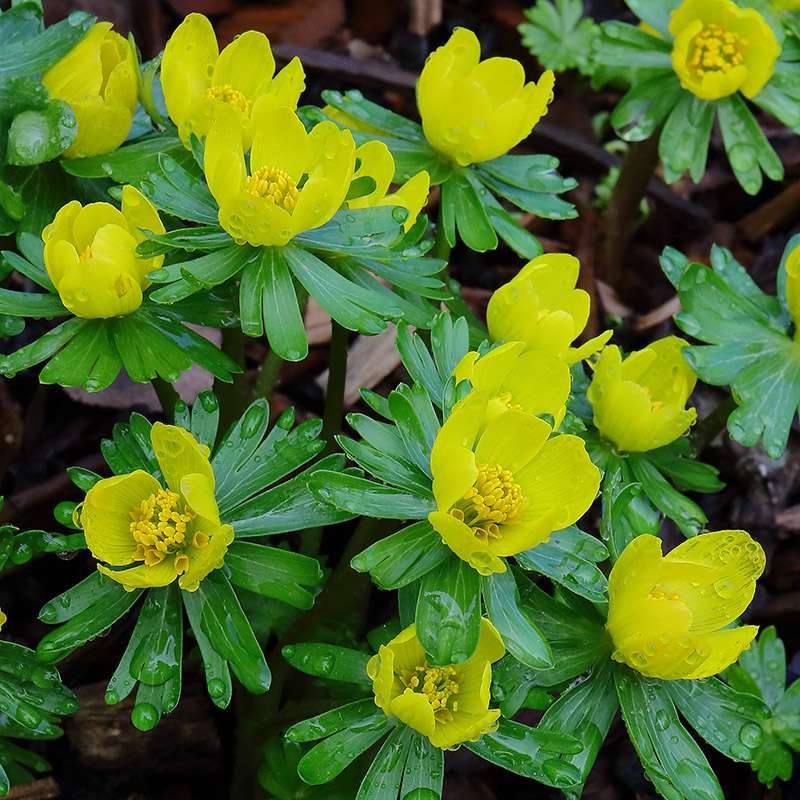
Currently there aren’t very many plants that are in flower here. The viburnum bushes still have their pink flowers and there several hellebores and some snowdrops and crocuses. But there could be more. Yellow winter aconite for instance, or blue Siberian squill. Chionodoxa (‘glory of the snow’) is another that offers blue flowers. Both it and Cyclamen coum come in a range of other colours, including pinks and white. These would all flower very early and provide food for insects at a time when it can be hard for them to find enough.

There have been a lot of changes in the garden over the last couple of years and I’ve lost a lot of small bulbs (mainly crocuses) by accidentally digging them up while moving plants or changing the layout of borders. I’m hoping that I’ll now have areas settled enough for bulbs to be reasonably safe. One of these areas is where I’ve planted a number of fruit trees. Early spring bulbs should grow well there and enjoy the sun before the leaf canopy appears. I want it to work because our little insect friends need a bit of help. 🐝

purple crocuses with a honey bee
A honey bee enjoys crocuses that have opened in the sun.

A Plea for Butterflies

Small Tortoiseshell butterfly

NB: A note for WordPress Reader users – you need to click on the title of the post again to come out of the reader and go to the post itself. This allows you to see the whole of the top photograph. (Otherwise you may see just a tiny section!)

Back in August I posted about taking part in the annual ‘Big Butterfly Count’ which is held by UK charity Butterfly Conservation. The results of the nationwide count have now been published and they confirm that the UK has indeed had a very bad summer for butterflies. So much so, that the charity has labelled it a ‘butterfly emergency’.

This year’s count recorded the lowest number of butterflies in the 14-year history of its existence. A total of just over 935,000 butterflies and day-flying moths for 2024 was a drop of over a third in comparison to the figure of over 1.5 million for 2023. The average number of butterflies seen per count fell from last year’s 12 to seven for each count this year and there was also the highest ever number of counts where no butterflies were seen (9,000).

Peacock butterflies counted fell in numbers in England by 66%.

While habitat loss and this year’s wet and initially cool summer must both be at least partly to blame for the dramatic drop in butterfly numbers, Butterfly Conservation is seriously concerned about the effects of pesticides. Head of Science at Butterfly Conservation, Dr Richard Fox, said that neonicotinoid pesticides used on farmland can contaminate the wild plants growing around the edges of fields, killing the butterflies and moths and their caterpillars that feed on them.

In an effort to protect future generations of butterflies (and of course, other insects), Butterfly Conservation is calling for a complete ban on neonicotinoid pesticides in the UK. (They were banned in 2018, but an exception was made for their use on sugar beet.) The request for the ban is being made in an open letter to the Secretary of State and they are asking UK residents to support that request by signing their letter. You can find the letter here. (And you can see the full report on butterfly numbers here.)

The photographs in this post weren’t taken this year, but in 2020 and 2021. This year there were very few butterflies in my garden, so I had very little chance to photograph any. Like many people this year, I noticed that my garden was unusually empty of butterflies, bees, and the other insects that I normally expect to see here. (The small tortoiseshell in my top photo was one of England’s worst-affected species with a drop of 72% from the numbers in last year’s count. Holly blue numbers fell in England by 80% and red admirals by 82%.)

I hope that those who can sign this letter will do so – it’s a small chance to do something that may help preserve all of our insects, not only the beautiful butterflies.

Comma butterfly
A comma butterfly looking a bit the worse for wear – their count fell by 51% in England this year.

Small Signs of Hope

Red admiral butterfly on buddleia

NB: A note for WordPress Reader users – you need to click on the title of the post again to come out of the reader and go to the post itself. This allows you to see the whole of the top photograph. (Otherwise you may see just a tiny section!)

This summer butterflies have been pretty much absent. However, this week there have been several flitting around the garden and feasting on the last of the buddleia flowers. There weren’t many, but they were very welcome and they brought with them the hope that there may be more butterflies next year.

The red admiral shown here was one of a group of five that found the only buddleia that was still flowering well. This particular plant is one that I had intended to remove, but had found it impossible to dig out. (I have a number of more attractively-coloured named varieties in the garden, so I had decided to remove some of the more ‘ordinary’ buddleias. This one is one of the progeny of a massive shrub that was in the garden when we arrived. It seems that its family line is destined to continue!)

The severe and later than usual cutting-back prevented this buddleia from flowering at the same time as the others. That turned out to be an advantage for this group of late butterfly visitors. Next year I’ll cut the buddleias back at slightly different times so that the flowers will be spread over a longer period. Then there should still be something to feed butterflies that arrive later on, rather than all the flowers being over by this time.

The red admirals briefly had a small tortoiseshell butterfly as a companion, but I suspect they chased it away. I spotted it feeding much higher up and too far away for me to be able to photograph it. (But you can see a photo from a previous year in this post.) This was the only small tortoiseshell I’ve seen this year.

Other interesting visitors to the garden this week were a couple of elephant hawk-moths and one of their caterpillars. (Found on a very small potted fuchsia. I brought the pot up to a much larger fuchsia and later noticed that the caterpillar had very obligingly transferred itself to the less vulnerable plant.) This is only the second time that I’ve seen elephant hawk-moths here, so I’m hoping that there will be more in the garden next year. 🦋

Red Admiral butterfly on buddleia
Red admiral butterfly on buddleia

Missing: Butterflies…

Comma butterfly

NB: A note for WordPress Reader users – you need to click on the title of the post again to come out of the reader and go to the post itself. This allows you to see the whole of the top photograph. (Otherwise you may see just a tiny section!)

‘Where are the butterflies this year?’ I’ve heard that question from many folk here in the UK this year. The rain and lack of warmth earlier in the summer have been blamed, especially after the previous very wet and windy weather in the spring.

It has become warmer and more summery recently but there still aren’t many butterflies around. At this time of year I take part in the ‘Big Butterfly Count’, run by the UK charity, Butterfly Conservation. Butterfly Conservation has reported that the numbers of butterflies recorded this year are the lowest ever in the 14 years of holding it. Although the poor weather has made it hard for butterflies to fly and to mate this year, their numbers have already been in decline in recent decades. Much of this is attributed to the loss of habitats, pesticides, and now a changing climate.

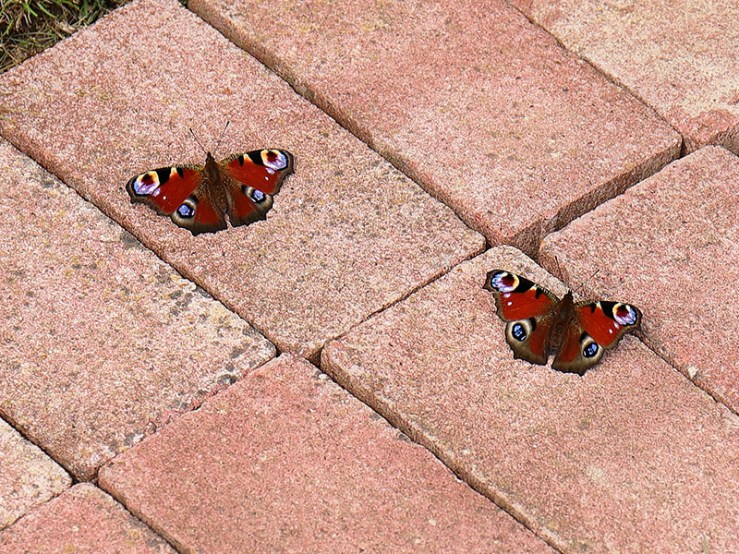
My photographs here were not taken this summer, but in previous years. There simply haven’t been enough times when I’ve seen butterflies in the garden to be able to photograph them. For my count here, it was noticeable that there was a huge drop in the numbers of those that are usually the commonest. There was only one peacock butterfly and no red admirals at all. (I have in the past seen a dozen peacock butterflies sunning themselves on our brick path and around the same number of red admirals feasting on a buddleia.)

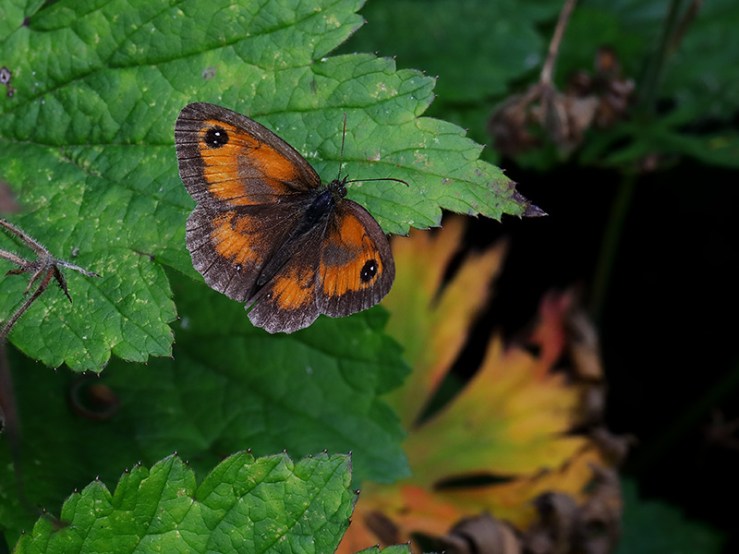
For one particular butterfly – the gatekeeper (below) – there was actually a slight rise in numbers. This year I saw five of them during the 15-minute count. Last year I think it was three. (We are probably seeing more of these because we now have both blackberries and thyme in the garden for the adults to feed on.) Other butterflies – large white, small white, and comma (top photo) were sighted but, again, in fewer numbers. There was a single brimstone, which I’ve only seen once during a count, but no small tortoiseshell this year.

It’s not just a poor year for butterflies here, but for bees too. Normally there would be lots in the garden, but now there are very few. (Spring was good at one point, and I noticed that the ajuga was absolutely buzzing while it was in flower.) I hope that the insect numbers will be able to recover in warmer years, but I feel that I may need to do more to provide both habitat and food to encourage these visitors. In particular, I’d like to grow food plants that will be available over a longer period, especially for any late-arriving butterflies and bees. 🦋

Gatekeeper butterfly
Gatekeeper butterfly on an anemone leaf

Ragged but Lovely: Silene flos-cuculi

Ragged Robin (Silene flos-cuculi) flowers

NB: A note for WordPress Reader users – you need to click on the title of the post again to come out of the reader and go to the post itself. This allows you to see the whole of the top photograph. (Otherwise you may see just a tiny section!)

Ragged robin (Silene flos-cuculi, also known as Lychnis flos-cuculi) is a very pretty wildflower that is native to Europe and Asia. It grows in damp or marshy ground and was, in the past, a common sight around the UK. (I remember it growing in soggy ditches alongside country roads when I was much younger.) It has become significantly less common now, even rare, due to land development, especially the drainage of ground for agriculture and the loss of wetlands and wild ponds.

Fortunately, ragged robin is now grown as a garden plant. It’s a perennial which seeds itself around very readily in moist and sunny sites. Gardeners can choose cultivars in deep pink, pale pink or white. The pale flowers in the photograph below were growing in the wet ground alongside a large pond in a garden we visited. They were such a lovely sight that I wished I could grow them in my own much drier garden.

The desire to grow plants that like damp conditions led me to create a little ‘bog garden’ last year. That meant that I was able to plant the dark-flowered ragged robin that you can see in the top photo. (I was afraid that the huge increase in our winter rainfall might have drowned the plants in my bog garden, but everything in it is growing again and the ragged robin seems perfectly happy.)

The availability and growing popularity of wildflowers as garden plants helps not only their survival, but that of many insects too. Ragged robin is an excellent source of nectar for bees and butterflies and apparently attracts dragonflies too. I shall be on the lookout for those!

Ragged Robin (Silene flos-cuculi) flowers
The pale pink ragged robin that inspired my wish to grow this attractive plant.

Late Arrivals

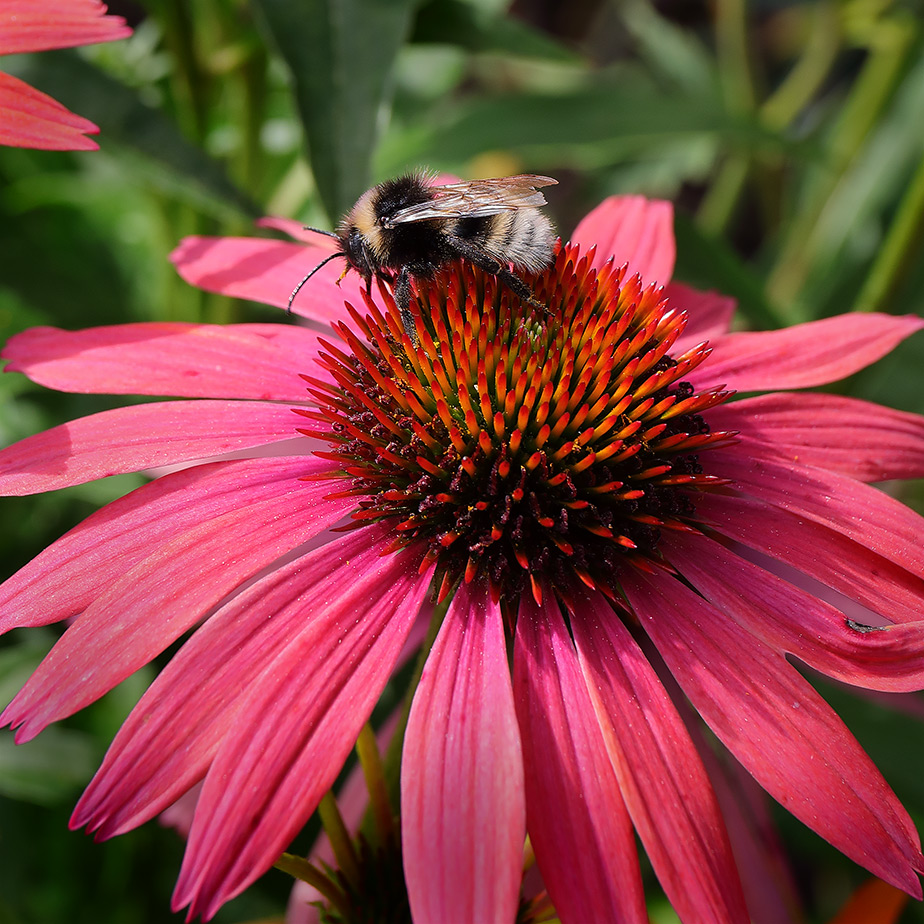
Bumblebee on echinacea flower

NB: A note for WordPress Reader users – you need to click on the title of the post again to see the full photograph. (Otherwise you see just a tiny section!)

This year was a worrying one as far as tiny visitors to the garden went. In spring and early summer it definitely felt as if there were fewer bees and other pollinators around. Butterflies, too, seemed scarcer this year. Things improved in the later part of the summer and there were days when there were a fair number of insects around, but not as good as previous years.

Last winter was a very cold one, with much harder frosts than we usually get. Presumably, this must have made it harder for hibernating insects to make it through to spring. I’ve also read that last year’s drought didn’t help insect numbers. Hopefully the wetter summer this year will have produced an improvement.

Common Carder bee
Common Carder bee

It was a relief to see bees and butterflies appearing as the summer progressed. But there were some things that I didn’t see here, such as the Small Tortoiseshell butterfly in the photo below.

Peacock butterflies were a rare sight here too, but Red Admirals appeared in good numbers. (They are the commonest butterflies in my garden, along with the Cabbage Whites.) The largest number I saw was on a particularly sunny day, when about a dozen Red Admirals and a solitary Peacock were feasting on a buddleia. For a few warm days there were enough of them around to swirl past me whenever I walked along the path and brushed against our butterfly bushes.

Small tortoiseshell butterfly
Small Tortoiseshell butterfly photographed in a previous summer

There was an increase in dragonflies visiting – they have obviously become more aware of our pond. It was amusing to watch these fairly heavy creatures try to settle on the nearby stems of evening primrose, which quickly bent and swayed under their weight. To give them better lookout posts, I pushed some big birch twigs into the pots of a couple of the pond plants. I hope they appreciated them!

Although this appeared to be a poor year for insects, there are some signs of hope in the attitudes towards their welfare. I’ve noticed a lot more wild plants and food plants for bees and butterflies in garden centres and nurseries, a response to the growing interest in gardening for wildlife. And, much to my delight, our local council stopped mowing many grassy areas. This means that the green that runs in front of the houses here is being allowed to become wilder. I’m hoping that in a few years we’ll have a decent little wildlife meadow out there!

Hoverfly on potentilla flower
Hoverfly on potentilla

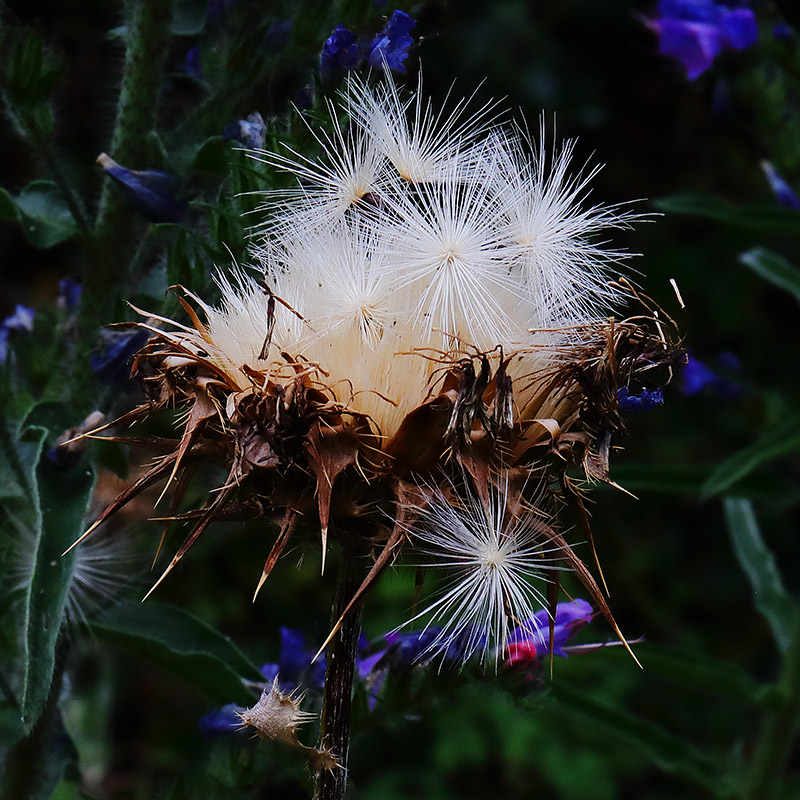
Pure Fluff: Cardoon Seed Heads

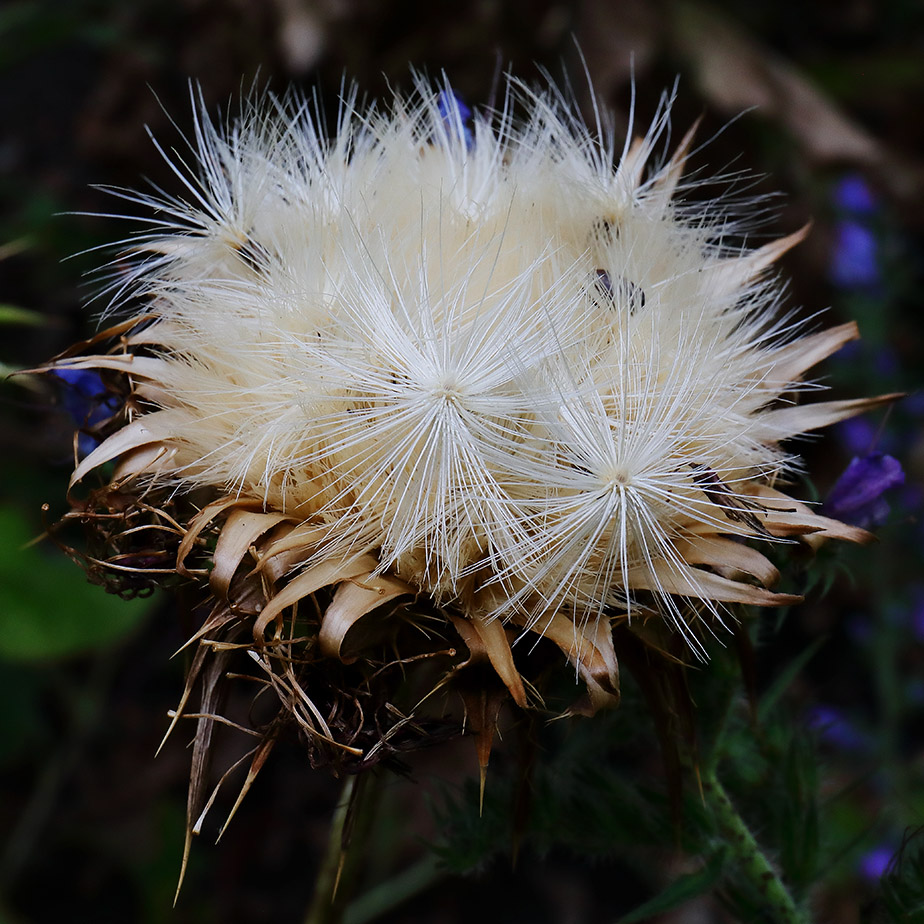
Cardoon seed head

NB: A note for WordPress Reader users – you need to click on the title of the post again to see the full photograph. (Otherwise you see just a tiny section!)

Some seed heads draw more attention than others. The sight of the huge fluffy seed heads of the cardoon (Cynara cardunculus), growing in a garden I visited was irresistible. The seed heads appealed as a subject to photograph, and because I always want to stroke the soft hairs attached to the delightfully ethereal seeds. (I didn’t stroke them though. I couldn’t get close enough!)

I’m not the only one attracted to the cardoon’s seeds. In winter, finches will eat the seeds and, when spring comes, if any the soft down remains, it may be used to line nests. Long before that stage, the huge purple thistle flowers are visited by many bees and other pollinators. The cardoon flowers have lots of pollen and nectar and can appear over a long period (around June to September). This makes the cardoon a valuable plant for bees and it would be a great addition to a garden planted with pollinators in mind.

Cardoons grow to a large size – up to 6 feet tall by about 4 feet wide. That’s a bit big for my own garden. (Space is becoming an issue here.) If there was room for one, I’d certainly consider growing one of these plants because, in addition to the bee-friendly flowers, they also have spectacular deeply-cut silvery leaves. However, it might irritate my neighbours if those floaty little seeds were to land and then produce new plants all over their gardens!

Cardoon seed head
Seeds are beginning to float away from this cardoon seed head.

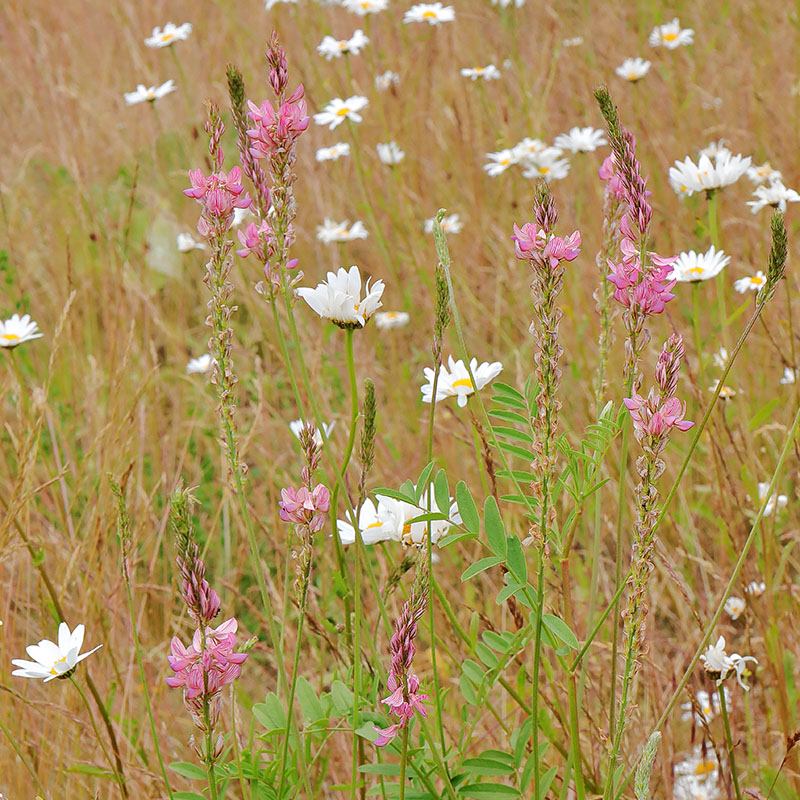
A Meadow Beauty: Sainfoin

Flower of sainfoin (Onobrychis viciifolia)

NB: A note for WordPress Reader users – you need to click on the title of the post again to see the full photograph. (Otherwise you see just a tiny section!)

The flowers of sainfoin (Onobrychis viciifolia) were sprinkled throughout the meadow that I wrote about in last week’s post. It’s a plant that I had never seen before. I was enchanted by the spikes of delicate pink flowers with darker pink veining, so I took the opportunity to photograph it.

Reading up about this grassland plant afterwards, I discovered that it is a native of Europe and Asia. Sainfoin is an ancient forage crop grown to feed cattle, sheep and horses. It fell from favour in modern times but is apparently making a comeback. The plant has several benefits, including controlling worms in grazing animals and improving the quality of the soil by fixing nitrogen. (The common names of ‘healthy hay’ and ‘holy hay’ reflect the benefits to livestock.)

But it’s not the usefulness to animals that caught my attention. I’m far more interested in the benefits that sainfoin offers to bees and other pollinators. Apparently sainfoin produces large amounts of both pollen and nectar, making it very attractive to pollinating insects, including bumblebees and butterflies.

This suggests that it would be worth growing in a selection of wildflowers for a semi-wild area that will be a habitat for wildlife. It’s an idea that appeals to me greatly, but I would need to be able to fit my wild patch into a small space. A possibility for next year… 🙂

Sainfoin (Onobrychis viciifolia) with ox-eye daisies

Meadow Wildflowers (1)

Bee Orchid

NB: A note for WordPress Reader users – you need to click on the title of the post again to see the full photograph. (Otherwise you see just a tiny section!)

An awareness of the importance of wildflowers in creating spaces for nature is growing in the UK. Plants for bees and other insects are recognised as being vital to help species survive. Many gardeners are trying to help nature by allowing their gardens to become a little wilder, and some are creating their own ‘meadow’ areas within their gardens.

Recently I visited a large garden at a Suffolk farm and had a walk around the adjacent wildflower meadow. There are already a few wildflowers in my own garden and I’m interested to see what else I can grow to encourage insect life. (But without letting something take over the garden, e.g. white deadnettle. Although its flowers are great for bees in the early part of the year, I’m finding it almost impossible to stop the plant from spreading everywhere.)

I’m on the lookout for wildflowers to grow, but I know that the plant in my top photograph is unlikely to appear in my garden. It’s a bee orchid (Ophrys apifera), an orchid that is native to the UK. This is a cheeky wee plant – the flowers mimic female bees so that the male bee comes along hoping to mate, but pollinates the flowers instead. (A bit disappointing for the bee, I reckon!) An uncommon plant, however, it does appear in meadows here in the east of England.

The plant below is one that I do already have, but mine is growing in a pot. This is bird’s foot trefoil (Lotus corniculatus), another native grassland plant which grows throughout the UK. The flowers are a great source of nectar for bees and it is a food plant for caterpillars too. It was interesting to see how it grows in the wild, but because the RHS website says it can become invasive, I will probably keep mine in its pot. (I like the idea of having pots of it dotted around the garden in sunny spots. The bees and butterflies would love it.)

Birds Foot Trefoil
Bird’s Foot Trefoil