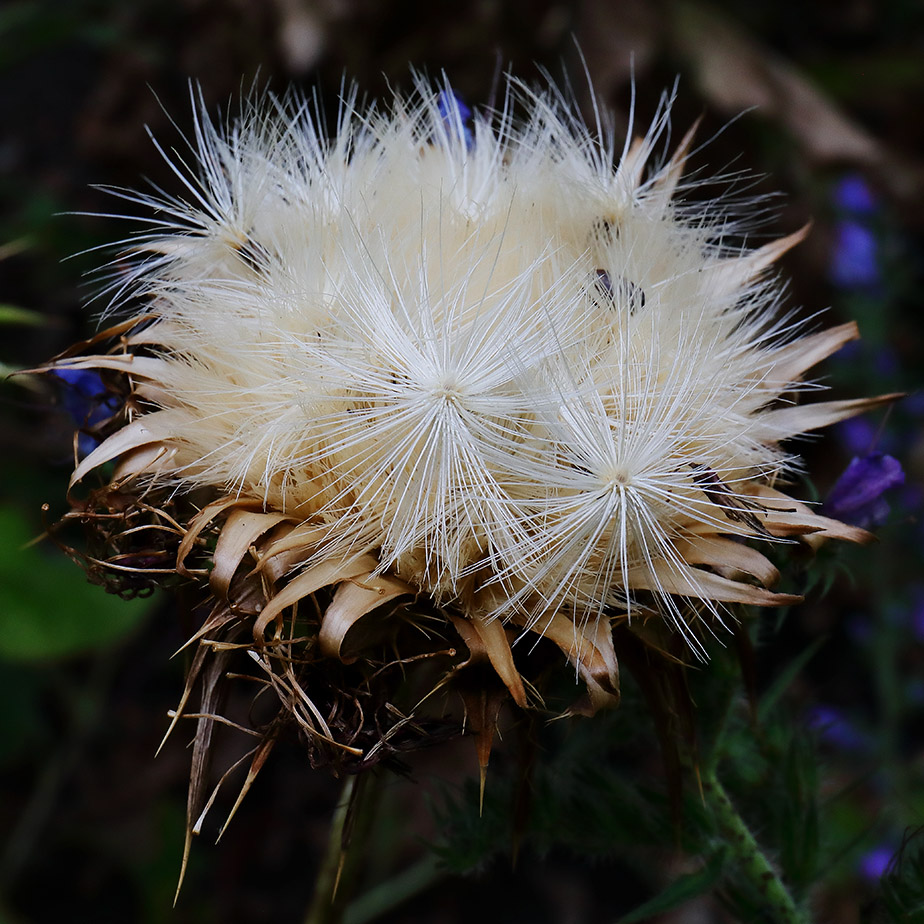
NB: A note for WordPress Reader users – you need to click on the title of the post again to see the full photograph. (Otherwise you see just a tiny section!)
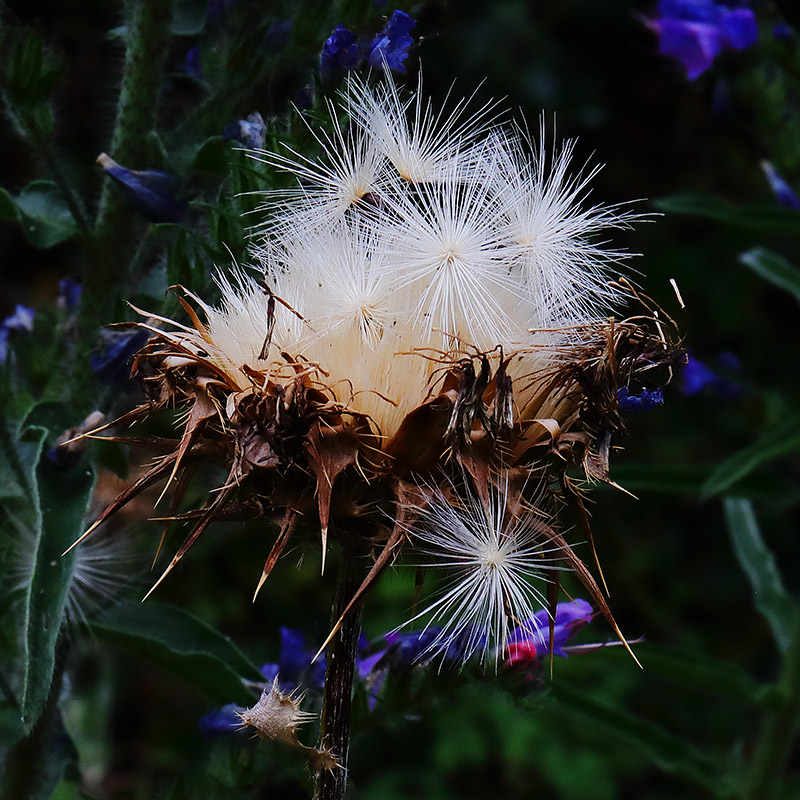
Some seed heads draw more attention than others. The sight of the huge fluffy seed heads of the cardoon (Cynara cardunculus), growing in a garden I visited was irresistible. The seed heads appealed as a subject to photograph, and because I always want to stroke the soft hairs attached to the delightfully ethereal seeds. (I didn’t stroke them though. I couldn’t get close enough!)
I’m not the only one attracted to the cardoon’s seeds. In winter, finches will eat the seeds and, when spring comes, if any the soft down remains, it may be used to line nests. Long before that stage, the huge purple thistle flowers are visited by many bees and other pollinators. The cardoon flowers have lots of pollen and nectar and can appear over a long period (around June to September). This makes the cardoon a valuable plant for bees and it would be a great addition to a garden planted with pollinators in mind.
Cardoons grow to a large size – up to 6 feet tall by about 4 feet wide. That’s a bit big for my own garden. (Space is becoming an issue here.) If there was room for one, I’d certainly consider growing one of these plants because, in addition to the bee-friendly flowers, they also have spectacular deeply-cut silvery leaves. However, it might irritate my neighbours if those floaty little seeds were to land and then produce new plants all over their gardens!

 Ann Mackay: Inspired by Nature
It would be hard not to like the down of this plant’s seed heads.
The word cactus originally referred to the artichoke and the cardoon. Their prickliness later got transferred to what we now call a cactus.
LikeLiked by 1 person
Ah, that’s fascinating to hear, Steve!
LikeLike
Etymology elucidates many things. Here’s a little more information about this one:
https://www.etymonline.com/word/cactus
LikeLiked by 1 person
Awesome clarity and sharpness in these macro shots, Ann!
LikeLiked by 1 person
Thank you Indira! It’s a big seed head, so easier to photograph than most seed heads. 🙂
LikeLiked by 1 person
These seeds remind me of our those produced by our basket-flowers. This isn’t the best photo — I’m sure I have more — but it does show the similarity in the structure, with the seed below the starburst-like fluff. I’d never heard of a Cardoon, and never would have imagined it was a thistle, but it clearly possesses all the advantages of a good thistle: nectar, pollen, fluff, and seeds. And it’s native — always a plus.
LikeLiked by 1 person
I love the detail of the spider silk holding the seed in your photograph. If you saw the whole cardoon plant, you’d recognise it immediately as a huge thistle. I find it rather surprising that it and other thistles are members of the same family as daisies (Asteraceae). Shows how different family members can be!
LikeLiked by 1 person
I love this, Ann, and the multiple colors of the flowers in the background are a bonus!
LikeLiked by 1 person
I can’t remember what those flowers were, but the colours are pretty. This garden visit (last year) was a very uplifting experience and a place that we hadn’t been able to get to during the Covid epidemic. We haven’t been there yet this year but there’s still time… 🙂
LikeLiked by 1 person
A lovely seedhead, indeed, Ann. Like you, my first impulse was to caress it in order to feel its softness.
LikeLiked by 1 person
When you’re looking at photographs of a garden it’s easy to forget about the senses of touch and smell – but what a lot they add to the experience when you’re actually in a garden!
LikeLiked by 1 person