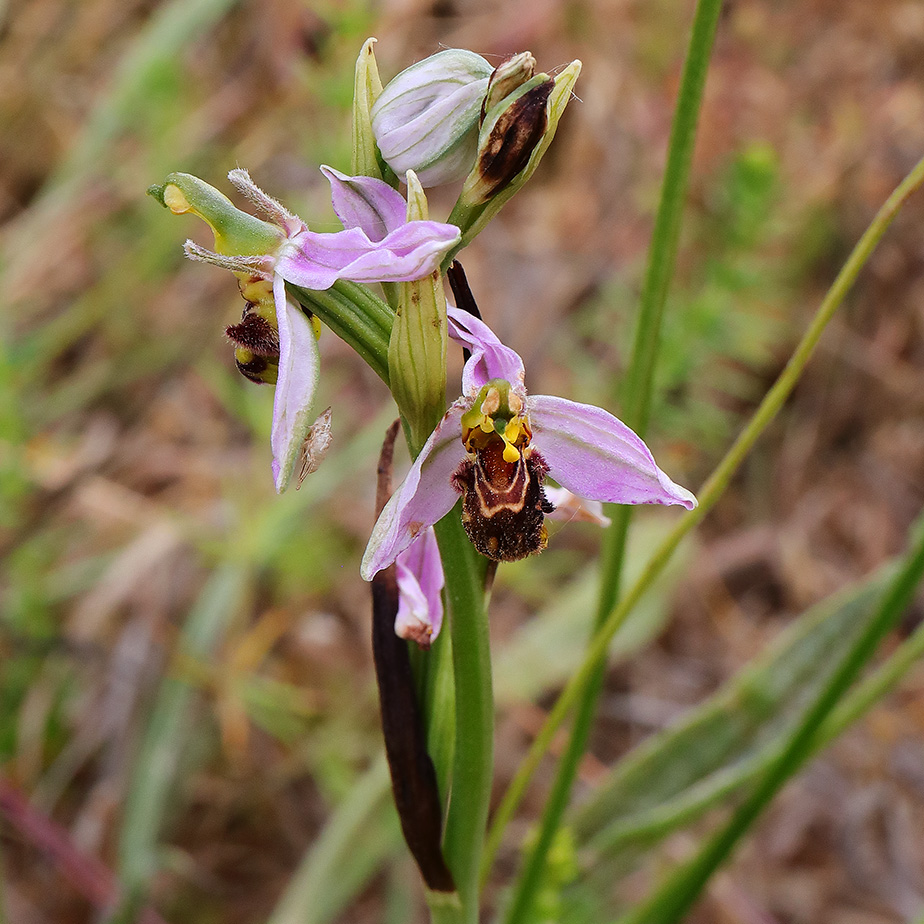
NB: A note for WordPress Reader users – you need to click on the title of the post again to see the full photograph. (Otherwise you see just a tiny section!)
An awareness of the importance of wildflowers in creating spaces for nature is growing in the UK. Plants for bees and other insects are recognised as being vital to help species survive. Many gardeners are trying to help nature by allowing their gardens to become a little wilder, and some are creating their own ‘meadow’ areas within their gardens.
Recently I visited a large garden at a Suffolk farm and had a walk around the adjacent wildflower meadow. There are already a few wildflowers in my own garden and I’m interested to see what else I can grow to encourage insect life. (But without letting something take over the garden, e.g. white deadnettle. Although its flowers are great for bees in the early part of the year, I’m finding it almost impossible to stop the plant from spreading everywhere.)
I’m on the lookout for wildflowers to grow, but I know that the plant in my top photograph is unlikely to appear in my garden. It’s a bee orchid (Ophrys apifera), an orchid that is native to the UK. This is a cheeky wee plant – the flowers mimic female bees so that the male bee comes along hoping to mate, but pollinates the flowers instead. (A bit disappointing for the bee, I reckon!) An uncommon plant, however, it does appear in meadows here in the east of England.
The plant below is one that I do already have, but mine is growing in a pot. This is bird’s foot trefoil (Lotus corniculatus), another native grassland plant which grows throughout the UK. The flowers are a great source of nectar for bees and it is a food plant for caterpillars too. It was interesting to see how it grows in the wild, but because the RHS website says it can become invasive, I will probably keep mine in its pot. (I like the idea of having pots of it dotted around the garden in sunny spots. The bees and butterflies would love it.)


 Ann Mackay: Inspired by Nature
Amazing flowers
LikeLiked by 1 person
Thank you Leanne. Nature has some amazing creations! 🙂
LikeLike
From what you say, Britain is moving closer to Thoreau’s dictum that “In wildness is the preservation of the world.” Let’s hear it for more wildflowers!
LikeLiked by 1 person
I wish it was true of Britain as a whole…in other areas meadows and woodland are being destroyed for roads and building. But at least this destruction is being fought and protested against, so awareness is growing. I agree – we do need more wildflowers!
LikeLike
I did have a bee orchid one year, but then it disappeared never to be seen again. Plenty of Pyramidal orchids around in my part of Suffolk , but not in my garden, maybe one day.
LikeLiked by 1 person
That must have been a lovely surprise! I know that orchids appear on the green in Long Melford, but it has been a good few years since I saw them and I don’t know what they were. Hope you do find a Pyramidal orchid in your garden some day!
LikeLike
Pyramidal orchids have appeared in my old garden not far from here so I can get to see them there. A bee orchid appeared this year on the green outside the village hall, you never know where they will pop up.
LikeLiked by 1 person
It just shows that it’s really worth keeping your eyes open for these beauties. I have seen bee orchids in a couple of other small meadows in Suffolk – now I’ll be on the lookout for others. 🙂
LikeLike
These are lovely flowers, Ann. The strategies some plants “devise” are amazing, such as imitating the shape of a female bee in order to attract males!
I love the idea of fostering wildflowers, and many people are trying to do so everywhere. Let’s hope it will benefit the insects.
LikeLiked by 1 person
I’m hoping for that too, Tanja. Insects need our help these days – there’s a lot fewer of them around.
LikeLiked by 1 person
Well spotted these wild beauties, Ann!
LikeLiked by 1 person
Thank you Indira! I enjoyed my flower-spotting wander around that meadow. 🙂
LikeLike
Hi Ann! The bird’s foot trefoil is a pretty little thing. That’s the problem with wildflowers to me is that they are so small and dainty. They would probably make really cool looking big flowers! Nice post. (I can get to you on chrome but not Mozilla – had to figure….)
LikeLiked by 1 person
Yes, I reckon they would look amazing as big flowers…at their real size you really need to get close to them to see them properly. (Which is not really a problem for me because I like getting up close to flowers. 🙂 ) I’m glad you’ve figured out what was causing the WP problems, yay!
LikeLiked by 1 person
I’ve been trying to add more wildflowers to our yard a bit at a time. They are so important to our wild insects and, in some cases, birds too. Similar to what you mentioned the other day, I just planted two Tall Meadow Rues near our new pollinator garden. Good for you and GB in general for recognizing their importance.
LikeLiked by 1 person
That’s great Steve! We can all help to make a difference with our gardens – mini nature reserves could be everywhere! 🙂
LikeLiked by 1 person
That’s true, Ann. But for many animals corridors are needed between plots of wild lands because their ranges are larger than the average yard. Of course it isn’t that bad for insects and birds but the larger ones need more room to roam. That’s where land trusts come in working toward preserving larger tracts of land. We’ve a good one here in my part of the state. But there are others as well.
LikeLiked by 1 person
Agreed, Steve! In this country we have wildlife trusts in each county that have reserves which are absolutely vital, especially for birds. (There are other trusts and protected areas too.)
LikeLiked by 1 person
When I first was learning plants, I confused your bird’s foot trefoil with one of our native yellow peas. It is a pretty plant, but it’s willingness to invade new territory is pretty well known here. On our BONAP maps, blue and light blue are the colors for non-native, and look how your trefoil has made itself at home!
Orchids astonish me. The thought of one creating female bee-like flowers to attract male pollinators is pushing the boundaries of the believable (or, the bee-lievable!).
LikeLiked by 1 person
Wow, it may be a tiny plant but it gets everywhere! It just goes to show how careful you have to be with non-natives that are inclined to be invasive, especially if they’re taking space away from the native food plants for wildlife.
Orchids are fantastic flowers – I’m going to keep a lookout for more wild ones in future… 🙂
LikeLiked by 1 person
At first I thought there was a bee on that orchid. Wildflower meadows are so important and always look lovely.
LikeLiked by 1 person
You’re thinking like a male bee, hehe! It was lovely to walk through that meadow and think of all the tiny lives that it supports – a special place. 🙂
LikeLike
😀
LikeLiked by 1 person
[…] viciifolia) were sprinkled throughout the meadow that I wrote about in last week’s post. It’s a plant that I had never seen before. I was enchanted by the spikes of delicate pink […]
LikeLike